
Neonatal ECMO: Extracorporeal Membrane Oxygenation in Newborns — Complete Guide
Extracorporeal membrane oxygenation in neonates explained: procedure, circuit, indications, outcomes & career prep. ✅ Includes practice questions.

Extracorporeal membrane oxygenation in neonates is one of the most complex and life-saving interventions available in modern neonatal intensive care. Neonatal ECMO is a form of prolonged cardiopulmonary bypass that temporarily takes over the function of the heart and lungs when a critically ill newborn cannot sustain adequate gas exchange or cardiac output on conventional support. First successfully applied in a neonate in 1975 by Dr. Robert Bartlett, ECMO has since evolved into a cornerstone therapy for reversible neonatal respiratory and cardiac failure, with more than 35,000 neonatal ECMO runs documented in the Extracorporeal Life Support Organization (ELSO) registry.
The physiological basis of extracorporeal membrane oxygenation in neonates centers on bypassing damaged or immature lung tissue long enough for recovery. In the neonatal period, several conditions can cause severe hypoxemic respiratory failure or hemodynamic collapse that cannot be corrected by mechanical ventilation alone. Persistent pulmonary hypertension of the newborn (PPHN), meconium aspiration syndrome (MAS), congenital diaphragmatic hernia (CDH), neonatal sepsis, and congenital heart defects are the most common indications. These conditions share a final common pathway: the lungs fail to oxygenate blood adequately, carbon dioxide accumulates, and end-organ injury progresses rapidly without intervention.
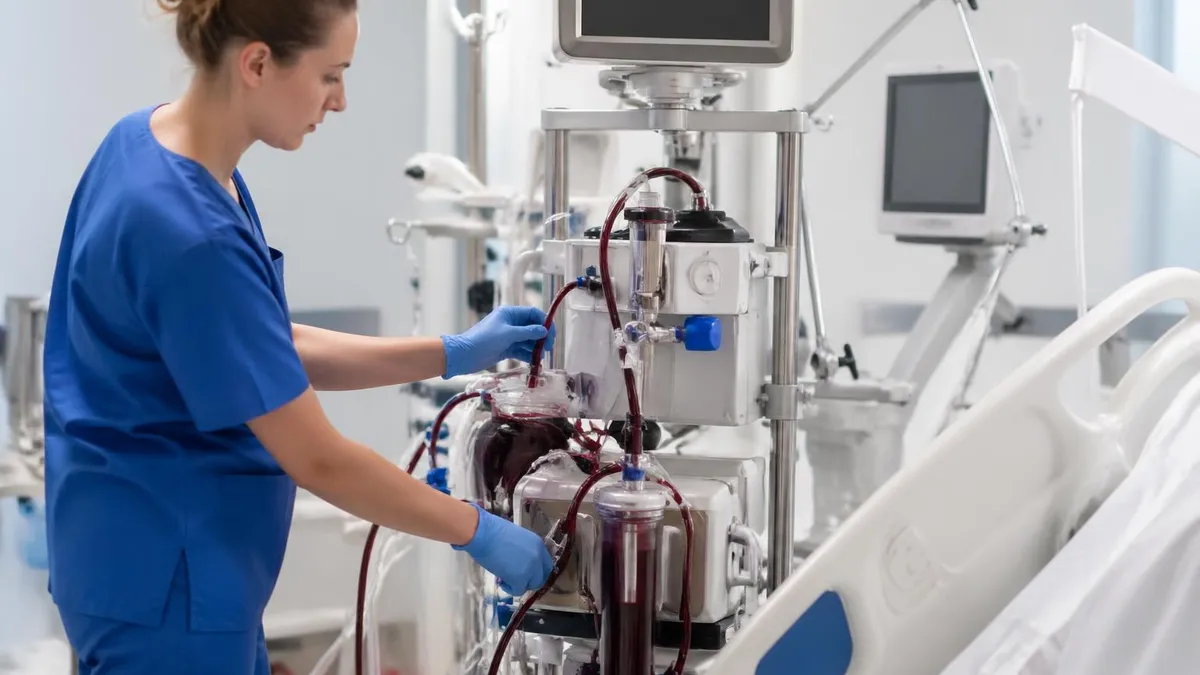
Understanding the extracorporeal membrane oxygenation procedure begins with recognizing that the ECMO circuit drains deoxygenated blood from the patient, passes it through a membrane oxygenator that adds oxygen and removes carbon dioxide, warms it to body temperature, and returns it to the patient. The entire circuit is primed with blood products to prevent a large crystalloid bolus from entering the small blood volume of a newborn. In neonates, circuit volume can equal or exceed the patient's own circulating blood volume, making careful priming and management essential to hemodynamic stability from the very first moments of support.
The two primary ECMO configurations used in neonates are venovenous (VV) and venoarterial (VA) modes. Venovenous extracorporeal membrane oxygenation supports gas exchange but not cardiac output, making it suitable for infants with adequate cardiac function who have primarily respiratory failure. Venoarterial ECMO supports both gas exchange and perfusion, which is required when cardiac function is compromised. Because neonates with CDH and congenital heart disease often have combined cardiopulmonary failure, VA ECMO is more frequently employed in this population than in pediatric or adult ECMO patients.
The extracorporeal membrane oxygenation circuit in neonatal patients consists of several integrated components: cannulas, tubing, a centrifugal or roller pump, a membrane lung (oxygenator), a heat exchanger, and various monitoring transducers. Modern neonatal ECMO circuits have become significantly more compact over the past two decades, reducing prime volumes and improving biocompatibility. Polymethylpentene (PMP) hollow-fiber membrane lungs have replaced older silicone oxygenators and offer superior gas transfer efficiency and lower resistance, allowing longer run durations with less plasma leakage and fewer circuit change-outs.
For ECMO specialists, nurses, neonatologists, and respiratory therapists who support neonatal ECMO programs, detailed knowledge of circuit management, patient assessment, anticoagulation, and complication recognition is essential. Certification examinations and institutional competency assessments test this knowledge rigorously. Whether you are preparing for the ELSO certification pathway, an institutional ECMO specialist credentialing process, or simply building the clinical expertise required to care for this vulnerable population, a systematic review of neonatal ECMO physiology, management principles, and outcomes data will strengthen your clinical decision-making and exam performance.
This comprehensive guide covers every dimension of extracorporeal membrane oxygenation in neonates: the clinical indications and patient selection criteria, the mechanics of the ECMO circuit, cannulation strategies, anticoagulation management, common complications, outcomes data, and the career path for specialists who dedicate themselves to neonatal ECMO care. Along the way, you will find practice resources, checklists, and study tools to help you master this challenging and rewarding subspecialty.
Neonatal ECMO by the Numbers

Key Indications for Neonatal ECMO
Meconium obstruction of airways causes air trapping, chemical pneumonitis, and severe PPHN. When oxygenation index exceeds 40 on maximal conventional support, ECMO is indicated to allow lung recovery without further ventilator-induced injury.
PPHN causes right-to-left shunting through fetal circulatory channels. Inhaled nitric oxide is first-line, but ECMO is initiated when oxygenation index remains above 40 or the infant deteriorates rapidly despite maximal medical therapy.
CDH causes lung hypoplasia and severe pulmonary hypertension. ECMO is used as a bridge to stabilization and surgical repair, typically VA mode given concurrent cardiac dysfunction. Survival rates range from 50–70% in specialized centers.
Congenital heart lesions causing severe low cardiac output or refractory arrhythmias require VA ECMO for hemodynamic support. ECMO may serve as a bridge to surgical repair, cardiac catheterization, or in rare cases heart transplant listing.
Group B streptococcal or gram-negative sepsis with refractory hypoxemia, and severe air leak syndromes unresponsive to conventional management, represent additional indications when the underlying condition is potentially reversible.
The extracorporeal membrane oxygenation procedure in a neonate begins well before the cannulas are placed. The ECMO team — typically comprising a neonatologist or pediatric intensivist, a pediatric surgeon or interventional cardiologist, ECMO specialists, bedside nurses, and a perfusionist — coordinates to prepare the circuit, obtain blood products for priming, and ensure the patient is anticoagulated before cannulation.
The decision to initiate ECMO is never taken lightly, as cannulation itself carries risks of vessel injury, hemorrhage, and air embolism. Informed consent from the family is obtained whenever time permits, with a thorough discussion of expected outcomes and the possibility of complications.
Cannulation in neonates has historically relied on cervical cannulation via the right internal jugular vein and right common carotid artery for VA ECMO. The carotid artery is ligated distally and cannulated proximally, allowing arterial blood return directly into the aortic arch.
While carotid ligation raises theoretical concerns about cerebrovascular outcomes, studies in neonatal survivors have shown that most infants compensate adequately through collateral circulation and contralateral carotid flow, though some centers now pursue carotid reconstruction at decannulation. For VV ECMO in neonates, a double-lumen bicaval cannula placed in the right internal jugular vein provides both drainage and return through a single access point, eliminating the need for carotid ligation.
Once cannulas are secured and connected to the extracorporeal membrane oxygenation circuit, the pump speed is gradually increased to achieve target ECMO flows, typically 100–150 mL/kg/min for neonates. This flow rate is designed to provide full or near-full cardiopulmonary support while minimizing recirculation. Circuit pressures, including pre-membrane, post-membrane, and venous inlet pressures, are continuously monitored to detect early signs of cannula malposition, circuit obstruction, or oxygenator failure. Sweep gas flow through the membrane lung is adjusted to control carbon dioxide removal independently of oxygen delivery, a key advantage of ECMO over conventional mechanical ventilation.
Anticoagulation management is among the most challenging aspects of the extracorporeal membrane oxygenation treatment protocol in neonates. Unfractionated heparin (UFH) is the standard anticoagulant, administered as a continuous infusion and titrated to an activated clotting time (ACT) target of 180–220 seconds or an anti-Xa level of 0.3–0.7 IU/mL.
Neonates are particularly vulnerable to both hemorrhagic and thrombotic complications: immature hemostatic systems, low platelet counts, and the thrombogenic surface of the circuit create a delicate balance. Intracranial hemorrhage (ICH) is the most feared complication, occurring in approximately 10–15% of neonatal ECMO patients and representing a leading cause of ECMO-related mortality and neurodevelopmental morbidity.
The extracorporeal membrane oxygenation circuit requires continuous bedside monitoring and daily maintenance. ECMO specialists assess the circuit for fibrin deposition, clot formation in the pump head or oxygenator, and the integrity of all connections and clamps. Oxygenator performance is evaluated by measuring pre- and post-oxygenator blood gases; a rising pre-membrane pressure or declining post-membrane oxygen tension signals impending oxygenator failure requiring circuit change-out. Centrifugal pump heads, now standard in modern neonatal ECMO systems, generate less hemolysis than older roller pumps but require careful management of the pressure-flow relationship to avoid cavitation or pump thrombosis.
Nutrition and fluid management during ECMO require careful attention to the neonate's rapidly evolving metabolic needs. Total parenteral nutrition is initiated early, with enteral feeds introduced cautiously once hemodynamic stability is achieved. The ECMO circuit itself contributes to fluid shifts through the large priming volume and ongoing transfusion requirements; careful fluid balance monitoring and judicious use of diuretics or continuous renal replacement therapy (CRRT) help prevent fluid overload, which independently worsens outcomes. Maintaining euvolemia while supporting adequate perfusion to all organ systems requires close collaboration between the ECMO team, nephrology, nutrition, and pharmacy.
Weaning from ECMO is a gradual process that begins when the underlying condition shows signs of recovery. For respiratory ECMO, improving lung compliance, decreasing ventilator requirements, and improving native oxygenation on reduced ECMO flows signal readiness to trial a wean. Flow rates are progressively reduced while monitoring hemodynamics and gas exchange. A successful trial off ECMO — typically 2–4 hours of stable native cardiopulmonary function at minimal flow — confirms readiness for decannulation. The entire ECMO management continuum, from initiation through decannulation, demands deep physiological knowledge and clinical vigilance from every member of the team.
Venovenous Extracorporeal Membrane Oxygenation vs Venoarterial: Key Comparisons
Venovenous extracorporeal membrane oxygenation is used when a neonate has adequate cardiac function but severe respiratory failure. Blood is drained from and returned to the venous circulation, providing gas exchange support without directly augmenting cardiac output. In neonates, VV ECMO is most commonly achieved via a double-lumen bicaval cannula placed in the right internal jugular vein, which simultaneously drains from the superior and inferior vena cava and returns oxygenated blood near the tricuspid valve.
The primary advantage of VV ECMO is preservation of the carotid artery, eliminating the risk of arterial ligation and potential right-sided cerebral hypoperfusion. Because native cardiac function is maintained, hemodynamic responses to volume status and vasoactive medications remain relatively intact, which simplifies overall patient management. However, recirculation — in which oxygenated return blood is immediately re-entrained into the drainage cannula before reaching the right heart — is a key limitation of VV ECMO and must be minimized through careful cannula positioning confirmed by echocardiography.

Benefits and Risks of Neonatal ECMO: What Families and Clinicians Should Know
- +Provides life-saving cardiopulmonary support when conventional therapies have failed
- +Allows time for lung recovery without continued ventilator-induced lung injury
- +Supports systemic perfusion in neonates with cardiac failure or arrest
- +Enables surgical intervention in hemodynamically unstable neonates who could not otherwise tolerate anesthesia
- +Well-established ELSO registry data allows evidence-based outcome counseling
- +Modern circuit designs have significantly improved biocompatibility and safety compared to earlier systems
- −Intracranial hemorrhage risk is 10–15%, with potential for permanent neurodevelopmental impairment
- −Systemic anticoagulation increases bleeding risk at all sites, including surgical wounds
- −Circuit thrombosis can cause acute device failure or systemic embolism
- −Carotid artery ligation in VA ECMO raises long-term cerebrovascular concerns
- −Requires highly specialized team available 24/7, limiting access to tertiary centers only
- −Prolonged ECMO runs carry increasing complication rates including infection, renal failure, and multi-organ dysfunction
Pros and Cons at a Glance
| Pros | Cons |
|---|---|
| Provides life-saving cardiopulmonary support when conventional therapies have failed | Systemic anticoagulation increases bleeding risk at all sites, including surgical wounds |
| Allows time for lung recovery without continued ventilator-induced lung injury | Circuit thrombosis can cause acute device failure or systemic embolism |
| Supports systemic perfusion in neonates with cardiac failure or arrest | Carotid artery ligation in VA ECMO raises long-term cerebrovascular concerns |
| Enables surgical intervention in hemodynamically unstable neonates who could not otherwise tolerate anesthesia | Prolonged ECMO runs carry increasing complication rates including infection, renal failure, and multi-organ dysfunction |
Neonatal ECMO Clinical Management Checklist
- ✓Confirm ECMO indication: oxygenation index ≥40 on two consecutive measurements or acute deterioration despite maximal support
- ✓Obtain cranial ultrasound and echocardiogram before cannulation to rule out contraindications (grade III-IV IVH, severe structural heart disease not amenable to support)
- ✓Prime the circuit with packed red blood cells, fresh frozen plasma, and albumin to achieve appropriate hematocrit and oncotic pressure
- ✓Initiate UFH bolus (50–100 units/kg) immediately before cannula insertion and titrate infusion to target ACT 180–220 seconds post-initiation
- ✓Set initial ECMO flows to 100–150 mL/kg/min and adjust sweep gas to normalize pH and PaCO2 within 1–2 hours of initiation
- ✓Obtain daily activated clotting times, anti-Xa levels, complete blood counts, coagulation panels, and chemistry panels to guide management
- ✓Perform cranial ultrasound every 24–48 hours during ECMO run to detect intracranial hemorrhage early
- ✓Monitor pre- and post-membrane blood gases every 4–8 hours and replace oxygenator if plasma leak or gas transfer efficiency declines
- ✓Maintain platelet count ≥80,000–100,000/µL and fibrinogen ≥150–200 mg/dL to reduce hemorrhagic complication risk
- ✓Document ECMO flows, pressures, ACT, and clinical status at minimum every hour in the bedside flow sheet and ELSO data registry
The Oxygenation Index Threshold That Triggers ECMO
An oxygenation index (OI) of 40 or greater, calculated as (mean airway pressure × FiO2 × 100) ÷ PaO2, is the most widely cited threshold for ECMO referral in neonates. Studies consistently show that neonates reaching an OI of 40 on two measurements taken 30–60 minutes apart face a predicted mortality exceeding 80% without ECMO, making timely referral to an ECMO center critical. Do not wait for the OI to rise further — earlier initiation is associated with lower complication rates and better neurological outcomes.
Complications of neonatal ECMO span every organ system and remain the primary determinant of both short-term survival and long-term neurodevelopmental outcomes. Hemorrhagic complications are the most common, occurring in up to 30–40% of neonatal ECMO runs. The combination of systemic heparinization, platelet consumption on the circuit surface, acquired von Willebrand syndrome from continuous shear stress, and the inherent fragility of neonatal vessel walls creates a profoundly altered hemostatic environment. Surgical site bleeding, cannulation site oozing, pulmonary hemorrhage, and gastrointestinal bleeding all require vigilant monitoring and prompt management.
Intracranial hemorrhage deserves special emphasis as the most devastating complication of neonatal ECMO. The immature germinal matrix of the preterm or near-term brain is highly susceptible to hemorrhage under the hemostatic perturbations of ECMO. Cerebral autoregulation may also be impaired in critically ill neonates, making the brain vulnerable to pressure-passive injury.
Routine cranial ultrasound surveillance every 24–48 hours allows early detection, but management options are limited once significant hemorrhage occurs. When grade III or IV intraventricular hemorrhage is detected on pre-ECMO imaging, most centers consider this a contraindication to initiation, as ongoing anticoagulation would likely extend the hemorrhage with catastrophic consequences.
Thrombotic complications represent the other face of the hemostatic balance challenge. Circuit thrombosis, pump head clot, and oxygenator failure can occur despite therapeutic anticoagulation, particularly during periods of reduced circuit flows or in patients with inherited or acquired thrombophilia. Cerebral, pulmonary, and systemic arterial emboli from circuit-generated thrombus have been reported. Careful visual inspection of the circuit by trained ECMO specialists, measurement of circuit pressures, and rapid recognition of declining oxygenator performance are the primary tools for detecting and managing thrombotic complications before they cause patient harm.
Neurological outcomes in neonatal ECMO survivors are a major focus of long-term follow-up programs. Approximately 15–25% of survivors demonstrate significant neurodevelopmental impairment at school age, including cognitive deficits, motor delays, hearing loss, and behavioral disorders. The etiology is multifactorial: the severity of pre-ECMO illness, intracranial hemorrhage, embolic events, periods of hypoperfusion or hypoxia, and the physiological effects of prolonged critical illness all contribute. Structured neurodevelopmental follow-up programs at ECMO centers track outcomes through early childhood and school age, informing counseling for families and quality improvement initiatives for ECMO programs.
Renal complications during neonatal ECMO are common, with acute kidney injury (AKI) occurring in 50–70% of patients and the need for continuous renal replacement therapy in 10–20%. AKI results from pre-ECMO hypoxia and hypoperfusion, inflammatory mediator release, hemolysis generating free hemoglobin that is nephrotoxic, and the effects of vasoactive medications. CRRT can be integrated directly into the ECMO circuit for continuous fluid and solute management, with the hemofilter connected between the post-pump and pre-oxygenator limbs. Careful electrolyte management, particularly potassium and calcium, is essential during combined ECMO-CRRT.
Infectious complications including healthcare-associated bloodstream infections, pneumonia, and surgical site infections increase with ECMO run duration. The cannulas represent direct intravascular access points that are difficult to maintain with standard sterile technique over a multi-week run. Bundle-based infection prevention strategies — consistent dressing changes, hand hygiene protocols, minimizing circuit entries, and early removal of unnecessary invasive devices — are associated with lower infection rates in ECMO programs that have implemented them systematically. Empiric antibiotic prophylaxis during ECMO remains controversial; most centers reserve antibiotics for documented or highly suspected infections.
Long-term pulmonary outcomes in neonatal ECMO survivors depend heavily on the underlying diagnosis. Meconium aspiration and PPHN survivors generally have good pulmonary outcomes with near-normal lung function by school age. CDH survivors face a higher burden of chronic lung disease, pulmonary hypertension, and the need for ongoing respiratory medications and follow-up. Neonates who required ECMO for congenital heart disease face disease-specific pulmonary and cardiac trajectories that require lifelong cardiology follow-up. Understanding these diagnosis-specific outcome profiles is essential for accurate family counseling both before and during ECMO support.

Pre-existing grade III or IV intracranial hemorrhage on pre-ECMO cranial ultrasound is an absolute contraindication to neonatal ECMO initiation, as therapeutic anticoagulation will extend the hemorrhage with near-certain fatal or severely disabling consequences. Gestational age below 34 weeks is a relative contraindication in most centers due to the increased risk of IVH. Irreversible underlying conditions — including lethal chromosomal anomalies or severe irreversible brain injury — also preclude ECMO as it would only prolong the dying process without meaningful benefit.
The career landscape for professionals involved in extracorporeal membrane oxygenation treatment in neonatal settings is both demanding and deeply rewarding. ECMO specialists — the bedside clinicians who manage the ECMO circuit 24 hours a day — are typically registered nurses, respiratory therapists, or perfusionists who have completed an institution-specific ECMO training program and achieved competency through direct mentored case experience.
The Extracorporeal Life Support Organization provides educational resources and a framework for training programs, though there is no single universal ECMO specialist certification analogous to the registered perfusionist credential. Individual centers maintain their own credentialing requirements, typically including a didactic course, simulation training, and a minimum number of proctored cases before independent practice is permitted.
Neonatologists who lead ECMO programs complete fellowship training in neonatal-perinatal medicine followed by additional exposure to ECMO physiology and management, either through their training program or dedicated ECMO courses offered by ELSO and its member institutions. Pediatric cardiac surgeons and pediatric surgeons perform the cannulation procedures and manage surgical complications; their ECMO-specific training is integrated into surgical fellowship programs and ongoing continuing medical education.
Pediatric cardiologists play an increasing role in neonatal ECMO programs, particularly in centers with active congenital heart surgery programs, where echocardiographic guidance for cannulation, assessment of cardiac recovery, and management of cardiac complications are central to ECMO care.
The nursing role in neonatal ECMO extends far beyond circuit management. Bedside nurses coordinate the complex care of a critically ill neonate who is simultaneously receiving ECMO, mechanical ventilation, multiple vasoactive infusions, total parenteral nutrition, continuous monitoring, and often additional procedures such as CRRT or therapeutic hypothermia. Developmental care, family communication, pain and sedation management, and infection prevention are all within the nursing scope. The density of clinical decision-making and the pace of change in these patients make neonatal ECMO nursing among the most cognitively demanding roles in the NICU environment.
Respiratory therapists bring specialized expertise in ventilator management during ECMO, a critically important component of care. Rest lung strategies during ECMO aim to minimize further ventilator-induced lung injury while the ECMO circuit handles the bulk of gas exchange. Typical rest ventilator settings include low peak inspiratory pressures (15–20 cmH2O), low respiratory rates (10–20 breaths per minute), moderate PEEP (5–8 cmH2O), and low FiO2 (0.21–0.40). Respiratory therapists titrate these settings and monitor for atelectasis, pulmonary edema, and early signs of pulmonary recovery that indicate readiness to begin ECMO weaning and increase native ventilatory support.
Pharmacists play a critical and often underappreciated role in neonatal ECMO programs. Drug dosing in ECMO patients is complicated by circuit sequestration, altered volume of distribution, and changes in protein binding. Highly lipophilic drugs like fentanyl, midazolam, and certain antibiotics are substantially sequestered by the PVC tubing and oxygenator membrane, resulting in dramatically reduced plasma levels relative to expected pharmacokinetics. Pharmacists with ECMO expertise provide dosing recommendations that account for these circuit effects and ensure therapeutic levels are maintained for anticoagulation, sedation, analgesia, infection treatment, and other critical medications.
For ECMO specialists and other clinicians preparing for certification examinations or institutional competency assessments, a structured approach to studying neonatal ECMO content is essential. The ELSO Red Book (Extracorporeal Cardiopulmonary Support in Critical Care) remains the foundational reference, covering pathophysiology, circuit technology, cannulation strategies, management protocols, and complications in detail. Supplementing textbook study with practice questions that mirror the clinical reasoning demands of actual ECMO management is a highly effective preparation strategy. Understanding why certain interventions are indicated — not just memorizing protocols — is what differentiates candidates who excel on examinations from those who merely pass.
Building a career in neonatal ECMO requires not only technical expertise but also strong communication and teamwork skills. ECMO patients are among the most critically ill in any hospital, and their care involves near-constant interprofessional collaboration. The ability to communicate clearly about circuit status, patient hemodynamics, and evolving clinical concerns in high-stress situations is as important as technical circuit management ability. Programs that invest in simulation-based team training, structured communication frameworks like SBAR, and regular multidisciplinary case reviews produce ECMO teams with stronger safety cultures and better patient outcomes.
Preparing effectively for neonatal ECMO certification and competency assessments requires a systematic approach that integrates conceptual understanding, clinical application, and repeated practice with examination-style questions. Begin your preparation by mastering the foundational physiology of neonatal cardiopulmonary physiology, including the transition from fetal to neonatal circulation, the pathophysiology of persistent pulmonary hypertension, and the oxygen-hemoglobin dissociation curve as it applies to management decisions during ECMO. These foundational concepts underpin nearly every clinical question you will encounter on certification assessments.
Next, work through the ELSO guidelines for patient selection, which define the specific oxygenation and ventilation criteria that trigger ECMO referral and initiation. Memorize the oxygenation index formula and the threshold values that most programs use, but also understand the clinical context — why a rapidly deteriorating infant at OI 35 may need ECMO before reaching OI 40, and why a stable infant at OI 42 on marginal support might be watched briefly if trends are improving. Clinical judgment questions that test this nuanced reasoning are common on advanced certification examinations.
Circuit management knowledge — including recognition of pre-oxygenator hypertension indicating tubing obstruction, post-oxygenator hypoxia indicating membrane failure, high negative inlet pressures indicating hypovolemia or cannula malposition, and chatter (vibration of the drainage line) indicating inadequate venous return — is heavily tested. Practice correlating specific circuit pressure and flow abnormalities with their most likely causes and the appropriate first response. These scenario-based questions reward candidates who have mentally rehearsed emergency circuit troubleshooting, not just those who have read about it.
Anticoagulation management questions will constitute a substantial portion of any ECMO examination. Know the mechanism of action of unfractionated heparin, its monitoring parameters (ACT, aPTT, anti-Xa), target ranges for neonatal ECMO, and how to respond to supratherapeutic or subtherapeutic anticoagulation in the context of specific clinical scenarios. Understanding heparin-induced thrombocytopenia (HIT) — including when to suspect it, how to confirm the diagnosis, and what alternative anticoagulants (argatroban, bivalirudin) are used in its place — is essential advanced content for higher-level examinations.
Pharmacology in neonatal ECMO is a rich area for examination content. Know which drug classes are most significantly sequestered by the ECMO circuit and by how much plasma levels may be reduced. Understand the rationale for sedation and analgesia during ECMO — preventing agitation-induced venous desaturation, minimizing circuit tugging, and ensuring the neonate's comfort during a prolonged and invasive therapy. Know the dosing principles for vasoactive medications during VA ECMO, where circuit flows may largely replace the need for vasopressors in some patients while other patients require significant pharmacological support alongside ECMO.
Complications recognition is one of the highest-yield areas for ECMO examination preparation. Create a mental checklist of the most common and most catastrophic complications — intracranial hemorrhage, circuit thrombosis, oxygenator failure, air embolism, cannula dislodgement, and pump failure — and for each one, know the clinical signs, laboratory and imaging findings, and immediate management steps. Practicing case-based scenarios that present you with a set of circuit readings, vital signs, and laboratory results and ask you to identify the problem and prioritize your response is the most effective way to prepare for these high-stakes questions.
Finally, understand the weaning and decannulation process in detail. Know the criteria for beginning a weaning trial, the stepwise reduction of ECMO flows, how to interpret native cardiopulmonary function during the wean, and the decision points that would prompt you to abort a weaning attempt and return to full support. Decannulation technique, post-decannulation monitoring, and carotid artery reconstruction considerations round out this topic. Candidates who can walk through the entire ECMO arc — from initiation criteria through decannulation — with clinical confidence are the ones who perform best on both written and oral components of certification examinations.
ECMO Questions and Answers

ECMO Medical Term: Understanding Extracorporeal Membrane Oxygenation

VA ECMO Cannulation: Complete Guide to Veno-Arterial Extracorporeal Membrane Oxygenation

ECMO Specialist: Career Path, Duties, Salary, and Certification Guide
ECMO: How Extracorporeal Membrane Oxygenation Works and Who Needs It

ECMO Cost: What Extracorporeal Membrane Oxygenation Really Costs in the US
About the Author

Educational Psychologist & Academic Test Preparation Expert
Columbia University Teachers CollegeDr. Lisa Patel holds a Doctorate in Education from Columbia University Teachers College and has spent 17 years researching standardized test design and academic assessment. She has developed preparation programs for SAT, ACT, GRE, LSAT, UCAT, and numerous professional licensing exams, helping students of all backgrounds achieve their target scores.
Join the Discussion
Connect with other students preparing for this exam. Share tips, ask questions, and get advice from people who have been there.
View discussion (9 replies)