
ECMO: How Extracorporeal Membrane Oxygenation Works and Who Needs It
Pass the ECMO: How Extracorporeal Membrane exam with confidence. Practice questions with detailed explanations and instant feedback on every answer. ✅
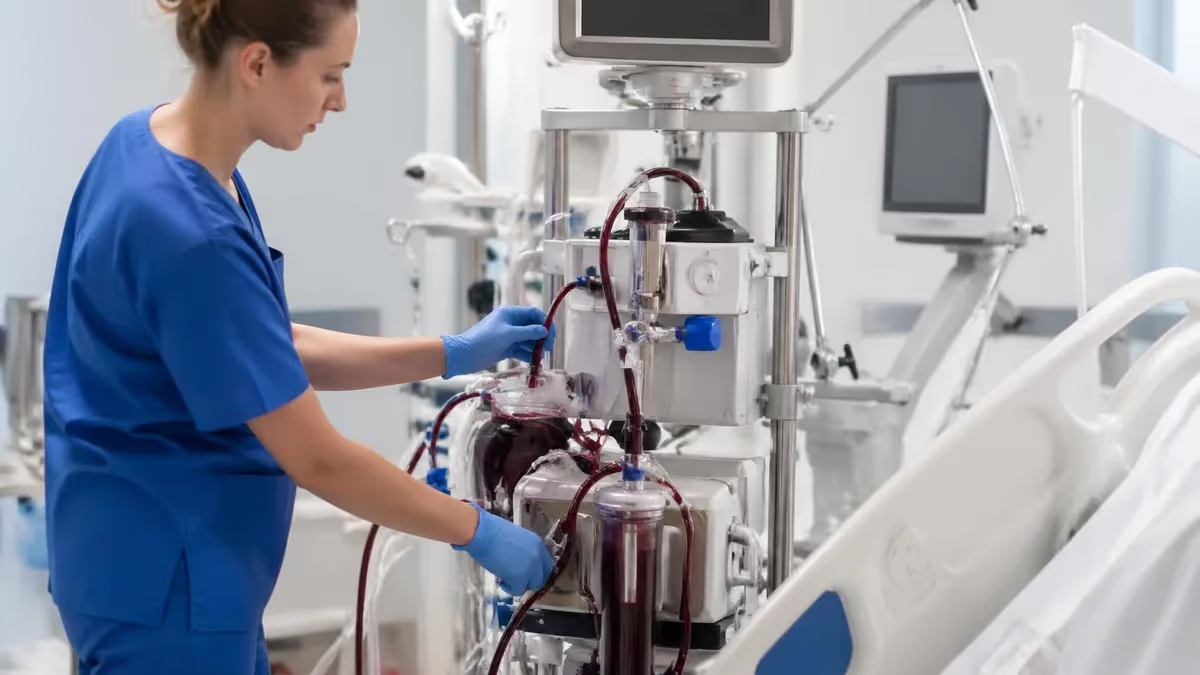
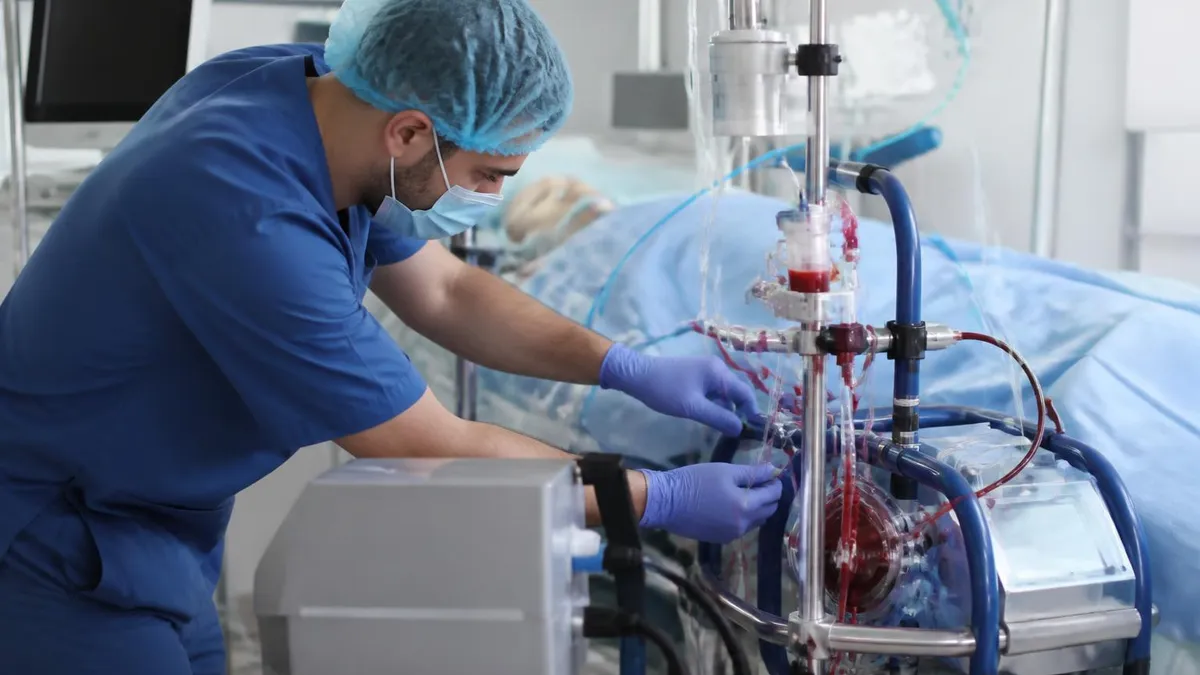
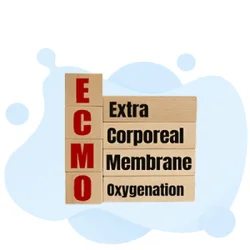
ECMO — extracorporeal membrane oxygenation — is a form of temporary life support that takes over the work of the heart, the lungs, or both when those organs fail so severely that conventional treatment can no longer sustain life. Blood is drawn from the patient, pumped through an oxygenator (an artificial membrane lung), and returned to the circulation — continuously, often for days or weeks, while the underlying condition is treated or a definitive intervention (surgery, transplant, device implantation) is arranged. It's not a cure. It's a bridge — buying time when there's no other viable option.
ECMO is used in intensive care units at specialized centers for conditions like severe ARDS, refractory cardiac arrest, acute myocarditis, massive pulmonary embolism, and post-cardiotomy failure. In neonatal medicine, it's lifesaving for infants with diaphragmatic hernia, meconium aspiration syndrome, and persistent pulmonary hypertension — conditions where the lungs simply can't oxygenate adequately in the first hours or days of life. The ELSO (Extracorporeal Life Support Organization) registry has recorded over 200,000 ECMO runs globally, making outcomes data increasingly strong and protocols increasingly standardized.
Managing a patient on ECMO requires a specialized multidisciplinary team: intensivists, perfusionists, ECMO specialists, nurses, pharmacists, and often cardiac surgeons — all coordinating around the circuit, the patient, and a constantly shifting clinical picture. If you're studying for ECMO certification or working toward ELSO specialist credentialing, this guide covers the foundational concepts you'll encounter: circuit physiology, cannulation strategies, anticoagulation management, neonatal and pediatric applications, and the pharmacology complexity that defines modern ECMO care.

VV-ECMO (veno-venous) supports the lungs only — blood is drained from the venous system, oxygenated and decarboxylated externally, then returned to the venous system. The heart continues to circulate blood normally; the ECMO circuit simply replaces the gas exchange function of the lungs. It's used for isolated respiratory failure — severe ARDS, viral pneumonia, COVID-19-associated respiratory failure, and conditions where the lungs can't maintain adequate oxygen delivery despite maximal ventilator support.
VA-ECMO (veno-arterial) supports both the heart and lungs — blood is drained from the venous side and returned to the arterial side, providing both oxygenation and circulatory support. It's used when cardiac output is insufficient: cardiogenic shock, refractory cardiac arrest (ECPR — ECMO-assisted CPR), acute myocarditis, and post-cardiotomy failure after open heart surgery. VA-ECMO is hemodynamically complex; the retrograde arterial flow it creates can impair left ventricular unloading and requires careful management of left heart distension.
A third configuration — VAV-ECMO — combines both, sometimes used in biventricular failure with concurrent respiratory compromise. Choosing the right cannulation strategy and circuit configuration for a given patient is one of the most consequential clinical decisions in ECMO management. Mistakes in configuration can cause devastating differential hypoxia, inadequate support, or left ventricular distension — all of which worsen outcomes even in centers with high ECMO volumes and experienced teams.
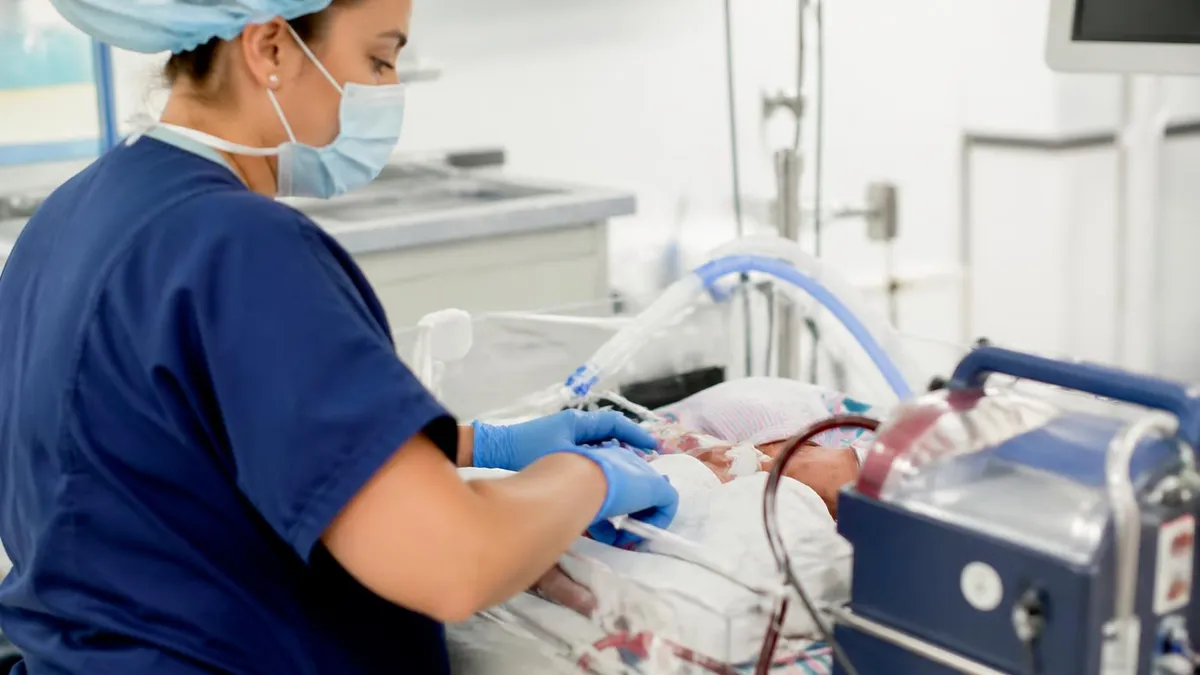
Neonatal ECMO is among the most established applications — it has been used since the 1970s, and the evidence base is far more developed than for adult cardiac ECMO. Infants with congenital diaphragmatic hernia (CDH) have underdeveloped lungs on the affected side and often require ECMO as a bridge to surgery or lung maturation. Meconium aspiration syndrome and persistent pulmonary hypertension of the newborn (PPHN) are other primary neonatal indications where the lungs acutely fail to transition from fetal to postnatal physiology.
Pediatric ECMO covers a wide range of indications: post-cardiac surgery support, viral myocarditis, septic shock with cardiac dysfunction, and bridging to cardiac transplantation. The smaller circuit volumes, higher metabolic rates, and different pharmacokinetic profiles of pediatric patients require distinct management from adult ECMO. Drug doses, anticoagulation targets, and circuit sizing all adjust significantly when managing a 5-kilogram infant versus a 70-kilogram adult.
ECPR — ECMO-assisted cardiopulmonary resuscitation — is an emerging application in both pediatric and adult settings. When conventional CPR fails to achieve return of spontaneous circulation, cannulation for VA-ECMO while compressions continue can restore perfusion and allow time for reversible causes to be treated. Outcomes are improving as protocols standardize, but ECPR requires immediate response capability that only specialized centers can reliably provide.
Managing the ECMO Patient
Anticoagulation is the most pharmacologically complex aspect of ECMO management. Unfractionated heparin (UFH) is the standard agent — it's infused continuously to prevent circuit thrombosis while monitoring targets via activated clotting time (ACT), anti-Xa levels, and increasingly aPTT or viscoelastic assays. Targets vary by institution and indication, but typical ACT targets are 180–220 seconds for VV-ECMO and slightly higher for VA-ECMO with higher thrombotic risk.
The core tension in ECMO anticoagulation is hemorrhage versus thrombosis. Too little anticoagulation and the circuit clots, requiring emergency changeout and risking thromboembolic events. Too much and major bleeding occurs — intracranial hemorrhage is the most feared complication and a leading cause of death and disability in ECMO patients. Platelet transfusions, antithrombin replacement, and direct thrombin inhibitors (bivalirudin) are all used in specific circumstances when heparin is insufficient or contraindicated.
Pharmacology in ECMO patients is complicated by the circuit itself. Many drugs are sequestered by the polyvinylchloride tubing, silicone membranes, and the oxygenator — fentanyl, midazolam, lorazepam, and lipophilic drugs in general are significantly absorbed into the circuit materials, particularly with new circuits early in a run. This means drug levels are unpredictable at standard doses, and clinical titration based on patient response is more reliable than dosing by weight alone.
Volume of distribution changes substantially in ECMO patients — the circuit adds priming volume (typically 500–1,000 mL in adults), hemodilution alters plasma protein binding, and the inflammatory state that necessitated ECMO shifts drug metabolism. Antibiotics, in particular, require careful pharmacokinetic monitoring: beta-lactams and vancomycin have altered renal and hepatic clearance patterns in ECMO, and underdosing infection treatment in critically ill patients carries its own mortality risk. Therapeutic drug monitoring is standard of care at experienced centers.
Sedation management on ECMO has evolved toward lighter targets — deep sedation increases complications, duration, and long-term neuropsychological burden. The challenge is that ECMO patients often have severe underlying illness requiring some level of sedation for comfort and circuit safety, while lighter sedation reduces delirium, muscle wasting, and post-ICU syndrome severity. Daily sedation interruptions and spontaneous breathing trials, adapted for the ECMO context, are increasingly used at high-volume centers.
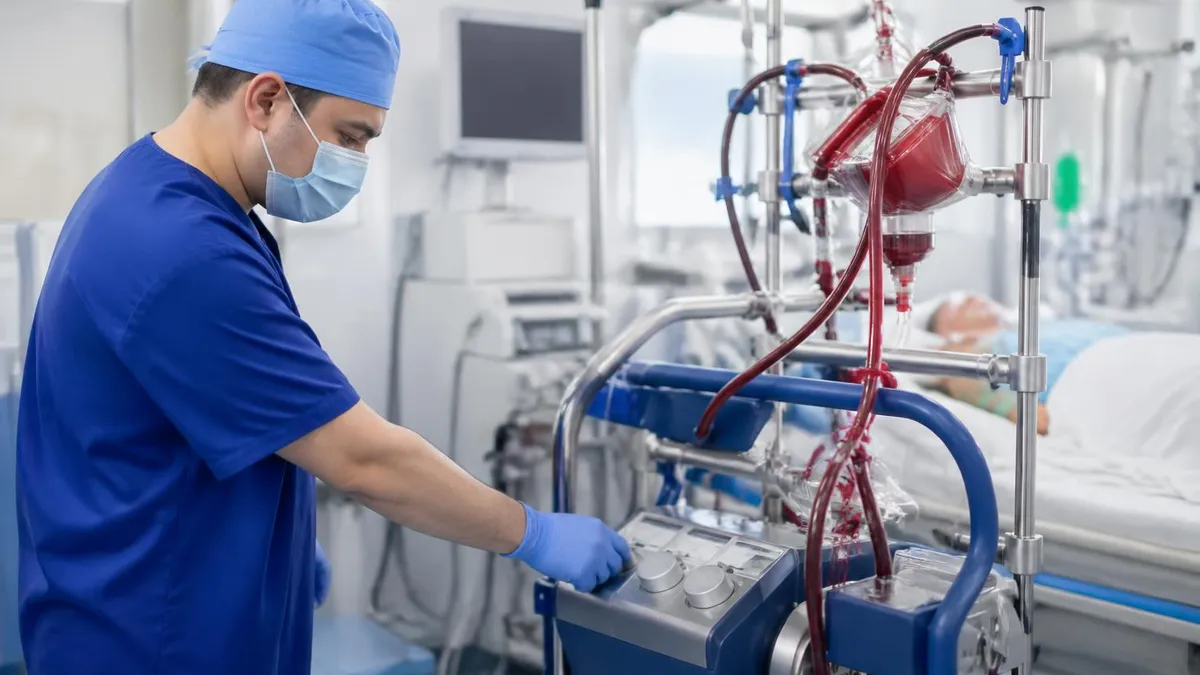
Cannulation in ECMO is either central (surgical, with cannulas placed directly in the heart or great vessels via sternotomy or thoracotomy) or peripheral (percutaneous or cutdown, using large-bore cannulas in the femoral vessels, internal jugular, or subclavian). Peripheral cannulation is faster, requires less surgical exposure, and can often be performed at the bedside. Central cannulation provides better drainage and return flows but requires an operating room and more time — meaningful constraints when the indication is cardiac arrest or rapidly decompensating shock.
Cannulation techniques and strategy decisions are a core competency for ECMO specialists and the surgeons or intensivists who perform cannulation. The choice of cannula size directly affects maximum achievable flow — undersized drainage cannulas create high negative pressures that collapse the venous wall and cause circuit chatter (cyclic interruption of flow). For adults, venous drainage cannulas are typically 23–29 French; arterial return cannulas 15–21 French. Cannula adequacy is assessed by the relationship between set RPM, actual flow, and pre-oxygenator pressures.
Limb ischemia is a serious complication of peripheral VA-ECMO when the arterial return cannula partially or completely occludes the femoral artery. A distal perfusion cannula (DPC) — a small sheath placed in the superficial femoral artery distal to the return cannula — restores perfusion to the leg. DPC insertion is standard of care at most experienced centers whenever femoral arterial access is used, and regular assessment of pedal pulses and lower limb perfusion is part of the ECMO nursing assessment protocol.
ECMO: Benefits and Limitations
- +Provides complete cardiopulmonary support when all other therapies have failed
- +Allows lung-protective ventilation by reducing ventilator dependency and avoiding ventilator-induced injury
- +Buys time for reversible conditions — myocarditis, drug toxicity, post-resuscitation injury — to improve
- +Bridges patients to cardiac surgery, transplantation, or long-term mechanical assist devices
- +Neonatal outcomes are excellent for well-selected indications — PPHN and MAS survival rates exceed 80%
- +Evidence base and protocols are rapidly improving with growing ELSO registry data and multicenter trials
- −Major bleeding risk — intracranial hemorrhage is the most feared complication and leading cause of non-survival
- −Circuit thrombosis can occur suddenly, requiring emergency changeout that carries its own mortality risk
- −Significant resource requirement — requires specialized center, dedicated team, and continuous monitoring
- −Neurological complications (stroke, seizure) occur in 5–15% of adult ECMO patients depending on indication
- −Infection risk increases with duration — bloodstream infections are common after 2+ weeks on circuit
- −Not curative — ECMO supports while the underlying cause is treated; if no treatment exists, outcomes are poor
Pros and Cons at a Glance
| Pros | Cons |
|---|---|
| Provides complete cardiopulmonary support when all other therapies have failed | Major bleeding risk — intracranial hemorrhage is the most feared complication and leading cause of non-survival |
| Allows lung-protective ventilation by reducing ventilator dependency and avoiding ventilator-induced injury | Circuit thrombosis can occur suddenly, requiring emergency changeout that carries its own mortality risk |
| Buys time for reversible conditions — myocarditis, drug toxicity, post-resuscitation injury — to improve | Significant resource requirement — requires specialized center, dedicated team, and continuous monitoring |
| Bridges patients to cardiac surgery, transplantation, or long-term mechanical assist devices | Not curative — ECMO supports while the underlying cause is treated; if no treatment exists, outcomes are poor |
ECMO pharmacology certification requires deep knowledge of how critical care drugs behave in the ECMO circuit context. Heparin anticoagulation, as described above, is central — but the drug management challenge extends across the entire formulary. Vasopressors and inotropes (norepinephrine, vasopressin, epinephrine, milrinone) are commonly co-administered with VA-ECMO support, and their interactions with ECMO-driven hemodynamics require careful titration. ECMO provides flow, not pressure regulation — blood pressure is determined by systemic vascular resistance and the combination of native and ECMO-driven cardiac output.
Sedation agents — particularly propofol, fentanyl, and midazolam — are substantially sequestered in the ECMO circuit at circuit initiation. Clinically, this means patients who receive standard weight-based doses may appear under-sedated initially, then become deeply sedated as circuit absorption saturates and plasma levels normalize. ECMO teams account for this by starting sedation at lower doses and titrating based on clinical response rather than fixed protocols, using validated sedation scales (RASS, SAS) as objective targets.
Nutrition in ECMO patients is complicated by circuit interactions with lipid emulsions and the altered gut perfusion that often accompanies critical illness. Enteral nutrition is preferred when hemodynamically tolerable — it supports gut integrity, reduces infection risk, and is safer than parenteral nutrition in most contexts. Lipid sequestration by the circuit is a real concern with propofol infusions (which contain lipid) and lipid-based parenteral nutrition, sometimes creating deposits in the oxygenator that degrade membrane performance over time.
ECMO Patient Management: Daily Checklist
- ✓Assess circuit integrity: inspect tubing, connections, pump head, and oxygenator for visible clot or air
- ✓Document pre- and post-oxygenator pressures and calculate transmembrane pressure gradient
- ✓Review anticoagulation parameters: ACT, anti-Xa, aPTT, platelet count, and fibrinogen level
- ✓Assess cannula sites for bleeding, hematoma, distal limb perfusion, and evidence of infection
- ✓Perform daily echocardiography to evaluate native cardiac function and cannula position
- ✓Review ventilator settings — implement lung rest strategy with low tidal volumes and reduced FiO2
- ✓Assess neurological status: sedation score, pupil response, motor response to stimulation
- ✓Review pharmacology: adjust heparin infusion, vasopressors, sedation based on current parameters
- ✓Evaluate weaning candidacy: stable hemodynamics, improving oxygenation, absence of active bleeding
- ✓Document ELSO-standard data elements for registry submission and quality improvement tracking
ELSO certification — the Extracorporeal Life Support Organization's credentialing for ECMO specialists — validates competency in circuit management, emergency response, patient assessment, and the pharmacological complexity described above. The ELSO exam tests knowledge across circuit physiology, anticoagulation, patient monitoring, equipment troubleshooting, and specific population knowledge (neonatal, pediatric, adult). Preparation typically involves ELSO-published guidelines (the Red Book), simulation training, and systematic review of the topic areas covered in the exam blueprint.
ECMO specialists come from diverse clinical backgrounds — perfusionists, respiratory therapists, ICU nurses, and physician assistants all work as ECMO specialists at different centers. What they share is intensive hands-on training in circuit management, supervised experience running patients on ECMO, and ongoing competency validation. The ELSO specialist credential provides external validation of that competency — useful both for individual career development and for centers demonstrating quality standards to accreditation bodies and payers.
The field is evolving rapidly. Miniaturized ECMO systems (micro-ECMO), surface-modified circuits that reduce anticoagulation requirements, ambulatory ECMO protocols that allow patients to walk and participate in rehabilitation while on support, and awake ECMO without intubation for selected VV-ECMO patients — all represent directions the field is moving aggressively. Understanding the foundations covered here equips you to evaluate new evidence critically as ECMO care continues to advance beyond what current protocols describe.
Anticoagulation and hemostasis monitoring in ECMO requires integrating multiple assays that don't always agree. ACT is the traditional bedside monitor — fast, practical, but imprecise. Anti-Xa levels provide more specific heparin activity measurement but require laboratory processing. Viscoelastic assays (TEG, ROTEM) give a dynamic picture of clot formation strength and lysis that helps distinguish between surgical bleeding, consumptive coagulopathy, and anticoagulation-related hemorrhage. Most major ECMO centers use a combination of these assays rather than relying on any single value.
Heparin resistance — when heparin dose escalation doesn't produce expected increases in anticoagulation — is relatively common in ECMO patients and is often due to antithrombin III (AT III) deficiency. Antithrombin is consumed in the hypercoagulable state of critical illness and is further diluted by circuit priming and fluid resuscitation. Supplementing AT III — either with fresh frozen plasma or purified AT III concentrate — often corrects heparin resistance and restores therapeutic anticoagulation at manageable doses.
Circuit changeout — replacing the entire ECMO circuit due to clotting or oxygenator failure — is a high-risk procedure requiring rapid, coordinated team action. The patient is briefly supported by other means or by hand-cranking the pump while the circuit is exchanged. Teams at high-volume centers drill changeout procedures regularly because the time pressure and consequence of error during an emergency changeout are maximal. Simulation-based training for circuit emergencies is now considered standard at accredited ECMO centers worldwide.
Outcomes data from the ELSO registry provide the most strong real-world evidence on ECMO survival. Adult VV-ECMO for respiratory failure shows survival to discharge of 60–70% in contemporary series. Adult VA-ECMO for cardiac indications is more variable — cardiogenic shock survival ranges from 30–50%, ECPR survival approximately 20–40% — but outcomes at experienced high-volume centers consistently exceed those at lower-volume programs. Volume-outcome relationships in ECMO are among the strongest in all of critical care, which is why regionalization to specialized centers is an explicit recommendation in ELSO guidelines.
Neonatal ECMO outcomes are more favorable. Meconium aspiration syndrome and PPHN carry 80–90%+ survival rates in experienced neonatal ECMO programs. CDH outcomes are more complex — surgical timing, degree of pulmonary hypoplasia, and presence of cardiac defects all significantly affect prognosis. The long-term neurodevelopmental outcomes in ECMO survivors — particularly neonates — are an active area of follow-up research, with concerns about cognitive, motor, and behavioral outcomes that persist years after successful ECMO weaning.
Long-term quality of life data in adult ECMO survivors is increasingly available and generally encouraging for patients who survive their acute illness. Survivors of ARDS-related VV-ECMO show recovery trajectories similar to ARDS survivors managed without ECMO. Post-ICU syndrome — the combination of physical deconditioning, cognitive impairment, and psychological trauma — affects ECMO survivors as it does other critical illness survivors, and post-ICU rehabilitation programs are important for maximizing functional recovery in this population.
ECMO Practice Test Questions
Prepare for the ECMO - Extracorporeal Membrane Oxygenation exam with our free practice test modules. Each quiz covers key topics to help you pass on your first try.
ECMO in Neonatal and Pediatric Populations
ECMO Exam Questions covering ECMO in Neonatal and Pediatric Populations. Master ECMO Test concepts for certification prep.
ECMO Pharmacology and Drug Management
Free ECMO Practice Test featuring ECMO Pharmacology and Drug Management. Improve your ECMO Exam score with mock test prep.
ECMO - Extracorporeal Membrane Oxygenation...
ECMO Mock Exam on - Extracorporeal Membrane Oxygenation Anticoagulation and Hemostasis. ECMO Study Guide questions to pass on your first try.
ECMO - Extracorporeal Membrane Oxygenation...
ECMO Test Prep for - Extracorporeal Membrane Oxygenation Cannulation Techniques and Strategies. Practice ECMO Quiz questions and boost your score.
ECMO - Extracorporeal Membrane Oxygenation...
ECMO Questions and Answers on - Extracorporeal Membrane Oxygenation Circuit Components and Management. Free ECMO practice for exam readiness.
ECMO - Extracorporeal Membrane Oxygenation...
ECMO Mock Test covering - Extracorporeal Membrane Oxygenation Complications and Troubleshooting. Online ECMO Test practice with instant feedback.
ECMO - Extracorporeal Membrane Oxygenation...
Free ECMO Quiz on - Extracorporeal Membrane Oxygenation ECMO Physiology and Principles. ECMO Exam prep questions with detailed explanations.
ECMO - Extracorporeal Membrane Oxygenation...
ECMO Practice Questions for - Extracorporeal Membrane Oxygenation ECPR and Special Populations. Build confidence for your ECMO certification exam.
ECMO - Extracorporeal Membrane Oxygenation...
ECMO Test Online for - Extracorporeal Membrane Oxygenation Patient Monitoring and Assessment. Free practice with instant results and feedback.
ECMO - Extracorporeal Membrane Oxygenation...
ECMO Study Material on - Extracorporeal Membrane Oxygenation Veno-Arterial (VA) ECMO Management. Prepare effectively with real exam-style questions.
ECMO - Extracorporeal Membrane Oxygenation...
Free ECMO Test covering - Extracorporeal Membrane Oxygenation Veno-Venous (VV) ECMO Management. Practice and track your ECMO exam readiness.
ECMO - Extracorporeal Membrane Oxygenation...
ECMO Exam Questions covering - Extracorporeal Membrane Oxygenation Weaning and Decannulation. Master ECMO Test concepts for certification prep.
Preparing for ECMO certification — whether ELSO specialist credentialing or institutional competency validation — requires systematic coverage of the domains described throughout this article. The exam doesn't test isolated facts; it tests applied clinical reasoning across circuit physiology, anticoagulation management, pharmacokinetics, neonatal and pediatric populations, and emergency response. Practice questions that explain the reasoning behind correct answers — not just identify them — build the kind of flexible knowledge that transfers from exam to bedside.
The most effective preparation strategy combines the ELSO Red Book (the authoritative ECMO guidelines document, updated periodically), simulation training at your institution, bedside experience under OJTI supervision, and systematic review of the specific domains covered in the exam blueprint. No exam preparation strategy substitutes for hands-on circuit experience — but knowledge review ensures you can interpret what you're observing at the bedside and respond appropriately when parameters deviate from expected ranges.
ECMO is one of the most challenging and high-consequence clinical skills in critical care medicine. The patients who need it are critically ill, the margin for error is small, and the physiological complexity is substantial. That's precisely why structured certification, systematic practice, and ongoing competency validation matter — not as bureaucratic requirements, but as genuine safety mechanisms that protect patients from the consequences of undetected knowledge gaps in the people caring for them.
ECMO Questions and Answers


About the Author

Educational Psychologist & Academic Test Preparation Expert
Columbia University Teachers CollegeDr. Lisa Patel holds a Doctorate in Education from Columbia University Teachers College and has spent 17 years researching standardized test design and academic assessment. She has developed preparation programs for SAT, ACT, GRE, LSAT, UCAT, and numerous professional licensing exams, helping students of all backgrounds achieve their target scores.
Join the Discussion
Connect with other students preparing for this exam. Share tips, ask questions, and get advice from people who have been there.
View discussion (9 replies)