
VA ECMO Cannulation: Complete Guide to Veno-Arterial Extracorporeal Membrane Oxygenation
Learn VA ECMO cannulation techniques, circuit setup, indications, and outcomes. Covers extracorporeal membrane oxygenation in neonates, adults, and COVID... ❓

VA ECMO cannulation is the cornerstone surgical procedure that initiates veno-arterial extracorporeal membrane oxygenation support, providing simultaneous cardiac and respiratory assistance to patients in profound cardiogenic shock or cardiac arrest. During this procedure, large-bore cannulas are placed in venous and arterial vessels to divert blood through an external oxygenator circuit and return it to the systemic circulation under mechanical pump pressure. Understanding this procedure is essential for anyone studying or working in critical care, perfusion science, or cardiothoracic surgery.
Extracorporeal membrane oxygenation in neonates has historically represented one of the most common and impactful applications of this technology. Neonatal patients with persistent pulmonary hypertension of the newborn, meconium aspiration syndrome, congenital diaphragmatic hernia, or congenital heart defects may require ECMO support during the most critical hours of their lives. The cannulation approach in neonates differs meaningfully from adult techniques, with smaller vessel sizes and unique physiologic considerations that demand specialized expertise and equipment calibrated to pediatric anatomy.
The extracorporeal membrane oxygenation procedure itself encompasses far more than simply inserting cannulas. The clinical team must carefully assess vessel anatomy using ultrasound guidance, select appropriately sized cannulas to optimize flow while minimizing trauma, establish anticoagulation protocols, and confirm circuit function before committing the patient to full ECMO support. Each of these steps carries significant risk and requires precise execution, particularly in hemodynamically unstable patients who may already be in cardiac arrest or near-arrest states.
VA ECMO differs fundamentally from its counterpart, venovenous extracorporeal membrane oxygenation, which provides respiratory support alone without the cardiac component. In VA configuration, oxygenated blood is returned to the arterial circulation, effectively acting as both an artificial heart and artificial lung. This bidirectional support makes it indispensable for conditions where conventional therapies have failed, including massive pulmonary embolism, refractory ventricular fibrillation, post-cardiotomy shock, and acute myocarditis causing hemodynamic collapse.
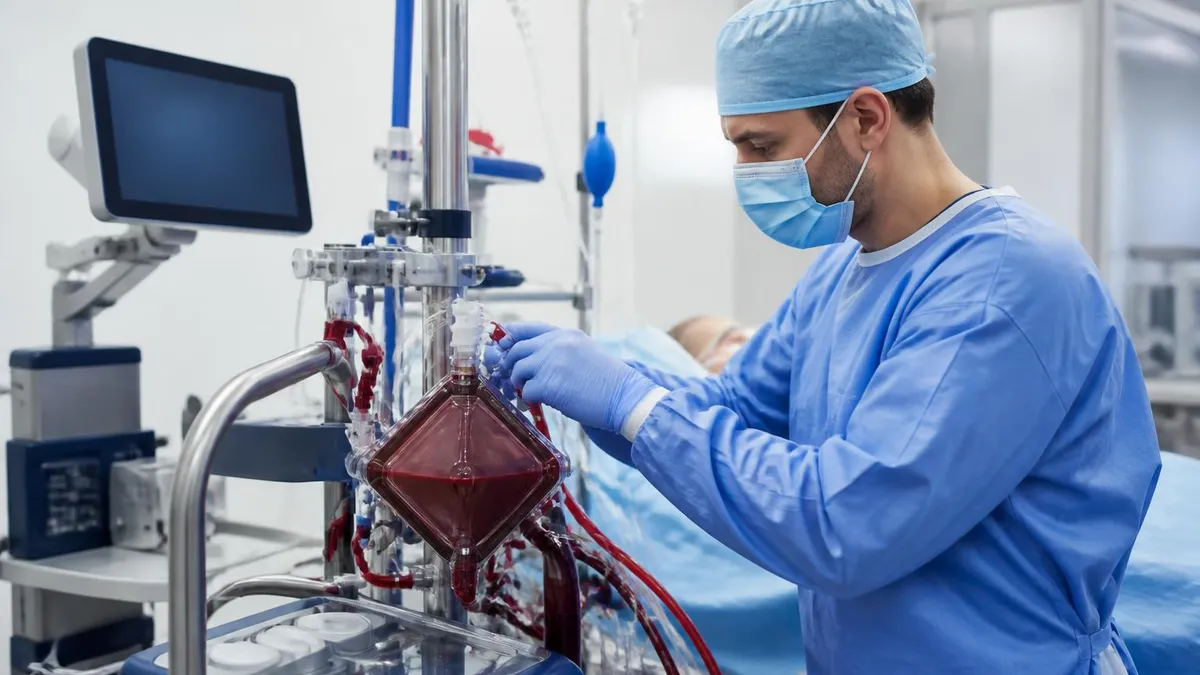
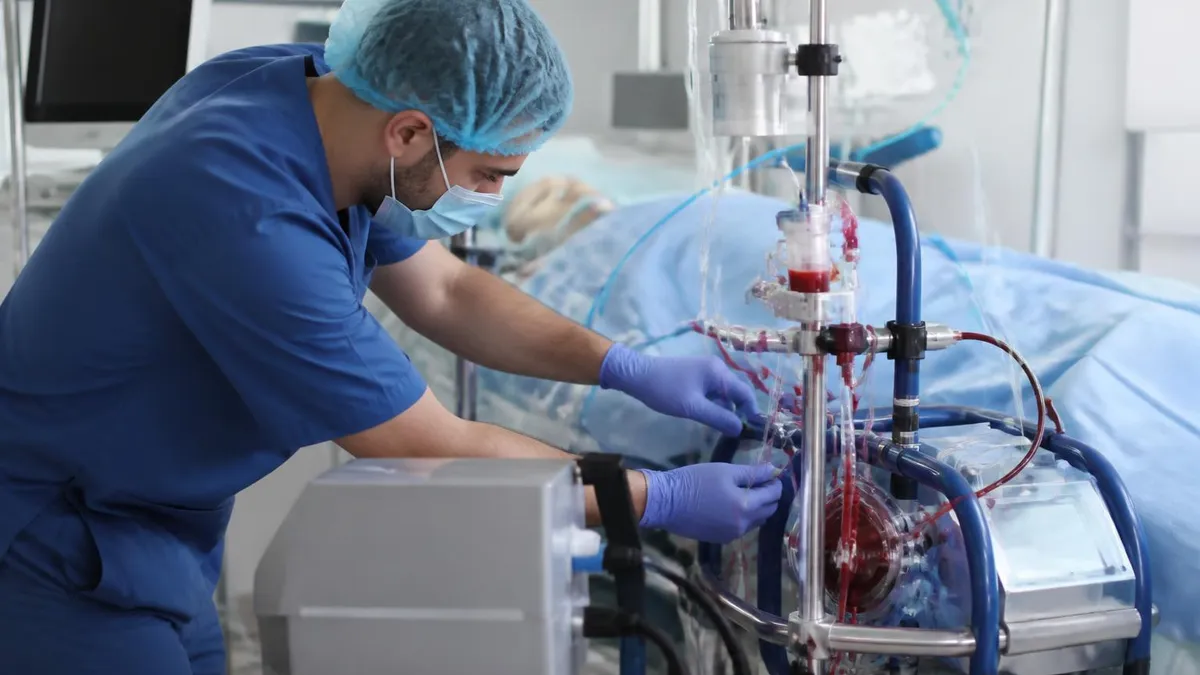
The extracorporeal membrane oxygenation circuit consists of multiple integrated components working in concert: the drainage cannula that removes deoxygenated blood from the venous system, the centrifugal or roller pump that generates flow, the membrane oxygenator that exchanges oxygen and carbon dioxide, a heat exchanger to maintain normothermia, and the return cannula that delivers oxygenated blood back to the patient. Each component must function flawlessly, as circuit failure during active support can be immediately life-threatening.
Extracorporeal membrane oxygenation for adults has expanded dramatically over the past two decades, driven by improvements in circuit miniaturization, oxygenator longevity, and bedside implantation techniques. Adult cannulation is most commonly performed percutaneously using the femoral vessels, allowing rapid deployment in emergency scenarios. The right femoral vein serves as the drainage site while the right or left femoral artery serves as the return site, with an antegrade perfusion cannula frequently added to the ipsilateral superficial femoral artery to prevent limb ischemia distal to the arterial return cannula.
As interest in extracorporeal membrane oxygenation treatment continues to grow across medical specialties, clinicians, nurses, respiratory therapists, and perfusionists must all develop a working knowledge of cannulation fundamentals. Whether preparing for ECMO certification examinations, entering a new clinical rotation, or deepening existing expertise, mastering VA cannulation concepts provides the clinical scaffolding needed to deliver safe and effective life support to the most critically ill patients in any hospital setting.
VA ECMO Cannulation by the Numbers

Step-by-Step VA ECMO Cannulation Process
Patient Assessment & Consent
Anticoagulation Initiation
Venous Drainage Cannula Placement
Arterial Return Cannula Placement
Circuit Connection & Initiation
Post-Cannulation Monitoring & Stabilization
The extracorporeal membrane oxygenation circuit is a precisely engineered closed-loop system that temporarily replaces the function of a failing heart and lungs. At its most basic level, the circuit consists of a drainage limb that removes venous blood from the patient, a pumping mechanism that generates the driving force for flow, an oxygenator membrane where gas exchange occurs, and a return limb that delivers oxygenated blood back to the patient's arterial system. Each component has evolved significantly over the past decade, resulting in circuits that are smaller, more biocompatible, and capable of sustaining patients for weeks rather than days.
The drainage cannula represents the critical first interface between the patient and the circuit. In peripheral VA ECMO, this cannula is typically placed in the right femoral vein and advanced so its tip lies within or near the right atrium. The size of the drainage cannula directly limits maximum circuit flow, as venous return to the circuit depends on gravity and the pressure differential created by the centrifugal pump.
Inadequate drainage manifests as circuit chatter or flutter, indicating that the pump is attempting to generate more flow than the venous system can supply. Clinicians must carefully balance drainage cannula size with the patient's vessel anatomy to optimize flow potential.
Modern ECMO circuits almost universally employ centrifugal pumps rather than older roller pump designs. Centrifugal pumps use a magnetically levitated impeller spinning at several thousand revolutions per minute to generate a pressure gradient that propels blood through the circuit. These pumps are preload-dependent and afterload-sensitive, meaning flow changes dynamically with patient volume status and systemic vascular resistance.
Unlike roller pumps, centrifugal pumps cannot generate negative pressure sufficient to cause air entrainment or tubing rupture, making them inherently safer for prolonged support. The pump console displays revolutions per minute, flow rate in liters per minute, and power consumption, all of which provide real-time insight into circuit performance and patient hemodynamics.
The membrane oxygenator is arguably the most technologically sophisticated component of the ECMO circuit. Contemporary oxygenators use hollow fiber polymethylpentene membranes arranged in a bundle through which blood flows externally while a sweep gas mixture of oxygen and carbon dioxide passes through the fiber lumens.
Oxygen diffuses across the membrane into the blood while carbon dioxide diffuses in the opposite direction. The gas exchange efficiency of modern oxygenators is extraordinary, capable of fully saturating blood and removing carbon dioxide at flow rates up to 7 liters per minute. Oxygenator life span typically ranges from two to four weeks before plasma leak or clot accumulation necessitates circuit exchange.
The heat exchanger maintains patient normothermia by warming or cooling the blood as it passes through the oxygenator module. This component is particularly important in neonatal patients, who lose heat rapidly due to their high surface-area-to-volume ratio. In adults undergoing targeted temperature management after cardiac arrest, the heat exchanger can be used to actively cool patients to 33–36 degrees Celsius during the initial post-resuscitation period, potentially improving neurological outcomes. Temperature is typically maintained between 36 and 37 degrees Celsius for most adult ECMO patients to prevent the coagulopathy and metabolic derangements associated with hypothermia.
Understanding the extracorporeal membrane oxygenation diagram is fundamental for clinicians learning to manage ECMO patients at the bedside. A standard circuit diagram depicts the drainage cannula on the patient's venous side, the tubing running to the pump head, then through the oxygenator and heat exchanger, and finally returning via the arterial cannula. Access ports for blood sampling, medication infusion, and hemofiltration connections are strategically placed throughout the circuit. Pressure monitoring sites before and after the pump and oxygenator allow detection of circuit obstructions, oxygenator failure, or cannula malposition before these problems escalate to clinical emergencies.
Priming the circuit before cannulation is a systematic process that removes air bubbles, ensures proper anticoagulant coating of circuit surfaces, and verifies component integrity. The prime solution typically consists of crystalloid fluid, occasionally supplemented with albumin or packed red blood cells in neonatal and pediatric patients to avoid excessive hemodilution.
Air in the circuit poses a catastrophic risk of systemic arterial air embolism and must be completely eliminated before circuit connection. Experienced perfusionists perform a series of rotation and tilting maneuvers during priming to ensure that every dead space within the oxygenator and tubing is flushed clear before the circuit is brought to the bedside for cannulation.
Venovenous vs. Veno-Arterial Extracorporeal Membrane Oxygenation: Key Differences
Veno-arterial ECMO is indicated when a patient requires both cardiac and respiratory support simultaneously. Primary indications include cardiogenic shock refractory to vasopressors and inotropes, massive acute myocardial infarction with hemodynamic collapse, refractory ventricular arrhythmias, acute myocarditis with pump failure, post-cardiotomy shock following cardiac surgery, massive pulmonary embolism with cardiac arrest, and hypothermic cardiac arrest. The defining criterion is the inability to maintain adequate tissue perfusion pressure despite maximal conventional medical therapy.
In the neonatal population, VA ECMO is preferred for congenital heart defects causing low cardiac output states, such as hypoplastic left heart syndrome after stage one palliation, anomalous left coronary artery from the pulmonary artery, and obstructed total anomalous pulmonary venous return. Extracorporeal membrane oxygenation treatment for adult acute myocarditis has shown particularly promising survival rates when initiated early, with some centers reporting over 70% survival to hospital discharge when ECMO is started before irreversible end-organ injury occurs.

Peripheral Femoral VA ECMO Cannulation: Advantages and Limitations
- +Rapid percutaneous deployment in minutes, ideal for emergent resuscitation situations including ECPR (extracorporeal CPR)
- +Can be performed at the bedside in the ICU, cardiac catheterization laboratory, or emergency department without need for operating room
- +Avoids sternotomy and its associated bleeding risks, infection risk, and prolonged recovery for patients who do not need open surgical access
- +Familiar anatomic landmarks make femoral vessel access teachable and reproducible across a broader range of operators than central cannulation
- +Provides immediate hemodynamic stabilization in cardiogenic shock, allowing time for diagnostic workup and treatment planning
- +Reversible and removable at the bedside when cardiac recovery is confirmed, without requiring return to the operating room in most cases
- −Retrograde aortic flow creates risk of differential hypoxemia when native cardiac output delivers desaturated blood to the coronary and cerebral arteries while ECMO oxygenates the lower body
- −Arterial cannula placement in the femoral artery obstructs antegrade flow, creating a high risk of limb ischemia requiring mandatory distal perfusion cannula placement
- −Large-bore venous and arterial access in the groin restricts patient mobility and significantly complicates rehabilitation and ambulation during support
- −Left ventricular distension may develop as retrograde aortic flow increases afterload against a stunned, non-ejecting ventricle, increasing thrombosis risk
- −Cannula dislodgement in mobile patients or during repositioning can cause catastrophic hemorrhage or loss of support requiring immediate surgical intervention
- −Groin site infections are common with prolonged cannulation, and femoral access limits long-term use compared to surgically placed central cannulas
VA ECMO Cannulation Pre-Procedure Safety Checklist
- ✓Confirm ECMO indication with attending physician and document refractory failure of conventional therapies before proceeding
- ✓Review contraindications including irreversible neurological injury, unrecoverable cardiac function without bridge-to-transplant plan, and advanced directives limiting resuscitation
- ✓Perform bilateral lower extremity vascular ultrasound to assess femoral vessel size, compressibility, and absence of prior thrombus
- ✓Verify ECMO circuit is primed, de-aired, and tested by perfusion team with all alarms active and sweep gas flow confirmed
- ✓Establish baseline activated clotting time (ACT) and administer heparin to achieve ACT of 180–220 seconds before cannula insertion
- ✓Prepare a distal perfusion cannula set and confirm antegrade sheath placement plan to protect the ipsilateral limb from ischemia
- ✓Confirm echocardiography availability at bedside to guide cannula positioning and assess cardiac function during initiation
- ✓Verify appropriate cannula sizes are available: venous drainage (19–25 Fr adult, 12–18 Fr pediatric), arterial return (15–19 Fr adult), and distal perfusion (6–8 Fr)
- ✓Ensure bedside nursing and respiratory therapy teams understand post-cannulation monitoring parameters and emergency response protocols
- ✓Document circuit initiation time, initial flow rate, blood pressure response, and limb perfusion assessment within 15 minutes of going on ECMO support
Limb Ischemia Is the Most Preventable VA ECMO Complication
Limb ischemia occurs in up to 20% of femoral VA ECMO cases when an antegrade perfusion cannula is not routinely placed. A simple 6–8 Fr sheath inserted into the superficial femoral artery at the time of cannulation and connected to the arterial return limb of the circuit provides continuous antegrade flow to the distal extremity and reduces amputation risk to under 2%. Near-infrared spectroscopy (NIRS) monitoring of both lower extremities should begin immediately after cannulation and be documented hourly throughout the ECMO run.
Extracorporeal membrane oxygenation in neonates represents one of the most technically demanding applications of this life-saving technology. Neonatal patients typically weigh between 2 and 5 kilograms, necessitating cannulas in the range of 8 to 14 French for venous drainage and 6 to 10 French for arterial return. The right common carotid artery and right internal jugular vein have historically been the access vessels of choice for neonatal ECMO, as they provide the shortest cannulation pathway to the great vessels and right heart. Surgical cutdown rather than percutaneous access is standard in this population given vessel fragility and size.
The decision to ligate the right common carotid artery following neonatal ECMO decannulation has long been debated in the literature. Some centers attempt carotid reconstruction after ECMO weaning, particularly when support duration is brief and vessel condition permits. Long-term neurodevelopmental studies show that most neonatal ECMO survivors have outcomes comparable to their underlying disease severity rather than their cannulation approach, though careful follow-up for developmental delays, school performance, and behavioral issues is standard of care for all neonatal ECMO graduates.
The most common neonatal indications for VA ECMO include persistent pulmonary hypertension of the newborn (PPHN) that has failed inhaled nitric oxide therapy, meconium aspiration syndrome with severe cardiopulmonary failure, congenital diaphragmatic hernia requiring cardiac support in the perioperative period, and neonatal cardiac arrest following congenital heart surgery. The Extracorporeal Life Support Organization (ELSO) registry, which contains outcome data from hundreds of thousands of ECMO runs worldwide, reports neonatal cardiac ECMO survival rates approaching 40–50%, while neonatal respiratory ECMO survival rates exceed 70% in many centers.
Pediatric ECMO cannulation for children between one month and eighteen years of age bridges the technical gap between neonatal and adult approaches. Vessel sizes in this population vary enormously, and cannula sizing must be precisely matched to patient weight and vessel diameter to optimize flow without causing vessel injury. Many pediatric ECMO programs use the same right neck surgical cutdown approach as in neonates for younger children, while older adolescents with sufficient vessel size may undergo percutaneous femoral cannulation similar to adult practice. Weight-based anticoagulation protocols and circuit prime composition differ significantly between the 5-kilogram toddler and the 60-kilogram teenager.
Extracorporeal membrane oxygenation for adults with non-cardiac indications has grown substantially beyond cardiac arrest and cardiogenic shock. ECMO has been used to support adults during high-risk percutaneous coronary interventions, to bridge patients to heart transplantation or left ventricular assist device implantation, and to manage fulminant drug toxicity with hemodynamic collapse. The COVID-19 pandemic drove significant increases in both VV and VA ECMO utilization globally, with extracorporeal membrane oxygenation covid applications revealing both the power of the technology and the importance of appropriate patient selection to avoid futile use in patients with irreversible disease.
The extracorporeal membrane oxygenation machine price represents a significant barrier to program development, particularly in resource-limited settings. A complete ECMO system including the console, pump, oxygenator, and associated monitoring equipment typically costs between $300,000 and $600,000 per unit. Disposable circuit components add approximately $10,000 to $30,000 per run, and costs escalate rapidly with ECMO duration due to circuit changeouts, blood product consumption, and intensive care bed days. These economic realities have driven efforts to develop ECMO triage criteria that concentrate use among patients with the highest likelihood of meaningful recovery.
Training for neonatal and pediatric ECMO teams involves rigorous simulation-based education, given that real patients present too rarely at any single center to maintain competency through clinical volume alone. High-fidelity ECMO simulators allow teams to practice cannulation, circuit troubleshooting, emergency interventions such as hand-cranking during pump failure, and crisis communication skills without risk to actual patients. The ELSO organization publishes guidelines recommending minimum case volumes, credentialing standards, and quality benchmarks for ECMO centers, providing a framework that programs worldwide use to measure and improve their performance.

In femoral VA ECMO, retrograde oxygenated blood from the circuit mixes with antegrade deoxygenated blood from the recovering left ventricle in the descending aorta. If cardiac recovery proceeds while pulmonary function remains impaired, the coronary arteries and brain may receive poorly oxygenated blood from native cardiac output while the lower body receives well-oxygenated ECMO flow — a condition called North-South syndrome or Harlequin syndrome. Continuous right-arm SpO2 monitoring (pre-ductal in neonates) and arterial blood gases from the right radial artery are mandatory to detect this complication early.
Complications of VA ECMO cannulation span a spectrum from minor procedural issues to life-threatening emergencies that demand immediate recognition and intervention. Hemorrhage at the cannulation site is the most frequent complication, occurring in up to 30–40% of ECMO runs and ranging from manageable oozing around cannula insertion points to catastrophic arterial bleeding requiring emergent surgical control. The systemic anticoagulation required to prevent circuit thrombosis fundamentally conflicts with the goal of hemostasis at cannulation sites, creating a persistent tension that ECMO teams must actively manage throughout the support period.
Thrombotic complications represent the other side of the anticoagulation challenge. Circuit clotting, oxygenator thrombosis, and systemic thromboembolism all increase in frequency when anticoagulation is held or reduced due to bleeding. Thrombus formation within the circuit can reduce oxygenator efficiency, increase pump power requirements, and ultimately necessitate emergency circuit exchange — a high-risk procedure that temporarily interrupts circulatory support. Daily oxygenator inspection for pressure gradients, visual assessment for clot visualization, and serial blood gas comparisons across the oxygenator help identify failing circuit components before complete failure occurs.
Neurological complications are among the most feared outcomes of ECMO support. Intracranial hemorrhage and ischemic stroke both occur at higher rates in ECMO patients than in the general ICU population, driven by anticoagulation, non-pulsatile flow, air embolism risk, and the underlying critical illness. Neonatal ECMO patients are particularly vulnerable to intraventricular hemorrhage, which can occur in up to 10–15% of runs and dramatically worsens neurodevelopmental outcomes. Daily cranial ultrasound in neonates and regular neurological assessments in older patients are standard monitoring practices at experienced ECMO centers.
Renal failure requiring continuous renal replacement therapy (CRRT) affects a substantial proportion of VA ECMO patients, reflecting both pre-existing kidney injury from cardiogenic shock and additional insults from non-pulsatile flow, hemolysis, and inflammatory mediators released during circuit contact. CRRT can be directly integrated into the ECMO circuit, eliminating the need for separate vascular access and simplifying patient management. However, this integration requires careful attention to anticoagulation, as the added surface area of the CRRT membrane increases the overall clotting burden on the circuit.
Infection control represents a constant challenge in ECMO patients who have multiple large-bore vascular access points, are often immunocompromised from critical illness, and require prolonged hospital stays. Cannulation site infections, bloodstream infections, and circuit colonization can all occur and carry significant morbidity. Rigorous sterile technique during cannulation, daily assessment of insertion sites, and early consideration of antibiotic prophylaxis protocols are elements of infection prevention bundles that many high-volume ECMO centers have implemented to reduce infectious complications without promoting antimicrobial resistance.
Weaning from VA ECMO requires systematic assessment of cardiac recovery using echocardiography, hemodynamic response to trial flow reductions, and occasionally formal cardiac output measurement. A stepwise reduction in ECMO flow while observing mean arterial pressure, mixed venous oxygen saturation, and cardiac function on echo allows clinicians to gauge the heart's readiness to assume full circulatory responsibility. Patients who demonstrate ejection fractions above 30–35% with acceptable hemodynamics at ECMO flows of 1–1.5 liters per minute are typically candidates for decannulation, which is most safely performed in a controlled operative setting with surgical hemostasis of the cannulation sites.
Recovery after successful VA ECMO weaning and decannulation varies enormously depending on the underlying cardiac diagnosis, duration of support, and degree of end-organ injury sustained before and during ECMO. Patients with reversible causes such as acute myocarditis or drug toxicity may recover to full cardiac function with excellent long-term prognosis. Those with ischemic cardiomyopathy who were bridged to coronary revascularization may achieve meaningful but incomplete recovery. Understanding these trajectories is essential for both patient counseling and resource stewardship, ensuring that ECMO is deployed with realistic goals and appropriate transition planning from the moment of cannulation.
Preparing for ECMO certification examinations and clinical competency assessments requires a systematic approach to mastering both the conceptual framework and the practical details of VA ECMO cannulation. Candidates should begin by thoroughly reviewing the ELSO guidelines for patient selection, circuit management, anticoagulation, and complication management, as these evidence-based documents form the foundation of most credentialing examinations. Reading ELSO guidelines in conjunction with institutional protocols helps bridge the gap between universal standards and center-specific practices that often reflect local adaptations to available equipment and patient populations.
Case-based learning is particularly effective for developing the clinical reasoning skills needed to manage complex ECMO scenarios. Reviewing published case series and quality improvement reports from high-volume ECMO centers exposes learners to a breadth of clinical presentations, decision-making frameworks, and complication management strategies that would take years to accumulate through direct clinical experience alone. The ELSO annual meeting abstracts and the journal ASAIO Journal publish cutting-edge ECMO research that reflects the current state of the science and often previews questions that will appear on future certification examinations.
Understanding the extracorporeal membrane oxygenation diagram from multiple perspectives — as a learner, a bedside clinician, and a troubleshooter — dramatically improves performance in both written examinations and high-stakes clinical situations. Learners should practice drawing the complete circuit from memory, labeling each component, identifying pressure monitoring sites, and tracing the path of blood from the patient through the circuit and back. This exercise reinforces spatial understanding of the circuit and helps clinicians immediately localize problems when alarms sound or hemodynamics deteriorate unexpectedly during a patient care emergency.
Simulation training using high-fidelity ECMO simulators has become the gold standard for developing and maintaining cannulation and circuit management skills between real patient encounters. Modern simulators can replicate circuit alarms, oxygenator failure, pump malfunction, air entrainment events, and cannula dislodgement scenarios in a consequence-free environment. Structured debriefs after simulation sessions help teams identify communication failures, knowledge gaps, and system-level latent safety threats that persist when only real patient exposure is used for training.
Pharmacology knowledge is essential for all members of the ECMO team, as drug dosing is profoundly altered during extracorporeal support. The large volume of distribution created by the circuit prime, drug sequestration by circuit tubing and oxygenator membranes, altered protein binding from hemodilution, and increased renal and hepatic clearance from supraphysiologic perfusion pressures all affect medication efficacy. Sedatives, analgesics, anticoagulants, anti-epileptics, and antibiotics all behave differently on ECMO compared to conventional ICU support, requiring dose adjustments guided by therapeutic drug monitoring rather than standard dosing weight-based algorithms.
Team dynamics and communication are as important as technical skill in delivering safe ECMO care. High-performing ECMO teams use structured communication tools such as SBAR (Situation, Background, Assessment, Recommendation) for critical updates, conduct daily multidisciplinary rounds specifically focused on ECMO goals and weaning criteria, and maintain clear escalation pathways for emergencies. Programs that invest in team training alongside technical skill development consistently demonstrate better patient outcomes in quality improvement analyses than those focused exclusively on individual competency without attention to team performance.
The field of VA ECMO cannulation continues to evolve rapidly, with ongoing research into minimally invasive transcutaneous approaches, novel oxygenator materials with reduced thrombogenicity, and ambulatory ECMO configurations that allow patients to walk and participate in physical rehabilitation during support. These advances promise to further expand the reach of ECMO technology to patient populations and clinical settings that were previously considered unsuitable for extracorporeal support. Staying current with emerging evidence through professional organization membership, journal subscriptions, and conference participation ensures that ECMO practitioners can integrate new knowledge into their clinical practice as the science advances.
ECMO Questions and Answers



About the Author

Educational Psychologist & Academic Test Preparation Expert
Columbia University Teachers CollegeDr. Lisa Patel holds a Doctorate in Education from Columbia University Teachers College and has spent 17 years researching standardized test design and academic assessment. She has developed preparation programs for SAT, ACT, GRE, LSAT, UCAT, and numerous professional licensing exams, helping students of all backgrounds achieve their target scores.
Join the Discussion
Connect with other students preparing for this exam. Share tips, ask questions, and get advice from people who have been there.
View discussion (9 replies)