
ECMO Patient Guide: What to Expect, Care, Recovery & Outcomes 2026 October
🏆 Complete ECMO patient guide: extracorporeal membrane oxygenation in neonates, adult care, circuit setup, recovery timeline, outcomes, and family
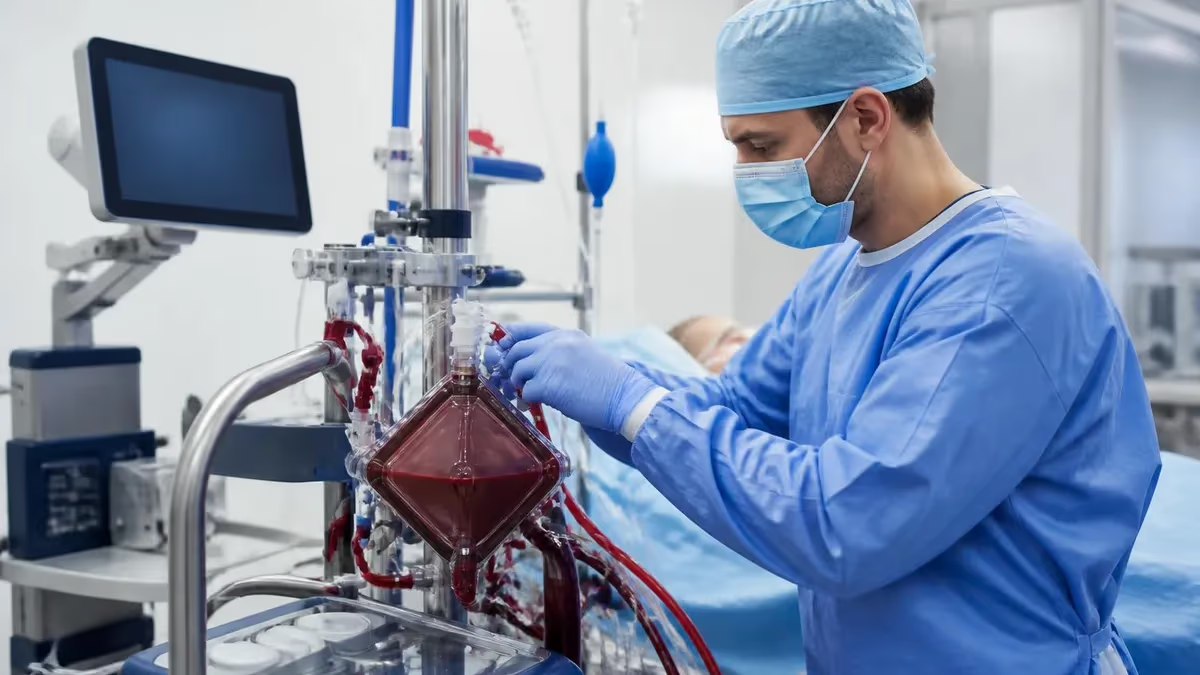
Becoming an ecmo patient is one of the most intense experiences a person or family can face, and understanding what happens before, during, and after cannulation makes the entire journey less frightening. Extracorporeal membrane oxygenation in neonates, children, and adults serves the same fundamental purpose: it temporarily replaces the work of the heart, the lungs, or both when a critically ill body cannot maintain oxygenation or perfusion on its own. This guide walks you through every clinical and human dimension of that experience.
An ECMO patient is someone whose blood is being continuously drained from a large vein, pumped through an oxygenator that adds oxygen and removes carbon dioxide, then returned warmed and saturated to the body. The technology is not a cure; it is a bridge. Patients are placed on ECMO so the underlying disease — severe pneumonia, ARDS, myocarditis, congenital heart defects, drowning injury, or pulmonary embolism — can be treated while organs rest and heal under controlled support.
The decision to initiate ECMO is rarely simple. ICU teams weigh whether the patient is likely to recover, whether complications such as bleeding or neurologic injury can be managed, and whether the family fully understands the commitment. A typical adult ECMO run lasts five to fourteen days, while neonates sometimes stay supported for two to three weeks. Each additional day on the circuit increases both healing time and the risk of secondary complications like infection.
Survival data has improved dramatically over the last decade. According to the Extracorporeal Life Support Organization (ELSO), roughly 73% of neonates with respiratory failure survive to hospital discharge, while adult respiratory ECMO survival hovers around 60%. Outcomes depend heavily on timing, center experience, and the underlying diagnosis — outcomes are noticeably better at high-volume centers performing more than thirty runs per year compared with low-volume programs.
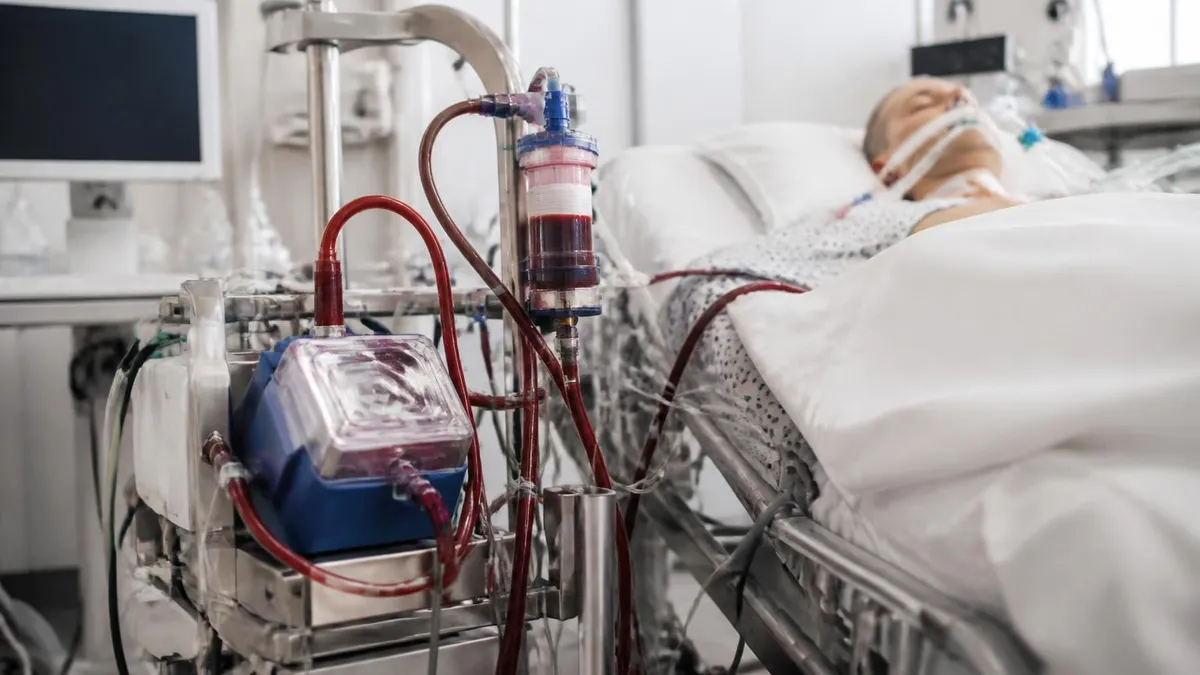
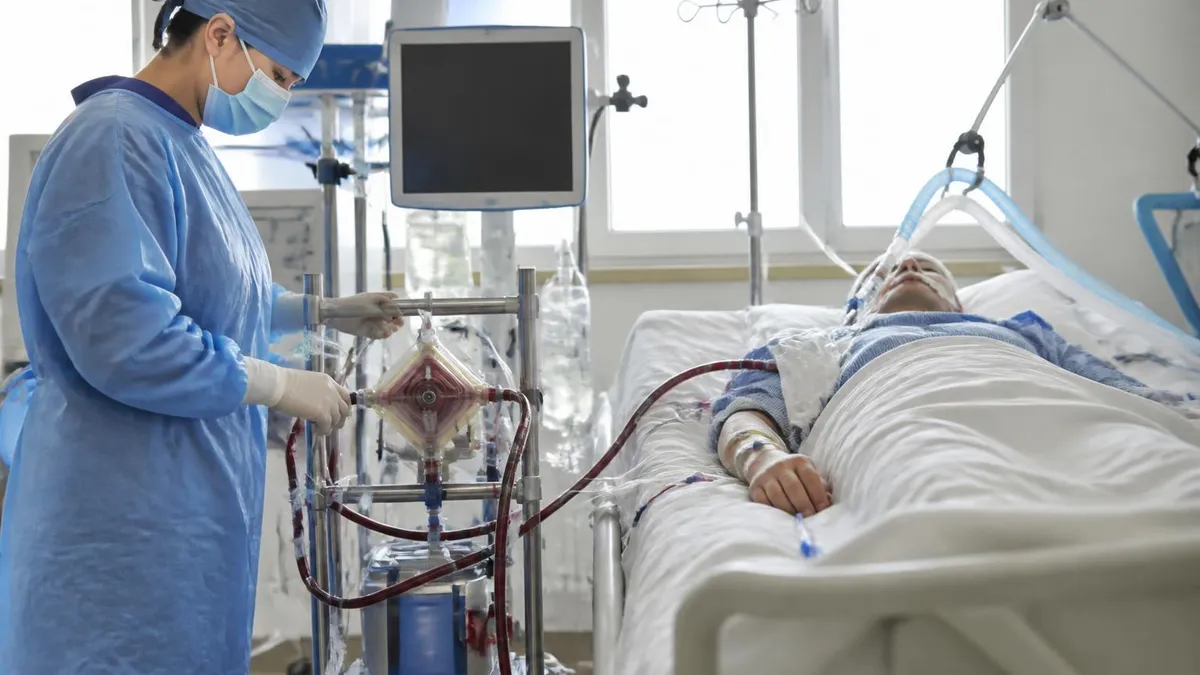
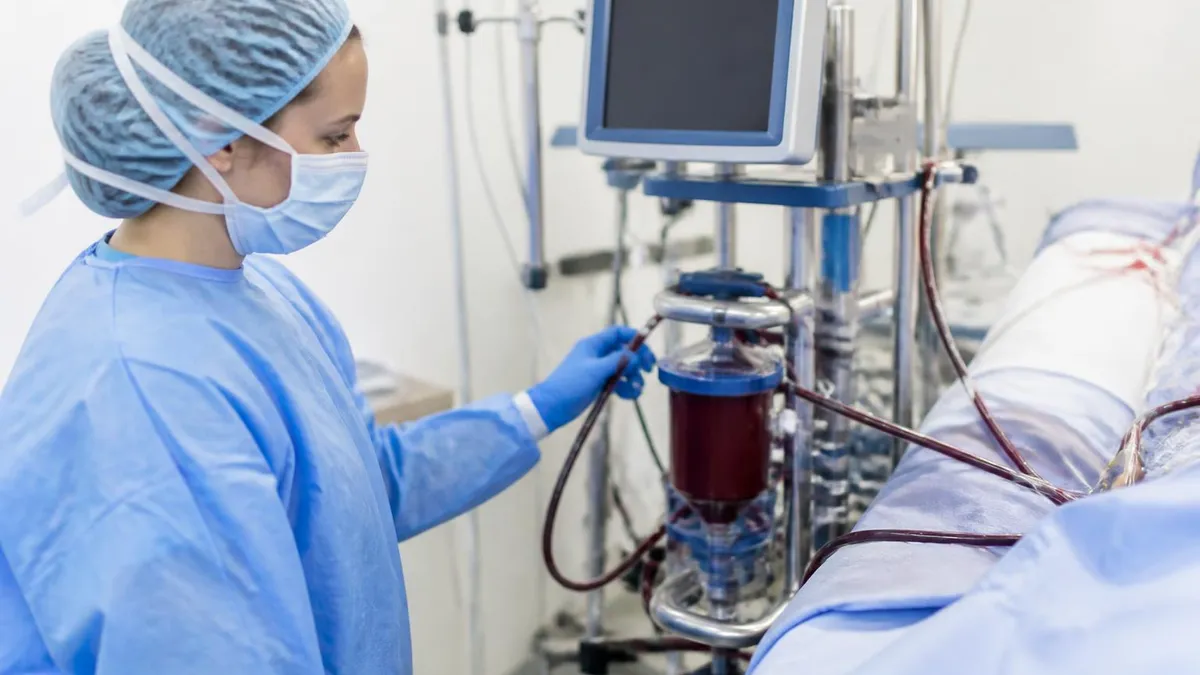
Families often arrive at the ICU shocked by what they see: a sedated loved one, cannulas the diameter of a garden hose, dark venous blood traveling through clear tubing, and a console with alarms. Knowing what each component does, why blood appears so dark on the inflow side and bright red on the return, and what the bedside nurse is constantly monitoring can transform fear into informed advocacy. That understanding starts here, and we will return to extracorporeal membrane oxygenation in neonates later in the guide.
This article covers the patient experience across age groups, the two major configurations (VA and VV), the circuit components, daily ICU routines, common complications, weaning criteria, rehabilitation, long-term outcomes, and frequently asked family questions. Whether you are a nursing student, a respiratory therapist preparing for credentialing, or a family member sitting next to a bed in the cardiothoracic ICU, you will leave with a clearer mental model of what ECMO support actually involves.
One final framing point: ECMO is a team sport. A typical patient has a bedside nurse, a perfusionist or ECMO specialist, an intensivist, a cardiothoracic or pediatric surgeon, a pharmacist, a respiratory therapist, and a physical therapist all involved daily. Decisions about anticoagulation targets, flow rates, sweep gas, and weaning are made collaboratively, and the patient's family is increasingly considered part of that team — a shift that has measurably improved both clinical and emotional outcomes.
ECMO Patient Outcomes by the Numbers
Who Qualifies as an ECMO Patient?
Patients with PaO2/FiO2 ratio below 80 mmHg despite optimized ventilation, severe ARDS from pneumonia, COVID-19, or aspiration, often qualify for venovenous ECMO when conventional support fails after six hours.
Patients with cardiac index under 2.0 L/min/m² despite inotropes, post-cardiotomy failure, acute myocardial infarction with shock, or fulminant myocarditis benefit from venoarterial ECMO support during their recovery window.
Witnessed in-hospital arrest with refractory ventricular fibrillation, reversible cause, and low-flow time under sixty minutes qualifies select patients for emergency extracorporeal cardiopulmonary resuscitation at experienced centers.
Newborns with meconium aspiration, congenital diaphragmatic hernia, persistent pulmonary hypertension, or sepsis with oxygenation index above 40 qualify for ECMO when nitric oxide and high-frequency ventilation fail.
Patients awaiting lung or heart transplantation with deteriorating organ function may be supported on ECMO for days to weeks while a donor organ becomes available, sometimes ambulating during the wait.
To understand the ECMO patient experience, you have to understand the circuit that surrounds them. The extracorporeal membrane oxygenation procedure begins with cannulation — surgical placement of two large cannulas, one to drain deoxygenated blood and one to return oxygenated blood. The drainage cannula is typically inserted into the femoral or internal jugular vein, while the return cannula is placed depending on configuration. In neonates, cannulation is usually performed at the bedside under sterile conditions by a cardiothoracic or pediatric surgeon.
Once cannulas are secured, blood is drawn into the extracorporeal membrane oxygenation circuit by a centrifugal pump that spins between 2,000 and 4,000 revolutions per minute. The pump generates negative pressure on the drainage side and positive pressure on the return side, propelling blood through a polymethylpentene hollow-fiber oxygenator. Inside the oxygenator, blood flows on one side of microscopic fibers while sweep gas — usually 100% oxygen — flows on the other, allowing diffusion of oxygen in and carbon dioxide out.
The blood then passes through a heat exchanger, where water-jacketed tubing warms the blood back to 37°C before it returns to the patient. This is critical: blood cools as it travels through several meters of plastic tubing, and hypothermia would compromise coagulation and immune function. The entire transit time from drainage to return is typically four to eight seconds, and the pump moves three to six liters per minute in adults — roughly the patient's entire blood volume every minute.
For the patient, this means the ventilator can be dramatically dialed down. Tidal volumes drop to lung-protective ranges of 3–4 mL/kg, plateau pressures fall below 25 cmH2O, and FiO2 often returns to room air. The lungs literally rest. In cardiac ECMO, the heart also rests because the pump generates the cardiac output the failing heart cannot. This protected interval is what allows healing — but it comes at the cost of full systemic anticoagulation with heparin or bivalirudin to prevent clotting in the circuit.
Patient monitoring during ECMO is more intense than standard ICU care. Continuous parameters include arterial blood pressure (often via radial and femoral lines), central venous pressure, pulse oximetry on multiple sites, near-infrared spectroscopy for cerebral oxygenation, hourly urine output, and circuit parameters such as flow, pump revolutions, pre- and post-oxygenator pressures, and sweep gas. Blood gases are drawn from both the patient and the circuit every two to six hours.
Sedation strategies have evolved significantly. The old model of deep paralysis and high-dose benzodiazepines has been replaced at many centers with light sedation, daily awakening trials, and even "awake ECMO" for selected patients awaiting lung transplant. Awake patients can communicate, eat, participate in physical therapy, and sometimes walk with the cannulas in place — a remarkable feat that improves muscle preservation and reduces ICU delirium.
Anticoagulation deserves special attention. Heparin is titrated to activated clotting times of 180–220 seconds or anti-Xa levels of 0.3–0.7 IU/mL. Too little anticoagulation risks clot formation in the oxygenator, leading to oxygenator failure or thromboembolism. Too much causes bleeding from surgical sites, the gastrointestinal tract, or, devastatingly, intracranially. Hemorrhagic complications occur in roughly 30–40% of adult ECMO runs and are the leading non-neurologic cause of death on support.
ECMO Practice Test Questions
Prepare for the ECMO - Extracorporeal Membrane Oxygenation exam with our free practice test modules. Each quiz covers key topics to help you pass on your first try.
ECMO in Neonatal and Pediatric Populations
ECMO Exam Questions covering ECMO in Neonatal and Pediatric Populations. Master ECMO Test concepts for certification prep.
ECMO Pharmacology and Drug Management
Free ECMO Practice Test featuring ECMO Pharmacology and Drug Management. Improve your ECMO Exam score with mock test prep.
ECMO - Extracorporeal Membrane Oxygenation...
ECMO Mock Exam on - Extracorporeal Membrane Oxygenation Anticoagulation and Hemostasis. ECMO Study Guide questions to pass on your first try.
ECMO - Extracorporeal Membrane Oxygenation...
ECMO Test Prep for - Extracorporeal Membrane Oxygenation Cannulation Techniques and Strategies. Practice ECMO Quiz questions and boost your score.
ECMO - Extracorporeal Membrane Oxygenation...
ECMO Questions and Answers on - Extracorporeal Membrane Oxygenation Circuit Components and Management. Free ECMO practice for exam readiness.
ECMO - Extracorporeal Membrane Oxygenation...
ECMO Mock Test covering - Extracorporeal Membrane Oxygenation Complications and Troubleshooting. Online ECMO Test practice with instant feedback.
ECMO - Extracorporeal Membrane Oxygenation...
Free ECMO Quiz on - Extracorporeal Membrane Oxygenation ECMO Physiology and Principles. ECMO Exam prep questions with detailed explanations.
ECMO - Extracorporeal Membrane Oxygenation...
ECMO Practice Questions for - Extracorporeal Membrane Oxygenation ECPR and Special Populations. Build confidence for your ECMO certification exam.
ECMO - Extracorporeal Membrane Oxygenation...
ECMO Test Online for - Extracorporeal Membrane Oxygenation Patient Monitoring and Assessment. Free practice with instant results and feedback.
ECMO - Extracorporeal Membrane Oxygenation...
ECMO Study Material on - Extracorporeal Membrane Oxygenation Veno-Arterial (VA) ECMO Management. Prepare effectively with real exam-style questions.
ECMO - Extracorporeal Membrane Oxygenation...
Free ECMO Test covering - Extracorporeal Membrane Oxygenation Veno-Venous (VV) ECMO Management. Practice and track your ECMO exam readiness.
ECMO - Extracorporeal Membrane Oxygenation...
ECMO Exam Questions covering - Extracorporeal Membrane Oxygenation Weaning and Decannulation. Master ECMO Test concepts for certification prep.
Venovenous Extracorporeal Membrane Oxygenation vs VA vs Hybrid
Venovenous ECMO supports patients in pure respiratory failure who still have adequate cardiac function. Blood is drained from a large vein, oxygenated, and returned to a vein — either through a single dual-lumen cannula in the internal jugular or through two separate cannulas in the femoral and jugular veins. The lungs receive oxygenated blood through the natural pulmonary circulation and the patient's own heart pumps it forward.
VV ECMO is the configuration of choice for severe ARDS, COVID-19 respiratory failure, status asthmaticus, smoke inhalation, and bridge to lung transplant. It avoids arterial cannulation, preserves pulsatility, has lower stroke risk than VA configurations, and allows easier mobilization. However, VV ECMO provides no hemodynamic support — if the patient's heart fails during the run, conversion to a hybrid VAV or VV-A configuration may be required.
Is ECMO the Right Choice? Benefits vs Burdens
- +Provides complete cardiopulmonary support when conventional therapy fails
- +Allows lung-protective ventilation and prevents further ventilator-induced injury
- +Buys time for reversible underlying conditions to heal
- +Enables bridge to recovery, decision, or transplant in complex cases
- +Neonatal survival rates exceed 70% in many high-volume centers
- +Awake ECMO permits rehabilitation, communication, and reduced ICU delirium
- −Requires continuous systemic anticoagulation with high bleeding risk
- −Hemorrhagic and thrombotic complications affect 30–40% of adult runs
- −Average US hospital costs exceed $500,000 per admission
- −Stroke and intracranial hemorrhage remain serious risks across all ages
- −Requires specialized 24/7 staffing and high-volume center expertise
- −Long-term cognitive, physical, and psychological sequelae are common
Pros and Cons at a Glance
| Pros | Cons |
|---|---|
| Provides complete cardiopulmonary support when conventional therapy fails | Requires continuous systemic anticoagulation with high bleeding risk |
| Allows lung-protective ventilation and prevents further ventilator-induced injury | Stroke and intracranial hemorrhage remain serious risks across all ages |
| Buys time for reversible underlying conditions to heal | Long-term cognitive, physical, and psychological sequelae are common |
Daily ECMO Patient Care Checklist for the Bedside Team
- ✓Verify cannula position, depth markings, and security every shift
- ✓Inspect all circuit connections for clots, fibrin strands, or air entrainment
- ✓Document pre- and post-oxygenator pressures and calculate transmembrane gradient
- ✓Measure activated clotting time or anti-Xa level every two to four hours
- ✓Assess distal limb perfusion if femoral arterial cannula is in place
- ✓Perform neurologic checks including pupils, cough, and gag every two hours
- ✓Confirm sweep gas, FiO2, and pump speed match the prescribed orders
- ✓Send arterial blood gas from patient and post-oxygenator circuit sample
- ✓Inspect cannula insertion sites for bleeding, swelling, or infection
- ✓Reposition the patient and provide eye, mouth, and skin care every two hours
ECMO is a bridge, not a destination
Every ECMO patient must have a defined exit strategy: recovery of native function, transplantation, or, in some cases, withdrawal of support after a goals-of-care discussion. Ask the team about the planned trajectory daily. Survival depends on continued forward progress, and lingering on the circuit without clear improvement increases complications without changing outcome.
Complications on ECMO are common, and managing them defines whether a patient survives. The most feared event is intracranial hemorrhage, which occurs in roughly 4% of adult VV runs, 6% of adult VA runs, and as much as 11% of neonatal cases. Risk factors include systemic anticoagulation, rapid swings in PaCO2 during cannulation, thrombocytopenia, and underlying coagulopathy. Daily transcranial Doppler in neonates and head CT or bedside cranial ultrasound when neurologic status changes are standard monitoring strategies.
Bleeding from cannulation sites, surgical wounds, the gastrointestinal tract, and the airways is far more common than intracranial bleeding. Most centers target the lowest effective anticoagulation, transfuse to maintain platelets above 50,000–100,000, and use antifibrinolytics like tranexamic acid for significant bleeding. Persistent bleeding often requires reducing or pausing heparin, which then raises clot risk in the circuit — a tightrope the ECMO specialist walks every shift.
Thrombotic complications include oxygenator clot, pump head thrombosis, and systemic thromboembolism. A rising transmembrane pressure gradient, falling post-oxygenator PaO2, hemolysis with rising plasma free hemoglobin, and visible clots in the oxygenator are signs that the circuit may need to be exchanged. Circuit exchange is a coordinated procedure, often completed in under five minutes, that swaps in a fresh primed circuit while temporarily clamping flows to the patient.
Infection is another significant threat. ECMO patients are critically ill, immunosuppressed, instrumented with multiple lines, and exposed to large prosthetic surfaces. Ventilator-associated pneumonia, bloodstream infection, and cannula site infection occur in roughly 20% of runs. Strict aseptic technique, daily chlorhexidine bathing, oral care, and judicious antibiotic stewardship reduce risk. Surveillance cultures and procalcitonin trends help distinguish ECMO-related inflammation from true infection.
Hemolysis — the breakdown of red blood cells from mechanical shear stress in the pump and oxygenator — leads to improved plasma free hemoglobin, dark urine, and acute kidney injury. Up to 60% of ECMO patients develop some degree of acute kidney injury, and roughly 20% require continuous renal replacement therapy integrated into the circuit. Hemolysis above 50 mg/dL of plasma free hemoglobin warrants investigation for pump or oxygenator dysfunction and possible circuit exchange.
Limb ischemia is a complication specific to femoral arterial cannulation in VA ECMO. The large arterial cannula obstructs antegrade flow to the leg, and without intervention, distal ischemia, compartment syndrome, and amputation can occur. Prevention requires a distal perfusion catheter — a smaller sheath placed into the superficial femoral artery and connected to the return limb of the circuit — along with hourly distal limb assessment including pulse oximetry on the toe and palpation of pedal pulses.
Finally, psychological and neurocognitive complications affect both patients and families. ICU delirium occurs in over 70% of ECMO survivors. Post-intensive care syndrome — encompassing cognitive impairment, anxiety, depression, and PTSD — affects a majority of survivors at one year. Family members frequently develop PTSD as well, particularly when ECMO was emergent and the patient deteriorated rapidly. Early mobilization, family presence, daily orientation, and post-ICU follow-up clinics meaningfully reduce these long-term burdens.
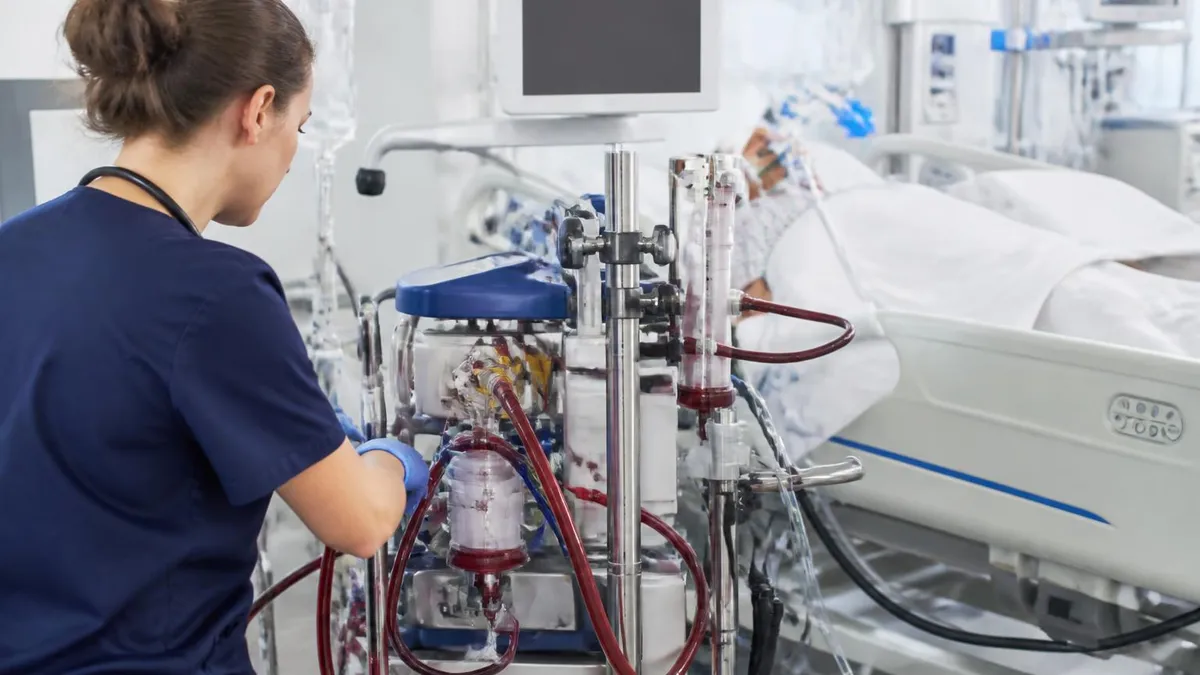
Any new pupil asymmetry, seizure activity, loss of cough or gag reflex, or sudden change in cerebral oximetry on an ECMO patient must trigger immediate neurologic imaging and team notification. Intracranial hemorrhage on ECMO carries a mortality above 80%, and rapid identification allows reversal of anticoagulation, neurosurgical consultation, and informed family discussion.
Weaning an ECMO patient is as carefully choreographed as cannulation. For VV ECMO, weaning begins when the native lungs show evidence of recovery: improving compliance, falling FiO2 requirements on the ventilator, and decreasing carbon dioxide retention. The team performs a sweep gas trial, gradually reducing sweep flow toward zero while monitoring patient PaCO2 and oxygenation. If the patient tolerates several hours of sweep gas at 1 L/min or off, decannulation is considered.
VA ECMO weaning is more complex because both cardiac and pulmonary recovery must be assessed. Weaning involves stepwise reduction of pump flow — often to 1.0–1.5 L/min — while echocardiography evaluates left ventricular ejection fraction, right ventricular function, and aortic outflow. A successful pump-controlled retrograde trial with stable hemodynamics, low inotrope requirements, and clear evidence of ventricular function predicts successful decannulation. Some centers use a brief total flow cessation under heparin loading to confirm readiness.
Decannulation itself is a surgical procedure for arterial cannulas, requiring direct vessel repair, and a bedside procedure for venous cannulas, where pressure and purse-string sutures are typically sufficient. Post-decannulation, patients usually remain ventilated for hours to days as anticoagulation wears off and surgical bleeding risk subsides. Most patients require ongoing ICU care for one to two weeks after decannulation before transferring to a step-down unit, accounting for the high extracorporeal membrane oxygenation machine price reflected in total admission costs.
Rehabilitation after ECMO is intensive. Patients often emerge profoundly deconditioned, having lost 1–2% of muscle mass per day during their critical illness. Physical and occupational therapy begin during the ECMO run when possible and intensify after decannulation. Many survivors require inpatient rehabilitation for two to six weeks, followed by outpatient therapy for months. Cardiopulmonary rehabilitation, swallowing therapy after prolonged intubation, and cognitive rehabilitation are common components of recovery.
Long-term outcomes depend heavily on the underlying disease. Neonates who survive ECMO for respiratory failure generally do well, though roughly 20% have measurable neurodevelopmental impairment, hearing loss, or motor delays at school age. Adult survivors of respiratory ECMO often regain near-normal pulmonary function within twelve months, while those bridged to transplant have outcomes similar to other transplant recipients. Survivors of ECPR have more variable outcomes, with neurologic injury being the dominant determinant of quality of life.
Follow-up care matters. Many ECMO centers now run dedicated survivor clinics that combine pulmonology, cardiology, neurology, psychiatry, physical therapy, and palliative or social support. Patients are screened for PTSD, depression, cognitive impairment, and physical recovery milestones. Families benefit from these visits as much as patients, gaining context for what they witnessed and reassurance that ongoing recovery is expected. Connecting with peer-support groups such as ECMO survivor networks also improves emotional outcomes for both groups.
The cost of an ECMO admission in the United States typically ranges from $250,000 to over $1,000,000, varying by length of stay, complications, and need for transplantation. Insurance coverage is generally strong for inpatient ECMO at accredited centers, but families should ask about out-of-pocket maximums, in-network status, and post-discharge rehabilitation coverage early in the admission. Hospital case managers and social workers are invaluable for navigating these conversations during a deeply stressful time.
Practical advice for family members visiting an ECMO patient begins with permission to be present. Modern ICUs encourage continuous family presence, including overnight. Talk to your loved one even when sedated — auditory processing often continues, and familiar voices reduce delirium and agitation. Bring photos, play preferred music at low volume, and ask the team about safe touch zones away from cannulas and lines. Your presence is not just comforting; it is therapeutic.
Ask specific questions during daily rounds. Useful questions include: What is the goal for today? Are we trending toward weaning or holding for stability? What are the bleeding and clotting parameters? Is sedation being lightened? What is the plan if the underlying disease does not improve? Writing these questions in a notebook helps families track answers across shifts and reduces the sense of disorientation that comes with prolonged ICU stays.
For clinicians caring for ECMO patients, the highest-yield daily practice is a structured bedside huddle that reviews cannula position, flow targets, anticoagulation, sedation, ventilator settings, nutrition, mobility plan, and goals of care. ECMO patients deteriorate quickly when one component is overlooked, and structured rounds reduce omissions. Closed-loop communication between perfusion, nursing, and physician teams is associated with measurably lower complication rates in multicenter studies.
Nutritional support is often underemphasized. ECMO patients are hypermetabolic and lose protein rapidly. Early enteral nutrition within 48 hours, target protein delivery of 1.5–2.0 g/kg/day, micronutrient repletion, and avoidance of overfeeding all support healing and reduce ICU-acquired weakness. Indirect calorimetry, when available, is the most accurate way to titrate caloric goals; standard predictive equations frequently underestimate true requirements in this population.
Mobilization, even modest, has remarkable benefits. Passive range of motion within 24 hours, active resistance exercises by day three when possible, sitting at the edge of the bed by day five, and standing or walking with the cannulas in place when clinically appropriate all preserve muscle mass and reduce ICU delirium. Centers experienced with awake ECMO routinely walk patients on venovenous extracorporeal membrane oxygenation down hospital corridors with the circuit on a portable cart.
For students preparing for ECMO certification, focus your studying on physiology first, equipment second, and complications third. Understanding why a falling SvO2 indicates either decreased oxygen delivery or increased consumption will help you troubleshoot dozens of clinical scenarios. Memorizing pump RPM ranges without understanding centrifugal versus roller pump physics leads to surface-level knowledge that fails in real cases. Practice tests are valuable, but pair them with patient case reviews whenever possible.
Finally, remember that ECMO outcomes have improved dramatically and continue to improve. Patients who would have certainly died fifteen years ago now walk out of the hospital. New oxygenator materials, miniaturized circuits, ambulatory ECMO carts, anticoagulant alternatives like bivalirudin, and ECPR programs have expanded what is possible. Whether you are a clinician, student, or family member, you are witnessing one of the most rapidly advancing fields in critical care — and your engagement, attention, and advocacy directly contribute to that progress.
Sample ECMO - Extracorporeal Membrane Oxygenation Practice Questions
Try these questions from our free ECMO - Extracorporeal Membrane Oxygenation practice tests. The correct answer and an explanation follow each question.
A 50-year-old patient on VV ECMO for ARDS has a PaCO2 that has risen from 45 mmHg to 60 mmHg over four hours. The ECMO pump flow is stable, and the patient's metabolic state is unchanged. Which parameter on the ECMO circuit should be adjusted first to directly address the hypercapnia?
- A. Increase the pump RPM to increase blood flow.
- B. Increase the FiO2 on the gas blender.
- C. Increase the sweep gas flow rate.
- D. Decrease the patient's ventilator respiratory rate.
Answer: C. Increase the sweep gas flow rate.
In an ECMO circuit, carbon dioxide removal is almost entirely dependent on the sweep gas flow rate. Increasing the flow of gas (the 'sweep') across the membrane creates a steeper concentration gradient for CO2, facilitating more efficient diffusion from the blood into the gas phase. Increasing pump flow or FiO2 primarily affects oxygenation. Decreasing the ventilator rate would worsen hypercapnia.
A 28-year-old patient with blunt chest trauma develops severe ARDS and requires VV ECMO. The patient has multiple rib fractures and a small, stable pulmonary contusion. The trauma team is concerned about bleeding risk. What is the most appropriate initial anticoagulation strategy for this patient?
- A. Initiate a standard heparin infusion with a target aPTT of 60-80 seconds.
- B. Start a bivalirudin infusion as it has a more predictable response.
- C. Use a completely heparin-free circuit and monitor for signs of clotting.
- D. Withhold systemic anticoagulation for the first 24-48 hours while monitoring for bleeding.
Answer: D. Withhold systemic anticoagulation for the first 24-48 hours while monitoring for bleeding.
In trauma patients on ECMO, the risk of life-threatening hemorrhage often outweighs the risk of circuit thrombosis, especially in the early phase. A common approach is to withhold systemic anticoagulation for at least 24-48 hours, or until the sources of bleeding are controlled and the patient is stable. Modern heparin-bonded circuits can often tolerate this period without systemic anticoagulation.
In a patient on VV-ECMO, the sweep gas FiO2 is increased from 0.6 to 1.0 with minimal change in patient PaO2. What does this suggest?
- A. The membrane lung has failed
- B. Recirculation or inadequate ECMO blood flow relative to cardiac output
- C. The patient has developed a tension pneumothorax
- D. Hemolysis is impairing oxygen carrying capacity
Answer: B. Recirculation or inadequate ECMO blood flow relative to cardiac output
When increasing oxygenator FiO2 has little effect on systemic oxygenation, insufficient ECMO flow relative to native cardiac output means a large fraction of venous blood bypasses the circuit entirely.
What physiological phenomenon explains why a patient's SaO2 may improve after reducing ECMO blood flow in VV-ECMO?
- A. Lower flow reduces turbulence and improves oxygenator efficiency
- B. Reduced flow decreases recirculation, allowing more fresh venous blood to be oxygenated
- C. Lower flow decreases CO2 production by reducing hemolysis
- D. Reduced flow allows the native lungs to contribute more to oxygenation
Answer: B. Reduced flow decreases recirculation, allowing more fresh venous blood to be oxygenated
Paradoxically, reducing VV-ECMO flow can decrease recirculation, meaning a greater fraction of the blood processed is truly desaturated venous blood rather than already-oxygenated recirculated blood.
Take the full ECMO - Extracorporeal Membrane Oxygenation practice test
ECMO Questions and Answers
ECMO Specialist: Career Path, Duties, Salary, and Certification Guide
Newborn ECMO: Neonatal Indications, Outcomes, & Family Guide
ECMO Practice Test Prep Guide & Study Resources
ECMO: How Extracorporeal Membrane Oxygenation Works and Who Needs It
VV ECMO: Veno-Venous Extracorporeal Membrane Oxygenation Guide
About the Author

Educational Psychologist & Academic Test Preparation Expert
Columbia University Teachers CollegeDr. Lisa Patel holds a Doctorate in Education from Columbia University Teachers College and has spent 17 years researching standardized test design and academic assessment. She has developed preparation programs for SAT, ACT, GRE, LSAT, UCAT, and numerous professional licensing exams, helping students of all backgrounds achieve their target scores.
Join the Discussion
Connect with other students preparing for this exam. Share tips, ask questions, and get advice from people who have been there.
View discussion (9 replies)