
Theory Test Centre: Booking, Locations, and What to Expect 2026 October
Theory test centre guide: finding your nearest centre, booking process, what to bring, the test format, and tips for first-time visitors to UK centres. 💯
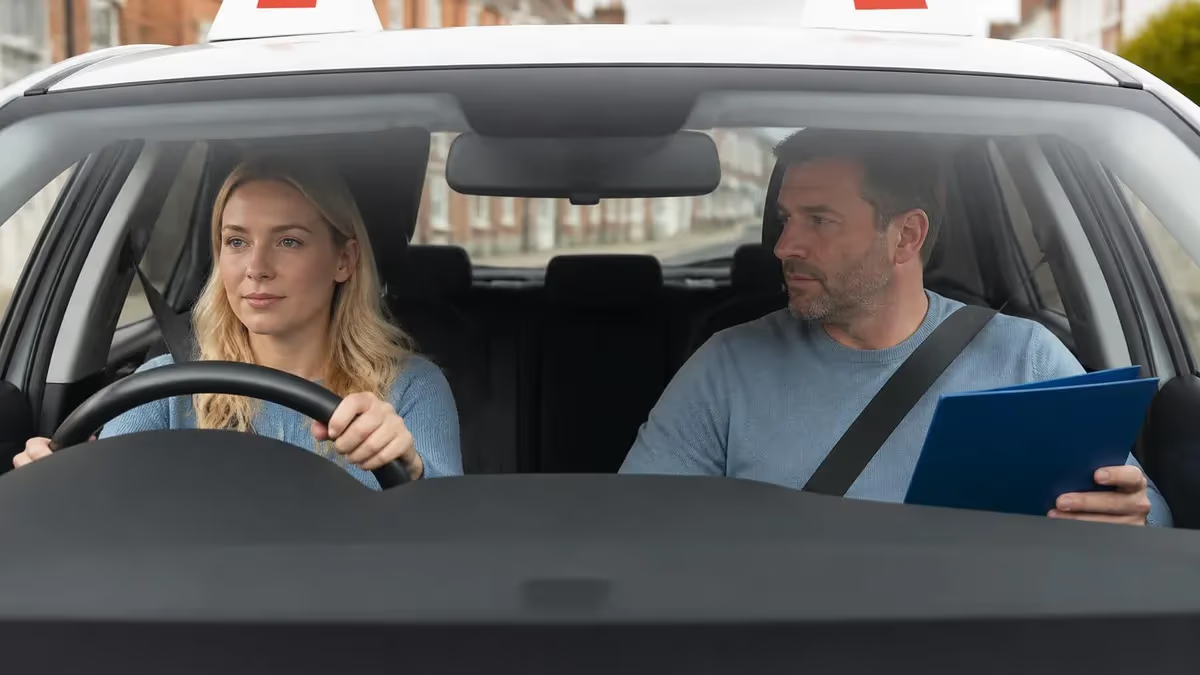
Theory test centre refers to the official DVSA-approved testing locations across the United Kingdom where learner drivers take the theory test required before progressing to practical driving test. The DVSA (Driver and Vehicle Standards Agency) operates approximately 160 theory test centres across England, Scotland, Wales, and Northern Ireland through Pearson VUE testing centres. Booking testing slots, finding nearest centres, and understanding what to expect at testing day all matter for successful theory test completion. Whether you're a first-time learner or returning after previous attempt, understanding theory test centres helps prepare effectively.
The actual theory test consists of two parts: multiple choice section (50 questions, 57 minutes) testing road rules and safe driving knowledge, and hazard perception section (14 video clips testing ability to identify developing hazards). Both sections must be passed in same sitting (43/50 multiple choice; 44/75 hazard perception). Test fee is £23 typically. Booking through gov.uk or DVSA-approved booking services. Testing slots vary in availability — popular centres in major cities can have wait times of weeks or months for desired times.
For finding nearest theory test centre specifically, several approaches work. Gov.uk official site has theory test centre search by postcode. Pearson VUE platform shows centre availability when booking. Most major UK cities have multiple centres; rural areas have fewer with longer travel. Centre locations include city centres, suburban locations, and various accessible sites. Travel time and ease of access matter for test day — choose centre that's reasonable to reach without rushing. Public transport access varies by centre.
This guide covers theory test centres comprehensively: how to find and book testing slots, what to bring on test day, what to expect at the centre and during testing, fees and rebooking processes, and how to navigate the testing experience effectively. Whether you're booking your first test or rebooking after previous attempt, you'll find practical guidance here.
Operator: DVSA through Pearson VUE testing centres
Number of centres: Approximately 160 across UK
Test fee: £23 typical
Two test parts: Multiple choice (50q, 57 min) + Hazard perception (14 clips)
Booking: gov.uk or DVSA-approved booking services
For booking theory test specifically, several considerations matter. Book through official gov.uk site or authorized booking services to avoid scam sites that charge inflated booking fees. Provide UK provisional driving licence number and personal information. Choose preferred test centre and available time slot. Pay test fee (£23 typical for car category; varies by category). Receive booking confirmation. Save confirmation for test day. The booking process is straightforward through official channels; avoid unofficial booking services charging substantial markup over actual £23 fee.
For test day requirements specifically, several items must be brought. Provisional driving licence (photocard plus paper counterpart). Valid form of identification. Booking confirmation. Glasses or contact lenses if normally worn. Arrive 15-20 minutes early for check-in. Empty pockets of phones, watches, and various items not allowed in testing room. Locker provided for personal items. Various other items prohibited per DVSA rules. The theory test resources cover the test broadly.
For ID requirements specifically, photocard licence is required. If you only have paper licence (rare for newer drivers), additional ID required. Check requirements before test day to prevent showing up without correct documentation. Forgetting required ID means cancellation and rebooking with new fee. The few minutes verifying ID before test day prevents costly forgotten-document scenarios. The book theory test resources cover booking specifics.
For the testing room specifically, computer-based testing in monitored testing room. Each candidate has individual computer station. Strict no-talking, no-noise environment. Instructor monitors throughout. Testing software guides through both sections. Time limits enforced for each section. After completion, results available almost immediately. The testing environment is similar to other Pearson VUE testing (used for various professional certifications) — quiet, monitored, computer-based.
For multiple choice section specifically, 50 questions covering Highway Code, road signs, vehicle handling, safety, and various other driving topics. 57 minutes time limit (about 68 seconds per question average). Pass mark 43/50. Topics drawn from official DVSA learning materials (Highway Code, theory test books). Questions vary in difficulty; some straightforward fact-recall, others require judgment about specific situations. Practice tests using official questions support strong preparation. The theory test practice resources cover practice materials.
Theory Test Centre Process
Through gov.uk or authorized booking sites. £23 fee for car category. Provide provisional licence number. Choose preferred centre and time. Wait times vary — popular centres can have weeks of wait. Confirmation sent via email. Save confirmation for test day. Avoid unofficial sites charging markup.
Study Highway Code, theory test books, hazard perception practice. Take practice tests until consistently passing. Verify documentation: provisional licence (photocard), valid ID. Plan travel to centre with buffer time. Get adequate sleep night before. Eat reasonable breakfast. Arrive 15-20 minutes early.
Check in with provisional licence and ID. Receive testing instructions. Lock personal items in provided locker (phones, watches, etc.). Enter monitored testing room. Use computer station. Follow software prompts. Complete both sections in single sitting. Receive results almost immediately.
Pass: receive theory test certificate (valid 2 years for practical test booking). Failure: option to rebook for additional £23 fee. Address weak areas before retake. Some centres allow same-day rebooking for slot in coming days. Plan practical test booking after passing theory if you've prepared driving skills too.
For hazard perception section specifically, 14 video clips of driving situations testing ability to identify developing hazards. Click mouse when developing hazard appears — earlier identification scores more points. Maximum 5 points per hazard, 75 points total. Pass mark 44/75. One clip contains two hazards (worth more points). Practice for hazard perception requires specifically practicing hazard recognition under timed conditions. Theory and skill development through structured practice produces better outcomes than just intuitive viewing.
For combined pass requirement specifically, both sections must be passed in same sitting. Failing one section means retaking entire test (both sections again) at next attempt. Passing multiple choice but failing hazard perception isn't sufficient for overall pass. Plan preparation accordingly — both sections require thorough preparation. Many candidates pass multiple choice while failing hazard perception (or vice versa) on first attempt; comprehensive preparation across both sections produces better first-attempt results.
For theory test certificate specifically, passing produces certificate valid for 2 years. Within 2 years, you can book practical driving test using theory pass certificate. Failing to book and complete practical test within 2 years means retaking theory test. Plan practical preparation alongside theory study to use theory certificate within validity period. Many candidates take theory test prematurely without practical readiness, ending up retaking theory if 2 years expire before practical readiness. The driving test resources cover practical test.
For rebooking after failure specifically, several considerations matter. Wait period of 3 working days minimum before retaking after failure. Pay £23 fee again for retake. Address weak areas before retake — what topics had wrong answers? Practice more thoroughly on weak areas. Some candidates need multiple attempts before passing; pass rates vary but typical first-time pass rate is around 47-50%. Don't take rebooking personally — retake reflects insufficient preparation, not personal failing. Stronger preparation produces success on retake.
For preparing for theory test specifically, several resources help. Official DVSA learning materials (Highway Code, official theory test books). DVSA-approved practice tests on various platforms. The Hazard Perception app from DVSA. Various third-party preparation services. Driving instructor support if taking lessons. Structured study plus practice testing typically produces success in 2-6 weeks of preparation depending on prior knowledge. Don't underprepare — assuming you can pass without study often produces failure and additional rebooking costs.
Theory Test Preparation Stages
No prior driving knowledge:
- Time needed: 4-8 weeks part-time study
- Resources: Highway Code, official theory book, practice tests
- Focus: Build foundational road rules knowledge
- Practice testing: Start after 1-2 weeks of content study
- Goal: Score 90%+ consistently on practice tests before booking
For accessibility considerations specifically, several services support candidates with various needs. Reading or recognition difficulties may qualify for special arrangements (extra time, separate room, etc.). Hearing-impaired candidates can request appropriate accommodations. Disabled candidates have specific access provisions. Foreign language considerations don't automatically permit translation but specific arrangements may apply in some circumstances. Each accommodation requires advance notice when booking. Discussing specific needs with DVSA when booking ensures appropriate support during test.
For test centre etiquette specifically, several practices help. Arrive on time (or slightly early) — late arrivals may be turned away. Be quiet in waiting area and testing room. Follow staff instructions. Don't bring prohibited items inside. Use locker for personal items. Don't disturb other test takers. Each etiquette consideration supports smooth testing experience. The testing environment is more formal than typical experiences; behaving professionally throughout supports stress-free testing.
For specific challenges affecting test scores specifically, several factors matter. Test anxiety can impair performance; managing anxiety through breathing, preparation, and reasonable expectations helps. Reading speed affects multiple choice performance — slow readers may struggle with time pressure. Hazard perception requires specific skill — visual processing of driving scenarios. Each challenge has potential mitigation. Practice under realistic conditions builds adaptation to actual test pressures. The hazard perception test resources cover hazard perception specifically.
For test centre wait times specifically, current availability varies by region and specific centre. Major cities (London, Manchester, Birmingham) often have wait times of weeks or months for popular times. Smaller cities and rural areas have shorter waits. Booking flexibility supports earlier test dates. Some candidates book at less popular centres to test sooner. Tracking gov.uk regularly for cancellations sometimes finds short-notice slots. The booking driving test resources cover booking strategies.
For combining theory and practical preparation specifically, several patterns work. Taking driving lessons during theory study builds practical readiness alongside theoretical knowledge. Some learners pass theory before starting practical lessons; others integrate. Driving instructor input supports both theory and practical preparation. Some structured driving programs include theory preparation. The combination of theory and practical preparation typically produces better outcomes than treating them separately.
Official theory test booking is £23 through gov.uk or DVSA-approved booking services. Various unofficial sites charge inflated booking fees ($30-$80+) by reselling slots they've booked. These add no value and waste money. Always book through gov.uk directly or verified DVSA-approved channels. If a booking site's fees seem high or it's unclear whether it's official, navigate to gov.uk and book through there. The official channel guarantees no booking markup beyond the actual test fee. Avoiding unofficial booking services saves £10-£60 per booking with no loss of service quality.
For specific UK regions and centre availability specifically, several patterns appear. London has many centres but high demand produces longer waits. Manchester, Birmingham, Glasgow, Edinburgh have multiple centres with varying availability. Smaller cities have one or few centres with sometimes shorter waits. Rural areas have fewer centres requiring more travel. Northern Ireland and Wales have specific centre networks. Each region's specific availability affects practical scheduling. Researching nearest options before booking optimizes travel and timing.
For lorry, bus, and motorcycle theory tests specifically, separate theory tests exist for different vehicle categories. Car theory test (covered in this guide) most common. Motorcycle theory test for motorbike licensing. Lorry/HGV theory test for commercial driver licensing. Bus theory test for passenger transport licensing. Each has specific content and pass requirements. Centre booking process similar but different test category specified. Verify correct category when booking — wrong category test wastes time and fee.
For first-time visitors specifically, several practices help. Visit centre location before test day if possible to verify how to find it. Plan parking or public transport approach. Identify check-in location upon arrival. Bring water bottle (allowed in waiting areas typically). Use bathroom before checking in. Test centre staff are typically helpful with first-time questions; don't hesitate to ask if unclear about procedures. The DVSA driving test resources cover broader DVSA testing.
For test day stress management specifically, several approaches help. Arrive early but not too early (extreme early arrival builds anticipation anxiety). Take slow breaths during waiting period. Trust your preparation. Read each question carefully. Don't rush — time limits are reasonable for prepared candidates. Skip difficult questions and return rather than burning excessive time. After completing multiple choice, brief mental break before hazard perception. Each strategy reduces test-day stress while supporting performance.
For after passing theory specifically, several next steps follow. Theory certificate received with 2-year validity. Begin or continue practical driving lessons if not already underway. Book practical driving test when practical skills ready. Don't delay practical preparation — 2-year theory validity is shorter than it seems. Many candidates take theory early then take 2+ years preparing practical, requiring theory retake. Plan integrated theory and practical preparation supporting timely licensing.
Theory Test Day Checklist
- ✓Provisional driving licence (photocard plus paper if applicable)
- ✓Booking confirmation email or printed confirmation
- ✓Glasses or contacts if normally worn
- ✓Arrive 15-20 minutes early for check-in
- ✓Empty pockets — phones and watches go in locker

For theory test approach for international students or new UK residents specifically, several considerations matter. Foreign driving licences may have specific recognition agreements with UK; some allow direct exchange without full retest. Other foreign licences require complete UK testing including theory and practical. EU licence holders had transition arrangements following Brexit; current rules vary. International students typically pursue full UK testing for residence-period driving. Consult specific UK Driver and Vehicle Licensing Agency (DVLA) information for your specific country and circumstances. The path varies substantially by origin country.
For weather and seasonal considerations specifically, UK theory tests run year-round. Winter testing requires additional travel planning for weather-affected centres. Summer popularity increases wait times in some regions. Specific regional weather affects practical test booking but doesn't typically affect theory testing. Plan around your specific schedule rather than seasonal patterns. Theory testing isn't significantly weather-dependent unlike practical testing which can be affected by severe weather.
For preparation app and resource specifically, several quality options support theory test preparation. Official DVSA Theory Test Kit app (paid, comprehensive). Driving Theory Test Free 4 in 1 (free with ads). Theory Test Pro (subscription, comprehensive). Various other apps with varying quality. Combining app practice with Highway Code reading and physical theory book study produces best preparation. Single-source preparation often misses content other sources cover. Diverse preparation through multiple resources covers content better than relying on one source.
For the value of theory test certification specifically, the certificate represents demonstrated knowledge of road rules and hazard recognition. Beyond just qualification for practical test, theory knowledge supports actual safe driving. Theory test focus on Highway Code and traffic laws builds knowledge that translates to safer practice. The investment in thorough theory preparation pays back through both test passage and lifelong driving competence. Treating theory study as foundation for driving career rather than just test hurdle produces better outcomes long-term.
For DVSA approved instruction specifically, learner drivers benefit from professional instruction. ADIs (Approved Driving Instructors) certified by DVSA. PDIs (Potential Driving Instructors) in training under supervision. Various lesson packages and intensive courses available. Professional instruction supports both theory understanding and practical skills. The investment in lessons (£25-£50/hour typical) substantially improves passage rates over self-taught approaches. Most successful UK driving licence candidates use combination of professional instruction plus practice driving with experienced family/friends. The combined approach provides both formal training and informal practice opportunities.
For theory test centres in different parts of UK specifically, regional variations matter. London centres typically have longest waits but most options. Scottish Highlands have fewer centres requiring substantial travel. Welsh centres include both English and Welsh language options. Northern Ireland has separate testing infrastructure with similar but distinct procedures. Each region has specific characteristics affecting practical test booking; researching specific area helps planning. Knowing your specific region's typical wait times helps timing.
Theory Test Centre Quick Facts
Key Facts at a Glance
| Item | Value | Details |
|---|---|---|
| Test fee for car category | £23 | |
| Multiple choice section time limit | 57 min | |
| Multiple choice pass mark | 43/50 | |
| Theory certificate validity for booking practical test | 2 years |
Theory Test Centre Experience
- +Approximately 160 centres across UK provide reasonable accessibility
- +Computer-based testing supports immediate results
- +£23 fee modest for the testing service provided
- +Two-year certificate validity allows time for practical preparation
- +Standard testing environment supports consistent experience across centres
- −Wait times of weeks/months at popular centres
- −Travel may be substantial for rural candidates
- −Strict environment with prohibited items may stress some candidates
- −Failure means retaking entire test plus another £23 fee
- −First-time pass rate around 47-50% means many candidates retake
Sample DVSA UK Driving Theory Practice Questions
Try these questions from our free DVSA UK Driving Theory practice tests. The correct answer and an explanation follow each question.
What does a broken white line along the centre of the road indicate?
- A. You must not overtake under any circumstances
- B. You may cross it to overtake if it is safe to do so
- C. The road ahead is closed to through traffic
- D. You must stop and give way to oncoming vehicles
Answer: B. You may cross it to overtake if it is safe to do so
A broken centre line means you may cross it to overtake or turn, provided it is safe and legal to do so.
When loading a vehicle, which items should be placed lowest and closest to the centre of the vehicle?
- A. Light, bulky items
- B. The heaviest items
- C. Fragile items wrapped in packaging
- D. Items needed most frequently during the journey
Answer: B. The heaviest items
Heavy items should be secured as low and central as possible to keep the vehicle's centre of gravity low and maintain stability.
What colour are direction signs on UK motorways?
- A. Green with white text
- B. Blue with white text
- C. White with black text
- D. Yellow with black text
Answer: B. Blue with white text
Motorway direction signs have a blue background with white text and white borders, distinguishing them from other road types.
At what engine action do vehicles typically use the most fuel?
- A. Steady cruising on a motorway
- B. Idling at traffic lights for extended periods and heavy acceleration
- C. Engine braking downhill
- D. Driving at 20 mph in a residential zone
Answer: B. Idling at traffic lights for extended periods and heavy acceleration
Excessive idling and harsh acceleration both burn disproportionately large amounts of fuel compared to smooth, progressive driving.
DVSA Questions and Answers
About the Author
Licensed Driving Instructor & DMV Test Specialist
Penn State UniversityRobert J. Williams graduated from Penn State University with a degree in Transportation Management and has spent 20 years as a certified driving instructor and DMV examiner consultant. He has personally coached thousands of applicants through written knowledge tests, skills assessments, and commercial driver licensing programs across more than 30 states.