
Mock Theory Test: Free UK Driving Theory Practice (2026 September)
Take a free UK mock theory test. Practice DVSA-style questions on Highway Code, road signs, hazard perception, and driving rules to pass first time. ✍🏼
What Is a Mock Theory Test?
A mock theory test is a practice version of the UK DVSA driving theory test, designed to familiarise you with the real exam's format, timing, and question style before you sit the official test. Mock tests use the same multiple choice format as the real theory test — 50 questions drawn from the same categories covered in the Highway Code — and are timed to match the 57-minute limit of the official exam.
Doing mock tests regularly is the single most effective preparation method most driving instructors recommend, because it trains both your knowledge and your test-taking performance under realistic conditions.
The DVSA (Driver and Vehicle Standards Agency) driving theory test has two parts: the multiple choice section and the hazard perception test. Both must be passed on the same test day for the result to count — you can't pass one and retake only the other.
A mock theory test typically focuses on the multiple choice section, though separate hazard perception practice tools exist for the video clip component. This guide covers how to use mock tests effectively, what the real theory test includes, common mistakes that cause people to fail, and what to do if you don't pass first time.
First-time pass rates for the UK theory test run around 47-52% — meaning roughly half of all candidates fail their first attempt. Most failures come down to inadequate preparation rather than inability. Candidates who do consistent mock testing in the weeks before their exam pass at significantly higher rates because they've already experienced the format, identified their weak spots, and learned from their mistakes in a low-stakes practice environment before the real test.
When choosing a mock test resource, prioritise tools that draw from the official DVSA question bank rather than questions written by third parties. The DVSA publishes its own practice materials through the official DVSA app — this is the most reliable source because questions are drawn from the same bank as the real test. Third-party sites vary significantly in accuracy; some present outdated questions that no longer reflect current Highway Code rules, while others use correct content but different formatting from the real test interface.
Reading reviews and checking whether a resource explicitly states it uses the official DVSA bank helps you avoid wasting practice time on inaccurate materials. Checking your scores across multiple providers, rather than relying on a single source, gives a more accurate picture of your true readiness before you sit the real exam.
The goal of mock testing isn't just to learn facts — it's to build the confidence and familiarity that lets you perform at your best on test day. For more detail on the theory test structure and what to expect, the UK driving theory test guide covers the full exam format, cost, booking process, and what happens on test day.
- Multiple choice section: 50 questions, 57 minutes, need 43 correct (86%) to pass
- Hazard perception section: 14 video clips, each containing at least 1 developing hazard, scored 0-5 per hazard — need 44 out of 75 points to pass
- Both parts: Must pass both on the same day; failing one means you've failed the test even if you passed the other
- Test fee: £23 for cars and motorcycles (2026 rates)
- Results: Provided immediately after the test at the test centre
- Theory test certificate: Valid for 2 years — you must pass your practical driving test within this window
- Topic areas: Highway Code, road signs, vehicle safety, environmental issues, motorway rules, vulnerable road users, hazard awareness
How to Use Mock Tests to Prepare
Week 1-2: Read the Highway Code and Identify Gaps
Week 2-4: Targeted Practice on Weak Areas
Week 3-4: Add Hazard Perception Practice
Final Week: Full Timed Mock Tests
Test Day: Apply What You've Practiced
What the UK Theory Test Covers
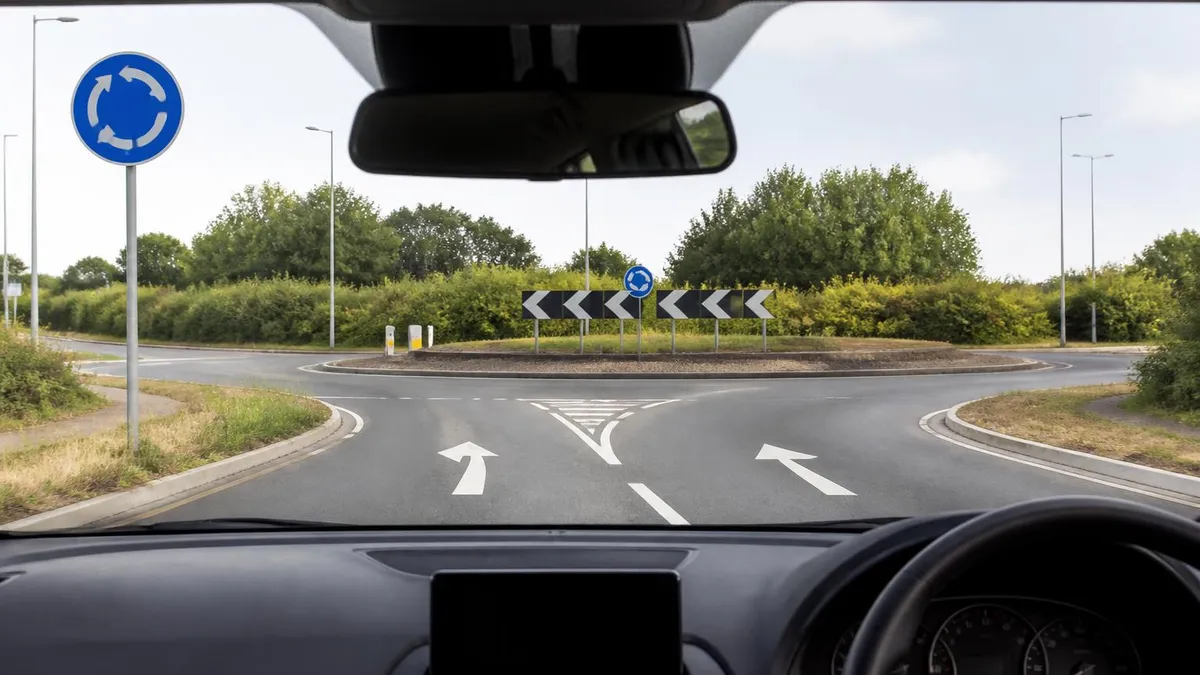
The UK theory test draws its 50 questions from 14 topic areas all covered in the Official Highway Code. The largest category — and the one most candidates struggle with — is Hazard Awareness, which tests whether you can identify developing road hazards from descriptions and scenarios. Other heavily tested areas include Rules of the Road (right of way, speed limits, stopping distances), Road and Traffic Signs (recognising and understanding all sign shapes and colours), and Safety and Your Vehicle (seatbelts, tyre pressures, warning lights, loads and towing).
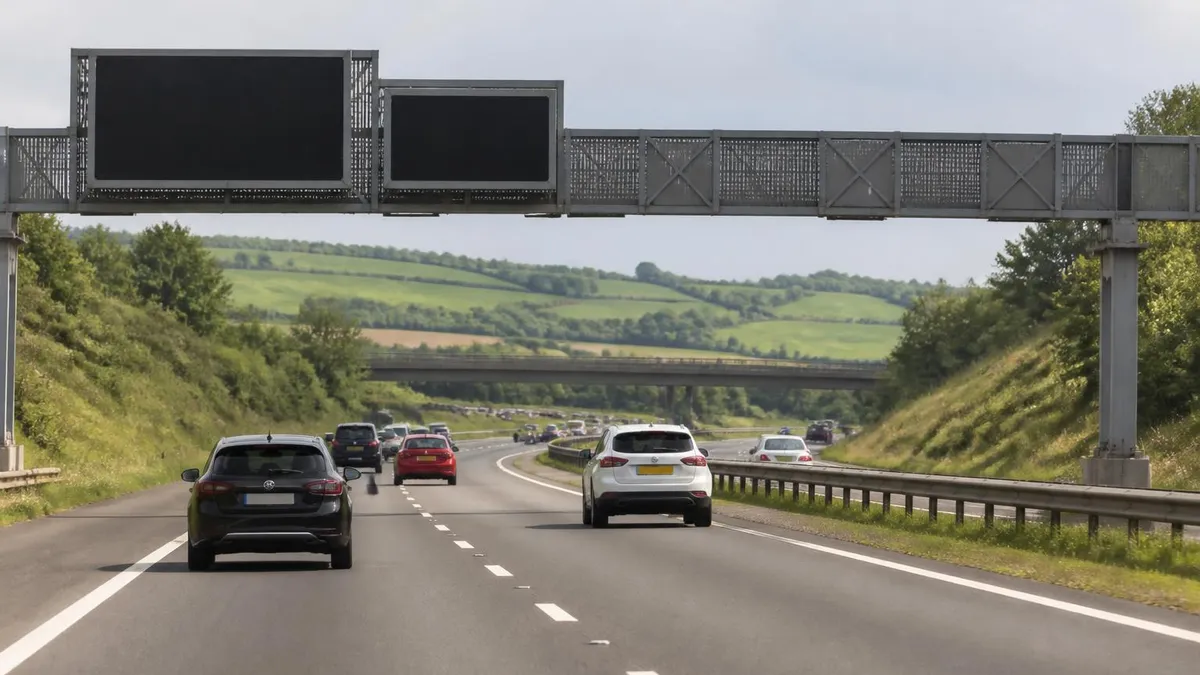
Motorway Rules is a category many candidates underestimate because they haven't driven on a motorway yet during lessons. The theory test covers smart motorway rules, overhead gantry signs, minimum speeds on motorway slip roads, and emergency refuge areas — all concepts that learner drivers rarely encounter in practice. Environmental issues cover fuel efficiency, engine idling, and environmental impact of driving habits. Vulnerable Road Users covers safe distances and speeds around pedestrians, cyclists, motorcyclists, and horse riders. Vehicle loading and towing rules appear in several questions and often catch candidates who've focused only on core driving rules.
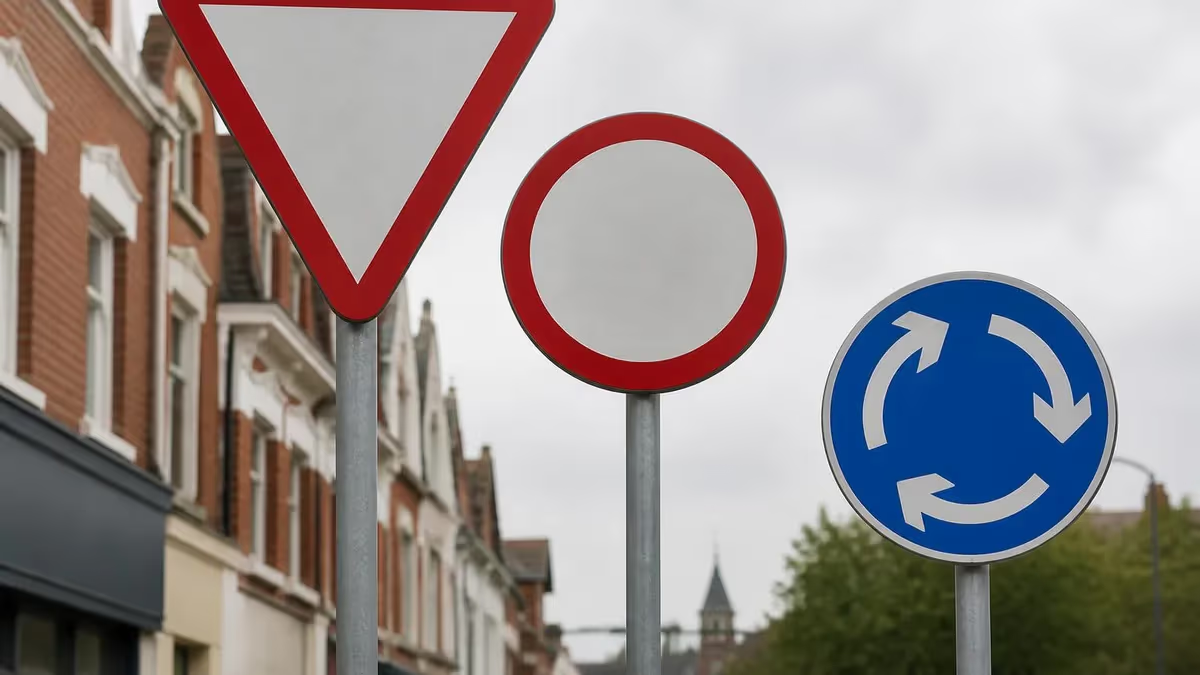
Road signs are tested both by description ('what does a round blue sign with a white arrow mean?') and by image recognition. You need to know the difference between warning signs (triangular), regulatory signs (circular, often red border), and information signs (rectangular). Practising sign recognition through dedicated sign flashcard tools or mock test categories focused on signs is particularly effective for improving your score in this area.
The driving theory test practice page has practice questions organised by topic so you can target sign questions specifically when your mock tests show weakness there. Understanding why each sign has its particular shape and colour — not just memorising meanings — makes these questions easier to answer even when phrasing is unfamiliar.
Four Key Theory Test Knowledge Areas
Right of way, speed limits, stopping distances, road markings, lane discipline, overtaking rules, and junction procedures. The largest and most comprehensive category — foundational to the theory test and the practical test that follows.
Warning signs (triangle/red border), regulatory signs (circle), information signs (rectangle). Know sign shapes, colours, and meanings. Signs can appear in mock tests both as images and as text descriptions.
Recognising conditions and situations that create risk — wet roads and stopping distances, blind spots, fatigue signs, road rage scenarios, and situations requiring particular caution around vulnerable road users.
Tyres, brakes, lights, seatbelts, warning lights, fuel efficiency, engine idling, eco-driving techniques, towing limits, and loading rules. Often underestimated as a category — worth dedicated study time.
Mock Theory Test Strategies
Read every question carefully before looking at the answer options — many questions include qualifying words like 'always,' 'never,' 'most likely,' or 'least likely' that completely change the correct answer. Rush reading is the primary cause of preventable errors on test day. If a question is genuinely confusing, flag it and move on — you can return to flagged questions at the end and there's no penalty for reviewing.
When you're unsure of the answer, eliminate the options you know are wrong first. Often you can narrow it down to two plausible answers, at which point your chance of guessing correctly is much better. For questions about numbers (stopping distances, speed limits, following distances), learn the specific values from the Highway Code rather than guessing — these come up regularly and there are a finite number of them to memorise.

How Mock Tests Differ from the Real Theory Test
The real DVSA theory test is delivered at an official test centre on a computer, and draws its 50 questions from a bank of approximately 700+ official questions — the same bank that all practice materials should be drawn from. Good mock tests use the official DVSA question bank, so the questions you practice are the same questions (or similar phrasing of the same content) that appear on the real test. Mock tests from the DVSA's own practice materials (available via the DVSA app) are the most reliable for this reason.
The test centre environment differs from home practice in ways that can affect performance. You'll be at a computer you're unfamiliar with, with other candidates around you (though separated), and you may feel more time pressure than during relaxed home practice. Simulating test conditions during your final mock tests — sitting quietly, timing yourself strictly, not pausing to look things up — helps reduce the performance gap between practice and test day. Research consistently shows that practice under exam-like conditions predicts real exam performance better than practice done without time pressure or environmental constraints.
Online mock test platforms vary in quality. Some use unofficial or outdated questions; others pull from the official DVSA bank but present questions in a format different from the real test. The DVSA's official practice tests, available through their app or website, are the gold standard — any other resource should be verified against official materials.
Candidates who study only from third-party resources that don't accurately represent the official question bank sometimes get caught out by questions whose phrasing or answer options differ subtly from what they practiced. For official practice questions and the hazard perception format, the hazard perception test guide covers what the DVSA video clips look like and how scoring works in detail.
Mock Theory Test Preparation Checklist
- ✓Read the Official Highway Code from start to finish at least once — paper copy or free GOV.UK online version
- ✓Take your first mock test early (first week) to identify knowledge gaps, not after you've studied everything
- ✓Score 47+ out of 50 consistently on mock tests before booking the real theory test
- ✓Practice stopping distances and their specific values as these appear in almost every theory test
- ✓Study road signs specifically — know warning (triangle), regulatory (circle), and information (rectangle) sign categories
- ✓Add hazard perception practice once multiple choice scores are consistently above 43/50
- ✓Do at least 3-5 full timed mock tests under exam conditions in the week before your real test
- ✓Review every wrong answer in detail — don't just note the right answer, understand why the other options were wrong
- ✓Study motorway-specific rules separately — smart motorways, variable speed limits, and breakdown procedures
- ✓Check GOV.UK for any recent Highway Code changes — the 2022 update included significant changes to rules around cyclists and pedestrians that still appear in tests
Mock Tests vs Other Study Methods
- +Active recall — answering questions forces your brain to retrieve information, which builds memory more effectively than passive reading
- +Immediate feedback — seeing which answers are wrong and why gives targeted guidance for what to study next
- +Format familiarity — practising in the same format as the real test reduces test-day anxiety and improves performance
- +Identifies weak spots — a mock test score by topic shows exactly which Highway Code sections need more attention
- +Time management practice — working within the 57-minute limit trains pacing for the real exam
- −Possible over-reliance on specific questions — if you memorise specific questions without understanding underlying rules, unusual phrasing in the real test can trip you up
- −Not a substitute for actually reading the Highway Code — mock tests test knowledge; the Highway Code builds it
- −Quality varies significantly across free online mock test providers — some use outdated or inaccurate questions
- −Doesn't replace hazard perception practice — multiple choice mock tests don't cover the video clip component
- −May create false confidence if scores are high but understanding is shallow — scoring 50/50 by pattern-matching isn't the same as genuinely understanding the rules
How Many Mock Tests Before the Real Theory Test?
Most driving instructors recommend achieving a consistent score of 47+ out of 50 on timed mock tests before booking the real theory test — not just passing at 43, but comfortably exceeding it. The higher target gives you a buffer for test-day nerves, unfamiliar question phrasing, or a slightly harder draw from the question bank. Candidates who book when they're barely passing mock tests tend to fail the real test at higher rates than those who give themselves a comfortable margin.
In terms of quantity, there's no magic number of mock tests — it depends entirely on your starting knowledge level and how quickly you improve. Some candidates who've driven abroad, studied the Highway Code thoroughly, or have a strong knowledge base from other contexts can pass with 20-30 practice questions per topic area.
Candidates starting from zero typically need several weeks of regular practice and multiple complete mock tests per week to build the knowledge reliably. If after 4-5 weeks of serious preparation your mock scores aren't consistently reaching 43+, consider whether you need driving lessons that specifically cover theory alongside practical skills — some instructors weave theory content into lesson debriefs systematically.
Booking the theory test when you're genuinely ready rather than when your provisional licence arrives or when a family member pressures you to 'just get it done' is the practical advice. The £23 fee is non-trivial for many learners, and paying it twice because you weren't ready is more expensive than taking an extra two to three weeks of preparation. For practice questions covering the full range of theory test categories, the booking a theory test guide covers the process, what ID to bring, and what to expect when you arrive at the test centre.
UK Theory Test: Key Statistics
Hazard Perception Practice: What to Expect
The hazard perception section of the UK theory test uses 14 video clips, each filmed from the driver's perspective at normal road speed. Each clip contains at least one developing hazard — a situation that's about to require the driver to take action (slow down, stop, change direction). One of the 14 clips contains two developing hazards.
You score points by clicking when you first see the hazard developing: the earlier in the development sequence you click (up to a maximum of 5 points), the higher your score. You need 44 out of a maximum 75 points to pass this section.
The critical distinction in hazard perception is between a potential hazard (something that might develop into a problem) and a developing hazard (something that's actively turning into a situation requiring driver action). The scoring system only rewards clicks at the point a potential hazard begins to develop — clicking too early (before development starts) scores zero for timing, and clicking too late (after the hazard is fully developed) scores only 1-2 points rather than the maximum 5. Building a feel for the development sequence takes specific practice with actual video clips, not just reading descriptions of how it works.
Clicking in rapid succession during a single clip is detected by the DVSA system as an attempt to cheat the scoring mechanism and results in a score of zero for that entire clip — this is one of the most common preventable hazard perception failures. Click once when you genuinely see a hazard beginning to develop, then watch for any second hazard in the same clip (present in one of the 14 clips). The DVSA driving theory practice hub includes hazard perception guidance alongside multiple choice practice across all Highway Code topic areas.
Many candidates find that their hazard perception scores improve noticeably after just 3-5 dedicated practice sessions with real video clips. The key is active practice — watch the clip, click at what you believe is the right moment, then review your score and timing to understand whether you clicked too early, too late, or at exactly the right point of development. Passive watching without clicking doesn't build the muscle memory that the actual test requires. Schedule hazard perception practice into your final preparation weeks alongside full timed mock tests for multiple choice, so both skills are sharp on test day.
Your driving theory test certificate is only valid for 2 years from the date you pass. If you don't pass your practical driving test within that 2-year window, your theory test certificate expires and you'll need to resit the theory test — paying the £23 fee again — before you can rebook the practical test. Plan your driving lessons and practical test booking with this deadline in mind. If you're approaching the 2-year mark and haven't yet passed your practical, prioritise booking a test date before your certificate expires, even if you're not fully confident — it's cheaper to fail the practical than to repay for the theory test.
What Happens If You Fail the Theory Test?
Failing the UK theory test means you can't sit the practical driving test until you've passed — there's no way around this requirement. You can retake the theory test, but you must wait at least 3 working days before rebooking. The DVSA doesn't specify how many times you can retake the theory test, so you can keep attempting until you pass.
However, each attempt costs £23, making repeated failures expensive. Most candidates who fail do so by a narrow margin in one of the two sections — careful review of your result slip helps identify whether you failed the multiple choice section, the hazard perception section, or both.
If you failed the multiple choice section, your test result should show which topic areas you answered most poorly — use this to focus your re-study before your next attempt. Common failure areas include stopping distances, motorway-specific rules, and environmental questions that candidates underestimate in their preparation. If you failed the hazard perception section, the issue is almost always insufficient practice with the actual video format — reading about hazard perception doesn't build the same skill as watching clips and practising clicks.
Many driving instructors recommend discussing your theory test result with your instructor, who can help identify what went wrong and adjust your lesson structure to incorporate more theory discussion alongside practical skills. Some candidates book theory-specific tutoring sessions before their next attempt.
It's worth being deliberate about when you rebook your resit rather than booking the earliest available slot automatically. The 3-working-day waiting period is a minimum, not a recommendation — booking a week or two out gives you meaningful preparation time to address your weak areas.
If you failed by a large margin or failed both sections, rushing back in three days without targeted study is likely to produce the same result at the cost of another £23. Use your result breakdown to build a focused revision plan: if you scored poorly on road signs, spend your preparation days on sign flashcards specifically.
If hazard perception was your weak section, practise with video clips daily until the timing instinct feels natural. Many candidates who initially fail go on to pass comfortably on their second attempt once they've identified precisely where their preparation fell short. For comprehensive preparation resources covering all theory test categories including road signs, Highway Code rules, vehicle safety, and hazard awareness, the theory test practice page provides free questions across all topic areas.
DVSA Theory Test Questions and Answers
About the Author

Licensed Driving Instructor & DMV Test Specialist
Penn State UniversityRobert J. Williams graduated from Penn State University with a degree in Transportation Management and has spent 20 years as a certified driving instructor and DMV examiner consultant. He has personally coached thousands of applicants through written knowledge tests, skills assessments, and commercial driver licensing programs across more than 30 states.