
UK Theory Test: Structure, Pass Mark, Booking, and How to Prepare 2026 September
Complete guide to the UK theory test: 📝 multiple choice questions, hazard perception, pass mark, how to book, cost, and proven study strategies to pass
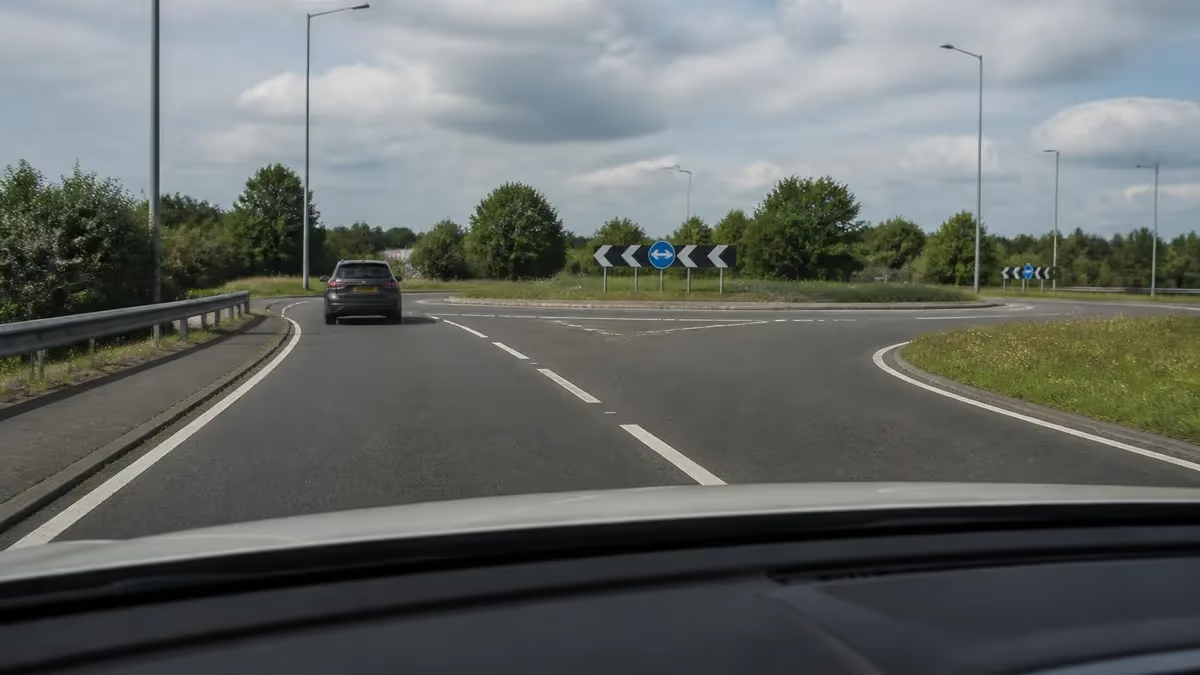
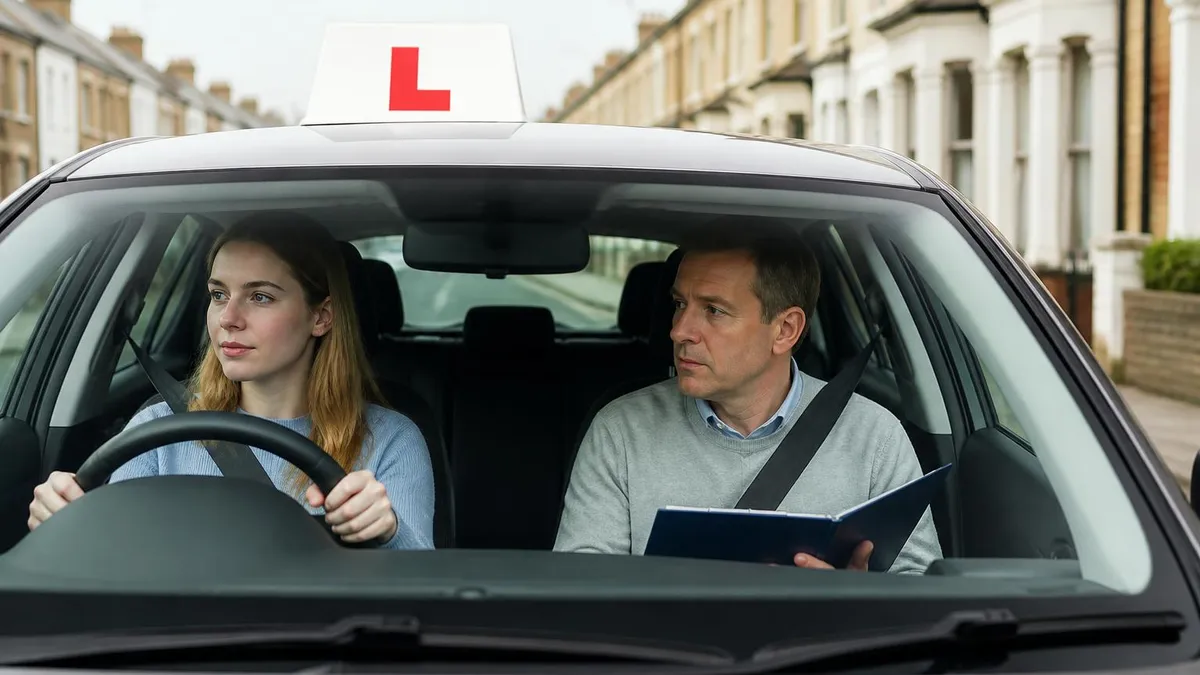
The UK theory test is the written and perception examination every learner driver must pass before taking the practical driving test. Administered by the Driver and Vehicle Standards Agency (DVSA), the theory test has two parts: a multiple choice section testing knowledge of the Highway Code and driving rules, and a hazard perception section using video clips to assess how quickly you identify developing road hazards.
Both parts must be passed on the same sitting — failing either one means you'll need to rebook and sit the entire test again, regardless of how well you did on the section you passed.
The test was introduced in 1996 to ensure that new drivers have a solid foundation of road knowledge before they're allowed to practise independently on public roads. Before its introduction, theoretical driving knowledge was only tested as part of the practical examination, and pass rates for knowledge questions were inconsistent. The two-part structure — combining factual recall with perception skills — was designed to assess both what drivers know and how well they identify risk in real driving scenarios.
Passing the theory test grants you a certificate that's valid for two years. If you don't pass your practical driving test within that two-year window, the theory test certificate expires and you must resit and pass the theory test again before attempting another practical test. This is a common catch for learners who take extended breaks between their theory pass and practical preparation — it's worth planning your driving education timeline to avoid this.
The theory test applies to car drivers (category B licence), but separate theory tests exist for motorcyclists (which includes a different hazard perception bank), large goods vehicle (LGV) drivers, passenger carrying vehicle (PCV) drivers, and other licence categories. The content and pass marks differ across categories.
The information in this guide refers to the standard category B car driver theory test unless otherwise specified. For a full breakdown of the knowledge domains covered in the DVSA theory test and what the Highway Code expects drivers to know, the theory test uk study guide covers every subject area tested in the multiple choice section.
This guide covers the test structure, pass marks, booking process, cost, and preparation strategies that consistently produce first-time passes — including what most learners underestimate about hazard perception and why Highway Code revision alone isn't sufficient preparation for the multiple choice section.
Theory Test Structure: Multiple Choice and Hazard Perception
The multiple choice part of the theory test consists of 50 questions drawn from the official DVSA question bank. Questions cover the full range of road knowledge: road signs and markings, speed limits and safe speeds, stopping distances, right of way rules, motorway driving, driving in adverse conditions, vehicle safety checks, towing and loads, incidents and emergencies, and attitudes to driving. Each question presents four options and requires you to select the correct answer — some questions may ask you to select two correct answers, and these are clearly indicated in the instructions.
You're given 57 minutes to complete the multiple choice section. The pass mark is 43 out of 50, meaning you can miss a maximum of 7 questions and still pass. The questions are presented on a touchscreen computer and you can flag questions to return to before submitting. You're allowed to take a voluntary break between the multiple choice and hazard perception sections if needed, but the break counts against your total test time if you take one during the multiple choice section.
The hazard perception part uses a different format entirely. You watch 14 one-minute video clips filmed from a driver's perspective on real UK roads. Each clip contains at least one developing hazard — a situation that would cause a real driver to react by slowing, stopping, or changing direction. One of the 14 clips contains two developing hazards.
You score points by clicking as soon as you spot a developing hazard: the earlier you click after the hazard begins to develop, the higher your score for that clip. Maximum score per hazard is 5 points; the minimum is 1 point if you spot the hazard late but before the scoring window closes. Clicking too early or clicking repeatedly in a pattern that looks like cheating results in zero for that clip.
The total available score for hazard perception is 75 points (14 clips × 5 points, with one clip offering a second hazard for an extra 5). The pass mark is 44 out of 75. Most people find that spotting hazards isn't the hard part — clicking at exactly the right moment during the developing stage, rather than too early or too late, takes specific practice.
Mock hazard perception tests are essential preparation because reading about the scoring system is not the same as practising the timing. The theory test uk practice resources include mock tests for both sections with the same format and timing as the real exam.
Results for both sections are given immediately after the test at the test centre. You're told whether you've passed each section individually, and you receive a pass certificate if you've passed both. If you fail, you receive a breakdown of which topic areas had the most incorrect answers in the multiple choice section, which can help you target revision before rebooking.

Theory Test: Key Facts by Section
50 questions from official DVSA bank. Pass mark: 43/50. Time: 57 minutes. Touchscreen computer format. Topics: Highway Code, road signs, speed limits, stopping distances, motorway rules, vehicle safety, attitudes to driving. Can flag questions to revisit.
14 video clips filmed from driver's view. 1 clip has 2 developing hazards. Pass mark: 44/75. Click when you see a developing hazard — earlier clicks score higher (max 5 per hazard). Pattern-clicking or clicking too early = zero for that clip.
Book online through the official DVSA website. Cost: £23 for car drivers. Available at hundreds of test centres across Great Britain. Earliest available slots vary by location. Can be booked with 3 working days' notice if slots are available.
Theory test certificate is valid for 2 years. You must book your practical driving test within that window. If you let the certificate expire, you must resit the theory test from scratch. Pass certificate is required when booking the practical test.
How to Book the Theory Test
Theory tests are booked through the official DVSA booking website at gov.uk. You'll need your provisional driving licence number to book. The test costs £23 for category B car licence applicants, payable at the time of booking. Test centres are located throughout Great Britain — Northern Ireland has its own system through DVA (Driver and Vehicle Agency) — and slots are typically available within a few weeks, though popular test centres in urban areas can have longer waits.
You must be at least 17 years old to take the car theory test, though you can book and sit it younger if your 17th birthday falls before the test date. There's no requirement to have a certain number of driving lessons before taking the theory test — you can book it as soon as you have your provisional licence, and many learners prefer to pass the theory test early in their learning so they can focus entirely on practical skills during lessons.
On test day, you must bring your provisional driving licence (photocard). If your licence was issued before 1998 and is a paper version, you'll also need a valid passport. Arriving without acceptable ID means you'll be turned away and will forfeit your test fee. Test centres typically ask you to arrive 15 minutes before your appointment, and late arrivals may be refused entry at the examiner's discretion.
If you need to change or cancel your booking, you can do so online at least 3 clear working days before your test date without losing your fee. Cancelling less than 3 working days before the test forfeits the £23 fee. If you don't pass, you must wait at least 3 working days before rebooking — you can't book a resit immediately on the day of a failed attempt. The short wait period is a feature designed to ensure candidates revise rather than immediately rebooking without addressing the gaps the test identified.
Theory tests are available with reasonable adjustments for learners with disabilities or specific learning difficulties — voiceover assistance, extended time, and reader support are available through the DVSA's special requirements process. These adjustments must be requested at the time of booking through the DVSA contact centre, not online, and may require supporting documentation from a healthcare provider or educational institution. For details on what content is tested and how to prepare effectively for the Highway Code questions, the theory test uk resources address both the standard and adjusted test formats.
UK Theory Test: Key Numbers
How to Study for the UK Theory Test
The most important preparation resource is the official DVSA revision material: The Highway Code, Know Your Traffic Signs, and the DVSA's own question bank, which is published as an official revision app and book. The DVSA publishes the complete question bank — over 700 questions — that the theory test draws from, meaning there are no surprise question types. Everything you'll be asked on the real test exists in the official question bank. If you've worked through the entire question bank to fluency, you will pass the multiple choice section.
The practical challenge is that 700+ questions is a large body of material, and simply reading The Highway Code from cover to cover is an inefficient way to learn them. Most successful candidates use a combination of: reading The Highway Code for foundational understanding, then practising with question bank apps or mock tests to identify weak areas, then returning to specific Highway Code sections to reinforce the topics they got wrong. Spaced repetition — returning to missed questions at increasing intervals — is consistently more effective than massed practice of the same questions in sequence.
Stopping distances are the category that most learners underperform on. The required figures are specific — in metres and feet, in dry and wet conditions, at specific speeds — and must be memorised accurately rather than estimated. A common misconception is that approximate knowledge is sufficient; the test questions are designed to distinguish between learners who know the precise figures and those who are guessing in the right ballpark. These figures are worth focused, explicit memorisation rather than incidental learning.
Road signs are a second high-weight category where specific preparation pays off. Some signs are obvious from context; many are counterintuitive or easily confused with each other. Know Your Traffic Signs, the official DVSA guide, covers every sign you might encounter. Working through it systematically and testing yourself on unfamiliar signs is more effective than relying on recognition of signs you've seen in passing as a passenger or pedestrian. The theory test uk exam prep resources include sign recognition practice alongside the full multiple choice question bank.
For hazard perception, mock tests are not optional — they're the only effective preparation. The scoring timing is not intuitive from reading about it, and the only way to develop a reliable click-timing instinct is to practise on video clips with real-time feedback on your score.
Most commercial revision apps include hazard perception practice; the DVSA's official app is one option, and several third-party providers offer larger clip banks with more variety. Aim for consistent scores well above 44 across multiple mock sessions before your test date — a comfortable margin reduces the risk of a bad sitting derailing your result.
Theory Test Preparation Guide
The DVSA multiple choice question bank covers 14 subject categories, each with a different number of questions available. The categories with the highest number of questions — and therefore the most likely to appear on any given test — include: alertness, attitude, safety and your vehicle, safety margins, hazard awareness, vulnerable road users, other types of vehicle, vehicle handling, motorway rules, rules of the road, road and traffic signs, documents, accidents, and vehicle loading.
Some categories are weighted more heavily than others in the question bank. Hazard awareness, rules of the road, and road and traffic signs together account for a significant proportion of questions. Motorway rules and vulnerable road users (cyclists, pedestrians, motorcyclists, horses) are also frequently represented. Vehicle documents and vehicle loading are smaller categories but still appear in most test sittings.
The Highway Code contains most of the required knowledge, but some questions draw on vehicle-specific information — like tyre tread depth minimums, warning light meanings, and towing capacity rules — that's covered in the DVSA's 'Know Your Traffic Signs' and vehicle safety sections rather than The Highway Code proper. Use the official DVSA question bank as your content guide, not just The Highway Code.
Common Theory Test Mistakes and How to Avoid Them
Underestimating the hazard perception section is the most common strategic mistake. Because the multiple choice content feels like a conventional revision task — learn the Highway Code, do mock questions — many learners spend all their preparation time on it and treat hazard perception as an afterthought. The result is a passed multiple choice and a failed hazard perception, which means a failed test overall. Hazard perception requires specific video-based practice that can't be substituted with reading. Allocate meaningful preparation time to it from the start.
Relying only on The Highway Code as a study resource misses content. The full DVSA question bank draws from The Highway Code, Know Your Traffic Signs, and vehicle safety information that includes tyre depths, load limits, and warning light meanings. Working through the question bank directly — not just reading source material — is the most reliable way to identify every topic type that appears in the test, because the bank itself defines the scope of testable content.
Assuming the Highway Code sections you use daily as a pedestrian or passenger are well-known enough not to require study is another consistent error. Questions about speed limits in specific circumstances, priority rules in junctions you don't regularly encounter, and motorway regulations often trip up learners who've spent years around roads without ever needing to apply those specific rules. The test rewards systematic knowledge, not assumed familiarity.
Neglecting stopping distances until the night before the test is a specific mistake worth calling out. The distances are a fixed body of memorisation — they don't become intuitive from driving experience alone because you can't measure them in a car. They require deliberate memory work.
Starting this memorisation early in revision, and returning to it regularly through spaced repetition, is significantly more effective than cramming them the evening before the test. For comprehensive practice on all the topic areas covered in the DVSA theory test, the theory test uk practice hub organises mock questions by subject area for targeted revision by category.
Arriving at the test centre without your provisional licence photocard is an entirely preventable failure mode that costs learners their test fee every year. Check the ID requirement before you leave home on test day. Setting a reminder the night before your test to gather your photocard licence and put it somewhere you cannot miss takes thirty seconds and eliminates a completely avoidable failure mode.
The photocard must be current and valid — not expired, not a paper licence alone, not a photocopy. If there's any doubt about your ID, call the test centre before test day rather than arriving and hoping for the best.
DVSA Theory Test: What's Hard and What Helps
- +Full question bank is published — no surprise question types if you've practised it all
- +Pass mark of 43/50 allows room for 7 wrong answers in multiple choice
- +Immediate results at the test centre — no waiting for outcomes
- +Flexible booking with tests available at hundreds of locations across Great Britain
- +Reasonable adjustments available for learners with disabilities or learning differences
- +Theory pass is valid for 2 years — ample time to prepare for the practical test
- −Both sections must be passed on the same sitting — one fail means retaking both
- −Hazard perception timing is counterintuitive without video-based practice
- −£23 fee is forfeited on each failed attempt — multiple resits become expensive
- −Stopping distances require explicit memorisation; experience doesn't substitute
- −Test certificate expires if practical test isn't passed within 2 years
- −Popular test centres can have longer wait times for available slots
DVSA Questions and Answers
About the Author

Licensed Driving Instructor & DMV Test Specialist
Penn State UniversityRobert J. Williams graduated from Penn State University with a degree in Transportation Management and has spent 20 years as a certified driving instructor and DMV examiner consultant. He has personally coached thousands of applicants through written knowledge tests, skills assessments, and commercial driver licensing programs across more than 30 states.