
Driving Theory Test Practice: How to Study and Pass First Time 2026 October
How to practice for the UK driving theory test. DVSA question bank, 💯 hazard perception tips, Highway Code topics, study schedule, and free practice tests.
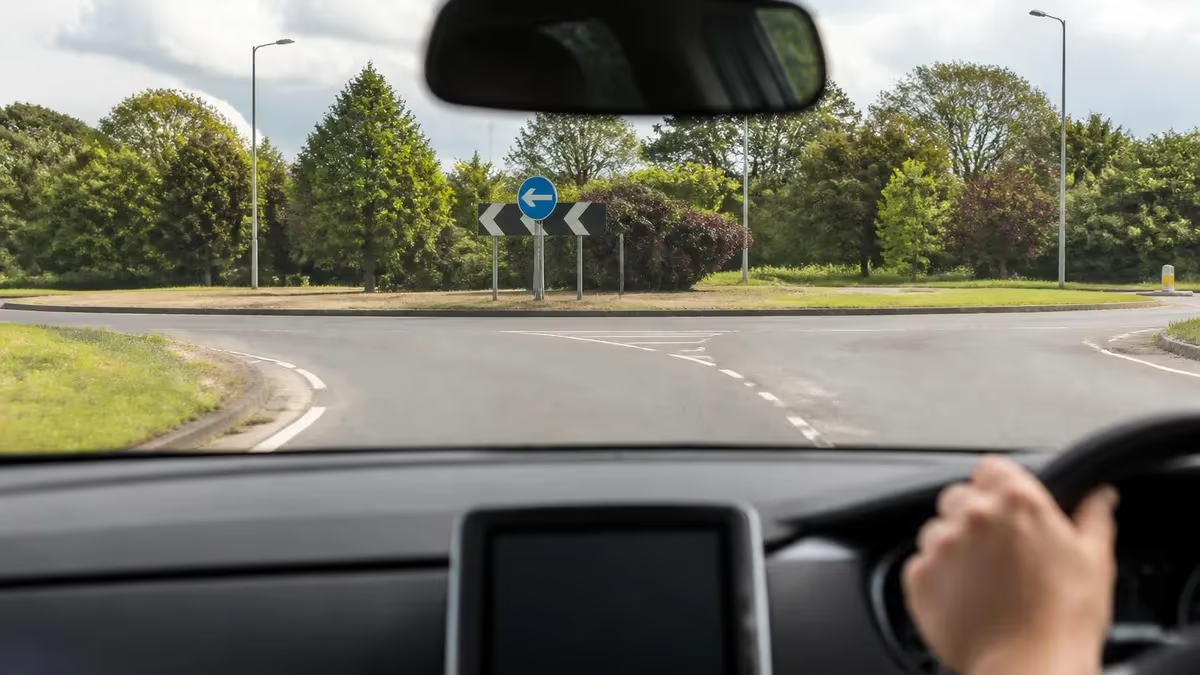
UK Driving Theory Test: What You're Preparing For
Key Facts at a Glance
| Item | Value | Details |
|---|---|---|
| Questions in the DVSA Official Question Bank | ~700 | |
| Multiple Choice Pass Mark (86%) | 43/50 | |
| Hazard Perception Pass Mark | 44/75 | |
| Cost to Rebook if You Fail — Study Before You Sit | £23 |
Driving theory test practice means systematically working through the DVSA question bank and hazard perception clips before you sit the actual test. The national first-time pass rate hovers around 47% — meaning roughly half of all candidates fail on their first attempt. Almost every failure is preventable with structured preparation. The candidates who pass first time aren't necessarily smarter; they've done more deliberate, targeted practice in the weeks before their test date.
Before you begin any study programme, you should already have booked your test. Having a date creates accountability — it turns abstract studying into preparation for a specific deadline. If you haven't done so yet, use the official DVSA portal to book a theory test before you start your practice routine, so that your preparation has a clear endpoint. Six to eight weeks is the recommended preparation window for most candidates; starting earlier is fine, but don't let a distant test date remove the urgency from daily practice sessions.
The theory test has two separate components: a 50-question multiple choice section and a hazard perception test consisting of 14 video clips. You must pass both parts on the same day. Failing either part — even if you passed the other — means failing the whole test and having to rebook. This is a crucial point that many candidates underestimate.
Most revision materials focus heavily on the multiple choice section because it's more intuitive to study for, but hazard perception is where a significant proportion of candidates fail, particularly on repeat attempts. Your practice routine needs to address both parts explicitly from the start.
The DVSA publishes its official question bank through licensed learning materials including the 'Official DVSA Theory Test Kit' app and the 'Official DVSA Theory Test for Car Drivers' book. Questions on the actual test are drawn verbatim from this bank — you're not being tested on novel scenarios. Unofficial practice apps may use paraphrased or outdated questions. Spending the majority of your study time on official materials ensures you're learning exactly what you'll be tested on. Third-party apps are fine as supplements, not as primary study resources.
The multiple choice section draws from approximately 700 questions organised into topic categories: alertness, attitude, safety and your vehicle, safety margins, hazard awareness, vulnerable road users, other types of vehicle, vehicle handling, motorway rules, rules of the road, road and traffic signs, documents, accidents, vehicle loading, and environmental issues. You don't need to memorise all 700 questions in sequence — you need to understand the concepts behind them well enough to recognise the correct answer under exam conditions, where questions may be worded slightly differently from the practice version.
The most effective approach to theory test practice for multiple choice involves three phases. In the first phase — roughly weeks one and two — read through the current Highway Code from start to finish. It's not a long document, but it's comprehensive, and a complete read-through builds the conceptual framework you'll need for the question bank.
In the second phase — weeks three through five — work through the DVSA question bank by topic category, reviewing explanations for every question whether you got it right or wrong. In the third phase — final week or two — take full timed practice exams under realistic conditions: 57 minutes, no pauses, no looking things up. Track your score daily and identify any topic categories where you're still dropping more than one or two marks.
Road sign knowledge is the topic category that most candidates find hardest and most time-consuming to learn. The UK road sign system is extensive — warning signs (triangles), prohibitory signs (circles with red borders), mandatory signs (blue circles), information signs (rectangles) — and many signs are rarely encountered in everyday driving.
Use flashcard-style review for road signs specifically, drilling the ones you consistently get wrong rather than reviewing familiar ones repeatedly. By the final week, you should be scoring 48 or 49 out of 50 consistently on practice multiple choice papers — if you're not, delay your test booking rather than sitting with low scores.
Stopping distances are another frequently tested numerical topic that requires memorisation rather than reasoning. The DVSA expects you to know specific overall stopping distances at standard speeds: 12 metres at 20mph, 23 metres at 30mph, 36 metres at 40mph, 53 metres at 50mph, 73 metres at 60mph, and 96 metres at 70mph — the 'thinking distance plus braking distance' formula.
These values assume good road conditions, well-maintained tyres, and an alert driver. Questions often ask about the effect of wet roads (doubles braking distance), worn tyres, or alcohol on stopping distances. These aren't concepts you can reason through on the spot — the numbers need to be committed to memory before test day.
Environmental questions have become more prominent in the DVSA question bank in recent years, reflecting updated Highway Code guidance. Questions cover catalytic converters and their role in emissions, engine idling in residential areas, selecting correct speed limits in environmentally sensitive zones, and the environmental impact of aggressive acceleration.
The current edition of the Highway Code added explicit sections on road-sharing etiquette for cyclists and e-scooters, and these sections are now tested. If you're using study materials more than two years old, verify that you're studying from the current Highway Code edition and the current DVSA question bank version — questions are periodically updated to reflect legislative and Highway Code changes.

Theory Test Practice Methods Compared
- Content: Full official question bank (~700 questions) with DVSA explanations, hazard perception practice clips
- Format: Topic-by-topic and timed mock test modes
- Cost: Paid app (£4.99–£14.99 depending on version)
- Best for: Primary study resource — questions match the actual exam verbatim
- Limitation: Hazard perception clips are the same set repeatedly — supplement with other clip sources
Hazard perception requires a different kind of preparation from multiple choice study. You're not memorising facts — you're training a perceptual skill: the ability to scan a driving scene and identify potential hazards before they fully develop into emergencies. The scoring system rewards early responses — clicking sooner earns more points than clicking after the hazard is fully apparent. Each clip contains one or two 'developing hazards' (hazards that will require the driver to take action), and each developing hazard scores up to five points depending on how quickly you click after it starts developing.
The key mistake candidates make on hazard perception is either clicking too early (before the hazard starts developing, which scores zero) or clicking too late (after the hazard has fully developed). Rapid repeated clicking — a strategy some candidates use to ensure they don't miss the timing window — is penalised by the algorithm as cheating, returning a score of zero for that clip.
The correct approach is to click once as soon as you spot the first sign that a hazard is beginning to develop: a pedestrian stepping off a pavement, a vehicle pulling out from a side road, a cyclist wobbling, a junction ahead with poor sightlines.
Building hazard perception skill is closely tied to real driving experience. Candidates who are already taking driving lessons with an ADI-approved instructor typically score higher on hazard perception because they've practiced identifying hazards on real roads under supervision. If you're studying for the theory test before starting lessons, supplement clip practice with active observation as a passenger — sit in the front seat, watch the road ahead, and mentally flag everything that could become a hazard. This builds the same visual scanning habits the hazard perception test rewards, even before you're behind the wheel.
One technique that improves hazard perception scores significantly is learning the categories of developing hazards rather than trying to memorise specific clips. The DVSA uses a defined set of hazard scenarios across clips: pedestrians crossing or stepping into the road, cyclists appearing from behind parked vehicles, vehicles pulling out from junctions or side roads, vehicles slowing unexpectedly, road works narrowing the carriageway, bends that conceal oncoming vehicles, and children near the road edge.
Once you understand these hazard categories, you apply a mental scanning checklist to each clip as it plays: where are the pedestrians? Are there parked vehicles that could open doors or hide pedestrians? Is there a junction ahead? What's the cyclist doing? Developing this categorical scanning approach is more reliable than hoping to recognise a specific clip you've seen before.
After each practice session, review your scores clip by clip. Most practice platforms show a timeline of the clip with your click marked and the scoring window highlighted. This feedback is genuinely useful — you can see visually whether you're clicking too early, too late, or within the scoring window. Adjust your approach based on the pattern you see in your errors.
If you're consistently early, you're responding to potential hazards rather than developing ones. If you're consistently late, you're waiting for the hazard to be obvious rather than spotting the early signs. The DVSA's own timing is calibrated to an experienced driver's response — you're aiming to match that, not beat it by clicking the moment the video starts.
Six-Week Practice Plan
- Weeks 1–2: Read the Highway Code in full (gov.uk/highway-code). Note sections on road signs, motorway rules, and vulnerable road users — highest-miss areas
- Weeks 3–4: Work through DVSA question bank by topic. Review every explanation. Begin daily hazard perception clip practice (minimum 14 clips/day)
- Week 5: Full timed mock exams — 57 minutes, no pauses. Target 48+/50 on multiple choice consistently. Score HP clips after each practice session
- Final week: Daily mock exams + targeted review of any topic where you're still dropping more than 1 mark. If scoring below 47/50 consistently, consider rescheduling your test
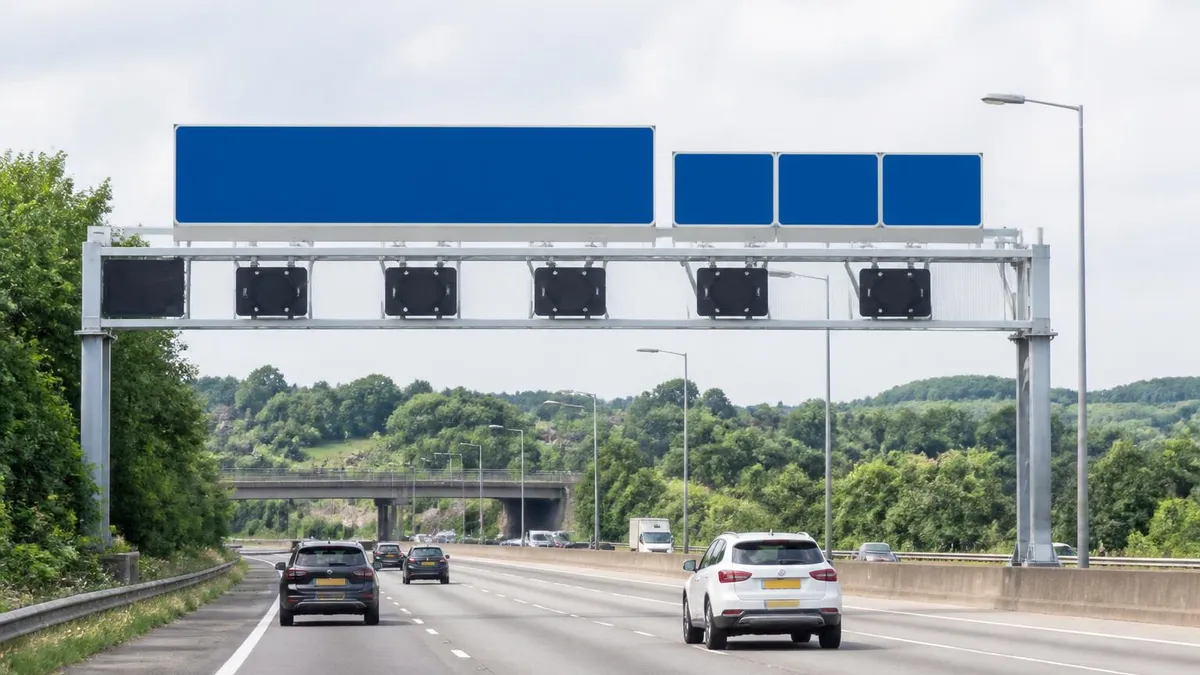
Data from DVSA and independent analysis of test failures consistently identify three weak spots: (1) Hazard perception — candidates either click too early, too late, or not at all on developing hazards. (2) Road signs — particularly informatory and warning signs that are rarely encountered in everyday driving. (3) Motorway rules — many learners have never driven on a motorway and find questions on smart motorways, variable speed limits, and red X signals difficult. Target these three areas in the final two weeks of your preparation.
Learning to Drive Before vs. After Theory Test
- +Theory first: Understanding rules before driving makes on-road instruction more productive
- +Theory first: Theory certificate valid 2 years — plenty of time to complete practical lessons
- +Lessons first: Real road experience dramatically improves hazard perception scores
- +Lessons first: Practical context makes abstract rules (braking distances, overtaking rules) intuitive
- +Simultaneously: Reinforcing theory and practical together shortens overall time to full licence
- −Theory first: Hazard perception practice without real driving experience is harder to build instinct for
- −Theory first: Theory certificate expires in 2 years — risk if practical progress is very slow
- −Lessons first: More expensive if you delay theory test booking — instructor hours add up
- −Lessons first: Some learners develop bad habits before studying the correct rules
- −Both paths: The theory pass mark is high (86%) — regardless of approach, deliberate daily practice is non-negotiable
How many practice tests you should complete before your actual test depends on where you're starting from and how quickly your scores improve. As a rough benchmark: you should sit a minimum of 10 to 15 full timed mock exams before test day. More important than the number is the trajectory — your scores should be increasing and stabilising near the ceiling.
If you're scoring 50/50 or 49/50 consistently on multiple choice for the last five mock exams, you're ready. If your scores are still varying between 43 and 48, the knowledge isn't consolidated yet and you need more practice time or more targeted review of weak topics.
Track your mock exam scores with dates in a simple spreadsheet or the app's built-in progress tracker. Seeing an upward trend over time confirms your preparation is working. A flat or declining score trend, or high scores followed by a drop when you haven't studied for a few days, suggests the learning is shallow.
Spaced repetition — reviewing material you've missed at increasing intervals — builds more durable retention than blocking all your study into one session the day before the test. The DVSA app's built-in progress tracking surfaces questions you've previously missed and serves them more frequently, which is essentially spaced repetition built into the practice flow.
One often-overlooked aspect of theory test preparation is familiarising yourself with the actual test interface before test day. The DVSA app and most practice websites use a similar multiple-question interface, but the real exam is delivered via a specific piece of software with a flag-for-review function.
You can mark any uncertain question and return to it before submitting the section — use this feature during practice so it becomes automatic on test day. Some candidates spend too long on difficult questions in the first pass and run short of time at the end; flag-and-return prevents this by letting you secure marks on questions you're confident about before investing time in the harder ones.
A realistic pre-test threshold: consistently scoring 47 or above out of 50 on multiple choice AND scoring above 50 on hazard perception practice sessions. Below those benchmarks, sitting the test is financially risky — you'll lose your £23 booking fee and need to rebook. The three clear working day cancellation window means you can still reschedule even after booking if your preparation isn't where it needs to be. Use that window if your scores haven't reached the threshold in the final week.
After passing the theory test, the DVSA issues a pass certificate with a unique reference number and a two-year expiry. You'll need that certificate number to book your practical driving test. If you haven't already started lessons, now is the time — practical test waiting times at busy test centres run 10 to 16 weeks in many parts of the UK, so booking the practical as soon as you receive your theory pass gives you the most lead time.
If your practical wait is very long, look at whether driving test cancellations at your preferred centre are appearing regularly — earlier slots surface as candidates reschedule, and checking the booking portal every day or two can shave weeks off your wait.
Some candidates pass the theory test and then let months pass before starting serious practical preparation. This is a common and avoidable mistake. The practical driving test uses many of the same concepts you've just studied — independent driving, responding to traffic signs, road positioning, following speed limits — and the theory knowledge is freshest immediately after you've been revising intensively for the test. Starting lessons promptly after your theory pass while the knowledge is active in your memory gives you better value from each lesson and a faster path to the practical test.
The theory test is, ultimately, the foundation of your driving competence — not just an administrative hurdle. Every rule in the Highway Code exists because someone, somewhere, was injured when that rule was ignored. Understanding why the rules exist makes them easier to remember and more likely to be applied automatically in real traffic. Candidates who approach the theory test as a genuine learning exercise rather than a box-ticking exercise tend to become safer, more competent drivers — and they tend to pass more quickly, too.
For candidates preparing to take the test in Welsh, the DVSA offers the theory test in Welsh as well as English. Welsh-medium study materials are available through the DVSA, and the test interface at designated centres supports Welsh language delivery. This is worth knowing for candidates whose primary language is Welsh — studying in your strongest language and taking the test in that language removes an unnecessary cognitive load on test day. The content and difficulty of the test is identical regardless of language choice; only the delivery language changes.
A common question from candidates returning after a previously failed attempt: should I rebook the same test centre, or try a different one? The test content is identical at every centre — you're sitting the same questions from the same question bank regardless of location. If your previous centre was convenient and well-run, rebook it.
If logistics or the environment contributed to your anxiety, choosing a quieter or more accessible centre is a legitimate adjustment. But the primary focus before your next attempt should be on addressing the specific topic areas and hazard perception skills that contributed to your failure — the test centre location is a very minor variable compared to your overall preparation level and targeted study of weak topics.
Key Topic Areas to Master
The single most commonly failed topic area. Covers warning signs (triangles), prohibitory/restriction signs (circles), mandatory instruction signs (blue circles), information signs (rectangles), and road markings. Use flashcard drilling for signs you encounter infrequently in daily life — bus lane markings, clearway signs, hazard warning lines, and motorway-specific signs.
Heavily tested despite most learners never having driven on a motorway. Covers smart motorways, variable speed limits, red X overhead gantry signals, lane discipline, emergency refuge areas, hard shoulder use, minimum speeds, and joining/leaving motorway rules. The 2022 smart motorway rule changes feature prominently in current question bank versions.
Covers stopping distances at various speeds (crucial — must be memorised), reaction times, effects of tiredness and alcohol on response time, tyre grip in wet and icy conditions, following distance rules, and the two-second rule. Questions on this topic often use specific numerical values — stopping distance at 70mph (96m overall), for example — that can't be estimated.
Pedestrians, cyclists, motorcyclists, horse riders, and farm vehicles. Tested extensively because interactions with vulnerable users are a major cause of serious collisions. Key areas: pedestrian priority rules at zebra crossings and advanced stop lines, overtaking cyclists safely, motorcyclist blind spot awareness, and horse-rider-specific rules that don't apply to other road users.
Sample DVSA UK Driving Theory Practice Questions
Try these questions from our free DVSA UK Driving Theory practice tests. The correct answer and an explanation follow each question.
When are you permitted to use the hard shoulder on a motorway for driving?
- A. During peak traffic hours
- B. When directed to by overhead gantry signs on a smart motorway
- C. Whenever the motorway is congested
- D. When overtaking a slow-moving vehicle
Answer: B. When directed to by overhead gantry signs on a smart motorway
On certain smart motorways (All Lane Running or controlled motorways), the hard shoulder may be opened as a running lane during busy periods. This is indicated by speed limit signs displayed above the hard shoulder on overhead gantries. You must only use it when signs indicate it is open.
You are driving on a country road at 50 mph. How much distance should you allow for thinking distance alone?
- A. 9 metres (30 feet)
- B. 12 metres (40 feet)
- C. 15 metres (50 feet)
- D. 18 metres (60 feet)
Answer: C. 15 metres (50 feet)
At 50 mph, the thinking distance is approximately 15 metres (50 feet). A useful rule of thumb is that thinking distance in feet roughly equals your speed in mph — so at 50 mph, thinking distance is about 50 feet (15 metres).
You are driving along a residential road with cars parked on the left-hand side. A ball bounces out into the road ahead. What is the most significant potential hazard you should be prepared for?
- A. The ball damaging your car's paintwork.
- B. A child running out to retrieve the ball.
- C. A vehicle door opening suddenly from a parked car.
- D. An oncoming vehicle swerving to avoid the ball.
Answer: B. A child running out to retrieve the ball.
A ball bouncing into the road is a classic sign that a child may follow it without checking for traffic. You must anticipate this and be ready to stop immediately. While other hazards exist, a child running into the road is the most immediate and serious danger.
You are driving behind a bus that pulls up at a stop. What hazard should you anticipate?
- A. The bus may reverse towards you
- B. Pedestrians may cross the road from in front of the bus
- C. The bus may turn right without indicating
- D. Other buses may overtake you
Answer: B. Pedestrians may cross the road from in front of the bus
When a bus stops, passengers may alight and cross the road, sometimes emerging from in front of the bus where you cannot see them. Be prepared to stop and watch for pedestrians stepping into the road.
Theory Test Practice Questions and Answers
About the Author

Licensed Driving Instructor & DMV Test Specialist
Penn State UniversityRobert J. Williams graduated from Penn State University with a degree in Transportation Management and has spent 20 years as a certified driving instructor and DMV examiner consultant. He has personally coached thousands of applicants through written knowledge tests, skills assessments, and commercial driver licensing programs across more than 30 states.