
Driving Lessons: What to Expect, Costs & How to Pass Faster 2026 October
Everything you need to know about driving lessons in the UK — ✏️ costs, how many you need, finding an instructor, and tips to pass your test faster.
What Are Driving Lessons — and Why Do They Matter?
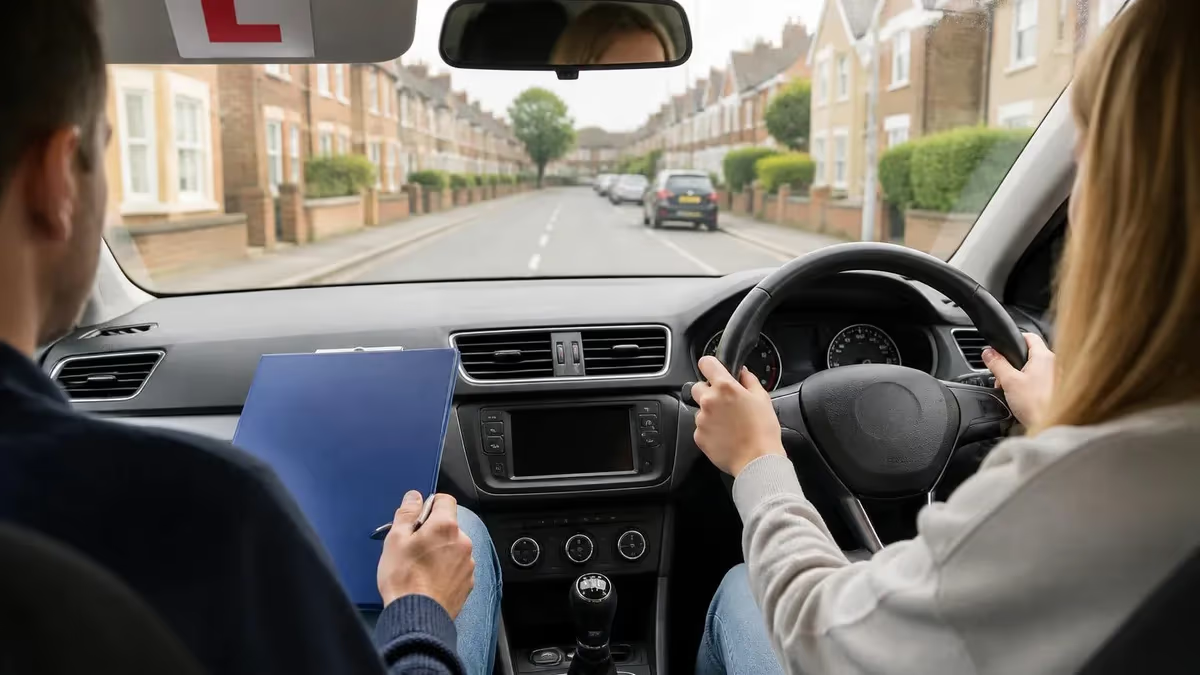
Driving lessons are the backbone of learning to drive in the UK. They're not just a box to tick before your uk driving test — they shape how confident, safe, and prepared you'll be behind the wheel for the rest of your life. If you rush through them or skip the tricky bits, it shows. Examiners notice.
The Driver and Vehicle Standards Agency (DVSA) sets the standard for driving instruction in the UK. Approved Driving Instructors (ADIs) must pass three demanding tests before they're allowed to take students. That's actually reassuring — it means there's a baseline quality you can expect from any ADI carrying a green badge.
Still, lessons vary wildly depending on your instructor, your area, and how seriously you treat each session. Here's what you need to know before you book your first lesson — or if you're part-way through and wondering what comes next.
How Many Driving Lessons Do You Actually Need?
The honest answer? It depends. The DVSA's own research suggests the average learner needs around 45 hours of professional instruction combined with 22 hours of private practice. But that's an average — plenty of people need more, and a smaller group gets through with less.
What affects how many lessons you'll need:
- Your age: Younger learners (17-25) often pick up skills faster. That said, older learners tend to be more focused and pass with fewer retakes.
- How much private practice you get: Learners who supplement lessons with private practice in a family car consistently need fewer paid lessons overall.
- Lesson frequency: Two or three lessons per week is more effective than one per week. Your skills consolidate faster when there's less gap between sessions.
- The complexity of your local roads: If your test centre is in a dense urban area with bus lanes, one-way systems, and tricky junctions, you'll need more preparation than someone testing in a quiet market town.
Don't let anyone pressure you into booking your test before you're ready. It's cheaper — and far less stressful — to take an extra five lessons than to fail and rebook.
How Much Do Driving Lessons Cost in the UK?
As of 2025, the average cost of a driving lesson in the UK sits at around £35-£40 per hour. In London and major cities, you'll often pay £40-£50+. In smaller towns and rural areas, it can drop to £28-£33.
Watch out for block booking deals — some instructors offer 10 lessons for the price of 9, which sounds great until you realise you don't click with their teaching style. Many learners suggest booking two or three lessons with an instructor before committing to a block.
Factor in these additional costs when budgeting:
- Theory test fee: £23 (car)
- Practical driving test fee: £62 on weekdays, £75 on evenings and weekends
- Provisional licence: £34 online
So realistically, budget for 40-50 hours of professional instruction plus test fees. That puts the total investment somewhere between £1,500 and £2,200 for most people — more in London, less elsewhere. It sounds like a lot, but driving is a skill you'll use for decades.
Finding the Right Driving Instructor
Your driving instructor can make or break your learning experience. A good one will build your confidence gradually, give clear feedback, and adapt their style to how you learn. A poor one will leave you anxious, confused, or feeling like you're never improving.
Every DVSA-approved instructor carries a green badge displayed in the front windscreen. If you see a pink badge, the instructor is a trainee — legal to teach, but not yet fully qualified. Neither is better necessarily, but you should know the difference.
When you're choosing, ask:
- Do they have pass rates publicly available? (Some do, some don't.)
- Will they help you practice at the specific test centre you're using?
- How do they handle anxious learners?
- What happens if you need to cancel last minute?
Personal recommendation is still the best filter. Ask friends or family who they used and whether they'd go back. Online reviews help too — look for patterns rather than individual comments.
You can also use the DVSA's official 'Find a driving instructor' tool at gov.uk to check an instructor's ADI number and badge status.
What Happens During a Typical Lesson?
Your first lesson will likely cover the car's basic controls — how to use the clutch, accelerator, and brake smoothly, plus the mirror-signal-manoeuvre routine. Don't expect to go far. Getting comfortable with the biting point and moving off in first gear is enough of a challenge for most people on day one.
As you progress, lessons build on each other:
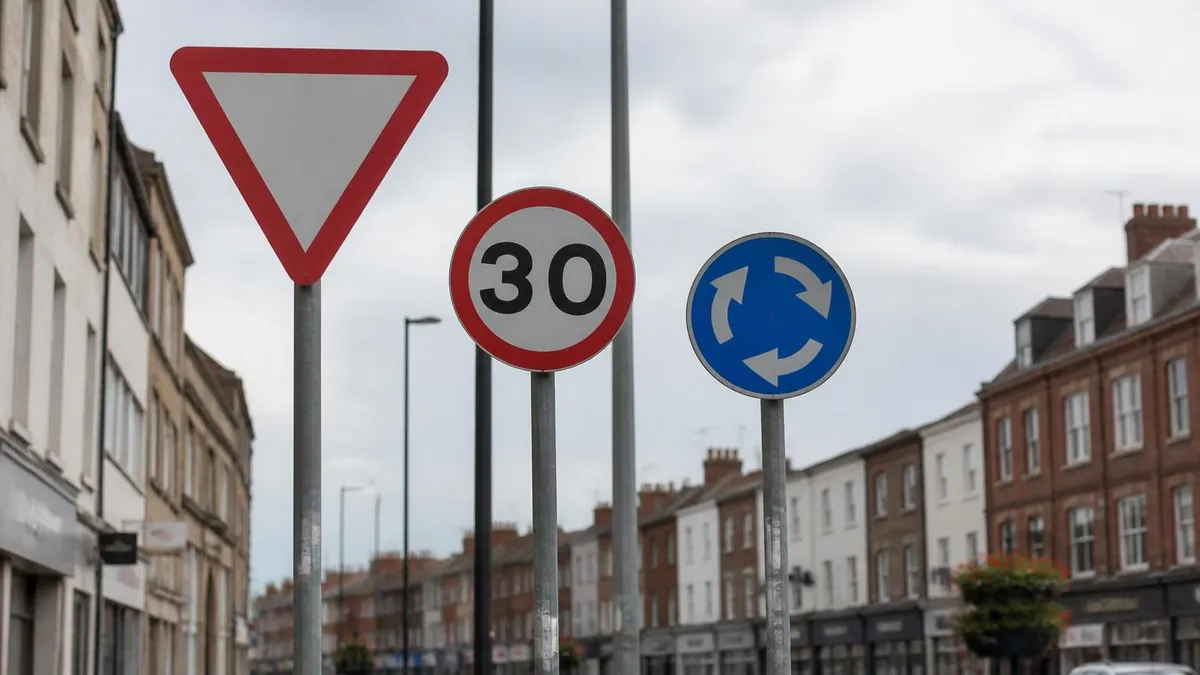
- Early lessons: Moving off and stopping, changing gears, basic junctions, roundabouts
- Mid-stage: Complex junctions, dual carriageways, town driving, parking manoeuvres
- Pre-test: Independent driving (following sat-nav directions for 20 minutes), mock tests, test route practice
Your instructor should explain why you're doing each thing — not just how. If you don't understand the reasoning behind a manoeuvre, ask. Understanding the logic helps it stick.
Theory Test vs Practical: How They Connect
You must pass the uk driving test's theory component before you can book your practical. The theory test has two parts: a multiple-choice section and a hazard perception test. Both need preparation — the theory questions cover everything from road signs and stopping distances to motorway rules and towing regulations.
Your practical lessons and theory study shouldn't happen in separate silos. When your instructor explains why you must keep a two-second gap at 30mph, that's also helping you answer theory questions about stopping distances. When you practice spotting hazards in town, you're training the same perception skills the hazard perception test measures.
Most instructors recommend starting to study for the theory test around the same time you start practical lessons — don't leave it until you're already booking your practical.
Automatic vs Manual Lessons — Which Should You Choose?
This is one of the most common questions new learners ask, and the answer isn't as obvious as people assume.
Learning in a manual car takes longer — the clutch and gear changes add a real layer of complexity, especially in stop-start town driving. But if you pass in a manual, you can drive both manual and automatic cars. Pass in an automatic, and your licence restricts you to automatics only.
That restriction isn't trivial. Rental cars abroad are often manual. Company cars in the UK are still frequently manual. If you ever need to drive a borrowed vehicle in a hurry, an automatic-only licence can leave you stuck.
That said, there are completely valid reasons to go automatic:
- You have a disability affecting clutch control
- You only ever plan to own automatics
- High anxiety around the clutch is significantly slowing your progress
If none of those apply, most instructors recommend learning manual. The extra challenge is worth it for the flexibility.
Intensive Courses: Are They Worth It?
Intensive or 'crash' courses compress your lessons into a week or two — sometimes 30-40 hours over 5-7 days, finishing with the practical test at the end. They're popular with people who have a specific deadline: a new job that requires driving, moving abroad, or simply wanting to get it done.
The evidence on intensive courses is mixed. Some learners do brilliantly — particularly those who've had some driving experience already (lived abroad, farm driving, etc.). Others find that without time to consolidate what they've learned between sessions, skills don't stick as well. Fatigue is also real — seven hours of driving instruction in a day is genuinely exhausting.
If you go intensive, make sure:
- The course includes a guaranteed test at the end (not just a booking attempt)
- You're not a complete beginner — even 5-10 hours beforehand helps enormously
- The instructor has solid pass rates for intensive learners specifically
Tips to Progress Faster and Spend Less
Every hour you spend with a professional instructor costs money. Here's how to get more value from each session:
- Review after each lesson. Spend 10 minutes after every lesson writing down what went well and what you need to work on. This isn't about being hard on yourself — it's about making the next lesson start from a better place.
- Use private practice deliberately. Don't just drive around aimlessly with a family member. Focus on the specific things your instructor flagged. Dual-use practice sessions between paid lessons cut the total number of lessons most people need by 20-30%.
- Study theory in parallel. Use the waiting time before your practical to nail the theory. Candidates who're confident about theory rules also drive more confidently — they're not second-guessing themselves on roundabout priority.
- Don't skip lessons. Consistency matters more than frequency. One missed lesson per month adds up to lost momentum. Even if life gets busy, try to keep at least one lesson per week going.
- Ask for feedback every time. Your instructor should be telling you what went well and what needs work. If they're not, ask directly. Specific feedback is how you improve.
What Examiners Actually Look For
The driving test tips you'll find online mostly focus on the obvious stuff — check your mirrors, don't stall at junctions. But it's worth knowing what examiners are actually assessing underneath all of that.
Examiners want to see that you drive independently and safely. They're not trying to trip you up. The most common reasons people fail the practical test are:
- Observation at junctions (not looking properly before emerging)
- Mirrors — not checking them frequently enough, especially before signalling or changing speed
- Steering control (late or over-correction)
- Moving off unsafely
- Poor positioning on the road
None of these are exotic. They're all things your instructor will drill into you — but they require consistent practice to become second nature. You can't fake good observation habits on test day if you haven't built them during lessons.
When You're Ready to Book Your Test
Your instructor should tell you when you're ready — but you should also trust your own judgement. If you're passing mock tests consistently, driving independently on routes you haven't seen before, and staying calm when things don't go perfectly — you're probably ready.
You can check driving test availability at test centres near you via the DVSA website. Waiting times fluctuate — sometimes there are slots within two weeks, other times you're looking at 8-12 weeks. Book as soon as your instructor gives the green light so you're not sitting idle waiting.
One last thing: even excellent drivers occasionally have a bad day on test day. Nerves are real, and examiners see them all the time. If you do fail, get feedback, address the specific faults, and rebook. Most people who take the time to genuinely fix what went wrong pass on their next attempt.
Making the Most of Your Learning Journey
Learning to drive is one of those skills where patience genuinely pays off. You're not just learning to pass a test — you're building habits that will keep you safe for decades. Instructors who seem thorough and slow in the moment are often the ones whose students have the best long-term safety records.
Take the theory seriously. Study the Highway Code beyond just the test questions. Understand why rules exist, not just what they are. A driver who understands the reasoning behind road rules adapts better to unusual situations — which is exactly what keeps you out of accidents.
And when you pass — because you will — remember that a full licence is the beginning of safe driving, not the end. New drivers have the highest accident rates of any age group in the first two years after passing. Stay humble, keep your speed down, and never underestimate how much experience still ahead of you will teach you.
About the Author

Licensed Driving Instructor & DMV Test Specialist
Penn State UniversityRobert J. Williams graduated from Penn State University with a degree in Transportation Management and has spent 20 years as a certified driving instructor and DMV examiner consultant. He has personally coached thousands of applicants through written knowledge tests, skills assessments, and commercial driver licensing programs across more than 30 states.