
Practice Theory Test: Free UK Driving Practice (2026 September)
Take a free practice theory test for the UK driving licence. Covers all DVSA topics: Highway Code, road signs, hazard perception, and how to pass 💡
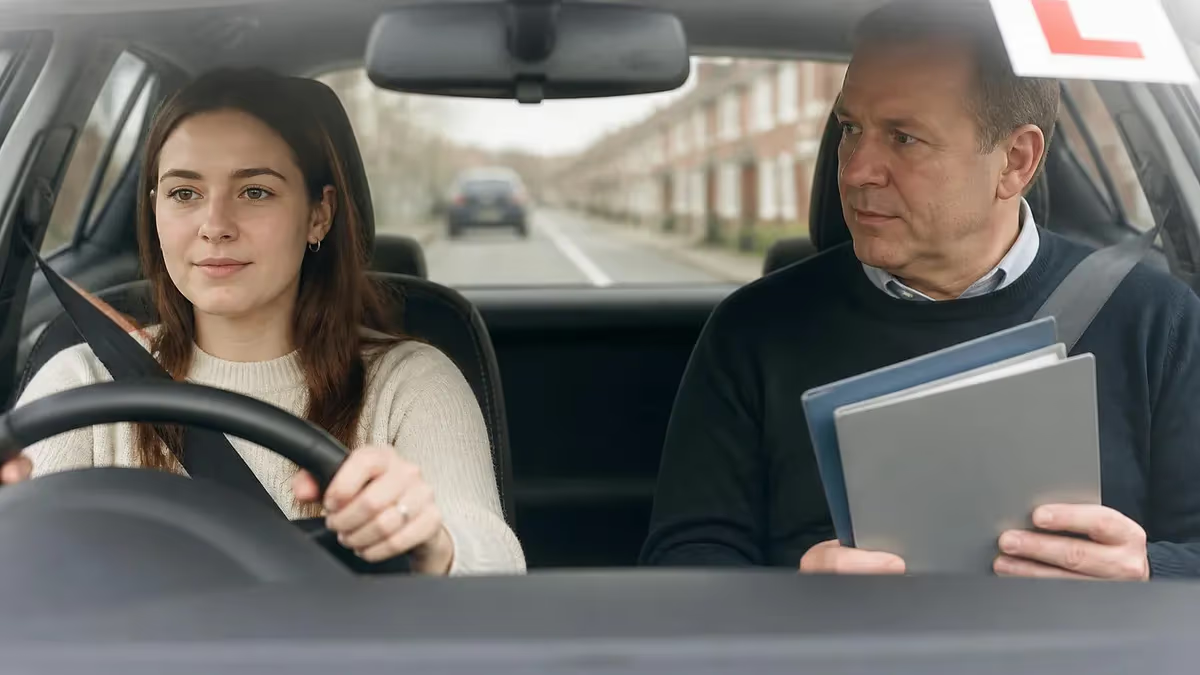
Why Practice Theory Tests Matter for Passing First Time
The UK driving theory test has a pass rate of around 47% — meaning more than half of all candidates fail on their first attempt. The most common reason isn't nerves or bad luck: it's insufficient practice with the actual question types and topic areas the DVSA tests. The multiple choice section contains 50 questions drawn from a bank of nearly 700 unique questions, and you need 43 correct to pass. Knowing the Highway Code in general isn't enough — you need to recognise how the DVSA phrases questions, what distractors look like, and which topics appear most frequently.
Practice theory tests replicate the format, difficulty, and topic distribution of the real exam. Working through them consistently — not just once or twice, but until you're scoring 46/50 or higher reliably — is the most effective preparation strategy.
Research into driving test preparation consistently shows that candidates who complete at least 20 full practice tests before their appointment have significantly higher first-attempt pass rates than those who only study revision materials without testing themselves. The practice process forces active recall rather than passive reading, builds the recognition speed you need to work through 50 questions in 57 minutes, and identifies your weak topics so you can focus revision where it counts.
The UK driving theory test has two distinct parts: the multiple choice section and the hazard perception test. Both are taken in the same appointment. Both require specific practice — the skills tested in each part are quite different, and candidates who over-prepare for one while neglecting the other frequently fail the part they underestimated.
This guide covers how to practise effectively for both parts, what topics to focus on, how many practice tests to complete before your test, how to interpret your practice scores, and what to do on test day to give yourself the best possible chance of passing first time.
Free practice theory tests are available through the official DVSA resources and through numerous third-party revision platforms. The official DVSA theory test kit (available as an app and on the DVSA website) uses actual questions from the live question bank — this is the most accurate preparation resource available.
Third-party platforms, including the practice tests on this site, offer additional practice material structured around the same DVSA topics. Using both is a sensible approach: the official kit for question accuracy, third-party platforms for additional volume and topic-specific drilling. For a full overview of what the test covers and how it works, the DVSA driving theory hub is the starting point.
- Multiple choice: 50 questions, 57 minutes, pass mark 43/50
- Hazard perception: 14 video clips, 75 points available, pass mark 44/75
- First-attempt pass rate: ~47% — more than half of candidates fail their first test
- Question bank size: Nearly 700 unique multiple choice questions across all topics
- Cost of resitting: £23 each time — practice thoroughly to avoid costly resits
- Best practice target: Score 46/50 or higher consistently before booking your test appointment
- Official revision app: DVSA Theory Test Kit — uses real questions from the live bank
How to Use Practice Tests to Pass First Time
Week 1-2: Study the Highway Code and Take a Diagnostic Test
Week 2-4: Topic-by-Topic Drilling
Week 3-5: Full Mock Tests Under Timed Conditions
Week 4-6: Hazard Perception Practice
Final Week: Consolidation and Light Review
What the Theory Test Practice Questions Cover
The DVSA multiple choice question bank covers 14 topic categories. Questions are drawn from all categories in each test, though the distribution isn't entirely uniform — some topics have many more questions in the bank than others, meaning they appear more frequently in real tests. Knowing the topic weightings helps you allocate revision time efficiently.
The largest topic areas by question volume are: alertness (questions about concentration, tiredness, distractions, and mobile phone use while driving); attitude (questions about road rage, patience, consideration for other road users, and appropriate responses to dangerous situations); safety and your vehicle (tyre condition, lights, brakes, loads, and pre-drive checks); safety margins (stopping distances in different conditions, following distance, adverse weather driving); and hazard awareness (reading the road ahead, anticipating hazards, and responding to emerging risks). These five topics collectively account for roughly 40% of the question bank, making them the highest-value areas for revision time.
Other significant topic areas include: vulnerable road users (pedestrians, cyclists, motorcyclists, horses, and children — how to pass them, give way rules, and what to watch for); other types of vehicle (lorries, buses, tractors, and emergency vehicles); vehicle handling (steering, skidding, aquaplaning, driving in fog, ice, and snow); motorway rules (joining, overtaking, lane discipline, contraflow, stopping on the hard shoulder).
Further categories: rules of the road (give way rules, priority at junctions, traffic lights, box junctions, and road markings); road and traffic signs (mandatory signs, warning signs, direction signs, and road markings); documents (what documents to carry, MOT requirements, insurance obligations, DVLA registration); accidents (what to do at accident scenes, first aid basics, emergency services); and vehicle loading (legal load limits, securing loads, passenger limits).
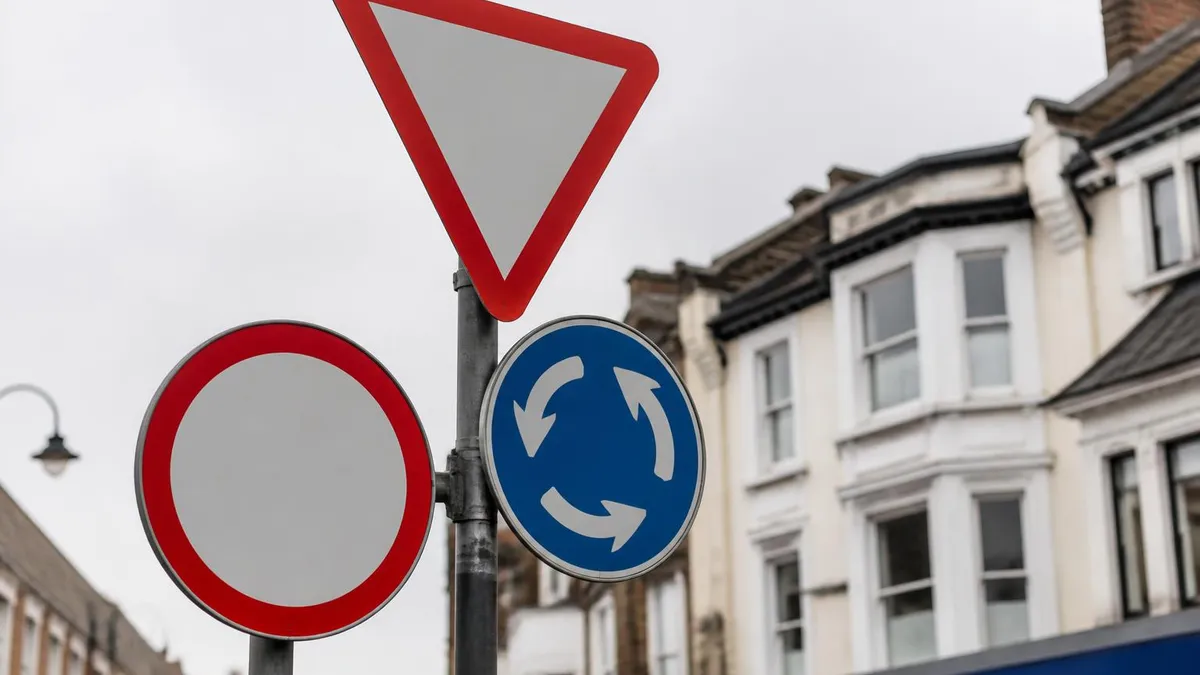
Road signs deserve particular focus. The DVSA has a large bank of sign recognition questions, and many candidates are caught out by less common signs they haven't encountered in normal driving — circular mandatory signs (must do / must not do), triangular warning signs, and information signs for specific road types. A dedicated road signs revision session covering all categories, followed by sign-specific practice questions, is time well spent for most candidates. The mock theory test on this site includes questions across all topic areas in realistic exam format.
Four Highest-Priority Theory Test Topics
Sign recognition accounts for a significant portion of questions. Study all three categories: circular mandatory signs (red = prohibit, blue = instruct), triangular warning signs, and rectangular information signs. Less common signs catch many candidates — ensure you can identify level crossing signs, clearway signs, and zone signs.
The DVSA tests stopping distance questions repeatedly. Memorise the Highway Code table: 20mph = 12m, 30mph = 23m, 40mph = 36m, 50mph = 53m, 60mph = 73m, 70mph = 96m. Questions also test how rain, ice, fog, and tyre condition affect these distances — wet roads double stopping distance, icy roads can increase it tenfold.
Questions test your ability to identify potential hazards, anticipate developing situations, and respond appropriately before a hazard becomes an emergency. Practice reading scenarios from the perspective of 'what could go wrong here?' — parked vehicles near schools, cyclists near junctions, vehicles pulling out from side roads.
Pedestrians, cyclists, motorcyclists, horses, elderly drivers, and children all feature prominently. Questions cover passing distances, junction priority, appropriate speed near schools and pedestrian crossings, and recognising the visual limitations other road users have. This topic has a high question density and strong overlap with hazard awareness.
Where to Find the Best Practice Theory Tests
The DVSA Official Theory Test Kit is the most accurate preparation resource — it uses actual questions from the live multiple choice question bank.
- DVSA app: Available on iOS and Android — search 'DVSA Theory Test Kit' in your app store. Includes the full question bank, mock tests, and hazard perception practice clips
- Cost: The DVSA app costs around £4.99 and is worth it for access to the complete official question bank
- dvsa.gov.uk: The DVSA website links to official revision resources and approved practice materials
- What it includes: All multiple choice questions with explanations, official hazard perception practice clips, case studies section, full mock test mode
The official DVSA question bank is updated periodically to reflect changes in the Highway Code and road law. Using official resources ensures your practice reflects the current live test, not an outdated version.
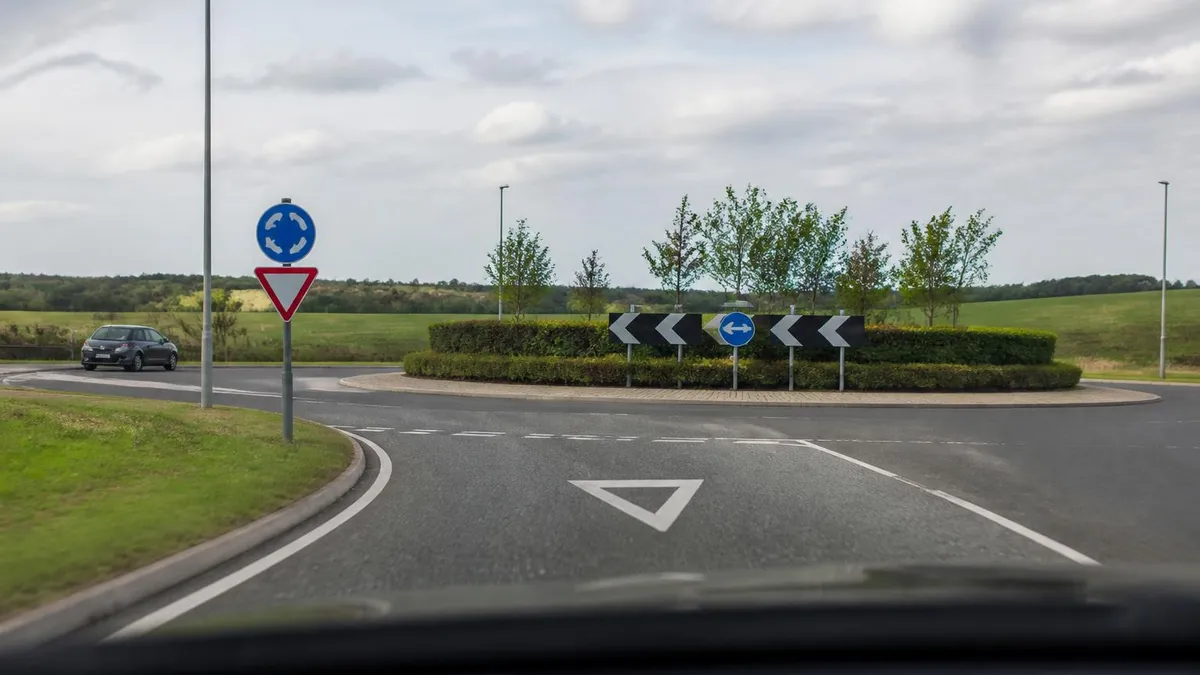
How Many Practice Tests Should You Do Before Your Theory Test?
There's no single answer that applies to every candidate — the right number depends on your starting knowledge, how quickly you learn from mistakes, and how consistent your scores become over time. That said, general guidance from driving instructors and the DVSA's own research suggests that most candidates benefit from completing at least 20-30 full mock tests across their revision period, in addition to topic-specific drilling and at least five hazard perception practice sessions.
A more useful target than a raw number is a score threshold: when you're consistently scoring 46/50 or higher on multiple choice mock tests (not just once, but across three or four consecutive tests), and scoring 50+ on hazard perception practice, you're likely ready to sit the real test. Consistent high scores across multiple sessions indicate genuine understanding rather than lucky runs. If your scores are variable — 44 one test, 39 the next — you haven't yet achieved the reliable knowledge base needed to pass consistently.
The DVSA test draws questions from across all 14 topic categories. If you're consistently strong in most areas but weak in one or two, a targeted run of 30-50 questions on those specific topics often resolves the gap more efficiently than another round of full mock tests. Track your weak categories: if you notice you repeatedly miss questions about motorway rules or vehicle loading, those are the areas to drill rather than completing more general practice.
Don't book your theory test appointment before you're consistently scoring 46+. The test costs £23, and retaking after a fail means waiting at least 3 working days (usually longer) and paying again. Time spent reaching a genuine 46+ consistently before booking is time and money well saved. The driving theory test practice section on this site organises questions by DVSA topic category so you can drill your weak areas efficiently alongside full mock tests.
Theory Test Preparation Checklist
- ✓Read the Highway Code — particularly road signs, right of way rules, speed limits, and pedestrian crossing types
- ✓Take a diagnostic 50-question mock test at the start of revision to identify your weakest topics
- ✓Work through topic-specific practice questions for the 14 DVSA categories, spending extra time on weak areas
- ✓Memorise stopping distances at all speeds — the Highway Code table is tested directly in multiple choice questions
- ✓Study all road sign categories: mandatory (circular), warning (triangular), and information (rectangular)
- ✓Complete at least 20 full 50-question mock tests under timed conditions (57 minutes) before your test date
- ✓Score 46/50 or higher consistently across multiple mock tests before booking your appointment
- ✓Complete dedicated hazard perception practice — at least 5-10 full sessions using video clips
- ✓Practise the hazard perception clicking technique — respond when a hazard is developing, not fully formed
- ✓Check your provisional driving licence is valid and not expired before your test day
- ✓Bring your provisional licence to the test centre — without it, you cannot sit the test
Free vs. Paid Theory Test Preparation
- +Free online practice tests cover all DVSA topic categories and provide sufficient volume for most candidates to prepare thoroughly
- +The DVSA's own official resources — most accurate to the live question bank — are available at low cost (app approximately £4.99)
- +Paid theory test preparation courses and intensive revision packages provide structured learning and instructor guidance for candidates who struggle with self-directed study
- +Free resources require self-discipline to use consistently — candidates who study independently with free resources typically save £50-£200 vs. commercial courses
- −Free third-party practice question banks may not use exact DVSA wording — phrasing differences can be confusing when the real test uses slightly different language
- −Free platforms rarely include official hazard perception video clips — the paid DVSA app is the best source for authentic hazard perception practice
- −Paid theory test courses don't guarantee a pass — a £100 course doesn't compensate for insufficient practice volume
- −Self-directed preparation with free resources requires honest self-assessment — candidates tend to book too early before reaching reliable 46+ scores

Hazard Perception: How to Practise and What to Expect
The hazard perception section is the second part of your theory test and is taken immediately after the multiple choice section in the same appointment. It consists of 14 short video clips filmed from a driver's perspective on real UK roads. Within each clip, you must identify developing hazards — situations where the driver would need to slow, stop, or change direction in response to something happening on the road ahead. There are 15 scored hazards across the 14 clips: 13 clips contain one scored hazard each, and one clip contains two scored hazards.
Scoring works on a 0-5 scale per hazard. You score 5 points if you click when the hazard first starts developing (the earliest possible response window), 4 points for clicking slightly later, 3 for a bit later, and so on down to 0 if you click outside any scoring window (too early or too late). The maximum score across 14 clips is 75 points, and the pass mark is 44.
This means you have a reasonable margin — you don't need perfect scores on every clip to pass, but you do need to identify the majority of hazards and respond reasonably promptly.
Common mistakes in hazard perception practice: clicking too late (waiting until the hazard is obvious rather than responding when it's still developing); clicking too early (triggering on things that aren't developing hazards, which scores zero for that response window); and clicking repeatedly in rapid bursts (the system detects clicking patterns and voids the score for that clip). The correct technique is one decisive click when you first notice a hazard beginning to develop — a pedestrian stepping towards the road edge, a vehicle pulling out of a side road, a cyclist swerving to avoid a drain cover.
The best way to build hazard perception skill is to practise with official DVSA video clips — the DVSA Theory Test Kit app includes these. After each practice clip, review the scoring feedback to understand where your response fell within the scoring window. Most candidates improve quickly with dedicated practice; the skill is learnable but requires seeing enough different scenarios to develop pattern recognition.
Five to ten full practice sessions with authentic clips is usually sufficient for most candidates. For additional practice specifically targeting hazard perception, the dedicated hazard perception guide covers the technique, scoring, and practice resources in more detail.
UK Driving Theory Test: Key Statistics
How to Know When You're Ready to Book Your Theory Test
Many candidates book their theory test too early — either because they feel confident after a few good practice sessions or because they're eager to progress. Booking too early and failing wastes £23 and requires at least a 3-working-day wait before you can resit, potentially longer given test centre availability. The cost of waiting until you're genuinely ready is always less than the cost of failing and resitting.
The readiness benchmark is consistency, not a single good score. If you take five consecutive full mock tests under timed conditions and score 46/50 or higher on all of them, combined with hazard perception practice scores consistently above 50/75, you're ready to book. If your scores are variable — strong one session, weaker the next — you have knowledge gaps that additional topic drilling will address. A single 50/50 score means nothing if you scored 40 on the previous test.
Also consider which questions you're getting wrong in your practice sessions. If your mistakes are concentrated in one or two topic areas, targeted drilling should resolve those gaps efficiently. If your mistakes are distributed randomly across topics, it suggests either insufficient revision volume or a need to revisit the Highway Code fundamentals rather than just doing more practice tests. Tracking your category scores across multiple sessions identifies which pattern applies to you.
Book your theory test once you meet the consistency standard, allowing yourself at least 3-5 days of buffer between your final practice sessions and the test date. Don't schedule the test for the day after your last practice run — a short buffer period lets the material consolidate and prevents the fatigue of intensive last-minute cramming. Once booked, continue light daily practice rather than intensive study. See the guide to booking a theory test for practical details on how to book, what identification to bring, and what to expect when you arrive at the test centre.
The theory test pass requires passing both the multiple choice section (43/50) AND the hazard perception section (44/75) in the same appointment. If you pass one part but fail the other, the entire test is a fail and you must resit both parts from scratch at a new appointment. This is why dedicated hazard perception practice is as important as multiple choice preparation — neglecting either part can cause a fail even when the other part is well prepared. Don't assume strong multiple choice performance guarantees a pass; practise both sections properly before sitting.
What to Do on Theory Test Day
Arriving prepared on test day is as important as preparation in the weeks before. UK theory tests are taken at a network of DVSA-approved test centres across the country. You must bring your valid UK provisional driving licence to the test — without it, the centre will not allow you to sit the test and you'll forfeit your fee. Some test centres may also ask for a second form of ID; check your confirmation email for the specific centre's requirements.
Arrive at least 15 minutes before your appointment. Late arrivals may be turned away if the test has already begun for other candidates. You'll be asked to store all personal items including your phone in a locker — nothing can be taken into the test room. You'll be given a brief explanation of how the computer-based test works by the test centre staff. Don't hesitate to ask the staff to clarify the instructions if anything is unclear before you start.
During the multiple choice section, read each question carefully before selecting your answer. The DVSA uses careful wording in questions, and some options are designed to be plausible-sounding distractors. If you're unsure about a question, use the 'flag for review' function — flag it, move on, and return to it at the end. With 57 minutes for 50 questions, you have more than enough time to review flagged questions without rushing. Answer all 50 questions — there's no penalty for wrong answers, so never leave a question blank.
After completing the multiple choice section, you'll have a short break before the hazard perception section begins. Watch the short instruction video about how hazard perception works — even if you've practised extensively, it refocuses your attention on the clicking technique. During the clips, remember: click once when the hazard starts developing, not when it's fully evident. Stay alert throughout all 14 clips — it's easy to lose focus by clips 12-14. After submitting, your result is shown on screen immediately. The mock theory test simulates the full two-part format so you know exactly what to expect on the day.
Practice Theory Test Questions and Answers
About the Author

Licensed Driving Instructor & DMV Test Specialist
Penn State UniversityRobert J. Williams graduated from Penn State University with a degree in Transportation Management and has spent 20 years as a certified driving instructor and DMV examiner consultant. He has personally coached thousands of applicants through written knowledge tests, skills assessments, and commercial driver licensing programs across more than 30 states.