
Online CPR Training: Complete Guide to ACLS Algorithm, PALS Certification, and Life Support Certification in 2026 August
Complete guide to online CPR training: ACLS algorithm, PALS certification, infant CPR, AED use, and life support requirements for US learners in 2026 August. ❓
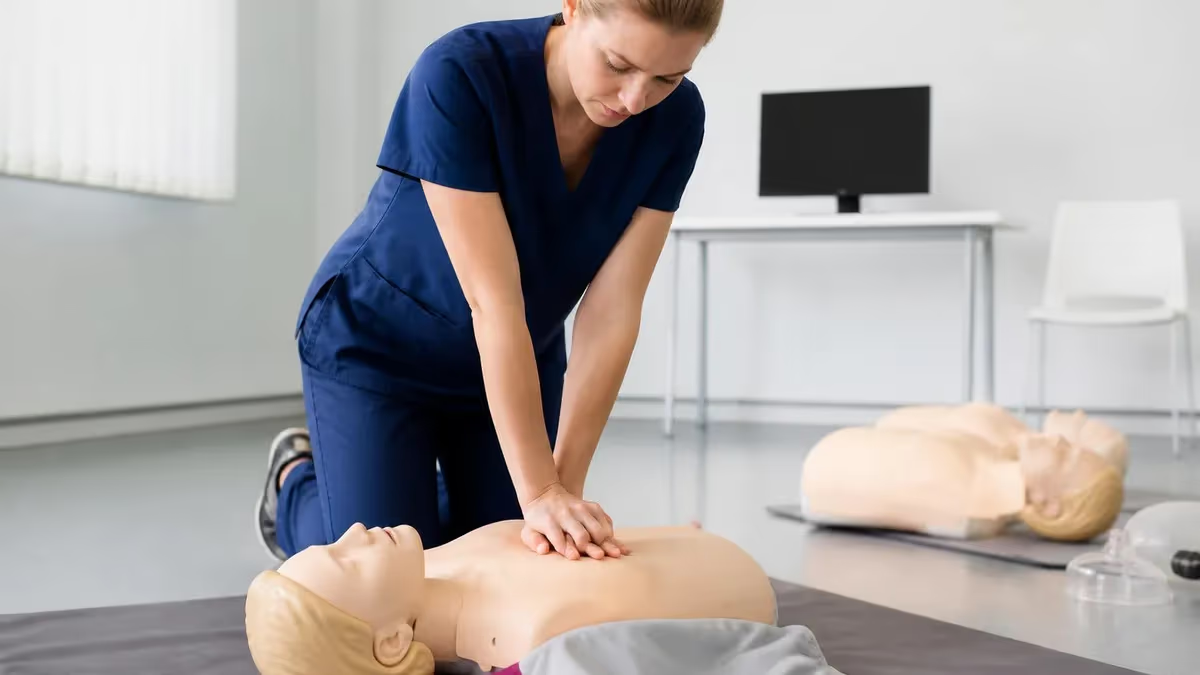
The ACLS algorithm is at the core of every serious resuscitation protocol, and mastering it starts with choosing the right online cpr training program. Whether you are a first responder, a hospital nurse, a parent preparing for emergencies, or a fitness professional renewing your credentials, the landscape of digital CPR education has expanded dramatically in 2026. Accredited platforms now deliver interactive simulations, real-time feedback, and skills verification that rival in-person classroom experiences — making remote certification more accessible and credible than ever before.
Understanding the full spectrum of life support education is essential before you enroll. The phrase "online CPR training" covers everything from a 30-minute awareness course on infant CPR to a rigorous multi-day program preparing healthcare professionals for PALS certification or ACLS recertification. The course that is right for a daycare worker differs substantially from what a pediatric ICU nurse needs, and choosing incorrectly can waste both time and money while leaving critical skill gaps unfilled.
A common point of confusion for new learners is the relationship between CPR, BLS, ACLS, and PALS. CPR — cardiopulmonary resuscitation — is the foundational skill set: chest compressions and rescue breathing. Basic Life Support (BLS) builds on that foundation with structured protocols for healthcare teams. The ACLS algorithm extends further into advanced airway management, pharmacology, and rhythm interpretation. PALS certification applies those advanced concepts specifically to pediatric emergencies, requiring specialized knowledge of age-appropriate respiratory rate norms and pediatric drug dosing.
The question of what does AED stand for comes up in almost every beginner-level training session. AED stands for Automated External Defibrillator — a portable device that analyzes heart rhythms and delivers a shock to restore normal cardiac function. Modern online training programs walk learners through AED placement, pad positioning, and voice-prompt compliance in vivid detail, often using branching video scenarios that force the learner to make real decisions under simulated pressure. Knowing how to operate an AED correctly can triple survival rates for witnessed cardiac arrest when combined with high-quality compressions.
Recovery position is another skill that online courses now teach effectively through 3D animation and guided practice prompts. Placing an unconscious but breathing casualty into the correct position recovery prevents airway obstruction from vomit or the tongue, buying critical time until emergency services arrive. Courses that cover this skill alongside standard CPR give learners a far more complete emergency response toolkit than compression-only programs, and most accredited providers include it as a standard module in their general public offerings.
The National CPR Foundation is one of the most recognized accrediting bodies in the United States, offering online-first certifications that satisfy OSHA workplace safety requirements and many employer mandates. Their courses are accepted by gyms, schools, childcare facilities, and numerous healthcare organizations. Understanding which accreditor backs your certificate matters enormously: some employers require American Heart Association or American Red Cross credentials specifically, while others accept any nationally recognized organization. Always verify acceptance before you purchase a course.
This guide walks you through every dimension of online CPR education: how the ACLS algorithm is structured, what PALS certification requires, how to perform infant CPR correctly, what life support tiers exist, and how to select, prepare for, and pass your certification exam on the first attempt. You will also find curated practice quizzes, a step-by-step enrollment timeline, pros and cons of online versus blended training, and an expert checklist to ensure you are fully ready before your skills assessment.
Online CPR Training by the Numbers
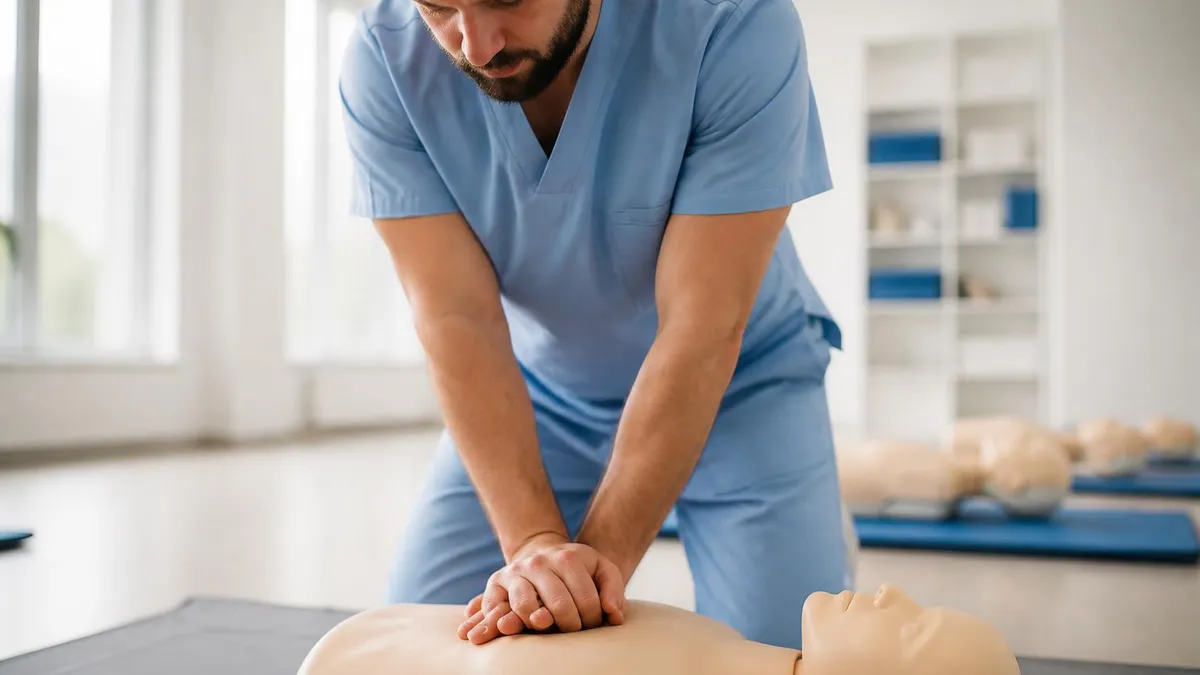
How to Complete Your Online CPR Training Step by Step
Identify Your Certification Level
Choose an Accredited Online Provider
Complete the Online Didactic Modules
Pass the Written Knowledge Exam
Schedule and Pass Your Skills Check
Download Your Digital Certificate
The ACLS algorithm is a systematic decision framework that guides rescuers through the management of cardiac arrest, post-arrest care, acute coronary syndromes, stroke, and other cardiovascular emergencies. Developed and regularly updated by the American Heart Association, the algorithm provides a structured chain of actions designed to maximize survival by eliminating hesitation and ensuring that every critical intervention happens in the right sequence at the right time. For healthcare professionals, fluency with the ACLS algorithm is not optional — it is a core clinical competency that regulatory bodies and hospital credentialing committees verify at hire and every two years thereafter.
At the center of the cardiac arrest algorithm is a simple loop: start high-quality CPR, check the rhythm every two minutes, shock if shockable (ventricular fibrillation or pulseless ventricular tachycardia), and administer epinephrine every three to five minutes for non-shockable rhythms. This rhythm-check-and-shock cycle is what most people picture when they hear about the ACLS algorithm, but the full protocol also encompasses airway management priorities, waveform capnography use, and the identification and treatment of reversible causes — the Hs and Ts (hypovolemia, hypoxia, hydrogen ion excess, hypo/hyperkalemia, hypothermia; tension pneumothorax, tamponade, toxins, thrombosis).
Life support training exists on a clear continuum. Basic Life Support (BLS) equips responders with hands-only CPR, rescue breathing, AED operation, and relief of airway obstruction — the skills any trained bystander can deploy in the critical minutes before advanced help arrives. ACLS builds on BLS by adding rhythm interpretation on a cardiac monitor, advanced airway insertion techniques, intravenous medication administration, and team dynamics protocols for resuscitation leadership. PALS certification mirrors the ACLS structure but recalibrates every parameter for pediatric patients: smaller compression depths, higher respiratory rate targets, weight-based drug dosing, and specific algorithms for pediatric tachyarrhythmias and bradyarrhythmias.
Respiratory rate is a vital sign that online CPR courses address in detail because it varies significantly by age and is frequently tested on certification exams. A normal adult respiratory rate at rest is 12–20 breaths per minute. For children aged one to twelve, the normal range is 18–30 breaths per minute. For infants under one year, normal respiratory rate climbs to 30–53 breaths per minute.
During CPR, rescue breaths are delivered at a rate of one breath every five to six seconds (10–12 per minute) for adults when an advanced airway is in place, and one breath every three to five seconds (12–20 per minute) for children and infants — numbers that appear repeatedly in PALS certification exams and ACLS algorithm modules.
Understanding what does AED stand for and how to deploy one is covered in nearly every online CPR curriculum, from beginner to advanced levels. AED stands for Automated External Defibrillator. The device's built-in voice prompts guide even untrained bystanders through pad placement, shock delivery, and compression resumption. Online training courses teach learners how to recognize the two shockable rhythms — ventricular fibrillation and pulseless ventricular tachycardia — versus the non-shockable rhythms like asystole and pulseless electrical activity (PEA), for which defibrillation is ineffective and compressions plus epinephrine are the primary interventions.
The National CPR Foundation offers a fully online CPR/AED certification that satisfies OSHA General Industry Standard 29 CFR 1910.151 for many workplace settings. Their courses include HD video demonstrations, interactive knowledge checks, and instant digital certification upon passing.
Other major providers include the American Heart Association (AHA), which offers a Heartsaver CPR AED Online with a blended skills session, and the American Red Cross, which provides a similar online-plus-skills format. For strict healthcare settings — hospitals, surgery centers, dialysis clinics — the AHA's BLS Provider or ACLS Provider certification is almost universally required and must include the hands-on skills evaluation component.
Position recovery is a skill that online courses now integrate effectively through guided animation. After a cardiac arrest patient achieves return of spontaneous circulation (ROSC), or when a bystander encounters someone unconscious but breathing normally, placing the individual in the correct recovery position prevents aspiration and maintains airway patency.
The standard lateral recovery position involves rolling the casualty onto their side, using the upper arm and knee as stabilizers, and tilting the head slightly back to keep the airway open. This maneuver is simple but frequently tested in both basic and advanced online CPR assessments, making it a topic worth drilling before your certification skills session.
CPR Practice Test Questions
Prepare for the CPR Cardiopulmonary Resuscitation Practice exam with our free practice test modules. Each quiz covers key topics to help you pass on your first try.
CPR Basic CPR
CPR Exam Questions covering Basic CPR. Master CPR Test concepts for certification prep.
CPR and First Aid
Free CPR Practice Test featuring and First Aid. Improve your CPR Exam score with mock test prep.
CPR (Cardiopulmonary Resuscitation) Adult ...
CPR Mock Exam on (Cardiopulmonary Resuscitation) Adult CPR and AED Usage. CPR Study Guide questions to pass on your first try.
CPR (Cardiopulmonary Resuscitation) Airway...
CPR Test Prep for (Cardiopulmonary Resuscitation) Airway Obstruction and Choking. Practice CPR Quiz questions and boost your score.
CPR (Cardiopulmonary Resuscitation) Cardio...
CPR Questions and Answers on (Cardiopulmonary Resuscitation) Cardiopulmonary Emergency Recognition. Free CPR practice for exam readiness.
CPR (Cardiopulmonary Resuscitation) Child ...
CPR Mock Test covering (Cardiopulmonary Resuscitation) Child and Infant CPR. Online CPR Test practice with instant feedback.
CPR (Cardiopulmonary Resuscitation) High-P...
Free CPR Quiz on (Cardiopulmonary Resuscitation) High-Performance Team Dynamics. CPR Exam prep questions with detailed explanations.
CPR (Cardiopulmonary Resuscitation) Legal ...
CPR Practice Questions for (Cardiopulmonary Resuscitation) Legal and Ethical Considerations. Build confidence for your CPR certification exam.
CPR for Specific Populations
CPR Test Online for for Specific Populations. Free practice with instant results and feedback.
CPR Airway & Breathing Management
CPR Exam Questions covering Airway & Breathing Management. Master CPR Test concepts for certification prep.
CPR Assessment & Recognition of Cardiac Ar...
Free CPR Practice Test featuring Assessment & Recognition of Cardiac Arrest. Improve your CPR Exam score with mock test prep.
CPR Chest Compressions & Defibrillation
CPR Mock Exam on Chest Compressions & Defibrillation. CPR Study Guide questions to pass on your first try.
CPR Post-Resuscitation Care & Recovery
CPR Test Prep for Post-Resuscitation Care & Recovery. Practice CPR Quiz questions and boost your score.
Infant CPR, PALS Certification, and Pediatric Life Support
Infant CPR requires a fundamentally different technique than adult resuscitation. For infants under one year of age, rescuers use two fingers (typically the index and middle fingers) placed on the center of the chest just below the nipple line, or the two-thumb encircling technique when two rescuers are available. Compressions should be delivered to a depth of approximately 1.5 inches at a rate of 100–120 per minute, with rescue breaths delivered gently enough to produce visible chest rise without over-inflating the small lung volume.
The compression-to-ventilation ratio for infant CPR with a single rescuer is 30:2, identical to adult CPR. However, when two trained healthcare providers are present, the ratio changes to 15:2 — a pediatric-specific protocol designed to increase the total number of rescue breaths delivered per minute and better address the higher likelihood of respiratory rather than cardiac etiology in pediatric arrest. Online infant CPR modules use detailed animation to demonstrate finger placement, head-tilt chin-lift modifications for small airways, and the signs of effective ventilation in infants.
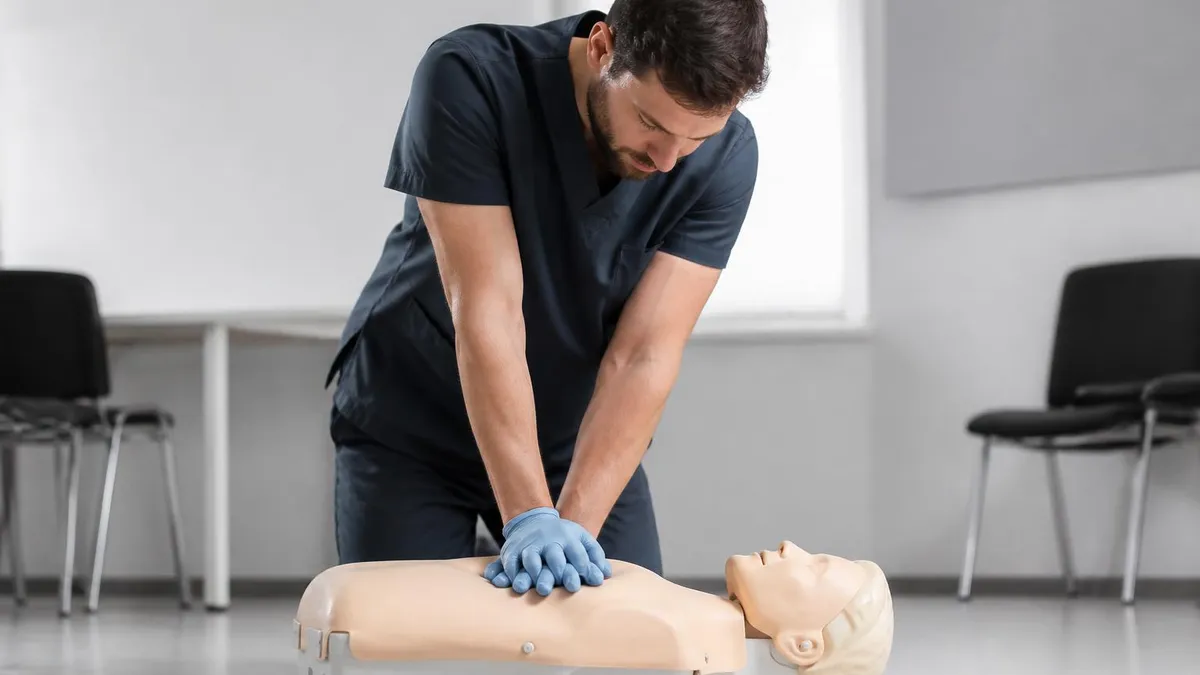
Online CPR Training vs. Traditional In-Person Classes: Pros and Cons
- +Learn at your own pace with 24/7 access to video modules and practice exams
- +Significantly lower cost — online-only or blended courses often cost 30–50% less than classroom-only formats
- +Immediate digital certification upon passing the knowledge exam for many basic courses
- +Access to updated ACLS algorithm content and AHA guideline changes as soon as they publish
- +Reduces time away from work — most BLS online modules complete in 3–4 hours vs. a full-day classroom
- +Ideal for remote workers, rural residents, or those with irregular schedules who cannot attend fixed-time classes
- −Full BLS, ACLS, and PALS certifications still require an in-person skills component — no fully online option for healthcare credentials
- −Hands-on muscle memory for compression depth and rate is harder to develop without a manikin
- −Self-paced learning requires discipline — learners who rush through modules retain less and struggle at skills stations
- −Technical issues (video buffering, browser incompatibility) can disrupt the learning experience
- −Some employers and licensing boards do not accept online-only certificates for clinical positions
- −Peer-to-peer team dynamics practice — critical for ACLS and PALS mega-codes — cannot be replicated in a solo online environment
Online CPR Certification Readiness Checklist
- ✓Confirm your employer or licensing board accepts your chosen provider's certification before enrolling.
- ✓Verify the course covers the current AHA guidelines (2020 or later update cycle).
- ✓Complete all didactic video modules without skipping — knowledge check scores improve by 20% when all content is viewed.
- ✓Memorize the ACLS algorithm cardiac arrest pathway including drug names, doses, and timing before your exam.
- ✓Practice rescue breathing ratios: 30:2 for single-rescuer adult and infant CPR; 15:2 for two-rescuer infant CPR.
- ✓Know the normal respiratory rate ranges: 12–20 (adult), 18–30 (child), 30–53 (infant).
- ✓Review what AED stands for, how to place pads correctly, and the two shockable cardiac rhythms (VF and pVT).
- ✓Practice position recovery technique using a pillow or couch cushion to simulate the lateral recovery roll.
- ✓Take at least two full-length practice exams and score 85% or higher before attempting your certification assessment.
- ✓Schedule your in-person skills session within 30 days of completing your online modules to retain muscle memory.
Rate AND Depth Both Matter — But Pauses Kill
Research published in Resuscitation journal shows that minimizing interruptions to chest compressions — keeping pauses under 10 seconds — has a greater impact on survival than achieving perfect compression rate or depth alone. During your online CPR training, focus equally on the no-interruption discipline (hands on chest within 10 seconds of rhythm check) as you do on the 100–120 per minute rate and 2–2.4 inch depth targets. This is the single most commonly failed element in ACLS and BLS skills evaluations.
Choosing the right online CPR training platform requires comparing accreditation, content quality, skills session logistics, certificate validity, and total cost. The American Heart Association remains the gold standard for healthcare provider credentials — their BLS Provider, ACLS Provider, and PALS Provider cards are accepted by virtually every US hospital, surgery center, and healthcare employer.
The tradeoff is cost: AHA-aligned courses typically run $60–$150 for the online portion plus an additional fee for the skills session, and the blended format means you still need to travel to a training site. For many working clinicians, this is a non-issue, but for learners in rural areas with limited access to AHA training centers, alternative accreditors become important.
The National CPR Foundation offers fully online certifications — no skills session required — that satisfy OSHA requirements for many non-clinical workplace roles. Their CPR/AED certification costs approximately $19–$35 and can be completed in under two hours. Renewal is required every two years. Employers in childcare, fitness, education, and corporate wellness settings frequently accept this credential. However, clinical employers — hospitals, dialysis centers, home health agencies, urgent care clinics — almost always require AHA or equivalent hands-on certification. Always confirm acceptance before purchasing any online-only course if you work in a regulated healthcare environment.
For PALS certification seekers, online preparation options have improved dramatically since 2023. Providers including ACLS Medical Training, ProTrainings, and HealthStream offer robust online PALS prep courses with interactive algorithm maps, pediatric case simulations, and practice exams that closely mirror the AHA PALS written assessment. These platforms structure their content around the pediatric assessment triangle, respiratory distress recognition, and weight-based pharmacology — the three content areas that account for the majority of incorrect answers on PALS exams. Pairing these prep courses with daily practice on PracticeTestGeeks' pediatric CPR quiz bank produces measurably better first-attempt pass rates.
Infant CPR online modules have become particularly sophisticated. Using 3D animation and close-up video from multiple camera angles, modern platforms can show exactly how two-finger compression technique differs from the two-thumb encircling method, why head position matters more in infants than adults (neutral position vs. slight extension), and how to assess for effective chest rise during rescue breaths when lung compliance is very high. Some platforms even include audio coaching that lets learners practice compression timing by tapping on their keyboard or touchscreen in sync with a virtual manikin, providing rudimentary feedback on rate accuracy.
The cpr cell phone repair association is a common search that actually refers to CPR — a national chain of cell phone repair stores — rather than cardiopulmonary resuscitation. Similarly, searches for cpr phone repair lead users to the retail franchise. This disambiguation matters because some learners searching for CPR certification online encounter these consumer electronics results first, causing confusion. If you are looking for life support training, make sure your search includes terms like "certification," "training," "BLS," or "ACLS" to filter out unrelated results and reach the accredited educational providers you actually need.
Cost is a genuine barrier for many people pursuing CPR certification, particularly those seeking ACLS or PALS credentials. A full AHA ACLS Provider course — including online content, textbook, and skills session — can cost $200–$400 depending on the training center. Hospital employees typically receive employer-paid ACLS training as part of their onboarding, but per-diem nurses, traveling healthcare workers, and new graduates often pay out of pocket.
Free and low-cost options exist: many fire stations, community health organizations, and libraries offer free Heartsaver CPR courses for community members. The American Red Cross frequently offers discounted courses through employer partnerships, and several online platforms provide free introductory CPR awareness content that satisfies basic training requirements for volunteer positions.
Technology continues to reshape online CPR education in meaningful ways. Virtual reality headsets now allow learners to practice full resuscitation scenarios in immersive simulated environments, with haptic feedback gloves providing resistance feedback that mimics chest wall compliance. AI-powered coaching tools analyze learners' compression timing and provide personalized feedback without requiring an instructor present.
Several platforms have integrated smartwatch connectivity, allowing learners to use their Apple Watch or Fitbit as a compression metronome during practice sessions at home. While none of these technologies replaces the live skills evaluation required for full certification, they substantially improve the quality of preparation that online learners arrive with at their skills station — translating directly into higher first-attempt pass rates and greater real-world confidence.
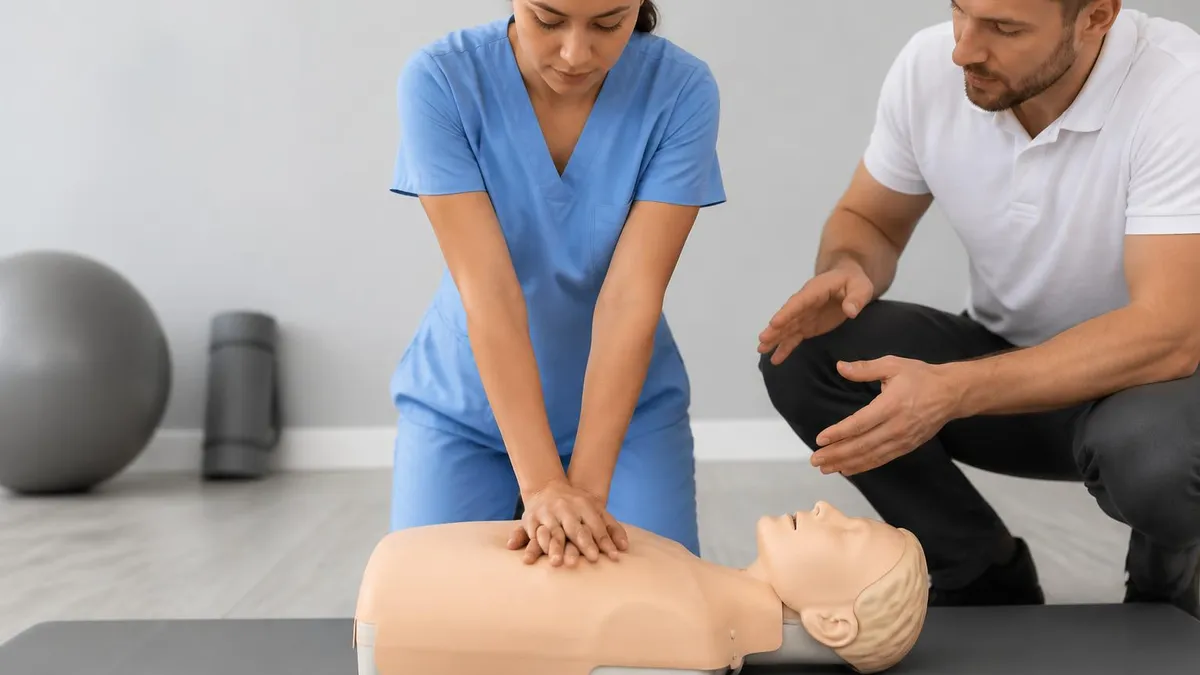
Not all online CPR certifications are accepted by all employers. Before you purchase any course, email or call your HR department or licensing board to confirm which accrediting body and which specific course format (online-only vs. blended) they accept. Healthcare employers regulated by The Joint Commission, CMS, or state nursing boards almost always require an AHA or equivalent blended-format course — a fully online-only certificate will not satisfy their credentialing requirements and you may need to retake the course at additional cost.
Exam preparation for online CPR certification assessments requires more than passively watching video modules. Research on adult learning consistently shows that active retrieval practice — the act of testing yourself on material rather than re-reading or re-watching it — produces dramatically better long-term retention.
For CPR certification candidates, this means taking practice exams early and often, not just in the final hours before your knowledge assessment. Beginning practice quizzes after your first few modules, rather than waiting until you have completed all content, forces your brain to retrieve partial knowledge and identify gaps while there is still time to address them.
The ACLS algorithm written exam typically includes 50 questions covering cardiac arrest management, bradycardia and tachycardia algorithms, post-arrest care, acute stroke protocols, and pharmacology.
Common high-difficulty questions focus on the correct epinephrine dosing interval (every 3–5 minutes, not every 2 minutes as many learners mistakenly believe), the initial energy setting for defibrillation with a biphasic device (manufacturer recommendation, typically 120–200 J), and the definition of return of spontaneous circulation (ROSC) versus organized rhythm without pulse. These nuances are exactly the types of details that appear on the exam and that online learners who rely solely on video modules without active practice consistently miss.
PALS certification exam questions frequently test respiratory rate interpretation and the pediatric assessment triangle. Candidates who can reliably identify a child in respiratory failure — as opposed to respiratory distress or the compensated shock phase — without using a reference chart perform substantially better on the written exam and in mega-code scenarios. Online PALS prep that includes symptom-based case vignettes, where you are given a clinical picture and must select both the diagnosis category and the priority intervention, prepares you for the actual exam format far more effectively than content review alone.
For infant CPR skills assessments, evaluators watch for three common failure points: failure to activate emergency services (calling 911 or directing a bystander to call) before beginning compressions in a witnessed scenario, incorrect hand placement (too high on the sternum or on the xiphoid process), and excessive ventilation volume causing visible gastric distension. Practicing these three elements deliberately during your home preparation — using a pillow as a surrogate manikin — reduces the likelihood of committing these errors under evaluator observation. The skills station is not the time to encounter these failure points for the first time.
Life support knowledge decays faster than most healthcare professionals expect. Studies show that without refresher practice, CPR skill quality begins to deteriorate significantly within three to six months of initial certification. This is why the two-year recertification cycle exists, but it also means that a provider who is recertifying after a 23-month lapse may perform significantly worse at their skills evaluation than someone who has maintained regular practice.
Building in quarterly review sessions — even just 20–30 minutes of practice quiz work and a quick review of the ACLS algorithm flowchart — maintains competency far above the minimum and dramatically reduces skills-session anxiety at recertification time.
The integration of position recovery, airway management, and AED deployment into a single seamless response sequence is what separates a truly prepared CPR provider from someone who has only memorized isolated steps. Online training programs that use scenario-based learning — presenting learners with a complete emergency situation and asking them to work through the full response sequence — develop this integration far more effectively than module-by-module topic review.
Look for platforms that include at least three to five full scenario simulations in their curriculum, covering different victim types (adult cardiac arrest, pediatric respiratory arrest, infant CPR, choking adult) so your decision-making fluency spans the full range of situations you may encounter.
The final weeks before your skills assessment should combine knowledge review with physical preparation. Practice your compression rate using a metronome app set to 110 beats per minute — slightly higher than the 100 minimum target to account for fatigue-related slowdown during a two-minute compression cycle. Review your provider's specific skills checklist, which is usually available for download from their website, and mentally walk through each item.
If your employer has a manikin available for practice, request 30 minutes of unsupervised practice time in the week before your skills session. Walking in with documented preparation and physical muscle memory is the single most reliable predictor of first-attempt skills assessment success across all certification levels — from basic CPR to ACLS recertification.
Practical preparation for your online CPR training certification begins well before your exam date. The most effective learners treat their certification prep like a structured mini-course: they set a daily study schedule, use spaced repetition to review high-yield topics, and benchmark their readiness with practice assessments rather than relying on gut feeling. For a BLS certification, plan for five to seven days of preparation; for ACLS or PALS, budget two to three weeks of consistent daily review, especially if you are new to rhythm interpretation or pediatric pharmacology calculations.
The ACLS algorithm cardiac arrest loop is the single highest-yield topic for both the written exam and the mega-code skills station. Commit the following sequence to memory: begin CPR → rhythm check every 2 minutes → if shockable, shock and immediately resume CPR → epinephrine 1 mg IV/IO after second shock and every 3–5 minutes thereafter → consider amiodarone 300 mg IV/IO for refractory VF/pVT after third shock.
For non-shockable rhythms, the loop simplifies: begin CPR → epinephrine 1 mg IV/IO as soon as IV access is established and every 3–5 minutes → search for and treat reversible causes (Hs and Ts). This core loop, drilled until it becomes automatic, eliminates the most common mega-code failure modes.
Infant CPR preparation benefits from watching multiple demonstration videos from different angles before your skills session. Pay particular attention to the head position for rescue breathing in infants — a neutral position (no hyperextension) rather than the sniffing position appropriate for older children and adults. Confirm that your rescue breath volume is calibrated to produce visible chest rise only, without the abdominal distension that indicates over-ventilation. In actual infant cardiac arrest, over-ventilation is a more common error than under-ventilation, particularly among providers who are accustomed to adult resuscitation and reflexively deliver adult-volume breaths.
Understanding the respiratory rate ranges for different age groups is a quick-win memorization task that pays off repeatedly on both BLS and PALS exams. Adult normal: 12–20 breaths per minute. Child (1–12 years) normal: 18–30 breaths per minute. Infant (under 1 year) normal: 30–53 breaths per minute. Newborn normal: 40–60 breaths per minute.
During CPR, rescue breaths are delivered at 10–12 per minute for adults (one every 5–6 seconds) and 12–20 per minute for children and infants (one every 3–5 seconds). A simple memory cue: the younger the patient, the faster the normal respiratory rate — and the more respiratory-focused your resuscitation approach should be, since pediatric arrest is more often respiratory than primarily cardiac in etiology.
For learners pursuing PALS certification, the weight-based drug dosing calculations deserve dedicated study time. Epinephrine for pediatric arrest is dosed at 0.01 mg/kg IV/IO (maximum 1 mg), compared to the fixed adult dose.
Adenosine for pediatric SVT is 0.1 mg/kg IV rapid push for the first dose (maximum 6 mg), followed by 0.2 mg/kg for a second dose if needed (maximum 12 mg). Atropine for pediatric bradycardia is 0.02 mg/kg IV/IO with a minimum dose of 0.1 mg (to avoid paradoxical bradycardia) and a maximum single dose of 0.5 mg. Creating a simple reference card with these doses and reviewing it daily in the two weeks before your PALS exam builds the fluency needed to apply them correctly under exam pressure without hesitation.
Position recovery technique, while straightforward in concept, benefits from physical practice before your skills assessment. Find a clear floor space, recruit a willing household member as your practice casualty, and walk through the full sequence: assess for breathing, call for help, position your arm, roll the casualty onto their side, stabilize with knee and arm, tilt the head, and verify open airway.
Time yourself — the full sequence should take no more than 30 seconds. Practice alternating sides (rolling right versus left) since your actual assessment casualty may be positioned in a way that requires either approach. This physical rehearsal cements the motor sequence in a way that mental visualization alone cannot match.
Staying current with guideline updates is part of responsible CPR certification maintenance. The AHA publishes major guideline updates every five years (most recently in 2020, with focused updates in intervening years). Key 2020 changes that remain current include the recommendation for dispatchers to provide real-time CPR coaching to bystanders over the phone, increased emphasis on passive oxygenation strategies during early resuscitation in certain settings, and updated adult opioid-associated emergency response algorithms incorporating naloxone administration.
Online CPR training platforms that are actively maintained update their content to reflect these guideline changes, while older or poorly maintained courses may teach outdated protocols — yet another reason to verify that any course you select references current AHA, ILCOR, or equivalent guideline standards before you invest your time and money.
CPR Questions and Answers
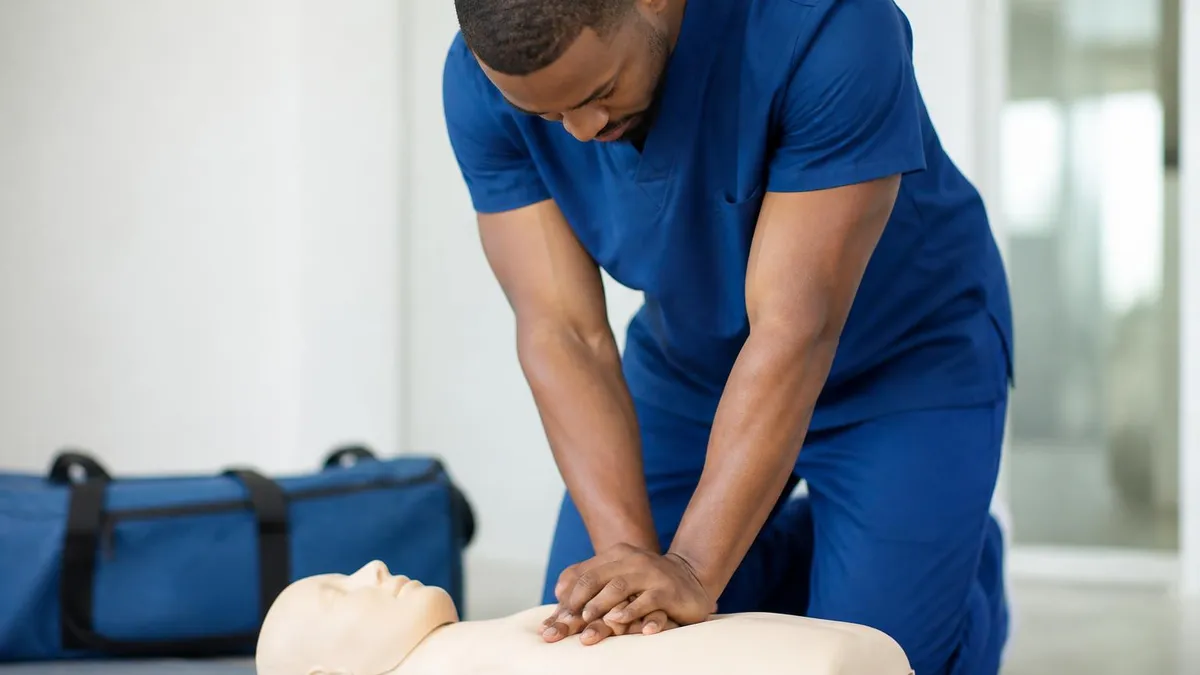
CPR Courses: Complete Guide to ACLS Algorithm, PALS Certification, and Life Support Training in 2026
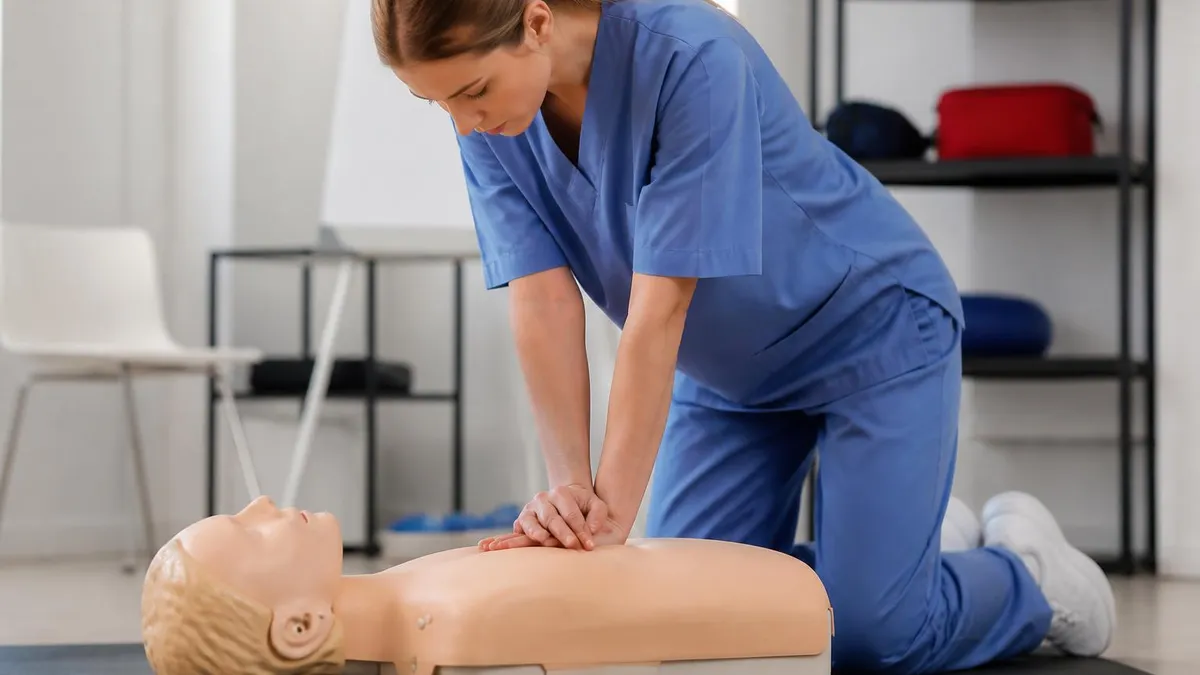
Types of CPR Training: From Basic Life Support to ACLS Algorithm Mastery in 2026
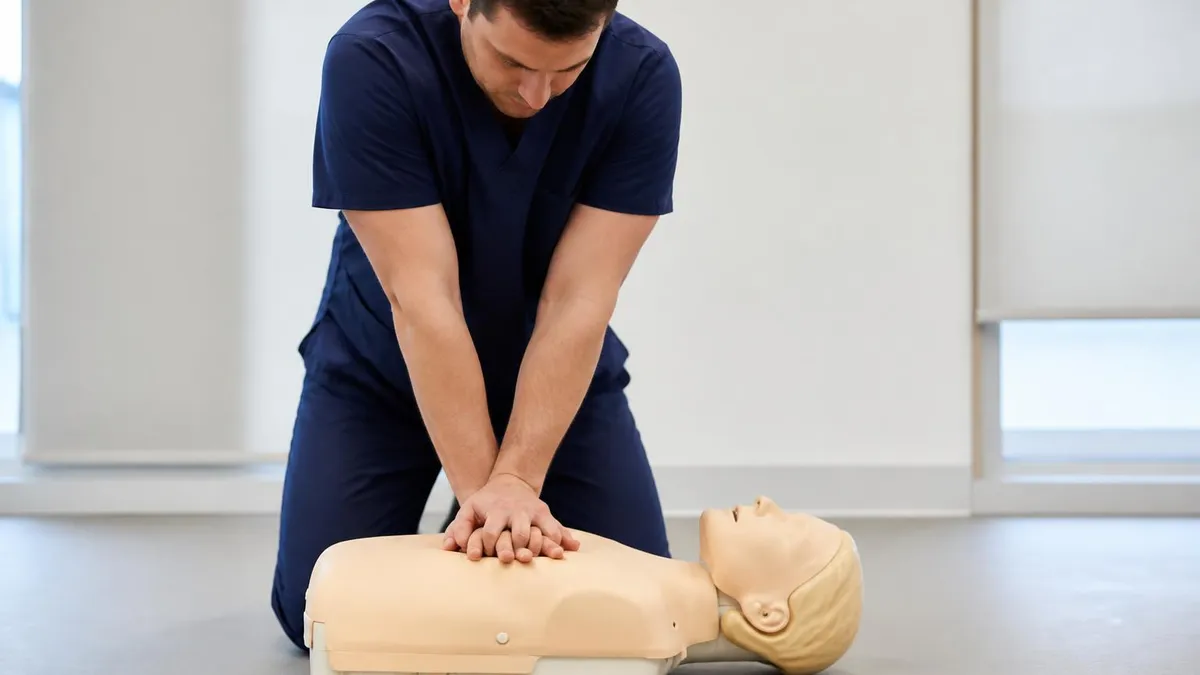
BLS vs CPR: Is BLS the Same as CPR? Complete 2026 Guide
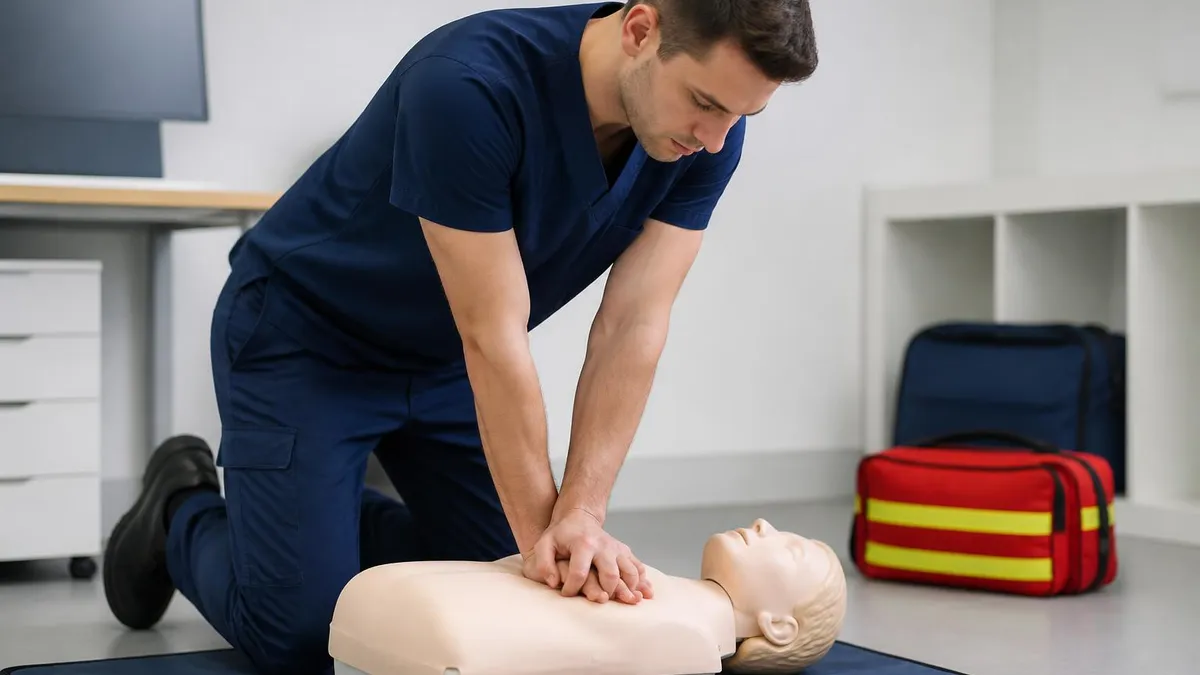
Adult CPR: Complete Step-by-Step Guide to Hands-Only and Standard CPR in 2026
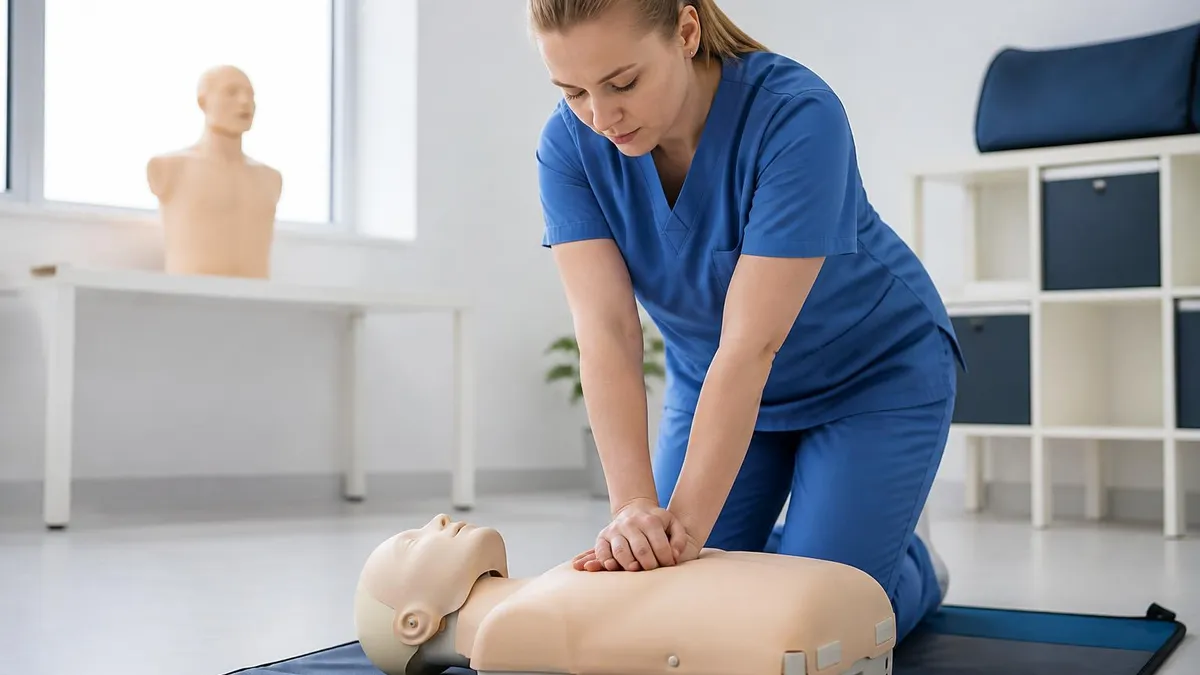
Free CPR Training: Complete Guide to ACLS Algorithm, PALS Certification, and Life Support Skills in 2026
About the Author

Registered Nurse & Healthcare Educator
Johns Hopkins University School of NursingDr. Sarah Mitchell is a board-certified registered nurse with over 15 years of clinical and academic experience. She completed her PhD in Nursing Science at Johns Hopkins University and has taught NCLEX preparation and clinical skills courses for nursing students across the United States. Her research focuses on evidence-based exam preparation strategies for healthcare certification candidates.
Join the Discussion
Connect with other students preparing for this exam. Share tips, ask questions, and get advice from people who have been there.
View discussion (5 replies)