
Look Up CPR Certification: How to Verify, Find, and Confirm Your Card in 2026 October
✏️ Need to look up CPR certification fast? Verify your card, find provider databases, confirm expiration, and replace lost certs in 2026 October.
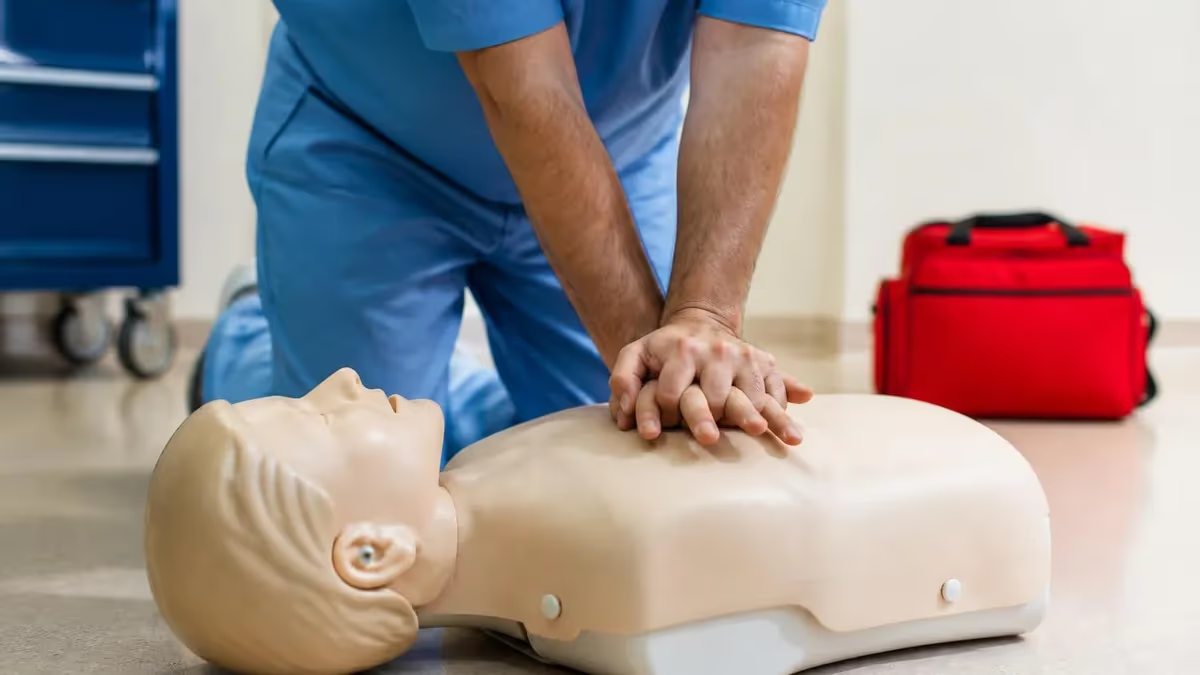
If you need to look up CPR certification quickly, you are not alone — employers, nursing schools, daycare licensors, and hospital credentialing offices all demand current proof of training before a shift, internship, or onboarding date.
The good news is that almost every provider, including the American Heart Association, American Red Cross, and the national cpr foundation, maintains an online verification portal that lets you confirm a card in under sixty seconds using a card ID, last name, and date of completion. This guide walks you through every database, what they look for, and what to do when nothing comes up.
Looking up certification is more than a clerical task; it is a compliance checkpoint. A hospital that hires a nurse without verifying current Basic Life Support (BLS), Advanced Cardiovascular Life Support, and pals certification can be cited by The Joint Commission, lose Medicare reimbursement, and face civil liability if a patient codes during an emergency. That is why credentialing teams will not accept a photo of your wallet card — they need a verifiable digital record that ties back to a real instructor, real course date, and a real issuing organization that follows ECC guidelines.
Many learners discover they cannot find their certification because the issuing organization went out of business, the card was issued under a maiden name, or the original course was completed through a third-party vendor that never reported the data upstream. Others run into trouble when a recruiter searches for an exact match and the card was filed under an abbreviated nickname. Knowing exactly which database to query — and what fields to enter — is the difference between starting work on Monday or scrambling for a last-minute renewal class.
Beyond employer requirements, looking up your own certification is a smart personal habit. Cards expire every two years for AHA and Red Cross programs, and you can easily lose track of your renewal date if you trained during a busy clinical rotation or onboarding sprint. A quick lookup tells you when to schedule a refresher, whether your skills check is current, and whether you need to add modules like infant cpr, AED operation, or first aid. If you are searching for red cross cpr classes near me, you can also pull historical course records that may still be valid.
This article covers every official lookup portal, how to interpret verification results, what to do when a card cannot be found, and how to keep your credentials accessible across job changes and license renewals. We also explain how to distinguish a legitimate certification from a non-accredited certificate of completion, because not every card you can buy online will pass a credentialing review. Whether you are a new EMT, a CNA renewing for a new job, or a parent who took a community class, you will leave with a clear plan.
We will also clarify common confusion between similar-sounding searches. Knowing the right search terms (and the right URLs) saves time and frustration. By the end of this guide, you will know exactly which database to use, which fields to fill in, and how to handle every common error message that pops up during a verification attempt.
Lastly, we will preview how certification lookups intersect with broader life support training requirements, including the acls algorithm sequences that pharmacy and ICU staff must know, the respiratory rate thresholds that trigger rapid response calls, and the position recovery techniques that bystanders use before EMS arrives. Understanding the entire ecosystem makes it easier to maintain and demonstrate your credentials across a long career.
CPR Certification Lookup by the Numbers

Major CPR Certification Verification Portals
The American Heart Association's official portal at ecards.heart.org verifies BLS, ACLS, PALS, and Heartsaver cards using a 13-digit eCard code, your last name, and the email address on file.
Use redcross.org/take-a-class/digital-certificate to validate Red Cross CPR/AED and First Aid certifications. Enter the ID number printed under the QR code or scan it directly with a smartphone camera.
Visit nationalcprfoundation.com/verify to look up cards issued through their online program. The system accepts certificate number plus full name and instantly displays expiration status.
American Safety and Health Institute verification runs through hsi.com/verify. This portal serves workplace and OSHA-compliance cards used in construction, manufacturing, and corporate safety programs.
EMTs, paramedics, and lifeguards often need state-level verification through NREMT or local boards. These databases tie CPR currency to professional licensure rather than to a single course.
Before you open a verification portal, gather the right information. Most lookup tools require at least three of the following: the full legal name used at registration, the card or eCard ID number, the course completion date, the instructor's name or training center ID, and the email address used during signup. Without these data points, the system will return a blank result even when your card is perfectly valid. Take a minute to dig through old emails — confirmation messages from training centers usually contain everything you need in a single thread.
The most common mistake is searching with a current name when the card was issued under a previous one. Maiden names, hyphenated names, and middle-initial variations all break exact-match searches. If you have changed your name since training, contact the original training center first; they can amend the record in the AHA Atlas or Red Cross Learning Center before you attempt another lookup. The same applies to typos — a card issued to "Jon" will not match a search for "John," even though credentialing officers usually accept supporting documents to reconcile the difference.
Card ID numbers are the gold standard for verification. The AHA uses a 13-character alphanumeric eCard code printed on every modern certificate. Red Cross cards display a similar ID directly beneath the QR code, and the national cpr foundation issues sequential certificate numbers tied to a unique completion record. If you can find one of these numbers, the lookup is almost always instant. If you cannot, fall back to name-and-date searches, which take slightly longer but still produce reliable results when entered correctly.
Date of completion is critical because it determines validity. Most AHA and Red Cross cards expire exactly two years from the course date, not from the issue date. So if you trained on August 12, 2024, your card lapses on August 12, 2026 — even if it was not mailed until September. Some programs offer a 30-day grace period for renewal without retaking the full course, but employers rarely honor that grace administratively. Knowing your exact completion date helps you avoid lapses and gives you a head start on renewal scheduling.
If you are verifying someone else's certification — say you are an office manager confirming staff compliance — you must have written permission to query their record. AHA and Red Cross portals are public, but pulling and storing another person's credential data without consent may run afoul of state privacy statutes. The cleanest workflow is to ask each employee to send a screenshot of their successful verification, then store that PDF in their personnel file alongside hire dates and license renewals. If a candidate is also aed pad placement certified, that detail should be noted in the file as well.
For internationally trained healthcare workers, lookup can be trickier. European Resuscitation Council, Australian Resuscitation Council, and Canadian Red Cross cards have their own verification systems that do not interoperate with US databases. If you are entering the US workforce, expect that your foreign card will not count for hospital credentialing — most US employers require an equivalent AHA BLS card issued by a US training center. Plan to take a recognized course before your start date instead of trying to convert international credentials, which is rarely cost-effective.
Finally, before you spend an hour searching, decide whether you actually need a formal verification or a simple confirmation. A daycare director asking to see your card is different from a hospital credentialing team that requires an audit-quality digital record. Match the depth of your search to the requirement, and you will save yourself significant time when you only need a printable confirmation rather than a notarized statement of training.
Readers who want more detail usually continue with look up cpr certification.
Readers who want more detail usually continue with look up cpr certification.

CPR Practice Test Questions
Prepare for the CPR Cardiopulmonary Resuscitation Practice exam with our free practice test modules. Each quiz covers key topics to help you pass on your first try.
CPR Basic CPR
CPR Exam Questions covering Basic CPR. Master CPR Test concepts for certification prep.
CPR and First Aid
Free CPR Practice Test featuring and First Aid. Improve your CPR Exam score with mock test prep.
CPR (Cardiopulmonary Resuscitation) Adult ...
CPR Mock Exam on (Cardiopulmonary Resuscitation) Adult CPR and AED Usage. CPR Study Guide questions to pass on your first try.
CPR (Cardiopulmonary Resuscitation) Airway...
CPR Test Prep for (Cardiopulmonary Resuscitation) Airway Obstruction and Choking. Practice CPR Quiz questions and boost your score.
CPR (Cardiopulmonary Resuscitation) Cardio...
CPR Questions and Answers on (Cardiopulmonary Resuscitation) Cardiopulmonary Emergency Recognition. Free CPR practice for exam readiness.
CPR (Cardiopulmonary Resuscitation) Child ...
CPR Mock Test covering (Cardiopulmonary Resuscitation) Child and Infant CPR. Online CPR Test practice with instant feedback.
CPR (Cardiopulmonary Resuscitation) High-P...
Free CPR Quiz on (Cardiopulmonary Resuscitation) High-Performance Team Dynamics. CPR Exam prep questions with detailed explanations.
CPR (Cardiopulmonary Resuscitation) Legal ...
CPR Practice Questions for (Cardiopulmonary Resuscitation) Legal and Ethical Considerations. Build confidence for your CPR certification exam.
CPR for Specific Populations
CPR Test Online for for Specific Populations. Free practice with instant results and feedback.
CPR Airway & Breathing Management
CPR Exam Questions covering Airway & Breathing Management. Master CPR Test concepts for certification prep.
CPR Assessment & Recognition of Cardiac Ar...
Free CPR Practice Test featuring Assessment & Recognition of Cardiac Arrest. Improve your CPR Exam score with mock test prep.
CPR Chest Compressions & Defibrillation
CPR Mock Exam on Chest Compressions & Defibrillation. CPR Study Guide questions to pass on your first try.
CPR Post-Resuscitation Care & Recovery
CPR Test Prep for Post-Resuscitation Care & Recovery. Practice CPR Quiz questions and boost your score.
Comparing AHA, Red Cross, and National CPR Foundation Lookups
The American Heart Association introduced eCards in 2014 to replace paper cards and reduce fraud. Every modern AHA BLS, ACLS, PALS, and Heartsaver card includes a unique eCard code, a QR code, and a verification link printed on the back. Employers, schools, and credentialing teams can scan the QR or visit ecards.heart.org to confirm authenticity within seconds. The portal returns the card holder's name, course type, issue date, expiration, and training center.
AHA verification is considered the gold standard for hospital and EMS settings because every card ties back to an authorized Training Center and AHA Instructor of record. If a card cannot be verified through this portal, the credentialing team will reject it — even if you have a physical card in hand. The acls algorithm content tested in AHA courses is updated every five years, so always confirm the course version matches your role's required guidelines.
Online vs. In-Person Certification: Which Verifies Better?
- +Digital cards are easier to share via email or QR scan
- +Online portals verify instantly without phone calls
- +Records persist in your account even after card expiration
- +AHA and Red Cross portals are free to use 24/7
- +Mobile-friendly verification works on any smartphone
- +Reduces fraud compared to easily forged paper cards
- −Online-only courses may not include hands-on skills check
- −Some hospitals reject any non-AHA verification
- −Older paper cards from before 2014 may not appear in databases
- −Name changes can break exact-match searches
- −Defunct training centers leave records in legal limbo
- −International cards rarely verify in US databases
Pros and Cons at a Glance
| Pros | Cons |
|---|---|
| Digital cards are easier to share via email or QR scan | Online-only courses may not include hands-on skills check |
| Online portals verify instantly without phone calls | Some hospitals reject any non-AHA verification |
| Records persist in your account even after card expiration | Name changes can break exact-match searches |
| Mobile-friendly verification works on any smartphone | Defunct training centers leave records in legal limbo |
| Reduces fraud compared to easily forged paper cards | International cards rarely verify in US databases |

Step-by-Step Checklist to Look Up CPR Certification
- ✓Locate your original course confirmation email from the training center
- ✓Identify the issuing organization (AHA, Red Cross, NCF, ASHI, or other)
- ✓Find your card or eCard ID number printed near the QR code
- ✓Confirm the exact name format used at registration
- ✓Visit the correct verification portal for your issuing organization
- ✓Enter the card ID, name, and date of completion exactly as recorded
- ✓Screenshot or download the verification result as a PDF
- ✓Check that the expiration date matches your records
- ✓Save the verification link in your professional credentials file
- ✓Set a calendar reminder 60 days before expiration to renew
Your eCard Lives Forever — Even After It Expires
AHA and Red Cross eCards remain accessible in your online account indefinitely, even after the two-year validity window closes. This means you can always pull a historical record proving you completed training on a specific date, which is invaluable for license renewals, professional portfolios, and continuing education audits. Bookmark your account login the day you receive a new card.
What happens when you search every database and your card simply will not appear? First, do not panic — there are several recovery paths, and most resolve within a few business days. The most common cause is a typo in the original registration record, followed by training centers that closed without transferring their data to the national database. Less commonly, a card may have been issued through a fraudulent or unauthorized provider, in which case the certificate has no legal standing regardless of what it looks like physically.
Start by contacting the training center listed on your card. Every AHA card includes a Training Center ID and instructor name. Calling the center directly is often faster than waiting on AHA national support. The training center can amend records, re-issue digital cards for misplaced physicals, and confirm course completion to your employer through a signed letter on letterhead. Keep that letter as supplementary documentation even after the digital record is corrected, because credentialing audits sometimes happen years after the fact.
If the training center no longer exists, contact the issuing organization's national support team. AHA support runs through the AHA Instructor Network and can pull historical records back to 2014 when eCards launched. Red Cross support can retrieve any digital certificate issued through their Learning Center. The national cpr foundation maintains lifetime records of every certificate they have issued. Be prepared to provide proof of identity, an approximate course date, and any payment receipts from the original registration to speed up the search.
When all formal recovery paths fail, you have two practical options. First, retake the course — depending on the provider and your location, a full BLS course costs roughly $60 to $120 and can be completed in three to four hours, often with same-day eCard issuance. Second, ask your employer whether they will accept a signed affidavit of training plus a same-day skills check from their internal AHA-authorized instructor. Many hospitals have this contingency built into their credentialing policies for exactly this situation.
Do not attempt to forge or alter a card. Modern QR-based verification makes counterfeiting trivially easy to detect, and the consequences are serious — termination, loss of professional license, and in some states criminal fraud charges. Hospital credentialing officers are trained to spot inconsistencies between physical cards and online records, and they routinely cross-reference with the training center listed on the card. Honesty plus a quick retake will always be the right choice when records cannot be recovered.
If your missing card is part of a broader life support credential — say, you cannot find your BLS but you do have a current pals certification — your employer may accept the PALS as evidence of BLS competency, since PALS curriculum includes all BLS skills. This bridging policy varies by institution, so always ask before assuming. Document any exception in writing to protect yourself if the credentialing landscape changes later, especially during accreditation surveys when every record is scrutinized.
Finally, remember that a non-verifiable card almost always points to a non-accredited provider. Before paying for any CPR course online, confirm that the issuing organization appears on the AHA Training Center list, the Red Cross authorized provider directory, or a recognized OSHA-compliant program. Cheap, no-skills-check, instant-PDF certificates may be tempting, but they often fail verification at the worst possible moment — the morning of your new-hire orientation or your daycare licensure audit.
Dozens of websites sell instant CPR certificates for under $20 with no skills check and no real verification database. These cards will fail employer lookups and may put your job at risk. Always confirm your provider appears on AHA, Red Cross, or recognized OSHA-compliant lists before paying for any course, regardless of how convincing the marketing looks.
Once you have located your certification, the next priority is keeping it current and accessible. Most providers require renewal every two years through a refresher course that confirms you still meet performance standards on chest compressions, rescue breathing, and AED use. The refresher is shorter than the initial course — usually two to three hours instead of four to five — but it carries the same weight for employer compliance. Schedule it well before your expiration date so a scheduling conflict does not lapse your credential.
For working healthcare professionals, renewal is often bundled with annual competency requirements. Hospitals frequently host in-house BLS and ACLS renewals for staff, sometimes at no cost. EMS agencies, fire departments, and large dental practices do the same. If your employer offers internal renewal, take advantage of it — internal courses are typically free, fit into your existing schedule, and are automatically logged in your personnel file without any additional verification step on your end.
Maintaining a digital wallet of credentials is a habit every healthcare worker should adopt. Save your eCard PDFs to a cloud folder, store the verification URLs in a password manager, and add expiration dates to a recurring calendar reminder set 60 days before they lapse. This system protects you against device loss, employer changes, and emergency credential audits. It also speeds up onboarding when you change jobs, because you can attach verified credentials directly to a new-hire form within minutes instead of scrambling to retake courses.
Cross-train and maintain related credentials together. A nurse who maintains BLS, ACLS, and PALS simultaneously demonstrates broader life support competency than one who lets PALS lapse. The acls algorithm overlaps significantly with PALS in cardiac and respiratory emergencies, so renewing them in the same quarter reinforces both. Adding a stroke certification or NRP for newborn resuscitation can make you significantly more valuable to employers and may qualify you for higher pay grades or float pool roles that require multiple active credentials.
Know the difference between a certificate of completion and a true certification. A certificate of completion proves you attended a class. A certification, like AHA BLS, proves you passed both a written and skills test under instructor supervision and meet defined competency standards. Only certifications appear in verifiable databases. If you have only a certificate of completion, you may not pass employer credentialing — and you likely cannot "look up" your card because it does not exist in a national registry to begin with.
Some employers now require additional modules beyond standard BLS — bloodborne pathogens, naloxone administration, stop-the-bleed, and trauma-informed first aid are common adders for school staff, social workers, and harm-reduction roles. These are usually verified through the same provider portals as your core CPR card, but the modules show as separate line items in your digital wallet. If you are reviewing the normal breathing rate as part of refresher prep, take time to update related modules too.
Finally, treat certification lookup as part of your professional brand. Recruiters, licensing boards, and hospital privileging committees all check current credentials before extending offers or admitting you to a specialty. A clean, verifiable, well-maintained credential history signals reliability and competence. The five minutes you spend now to confirm and bookmark your verification link will save hours of stress later when an unexpected opportunity or audit lands on your desk and you need to produce documentation immediately.
To close, here are practical tips that experienced credentialing officers, nurse educators, and EMS field training officers consistently recommend. First, treat the verification URL as a permanent part of your professional identity. Save it to your phone's home screen so you can pull it up in seconds during an interview, license renewal, or surprise audit. Many candidates lose offers not because they lacked the certification but because they could not produce it on demand during a credentialing conversation that lasted only a few minutes.
Second, always verify cards before signing employment agreements that depend on them. Some new hires discover post-hire that their certificate is non-verifiable, and the resulting probationary period can turn what should be a smooth start into a stressful scramble. A 60-second self-lookup before submitting your hiring paperwork eliminates this risk. Doing the same check on any new card immediately after a course completes confirms that the training center reported your data correctly to the national database.
Third, keep historical records even after cards expire. Continuing education portfolios, license renewal applications, and graduate school admissions often request a multi-year credential history. Saving every expired card PDF to a single cloud folder takes seconds at expiration and saves hours during application season. Some state nursing boards specifically request proof of continuous BLS currency, and historical eCards are the cleanest documentation you can provide for that purpose during your career.
Fourth, distinguish between BLS for healthcare providers and lay-rescuer Heartsaver CPR. The two cards verify in different databases and serve different purposes. Healthcare positions require BLS; lay-rescuer roles like office safety officers usually accept Heartsaver. Renewing the wrong card creates compliance gaps. The same applies to ACLS and PALS — they are layered on top of BLS, not replacements for it. Maintain the underlying BLS in addition to any specialty cards your role requires for full compliance.
Fifth, master the related foundational knowledge that certification implies. Employers expect that anyone with a current card can describe correct compression depth and rate, recognize abnormal respiratory rate, perform the jaw thrust maneuver for suspected spinal injury, place victims in recovery position, and explain what does aed stand for to a bystander. Even if no one asks during an interview, demonstrating fluency in these basics signals genuine competence rather than just a paper credential earned years ago.
Sixth, build a small home practice kit if you are between courses. An inexpensive CPR manikin and an AED trainer cost less than $200 together and let you maintain muscle memory between formal renewals. EMS field training officers report that students who practice between courses score consistently higher on skills checks and renew faster. Pair short practice sessions with quick written-knowledge quizzes for a complete review that reinforces both psychomotor skills and decision-making in cardiac arrest scenarios.
Seventh, when in doubt, call. Provider support lines for AHA, Red Cross, and the national cpr foundation are staffed during business hours and can resolve most lookup problems in a single call. Have your name, approximate course date, and training center handy. A polite, prepared call almost always produces a usable verification PDF within minutes. The same support lines can answer questions about international transfers, name changes, and merging duplicate accounts that accumulate across years of training renewals.
CPR Questions and Answers
CPR Card Lookup: How to Verify, Replace, and Access Your CPR Certification in 2026
AHA CPR: What It Is, Which Course You Need, and How to Get Certified
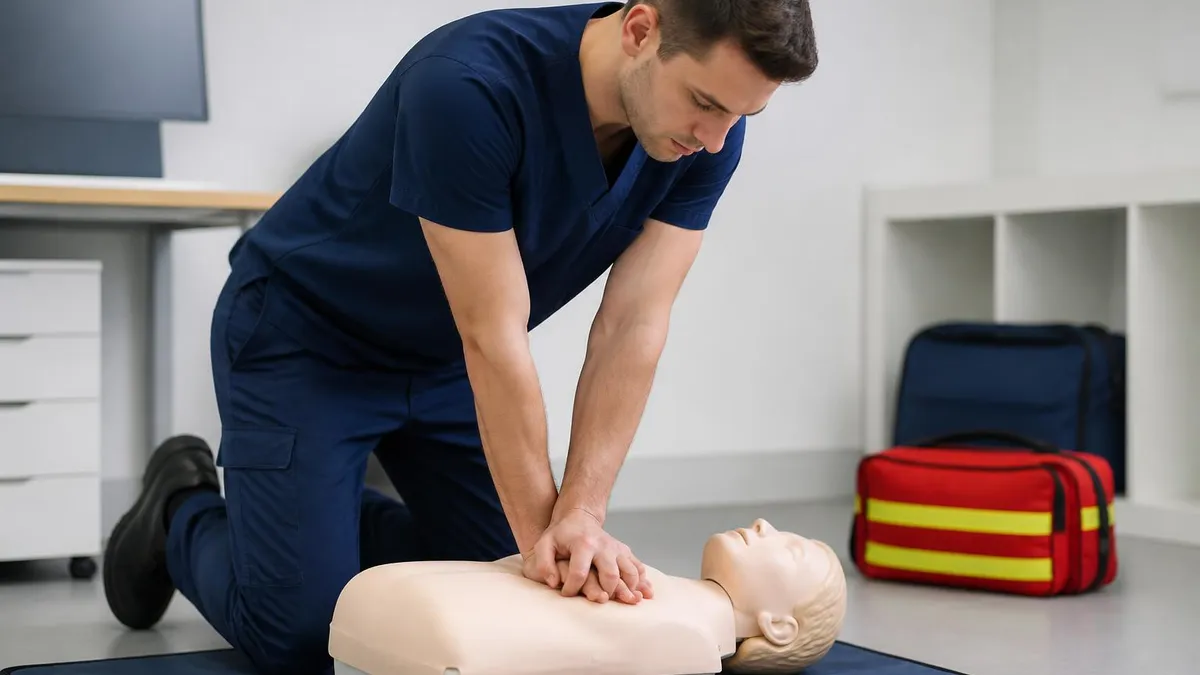
Adult CPR: Complete Step-by-Step Guide to Hands-Only and Standard CPR in 2026

CPR - Cardiopulmonary Resuscitation: Complete Study Guide 2026
Inappropriate CPR Songs: What Not to Play, Why It Matters, and Better Beat-Per-Minute Alternatives
About the Author

Registered Nurse & Healthcare Educator
Johns Hopkins University School of NursingDr. Sarah Mitchell is a board-certified registered nurse with over 15 years of clinical and academic experience. She completed her PhD in Nursing Science at Johns Hopkins University and has taught NCLEX preparation and clinical skills courses for nursing students across the United States. Her research focuses on evidence-based exam preparation strategies for healthcare certification candidates.
Join the Discussion
Connect with other students preparing for this exam. Share tips, ask questions, and get advice from people who have been there.
View discussion (5 replies)