
Heartsaver CPR: Complete Career and Duties Guide to Life Support, ACLS Algorithm, and Certification in 2026 September
Heartsaver CPR career guide: 🧠 duties, life support skills, ACLS algorithm, PALS certification, infant CPR, AED use, and pay. Start your 2026 September path today.
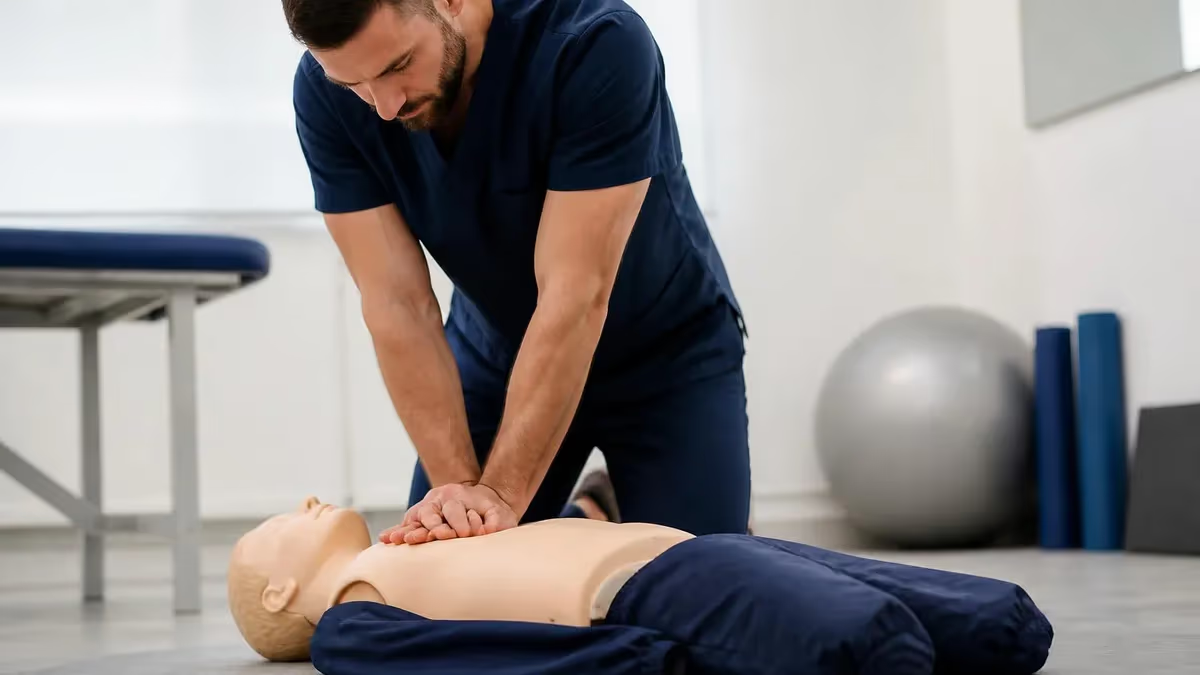
A heartsaver cpr credential is the entry point for millions of Americans who want practical, hands-on rescue skills without committing to a full clinical license. The course is built by the American Heart Association for laypeople, workplace responders, teachers, security staff, and anyone whose job description includes a duty to act. It teaches chest compressions, rescue breaths, choking relief, and automated defibrillator use across adult, child, and infant patients, giving you a complete toolkit for the most common cardiac and breathing emergencies you are likely to face.
Understanding this credential matters because the career landscape around resuscitation is wider than most people assume. The same emergency-response skill ladder that begins with a layperson course climbs through professional rescuer training and eventually into the acls algorithm used by paramedics and emergency physicians. Knowing where Heartsaver sits on that ladder helps you choose the right course the first time, avoid paying for training you do not need, and plan a realistic progression if you later decide to pursue a healthcare role.
This guide treats Heartsaver CPR as a career and duties topic rather than a quick how-to. We cover who performs these duties, what a typical responder is expected to do during a shift, how certification renews, and what salary and job categories connect to the skill. You will see how the credential overlaps with workplace safety law, how it compares to professional rescuer programs, and why employers increasingly list it as a hiring requirement for roles far outside the obvious medical fields.
The national cpr foundation, the American Heart Association, the American Red Cross, and the American Safety and Health Institute all issue layperson-level cards that employers accept. Each organization wraps roughly the same science around slightly different course names and pricing, so part of your job as a learner is recognizing which card your employer or state actually requires. We explain those distinctions plainly so you do not buy a certificate that fails an audit on your first day.
Cardiac arrest remains a leading cause of death in the United States, with more than 350,000 out-of-hospital events each year and survival rates that hover in the single digits when no bystander acts. Every percentage point of bystander response translates into thousands of lives, which is exactly why public-facing employers, schools, and gyms invest in Heartsaver training. When you hold this card, you become part of the chain of survival that buys time until professional life support arrives on scene.
By the end of this article you will understand the daily duties tied to the credential, the format and cost of the course, how it interlocks with infant CPR and AED skills, and the natural next steps toward higher certifications. Whether you are a new hire told to get certified by Friday or a career changer mapping a path into emergency services, you will leave with a clear, accurate picture of what Heartsaver CPR really means in 2026 and how to make the most of it.
Heartsaver CPR by the Numbers
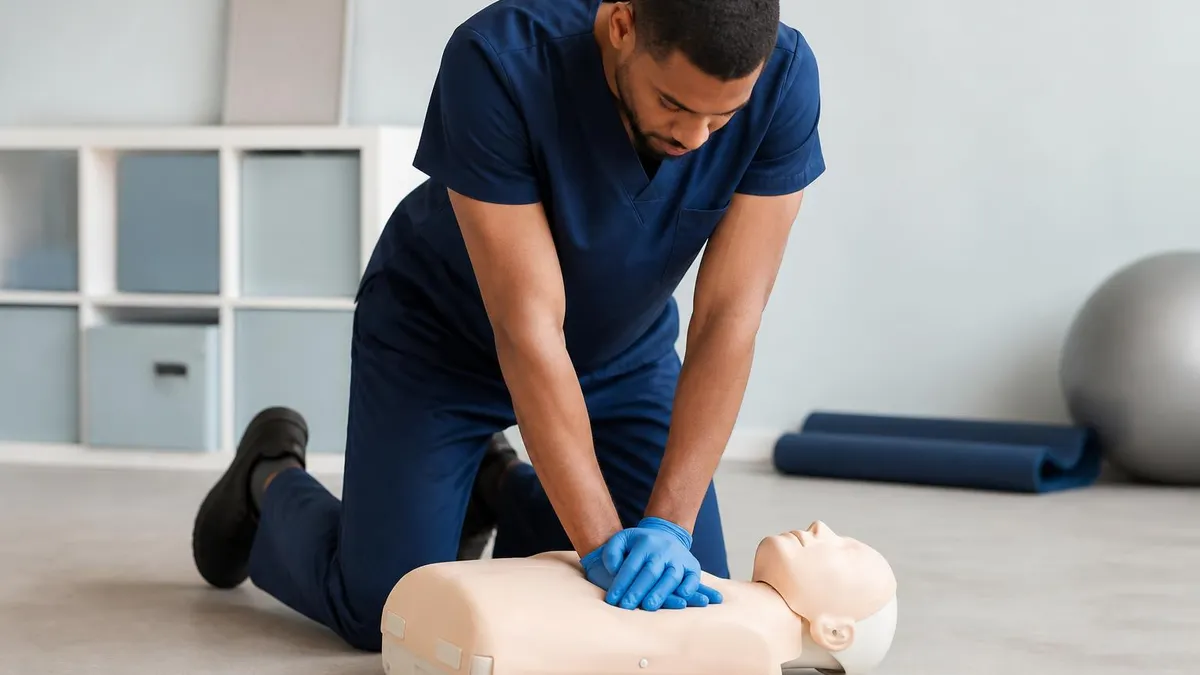
Roles and Responsibilities of a Heartsaver-Certified Responder
Designated employees keep the worksite covered under OSHA expectations, respond to collapses and choking, retrieve the AED, and activate emergency services while documenting the incident for the employer.
Teachers, coaches, and daycare workers handle infant and child emergencies, manage allergic reactions, and supervise return-to-activity decisions, making infant CPR and pediatric skills central to the role.
Lifeguards, gym staff, flight attendants, and hospitality workers act as first-on-scene responders in crowded venues, where rapid recognition and confident AED use directly influence survival outcomes.
Parents, home aides, and volunteers protect dependents who face higher cardiac or choking risk, performing compressions and rescue breaths until professional life support teams arrive on scene.
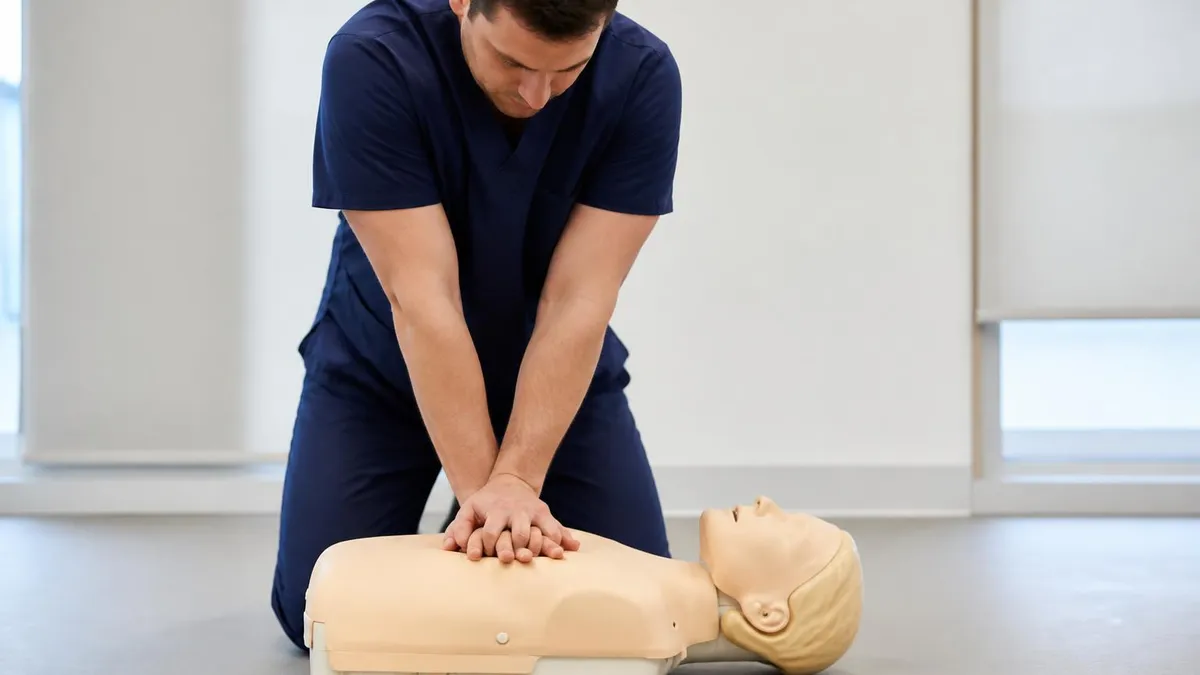
The Heartsaver curriculum is deliberately compact, but it covers a full chain of survival across three patient sizes. You start with scene safety and recognition, learning to confirm unresponsiveness, check for normal breathing, and call for help while sending someone to fetch an AED. From there the course drills high-quality chest compressions at a rate of 100 to 120 per minute, a depth of at least two inches for adults, and complete chest recoil between pushes. These mechanics are the foundation that every higher certification, including the acls algorithm, ultimately builds upon.
Rescue breathing is taught alongside compressions for responders whose duties include caring for children or drowning victims, where oxygen delivery matters more than in sudden adult cardiac arrest. You practice the 30-to-2 compression-to-breath ratio, learn to use a barrier device or pocket mask, and recognize when hands-only CPR is the safer, more sustainable choice for an untrained or fatigued bystander. The course makes clear that imperfect CPR beats no CPR, removing the hesitation that costs lives in the first critical minutes.
Choking relief forms a distinct module because airway obstruction is one of the most common emergencies in restaurants, schools, and homes. You learn abdominal thrusts for responsive adults and children, back blows and chest thrusts for infants, and the transition to CPR when a choking victim becomes unresponsive. Instructors emphasize the difference between mild and severe obstruction so you do not intervene when a person can still cough effectively and clear the blockage on their own.
Automated external defibrillator training is the module that most directly improves survival statistics. You learn what does aed stand for, how the device analyzes heart rhythm, where to place pads on adults versus children, and why you must clear the patient before a shock. The course stresses that an AED is designed for untrained users, with voice prompts guiding each step, so confidence rather than memorization is the goal of this hands-on practice.
Many providers now offer Heartsaver as a blended course, where you complete the cognitive portion online and then attend a short in-person skills session. This format respects busy schedules while preserving the hands-on practice that makes muscle memory stick. The skills check is conducted on a manikin with feedback technology that measures your compression depth and rate, ensuring your card reflects genuine competence rather than mere attendance at a lecture.
Compared with professional rescuer programs, Heartsaver intentionally leaves out advanced material like two-rescuer coordination on a clinical team, bag-valve-mask ventilation cycles, and rhythm interpretation. That trimming is a feature, not a gap: it keeps the course accessible to non-medical learners while still meeting the workplace and regulatory requirements that most employers actually face. If your duties later expand into healthcare, the next rung up the ladder fills those gaps in a focused, predictable way.
The credential you earn is recognized nationwide and accepted by the vast majority of U.S. employers, schools, and licensing boards that require a layperson card. Because the underlying science is standardized through the International Liaison Committee on Resuscitation, the skills you learn transfer cleanly even if you later certify through a different organization. That portability is one of the most practical reasons the Heartsaver card holds its value across job changes and relocations.
Respiratory Rate, Life Support, and Patient Assessment
Knowing a normal respiratory rate helps a responder distinguish true emergencies from anxiety or exertion. A resting adult breathes roughly 12 to 20 times per minute, a child 18 to 30, and an infant 30 to 60. Counting chest rises for thirty seconds and doubling gives a fast, reliable measure during your initial assessment of a struggling patient.
Heartsaver training teaches you to recognize abnormal breathing such as gasping, also called agonal respiration, which can fool untrained bystanders into thinking a cardiac arrest victim is still breathing normally. Treating agonal gasps as a sign of life delays compressions and lowers survival, so the course drills the rule that anything other than normal breathing in an unresponsive person means you start CPR immediately.
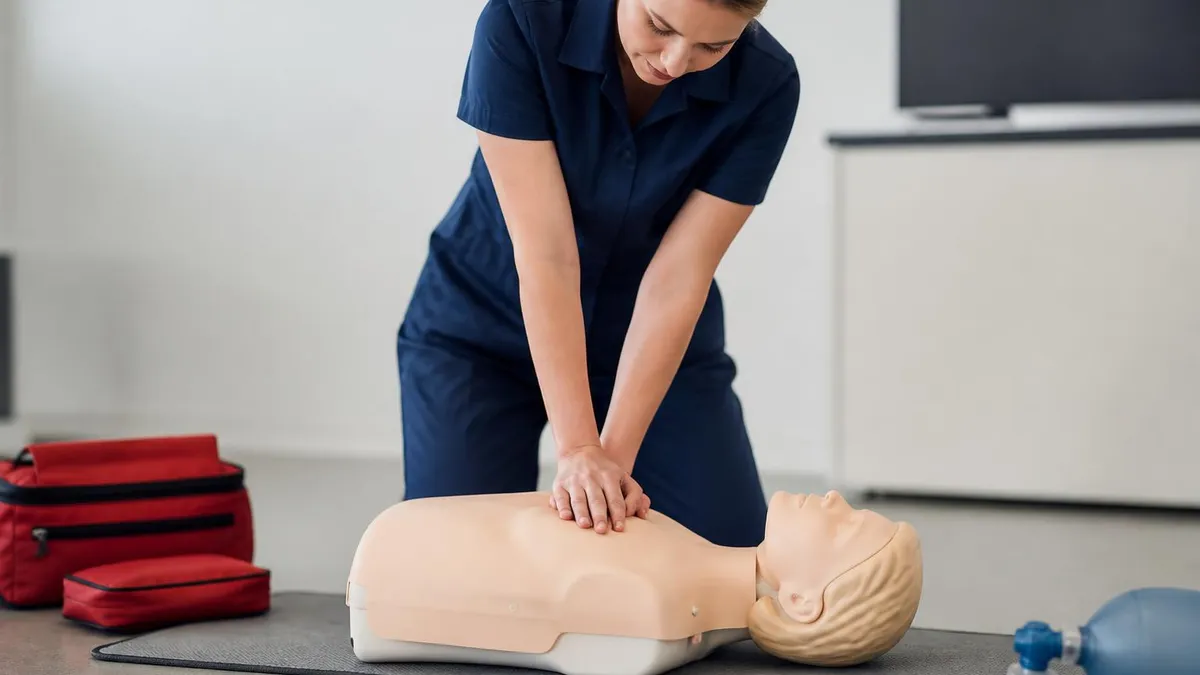
Is Heartsaver CPR the Right Course for You?
- +Designed for non-medical learners with no prerequisites required
- +Covers adult, child, and infant CPR plus choking and AED use
- +Nationally recognized and accepted by most U.S. employers
- +Short, affordable, and available in blended online formats
- +Satisfies most workplace, school, and childcare requirements
- +Builds a clear foundation for higher certifications later
- −Does not qualify you for clinical or healthcare provider roles
- −Excludes two-rescuer team dynamics and bag-valve-mask cycles
- −No rhythm interpretation or advanced airway management
- −Some licensing boards require a professional rescuer card instead
- −Renewal needed every two years to stay current
- −Skills fade without regular practice between renewals
Heartsaver Responder Duty Checklist
- ✓Confirm the scene is safe before approaching the victim.
- ✓Check responsiveness by tapping and shouting clearly.
- ✓Look for normal breathing for no more than ten seconds.
- ✓Direct a bystander to call 911 and fetch the AED.
- ✓Begin chest compressions at 100 to 120 per minute.
- ✓Push at least two inches deep and allow full recoil.
- ✓Attach and follow the AED prompts as soon as it arrives.
- ✓Deliver rescue breaths if trained and appropriate for the victim.
- ✓Switch to choking response if the airway becomes obstructed.
- ✓Hand off to EMS and report what care you provided.
Push hard, push fast, and do not stop
Studies consistently show that compression depth and minimal interruptions drive survival more than any other variable. If you remember nothing else from a Heartsaver course, remember to push hard, push fast, and limit pauses to under ten seconds. Even imperfect compressions keep blood moving to the brain and dramatically outperform no action at all.
Certification follows a predictable lifecycle that responders should understand before they enroll. After completing the cognitive and skills portions, you receive an eCard that employers can verify online, replacing the easily forged paper cards of the past. The card carries a two-year expiration, and most organizations send renewal reminders as the date approaches. Letting a card lapse usually means retaking the full course rather than a shorter refresher, so tracking your expiration is a small but meaningful professional responsibility.
The career path beyond Heartsaver branches in two directions. Many people stay at the layperson level indefinitely because their duties never require more, renewing every two years and occasionally adding a first aid module. Others use the credential as a stepping stone toward Basic Life Support for healthcare providers, which adds team dynamics and is the gateway to advanced programs. Mapping this path early prevents wasted money on overlapping courses you do not yet need.
For those moving into emergency medical services, the progression typically runs from BLS to the acls algorithm for adults and pals certification for pediatric patients. ACLS teaches rhythm recognition, medication administration, and team-based resuscitation, while PALS focuses on the unique physiology of children and infants. These advanced cards are required for nurses, paramedics, and physicians, and they assume you already command the basic skills that Heartsaver introduces, which is why a strong foundation pays dividends later.
Salary depends heavily on the role the certification supports rather than the card itself, since Heartsaver is rarely a standalone job. A certified lifeguard might earn fifteen to twenty dollars an hour, a childcare worker somewhat less, and an EMT who later adds advanced credentials considerably more. The credential functions as a hiring qualifier that opens doors and occasionally commands a small differential, but its real value lies in the roles it unlocks and the lives it equips you to protect.
Employers increasingly fold CPR certification into onboarding because liability and insurance incentives reward a trained workforce. Some companies bring an instructor on-site to certify entire teams at once, while others reimburse employees who certify independently. Understanding your employer's policy can save you the course fee and ensure your card matches the specific organization your industry recognizes, whether that is the American Heart Association, the Red Cross, or another approved provider.
Reciprocity between organizations is generally smooth because the underlying science is standardized, but the card brand still matters for certain regulated fields. A hospital may insist on an American Heart Association BLS card, while a daycare may accept any nationally recognized layperson certificate. Before you pay, confirm which brand and level your destination role demands so your certification clears its first compliance audit without an awkward and expensive do-over.
Finally, treat certification as a living skill rather than a checkbox. The two-year window exists because resuscitation guidelines evolve and because manual skills decay without practice. Responders who periodically rehearse on a manikin, review updated algorithms, and run mental scenarios stay far more effective than those who file the card and forget it. The most valuable responders are the ones who keep the knowledge fresh between renewals and act without hesitation when seconds count.
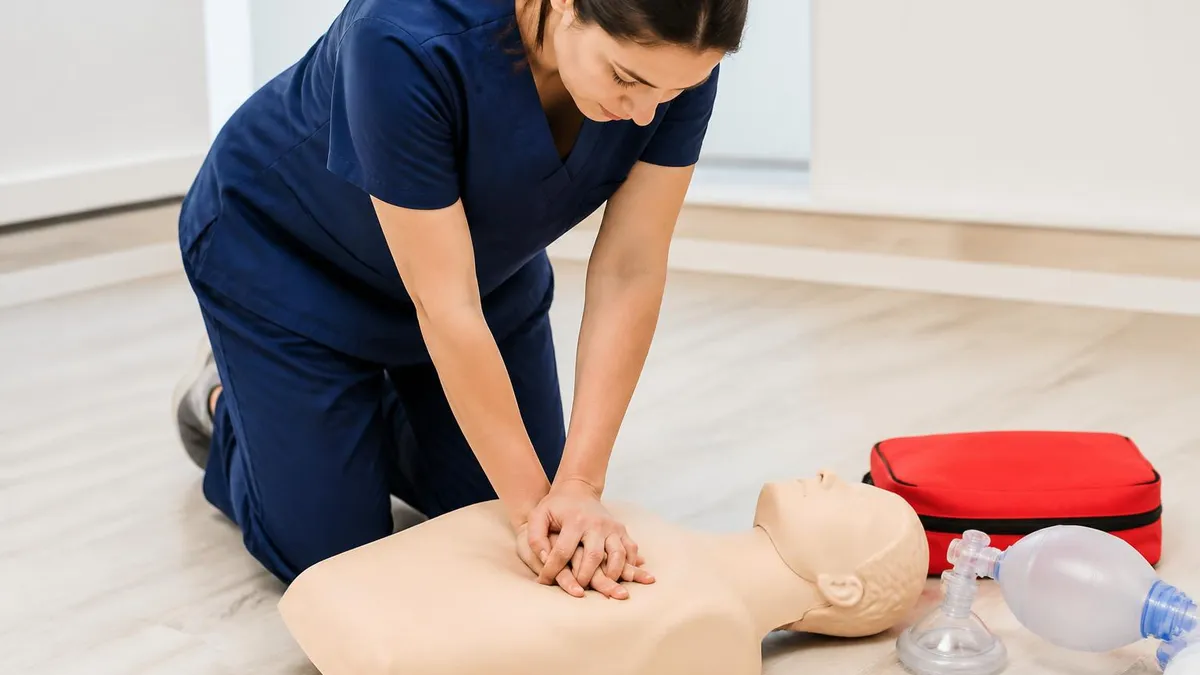
Most Heartsaver and provider cards expire exactly two years from the issue date, and a lapsed card often forces you to repeat the entire course rather than take a shorter renewal. Set a calendar reminder sixty days before expiration so your certification stays continuously valid for employment and licensing audits.
Automated external defibrillator competence is the skill that most directly separates survivors from fatalities in sudden cardiac arrest, so Heartsaver devotes focused practice to it. When you ask what does aed stand for, the answer is automated external defibrillator, a portable device that analyzes the heart's electrical rhythm and delivers a shock only when it detects a chaotic, shockable pattern. The automation is the point: the device makes the medical decision, leaving the responder to apply pads, clear the patient, and press the button on cue.
Pad placement differs by patient size, and the course drills these variations. Adults receive one pad on the upper right chest and one on the lower left side, while small children and infants may require front-and-back placement to keep the pads from touching. Pediatric pads or a pediatric setting reduce the energy delivered, and the course teaches that adult pads are acceptable for a child only when pediatric equipment is unavailable and the situation is life-threatening.
Equally important is the recovery position, which protects an unresponsive but breathing patient's airway while you wait for help. Placing a person in the position recovery uses, on their side with the head supported and the top knee bent for stability, allows fluids to drain and keeps the tongue from blocking the throat. Responders learn to use this position for a breathing victim who does not need compressions, monitoring their breathing continuously in case the situation deteriorates again.
Coordinating compressions with AED use is a choreography the course rehearses until it feels automatic. You compress continuously while the device powers on and pads are applied, pause only when the AED announces it is analyzing, ensure no one is touching the patient during a shock, and resume compressions immediately afterward without checking for a pulse. Minimizing those pauses is what preserves blood flow to the brain and gives the shock its best chance of restoring an effective rhythm.
Public access defibrillation programs have placed AEDs in airports, schools, gyms, and offices precisely because early shock dramatically improves outcomes. Heartsaver responders are often the people who know where the nearest device hangs and how to deploy it without hesitation. That situational awareness, knowing your building's AED locations before an emergency, is a quiet duty that distinguishes a prepared responder from a well-meaning bystander who loses precious minutes searching.
The course also addresses special circumstances that intimidate untrained users, such as a patient lying in water, a hairy chest that prevents pad contact, an implanted pacemaker, or a medication patch on the chest. You learn to move the patient off a wet surface, shave or firmly press the pads, avoid placing a pad directly over a device or patch, and otherwise proceed normally. Demystifying these edge cases prevents the freeze response that costs lives when a scene looks more complicated than the manikin in class.
Tying it all together, the AED and recovery skills represent the bridge between basic compressions and the advanced care that arrives with EMS. A responder who delivers strong compressions, applies a shock early, and protects a breathing patient's airway has executed the layperson version of life support flawlessly. Those minutes of confident action are exactly what the higher certifications, from the acls algorithm to pals certification, are designed to receive and continue once the professionals take over the patient.
Preparing for a Heartsaver course and the duties that follow is mostly about mindset and repetition. Read the participant manual before class so the in-person session reinforces concepts you already recognize rather than introducing everything cold. Watch a few reputable video demonstrations of compressions, rescue breaths, and AED use, and then visualize yourself walking through each step in a real setting. This mental rehearsal builds the calm confidence that turns a certified card into a genuinely capable responder when an emergency strikes.
On the day of your skills check, wear comfortable clothing and be ready to kneel on the floor for compression practice, which is more physically demanding than people expect. Compression fatigue sets in quickly, so the course teaches you to switch rescuers every two minutes when help is available. Practicing the rate by humming a familiar 100-to-120 beat song in your head is a proven trick that keeps your compressions on tempo without staring at a metronome during a stressful event.
Use free practice questions to lock in the cognitive material, especially the numbers that responders confuse under pressure: compression rate, depth, the 30-to-2 ratio, and normal respiratory rate ranges by age. Quizzing yourself repeatedly is far more effective than rereading the manual, because retrieval practice strengthens the recall you actually need at a scene. Spreading short study sessions across several days beats cramming the night before your skills evaluation and produces durable, lasting memory.
Once certified, integrate the skills into your real environment rather than letting them sit idle. Walk your workplace and note every AED, first aid kit, and emergency exit, and confirm who else on your team holds a current card. Knowing your fellow responders before a crisis lets you delegate instantly, one person compressing while another calls 911 and a third fetches the defibrillator, turning a chaotic scene into a coordinated and far more effective response.
Refresh your skills between renewals by attending occasional hands-only CPR events, many of which community organizations and hospitals offer for free. Even ten minutes on a manikin every few months keeps your muscle memory sharp and your confidence high. Survival data is clear that hesitation kills, so the responders who practice periodically are dramatically more likely to act decisively when a colleague, stranger, or family member collapses in front of them without any warning.
Finally, give yourself permission to act imperfectly. Good Samaritan laws across all fifty states protect bystanders who provide reasonable assistance in good faith, and the data overwhelmingly favors acting over waiting. A responder who starts compressions a beat too shallow still vastly outperforms one who stands frozen, second-guessing technique. Your Heartsaver training exists to replace that paralysis with practiced, decisive action that genuinely saves lives in the critical minutes before professional help arrives on the scene.
CPR Questions and Answers
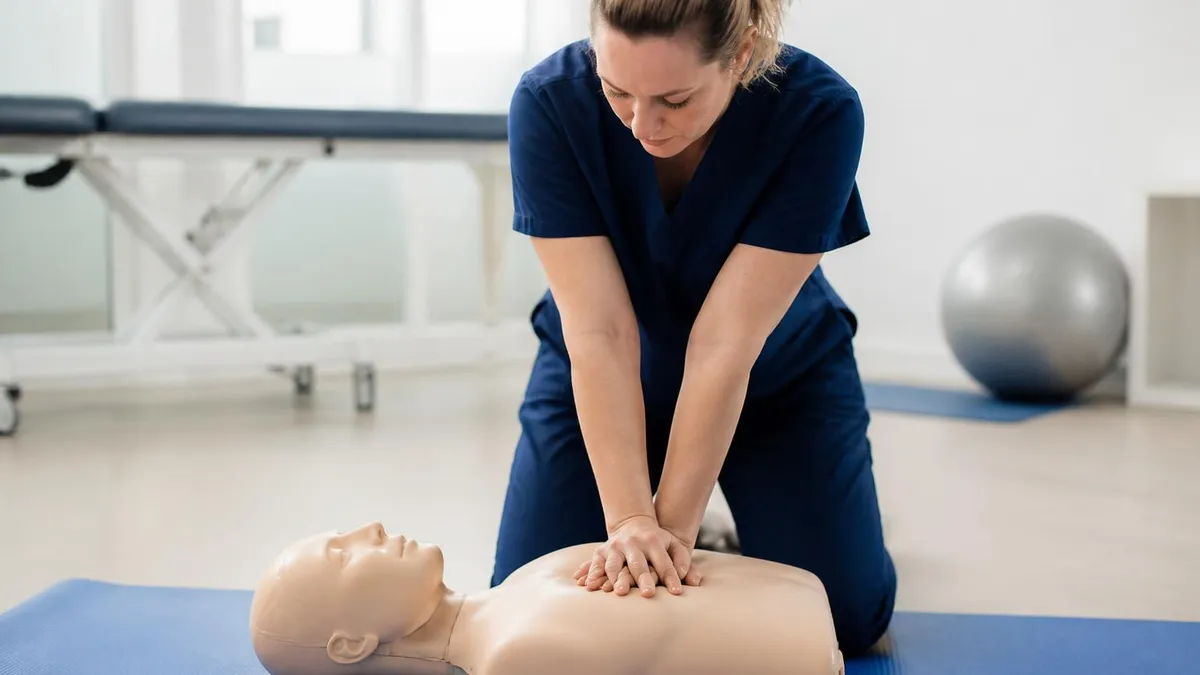
CPR Full Form: What CPR Stands For and Why It Matters
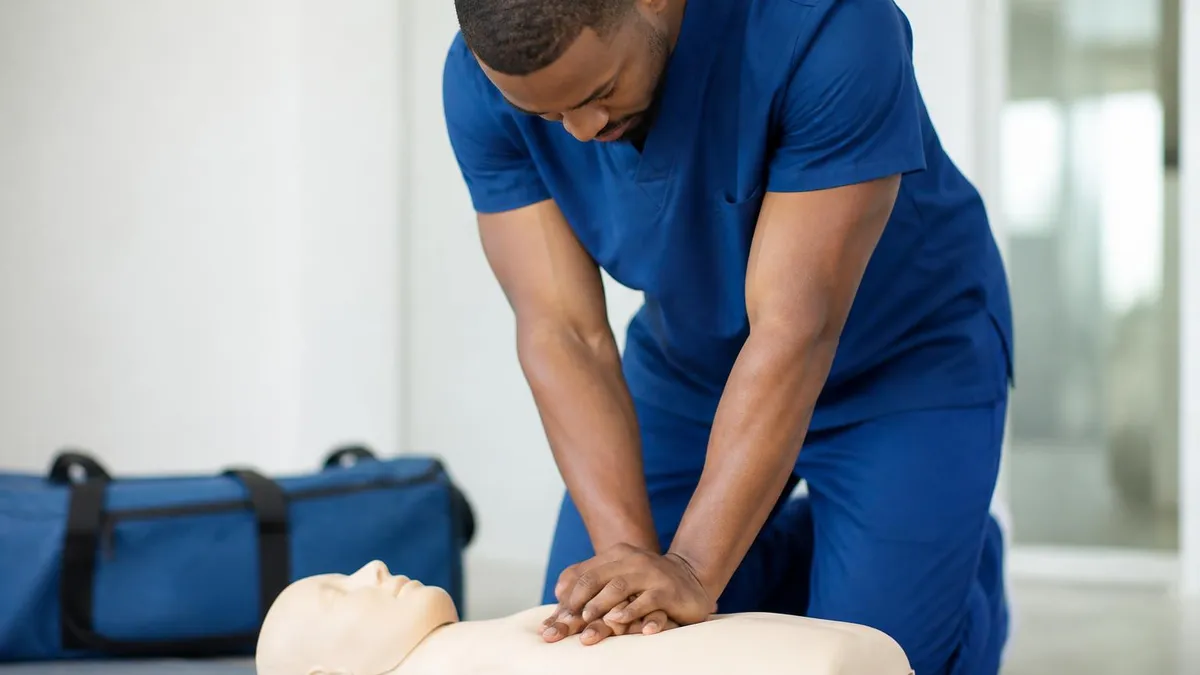
CPR Courses: Complete Guide to ACLS Algorithm, PALS Certification, and Life Support Training in 2026
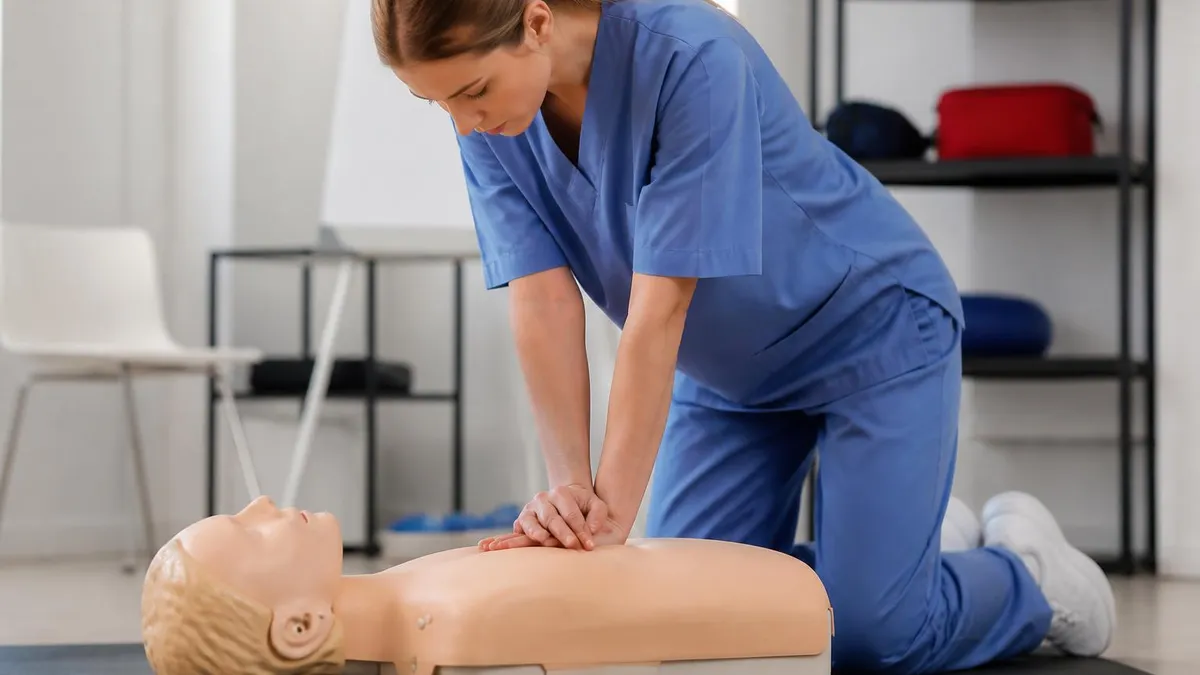
Types of CPR Training: From Basic Life Support to ACLS Algorithm Mastery in 2026
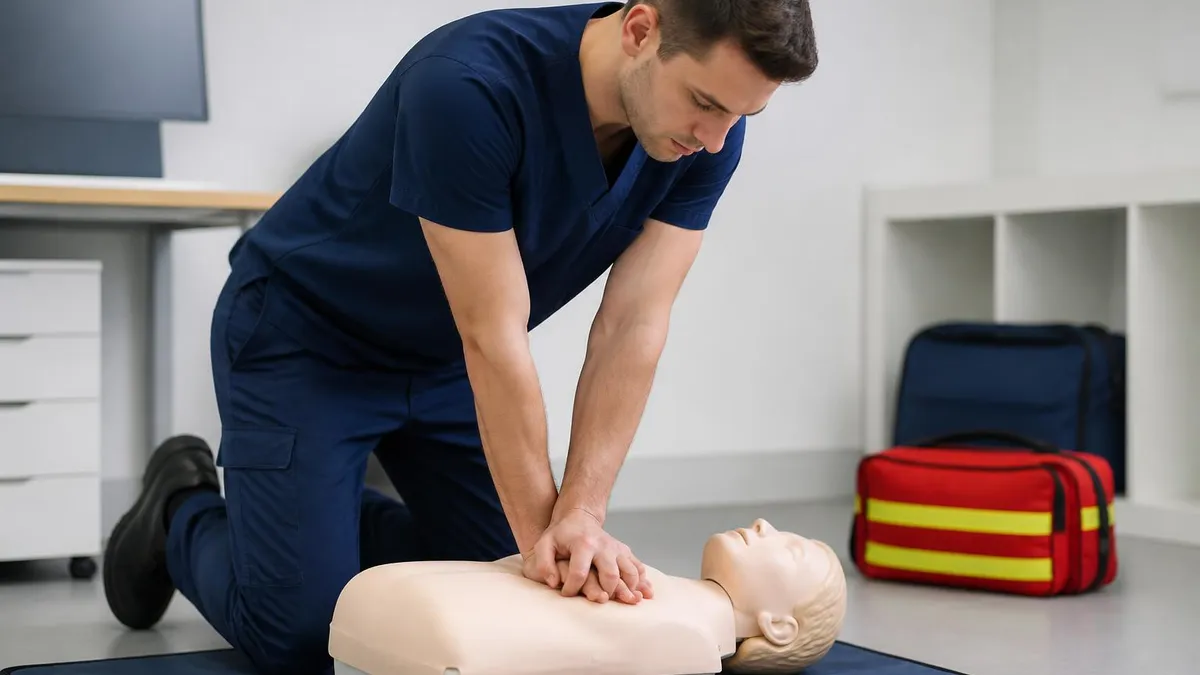
Adult CPR: Complete Step-by-Step Guide to Hands-Only and Standard CPR in 2026
BLS vs CPR: Is BLS the Same as CPR? Complete 2026 Guide
About the Author

Registered Nurse & Healthcare Educator
Johns Hopkins University School of NursingDr. Sarah Mitchell is a board-certified registered nurse with over 15 years of clinical and academic experience. She completed her PhD in Nursing Science at Johns Hopkins University and has taught NCLEX preparation and clinical skills courses for nursing students across the United States. Her research focuses on evidence-based exam preparation strategies for healthcare certification candidates.
Join the Discussion
Connect with other students preparing for this exam. Share tips, ask questions, and get advice from people who have been there.
View discussion (5 replies)