
Heartsaver CPR Training: Complete Guide to Certification, Requirements, and Life-Saving Skills
Master heart saver CPR training with our complete guide. Learn requirements, costs, infant CPR, AED use & ACLS algorithm. 🎯 Get certified today.

Heart saver CPR training is the foundational certification program designed for non-medical professionals, workplace responders, and community members who want to be prepared when cardiac emergencies strike. Whether you are a teacher, coach, parent, office worker, or fitness instructor, completing a Heartsaver course equips you with the skills to recognize cardiac arrest, deliver effective chest compressions, use an automated external defibrillator, and provide rescue breaths until emergency medical services arrive. Understanding the full scope of heartsaver cpr training helps you choose the right course level and maintain your certification properly.
Every year, approximately 350,000 cardiac arrests occur outside of hospital settings in the United States. Survival rates drop by seven to ten percent with every passing minute that effective CPR is not administered. Bystander CPR, when initiated immediately, can double or even triple a victim's chance of survival. The Heartsaver program, developed by the American Heart Association, addresses this public health crisis by making standardized, evidence-based CPR training accessible to people who are not healthcare professionals but still want to be capable first responders in their communities and workplaces.
The Heartsaver curriculum covers a broad range of emergency response skills beyond basic chest compressions. Students learn the full ACLS algorithm framework at a simplified level, including how to assess scene safety, call 911, position the victim, and begin the chain of survival. You will also learn what does AED stand for — Automated External Defibrillator — and how to operate these life-saving devices step by step. The training is structured to be completed in a single day, making it practical even for busy professionals who cannot commit to multi-day certification programs.
Heartsaver courses are offered in several formats to accommodate different learning preferences and schedules. Traditional instructor-led classroom courses, blended learning options that combine online modules with in-person skills sessions, and fully in-person options are all available through AHA-authorized training centers. The blended learning format has become increasingly popular because students can complete the cognitive portions at their own pace before attending a shorter, more focused hands-on session. Regardless of format, all courses must include hands-on skills practice to satisfy certification requirements.
One important distinction to understand is how Heartsaver CPR compares to more advanced certifications like PALS certification (Pediatric Advanced Life Support) and ACLS (Advanced Cardiovascular Life Support). Heartsaver is specifically designed for lay responders and non-healthcare providers, while PALS certification and ACLS are intended for healthcare professionals who regularly manage cardiac arrest in clinical settings. If you work in a hospital, emergency department, or intensive care unit, your employer will likely require a higher-level certification. Heartsaver remains the gold standard for the broader community responder audience.
The national cpr foundation and other AHA-authorized organizations offer Heartsaver training at locations throughout every state. Many employers, schools, and community organizations sponsor group training sessions, which can significantly reduce individual costs. Corporate training programs often negotiate discounted rates for bulk enrollments, making it cost-effective for businesses to ensure that a meaningful percentage of their workforce holds current Heartsaver certification. Some states and municipalities have even made Heartsaver or equivalent training mandatory for specific professional categories, including childcare workers, school bus drivers, and fitness center staff.
Understanding respiratory rate and how abnormal breathing patterns signal a medical emergency is also covered in Heartsaver training. Students learn to distinguish between normal breathing, agonal breathing (gasping), and the complete absence of respiration. These assessment skills are critical because acting quickly and correctly in the first moments of a cardiac emergency determines whether a victim survives with good neurological function. The Heartsaver program's emphasis on rapid, accurate assessment followed by immediate action reflects the latest science on optimizing outcomes from sudden cardiac arrest.
Heartsaver CPR Training by the Numbers

How to Get Heartsaver CPR Certified: Step-by-Step
Choose Your Course Format
Find an AHA-Authorized Training Center
Complete Online Modules (Blended Format)
Attend In-Person Skills Session
Pass the Skills Test
Receive Your Certification Card
Heartsaver CPR/AED training teaches a comprehensive set of life-saving skills that build on each other progressively throughout the course. The foundation of all CPR training — and the skill most heavily emphasized in Heartsaver — is high-quality chest compression technique.
Students learn that effective compressions must be delivered at a rate of 100 to 120 compressions per minute, with a depth of at least two inches for adults and approximately one and a half inches for infants and children. Allowing full chest recoil between compressions is equally important, as it permits the heart to refill with blood before the next compression cycle.
The ACLS algorithm, while primarily used by healthcare professionals, provides the logical framework that Heartsaver training simplifies for lay responders. The Heartsaver version of this chain of survival begins with recognizing an emergency, calling 911, beginning CPR immediately, using an AED as soon as one becomes available, and then continuing to support the victim until advanced medical help arrives. Understanding this sequence helps students internalize the correct order of actions so they can respond quickly and decisively rather than freezing under stress during a real cardiac emergency.
AED training is a central and increasingly important component of the Heartsaver curriculum. Many people who have never used an AED are surprised to learn how straightforward the devices are to operate. Modern AEDs are designed to be used by untrained bystanders — they provide step-by-step voice instructions that guide users through electrode pad placement, automatic rhythm analysis, and shock delivery if indicated. Students in Heartsaver courses practice the complete AED workflow using training devices that simulate real-world scenarios without delivering actual electrical shocks.
Rescue breathing instruction covers the proper technique for delivering effective ventilations that provide oxygen to non-breathing victims. In the Heartsaver curriculum, the compression-to-ventilation ratio for adult CPR is 30 compressions followed by two rescue breaths. Students learn to create a proper seal over the victim's mouth, tilt the head to open the airway, and deliver breaths slowly enough to see the chest rise without over-inflating the lungs. Heartsaver also covers the use of barrier devices and face shields, which protect rescuers while delivering rescue breaths.
The recovery position, sometimes called the lateral recumbent position or position recovery technique, is another skill taught in Heartsaver training. This technique is used for victims who are unconscious but breathing normally — situations where CPR is not yet needed but the victim requires monitoring and airway protection. Placing a victim in the recovery position prevents airway obstruction from the tongue or aspiration of vomit, which can be life-threatening in an unconscious person. Students practice the specific hand and body placement required to safely roll a victim into this protective position.
Heartsaver courses also cover recognition and response to choking emergencies in adults, children, and infants. The Heimlich maneuver for conscious adults and children, back blows combined with chest thrusts for infants, and modified techniques for pregnant or obese adults are all included in the curriculum. This comprehensive approach ensures that graduates are prepared to handle the full range of acute life-threatening emergencies they are most likely to encounter as community responders, not just cardiac arrest situations.
First aid components are often bundled with Heartsaver CPR training in the Heartsaver First Aid CPR/AED course. This expanded version adds skills like recognizing and treating shock, controlling severe bleeding with direct pressure and tourniquets, responding to allergic reactions and anaphylaxis, managing diabetic emergencies, and providing basic wound care. Many employers require the combined Heartsaver First Aid CPR/AED certification rather than CPR/AED alone, particularly in settings like schools, fitness centers, construction sites, and manufacturing facilities where a variety of medical emergencies may occur.
Adult, Child, and Infant CPR: Key Differences
Adult CPR uses two hands placed on the center of the chest — specifically the lower half of the sternum — with compressions delivered at a depth of at least two inches and a rate of 100 to 120 per minute. The compression-to-ventilation ratio is 30:2 for single rescuers. When using an AED on an adult, standard adult electrode pads are placed on the upper right chest and lower left side. Adults are the most common victims of sudden cardiac arrest, and the ACLS algorithm framework applies most directly to adult resuscitation protocols.
One important distinction for adult CPR is that the underlying cause of cardiac arrest is most commonly ventricular fibrillation — a shockable rhythm that responds well to early defibrillation. This is why rapid AED application is so strongly emphasized in adult CPR training. Every minute without defibrillation for ventricular fibrillation decreases survival by seven to ten percent, making AED use within the first three to five minutes the single most impactful intervention for improving adult cardiac arrest outcomes in community settings.

Heartsaver CPR Certification: Benefits and Limitations
- +Accessible to anyone — no medical background or prerequisites required
- +Accepted by most employers, schools, and community organizations across all 50 states
- +Covers adult, child, and infant CPR in a single certification course
- +Includes AED training, preparing you to use devices now found in most public spaces
- +Completed in one day — blended learning options reduce in-person time even further
- +Certification recognized by the American Heart Association, the most trusted CPR authority
- −Does not qualify for clinical healthcare roles that require BLS, ACLS, or PALS certification
- −Certification expires after two years, requiring periodic renewal and skills retesting
- −Hands-on manikin practice does not fully replicate the stress and variability of real cardiac arrest situations
- −Course quality can vary significantly between AHA-authorized training centers
- −Does not cover advanced airway management techniques used by paramedics and physicians
- −Online-only courses without skills testing are not recognized by most employers as valid certification
Heartsaver CPR Certification Checklist
- ✓Identify and enroll in an AHA-authorized Heartsaver CPR/AED course at a recognized training center.
- ✓Choose your format — in-person, blended learning, or employer-sponsored group training.
- ✓Complete all online cognitive modules before attending your in-person skills session.
- ✓Bring a government-issued photo ID to your in-person skills session for registration.
- ✓Practice compression technique on a CPR manikin during the hands-on portion of training.
- ✓Demonstrate proper AED electrode pad placement and device operation to your instructor.
- ✓Show correct infant CPR technique using two-finger compression method on infant manikin.
- ✓Practice placing an unconscious-but-breathing victim in the correct recovery position.
- ✓Demonstrate effective Heimlich maneuver technique for choking in adults and children.
- ✓Receive and safely store your digital or physical Heartsaver certification card for two years.
AED Deployment Within 3-5 Minutes Increases Survival to Over 70%
When CPR is started immediately and an AED is applied within three to five minutes of collapse, survival rates from ventricular fibrillation can exceed 70 percent. This is why Heartsaver training places such strong emphasis on locating and operating AEDs quickly — the device does not require medical training to use, and using it early is the single most impactful action a bystander can take during a cardiac emergency.
Understanding what AED stands for — Automated External Defibrillator — and how these devices work is one of the most empowering outcomes of Heartsaver CPR training. AEDs analyze the heart's electrical rhythm automatically after electrode pads are attached to the victim's bare chest. The device determines independently whether a shockable rhythm such as ventricular fibrillation or pulseless ventricular tachycardia is present.
If a shockable rhythm is detected, the AED charges and prompts the rescuer to press a button to deliver the shock. If the rhythm is not shockable, the AED will instruct the rescuer to continue CPR. At no point is the rescuer required to interpret an electrocardiogram or make a clinical judgment.
AEDs are now required by law in many public buildings, schools, gyms, airports, and workplaces across the United States. The exact requirements vary by state, but the national trend has been consistently toward broader mandates and expanded public access defibrillation programs.
Many AEDs are now registered with local emergency dispatch centers so that 911 operators can direct bystanders to the nearest device during a cardiac emergency. Some communities have also placed AEDs in outdoor public spaces, parks, and community centers. Knowing how to use these devices — and knowing where to find them — is a practical life skill that Heartsaver training directly provides.
The life support continuum in emergency medicine begins exactly where Heartsaver training starts: with a bystander who recognizes a cardiac emergency and acts immediately. Basic life support, or BLS, encompasses the hands-on CPR and AED skills that Heartsaver teaches, while advanced life support builds on this foundation with medications, advanced airway devices, and more complex interventions administered by healthcare professionals. When a Heartsaver-trained bystander begins CPR before emergency medical services arrive, they are effectively bridging the gap between collapse and advanced life support care, and that bridge is what keeps victims alive and neurologically intact.
The national CPR foundation and the American Heart Association both provide updated CPR guidelines based on the most current scientific evidence. Guidelines are reviewed and updated on a five-year cycle, with the most recent comprehensive update published in 2020 and ongoing science updates released annually.
Key changes in recent guidelines include increased emphasis on minimizing interruptions to chest compressions, updated compression depth and rate parameters, and growing recognition that high-quality CPR without rescue breaths — sometimes called compression-only or hands-only CPR — is effective for adult victims of sudden cardiac arrest in the first few minutes. Heartsaver courses are continuously updated to reflect these evolving evidence-based recommendations.
PALS certification differs from Heartsaver training in scope and target audience, but understanding the distinction helps community responders appreciate where Heartsaver fits in the larger emergency response ecosystem. PALS, or Pediatric Advanced Life Support, is a healthcare provider course that covers advanced interventions for critically ill infants and children, including medication administration, advanced airway management, and interpretation of cardiac rhythms. Heartsaver CPR training for children covers the basic hands-on skills needed by community responders, while PALS prepares nurses, physicians, and paramedics for complex pediatric emergencies in clinical settings. Both are important, but they serve very different audiences.
One aspect of Heartsaver training that students often find particularly valuable is the emphasis on team dynamics and communication during multi-rescuer CPR. When more than one trained responder is present during a cardiac emergency, coordinating roles — who compresses, who ventilates, who operates the AED, who calls 911 — significantly improves the efficiency and quality of the resuscitation effort. Heartsaver courses introduce the concept of clear role assignment and closed-loop communication, where instructions are confirmed and acknowledged, reducing the confusion that can occur when multiple bystanders attempt to help simultaneously without coordination.
Heartsaver training also addresses the psychological aspects of responding to a cardiac emergency. Many bystanders who witness cardiac arrest experience hesitation, fear, and uncertainty about whether they should intervene. Heartsaver courses acknowledge these natural reactions and provide practical strategies for overcoming hesitation, including the understanding that attempting CPR is always better than doing nothing and that legally, most states protect Good Samaritan responders from civil liability when they act in good faith during an emergency. Building confidence through realistic practice scenarios is a core pedagogical goal of the Heartsaver program.

Heartsaver CPR/AED certification is valid for exactly two years from the date of issue. Many employers conduct periodic audits of employee certifications and may place staff with expired cards on restricted duty until renewal is completed. Begin the renewal process at least four to six weeks before your expiration date to ensure uninterrupted certification status, especially if you work in a field where current certification is a condition of employment or licensure.
Maintaining current Heartsaver certification requires completing a renewal course every two years. Renewal courses are typically shorter than initial certification courses because they assume the student already has foundational knowledge and skills. AHA-authorized renewal courses focus on any guideline updates issued since the student's last certification, reinforced hands-on practice to counter skill decay, and a skills check-off to confirm continued competency. Many training centers offer renewal-specific scheduling with shorter time commitments than initial courses, making it convenient to stay current without disrupting a busy professional schedule.
Skill decay is a well-documented phenomenon in CPR training research. Studies consistently show that compression quality, correct compression depth, and appropriate rate adherence decline significantly within three to six months of initial training without practice reinforcement. The AHA's two-year renewal requirement helps mitigate long-term skill decay, but many CPR educators and workplace safety professionals recommend periodic refresher practice more frequently than the mandatory two-year cycle. Some employers with high cardiac emergency risk — such as fitness centers, schools, and manufacturing facilities — implement quarterly CPR skills refresher sessions in addition to formal biennial recertification.
The cost of Heartsaver CPR certification varies by geographic location, training center, and course format. Typical costs range from approximately fifty dollars for online-only courses (which do not include skills testing and are therefore not recognized by most employers) to one hundred dollars or more for full in-person or blended certification courses at AHA-authorized training centers.
Group and corporate training rates are often significantly lower per person, making employer-sponsored training the most cost-effective option when available. Some community organizations, fire departments, and public health programs offer subsidized or free Heartsaver training to community members, particularly in underserved areas with lower rates of bystander CPR response.
Continuing education credits are available for certain licensed professionals who complete Heartsaver training. Nurses, physical therapists, athletic trainers, and other allied health professionals may be able to count Heartsaver recertification toward their state licensure continuing education requirements. The number of CE credits awarded varies by state licensing board and professional association. Always verify with your specific licensing board whether Heartsaver training qualifies for CE credit in your state before assuming it does, as policies vary considerably across professions and jurisdictions.
For those who work in environments where cpr cell phone repair shops, office buildings, retail stores, or other non-clinical workplaces are present, understanding that Heartsaver certification is the appropriate standard for community responders provides important clarity. Some confusion arises because the term "CPR certified" is used loosely to describe everything from Heartsaver training to full ACLS certification. When employers specify CPR certification requirements, Heartsaver CPR/AED is almost always the appropriate course for non-medical staff, while healthcare providers in clinical roles will need BLS, ACLS, or PALS depending on their patient population and responsibilities.
Occupational Safety and Health Administration (OSHA) guidelines strongly recommend that workplaces with significant injury or medical emergency risk maintain an adequate number of first aid and CPR-trained employees to ensure rapid response capability. While OSHA does not mandate a specific number of CPR-certified workers for all industries, many sector-specific standards and consensus guidelines recommend that at least one Heartsaver-certified employee be available per shift at minimum. Healthcare facilities, construction sites, and fitness facilities typically have more stringent internal requirements driven by accreditation standards and liability considerations.
People often ask whether an online-only CPR course is an acceptable substitute for traditional Heartsaver training. The answer is straightforwardly no for most professional and employment purposes. The AHA requires hands-on skills practice and instructor verification for all certifications to be recognized as legitimate.
While online knowledge modules can supplement learning, certification without a proctored skills session does not meet AHA standards and is not recognized by most hospitals, healthcare systems, schools, or employers who audit certification cards. If you completed an online-only course and need recognized certification, you will need to attend an in-person skills session at an AHA-authorized training center to obtain a valid card.
Preparing effectively for your Heartsaver CPR skills check-off starts well before you arrive at the training center. Review the AHA's Heartsaver Participant Workbook, which is typically provided as part of your course enrollment. This resource covers compression technique, ventilation ratios, AED operation steps, and the specific criteria your instructor will assess during your skills demonstration. Familiarizing yourself with the evaluation criteria eliminates surprises on the day of your in-person session and helps you focus your practice on the specific elements that will be formally assessed.
Physical preparation for CPR skills practice is also worth considering. Delivering high-quality chest compressions for an extended period requires meaningful upper body effort, particularly for rescuers who are not accustomed to this type of physical exertion. During your skills session, you may be asked to demonstrate two minutes or more of continuous compressions to replicate real-world rescue conditions. Arriving well-rested and physically comfortable will help you perform your best during the skills check-off. Rescuers with physical limitations should discuss accommodations with their instructor in advance, as modifications are available for students with injuries or disabilities.
Mental preparation is just as important as physical readiness. Visualizing yourself responding to a cardiac emergency — seeing yourself approach the scene safely, assessing the victim, calling 911, beginning compressions, and operating the AED — activates the same neural pathways as physical practice and reinforces the behavioral sequences you need to execute automatically under stress. Athletes and military personnel have long used this kind of mental rehearsal to improve performance, and CPR researchers have validated its effectiveness for emergency response training as well.
One of the most common errors that students make during Heartsaver skills sessions is allowing interruptions to chest compressions. Every pause in compressions — even brief ones — reduces coronary perfusion pressure and decreases the effectiveness of the resuscitation effort. During your skills session, focus on minimizing pauses, including the time it takes to deliver rescue breaths. The two-breath ventilation phase of a 30:2 cycle should take no longer than five seconds for both breaths combined. Practice transitioning smoothly between compressions and ventilations so that the rhythm of your CPR is as continuous and uninterrupted as possible.
AED proficiency is another area where deliberate practice before your skills session pays dividends. Most AHA-authorized training centers have AED training devices available for students to practice with before their formal check-off. If your training center offers an open practice session or early arrival time, take advantage of it to rehearse the complete AED workflow: turning on the device, attaching electrode pads correctly, clearing the victim during analysis, and delivering the shock prompt. Repeated, successful practice builds the confidence and muscle memory that helps you operate an AED quickly and correctly under the stress of a real emergency.
After completing your Heartsaver certification, consider your ongoing role as a community responder. Share what you have learned with family members, coworkers, and neighbors. Encourage others to complete their own Heartsaver training. Advocate for AED placement in community spaces that currently lack devices.
Volunteer with local organizations that provide free CPR training to underserved communities. The skills you gained in Heartsaver training are most powerful when they spread through a community, because cardiac arrest can happen to anyone, anywhere, at any time, and the best predictor of a good outcome is whether someone nearby knows what to do and acts without hesitation.
Finally, remember that Heartsaver certification is just the beginning of your emergency response journey. As your confidence grows, you might consider expanding your training through additional AHA courses, first aid certifications, or community first responder programs. Many Heartsaver graduates eventually become CPR instructors themselves, multiplying their positive impact by teaching others. The path from first taking a Heartsaver CPR course to becoming a certified instructor is well-documented and achievable, and the AHA actively supports qualified individuals who want to help grow the pool of trained community responders across the United States.
CPR Questions and Answers
How Long Does CPR Certification Last? 2026 Renewal Guide

CPR Certification License Number: Complete Guide to ACLS Algorithm, Credentials, and Certification Logistics
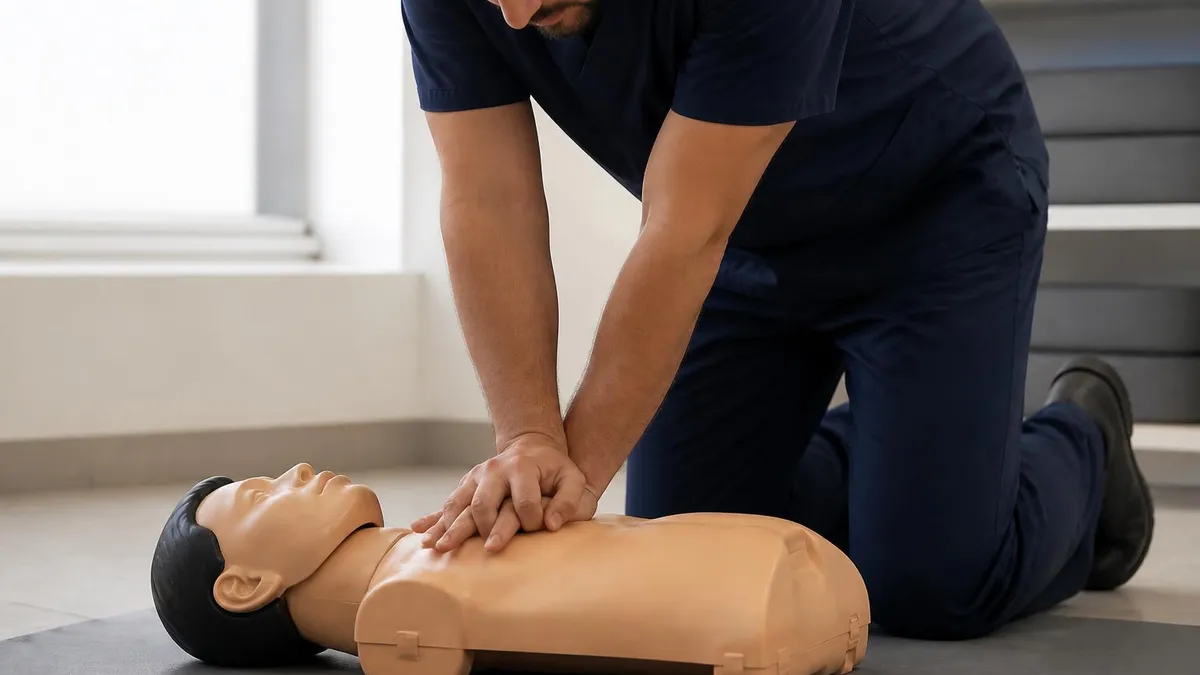
Extracorporeal CPR (ECPR): Complete Guide to Mechanical Circulatory Support During Cardiac Arrest in 2026
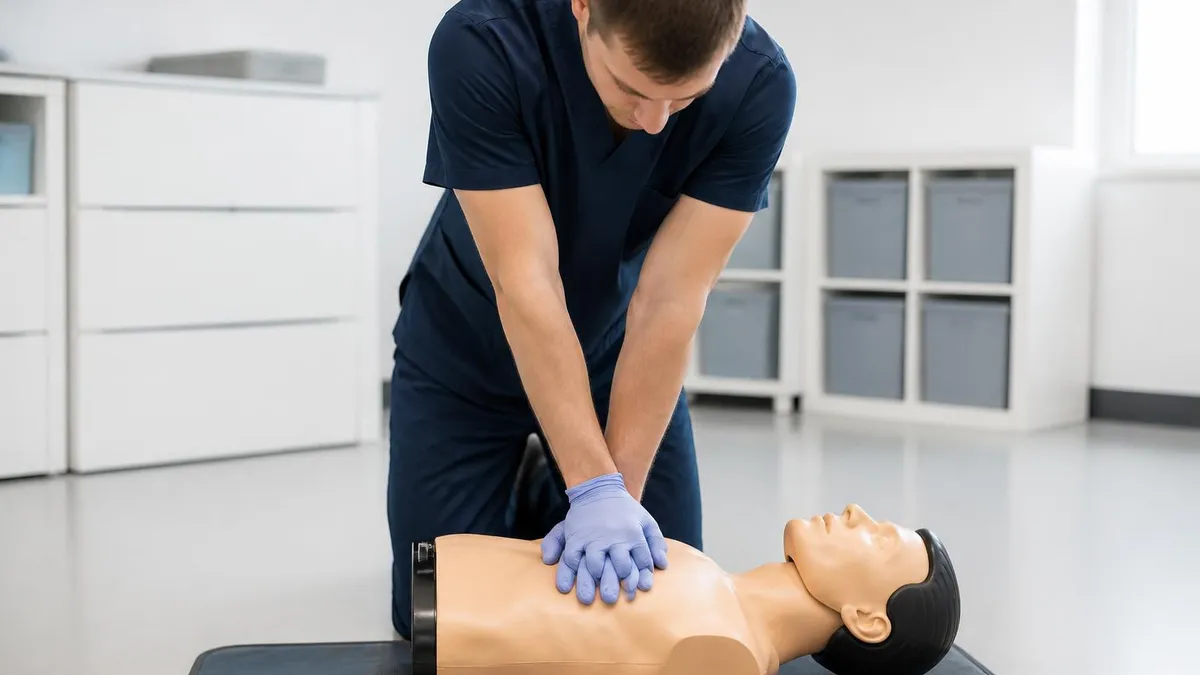
Free Online CPR Certification: Complete Guide to Legitimate Courses, Costs, and Workplace Acceptance in 2026
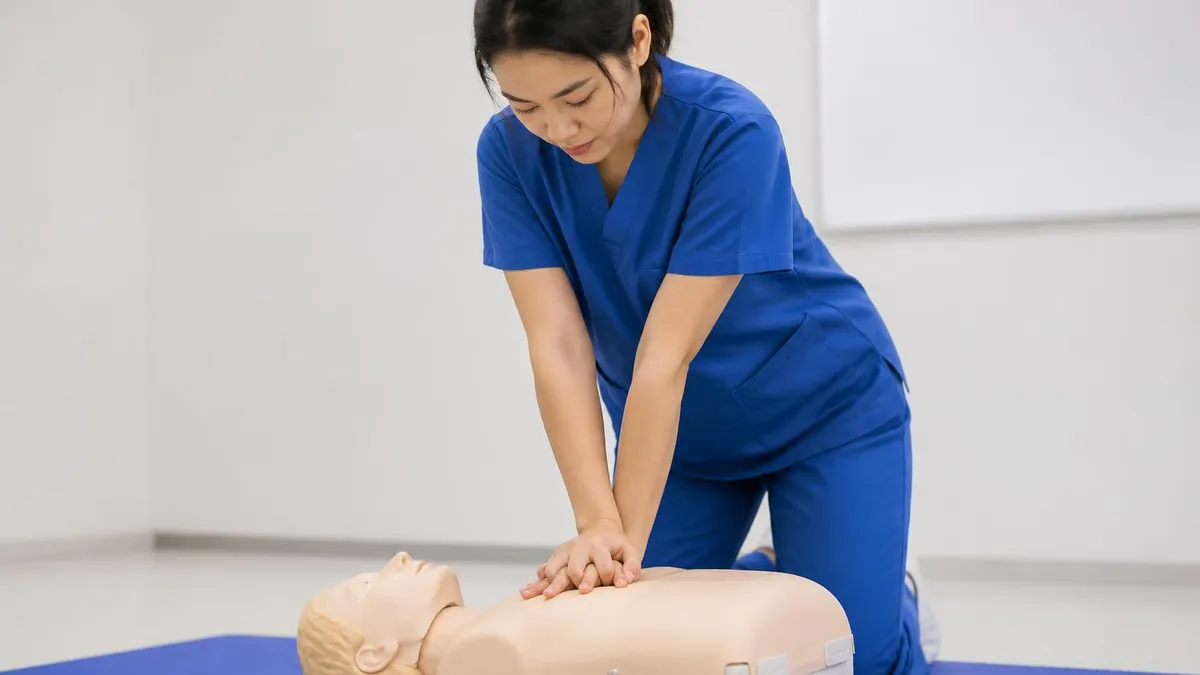
CPR Instructor Certification 2026: Complete Path to Teaching CPR
About the Author

Registered Nurse & Healthcare Educator
Johns Hopkins University School of NursingDr. Sarah Mitchell is a board-certified registered nurse with over 15 years of clinical and academic experience. She completed her PhD in Nursing Science at Johns Hopkins University and has taught NCLEX preparation and clinical skills courses for nursing students across the United States. Her research focuses on evidence-based exam preparation strategies for healthcare certification candidates.
Join the Discussion
Connect with other students preparing for this exam. Share tips, ask questions, and get advice from people who have been there.
View discussion (5 replies)