
Windy City CPR Schaumburg: Complete Guide to CPR Training Providers, AHA Courses, and Certification Options in 2026 October
Windy City CPR Schaumburg guide: compare CPR training providers, ACLS algorithm prep, PALS certification, infant CPR, and AED courses for 2026 October. ✅
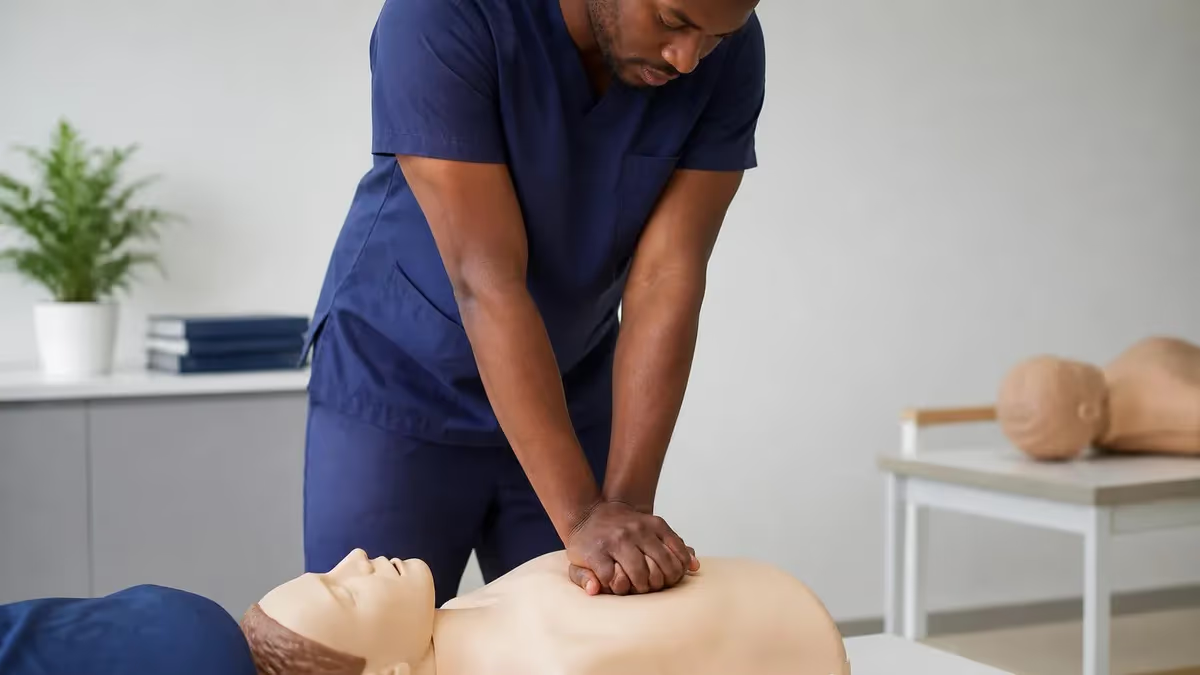
When you search for windy city cpr schaumburg, you are usually trying to solve one specific problem: you need a hands-on CPR class that meets American Heart Association standards, fits a tight schedule, and gives you a card your employer will actually accept. Schaumburg sits in the heart of the northwest Chicago suburbs, and demand for certified rescuers there spans nurses at Northwest Community, teachers in District 54, dental assistants, daycare workers, and personal trainers at LA Fitness. Choosing the right training provider matters more than most people realize.
The CPR training market is crowded. You will find national chains, hospital programs, fire-department-run classes, independent instructors, and online-only certificates with widely different quality levels. Some employers reject 100% online cards entirely. Others demand a specific provider like the AHA, Red Cross, or ASHI. Before you book a class, you need to know which credential your job requires, whether the acls algorithm or basic life support is the relevant scope, and how to verify that the instructor is current and authorized.
Local providers like Windy City CPR have built a reputation in Schaumburg by offering small group sizes, weekend availability, on-site corporate training, and Heartsaver, BLS, ACLS, and PALS courses on a rolling schedule. They typically issue AHA eCards within 24 hours, which matters when a new-hire deadline is looming. National competitors include the national cpr foundation, ProCPR, and ASHI affiliates, each with different validation rules and pricing structures that can range from $35 for a basic Heartsaver to $250 for a two-day ACLS initial.
This guide walks you through how to evaluate a CPR training provider whether you are in Schaumburg, Hoffman Estates, Elk Grove, or anywhere else in the country. We cover the difference between BLS and Heartsaver, what pals certification requires, how infant CPR compression rates differ from adult technique, and why the phrase what does aed stand for still matters in 2026 even if you have taken a class before. By the end, you will know exactly what to book, what to budget, and what red flags to avoid.
We also clear up a common search confusion. We will show you how to filter results so you reach a legitimate certification provider on the first click instead of a screen-replacement storefront. Reading time is roughly twelve minutes, and you can jump straight to pricing, course types, or verification steps using the table of contents.
If you have never taken a class, this article will give you the vocabulary you need to ask the right questions when you call. If you are renewing, we explain the renewal window, what happens if your card expires, and how to use the AHA Atlas lookup tool to confirm an instructor's status. Either way, the goal is the same: walk out with a credential you can defend, skills you can perform under pressure, and confidence that the next time someone collapses in front of you, you will know exactly what to do.
Throughout the guide, we link to deeper resources. For a structured plan to prepare for class, see the CPR - Cardiopulmonary Resuscitation: Complete Study Guide 2026, which walks through every skill station you will encounter from compressions to recovery position to bag-valve-mask ventilation.
CPR Training in Schaumburg by the Numbers
Key Facts at a Glance
| Item | Value | Details |
|---|---|---|
| Typical BLS Class Length | 4 hrs | Initial certification |
| Compressions Per Minute | 100-120 | AHA standard rate |
| Certification Validity | 2 yrs | Most AHA cards |

Course Types Offered by CPR Training Providers
Designed for the general public, daycare workers, teachers, and personal trainers. Covers adult, child, and infant CPR, AED use, and choking relief. No medical background required and typically completed in 3-4 hours.
The healthcare standard. Required for nurses, EMTs, dental staff, and clinical students. Emphasizes high-performance team CPR, bag-valve-mask ventilation, and two-rescuer scenarios. Most hospitals accept only AHA BLS cards.
Advanced Cardiovascular Life Support for nurses, paramedics, and physicians. Built around the acls algorithm flowcharts for cardiac arrest, bradycardia, and tachycardia. Requires BLS prerequisite and pharmacology knowledge.
Pediatric Advanced Life Support for clinicians caring for children. Covers respiratory distress, shock, and pediatric arrest. Pals certification is required in pediatric ERs, NICUs, and many urgent care centers.
Often bundled with Heartsaver. Covers bleeding control, burns, fractures, seizures, allergic reactions, and stroke recognition. Adds about two hours to a class and is required for many childcare licenses.
Picking a CPR training provider is less about brand loyalty and more about matching credentials to your exact job requirement. The first question to ask your employer is whether they accept only American Heart Association cards or also Red Cross, ASHI, and the national cpr foundation. Hospitals and most clinical settings stipulate AHA-only. Schools, daycares, gyms, and corporate workplaces are more flexible, but you still want a card issued by a recognized authority with a verifiable QR code or online lookup, not a generic PDF from an obscure website.
The second question is whether you need a fully in-person class, a blended class (online cognitive portion plus in-person skills check), or a fully online course. AHA's policy is firm: any course that requires hands-on skills verification cannot be completed 100% online. BLS, ACLS, and PALS all require a skills session with an authorized instructor. Heartsaver is the same. Beware of any provider offering a same-day, no-skills, $19.99 card. Those are routinely rejected, and you will end up paying twice.
The third question is class size and instructor ratio. AHA standards cap student-to-manikin ratios and recommend small groups so each student gets meaningful practice time. A 30-person Heartsaver class with two manikins is a warning sign. A typical Windy City CPR Schaumburg class runs six to twelve students with a manikin per person, which means you will actually perform two minutes of continuous compressions, practice AED pad placement, and ventilate with a bag-valve-mask rather than just watching a video.
Pricing varies more than most people expect. Heartsaver runs $50-$80, BLS runs $60-$95, ACLS and PALS initial classes run $200-$275, and renewals are typically $40-$60 less than initial. Hospital-based programs often charge less if you are an employee but more if you are an outside student. Beware of bait-and-switch pricing where a low headline rate excludes the eCard fee, manual, or skills session. Always ask for the all-in total before booking.
Location and scheduling matter too. Schaumburg-area providers compete on weekend and evening availability because the bulk of customers are working professionals. Some offer onsite training where the instructor travels to your office or facility, which is cost-effective for groups of six or more. If you are a solo learner, look at public classes posted on the provider's calendar at least a month in advance, especially around credential renewal cycles in January and July.
Pay attention to how quickly the eCard arrives. AHA instructors are required to issue cards within 20 business days, but reputable providers issue them within 24-48 hours. If your start date at a new job is two weeks away and the provider buries the eCard timeline in fine print, choose someone else. You should also verify that the instructor's AHA Instructor ID is current; you can confirm this through the AHA Atlas portal in about thirty seconds.
For a deeper look at the specific provider standards behind the most widely accepted credential, read our guide to AHA CPR: What It Is, Which Course You Need, and How to Get Certified. It explains the difference between Heartsaver and BLS in much more detail and shows which course matches which job title.

CPR Practice Test Questions
Prepare for the CPR Cardiopulmonary Resuscitation Practice exam with our free practice test modules. Each quiz covers key topics to help you pass on your first try.
CPR Basic CPR
CPR Exam Questions covering Basic CPR. Master CPR Test concepts for certification prep.
CPR and First Aid
Free CPR Practice Test featuring and First Aid. Improve your CPR Exam score with mock test prep.
CPR (Cardiopulmonary Resuscitation) Adult ...
CPR Mock Exam on (Cardiopulmonary Resuscitation) Adult CPR and AED Usage. CPR Study Guide questions to pass on your first try.
CPR (Cardiopulmonary Resuscitation) Airway...
CPR Test Prep for (Cardiopulmonary Resuscitation) Airway Obstruction and Choking. Practice CPR Quiz questions and boost your score.
CPR (Cardiopulmonary Resuscitation) Cardio...
CPR Questions and Answers on (Cardiopulmonary Resuscitation) Cardiopulmonary Emergency Recognition. Free CPR practice for exam readiness.
CPR (Cardiopulmonary Resuscitation) Child ...
CPR Mock Test covering (Cardiopulmonary Resuscitation) Child and Infant CPR. Online CPR Test practice with instant feedback.
CPR (Cardiopulmonary Resuscitation) High-P...
Free CPR Quiz on (Cardiopulmonary Resuscitation) High-Performance Team Dynamics. CPR Exam prep questions with detailed explanations.
CPR (Cardiopulmonary Resuscitation) Legal ...
CPR Practice Questions for (Cardiopulmonary Resuscitation) Legal and Ethical Considerations. Build confidence for your CPR certification exam.
CPR for Specific Populations
CPR Test Online for for Specific Populations. Free practice with instant results and feedback.
CPR Airway & Breathing Management
CPR Exam Questions covering Airway & Breathing Management. Master CPR Test concepts for certification prep.
CPR Assessment & Recognition of Cardiac Ar...
Free CPR Practice Test featuring Assessment & Recognition of Cardiac Arrest. Improve your CPR Exam score with mock test prep.
CPR Chest Compressions & Defibrillation
CPR Mock Exam on Chest Compressions & Defibrillation. CPR Study Guide questions to pass on your first try.
CPR Post-Resuscitation Care & Recovery
CPR Test Prep for Post-Resuscitation Care & Recovery. Practice CPR Quiz questions and boost your score.
ACLS Algorithm, BLS, and PALS Certification Pathways
Advanced Cardiovascular Life Support is structured around the acls algorithm flowcharts that every clinician memorizes: cardiac arrest, bradycardia with a pulse, tachycardia with a pulse, post-cardiac arrest care, and acute coronary syndromes. The course assumes you already hold a current BLS card and can perform high-quality compressions without coaching. Most students prepare two to four weeks in advance using the AHA precourse self-assessment, which has a passing threshold of 70%.
The class itself is typically two days for initial certification and one day for renewal. You will rotate through megacode stations where you lead a simulated arrest, call out the next step in the acls algorithm, interpret rhythms on a monitor, and direct medication administration. Pharmacology is heavy: epinephrine, amiodarone, lidocaine, atropine, and adenosine doses must be memorized. Cost ranges from $200 to $275 for initial and $150 to $200 for renewal at most US training centers.
Local Schaumburg Provider vs. National Online-Heavy Provider
- +Hands-on practice with manikin-per-student ratio
- +Small group sizes allow personalized instructor feedback
- +Same-week or weekend scheduling for working professionals
- +AHA eCard issued within 24-48 hours of class
- +On-site corporate training available for groups of six or more
- +Instructor can sign off on workplace-specific scenarios
- +Local accountability and Google reviews you can verify
- −Higher cost than fully online-only certificates
- −Requires travel to a physical classroom location
- −Fixed class times may not match shift workers' availability
- −Limited language options compared to large online platforms
- −Smaller catalog of specialty courses like neonatal resuscitation
- −Refund policy varies by independent provider

Pre-Class Checklist for Your CPR Certification
- ✓Confirm with your employer which provider (AHA, Red Cross, ASHI) is accepted.
- ✓Verify the instructor's credentials through the AHA Atlas or equivalent portal.
- ✓Ask whether the eCard fee is included in the headline price.
- ✓Bring photo ID and any prerequisite card (BLS card for ACLS or PALS).
- ✓Download the precourse self-assessment if taking ACLS or PALS.
- ✓Wear comfortable clothing — you will be on your knees performing compressions.
- ✓Eat a meal before class; classes run three to eight hours with short breaks.
- ✓Review the position recovery technique and choking algorithms in advance.
- ✓Confirm the renewal window so you do not lapse and need to retake initial.
- ✓Save the provider's contact info for future onsite or group training needs.
If skills were not tested in person, the card is likely invalid.
The American Heart Association does not authorize any fully online CPR certification for healthcare providers. If a website promises a same-day, $19 card with no skills check, your employer will almost certainly reject it. Always confirm that the course includes a hands-on skills verification with an authorized instructor before paying.
Local Schaumburg options are surprisingly diverse for a suburb of its size. Windy City CPR operates classes at multiple training venues in the northwest Chicago corridor and runs frequent BLS, Heartsaver, ACLS, and PALS sessions on a published monthly calendar. Their pitch is small group sizes, AHA-only curriculum, fast eCard issuance, and onsite training for dental practices, urgent care centers, and corporate offices. Reviews emphasize the practical skills time and the patience of instructors with first-time learners.
Other options in the area include hospital-based programs at Northwest Community Healthcare and AMITA Health Alexian Brothers, which often offer BLS and ACLS to internal staff at reduced rates and to outside students at standard pricing. The Schaumburg Fire Department and Hoffman Estates Fire Department periodically offer Heartsaver-style community classes, typically at low cost or free, although seats fill quickly and skills practice time can be shorter than at dedicated training centers with more manikins.
National providers like the national cpr foundation operate primarily online with mailed cards, which works for some employers but not for clinical roles. The Red Cross has a strong presence too, with classes at community centers and a recognizable brand that many schools and camps prefer. ASHI affiliates round out the market and often deliver high-quality training, though acceptance varies by employer. Always confirm before paying that your specific workplace will accept the card.
The biggest variable in Schaumburg pricing is whether you book a public class or schedule onsite training. Public classes are priced per seat and range from $60 to $275 depending on course type. Onsite training is priced as a flat instructor fee plus per-student cost, and it becomes cost-effective at about six students for Heartsaver and four students for BLS. If your dental office, school, or daycare needs to certify a whole staff, onsite is almost always cheaper and more convenient than sending everyone offsite.
One detail that often surprises first-time bookers is the language and accessibility options. Most Schaumburg-area providers teach in English, with some offering Spanish on request. If you need ASL interpretation or specific accessibility accommodations, ask at least two weeks before class. Reputable providers will work with you. Disreputable ones will quietly cancel and refuse to refund, which is a strong signal to read recent Google reviews before booking with a provider you have not used before.
Conversely, if you are looking for CPR training and Google keeps surfacing phone repair franchises, add American Heart Association or BLS to your search query to filter them out. The acronym collision is annoying but easy to work around with one extra keyword.
Once you have picked a provider, plan your post-class workflow. Save the eCard PDF to your phone and your employer's HR portal immediately. Set a calendar reminder for 90 days before expiration so you can book renewal without scrambling. And if you want a deeper refresher on technique between certifications, our Adult CPR: Complete Step-by-Step Guide to Hands-Only and Standard CPR in 2026 walks through every step from recognition to handoff.
Most AHA cards expire at the end of the month two years after issue. If your card lapses, many employers require you to retake the full initial class instead of the shorter renewal version, which costs more and takes more time. Renew within the 60-day window before expiration to stay on the renewal track and avoid clinical schedule disruptions.
Verification is the single most important post-class step and the one most students skip. Within a few days of class, you should receive your AHA eCard with a unique code. Go to the AHA's eCards portal, enter the code, and confirm that the card is active, that your name is spelled correctly, and that the expiration date matches what the instructor told you. Errors here are easy to fix in the first week and a nightmare to fix six months later when you need to onboard at a new job.
Employers will scan the QR code on the eCard or look it up in the portal, so a screenshot or printed copy works the same as a physical card. Some hospitals also require you to upload the eCard PDF into a credentialing system like HealthStream or Symplr. Have the PDF ready before your onboarding date. If you misplace your card, the issuing provider can resend the eCard at no charge or a small fee; see our CPR Card Lookup: How to Verify, Replace, and Access Your CPR Certification in 2026 guide for the step-by-step.
Red flags to watch for when evaluating a training provider include vague answers about which credential they issue, refusal to name the instructor or provide an Instructor ID, no physical training address, prices that seem too good to be true, and websites that look identical to other generic CPR mills with stock photos and no real testimonials. Reputable providers publish their calendar, instructor bios, AHA Training Center affiliation, and clear refund policies. Trust the boring, transparent ones over the flashy ones.
Renewal cycles are predictable. AHA cards are valid for two years. Plan your renewal at least four to six weeks before expiration to handle scheduling conflicts. If you are a healthcare professional juggling BLS, ACLS, and PALS, stagger them so you are not renewing all three in the same month. Many providers offer a combined ACLS and PALS renewal weekend, which saves time and sometimes money. Ask about bundle pricing if you need to renew multiple credentials together.
Refresher practice between classes pays off. Watch a short video on the acls algorithm every six months, run through a mental adult CPR scenario when you see an AED in a public space, and review what does aed stand for and how the pads should be placed if you have not used one in a while. These tiny refreshers add up. When the real moment comes — and statistics say roughly 70% of cardiac arrests happen at home in front of family — muscle memory matters far more than the calendar date on your card.
Finally, do not forget the legal protections. Every US state has a Good Samaritan law that protects ordinary citizens who provide reasonable assistance in good faith from civil liability. Healthcare providers acting within their scope of practice have additional protections. Knowing the law does not change what you do in an emergency, but it removes a common excuse people give themselves for not acting. Train, renew, and be ready.
Practical preparation matters as much as picking the right provider. The week before class, review the basics: compression depth, compression rate, the correct ventilation respiratory rate during rescue breathing, and the recovery position you place an unresponsive but breathing patient in while waiting for EMS. If you walk into class already comfortable with these terms, you will absorb the advanced material — team dynamics, megacode flow, and the acls algorithm decision points — much faster.
Bring the right supplies. A pen, a water bottle, comfortable clothing, and any pre-printed materials the provider asked you to download. Some providers require the AHA precourse self-assessment certificate of completion for ACLS and PALS. Print it or save the PDF to your phone. Skills tests are not graded on perfection but on the absence of fatal errors: failing to check the scene, skipping the pulse check, ventilating with too much volume, or stopping compressions for more than 10 seconds during a switch.
If you are nervous about the skills station, the single best practice is two minutes of continuous compressions on a manikin or pillow set to a metronome at 110 beats per minute. Most students underestimate how physically demanding two minutes is. Build up to it before class. If you have a wrist or shoulder injury, mention it to the instructor at the start of class so they can plan rotation timing. Instructors would rather know in advance than scramble mid-skills test.
For infant CPR, the technique is different enough that you should review it specifically. Compressions are with two fingers (single rescuer) or two-thumb encircling (two rescuers). Depth is about 1.5 inches or one-third the chest depth. Rate stays at 100 to 120 per minute. The compression to ventilation ratio is 30:2 for a lone rescuer and 15:2 for two healthcare providers. Choking response is back blows and chest thrusts, never abdominal thrusts on an infant. These details show up on every test and are easy to flip in your head if you have not practiced.
AED use trips up many first-time learners. Remember: what does aed stand for — automated external defibrillator. The device analyzes the rhythm and decides whether to shock. Your job is to place the pads correctly (one upper right chest, one lower left side, or anterior-posterior on small children), make sure no one is touching the patient when the device says "clear," and resume compressions immediately after the shock or after a no-shock advisory. Modern AEDs talk you through every step, which is the entire point of their design.
After class, do not let your new skills decay. Set a calendar reminder every three months to mentally walk through a CPR scenario from start to finish. If your workplace has a quarterly mock code, volunteer for it. If you are a parent, teach your older kids what to do if they find you unresponsive — how to call 911, how to find a neighbor, how to unlock the front door. These low-stakes drills build the family-wide preparedness that, statistically, will matter far more than your individual card ever does.
Finally, remember that CPR is one component of an emergency response system. Bystander CPR roughly doubles or triples survival from out-of-hospital cardiac arrest, but only when paired with early recognition, fast 911 activation, rapid defibrillation, and effective post-arrest care. You are one critical link in that chain. Picking a real training provider, doing the hands-on work, and refreshing the skills regularly is how you make sure that when your moment comes, you are ready.
CPR Questions and Answers
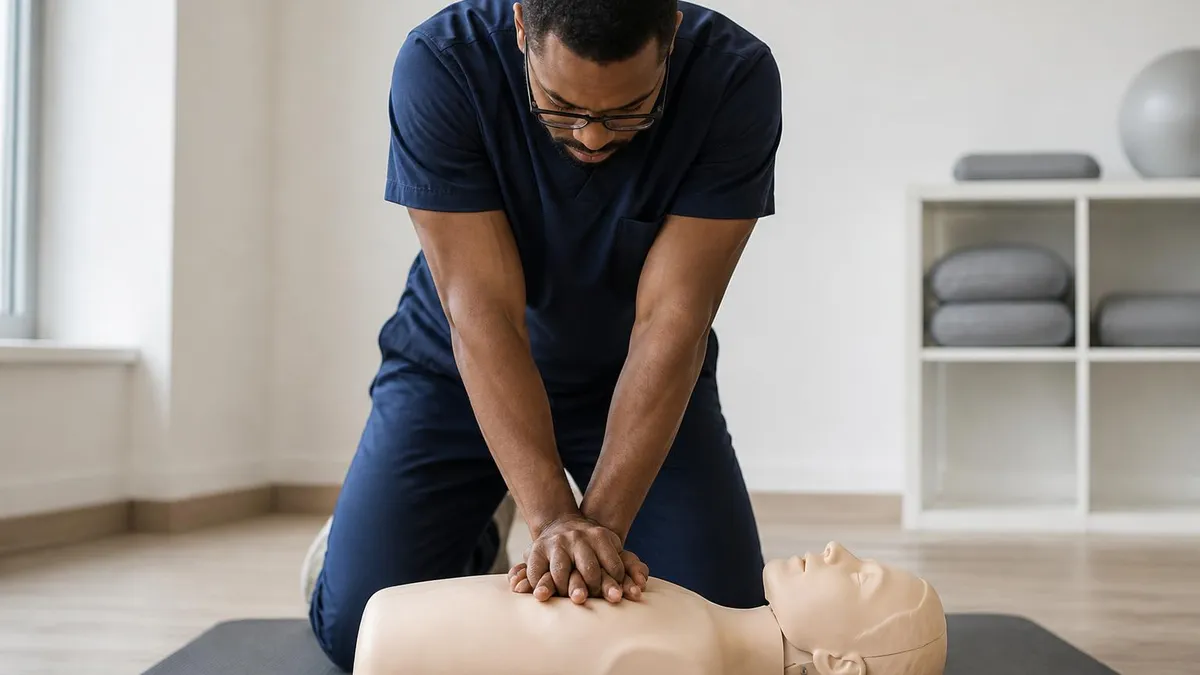
CPR Card Lookup: How to Verify, Replace, and Access Your CPR Certification in 2026
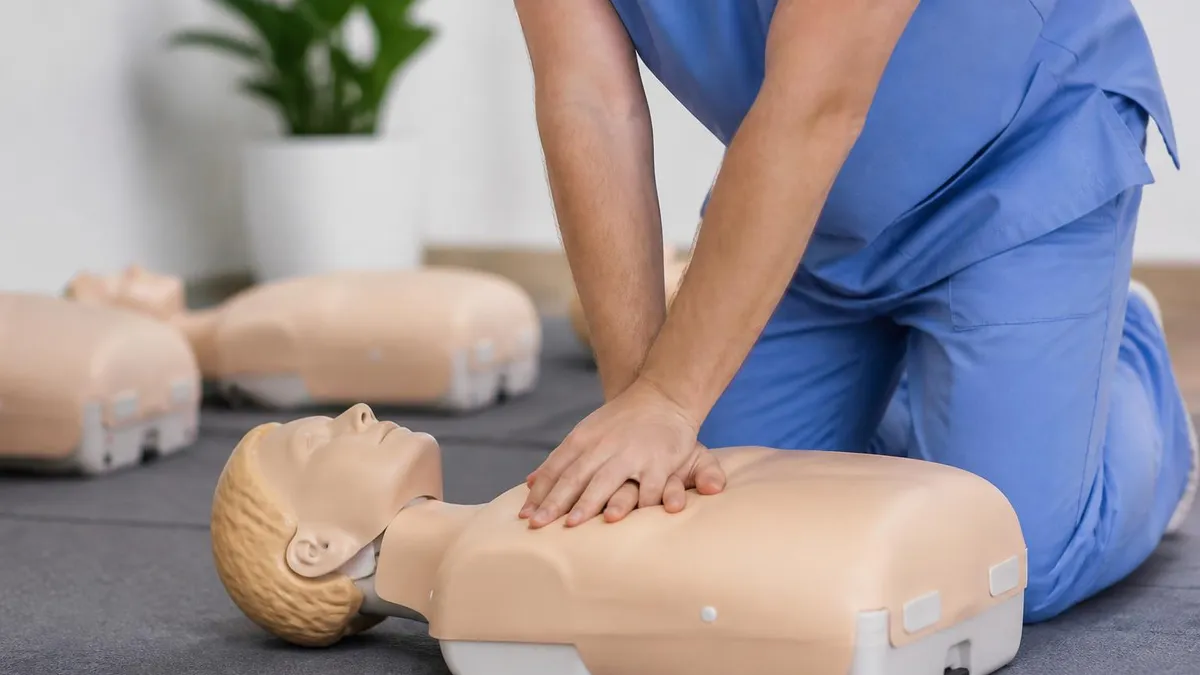
AHA CPR: What It Is, Which Course You Need, and How to Get Certified
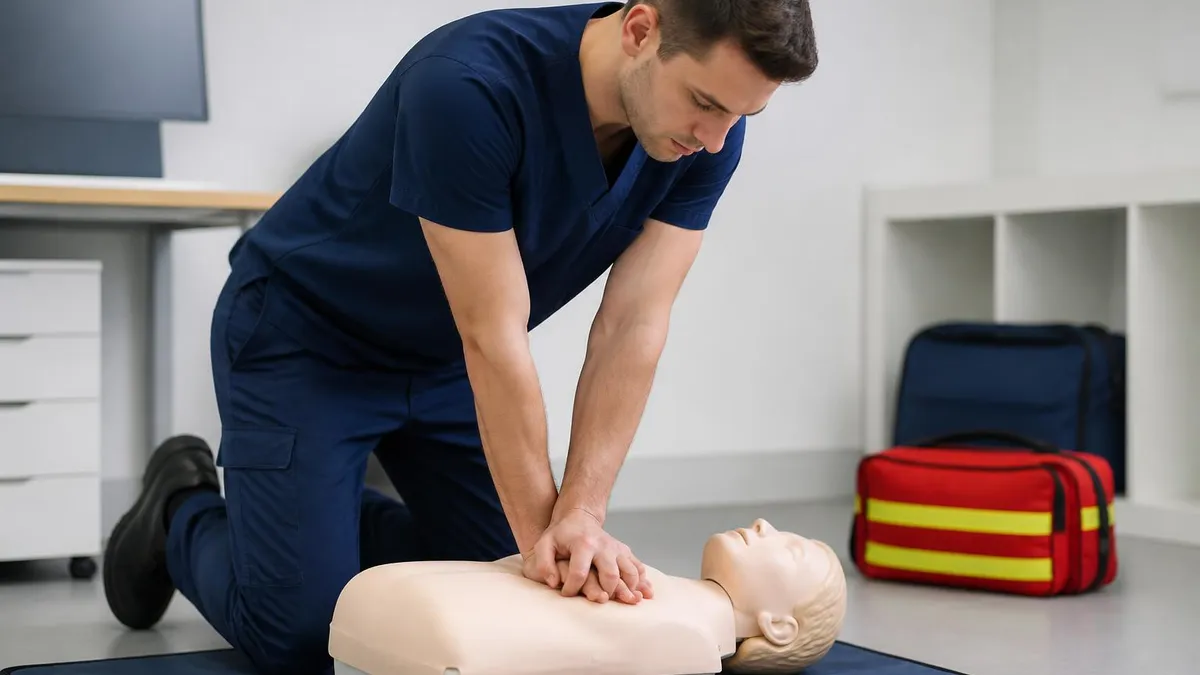
Adult CPR: Complete Step-by-Step Guide to Hands-Only and Standard CPR in 2026
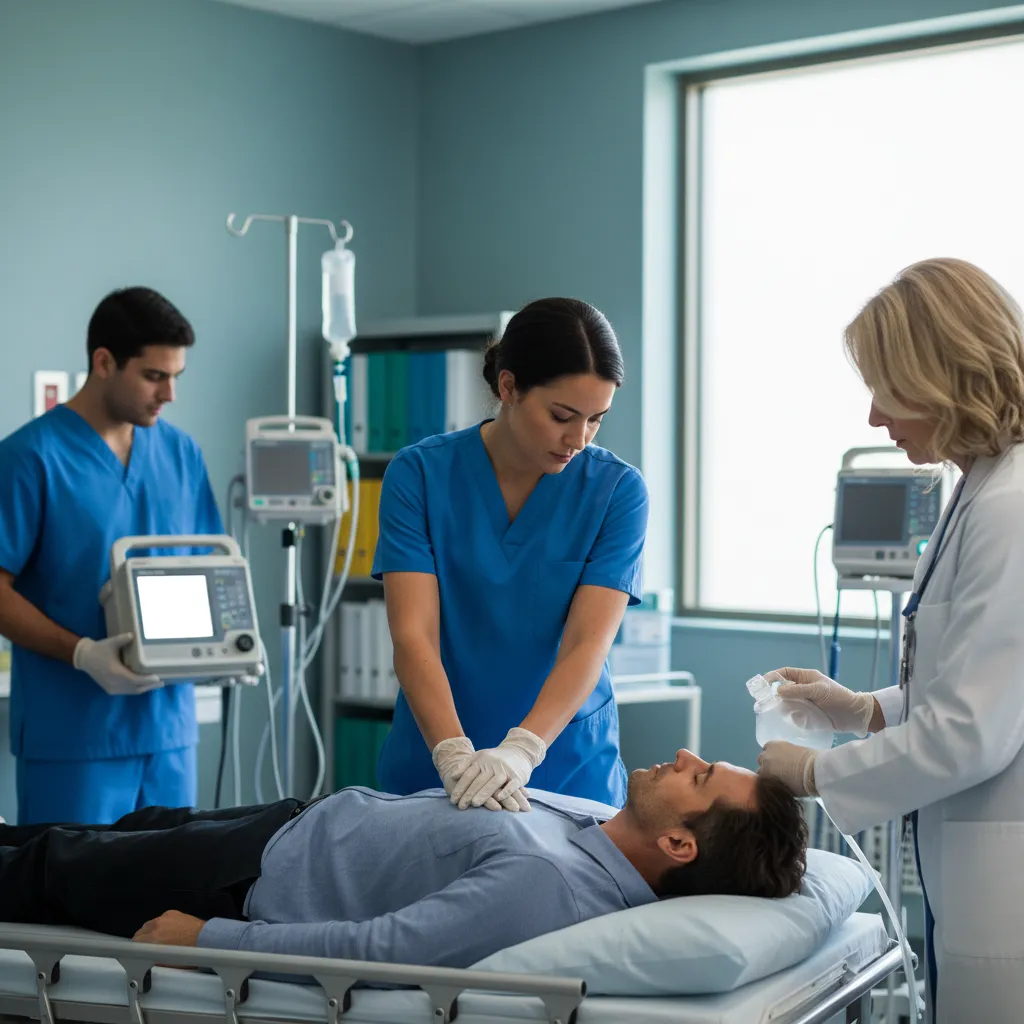
CPR - Cardiopulmonary Resuscitation: Complete Study Guide 2026
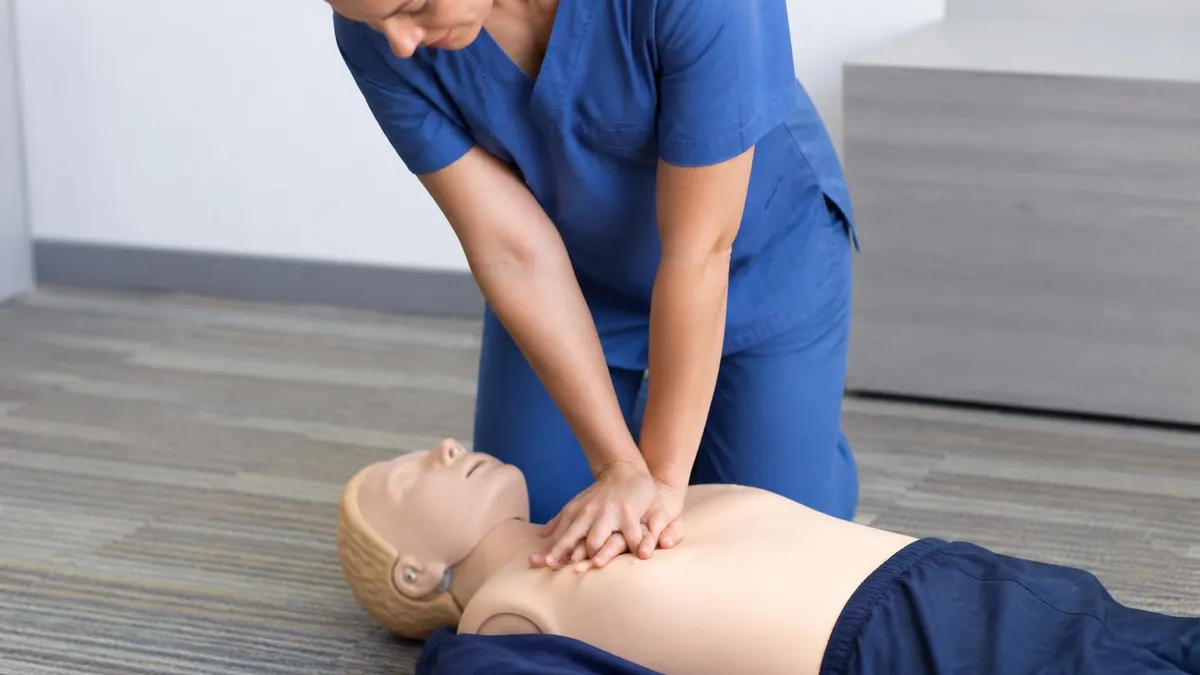
Inappropriate CPR Songs: What Not to Play, Why It Matters, and Better Beat-Per-Minute Alternatives
About the Author

Registered Nurse & Healthcare Educator
Johns Hopkins University School of NursingDr. Sarah Mitchell is a board-certified registered nurse with over 15 years of clinical and academic experience. She completed her PhD in Nursing Science at Johns Hopkins University and has taught NCLEX preparation and clinical skills courses for nursing students across the United States. Her research focuses on evidence-based exam preparation strategies for healthcare certification candidates.
Join the Discussion
Connect with other students preparing for this exam. Share tips, ask questions, and get advice from people who have been there.
View discussion (5 replies)