
Annie CPR Doll and CPR Training Manikins: The Complete 2026 October Guide to Choosing, Using, and Maintaining Lifesaving Practice Equipment
📝 Master CPR training with the Annie CPR doll and modern manikins. Compare adult, child, and infant CPR models, features, costs, and instructor tips
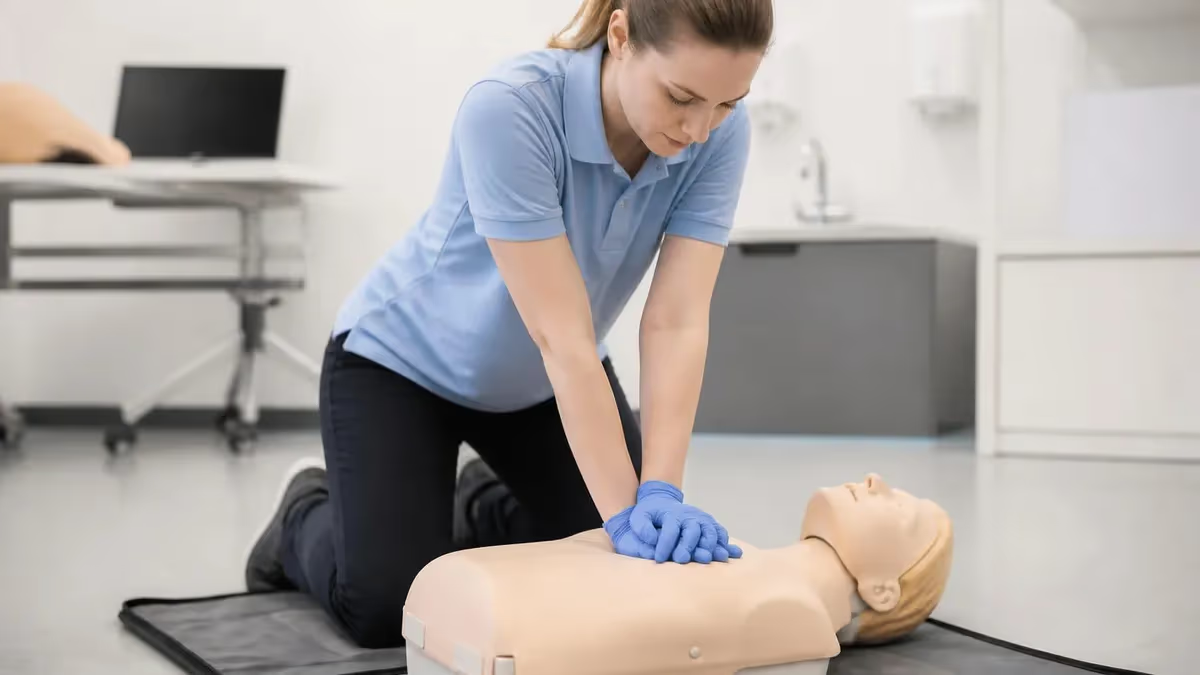
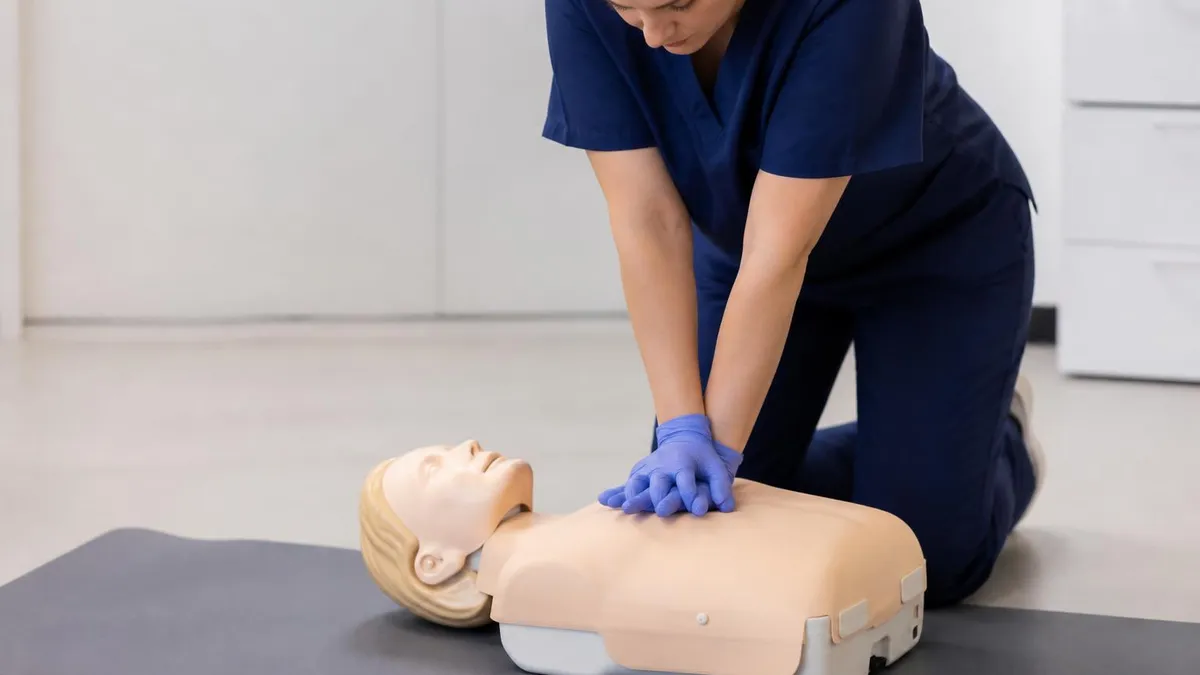
The Annie CPR doll is the single most recognizable training tool in resuscitation education, and for good reason. Since Norwegian toymaker Asmund Laerdal sculpted Resusci Anne's serene face in 1960, more than 500 million students have practiced chest compressions and rescue breaths on her. Whether you are studying the acls algorithm for an upcoming hospital recertification, sitting through a community Heartsaver class, or training new EMTs, you have almost certainly placed your palms on Annie's sternum at some point. Understanding what makes a good CPR training manikin is essential to learning lifesaving skills correctly.
CPR training manikins have evolved dramatically over the past six decades. Early Annie dolls had no feedback, no electronics, and no way to verify compression depth. Modern manikins from Laerdal, Prestan, WorldPoint, and CPR Savers ship with audible clickers, smartphone apps, light-bar feedback, and even Bluetooth-connected dashboards that capture every compression and ventilation. Studies published by the American Heart Association show that students who train with real-time feedback devices perform compressions that are 30-40 percent more likely to meet depth and rate guidelines than those trained on traditional silent manikins.
The market for CPR equipment has expanded well beyond the iconic adult Annie. Today, instructors stock infant cpr manikins like Baby Anne and Prestan Infant, pediatric manikins for the eight-to-puberty age range, bariatric models for advanced provider courses, and specialty trainers built for advanced airway insertion, intraosseous access, and defibrillation pad placement. A modern training cart for a basic life support classroom typically includes at least one adult manikin per two students, one infant manikin per group, and at least one AED trainer.
This guide walks through everything you need to know about CPR training manikins in 2026. We cover the Annie family tree, competing brands, feedback technology, what does aed stand for and how trainer AEDs simulate the real device, cost ranges, classroom ratios, hygiene protocols, and the difference between manikins designed for layperson courses and those built for healthcare provider programs. We also explain why the manikin you choose directly affects how well your students will perform during a real cardiac arrest.
Whether you are an instructor purchasing equipment for a training site, a coordinator outfitting a hospital simulation lab, or a self-learner buying a personal manikin to keep skills sharp between renewal cycles, the right choice matters. A poorly designed manikin can teach bad habits — shallow compressions, incorrect hand placement, or rushed ventilations — that transfer directly to the bedside. A well-designed manikin with accurate anatomy and meaningful feedback builds muscle memory you can trust under stress.
If you landed here looking for screen replacement, you are in the wrong place. If you are here to learn how to choose, set up, and maintain the equipment that will help you save a life, keep reading.
CPR Training Manikins by the Numbers

Major Categories of CPR Training Manikins
Life-size torso or full-body adult dolls like Resusci Anne QCPR and Prestan Adult. Used for BLS, ACLS, and Heartsaver courses. Most include articulated jaw, chest rise, and compression feedback. Average price ranges from $250 to $900 for classroom-grade models.
Smaller manikins built for infant cpr practice (under one year) and child CPR (one to puberty). Baby Anne, Prestan Infant, and Little Junior are standard. Critical for daycare, pediatric nursing, and parent CPR classes where two-finger and two-thumb techniques are taught.
Specialized manikins like SimMan and Laerdal Airway Management Trainer for intubation, supraglottic airway insertion, and bag-valve-mask ventilation. Used in paramedic, respiratory therapy, and anesthesia programs. Often paired with a separate compression manikin during full code simulations.
Non-shocking defibrillator units like the Prestan AED Trainer PLUS and Philips HeartStart Trainer. Pair with any compression manikin to teach pad placement, voice prompts, and shock-or-no-shock decision making. Essential for any complete BLS or Heartsaver kit.
Larger torso manikins simulating obese patients, plus specialty trainers for tracheostomy care, IO access, and OB resuscitation. Used in advanced provider, critical care, and simulation center settings rather than entry-level CPR courses.
The story of the Annie CPR doll begins with tragedy and ingenuity. In the late 1950s, Asmund Laerdal — a Norwegian publisher and toy manufacturer who had pulled his own two-year-old son from drowning years earlier — was approached by Austrian-American physician Peter Safar. Safar had been developing a technique called mouth-to-mouth resuscitation and needed a way to teach it without exposing students to the discomfort of practicing on each other. Laerdal, already skilled at producing soft plastic dolls, agreed to design a lifelike training mannequin.
The face Laerdal chose for the first Resusci Anne was reportedly inspired by L'Inconnue de la Seine, the death mask of an unidentified young woman pulled from the Seine River in Paris in the 1880s. Her enigmatic smile had become a popular artistic muse across Europe. By giving CPR's training doll this face, Laerdal arguably made her the most kissed face in history — every student who has ever bent down to deliver a rescue breath has greeted Annie. This origin story is shared in nearly every instructor course as a piece of resuscitation lore.
Early Resusci Annes were simple. A spring-loaded chest provided basic compression resistance, and a lung bag inflated when air was blown into the mouth. There were no electronics, no feedback, and no way to confirm whether a student's technique was correct beyond the instructor's visual assessment. Despite these limitations, the manikin revolutionized first aid training. Within a decade, Annie had been adopted by the American Heart Association, the Red Cross, and equivalent organizations across Europe, Asia, and the Americas.
The 1990s and 2000s brought significant upgrades. Annie acquired a carotid pulse simulator, articulated jaw for proper head-tilt-chin-lift training, anatomical landmarks for chest compressions, and eventually a clicker that audibly signaled adequate compression depth. The national cpr foundation and other certifying bodies began requiring instructors to use feedback-capable manikins for high-quality CPR documentation, particularly after the 2010 AHA guidelines emphasized chest recoil and minimal interruptions.
Today's Resusci Anne QCPR connects via Bluetooth to a tablet running the SimPad SkillReporter app, capturing every compression depth, rate, hand position, recoil percentage, ventilation volume, and pause duration. Instructors can review individual student performance, generate certification-ready reports, and identify which students need remediation before the practical exam. The transformation from simple spring chest to data-rich training platform took 60 years, but the underlying mission — teach quality CPR to as many people as possible — has never changed.
Annie has competitors now. Prestan Products launched in 2010 with a sleeker, lighter manikin featuring a built-in CPR rate monitor with color-coded lights. WorldPoint, Nasco Healthcare, and Simulaids each offer their own adult, child, and infant lines. But the name Annie has become genericized in the same way that Kleenex or Band-Aid have — instructors and students still call almost any adult CPR manikin an Annie regardless of the brand printed on its box.

CPR Practice Test Questions
Prepare for the CPR Cardiopulmonary Resuscitation Practice exam with our free practice test modules. Each quiz covers key topics to help you pass on your first try.
CPR Basic CPR
CPR Exam Questions covering Basic CPR. Master CPR Test concepts for certification prep.
CPR and First Aid
Free CPR Practice Test featuring and First Aid. Improve your CPR Exam score with mock test prep.
CPR (Cardiopulmonary Resuscitation) Adult ...
CPR Mock Exam on (Cardiopulmonary Resuscitation) Adult CPR and AED Usage. CPR Study Guide questions to pass on your first try.
CPR (Cardiopulmonary Resuscitation) Airway...
CPR Test Prep for (Cardiopulmonary Resuscitation) Airway Obstruction and Choking. Practice CPR Quiz questions and boost your score.
CPR (Cardiopulmonary Resuscitation) Cardio...
CPR Questions and Answers on (Cardiopulmonary Resuscitation) Cardiopulmonary Emergency Recognition. Free CPR practice for exam readiness.
CPR (Cardiopulmonary Resuscitation) Child ...
CPR Mock Test covering (Cardiopulmonary Resuscitation) Child and Infant CPR. Online CPR Test practice with instant feedback.
CPR (Cardiopulmonary Resuscitation) High-P...
Free CPR Quiz on (Cardiopulmonary Resuscitation) High-Performance Team Dynamics. CPR Exam prep questions with detailed explanations.
CPR (Cardiopulmonary Resuscitation) Legal ...
CPR Practice Questions for (Cardiopulmonary Resuscitation) Legal and Ethical Considerations. Build confidence for your CPR certification exam.
CPR for Specific Populations
CPR Test Online for for Specific Populations. Free practice with instant results and feedback.
CPR Airway & Breathing Management
CPR Exam Questions covering Airway & Breathing Management. Master CPR Test concepts for certification prep.
CPR Assessment & Recognition of Cardiac Ar...
Free CPR Practice Test featuring Assessment & Recognition of Cardiac Arrest. Improve your CPR Exam score with mock test prep.
CPR Chest Compressions & Defibrillation
CPR Mock Exam on Chest Compressions & Defibrillation. CPR Study Guide questions to pass on your first try.
CPR Post-Resuscitation Care & Recovery
CPR Test Prep for Post-Resuscitation Care & Recovery. Practice CPR Quiz questions and boost your score.
Feedback Technology and the ACLS Algorithm in Manikin Training
The simplest feedback mechanism in modern CPR training manikins is the audible clicker. When a student compresses the chest to at least two inches, a spring-loaded plate inside the torso snaps and produces a sharp click. Prestan Professional manikins are the best-known example, but Laerdal Little Anne and several budget brands also offer click feedback.
Clickers are inexpensive, require no batteries, and never fail mid-class. The downside is that they only confirm minimum depth — they cannot tell a student if compressions are too deep, if recoil is incomplete, or if the rate has drifted outside the 100-120 per minute target. For introductory Heartsaver and lay rescuer courses, clickers are usually sufficient.
Resusci Anne vs Prestan Professional: Which Manikin Wins?
- +Resusci Anne offers the most detailed Bluetooth analytics through SimPad SkillReporter
- +Annie's articulated jaw and realistic airway better simulate true patient anatomy
- +QCPR Classroom app supports multi-manikin sessions for instructor-led group training
- +Replacement parts are widely available and Laerdal honors warranty repairs globally
- +Long institutional track record means most simulation centers already own Laerdal accessories
- +Resusci Anne supports advanced features like pulse simulation and BP measurement add-ons
- −Resusci Anne is significantly heavier and bulkier to transport between training sites
- −Higher upfront cost — $700-$2,400 versus $200-$500 for Prestan Professional
- −Prestan manikins are lighter, stack easily, and ship four-packs in a single carry bag
- −Prestan clamshell torso requires no lung bag changes between students — just a face shield
- −Prestan rate monitor uses standard AA batteries while Annie QCPR needs proprietary chargers
- −Replacement lungs and faces for Prestan are cheaper and faster to swap during back-to-back classes
Pros and Cons at a Glance
| Pros | Cons |
|---|---|
| Resusci Anne offers the most detailed Bluetooth analytics through SimPad SkillReporter | Resusci Anne is significantly heavier and bulkier to transport between training sites |
| Annie's articulated jaw and realistic airway better simulate true patient anatomy | Prestan manikins are lighter, stack easily, and ship four-packs in a single carry bag |
| QCPR Classroom app supports multi-manikin sessions for instructor-led group training | Prestan clamshell torso requires no lung bag changes between students — just a face shield |
| Replacement parts are widely available and Laerdal honors warranty repairs globally | Prestan rate monitor uses standard AA batteries while Annie QCPR needs proprietary chargers |
| Long institutional track record means most simulation centers already own Laerdal accessories | Replacement lungs and faces for Prestan are cheaper and faster to swap during back-to-back classes |

Pre-Class Manikin Setup Checklist for Instructors
- ✓Inspect each manikin torso for cracks in the chest plate, sternum, or rib cage before students arrive
- ✓Install a fresh disposable face shield and lung bag for every student rotation
- ✓Test compression feedback by performing 30 compressions and confirming clicker, light bar, or app reads correctly
- ✓Charge or replace batteries in Bluetooth-enabled manikins and AED trainers the night before class
- ✓Pair each Bluetooth manikin with the tablet or laptop and confirm SkillReporter or QCPR Classroom shows live data
- ✓Place at least one manikin per two students per AHA and Red Cross instructor ratios
- ✓Set out infant and child manikins separately if the course covers pediatric or infant cpr techniques
- ✓Stage AED trainer pads in the open position with batteries inserted and pediatric pads available
- ✓Wipe manikin faces and chests with manufacturer-approved disinfectant between every student
- ✓Verify the metronome app, room music, or compression timer is loaded and audible from every workstation
You Do Not Need a $2,000 Manikin to Practice at Home
Laerdal's Mini Anne kit retails for around $45 and includes an inflatable adult torso, a disposable face shield, and an instructional DVD or QR-coded video. It is the same manikin the AHA distributes through its CPR Anytime program. For families, expectant parents, and lay rescuers who want to keep skills sharp between two-year recertification cycles, the Mini Anne is more than adequate — it teaches correct hand placement, depth, and rate with a built-in audible compression indicator.
Manikin maintenance is one of the least glamorous parts of running a CPR training program, but it directly affects student safety, equipment lifespan, and your training site's credibility. A neglected manikin can spread bacteria, viruses, and fungal infections between students. It can also develop mechanical problems — a sagging chest spring, a torn lung bag, a stuck jaw — that teach students incorrect technique without anyone noticing until the practical exam.
The first rule of manikin hygiene is one face shield per student. Disposable plastic face shields with one-way valves cost pennies in bulk and create a barrier between the student's mouth and the manikin's mouth. Some programs prefer manikin-specific face skins that pop on and off and can be assigned to each student for the duration of a class. Whatever system you use, never let two students share a face shield, and never assume that wiping the face with alcohol is enough between mouth-to-mouth practice rounds.
Lung bags should be replaced or thoroughly disinfected between classes. Prestan manikins use a folded clamshell bag that slides out through the chest cavity in seconds. Resusci Anne uses a more complex airway-and-lung assembly that requires partial disassembly. Manufacturers publish detailed cleaning protocols — Laerdal recommends Virkon, Cavicide, or a mild bleach solution; Prestan recommends a quaternary ammonium disinfectant. Never use straight isopropyl alcohol on Annie's face because it degrades the soft vinyl over time.
The chest mechanism itself requires periodic inspection. Open the torso every six months and check the compression spring, the recoil mechanism, and the click plate (if equipped). Listen for unusual squeaks during compressions, which often indicate a worn pivot point. Replacement springs and clickers cost $20-$60 and ship within a week from most distributors. Catching a worn spring before it fails saves you from canceling a class because half your manikins suddenly read shallow compressions.
Storage matters too. Stack manikins in their original carry bags or hard cases, not loose on a shelf where bodies, arms, or jaws can be crushed. Store in a climate-controlled space — extreme heat softens the vinyl and warps the chest plate, while freezing temperatures can crack the plastic. If you travel between training sites, invest in padded rolling cases. Replacing a $500 manikin because it cracked in a hot trunk costs far more than a $60 case.
Finally, keep a maintenance log. Record the date each manikin was purchased, the dates of major cleanings, parts replacements, and any incidents (a student bit through a face during practice, the chest spring failed mid-class, the Bluetooth module would not pair). When it comes time to budget for replacements, a maintenance log gives you concrete data to justify the purchase order rather than vague claims that the equipment is getting old.
A 2019 study in Resuscitation found that 65 percent of CPR training manikins surveyed at a major conference had detectable bacterial contamination, including staph aureus, on the face and airway. Always use one disposable face shield per student, replace lung bags between classes, and disinfect with a manufacturer-approved cleaner. Skipping these steps is a documented infection-control failure that has led to canceled certifications and lawsuits against negligent training centers.
Buying CPR training manikins is one of the largest discretionary purchases a training center, school, or fire department will make in any given year. Mistakes are expensive — a poorly chosen manikin can sit unused, fail to meet certification requirements, or break within six months. Before you submit a purchase order, work through the questions below with your instructor team and your purchasing department.
First, define your courses. A site that teaches only Heartsaver and friends-and-family CPR can get by with basic Prestan manikins and clicker feedback. A site that teaches BLS for healthcare providers, pals certification, and ACLS needs feedback-capable manikins with Bluetooth data export, plus separate airway and rhythm-recognition trainers. A site that runs paramedic, respiratory therapy, or nursing simulation programs needs high-fidelity manikins like SimMan, ALS Simulator, or Gaumard HAL that simulate life support scenarios including respiratory rate, heart sounds, and pharmacological response.
Second, calculate your student-to-manikin ratio. The American Heart Association requires no more than two students per manikin during practice. If you run classes of 12 students, you need six adult manikins, plus infant and child manikins if pediatric content is included. Most training centers underestimate this and end up with students standing around waiting their turn — which wastes class time and reduces total compression practice per student. Order at least 20 percent extra to account for repairs and concurrent classes.
Third, budget for accessories. The manikin itself is only part of the cost. Plan for face shields ($0.10-$0.30 each in bulk), replacement lung bags ($1-$5 each), disinfectant wipes, AED training pads (these wear out after about 100 uses), carry bags, and tablets or smartphones for Bluetooth feedback apps. A fully equipped Prestan classroom with four adult manikins, two infant manikins, two AED trainers, and a year's worth of consumables typically runs $2,500-$4,000.
Fourth, think about portability. If you teach at client sites — corporate offices, schools, churches, daycares — every pound matters. Prestan manikins ship four to a carry bag and weigh about six pounds each. Resusci Anne weighs nearly twice that. Full-body manikins with legs are nearly impossible to transport without a rolling cart. For a mobile training business, weight and stackability often outweigh the analytics benefits of higher-end models.
Fifth, plan for the future. CPR guidelines update every five years, and manikin software updates accompany them. Buy from manufacturers with a track record of supporting older hardware — Laerdal and Prestan both push firmware updates to manikins purchased years earlier. Avoid no-name imports from marketplaces where the seller may not exist in two years. The position recovery of a broken manikin from a defunct supplier is essentially impossible, and you will end up replacing the whole unit.
Finally, do not confuse training equipment with field equipment. A trainer AED does not deliver a shock and cannot be used in a real emergency. A training manikin is not a CPR feedback device for actual cardiac arrests. Keep them clearly labeled, store them separately, and never let a trainer unit drift into a real first-aid cabinet where a panicked bystander might grab it during a code.
Once you have the right manikins, getting the most out of them requires deliberate teaching practice. The best instructors do not just stand at the front of the room and demonstrate — they circulate, observe each student in real time, and use the manikin's feedback data to give specific, actionable corrections. A student who hears generic praise like good job learns nothing; a student who hears your last cycle averaged 95 compressions per minute, target is 100-120, focus on counting one-and-two-and learns exactly how to improve.
Rotate students frequently. Two minutes of high-quality compressions on a manikin is exhausting, and fatigue degrades performance rapidly. Real-world cardiac arrests require rescuer rotation every two minutes, and your training should mirror that. Set a visible timer or use the manikin app's two-minute cycle counter, and switch students at every rhythm check. This builds the habit that will translate to the field when ACLS, BLS, or PALS providers must coordinate care during a real code.
Use the data without weaponizing it. Bluetooth feedback can create anxiety in students who see their performance graphed in real time on a large screen. Some instructors project the feedback for the whole class to see, which can be motivating in some groups and humiliating in others. Read your room — for healthcare provider courses, public projection is usually fine because peer feedback is part of the culture. For lay rescuer or family CPR classes, show the data only to the individual student.
Pair manikin training with scenario practice. Compressions in isolation are easier than compressions during a coordinated team response with airway management, defibrillation, and medication administration. Set up megacode-style scenarios where one student performs CPR while another runs the AED trainer, a third bags the airway, and a fourth records times and drugs. This integrated practice is required for ACLS and PALS certification and builds the situational awareness that single-skill drills miss.
Do not skip infant and child manikins, even in adult-focused courses. Many adult cardiac arrests start as pediatric near-drowning, choking, or sudden infant death events that bystanders intervene in first. A daycare worker, grandparent, or babysitter taking a basic CPR course needs hands-on practice on an infant manikin to learn two-thumb encircling technique, gentle ventilation volumes, and the difference in compression depth between adults and infants. Many instructors short-change this section because adult content takes most of the class time — resist that temptation.
Finally, encourage students to practice between certifications. Two years is a long time, and skill decay sets in within three to six months without practice. The Mini Anne home kit, free metronome apps, and YouTube refresher videos all help students stay sharp. Some training centers loan out manikins for short periods or host quarterly skill check-ins for past students at no charge. These practices build customer loyalty and, more importantly, increase the chance that your former students will actually save a life when the moment arrives.
CPR Questions and Answers
CPR Card Lookup: How to Verify, Replace, and Access Your CPR Certification in 2026
Adult CPR: Complete Step-by-Step Guide to Hands-Only and Standard CPR in 2026

CPR - Cardiopulmonary Resuscitation: Complete Study Guide 2026
Inappropriate CPR Songs: What Not to Play, Why It Matters, and Better Beat-Per-Minute Alternatives
AHA CPR Recertification: How to Recertify CPR Online with the American Heart Association in 2026
About the Author

Registered Nurse & Healthcare Educator
Johns Hopkins University School of NursingDr. Sarah Mitchell is a board-certified registered nurse with over 15 years of clinical and academic experience. She completed her PhD in Nursing Science at Johns Hopkins University and has taught NCLEX preparation and clinical skills courses for nursing students across the United States. Her research focuses on evidence-based exam preparation strategies for healthcare certification candidates.
Join the Discussion
Connect with other students preparing for this exam. Share tips, ask questions, and get advice from people who have been there.
View discussion (5 replies)