
Hiring HVAC Technicians: What Employers and Job Seekers Need to Know in 2026 September
Everything about hiring HVAC technicians in 2026 September — ✅ salaries, certifications, job market trends, and how to land or fill an HVAC tech role.
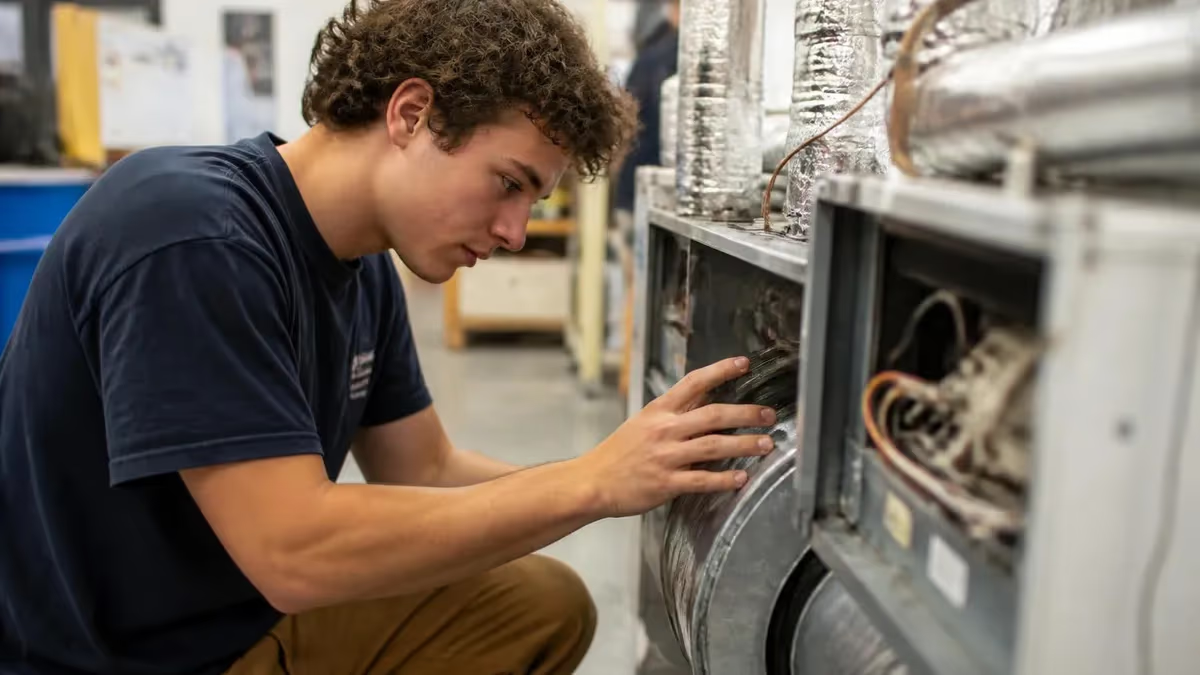
The demand for hiring HVAC technicians has reached a fever pitch across the United States, with the Bureau of Labor Statistics projecting a 9% growth rate for the occupation through 2033 — far outpacing the national average for all trades.
Residential construction booms, aging commercial infrastructure, and the accelerating shift toward high-efficiency heat pump systems are all converging to create a labor market where qualified technicians can essentially name their terms. Whether you are a building services company trying to staff up for summer peak season or a new technician evaluating your first job offer, understanding this market is the foundation of every smart decision you will make.
HVAC work sits at the intersection of mechanical, electrical, and refrigeration systems — which means skilled technicians are genuinely hard to replace with automation or outsourcing. A field service call to diagnose a failing compressor or recharge a commercial chiller requires hands-on expertise that no software platform can substitute. That scarcity is a structural advantage for workers entering the trade today. The median annual wage for HVAC and refrigeration mechanics and installers crossed $57,300 in recent surveys, with experienced technicians in high-cost metro areas regularly earning $80,000 to $95,000 including overtime and on-call premiums.
For employers, the difficulty of finding qualified candidates has pushed average time-to-fill for HVAC technician positions above 45 days in many markets, according to industry staffing surveys. Companies that once relied on walk-in applicants are now building structured apprenticeship pipelines, partnering with technical colleges, and offering signing bonuses that would have seemed unthinkable a decade ago. Understanding what technicians actually want — not just competitive base pay, but schedule flexibility, tool allowances, company vehicles, and clear promotion pathways — separates the employers who consistently attract top talent from those who are perpetually understaffed.
The certification landscape adds another layer of complexity to hvac technician jobs for both sides of the hiring equation. The EPA 608 certification is a federal legal requirement for anyone who purchases or handles refrigerants, and it is the minimum credential any legitimate employer should verify before a technician works independently on refrigerant circuits. Beyond EPA 608, credentials like the NATE (North American Technician Excellence) certification and state-level licensing requirements vary significantly, meaning a technician who is fully qualified to work in Texas may need additional steps before legally practicing in states like California, Florida, or New York.
This article is designed to give both job seekers and hiring managers a complete, honest picture of the HVAC technician job market in 2026. We will cover salary benchmarks by specialization and region, the certifications and licenses that matter most, strategies for finding high-quality job openings, and the red flags that both applicants and employers should watch for during the hiring process. Whether you are three weeks out of a vocational HVAC program or running the HR function for a regional mechanical contractor, the pages ahead contain actionable information you can apply immediately.
One theme you will encounter repeatedly throughout this guide is the importance of continuous skills development. The refrigerant transition from R-22 and R-410A to lower-GWP alternatives like R-32 and R-454B is already underway, and technicians who understand the new refrigerant chemistry, updated recovery procedures, and revised safety protocols will command measurable wage premiums over the next five years.
The same applies to smart controls and building automation — technicians who can commission and troubleshoot connected HVAC systems are increasingly valuable in both commercial and high-end residential markets. Staying current is not just good advice; in this field, it is a direct lever on earning potential.
Finally, the role of structured practice and examination preparation cannot be overstated for technicians entering or advancing within the trade. Many state licensing boards, employer pre-hire screenings, and NATE certification exams test the same core competencies: refrigeration fundamentals, electrical theory, load calculations, code compliance, and equipment-specific diagnostics. Technicians who invest time in focused exam preparation consistently outperform peers who rely solely on on-the-job experience when facing formal assessments. This guide will help you understand which credentials to pursue and how to prepare for them effectively.
HVAC Technician Jobs by the Numbers
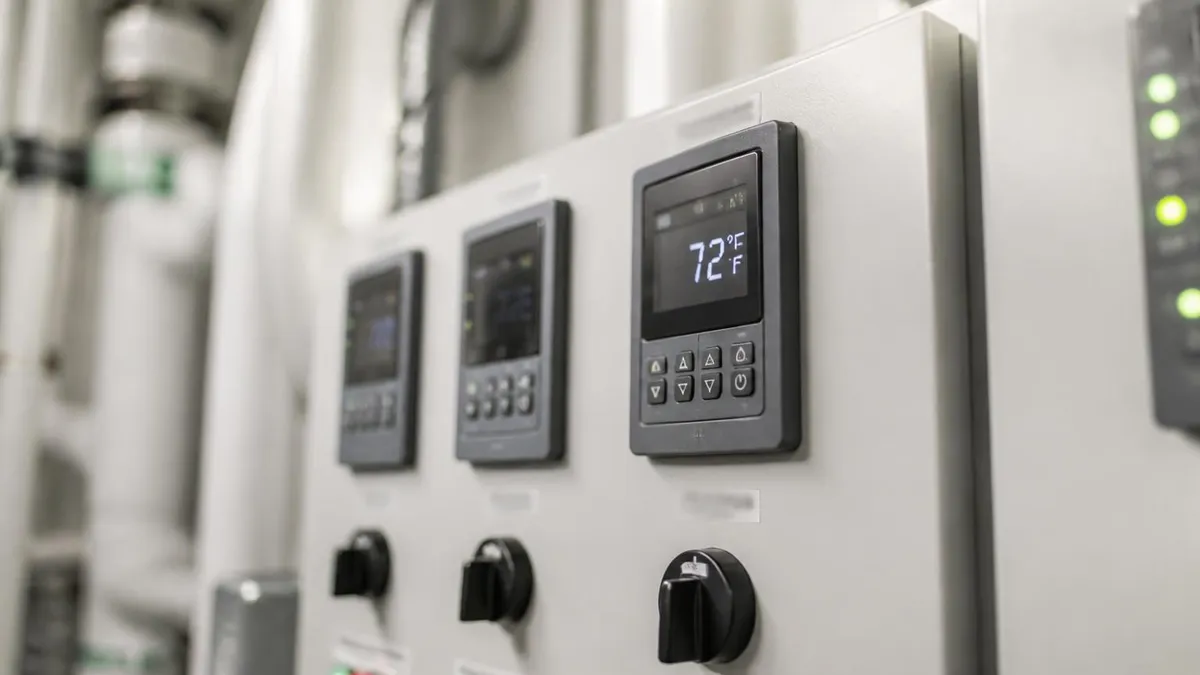
HVAC Technician Salary Ranges by Experience Level
Certifications in the HVAC trade function as both legal requirements and market differentiators, and understanding the distinction between them is critical for anyone navigating this job market. The EPA Section 608 certification is non-negotiable — federal law prohibits anyone from purchasing refrigerants in containers larger than two pounds or releasing refrigerants during service without holding the appropriate 608 certification type.
There are four types: Type I covers small appliances, Type II covers high-pressure systems, Type III covers low-pressure systems, and the Universal certification covers all three categories plus small appliances. Most employers require Universal certification as a condition of independent employment.
Beyond the federal EPA requirement, NATE certification has emerged as the de facto industry standard for demonstrating technical competence. NATE offers both a Core examination that tests foundational knowledge and specialty exams covering specific system categories including air conditioning, heat pumps, gas heating, oil heating, hydronics, and air distribution. Holding a NATE specialty certification tells a prospective employer that a technician has passed a rigorous, proctored exam administered by a respected third-party organization — a much stronger signal than a training certificate from an equipment manufacturer or an in-house company credential.
State licensing requirements represent the most variable dimension of the certification landscape. Roughly 30 states require HVAC contractors and technicians to hold a state-issued license, but the specific requirements, reciprocity agreements, and renewal obligations differ enormously. California's C-20 license, Florida's CAC (Certified Air Conditioning Contractor) credential, and Texas's TACL (Texas Air Conditioning Contractor License) each have distinct application processes, experience hour requirements, and examination formats. Technicians relocating across state lines often discover that their credentials do not automatically transfer, requiring them to complete additional testing or documentation before legally practicing in the new state.
Manufacturer-specific certifications from companies like Carrier, Trane, Lennox, and Daikin add another layer to a technician's credential portfolio. These programs typically cover proprietary diagnostic tools, firmware updates for connected systems, and warranty service procedures. While not legally required, manufacturer certifications can unlock service authorization agreements that allow a company to perform warranty repairs — a meaningful revenue stream for independent service contractors. They also demonstrate initiative and product knowledge that resonates with employers running service departments for specific equipment brands.
For technicians focused on commercial or industrial work, additional credentials become relevant. The RSES (Refrigeration Service Engineers Society) offers certifications covering commercial refrigeration that are well-regarded in supermarket and food service sectors. For building automation and controls work, certifications from Honeywell, Johnson Controls, or Siemens validate the ability to commission and maintain smart building systems. The CFC-free refrigerant training programs now being offered by AHRI and other organizations address the transition away from high-GWP refrigerants and will become increasingly important as equipment using R-32, R-454B, and other A2L refrigerants becomes more prevalent in the field.
Employers screening candidates should verify credentials directly rather than relying solely on a resume. EPA 608 certifications can be confirmed through the testing organization that issued them — ESCO, Prometric, and similar bodies maintain searchable databases. NATE certifications are verifiable through the NATE website using the technician's certification number. State license verification is typically available through the state contractor licensing board's public search portal. Taking the time to verify credentials protects the company from liability, ensures compliance with refrigerant regulations, and demonstrates to the candidate that the employer takes professionalism seriously.
For job seekers, the strategic question is which certifications to pursue first and in what order. The answer for most people entering the trade is to obtain Universal EPA 608 certification immediately — it is inexpensive to test for, widely available, and a hard prerequisite for independent work.
From there, completing the NATE Core exam and at least one specialty exam significantly improves both employability and starting salary offers. State licensing, where required, typically involves accumulating documented experience hours over one to four years, so beginning that documentation from day one of employment is essential to staying on track for licensure eligibility.
Finding HVAC Technician Jobs: Channels, Strategies, and Red Flags
For HVAC technicians actively looking for work, the most effective channels in 2026 are a combination of trade-specific boards like ACHR News job listings and HVACRJOBS.com, generalist platforms like Indeed and LinkedIn filtered by trade keywords, and direct outreach to local mechanical contractors. Referrals from instructors at vocational programs and fellow technicians in the field still account for a significant share of placements — the HVAC community is relationship-driven, and a warm introduction from a respected colleague carries real weight with hiring managers who receive dozens of cold applications weekly.
When evaluating job offers, technicians should look beyond the base hourly rate. Total compensation includes overtime structure, whether company vehicles are provided or whether there is a mileage reimbursement program, tool stipends, health insurance quality, retirement contributions, and continuing education support. A position paying $2 per hour less than a competitor may easily come out ahead once these factors are accounted for, particularly if the employer covers the cost of NATE exam fees and pays for manufacturer training that accelerates career advancement.

Pros and Cons of an HVAC Technician Career in 2026
- +Strong job security driven by growing demand for HVAC installation and maintenance nationwide
- +Median wages well above the national median for all occupations, with significant upside for specialists
- +No four-year degree required — most technicians complete training in 6 months to 2 years
- +Physically engaging, problem-solving-oriented work that varies daily across different job sites
- +Clear credentialing pathway from EPA 608 through NATE to state licensing and specialization
- +Increasing premium pay for technicians trained on heat pumps, VRF systems, and smart controls
- −Physical demands are significant — working in attics, crawlspaces, rooftops, and confined spaces in extreme temperatures
- −On-call rotation and emergency service requirements disrupt evenings, weekends, and holidays
- −Initial tool investment can exceed $3,000–$5,000 before an employer provides full equipment support
- −State licensing requirements mean relocating to another state may require additional testing and fees
- −Exposure to refrigerants, electrical hazards, and falls requires strict safety discipline and PPE adherence
- −Seasonal workload peaks in summer and winter can mean burnout during busy periods and slower income during shoulder seasons
Pros and Cons at a Glance
| Pros | Cons |
|---|---|
| Strong job security driven by growing demand for HVAC installation and maintenance nationwide | Physical demands are significant — working in attics, crawlspaces, rooftops, and confined spaces in extreme temperatures |
| Median wages well above the national median for all occupations, with significant upside for specialists | On-call rotation and emergency service requirements disrupt evenings, weekends, and holidays |
| Physically engaging, problem-solving-oriented work that varies daily across different job sites | State licensing requirements mean relocating to another state may require additional testing and fees |
| Increasing premium pay for technicians trained on heat pumps, VRF systems, and smart controls | Exposure to refrigerants, electrical hazards, and falls requires strict safety discipline and PPE adherence |
Employer Hiring Checklist: What to Verify Before Making an Offer
- ✓Verify EPA 608 certification type and confirm it matches the refrigerants used in your service area
- ✓Check NATE certification status directly through the NATE certification lookup portal
- ✓Confirm state contractor or technician license is current, active, and not under disciplinary action
- ✓Conduct a motor vehicle record (MVR) check if the role includes driving a company vehicle
- ✓Administer a hands-on skills assessment covering basic electrical measurements and refrigerant circuit diagnosis
- ✓Verify employment history and check references specifically about attendance reliability and on-call compliance
- ✓Confirm the candidate understands your refrigerant recovery and documentation procedures
- ✓Review any manufacturer certifications the candidate holds and whether they align with your equipment brands
- ✓Discuss on-call rotation expectations clearly before extending an offer to avoid early turnover
- ✓Confirm the candidate is aware of any state-specific licensing obligations if your service area crosses state lines
Technicians leave managers, not companies — retention starts at onboarding
Industry exit surveys consistently show that HVAC technicians who leave within 18 months of hire cite poor onboarding, unclear expectations, and lack of feedback from supervisors more often than compensation. Structured 30-60-90 day onboarding plans with defined performance milestones reduce first-year turnover by an estimated 25%, according to ACCA workforce data. Investing a week of structured mentorship at hire pays dividends far beyond any signing bonus.
Career advancement in HVAC is not a single ladder but a branching set of paths that reward different combinations of technical depth, soft skills, and business acumen. The most straightforward trajectory moves a technician from apprentice to journeyman to lead technician to service manager, typically over eight to fifteen years. This path rewards deep troubleshooting expertise, the ability to mentor junior staff, and reliability under pressure during peak-demand periods. Service managers in mid-size and large HVAC firms earn between $75,000 and $110,000 annually and often receive profit-sharing arrangements tied to department performance.
Specialization offers a faster route to premium compensation for technicians willing to develop expertise in a specific system category. Commercial refrigeration technicians who service supermarket display cases, walk-in coolers, and food service equipment often earn 15–20% more than residential-focused counterparts because the equipment is more complex, the regulatory requirements are stricter, and the cost of downtime to the customer is higher. Similarly, technicians who develop proficiency in variable refrigerant flow (VRF) systems — a rapidly growing segment of the commercial market driven by energy efficiency standards — are commanding significant wage premiums as demand for this expertise outstrips supply.
Building automation and controls represents perhaps the most future-proof specialization available to HVAC technicians today. As commercial buildings adopt increasingly sophisticated building management systems (BMS) that integrate HVAC, lighting, access control, and energy monitoring into unified dashboards, technicians who can program, commission, and troubleshoot these systems become valuable to facility management firms, large commercial real estate operators, and institutional clients like hospitals and universities. Entry into this specialization typically requires additional training from controls manufacturers like Honeywell, Siemens, or Johnson Controls, but the investment yields access to a tier of work that pays substantially above field service rates.
Self-employment and entrepreneurship are goals for many experienced HVAC technicians, and the economics can be compelling in the right market. A sole proprietor HVAC contractor with strong customer relationships, a reliable van, and established supplier accounts can gross $120,000 to $200,000 annually while keeping overhead manageable.
The path to independent operation typically involves first obtaining a contractor's license (which requires documented experience and passing a business and law examination in most states), then building a customer base methodically through referrals, online reviews, and targeted local advertising. The risks — equipment costs, liability exposure, cash flow variability — are real, but for technicians with strong organizational skills and customer service instincts, ownership offers both financial and lifestyle upside unavailable in employment.
Teaching and training roles at vocational schools, community colleges, and manufacturer training centers offer another career pathway that is increasingly viable as the industry struggles to replace retiring technicians. Experienced technicians who enjoy mentoring and have strong communication skills can transition into instructor roles without abandoning the trade entirely. These positions typically pay in the $55,000–$75,000 range with academic benefits including summers off and tuition remission — a trade-off in peak earnings that many experienced technicians find attractive after years of field service.
Project management and estimating positions within mechanical contracting firms represent yet another advancement pathway for technicians with strong organizational abilities. Estimators review blueprints, calculate equipment and labor costs, and prepare bid packages for commercial construction projects. Project managers coordinate installation teams, manage subcontractors, track schedules, and handle client communication during construction. Both roles leverage the technician's technical credibility while shifting the daily work toward planning and coordination. Compensation for senior estimators and project managers at established mechanical contractors routinely exceeds $95,000 annually with performance bonuses.
For technicians plotting a multi-decade career, the most important investment is in transferable skills that retain value across the inevitable equipment and technology transitions the industry will continue to experience. Electrical theory, psychrometrics, load calculation principles, and refrigeration fundamentals are durable knowledge that applies regardless of which specific refrigerant is in circulation or which brand of smart thermostat becomes dominant. Technicians who treat their education as an ongoing practice — not something that ended with vocational school — consistently outperform peers who stopped learning once they felt competent at the job in front of them.
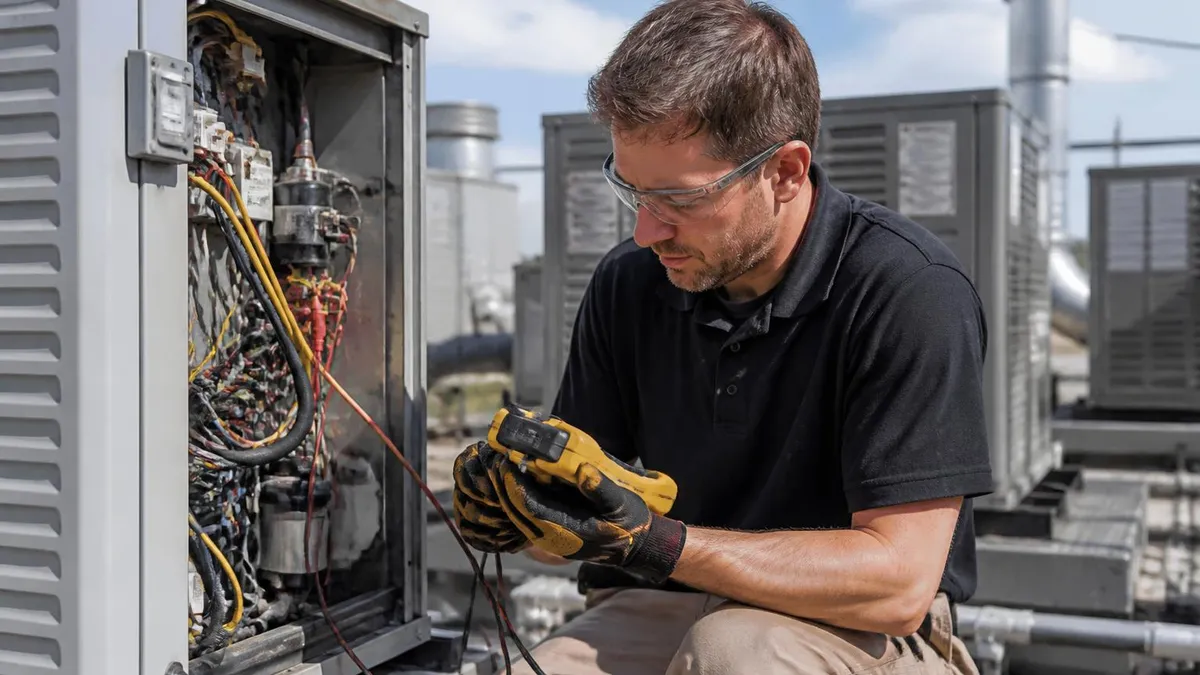
Beginning January 1, 2025, new residential air conditioning equipment using R-410A can no longer be manufactured in the United States under EPA regulations implementing the AIM Act. Equipment already in service can continue to be maintained, but replacement refrigerant prices for R-410A are rising as supply tightens. Technicians and employers should prioritize training on A2L refrigerants (R-32, R-454B) now — handling procedures, leak detection requirements, and safety protocols differ meaningfully from legacy HFCs, and customers will begin asking about this transition immediately.
Preparing for HVAC certification exams requires a fundamentally different approach than accumulating on-the-job hours. Field experience builds intuitive familiarity with specific equipment and common failure patterns, but certification exams test systematic knowledge across the full range of topics covered in industry standards — many of which technicians rarely encounter in day-to-day service work. A technician with seven years of experience servicing residential split systems may have excellent practical skills and yet struggle on an exam section covering low-pressure centrifugal chillers if they have never worked with that equipment type and have not studied the underlying principles independently.
The EPA 608 Universal exam covers four subject areas: core refrigerant handling and environmental regulations, Type I small appliance procedures, Type II high-pressure system procedures, and Type III low-pressure system procedures. The passing score is 70% on each section, and all four sections can be taken in a single sitting at any ESCO-certified testing location. The most effective preparation strategy combines reviewing the official ESCO study guide with completing multiple practice tests under timed conditions — not to memorize answers, but to identify knowledge gaps that require deeper study of the underlying concepts.
NATE exams are generally considered more rigorous than EPA 608, and preparation timelines reflect that difficulty. The NATE Core exam covers general HVAC/R knowledge including safety, tools, and basic system concepts. Specialty exams like the Air Conditioning specialty go considerably deeper into topics like psychrometrics, superheat and subcooling measurement, and system charging procedures. NATE publishes detailed study guides for each specialty that identify the specific knowledge areas and competency weightings tested — reading these guides carefully before selecting study materials ensures that preparation time is spent on high-yield topics rather than areas with minimal exam representation.
State licensing examinations typically include two components: a trade-specific technical exam and a business and law exam. The technical exam content is usually aligned with ICC or ACCA standards and covers system design, equipment sizing, code compliance, and installation practices. The business and law exam covers contractor licensing requirements, contract law basics, employee safety regulations, and state-specific rules that vary by jurisdiction.
Both components require deliberate study — technicians who attempt the business and law exam without preparation frequently fail it, even when they sail through the technical portion, because the content is genuinely unfamiliar to people whose careers have been entirely field-focused.
Practice tests are among the most valuable tools available to exam candidates, and using them strategically means more than just taking them once at the end of a study period. Interleaving practice testing with study sessions — a technique called retrieval practice — has been shown in cognitive science research to produce significantly better long-term retention than repeated review of the same material.
Taking a short practice quiz on refrigeration fundamentals before studying that topic forces the brain to retrieve what it already knows, creating stronger memory encoding when new information is then introduced. Platforms that offer randomized, timed practice questions with detailed answer explanations are particularly useful for this study method.
Hands-on practice with actual equipment remains irreplaceable, particularly for exams that include practical components or that test troubleshooting reasoning rather than pure recall. Technicians preparing for NATE exams should seek out opportunities to work with unfamiliar equipment types before the exam date — borrowing time in an employer's training lab, attending manufacturer training events, or accompanying more experienced colleagues on service calls outside their usual equipment specialty. The goal is not to become expert in every system type but to build enough mental model familiarity that exam questions about those systems feel grounded in recognizable reality rather than abstract theory.
Time management during the exam itself is a learnable skill that preparation should include. Most HVAC certification exams allocate roughly one to two minutes per question — a pace that feels comfortable for well-prepared candidates but creates pressure for those who hesitate on multiple questions.
Practice exams taken under strict time conditions train candidates to make confident decisions on known material quickly, flag genuinely uncertain questions for review rather than ruminating mid-test, and avoid the trap of second-guessing correct first instincts. Candidates who have never timed themselves on a full-length practice exam often discover in the real test that their pacing needs adjustment — an uncomfortable discovery that preparation could have surfaced and corrected weeks earlier.
The practical day-to-day reality of working as an HVAC technician involves a mix of scheduled maintenance visits, reactive service calls, and installation projects that demand different mental modes within the same workday.
A technician might spend the morning performing a systematic seasonal tune-up on a rooftop unit — methodically cleaning coils, checking refrigerant charge, testing electrical components, and documenting findings — and then pivot in the afternoon to an emergency no-cooling call requiring rapid diagnosis under pressure from a frustrated building manager. This variety is one of the genuine appeals of the trade for people who enjoy problem-solving and dislike repetitive routine.
Building strong relationships with customers and property managers is an underappreciated component of long-term success in field service. Technicians who communicate clearly about what they found, what they did, and what the customer should monitor going forward build trust that translates directly into repeat business, positive reviews, and referrals.
Conversely, technicians who treat every service call as a purely technical transaction and minimize communication with customers — even when their technical work is excellent — often find that customers switch providers at the first sign of a problem, interpreting the lack of explanation as evidence of something being hidden rather than just a taciturn personality.
Tool and equipment investment is a practical reality that surprises many people entering the trade. A basic toolkit for residential HVAC service includes refrigerant manifold gauges, a digital multimeter, a clamp meter, vacuum pump, refrigerant recovery machine, leak detector, psychrometer, and a range of hand tools — an investment that can easily reach $4,000 to $6,000 for quality equipment.
Many employers provide company-owned tools for large items like recovery machines and provide the van or truck, but technicians are typically expected to supply their own hand tools and basic test instruments. Understanding this expectation before accepting a position prevents the financial shock of a large tool purchase in the first weeks of a new job.
Safety practices in HVAC service are not bureaucratic box-checking but genuine protections against hazards that injure and kill workers every year. Electrical hazards are the most acute risk — technicians routinely work on equipment energized at 240V or higher, and lockout/tagout procedures exist precisely because a momentary failure of attention during energized work has catastrophic consequences.
Refrigerant safety has become more complex with the introduction of A2L mildly flammable refrigerants, which require different leak detection approaches and handling precautions than the non-flammable refrigerants most technicians learned on. Falls from rooftops and ladders, heat illness during summer service work, and musculoskeletal injuries from working in cramped attic and crawlspace environments round out the hazard profile that every technician must manage daily.
The HVAC industry's workforce demographics are shifting, with a significant cohort of experienced technicians approaching retirement age over the next decade. Industry associations estimate that more than 150,000 HVAC technicians will retire or exit the workforce by 2030, creating replacement demand that compounds the growth-driven hiring pressure already visible in today's job market.
This demographic reality is one of the strongest structural arguments for entering the trade now — technicians who establish themselves over the next five years will be positioned to advance into senior, supervisory, and specialist roles as the experienced cohort exits, rather than competing for those positions in a crowded field.
For employers, the workforce demographic shift argues for treating talent development as a strategic priority rather than a cost to be minimized. Companies that invest in apprenticeship programs, cover certification exam fees, provide paid training time for manufacturer courses, and create internal mentorship relationships between senior and junior technicians are building institutional capabilities that will differentiate them from competitors who depend entirely on the external labor market.
The costs of these investments are real but modest compared to the cost of perpetual understaffing — missed service calls, overtime for existing staff, and the reputation damage that follows slow response times during peak-demand emergencies.
The long-term outlook for HVAC as a career remains genuinely strong by most measures. The combination of essential service demand, credentialed scarcity, and technology evolution creating continuous skills premium opportunities makes this one of the more attractive trades for people entering the workforce today.
The physical demands and schedule requirements are real constraints that are not for everyone, but for people who enjoy mechanical and electrical problem-solving, can tolerate irregular hours, and are willing to invest in ongoing technical education, HVAC offers a career path with earnings, stability, and advancement potential that compares favorably with many four-year degree career tracks at a fraction of the educational cost and time investment.
HVAC Questions and Answers

Ameristar HVAC: Complete Guide to Units, Reliability, Costs, and Buyer Considerations
Residential HVAC: Systems, Selection, and Maintenance Basics
HVAC Industry Trends 2026: The Complete Guide to Heat Pumps, Refrigerant Changes, Smart Controls, and Workforce Shifts Reshaping Heating and Cooling
HVAC Advertising: The Complete Playbook for Generating Leads, Booking Calls, and Growing Your Heating and Cooling Business

HVAC License: State Requirements, EPA 608 and Career Path Guide
About the Author

NATE Certified HVAC Technician & Licensing Exam Trainer
Universal Technical InstituteMike Johnson is a NATE-certified HVAC technician and EPA 608 universal-certified refrigerant handler with a Bachelor of Science in HVAC/R Technology. He has 19 years of commercial and residential HVAC installation and service experience and specializes in preparing technicians for NATE certification, EPA 608, A2L refrigerant safety, and state HVAC contractor licensing examinations.