
HVAC Services Near Me: How to Find Reliable Local Heating and Cooling Pros 2026
Searching hvac close to me? Compare local HVAC services, 📗 pricing, licensing, response times, and what to expect from a quality contractor.
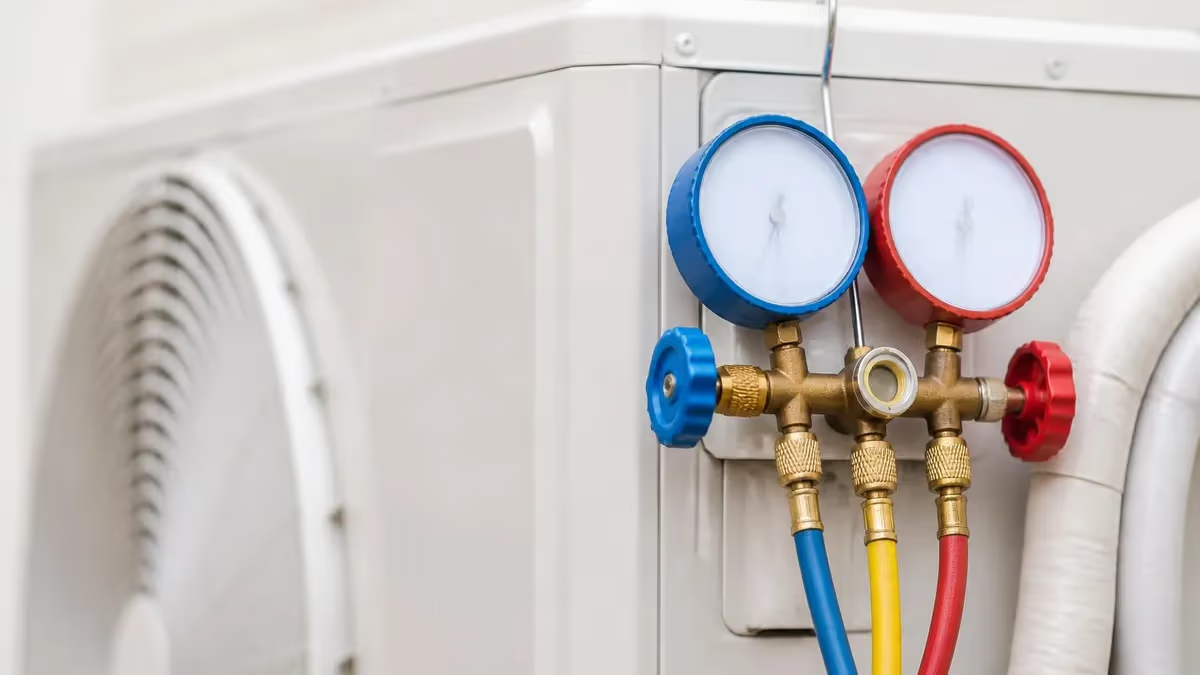
When you type hvac close to me into a search bar at 6 a.m. on a freezing morning or in the middle of a 95-degree afternoon, you are rarely shopping casually. You need a heating or cooling professional who can answer the phone, dispatch a technician within hours, diagnose the problem correctly, and quote a fair price without padding the invoice. The challenge is that the local search results page is crowded with national lead-aggregator sites, paid ads, and contractors whose actual service radius may not even reach your zip code.
This guide is built for homeowners and small business owners who want to evaluate local HVAC services like a pro. We will walk through how the industry is structured, what licensing and insurance to verify, how dispatch and pricing actually work behind the scenes, and which questions separate a reputable contractor from a fly-by-night operation. You will also learn how seasonal demand shifts pricing and availability, so you can time non-emergency work to your advantage.
Most metropolitan areas have between 40 and 300 licensed HVAC companies competing for residential work. They range from one-truck owner-operators who handle 4 or 5 jobs a day to regional firms running 50 vans, 24-hour dispatch centers, and dedicated commercial divisions. Each tier has trade-offs in price, response time, warranty support, and equipment access. Knowing which type matches your problem prevents overspending on a simple capacitor swap or underspending on a complex system replacement.
Before you commit to anyone, it helps to understand the equipment in your home. Furnaces, heat pumps, split-system air conditioners, packaged units, and ductless mini-splits all require different diagnostic skills and parts inventories. Our overview of HVAC Units: Types, Sizing, Costs, and How to Choose gives you a quick foundation so you can describe your system accurately when you call for service.
Throughout this article we focus on practical decision-making: what a real estimate should contain, how to spot upsell tactics, when to demand a manual J load calculation, and what red flags should send you to the next quote. We also cover after-hours emergency rates, maintenance plan economics, and the licensing databases you can search in under two minutes to confirm a contractor is legitimate in your state.
By the end you will have a repeatable framework for finding, vetting, and hiring local HVAC services whether you need a same-day repair, a planned system replacement, or a seasonal tune-up. The goal is to save you money, protect your equipment warranty, and give you confidence that the person standing in your mechanical room is qualified to be there.
If you are a technician or apprentice studying for certification, the same vetting criteria you will read about here are exactly what licensing boards and customers expect from you. Treat this as a two-sided playbook for the trade.
Local HVAC Services by the Numbers
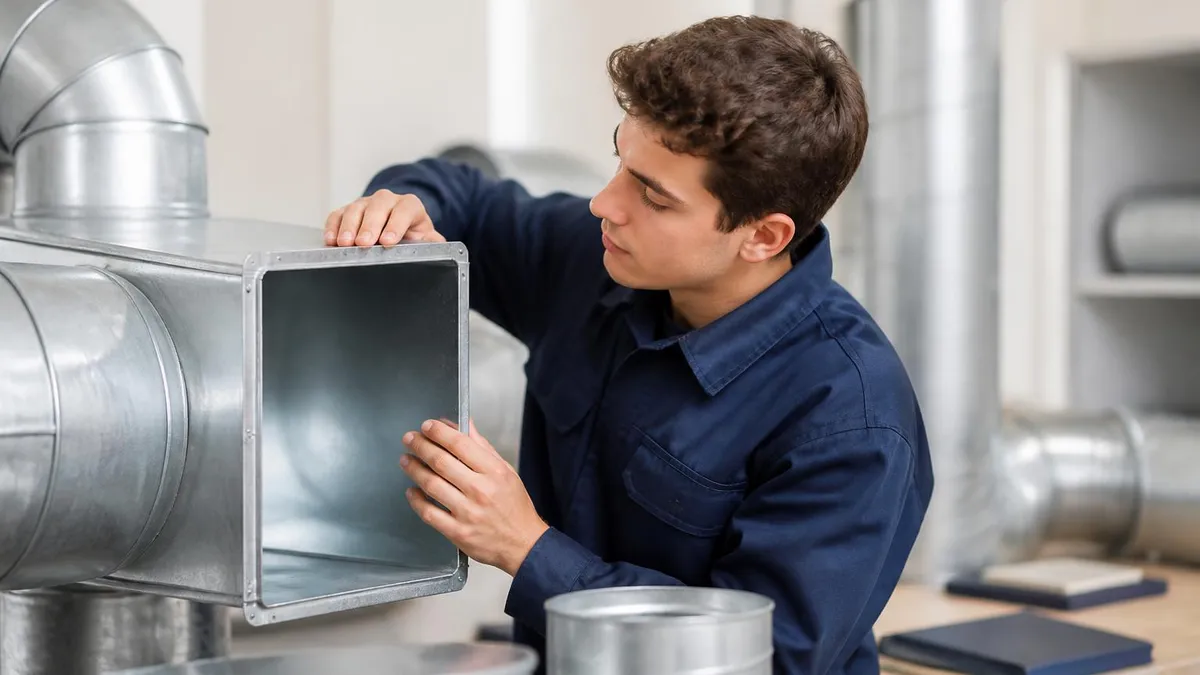
Types of Local HVAC Companies You Will Encounter
A single licensed technician running one or two trucks. Lower overhead means lower prices, but limited after-hours coverage and slower response during heat waves. Ideal for straightforward repairs and tune-ups when you have a relationship built over time.
Typically 5 to 25 trucks with a small office staff, dedicated dispatcher, and a mix of residential and light commercial work. Best balance of price, response time, and accountability for most homeowners needing repair or replacement.
Often 50+ vehicles, 24/7 call centers, financing programs, and standardized pricing books. Fast response and strong warranties, but expect higher labor rates and aggressive sales scripts on system replacements.
Locally owned but operating under a national brand. You get marketing polish and consistent uniforms, plus franchise-mandated pricing that may run 15 to 25 percent above independent shops in the same market.
Pre-screened by your gas or electric utility for rebate-eligible work. Useful when installing high-efficiency equipment because rebates and financing are processed directly, but the contractor pool is limited.
Vetting a local HVAC contractor takes about fifteen minutes and can save you thousands of dollars and weeks of headaches. The first stop is your state contractor licensing board website. Every state except a handful (Nebraska, New Hampshire, New York, and a few others) requires HVAC contractors to hold a state or local license. Search by the company name or the owner name and confirm the license is active, in the correct class for residential or commercial work, and free of recent disciplinary actions or revocations.
Insurance is the next non-negotiable. A legitimate contractor carries general liability of at least one million dollars and workers compensation for every employee who steps on your property. Ask for a Certificate of Insurance (COI) emailed directly from the insurance carrier, not a PDF the contractor sends you. If a technician is injured in your attic and the company lacks workers comp, your homeowners policy could be tapped for the claim.
Check three review sources, not one. Google reviews show recent customer experiences and how the company responds to complaints. Better Business Bureau accreditation is meaningful only when paired with a low complaint count relative to company size. Nextdoor and neighborhood Facebook groups reveal which contractors locals actually recommend versus those who simply spend the most on advertising. Look for patterns, not single bad reviews.
Manufacturer certifications matter more than people realize. A Carrier Factory Authorized Dealer, Trane Comfort Specialist, or Lennox Premier Dealer has met sales volume, training, and customer satisfaction thresholds set by the manufacturer. These designations also unlock extended parts and labor warranties (often ten years instead of five) that an unaffiliated installer cannot offer on the same equipment.
NATE certification (North American Technician Excellence) is the gold standard for individual technicians. Ask whether the tech dispatched to your home is NATE-certified in the specialty you need: air conditioning, heat pumps, gas heating, or air distribution. A NATE-certified technician has passed rigorous exams and is statistically less likely to misdiagnose a problem or recommend unnecessary repairs.
For ongoing care after the initial visit, a good contractor will offer a maintenance plan. Our guide on HVAC Servicing: What's Included, Schedule and Cost Guide breaks down what should actually be included in a tune-up versus what is marketing fluff added to inflate the price.
Finally, get the proposal in writing before any work begins. A verbal estimate is not enforceable. The written quote should specify equipment model numbers, scope of work, exclusions, warranty terms, payment schedule, and start and completion dates. If a contractor resists putting these details on paper, walk away.
HVAC Practice Test Questions
Prepare for the HVAC - Heating Ventilation and Air Conditioning exam with our free practice test modules. Each quiz covers key topics to help you pass on your first try.
HVAC Air Conditioning
HVAC Exam Questions covering Air Conditioning. Master HVAC Test concepts for certification prep.
HVAC Code Compliance
Free HVAC Practice Test featuring Code Compliance. Improve your HVAC Exam score with mock test prep.
HVAC Electrical Controls
HVAC Test Prep for Electrical Controls. Practice HVAC Quiz questions and boost your score.
HVAC Energy Efficiency
HVAC Questions and Answers on Energy Efficiency. Free HVAC practice for exam readiness.
HVAC Heating Systems
HVAC Mock Test covering Heating Systems. Online HVAC Test practice with instant feedback.
HVAC Load Calculations
Free HVAC Quiz on HVAC Load Calculations. HVAC Exam prep questions with detailed explanations.
HVAC Tools and Equipment
HVAC Practice Questions for HVAC Tools and Equipment. Build confidence for your HVAC certification exam.
HVAC Refrigeration
HVAC Test Online for Refrigeration. Free practice with instant results and feedback.
HVAC Safety Practices
HVAC Study Material on Safety Practices. Prepare effectively with real exam-style questions.
HVAC System Design
Free HVAC Test covering System Design. Practice and track your HVAC exam readiness.
HVAC Thermodynamics
HVAC Exam Questions covering Thermodynamics. Master HVAC Test concepts for certification prep.
Services Local HVAC Companies Typically Offer
Repair visits make up the bulk of residential HVAC work. A typical call starts with a flat diagnostic fee between $79 and $149 that covers the technician arriving, identifying the failure, and quoting the fix. Common repairs include capacitor replacement, contactor swap, condensate pump replacement, blower motor service, and refrigerant leak detection. Most single-issue repairs are completed in 60 to 120 minutes on the first visit if the part is on the truck.
Reputable shops will waive the diagnostic fee if you authorize the repair on the same visit. Be cautious of any contractor who refuses to itemize parts and labor or insists the only fix is a full system replacement. Always ask to see the failed component and request the old part be left with you. Genuine repair professionals welcome this transparency rather than treating it as an insult.
Local Independent Contractor vs Large Chain: Which Is Better?
- +Independent contractors typically charge 15 to 30 percent less for the same repair
- +Owner often performs or supervises work personally, raising quality control
- +Faster decision-making on warranty issues without corporate escalation
- +Long-term relationships build trust and lead to better preventive recommendations
- +Flexible payment terms and cash-pay discounts more common
- +Familiarity with neighborhood housing stock means faster, more accurate diagnoses
- +Less aggressive upselling because reputation drives most of their business
- −Limited after-hours and weekend availability without dedicated dispatch staff
- −Smaller parts inventory may delay repairs by a day for less common components
- −Shorter labor warranties on installations than national franchise programs
- −Less financing flexibility for large system replacements
- −Vacation or illness of the owner can leave you without service for days
- −Fewer technicians means slower response during heat waves and cold snaps
Pros and Cons at a Glance
| Pros | Cons |
|---|---|
| Owner often performs or supervises work personally, raising quality control | Limited after-hours and weekend availability without dedicated dispatch staff |
| Faster decision-making on warranty issues without corporate escalation | Smaller parts inventory may delay repairs by a day for less common components |
| Long-term relationships build trust and lead to better preventive recommendations | Shorter labor warranties on installations than national franchise programs |
| Flexible payment terms and cash-pay discounts more common | Less financing flexibility for large system replacements |
| Familiarity with neighborhood housing stock means faster, more accurate diagnoses | Vacation or illness of the owner can leave you without service for days |
| Less aggressive upselling because reputation drives most of their business | Fewer technicians means slower response during heat waves and cold snaps |
Hiring Checklist Before You Approve Any HVAC Work
- ✓Verify the state HVAC license is active and matches the company name on the truck
- ✓Request a current Certificate of Insurance for general liability and workers comp
- ✓Confirm the dispatched technician holds NATE certification in the relevant specialty
- ✓Ask whether a mechanical permit will be pulled for replacement or major work
- ✓Get the manual J load calculation in writing for any system replacement
- ✓Read at least 20 recent Google reviews and check how the company responds to criticism
- ✓Compare three written quotes with matching equipment models and scope of work
- ✓Confirm refrigerant type and warranty length match what the manufacturer publishes
- ✓Verify the company has been in business at least three years under the same name
- ✓Ask for the diagnostic fee in advance and whether it will be credited toward repairs
- ✓Request that the old failed part be left on site so you can see the actual defect
- ✓Read the cancellation and change-order policy before signing any contract
Search Your State Contractor Board First
Every state contractor licensing board publishes a free public search tool. Type the company name, the owner's full legal name, or the license number directly into the board's website before you let anyone open your electrical panel. A surprising number of trucks driving around with HVAC graphics belong to companies whose licenses lapsed years ago or were never issued at all. Unlicensed work voids your homeowners insurance coverage if a fire or water-damage claim is ever filed.
Pricing in the HVAC trade is less mysterious than it appears once you understand the cost structure. A contractor's hourly rate has to cover technician wages, vehicle costs, insurance, training, dispatch software, parts inventory, warranty reserves, and a reasonable profit margin. Most reputable shops bill labor at $125 to $225 per hour during normal business hours, with markup on parts ranging from 40 to 100 percent above wholesale. These are normal industry numbers, not gouging.
Where pricing varies dramatically is in how it is presented. Flat-rate pricing books are the dominant model today: the technician opens a tablet, selects the repair, and quotes a fixed price regardless of how long it takes. This protects you from slow workers but can feel expensive on quick repairs. Time-and-materials billing rewards efficient diagnoses but requires trust that the clock is honest. Both models are legitimate; the red flag is a contractor who refuses to disclose which model they use.
Emergency and after-hours pricing is where most homeowners get burned. Calls received after 5 p.m. on weekdays, on weekends, or on holidays commonly trigger overtime surcharges of $100 to $250 on top of normal rates. Before authorizing a 2 a.m. service call, ask whether the diagnosis can wait until morning. A furnace that has already failed will not get worse overnight if you can stay warm with space heaters and blankets.
Watch for three specific upsell patterns that signal a problem. First, any technician who insists your entire system must be replaced after a single failed component without showing you actual test readings deserves a second opinion. Second, scare tactics about carbon monoxide or refrigerant leaks should always be backed by combustion analyzer printouts or electronic leak detector readings, not vague warnings. Third, financing offers presented before the diagnosis is complete suggest the script matters more than the truth.
If you do need a system replacement, our breakdown of HVAC Installation Cost in 2026: Real Prices by System Type walks through what current pricing actually looks like by equipment type, region, and efficiency tier. Use it to calibrate quotes you receive and to recognize when a number is unreasonably high or suspiciously low.
Suspiciously low quotes are just as dangerous as inflated ones. A lowball bid often means the contractor plans to make up the margin with change orders, skip the permit, use refurbished equipment, or cut corners on the line set, drain pan, or condensate handling. A proper installation has fixed material costs the contractor cannot avoid; if a quote comes in 30 percent below the competition, ask exactly which steps or materials they are eliminating.
Finally, never pay more than 10 to 25 percent upfront on a system replacement and never pay in full until the inspection passes and the system has run through at least one full heating or cooling cycle. Reputable contractors structure payments around milestones precisely because they expect to earn the final check.

If a technician says your AC is low on refrigerant and offers to simply add more, stop and ask for a leak search first. Refrigerant does not get consumed; if levels are low, there is a leak somewhere in the system. Topping off without finding the leak wastes money, harms the environment, and often violates EPA Section 608 regulations. A reputable tech will recommend repair, replacement, or honest disclosure that the system is near end of life.
Once you have chosen a contractor, the booking experience tells you a lot about the company you are about to invite into your home. A well-run dispatch operation will confirm your address, ask about the equipment make and model, request a description of the symptoms (rather than just the diagnosis you assumed), and give you a two to four hour arrival window with a call ahead. If the booking agent cannot quote a diagnostic fee or refuses to send written confirmation by email or text, that is a preview of how the rest of the visit will go.
When the technician arrives, expect them to introduce themselves by name, show photo identification, and confirm the scope of the visit before stepping inside. Floor coverings, shoe covers, and drop cloths are standard for any work happening in living spaces. The technician should take time to ask diagnostic questions before pulling out tools: when did the problem start, has it happened before, what was the recent service history. Skipping this conversation often leads to misdiagnosis.
The diagnostic process itself should be methodical and observable. Good technicians narrate what they are checking and why, share readings from their multimeter or refrigerant gauges, and explain failure modes in plain language. You should be able to follow the logic from symptom to test to conclusion. If the explanation feels rushed or relies entirely on technical jargon, ask the technician to slow down and walk you through it again.
For after-hours emergencies, response standards differ. Same-day response during business hours should be achievable for non-life-safety issues. After hours, expect two to six hour response for true emergencies (no heat in freezing weather, no cooling with vulnerable occupants), and overnight to next-morning for everything else. Our guide on 24 Hour HVAC Repair Near Me explains what truly qualifies as an emergency and which symptoms can safely wait.
Documentation matters once the work is finished. Request a written invoice that itemizes diagnosis, parts (with model numbers), labor, taxes, and warranty terms. For installations, the packet should include manual J calculations, equipment specification sheets, the mechanical permit number, the inspection report, and refrigerant charge weights. Store these documents with your home records; they are required for manufacturer warranty claims and for proving system efficiency at resale.
Follow-up service is the final test. A quality contractor will call or email within a week to confirm the repair is holding or the new system is operating correctly. This courtesy is rare among bottom-tier shops and standard among the best ones. It also gives you an easy opportunity to flag any lingering noise, airflow, or temperature issues while the work is fresh and warranty coverage is active.
Build the relationship intentionally. The contractor you call in a crisis at midnight should already know your name, your equipment, and your maintenance history. That kind of relationship is built through one or two planned visits a year, not a frantic search for hvac close to me when something has already broken.
The final piece of finding reliable HVAC help is preparing yourself before you ever pick up the phone. A few minutes of preparation transforms the dynamic of the service call from passive customer to informed homeowner, which almost always results in better service and lower bills. Start by locating your equipment's data plate and writing down the manufacturer, model number, serial number, and installation date. This information lets a dispatcher route the right truck with the right parts and lets you verify warranty coverage in advance.
Document the symptoms with specifics. Instead of saying the system is broken, describe what you observed: the outdoor unit hums but the fan does not spin, the air coming out of vents is room temperature, the thermostat shows a flashing error code, water is dripping from the air handler. Phone-recorded video or audio of strange noises can save the technician thirty minutes of guesswork and you the cost of that time.
Check the obvious before calling. Confirm the thermostat is set to the correct mode and temperature, replace the air filter if it has been more than 60 days, verify the circuit breaker for the indoor and outdoor units is not tripped, and make sure the condensate drain is not clogged (a clogged drain often triggers a float switch that shuts the system off). These four checks resolve roughly one in five service calls before a technician is even dispatched.
Have your maintenance records and warranty documents ready. A contractor who installed your system should have records on file, but bringing your own copy speeds verification of parts and labor coverage. If you bought the home recently, check the closing documents and ask the previous owners or your real estate agent for service history. Manufacturer parts warranties often follow the equipment, not the original owner.
Set a realistic budget range before quotes arrive. For minor repairs (capacitor, contactor, thermostat), expect $200 to $500 all in. For mid-tier repairs (blower motor, control board, condensate pump), $400 to $1,200 is common. For major repairs (compressor replacement, evaporator coil, heat exchanger), $1,500 to $4,500 is normal and often triggers a serious replacement-versus-repair conversation. Knowing these ranges in advance prevents panic and improves negotiation.
Consider air quality add-ons during any service visit. Modern accessories like media filters, UV light systems, and whole-home dehumidifiers can be added during a normal service call at lower labor cost than scheduling a separate installation. If indoor air quality is a concern, our guide to UV Light for HVAC: How It Works, Benefits, and Cost explains where these accessories actually help and where they are marketing more than science.
Finally, treat the relationship with your HVAC contractor as a long-term investment. The technicians who do excellent work appreciate clients who treat them respectfully, pay invoices promptly, and offer honest reviews when the work is done well. Over time, these small gestures compound into priority dispatch, discounted rates, and a level of trust that pays off the next time something breaks at the worst possible moment.
Sample HVAC Practice Questions
Try these questions from our free HVAC practice tests. The correct answer and an explanation follow each question.
A technician finds microbial growth on cooling coil surfaces. Besides cleaning the coil, what HVAC design factor should be corrected to prevent recurrence?
- A. Increase supply air temperature to reduce condensation
- B. Ensure the drain pan slopes properly and condensate drains freely
- C. Replace the compressor to lower suction pressure
- D. Increase blower speed to reduce coil contact time
Answer: B. Ensure the drain pan slopes properly and condensate drains freely
Standing water in improperly draining condensate pans provides the moisture environment that sustains biological growth on cooling coils.
A technician is checking a heat pump in cooling mode and finds high suction pressure and high discharge pressure with warm air from the supply. What does this MOST likely indicate?
- A. Low refrigerant charge
- B. Refrigerant overcharge or a dirty outdoor condenser coil
- C. Failed reversing valve stuck in heating position
- D. Blocked indoor air filter
Answer: B. Refrigerant overcharge or a dirty outdoor condenser coil
High pressures on both sides in cooling mode typically indicate an overcharge of refrigerant or a dirty condenser coil restricting heat rejection.
Subcooling in a refrigeration system refers to cooling the refrigerant below its:
- A. Evaporating temperature
- B. Condensing temperature
- C. Critical temperature
- D. Dew point temperature
Answer: B. Condensing temperature
Subcooling occurs when liquid refrigerant is cooled below the saturation (condensing) temperature, increasing system efficiency.
In a commercial VAV system, when zone cooling demand drops to minimum, the VAV box may switch to reheat mode. What is the energy concern with this operation?
- A. Reheating previously cooled air wastes both cooling and heating energy simultaneously
- B. Reheat coils increase duct static pressure, overloading the AHU fan
- C. The zone thermostat loses calibration during reheat cycles
- D. Condensate drain lines can freeze during reheat operation
Answer: A. Reheating previously cooled air wastes both cooling and heating energy simultaneously
Reheat systems cool air centrally and then heat it locally at the VAV box, consuming both cooling energy (chiller) and heating energy (boiler or electric coil) at the same time — an inherently wasteful process.
HVAC Questions and Answers


How this page was made: written with AI tools. We have not yet matched this exam's facts to an official source, so confirm fees, dates and rules with the exam body. Not reviewed by a subject-matter expert. Editorial policy