
HVAC Flat Rate Pricing: The Complete Guide to Understanding, Comparing, and Negotiating Fixed-Price Heating and Cooling Service
HVAC flat rate pricing explained: 🎯 how fixed-fee menus work, average costs, hidden markups, and how to negotiate fair repair quotes in 2026 October.
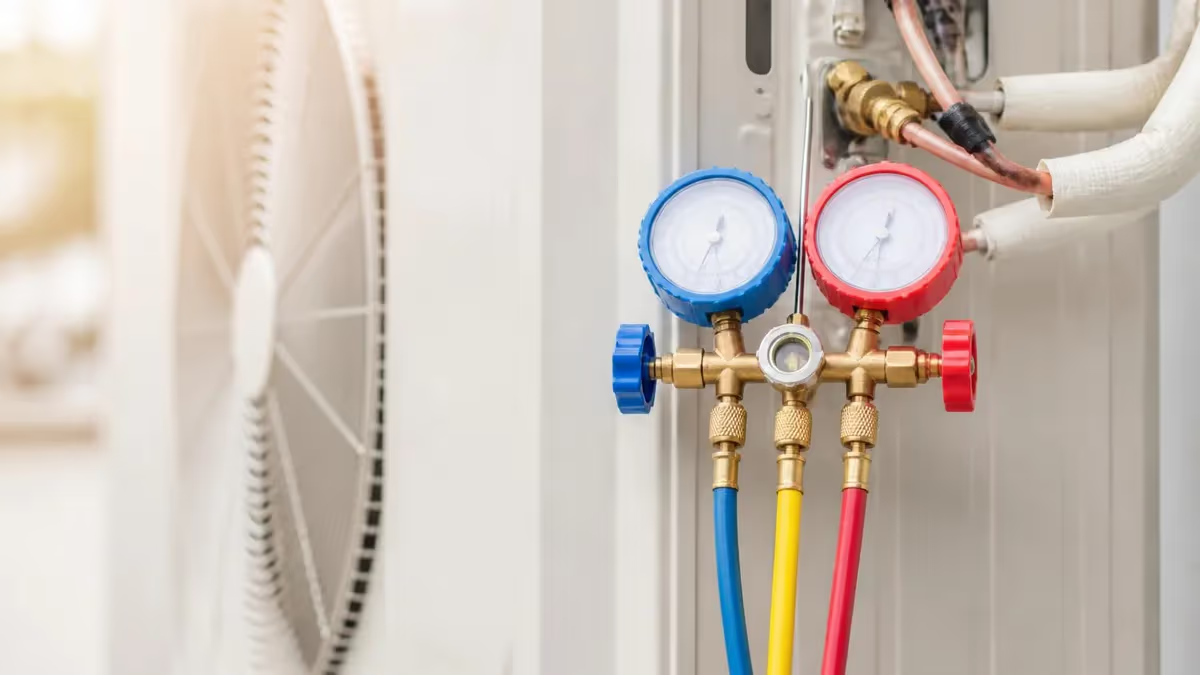
HVAC flat rate pricing is the billing model where a heating and cooling contractor quotes you a single fixed dollar amount for a specific repair, replacement, or maintenance task before any work begins. Instead of paying an hourly labor rate plus parts and watching the meter run, you see a menu price like "capacitor replacement: $289" and that is what you pay whether the technician finishes in twenty minutes or two hours. Flat rate pricing has quietly become the dominant billing system across residential HVAC service in the United States.
The shift from time-and-materials billing to flat rate pricing accelerated in the late 1990s when software companies like Callahan Roach, Profit Rhino, and Coolfront began selling pre-built repair menus to contractors. Today an estimated seventy-five to eighty-five percent of residential HVAC companies use some version of flat rate pricing, and the model has spread to plumbing, electrical, and appliance repair as well. For homeowners, this means the days of asking "how much do you charge per hour" are largely behind us.
The promise of flat rate pricing is transparency: you know the cost before approving the work, there are no surprise overages, and a slow or inexperienced technician does not cost you more than a fast veteran. The reality is more complicated. Flat rate menus bake in labor inefficiency, overhead, warranty reserves, and a healthy profit margin that can make a fifteen-minute capacitor swap cost three hundred dollars. Whether that is fair depends on what you are actually buying.
For homeowners researching HVAC Repair Portland or any other local market, understanding how flat rate pricing works is the single most useful piece of consumer knowledge in this industry. It explains why two companies can quote wildly different numbers for the same job, why "diagnostic fees" exist, and why the technician at your door is often a commissioned salesperson as much as a tradesperson.
This guide breaks down exactly how flat rate pricing is built, what the typical markups look like on common repairs, where the model serves homeowners well, and where it crosses into price gouging. We will cover diagnostic fees, service agreements, the "good-better-best" presentation technique, and the specific scripts technicians use when delivering quotes. By the end you will be able to read any flat rate quote and know whether you are being treated fairly.
You will also learn how to compare quotes between companies that all use flat rate books but charge dramatically different prices, how to negotiate when a number feels too high, and when it makes sense to walk away and call a second contractor. The goal is not to vilify flat rate pricing — it has real benefits — but to make sure you approach your next service call as an informed buyer rather than a captive audience with a broken furnace in February.
Whether you are a first-time homeowner staring at a $1,400 quote for a blower motor or a property manager trying to budget annual maintenance across a portfolio, the principles below apply. Flat rate pricing is here to stay, and learning to navigate it will save you thousands of dollars over the life of your HVAC equipment.
HVAC Flat Rate Pricing by the Numbers

How Flat Rate Pricing Is Built
Flat rate books assign a fixed labor time to every task — for example, 1.5 hours for a capacitor swap even though it takes 20 minutes. This protects the contractor when jobs run long but pads the price when they go smoothly.
The hourly rate plugged into the formula is not the technician's wage. It includes payroll taxes, vehicle costs, insurance, training, dispatch, office overhead, warranty reserves, and target profit — often $180 to $260 per billable hour.
Parts are marked up on a sliding scale: small parts under $20 may be marked up 4x to 6x, while large components like compressors carry a 1.5x to 2.5x multiplier. This is where the biggest variance between companies appears.
Most contractors use Profit Rhino, Coolfront, Callahan Roach, or ServiceTitan pricebooks. The technician taps the repair on a tablet and the quote auto-generates, ensuring consistency across the company.
Repairs are typically presented in three tiers: a basic fix, a fix plus related preventive work, and a premium option bundling extended warranty and service membership. The middle tier is engineered to be the most attractive.
To understand whether a flat rate quote is fair, you need to know the typical price range for common HVAC repairs in 2026. The numbers below reflect national averages across mid-sized markets and include parts, labor, and standard warranty. Expect to add ten to twenty-five percent in high cost-of-living metros like San Francisco, Boston, or Seattle, and subtract a similar amount in rural areas where competition keeps prices honest.
A run capacitor replacement, one of the most common AC repairs, typically falls between $180 and $400. The capacitor itself costs the contractor between $12 and $45 wholesale, and the actual work takes fifteen to thirty minutes including diagnosis. Anything over $450 for a single capacitor on a residential system is aggressive pricing, and quotes above $600 are firmly in the gouging territory you sometimes see from private-equity-owned chains.
Contactor replacement runs $200 to $450. A blower motor swap on a gas furnace ranges from $650 to $1,400 depending on whether it is a standard PSC motor or a more expensive ECM variable-speed unit. Condenser fan motor replacement typically lands between $550 and $1,100. A new thermostat install, including a smart model like a Nest or Ecobee, generally runs $350 to $650 with the device supplied.
Refrigerant recharges are where pricing gets murky. R-410A is now common but being phased out in favor of R-454B and R-32, and prices fluctuate based on EPA reclaim rules. A two-pound top-off on R-410A might cost $180 to $350, while the same service on a legacy R-22 system can run $400 to $900. If a contractor cannot find and fix the leak before recharging, you are essentially renting refrigerant that will leak back out.
Major repairs such as compressor replacement, evaporator coil replacement, or heat exchanger swaps on furnaces often exceed $2,500 and can approach the cost of full equipment replacement. This is intentional in the flat rate model — at a certain price point the technician is trained to pivot the conversation toward a new system quote, where margins are often higher and financing is available. Whether that pivot serves you or the contractor depends on the age and condition of your equipment.
For routine maintenance, expect to pay $99 to $189 for a single-system tune-up, or $179 to $299 annually for a service membership that includes two visits (heating and cooling), priority scheduling, and a fifteen percent discount on repairs. Memberships are profitable for contractors but also genuinely valuable if you use them. Reviewing hvac maintenance service options before signing up helps you compare what is actually included beyond the marketing language.
Knowing these ranges lets you smell-test any quote in real time. If a technician hands you a $750 bill for a capacitor and refrigerant top-off, you now know to push back. If the same technician quotes $4,200 to replace an evaporator coil on a fourteen-year-old system, you know to get a second opinion focused on replacement rather than repair.
HVAC Practice Test Questions
Prepare for the HVAC - Heating Ventilation and Air Conditioning exam with our free practice test modules. Each quiz covers key topics to help you pass on your first try.
HVAC Air Conditioning
HVAC Exam Questions covering Air Conditioning. Master HVAC Test concepts for certification prep.
HVAC Code Compliance
Free HVAC Practice Test featuring Code Compliance. Improve your HVAC Exam score with mock test prep.
HVAC Electrical Controls
HVAC Test Prep for Electrical Controls. Practice HVAC Quiz questions and boost your score.
HVAC Energy Efficiency
HVAC Questions and Answers on Energy Efficiency. Free HVAC practice for exam readiness.
HVAC Heating Systems
HVAC Mock Test covering Heating Systems. Online HVAC Test practice with instant feedback.
HVAC Load Calculations
Free HVAC Quiz on HVAC Load Calculations. HVAC Exam prep questions with detailed explanations.
HVAC Tools and Equipment
HVAC Practice Questions for HVAC Tools and Equipment. Build confidence for your HVAC certification exam.
HVAC Refrigeration
HVAC Test Online for Refrigeration. Free practice with instant results and feedback.
HVAC Safety Practices
HVAC Study Material on Safety Practices. Prepare effectively with real exam-style questions.
HVAC System Design
Free HVAC Test covering System Design. Practice and track your HVAC exam readiness.
HVAC Thermodynamics
HVAC Exam Questions covering Thermodynamics. Master HVAC Test concepts for certification prep.
Flat Rate vs Time and Materials Billing
Flat rate pricing quotes a fixed total before work begins. The customer sees a single dollar figure for the complete repair, accepts or declines, and pays exactly that amount regardless of how long the work takes. This model dominates residential HVAC because it eliminates the awkward end-of-job conversation about hours worked and protects contractors from losing money on tricky jobs that exceed time estimates.
The advantages for homeowners include price certainty, no incentive for technicians to drag out work, and apples-to-apples comparison between bids. The disadvantages include hidden labor padding, higher overall costs on simple jobs, and the psychological pressure of being asked to approve a four-figure repair on the spot. Roughly eighty-two percent of US residential HVAC firms use flat rate as their primary billing method in 2026.
Is HVAC Flat Rate Pricing Good for Consumers?
- +Price certainty before work begins eliminates surprise invoices
- +No incentive for technicians to slow down or pad hours
- +Easy apples-to-apples comparison between competing bids
- +Inexperienced technicians do not cost you extra time
- +Written quotes provide documentation for warranty disputes
- +Bundled options make it clear what extras are optional
- +Decline-the-job option preserves your right to walk away
- −Simple repairs are often priced 3x to 5x actual cost
- −Diagnostic fees create pressure to approve immediate repairs
- −Commission structures incentivize upselling unnecessary work
- −Pricebooks bake in worst-case labor times into every quote
- −Good-better-best presentations exploit decision fatigue
- −Membership programs lock you in with modest discounts
- −Hard to negotiate when the price is presented as fixed policy
Pros and Cons at a Glance
| Pros | Cons |
|---|---|
| Price certainty before work begins eliminates surprise invoices | Diagnostic fees create pressure to approve immediate repairs |
| No incentive for technicians to slow down or pad hours | Commission structures incentivize upselling unnecessary work |
| Easy apples-to-apples comparison between competing bids | Pricebooks bake in worst-case labor times into every quote |
| Inexperienced technicians do not cost you extra time | Good-better-best presentations exploit decision fatigue |
| Written quotes provide documentation for warranty disputes | Membership programs lock you in with modest discounts |
| Bundled options make it clear what extras are optional | Hard to negotiate when the price is presented as fixed policy |
Smart Buyer Checklist for HVAC Flat Rate Quotes
- ✓Ask for the diagnostic fee in writing before the technician arrives at your door
- ✓Request itemized quotes that separate parts, labor, and service fees clearly
- ✓Photograph the failed component before authorizing replacement work
- ✓Ask if the diagnostic fee is waived or credited when you approve the repair
- ✓Get a second opinion in writing for any repair quote exceeding eight hundred dollars
- ✓Verify the technician's license number and check it on your state board website
- ✓Confirm the warranty period and what specifically is covered on parts and labor
- ✓Decline same-day add-on services and take twenty-four hours to research them
- ✓Ask whether the technician earns commission on the repair you are approving
- ✓Check online reviews mentioning the specific repair type before scheduling service
Always get a second quote on any repair over $800
Industry data shows price variance between competing HVAC contractors on identical repairs routinely exceeds forty percent. On a $1,500 quote, that variance is six hundred dollars — enough to justify two days of waiting for a second estimate. Reputable contractors expect this and will not pressure you to decide on the spot. The companies that do pressure you are exactly the ones you should be price-checking.
Several patterns inside flat rate pricing cross from aggressive into outright predatory, and recognizing them in real time is the difference between a fair repair and a financial mugging. The most common red flag is the "safety inspection" tactic, where a technician shows up for a routine maintenance visit and produces a list of urgent safety concerns ranging from cracked heat exchangers to dangerous capacitor failures. Sometimes these findings are real. Often they are manufactured to trigger a same-day sale.
A genuine cracked heat exchanger is a serious condition that warrants furnace replacement. A scratch, surface discoloration, or normal heat-stress mark photographed at an angle is not. Always ask for the exact location of the defect, request photos with reference markings, and never approve a furnace replacement on the day of diagnosis. If the technician claims your equipment is unsafe to operate, ask them to red-tag the unit with the gas utility — most predatory pitches collapse the moment a real regulatory body gets involved.
The second red flag is parts markup that exceeds five times wholesale. A capacitor that costs your contractor twenty dollars and sells for two hundred dollars is at the upper edge of acceptable industry practice. The same capacitor quoted at four hundred dollars is gouging. You can sanity-check parts pricing by searching the model number on Supplyhouse, Amazon, or Grainger before approving the repair. The technician will tell you the parts are commercial-grade and warrantied, which is partially true, but a 20x markup is never justified by warranty alone.
The third red flag is bundling unrelated work into a single line item. "Compressor replacement and system rejuvenation: $4,800" tells you nothing about what you are buying. Demand a line-item breakdown showing the compressor, refrigerant, filter drier, contactor, labor, and any miscellaneous parts separately. If the contractor refuses, you are dealing with a sales-driven shop that knows the bundle hides the math. A reputable contractor will gladly itemize because their pricing holds up to scrutiny.
The fourth red flag is high-pressure financing offers presented during the quote. "Sign now and we can lock in our 0% APR promotion" is a sales tactic, not a customer benefit. Financing is always available afterward, and any contractor who claims otherwise is pushing you into a decision before you can comparison shop. The same applies to "today-only" discounts on full system replacement — legitimate equipment pricing does not evaporate by sundown.
The fifth red flag, and perhaps the most expensive, is unnecessary system replacement quoted when the actual problem is a single failed component. A blower motor failure on an eight-year-old high-efficiency furnace does not justify replacing the whole furnace. A failed compressor on a six-year-old condenser does not require replacing the matched air handler. When the repair quote approaches fifty percent of replacement cost, replacement starts to make sense — but the calculation should be yours, not a salesperson's.
Finally, watch for membership upsells presented as required maintenance. Some contractors quote a repair at one price for members and a thirty percent higher price for non-members. The membership might cost $179 and "save" you $400 on this repair, but you are also committing to annual fees and the social pressure of using that contractor for future work. Run the numbers honestly — sometimes membership pays off, often it does not.
For a deeper look at this topic, see our guide to hvac flat rate pricing.
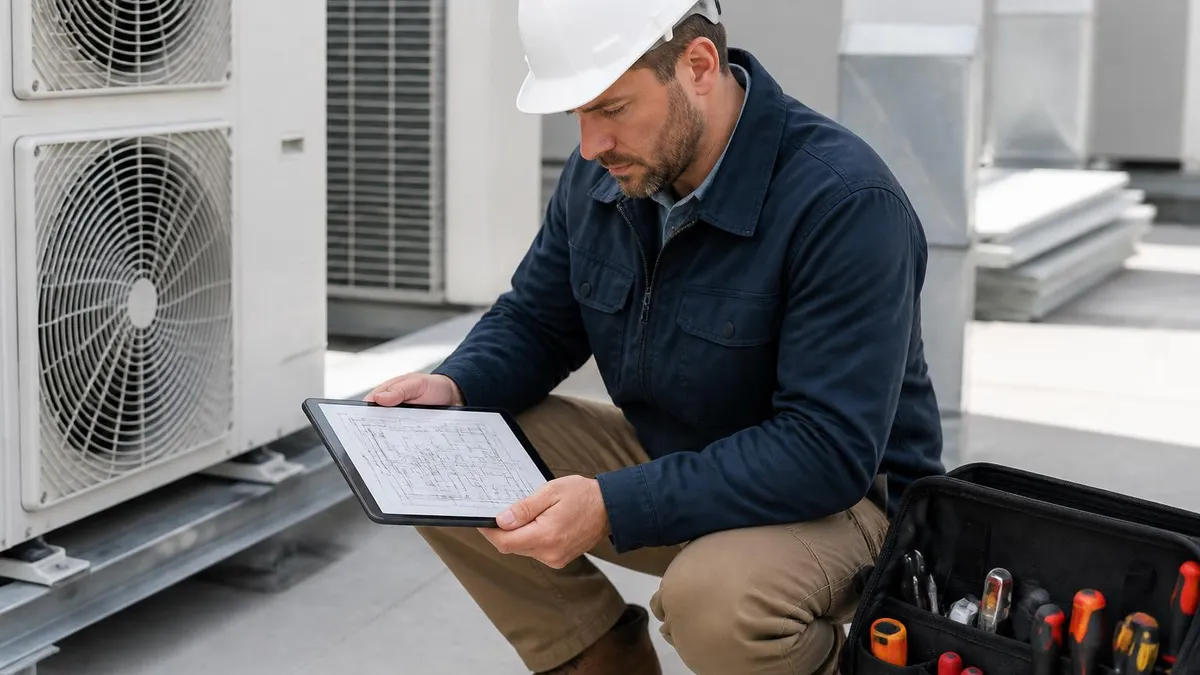
Many contractors charge a $89 to $159 diagnostic fee that is waived only if you approve the repair on the same visit. This creates artificial pressure to accept a quote you would otherwise decline. The fee is real, but so is your right to pay it and get a second opinion. Spending $129 on a diagnostic to avoid a $900 overcharge is excellent math. Never let the sunk cost of a diagnostic fee force you into an unfair repair.
Negotiating an HVAC flat rate quote feels uncomfortable because the price is presented as fixed company policy, but successful negotiation happens every day. The key is understanding that the technician at your door has more discretion than they let on, and the office has even more. Roughly thirty to forty percent of flat rate quotes are negotiated downward when the customer pushes back politely and credibly.
The most effective opening line is not "can you do better" but rather "I've gotten quotes between $X and $Y for this same job — what can you do?" This shifts the conversation from a yes-or-no decision to a comparative one. If you genuinely have a competing quote, share the contractor name and amount. If you do not, anchor with realistic numbers from your own research. Pulling up a Reddit thread or a HomeAdvisor cost range on your phone makes the conversation concrete.
The second tactic is to unbundle. If the quote includes a capacitor, a contactor, a service fee, and a "system performance check," ask which items you can remove. The performance check is almost always optional. The contactor might not be failing yet. Removing items you do not actually need can reduce a $750 quote to $380 without any negotiation on the items that remain. Most pricebooks support this granular itemization even when the technician initially resists.
The third tactic is to ask for the office manager. Field technicians often have limited price authority, but their dispatcher or service manager can approve discounts of ten to twenty percent on the spot. Be polite, explain that the price exceeds your budget, and ask if the office can review the quote. This works especially well after hours or on weekends when overtime adders may be applied to your quote — those adders are almost always negotiable.
The fourth tactic involves timing. HVAC contractors are slammed during the first heat wave of summer and the first cold snap of winter, when negotiation use favors them entirely. In April, May, September, and October, business is slower and technicians have time for full diagnostic conversations. If your equipment is limping but functional, scheduling repair work during shoulder season can shave fifteen to twenty-five percent off prices and grant you access to more careful workmanship.
The fifth tactic is to use online reviews honestly. If you have had three quotes and one company stands out for fair pricing, mention that you are choosing them specifically because of their reputation and ask if they can match a slightly lower competitor on price. Many shops will absorb a small margin hit to win the job from a customer who explicitly values their reputation. Comparing local hvac contractors by review depth, not just star count, makes this conversation credible.
Finally, do not negotiate from desperation. If your furnace died in a January cold snap and you need heat in twenty-four hours, you are not in a strong negotiating position and the contractor knows it. The most powerful negotiation move is having a backup heat source — space heaters, a fireplace, a hotel for one night — that gives you the time to compare quotes properly. Preparation before equipment fails is worth more than any negotiation skill afterward.
Putting flat rate knowledge into practice takes only a few small habits but pays back across the entire life of your HVAC equipment. Start with a single document — a notes app, a spreadsheet, or even a paper folder — where you record every service call: date, contractor name, technician name, problem reported, repair performed, parts numbers, and total cost. After three or four service calls this record becomes the most valuable consumer document you own.
Next, build a relationship with one contractor before you need them. Schedule a maintenance visit during shoulder season when there is no urgency, observe how the technician communicates, see whether the quote feels honest, and check whether the company calls back when promised. The contractor you trust at $159 for a tune-up is the contractor you will trust at $1,500 for an emergency repair. Locking in this relationship before crisis hits is the single highest-use move a homeowner can make.
Learn the basic vocabulary of your specific system. Knowing whether your AC uses R-410A, R-22, or the newer R-454B refrigerant, whether your furnace is single-stage or modulating, and whether your blower is PSC or ECM lets you read quotes critically. You do not need to be a technician — you need to be a customer who cannot be fooled by jargon. Twenty minutes of YouTube research after each service call compounds quickly.
Verify warranties yourself. Manufacturers like Carrier, Trane, Lennox, Goodman, and Rheem all maintain online warranty lookup tools where you can enter your serial number and see exactly what is covered. If a contractor quotes a part that should still be under manufacturer warranty, you should only be paying labor — not parts. This single check has saved homeowners thousands when contractors "forgot" to file warranty paperwork.
Build a repair budget into your annual home maintenance plan. Industry averages suggest setting aside one to two percent of your home's value annually for systems maintenance, with HVAC representing roughly a quarter of that. For a $400,000 home, that means budgeting roughly $1,000 to $2,000 per year for HVAC repairs and tune-ups. Treating these expenses as planned rather than emergency reduces the financial pressure that pushes homeowners into bad decisions.
Consider whether DIY makes sense for the simplest items. Changing your air filter monthly, clearing the condensate drain line with a wet-vac twice a year, hosing off the outdoor condenser coil every spring, and replacing thermostat batteries are all twenty-minute jobs that prevent service calls. None of this voids warranties or requires tools beyond what you already own. The contractor you trust will tell you exactly the same thing — predatory contractors will tell you to call them for everything.
Finally, treat every service interaction as data. The contractor who explained the problem clearly, photographed the failed component, itemized the quote, and offered to leave without pressure when you wanted a second opinion is the contractor to call next time. The one who pushed financing, dismissed your questions, and refused to itemize is the one to remove from your list. Reviewing comprehensive HVAC Solutions options helps you understand what good service looks like across heating, cooling, and indoor air quality decisions.
Sample HVAC Practice Questions
Try these questions from our free HVAC practice tests. The correct answer and an explanation follow each question.
Which factor does NOT directly affect the required outdoor air ventilation rate per ASHRAE 62.1 Ventilation Rate Procedure?
- A. Occupancy density (people per sq ft)
- B. Area of the space (sq ft)
- C. Ceiling height of the space
- D. Occupancy category (office, gym, etc.)
Answer: C. Ceiling height of the space
The Ventilation Rate Procedure uses occupancy density and area-based rates by category; ceiling height is not a direct input, though it influences volume and air change calculations.
In a heat pump operating in heating mode, which component acts as the heat absorber from outdoor air?
- A. Indoor coil (condenser in cooling mode)
- B. Reversing valve
- C. Outdoor coil (acting as evaporator)
- D. Accumulator
Answer: C. Outdoor coil (acting as evaporator)
In heating mode, the outdoor coil absorbs heat from outdoor air (even cold air) acting as an evaporator to deliver heat indoors.
In sheet metal layout, what tool is used to scribe a parallel line at a fixed distance from a straight edge?
- A. Dividers or a scratch awl with a straightedge
- B. Center punch
- C. Combination square
- D. Bevel gauge
Answer: A. Dividers or a scratch awl with a straightedge
Dividers or a scratch awl guided along a straightedge are used to scribe accurate parallel layout lines on sheet metal.
Solar heat gain through windows is accounted for in a cooling load calculation using which factor?
- A. R-value
- B. Solar Heat Gain Coefficient (SHGC)
- C. U-factor
- D. Visible Transmittance (VT)
Answer: B. Solar Heat Gain Coefficient (SHGC)
The Solar Heat Gain Coefficient (SHGC) represents the fraction of solar radiation admitted through a window, used with peak solar intensity and window area to calculate solar load.
HVAC Questions and Answers
HVAC Repair Portland: The Complete 2026 Homeowner's Guide to Furnace, AC, and Heat Pump Service in the Rose City

HVAC Tune Up Service: The Complete Guide to Professional HVAC Maintenance and Why It Pays for Itself
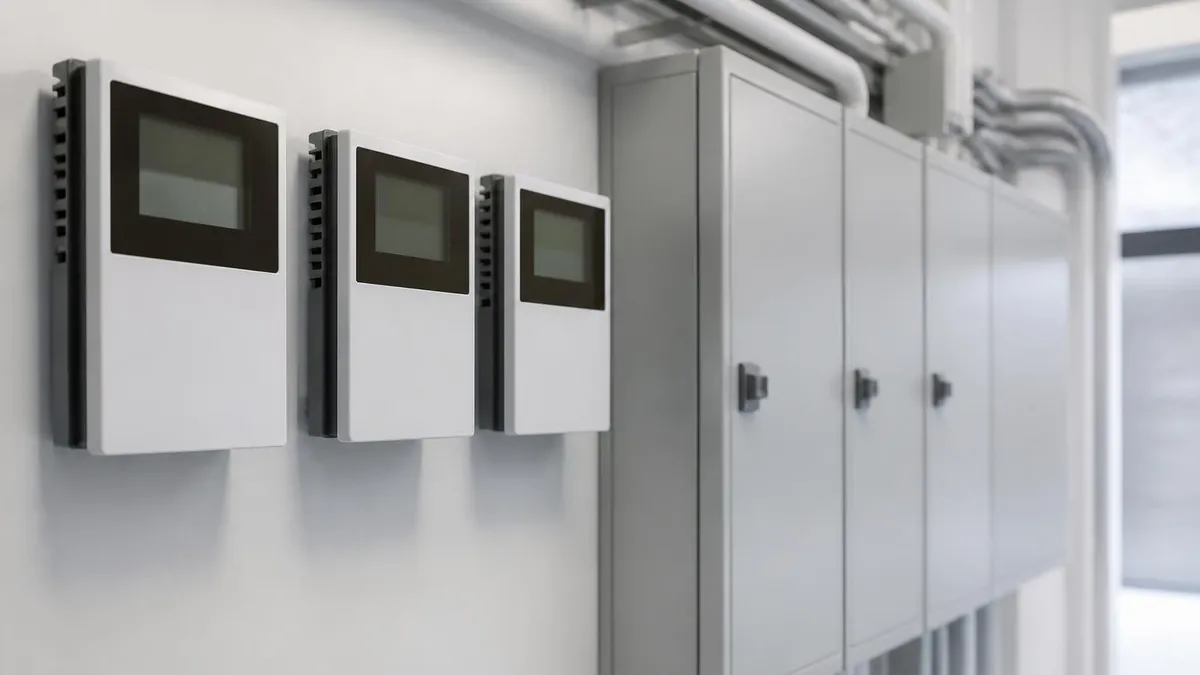
HVAC Solutions: The Complete Guide to Heating, Cooling, and Indoor Air Quality Systems for Homes and Buildings
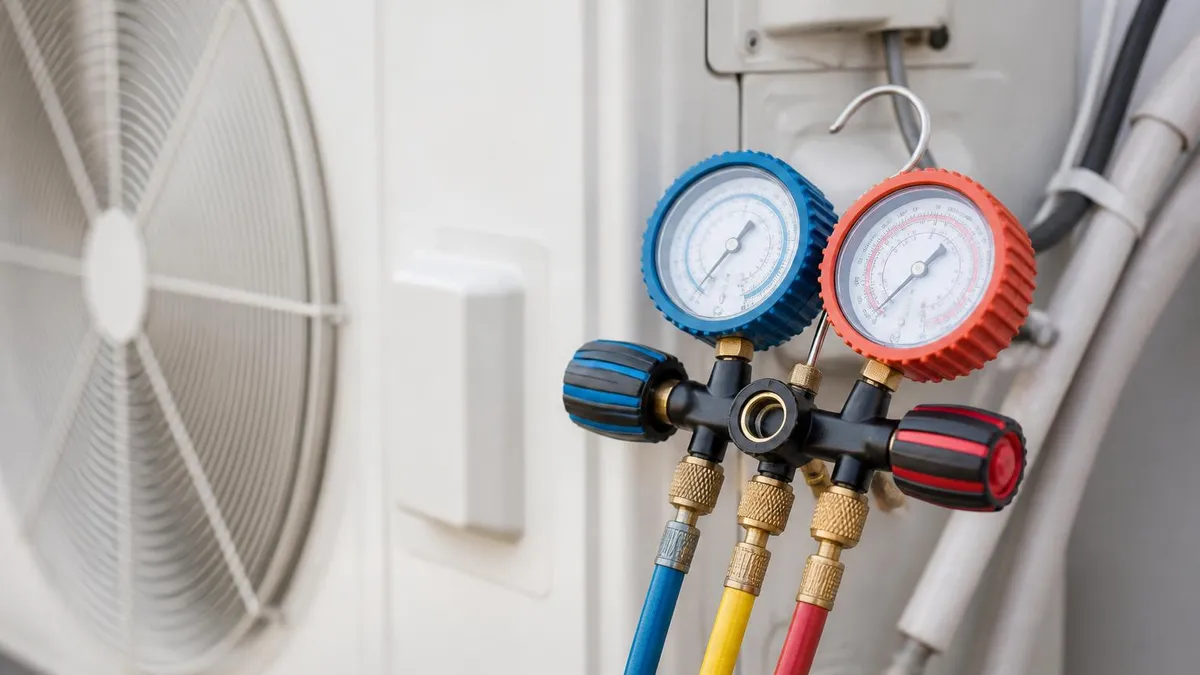
Certified HVAC Contractors: How to Find, Vet, and Hire the Right Professional for Your Home or Business
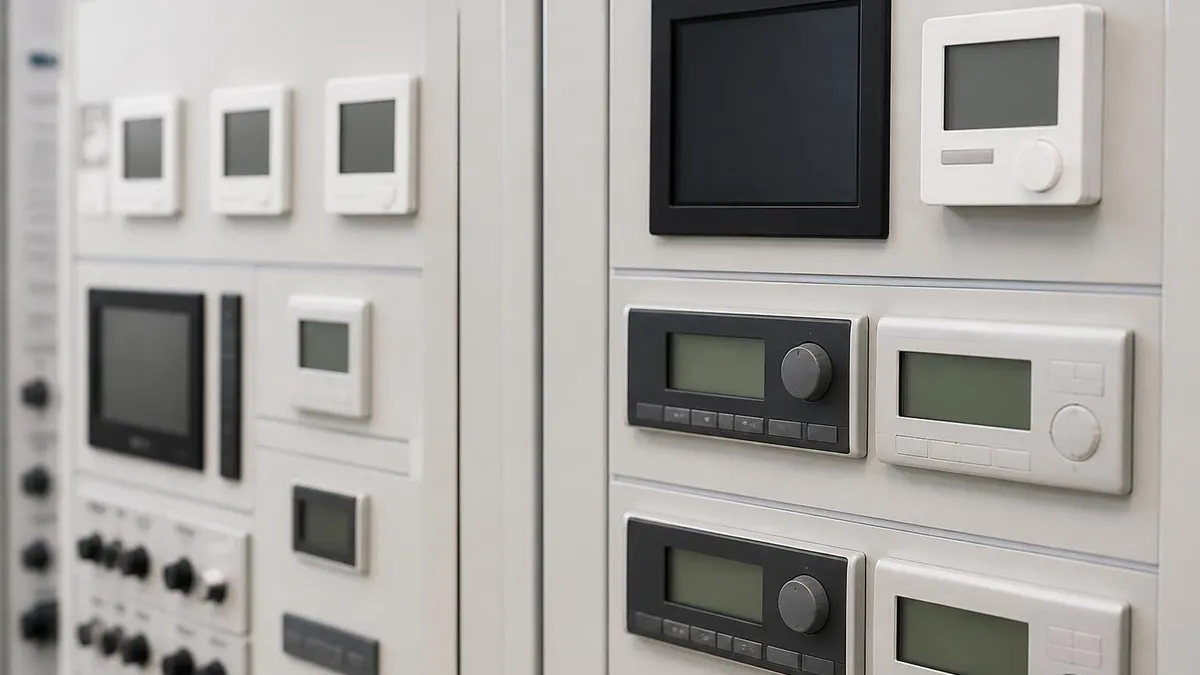
HVAC Parts and Supply: The Complete Guide to Sourcing, Identifying, and Buying Heating and Cooling Components in 2026
About the Author

NATE Certified HVAC Technician & Licensing Exam Trainer
Universal Technical InstituteMike Johnson is a NATE-certified HVAC technician and EPA 608 universal-certified refrigerant handler with a Bachelor of Science in HVAC/R Technology. He has 19 years of commercial and residential HVAC installation and service experience and specializes in preparing technicians for NATE certification, EPA 608, A2L refrigerant safety, and state HVAC contractor licensing examinations.