
HVAC Augusta GA: Local Services, Costs, and How to Choose the Right Contractor
💯 HVAC Augusta GA guide: real local service costs, contractor vetting checklist, climate-specific tips, and answers to common homeowner questions.
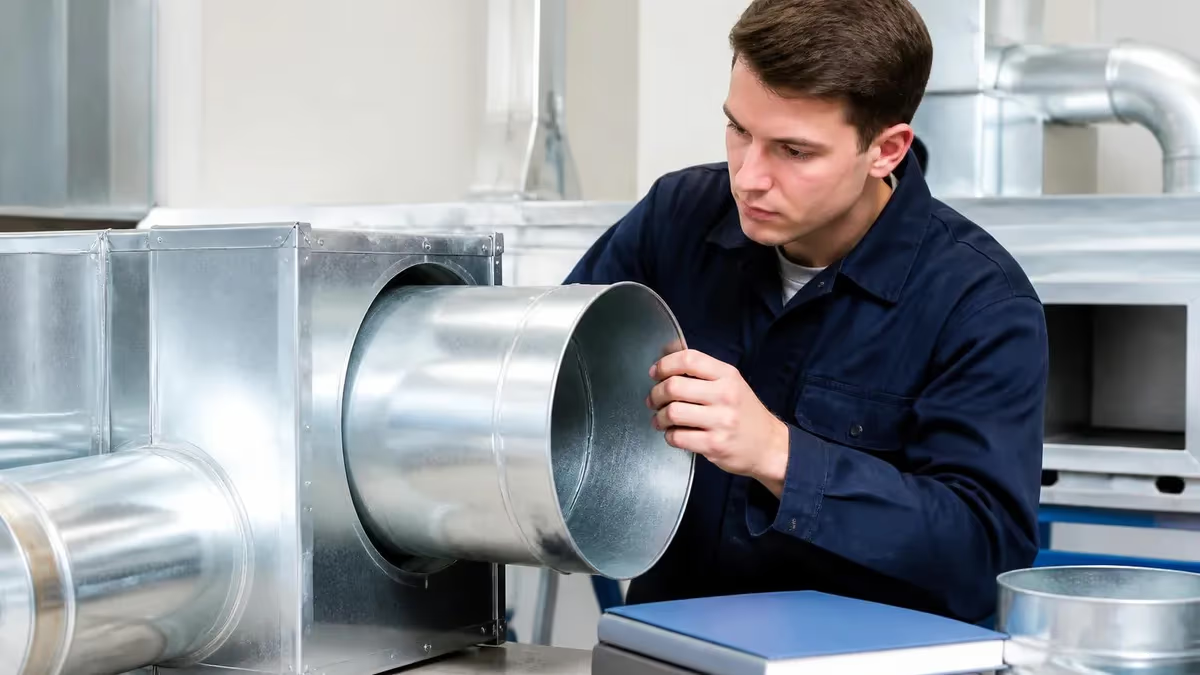
Searching for reliable hvac augusta ga services means navigating a market shaped by hot, humid CSRA summers, mild but damp winters, and a mix of historic homes downtown and new builds in Evans, Martinez, and Grovetown. Whether your 14-year-old condenser finally died during a July heat advisory or you noticed musty smells creeping out of your return vents, the contractor you pick will determine comfort, energy bills, and equipment lifespan for the next decade. Local knowledge matters more than glossy national branding.
Augusta sits in IECC climate zone 3A, which means cooling loads dominate the year. The average July high hovers near 92°F with dewpoints in the low 70s, so latent (moisture) load is just as punishing as sensible heat. A contractor who oversizes equipment by even a half ton can leave you with short cycles, sticky indoor air at 78°F, and mold blooming on supply registers. Right-sizing using ACCA Manual J and Manual S is non-negotiable in this market.
The Augusta metro has roughly 600,000 residents across Richmond and Columbia counties, and the licensed HVAC contractor pool ranges from one-truck owner-operators to regional players with 40+ technicians. Georgia requires a state Conditioned Air Contractor license (Class I unrestricted or Class II limited to under 175,000 BTU/h), plus liability insurance and workers' comp. Always verify license numbers through the Secretary of State portal before signing anything — unlicensed work voids manufacturer warranties and homeowners insurance claims.
Pricing in Augusta tends to run 5-10% below Atlanta but slightly above smaller South Georgia metros. A straight-cool 3-ton replacement with matched coil and basic permits typically lands between $6,500 and $9,500 installed in 2026, while a full system swap with a variable-speed heat pump, new line set, and refreshed plenum can climb past $14,000. Ductwork issues — common in older Summerville and Hill homes — can add $2,000-$5,000 if you upgrade the air pulled through them.
Beyond replacement work, the local service mix includes annual maintenance plans ($180-$280 per year for two visits), emergency repairs, refrigerant-leak diagnostics, indoor air quality upgrades, and increasingly, smart thermostat integration with TOU rate plans from Georgia Power. Demand spikes from late May through September, so response times stretch and overtime rates kick in fast. Booking spring tune-ups in February or March gets you priority slots before the rush.
This guide walks through what local HVAC services actually include, how to vet a contractor without getting upsold, realistic cost ranges for Augusta and the CSRA, climate-specific considerations like attic insulation and crawlspace humidity, and a checklist you can take into any in-home estimate. By the end you'll know exactly what questions to ask, what red flags to walk away from, and how to match equipment to the way your home actually behaves in the Georgia summer.
Augusta HVAC Market by the Numbers
Service Categories Augusta Contractors Offer
Full removal of existing condenser, air handler, and sometimes line set, followed by new equipment install with Manual J load calculation, permits, and start-up commissioning.
Capacitor swaps, blower motors, refrigerant leak detection with electronic sniffers or UV dye, control board replacement, and refrigerant top-offs on R-410A and newer R-454B systems.
Twice-yearly tune-ups covering coil cleaning, refrigerant pressures, electrical checks, condensate flush, and filter changes. Most plans include 10-15% parts discounts and priority dispatch.
Aeroseal duct sealing, mastic touch-ups at register boots, replacement of crushed flex runs in attics, and new duct design for additions or finished bonus rooms over garages.
Whole-home dehumidifiers, MERV-13 media filters, UV-C coil lights, fresh-air ventilators (ERV/HRV), and bipolar ionization. Critical for Augusta's humid envelope and pollen-heavy springs.
Pricing transparency is the single biggest pain point Augusta homeowners report. Two contractors can quote the same house and the spread can hit $4,000, not because one is gouging but because they are scoping the job differently. One may include a new pad, surge protector, float switch, and a 10-year labor warranty; the other strips those out to win on sticker price. Always demand line-item proposals so you can compare apples to apples instead of bundled lump sums.
For a baseline straight-cool replacement on a 1,800-square-foot Augusta ranch with existing serviceable ductwork, expect $6,500-$8,500 for a 14.3 SEER2 single-stage system with a basic matching coil and 5-year parts/1-year labor warranty. Step up to a 16-17 SEER2 two-stage unit and you're typically at $8,500-$10,500. A high-end variable-speed heat pump with a communicating thermostat lands between $11,000 and $14,500 installed. Many Augusta homes benefit from a heat pump since electric resistance backup heat handles mild winters fine.
Repair pricing follows a more predictable pattern. A run capacitor replacement on a residential condenser averages $180-$320 with diagnostic. Contactor swap is $200-$380. A condenser fan motor lands $450-$700 depending on horsepower. Refrigerant recharges depend heavily on refrigerant type — R-410A pricing has stabilized around $90-$140 per pound installed, but R-22 (in pre-2010 systems) can hit $180+ per pound when supply allows, often making replacement the smarter call. For deeper context on what's normally bundled, the HVAC servicing breakdown maps out what each visit should include.
Ductwork is where Augusta homes hide the biggest surprises. Houses built between 1985 and 2005 commonly have R-4.2 flex duct that's brittle, kinked over rafters, or pulled loose at boots. A static-pressure test at the air handler will usually read 0.9-1.1 inches w.c. when it should be 0.5 — meaning your blower is straining and your new $10,000 condenser will short-cycle. Targeted duct repairs run $400-$1,500, full replacement of attic trunk and runs is $4,500-$9,000, and aeroseal sealing typically costs $1,800-$2,800.
Don't forget ancillary costs that often get buried. Permit fees in Richmond County run $65-$95 per system, Columbia County $50-$80. A new outdoor disconnect is $90-$150. Hard-wired float switches that protect drywall ceilings from a clogged condensate line cost $50-$120 installed and are absolutely worth it on any attic air handler. Smart thermostats — Ecobee Premium or Nest Learning — add $250-$400 with install but often pay back in two to three summers through better dehumidification scheduling.
Financing changes the conversation. Most Augusta dealers offer 18-month same-as-cash through Wells Fargo or Synchrony, plus 5-7 year reduced-rate plans at 7.99-9.99% APR. Georgia Power's instant rebates for qualifying heat pumps ($150-$400) stack with federal 25C tax credits — up to $2,000 for heat pumps meeting CEE tier criteria — and any local utility weatherization rebates. Always run your numbers on the after-rebate price before deciding between single-stage and variable-speed equipment.
One pricing trap to flag: "manager specials" that promise a brand-new system for $4,995. These almost always involve builder-grade equipment, no Manual J, no permit, a cash-only deal, and a one-year company warranty backed by nobody if the installer disappears. Augusta has a steady churn of pop-up HVAC operations every spring; the BBB and Better Business Bureau of Central Georgia complaint logs make for sobering reading. Stick with contractors who have been at the same address for five-plus years.
HVAC Practice Test Questions
Prepare for the HVAC - Heating Ventilation and Air Conditioning exam with our free practice test modules. Each quiz covers key topics to help you pass on your first try.
HVAC Air Conditioning
HVAC Exam Questions covering Air Conditioning. Master HVAC Test concepts for certification prep.
HVAC Code Compliance
Free HVAC Practice Test featuring Code Compliance. Improve your HVAC Exam score with mock test prep.
HVAC Electrical Controls
HVAC Test Prep for Electrical Controls. Practice HVAC Quiz questions and boost your score.
HVAC Energy Efficiency
HVAC Questions and Answers on Energy Efficiency. Free HVAC practice for exam readiness.
HVAC Heating Systems
HVAC Mock Test covering Heating Systems. Online HVAC Test practice with instant feedback.
HVAC Load Calculations
Free HVAC Quiz on HVAC Load Calculations. HVAC Exam prep questions with detailed explanations.
HVAC Tools and Equipment
HVAC Practice Questions for HVAC Tools and Equipment. Build confidence for your HVAC certification exam.
HVAC Refrigeration
HVAC Test Online for Refrigeration. Free practice with instant results and feedback.
HVAC Safety Practices
HVAC Study Material on Safety Practices. Prepare effectively with real exam-style questions.
HVAC System Design
Free HVAC Test covering System Design. Practice and track your HVAC exam readiness.
HVAC Thermodynamics
HVAC Exam Questions covering Thermodynamics. Master HVAC Test concepts for certification prep.
Augusta Climate and Equipment Sizing
Augusta summers regularly produce 1% design conditions of 95°F dry-bulb and 76°F wet-bulb, with extended runs above 90°F from late May through mid-September. The high wet-bulb means a large fraction of cooling capacity goes to dehumidification rather than temperature drop. Oversized single-stage equipment satisfies the thermostat in 6-8 minute cycles and never removes enough moisture, leaving indoor RH at 60-65%.
The fix is right-sizing with Manual J and choosing two-stage or variable-speed compressors that can run longer at lower capacity. A properly sized 3-ton variable-speed system in a tight 1,900-square-foot home will hold 50% RH at 75°F all summer while drawing roughly 30% less power than a same-size single-stage unit. Don't let a contractor sell tonnage based on square footage rules of thumb alone.

Hiring a Local Augusta HVAC Company vs. National Chain
- +Owners typically live in the CSRA and answer escalations personally
- +Faster response on emergency calls — most local techs are within 20 miles
- +Better familiarity with Augusta's historic homes, crawl spaces, and attic builds
- +Direct relationships with Richmond and Columbia County permit offices
- +More flexible on custom work like high-velocity systems or mini-split retrofits
- +Reputation tied directly to local word-of-mouth, so quality stays consistent
- +Pricing usually 8-15% lower than franchise-model competitors on similar scopes
- −Smaller crews mean tighter scheduling during peak summer weeks
- −Fewer financing partners than national chains with corporate underwriting
- −After-hours coverage may be one on-call tech versus a national dispatch center
- −Some local outfits skip Manual J calcs unless you specifically demand them
- −Warranty support depends on the company surviving long-term
- −Marketing and online reviews may be thinner, making research harder
- −Limited brand selection — most carry one or two manufacturer lines
Pros and Cons at a Glance
| Pros | Cons |
|---|---|
| Owners typically live in the CSRA and answer escalations personally | Smaller crews mean tighter scheduling during peak summer weeks |
| Better familiarity with Augusta's historic homes, crawl spaces, and attic builds | Fewer financing partners than national chains with corporate underwriting |
| Direct relationships with Richmond and Columbia County permit offices | After-hours coverage may be one on-call tech versus a national dispatch center |
| More flexible on custom work like high-velocity systems or mini-split retrofits | Some local outfits skip Manual J calcs unless you specifically demand them |
| Reputation tied directly to local word-of-mouth, so quality stays consistent | Warranty support depends on the company surviving long-term |
Augusta HVAC Contractor Vetting Checklist
- ✓Verify Georgia Conditioned Air Contractor license through the Secretary of State website
- ✓Confirm general liability insurance of at least $1M and workers' comp coverage
- ✓Request three references from jobs completed within the last 12 months in Augusta
- ✓Demand a written Manual J load calculation, not square-footage rules of thumb
- ✓Get itemized proposals from three contractors with matching scope and equipment
- ✓Confirm the company pulls Richmond or Columbia County permits in their own name
- ✓Verify the proposal lists exact model numbers for condenser, coil, and air handler
- ✓Check that the labor warranty is at least one year, ideally five to ten years
- ✓Read the last 25 reviews on Google, BBB, and Nextdoor for service-after-sale patterns
- ✓Ask which refrigerant the new system uses — R-454B is the current standard for 2026
Ask about static pressure before signing
A good Augusta contractor will measure total external static pressure on your existing system before quoting new equipment. If your ducts already restrict airflow above 0.8 inches w.c., installing a high-efficiency variable-speed system without fixing the ducts will void airflow warranties and crush efficiency. This single 5-minute test separates serious installers from box-changers.
Permits and licenses protect homeowners from shoddy work and protect resale value when you eventually sell. Georgia requires a Conditioned Air Contractor license issued by the State Construction Industry Licensing Board for any installation, repair, or replacement involving HVAC equipment over 5 tons or 175,000 BTU/h. Class II licenses cover residential work below that threshold. Every Augusta-area contractor working on your home should have the license number printed on the proposal, the truck, and the permit application — no exceptions.
Local permit requirements vary slightly. Richmond County (City of Augusta) requires a mechanical permit for any equipment replacement, with fees scaling by tonnage and BTU. Columbia County uses a similar structure. Inspection happens after install: an inspector checks disconnect placement, refrigerant line set support, condensate routing, and electrical connections. The inspection card stays in your file and proves to future buyers that work was done to code. If a contractor offers to skip the permit to save you money, they're shifting all liability onto you.
Manufacturer warranties are equally important and equally misunderstood. A new Carrier, Trane, Lennox, Goodman, or Rheem system typically carries a 10-year parts warranty if registered within 90 days of installation. Skip registration and the warranty often drops to 5 years. Compressor warranties are usually 10-12 years. Labor warranties come from the installing contractor, not the manufacturer, and typically range from 1 year (standard) to 10 years (premium). Always ask whether the labor warranty is backed by an insured third-party administrator or just the company's verbal promise.
Refrigerant lineage matters in 2026. The federal AIM Act phasedown means R-410A is being replaced with lower-GWP alternatives — primarily R-454B and R-32 — across most major brands. New installs in Augusta should already be on the new refrigerants. Servicing legacy R-410A systems remains legal, but new factory-charged equipment with R-410A is no longer manufactured. Verify the refrigerant type in the proposal and confirm your contractor's techs are certified to handle A2L mildly flammable refrigerants like R-454B.
Bonding and insurance protect you if something goes wrong on the jobsite. A reputable Augusta HVAC company carries general liability of $1 million minimum, workers' compensation (mandatory in Georgia for three or more employees), and a commercial auto policy. Ask for a certificate of insurance naming you as a certificate holder before work begins. If a tech falls off your roof or damages your hardwoods, those certificates determine whether your homeowners policy gets stuck with the bill. For deeper detail on what should be included in a full install scope, the HVAC installation cost guide breaks down line items.
EPA Section 608 certification is required for any technician handling refrigerant. Universal certification covers all equipment types; Type II is most common for residential split systems. NATE certification (North American Technician Excellence) is voluntary but signals real competence — ask whether the technician assigned to your job is NATE-certified. Lead techs at the better Augusta companies usually carry it, while helpers and apprentices may not yet.
Finally, document everything. Take photos before, during, and after install. Keep the model and serial number stickers, the start-up commissioning sheet, the load calculation, the permit, and the final inspection card in a binder or shared cloud folder. When you sell the house in 8-12 years, that binder is what convinces a buyer's home inspector — and the buyer themselves — that your system was professionally installed and maintained, often adding $3,000-$5,000 to perceived value during negotiation.
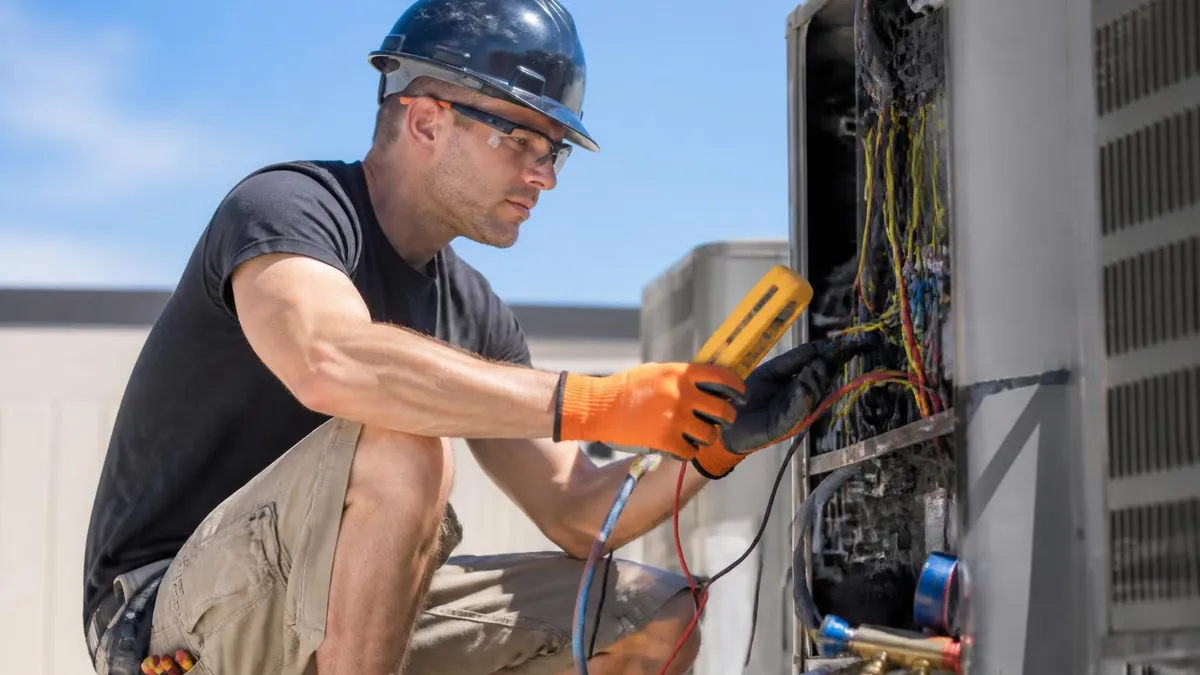
Every spring, traveling sales crews canvass Augusta neighborhoods offering free "energy audits" or government rebate inspections. These are almost always lead-gen schemes for high-pressure sales of overpriced systems. Real Georgia Power and federal programs never knock door-to-door. Ask for a license number; if they hesitate, close the door.
Maintenance and indoor air quality are where the Augusta climate punishes neglected systems the hardest. The combination of high pollen counts in spring, sustained humidity in summer, and dust from agricultural fields in surrounding counties means evaporator coils, drain pans, and blower wheels accumulate gunk faster than in drier climates. A coil that's lost 30% of its surface area to biofilm has lost 30% of its capacity — but you'll only notice in August when the system can't keep up on a 96°F afternoon.
A proper twice-yearly maintenance visit in Augusta should include pulling the blower wheel for inspection (not just looking at it), washing the outdoor condenser coil with a coil-safe cleaner, checking refrigerant subcool and superheat against the data plate, testing capacitor microfarads against rated values, flushing the condensate line with a nitrogen blow or wet-vac, and tightening every electrical connection with a torque screwdriver. If your tech is in and out in 25 minutes with a clipboard, you're getting a wave-through, not maintenance.
Filter strategy matters more than most homeowners realize. The cheap fiberglass filters at hardware stores capture maybe 15-20% of particulates and let pollen and dust mites stream through your coil. Pleated MERV 8 filters changed every 60-90 days are the sweet spot for most Augusta homes. Step up to MERV 11 or 13 only if your blower can handle it without static pressure spiking — check with your installer first. Whole-home media cabinets that hold a 4-inch or 5-inch filter for 6-12 months are even better and reduce nuisance changes.
Indoor air quality add-ons are popular in Augusta but vary wildly in effectiveness. Whole-home dehumidifiers are genuinely significant for tight new construction or homes with crawl spaces. UV-C coil lights kill biofilm on the evaporator and can reduce coil cleaning frequency — for context on the science and limits, the HVAC UV light guide covers what's been validated. Bipolar ionization and certain plasma technologies have weaker peer-reviewed evidence and should be treated skeptically when sold as virus killers.
Crawlspace and attic conditions feed directly into HVAC performance. About 40% of Augusta homes have ventilated crawlspaces that pump humid summer air right under the floor, where it condenses on cool duct surfaces and feeds mold. Encapsulating the crawlspace with a 12-mil vapor barrier and a small dehumidifier ($3,500-$6,500) often does more for indoor comfort than upgrading the AC. Attic radiant barriers and adequate insulation (R-38 minimum in zone 3A) reduce duct gains and cooling loads by 8-15%.
Smart thermostats deserve a separate mention. The Ecobee Premium and Nest Learning Thermostat both support remote sensor integration, which lets you average temperatures across bedrooms instead of just the hallway. They also expose dehumidification overcooling logic that variable-speed systems use to hold setpoint while running longer. Pair a smart thermostat with Georgia Power's nights-and-weekends rate plan and you can shift pre-cooling to cheap hours, saving $15-$30 a month during hvac emergency repair mc lean.
Finally, build a relationship with one local company rather than chasing the cheapest service call every time. Maintenance plan customers get priority scheduling, locked-in rates, and a tech who knows your equipment history. That history matters when something weird happens — a tech who installed your system five years ago can troubleshoot in 15 minutes what a stranger would chase for two hours. Loyalty pays back in availability when you need it most, like the Saturday of Masters Week when the outdoor temperature hits 88°F.
Putting it all together, hiring HVAC services in Augusta comes down to three practical moves: gather three written proposals with matching scope, verify license and insurance for every bidder, and prioritize installation quality over equipment brand. The difference between a top-tier and mediocre install of the exact same Carrier or Trane system can be 30% in real-world efficiency and 5+ years in lifespan. Brand fanboyism on Facebook groups misses this — installation craftsmanship beats logo every time.
Time your project strategically. Spring tune-ups and replacements scheduled in February-March cost less and get better crew attention than emergency August installs. If your current system is on its last legs heading into summer, replace it in May rather than gambling on July. Off-season pricing can save $500-$1,200, and you can choose your installer rather than taking whoever can show up first when the house is 84°F inside.
Don't fall for SEER2 chasing without context. A 20 SEER2 variable-speed system installed on bad ducts will underperform a 15 SEER2 system on well-designed ducts. The Augusta climate especially punishes mismatched components. Spend marginal dollars on duct sealing, insulation upgrades, and proper commissioning before chasing top-of-the-line equipment. The payback math almost always favors fixing the envelope first.
Get familiar with your system once it's installed. Walk the outdoor unit monthly and pull leaves and grass clippings from the condenser coil. Check the filter every 30 days and change at 60-90. Pour a cup of distilled vinegar or bleach into the condensate cleanout port every few months to prevent algae clogs that trip the float switch. These five-minute homeowner tasks prevent maybe 40% of summer service calls.
Know the warning signs of trouble before they become emergencies. Ice on the suction line means low refrigerant or low airflow — shut the system off and call. A condenser that runs but the indoor fan doesn't is usually a blower capacitor or control board. Strange burning smells from the air handler need immediate shutdown. Water dripping from a ceiling register means the secondary drain pan is full and the primary line is clogged. Acting at the first sign of trouble keeps repair bills small.
Plan for replacement at year 12 even if the system still runs. Heat pumps and ACs degrade efficiency 1-2% per year, and components fail more frequently after year 15. Replacing a marginal 14-year-old system on your terms in March is far cheaper and less stressful than emergency replacement in July with overtime rates and three-week lead times on certain coil sizes. Building a replacement fund of $50-$75 per month starting at year 8 makes the eventual project painless.
The final word: trust slowly, verify aggressively, and treat the contractor you pick as a long-term partner. Augusta's HVAC pool has plenty of excellent companies and a steady supply of fly-by-nights. The checklist, vetting questions, and cost benchmarks in this guide will help you tell them apart. The home you protect will be far more comfortable, cheaper to operate, and more valuable when it's time to sell.
Sample HVAC Practice Questions
Try these questions from our free HVAC practice tests. The correct answer and an explanation follow each question.
Which documentation is essential when working with system design in HVAC?
- A. Only verbal notes
- B. Detailed technical specifications and as-built diagrams
- C. Marketing materials
- D. General descriptions without specifics
Answer: B. Detailed technical specifications and as-built diagrams
Detailed technical specifications and as-built diagrams provide the accurate reference information needed for maintenance and troubleshooting.
Which document typically outlines the compliance requirements for HVAC professionals?
- A. Employee handbook
- B. Marketing brochure
- C. Standards of practice and code of conduct
- D. Annual financial report
Answer: C. Standards of practice and code of conduct
Standards of practice and codes of conduct define the professional and ethical requirements practitioners must follow.
In HVAC practice, what is the best approach to quality improvement in troubleshooting?
- A. Make changes without measuring results
- B. Use data-driven methods with measurable outcomes
- C. Wait for problems to occur before acting
- D. Copy what other organizations do without analysis
Answer: B. Use data-driven methods with measurable outcomes
Data-driven quality improvement with measurable outcomes ensures that changes actually produce the intended improvements and can be verified.
What is the purpose of a turning vane installed inside an HVAC elbow?
- A. Support the duct wall to prevent collapse at high velocity
- B. Guide airflow around the bend to reduce turbulence and pressure drop
- C. Act as a manual volume damper for zone control
- D. Prevent condensation from dripping into the duct
Answer: B. Guide airflow around the bend to reduce turbulence and pressure drop
Turning vanes inside elbows redirect airflow smoothly around the bend, reducing turbulence and cutting pressure drop compared to a plain 90° elbow.
HVAC Questions and Answers

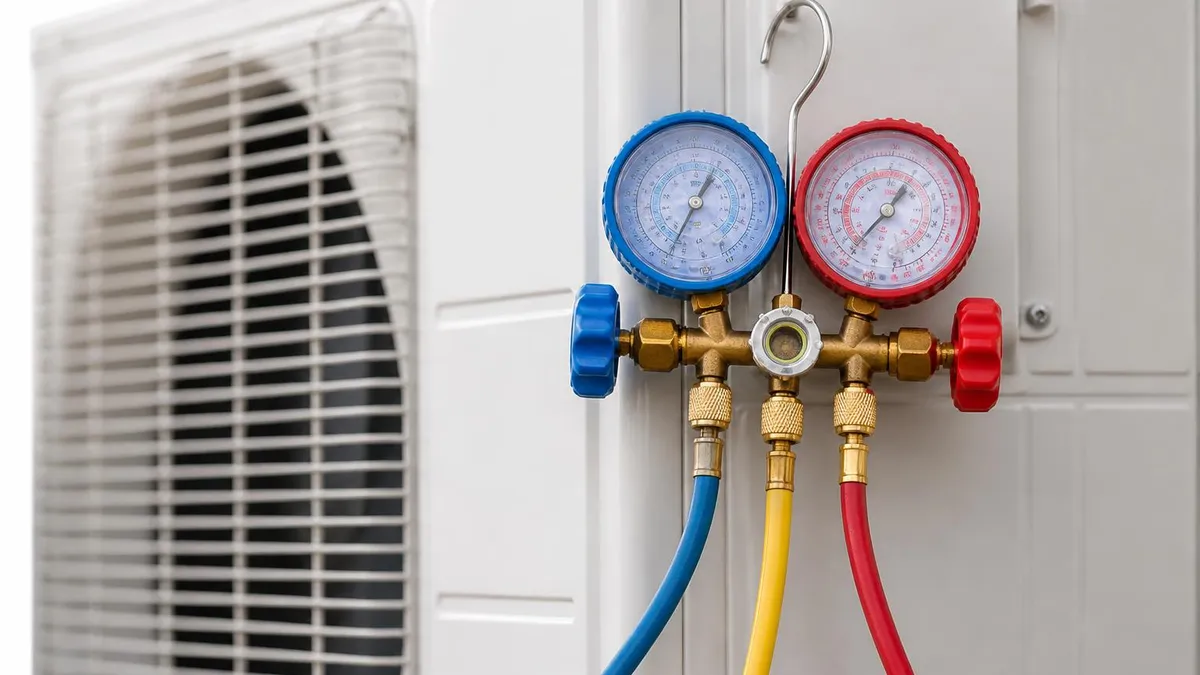
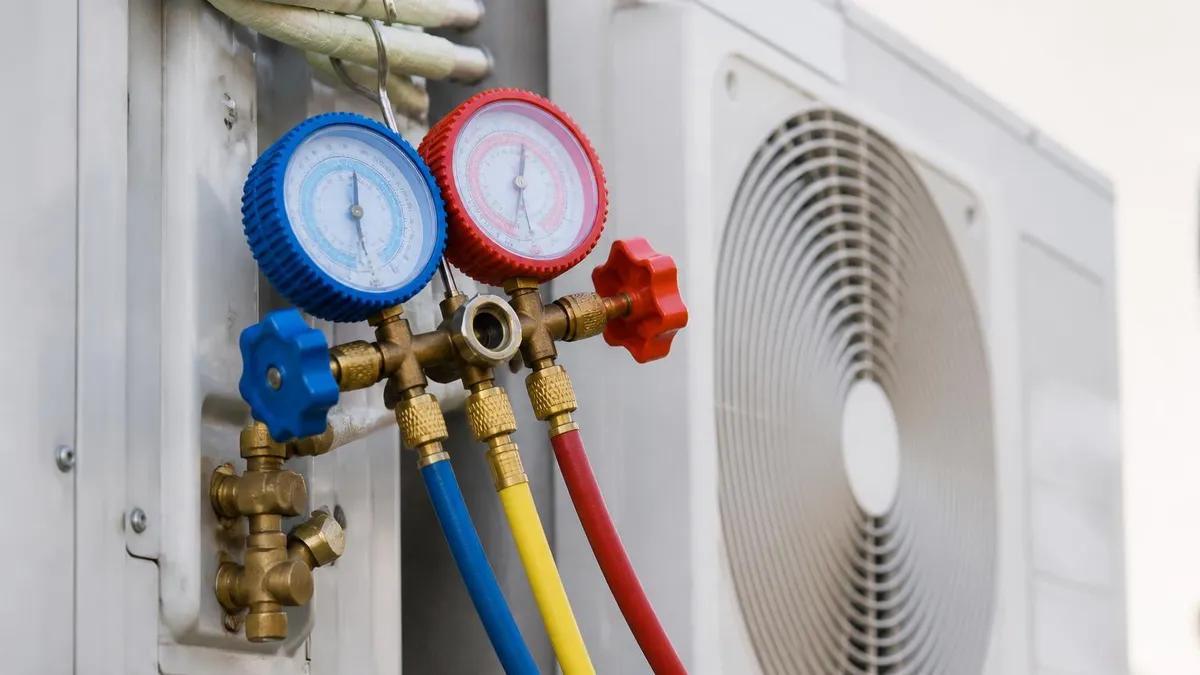

About the Author

NATE Certified HVAC Technician & Licensing Exam Trainer
Universal Technical InstituteMike Johnson is a NATE-certified HVAC technician and EPA 608 universal-certified refrigerant handler with a Bachelor of Science in HVAC/R Technology. He has 19 years of commercial and residential HVAC installation and service experience and specializes in preparing technicians for NATE certification, EPA 608, A2L refrigerant safety, and state HVAC contractor licensing examinations.