
Essex County HVAC: Local Heating and Cooling Services Guide for New Jersey Homeowners
Essex County HVAC guide covering local contractors, ❓ installation costs, permits, seasonal maintenance, and how to choose the right local company.
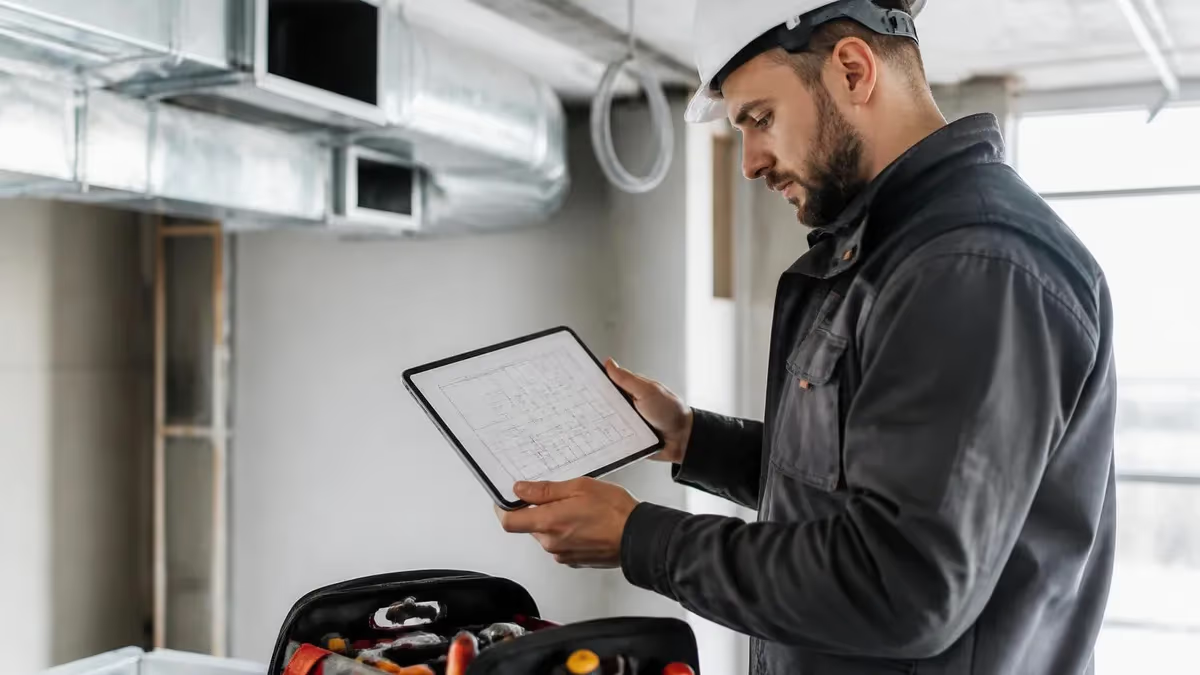
Finding reliable essex county hvac services matters more than most New Jersey homeowners realize until the furnace quits on a fifteen-degree January morning or the central air dies during a July heat wave. Local heating and cooling work blends licensed trade skill, code knowledge, equipment sizing, and customer service into one bundled decision, and the contractor you choose will shape your home comfort, energy bills, and indoor air quality for the next decade or longer. This guide walks through everything that goes into selecting and working with a quality local HVAC company.
Essex County covers an unusually diverse housing stock. You have century-old brownstones in Montclair, mid-century split-levels in Livingston, dense urban apartments in Newark and East Orange, and newer construction in Cedar Grove and Roseland. Each of these home types demands a different approach to heating, cooling, ductwork, and ventilation. A contractor who specializes in retrofitting old radiator systems will not necessarily be the right pick for a new ducted heat pump install, and the reverse is also true.
The local HVAC market in northern New Jersey is also shaped heavily by climate. Winters routinely drop into the teens and occasionally below zero, while summers push past ninety-five degrees with brutal humidity. Equipment must be sized and selected for both extremes, not just one. That is why a Manual J load calculation, performed properly with current insulation values and actual window data, matters far more than a contractor eyeballing your square footage and quoting a unit that is too large or too small for the load.
Local services in this region cover the full spectrum: hvac emergency repair mc lean, planned replacement, ductwork modifications, indoor air quality upgrades, smart thermostat installation, energy audits, and ongoing maintenance contracts. Most reputable shops offer all of these under one roof, which simplifies warranty claims and gives you a single point of accountability when something goes sideways. Single-vendor relationships also tend to produce better long-term results because the company knows your equipment history.
Pricing in Essex County tracks higher than national averages, partly because of labor costs in the New York metro area and partly because of stricter permit and inspection requirements. A full central air replacement on an existing duct system commonly runs between $8,000 and $14,000 depending on tonnage, SEER rating, and brand. Gas furnaces fall in a similar range. Heat pump conversions, which are increasingly popular thanks to federal tax credits and state rebates, can push past $18,000 for whole-home systems with proper electrical upgrades.
Throughout this guide we will cover how to vet contractors, what permits look like in Essex County municipalities, when to repair versus replace, seasonal maintenance schedules, financing and rebate programs, and the warning signs that should make you walk away from a quote. The goal is to give homeowners enough background to ask sharp questions and recognize quality work, so you end up with a system that actually performs and a contractor relationship that lasts.
Whether you live in West Orange, Maplewood, Bloomfield, Verona, Glen Ridge, Caldwell, Nutley, Belleville, Irvington, South Orange, Millburn, Essex Fells, or any of the other municipalities in the county, the principles below apply. Local matters, licensing matters, sizing matters, and follow-through matters more than the lowest sticker price you can find on a search ad. Read on for the full breakdown.
Essex County HVAC by the Numbers
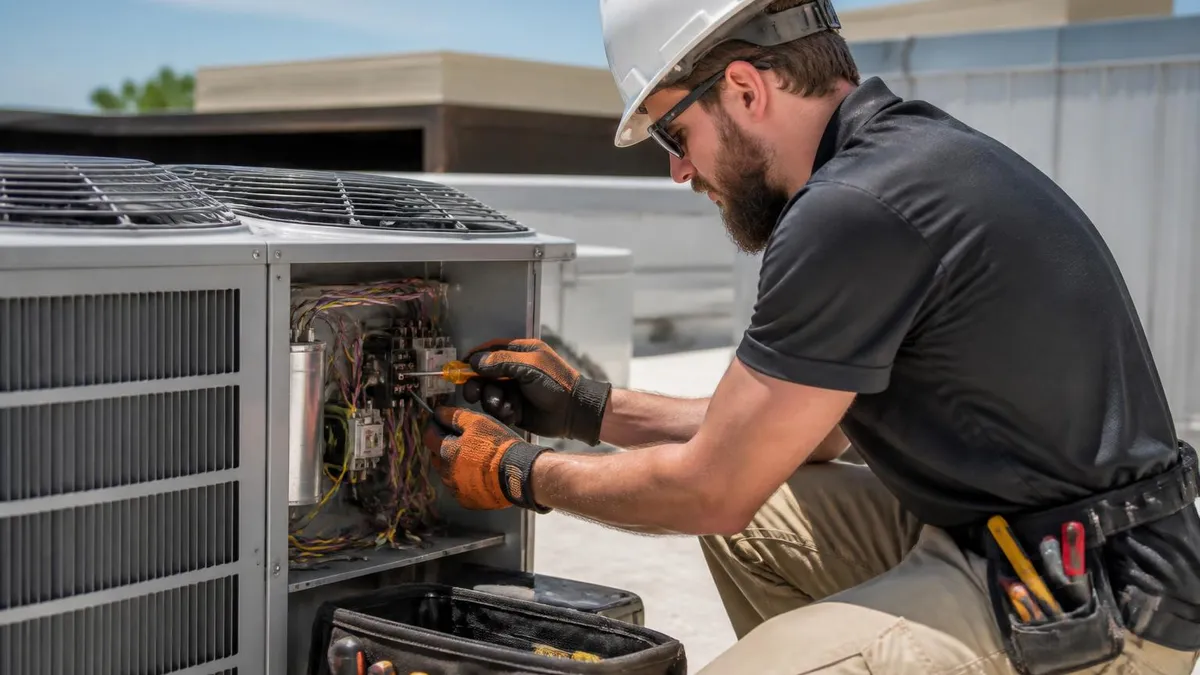
Types of Local HVAC Services Available
24/7 response for no-heat and no-cool calls, typically with a service fee of $125 to $225 plus diagnostic time. Most local shops in Essex County guarantee same-day response during peak seasons for existing customers.
Removal of old equipment and installation of new furnace, AC, or heat pump systems. Includes load calculations, refrigerant line work, electrical updates, permit filing, and post-install commissioning with airflow measurements.
Installation, modification, sealing, and cleaning of supply and return ducts. Critical for older homes where leaky ducts waste 20 to 30 percent of conditioned air and create comfort imbalances between floors.
Annual or biannual tune-up agreements that cover spring AC service and fall heating service. Typical cost runs $180 to $320 per year and usually includes priority scheduling and discounts on repairs.
Whole-home humidifiers, dehumidifiers, HEPA filtration, UV light systems, and energy recovery ventilators. Increasingly popular after the post-pandemic shift in attention toward indoor air contaminants.
Choosing the right local HVAC contractor is the single most important decision in this entire process, and unfortunately it is also where most homeowners make the worst calls. The instinct to take the lowest of three quotes feels logical, but in this trade the cheapest bid almost always reflects either an undersized unit, missing permit work, no commissioning, or a contractor who plans to disappear when warranty problems surface. Price spread on identical scopes can be twenty percent, but spread on quality of execution can be the difference between fifteen years of service and three.
Start every contractor evaluation by verifying their New Jersey HVACR license. The state issues a Master HVACR Contractor license that is required for anyone bidding work, and you can look up any contractor by name on the Division of Consumer Affairs website. While you are there, confirm liability insurance and workers comp coverage. A contractor who balks at producing these documents on request is a contractor who will probably also balk at honoring a warranty claim two years from now when you really need them.
Manual J load calculations should be table stakes for any system over five years old or any home that has been altered through additions, window replacement, or insulation upgrades. A real Manual J takes thirty to ninety minutes of measurement and data entry, and the result tells the contractor exactly how much heating and cooling capacity your home needs. Oversized equipment short-cycles, dehumidifies poorly, and wears out compressors faster, while undersized equipment never reaches setpoint on design days.
References and online reviews both matter, but read them critically. Look for patterns rather than individual complaints. A company with three hundred reviews and a four-point-seven star average is generally trustworthy even if a handful of customers had bad experiences. A company with twelve reviews all posted in a two-week window is almost certainly gaming the system. Spend twenty minutes reading the actual review text and you will quickly spot the contractors who solve problems versus the ones who blame customers.
Local presence matters in this trade because parts availability, follow-up service, and permit familiarity all depend on a contractor who actually operates in Essex County. Be skeptical of out-of-area companies that flood search ads and home services platforms with leads they then sell to subcontractors. Ask where their physical shop is located, where their trucks park overnight, and how long they have served your specific municipality. A real local company can answer these questions in seconds.
Permit pulling separates serious contractors from corner-cutters. Every Essex County municipality requires permits for equipment replacement and any ductwork modification, with inspection by the local construction official after install. A contractor who suggests skipping the permit to save you money is signaling that they do not want their work inspected, which is a red flag that should end the conversation immediately. Unpermitted work also creates problems at resale and may void manufacturer warranties.
Finally, look at the proposal itself. Quality contractors provide written, itemized scopes that specify equipment model numbers, refrigerant type, electrical upgrades, line set details, thermostat models, warranty coverage, and a firm price. Vague one-page quotes that just say something like quote for new system, lump sum, are a setup for change orders and disputes. If you cannot read the proposal and know exactly what you are buying, you do not yet have a real proposal in hand.
HVAC Practice Test Questions
Prepare for the HVAC - Heating Ventilation and Air Conditioning exam with our free practice test modules. Each quiz covers key topics to help you pass on your first try.
HVAC Air Conditioning
HVAC Exam Questions covering Air Conditioning. Master HVAC Test concepts for certification prep.
HVAC Code Compliance
Free HVAC Practice Test featuring Code Compliance. Improve your HVAC Exam score with mock test prep.
HVAC Electrical Controls
HVAC Test Prep for Electrical Controls. Practice HVAC Quiz questions and boost your score.
HVAC Energy Efficiency
HVAC Questions and Answers on Energy Efficiency. Free HVAC practice for exam readiness.
HVAC Heating Systems
HVAC Mock Test covering Heating Systems. Online HVAC Test practice with instant feedback.
HVAC Load Calculations
Free HVAC Quiz on HVAC Load Calculations. HVAC Exam prep questions with detailed explanations.
HVAC Tools and Equipment
HVAC Practice Questions for HVAC Tools and Equipment. Build confidence for your HVAC certification exam.
HVAC Refrigeration
HVAC Test Online for Refrigeration. Free practice with instant results and feedback.
HVAC Safety Practices
HVAC Study Material on Safety Practices. Prepare effectively with real exam-style questions.
HVAC System Design
Free HVAC Test covering System Design. Practice and track your HVAC exam readiness.
HVAC Thermodynamics
HVAC Exam Questions covering Thermodynamics. Master HVAC Test concepts for certification prep.
Heating and Cooling System Options for Essex County Homes
The traditional combination in Essex County remains a high-efficiency gas furnace paired with a split-system central air conditioner. Most homes already have natural gas service and existing ductwork, which keeps installation costs lower than full conversion projects. Modern 96 percent AFUE furnaces deliver excellent cold-weather performance and pair well with 16 to 18 SEER2 AC units.
Typical install pricing runs $10,000 to $16,000 for a complete dual replacement on a 1,800 to 2,400 square foot home. This setup remains the workhorse of the regional market because of fuel cost, reliability, and homeowner familiarity. Expect 15 to 20 years of service with annual maintenance. The downside is two pieces of equipment to maintain and no electrification benefits for federal incentive programs.
Hiring Local versus a National Chain in Essex County
- +Local techs know municipal permit offices and inspectors personally
- +Faster emergency response since trucks are already in the area
- +Direct accountability with the owner if something goes wrong
- +Local references you can verify with neighbors and friends
- +Lower overhead means more competitive bid pricing on equivalent scope
- +Familiarity with regional housing stock and common quirks
- +Longer-term relationship for warranty work and follow-up service
- −Smaller shops may have limited weekend or holiday coverage
- −Financing options can be less strong than franchise operations
- −Showroom and office facilities may be more modest
- −Brand selection sometimes narrower than national dealer networks
- −Marketing polish can be lower, making vetting take more effort
- −Vacation coverage during summer peak can stretch response times
Pros and Cons at a Glance
| Pros | Cons |
|---|---|
| Local techs know municipal permit offices and inspectors personally | Smaller shops may have limited weekend or holiday coverage |
| Faster emergency response since trucks are already in the area | Financing options can be less strong than franchise operations |
| Direct accountability with the owner if something goes wrong | Showroom and office facilities may be more modest |
| Local references you can verify with neighbors and friends | Brand selection sometimes narrower than national dealer networks |
| Lower overhead means more competitive bid pricing on equivalent scope | Marketing polish can be lower, making vetting take more effort |
| Familiarity with regional housing stock and common quirks | Vacation coverage during summer peak can stretch response times |
Essex County HVAC Contractor Pre-Hire Checklist
- ✓Verify New Jersey Master HVACR license on the Division of Consumer Affairs lookup
- ✓Request and confirm current general liability and workers comp insurance certificates
- ✓Ask for at least three local references with addresses in your municipality or adjacent town
- ✓Insist on a written Manual J load calculation before equipment is sized or quoted
- ✓Confirm the contractor will pull the required permit and schedule the inspection
- ✓Review the itemized proposal for model numbers, SEER2 or AFUE ratings, and warranties
- ✓Compare three quotes with identical equipment specifications, not just lump-sum totals
- ✓Check Better Business Bureau and Google reviews for patterns in negative feedback
- ✓Ask about commissioning steps including static pressure and refrigerant charge measurement
- ✓Verify the warranty registration will be completed in your name with the manufacturer
- ✓Confirm payment terms in writing including deposit, progress payment, and final payment
- ✓Make sure the start date and substantial completion date are explicit in the contract
Oversizing wastes money for the life of the equipment
Industry research from the Air Conditioning Contractors of America found that up to 70 percent of residential systems are oversized, leading to short cycling, poor humidity control, and 10 to 20 percent higher energy bills. A properly performed Manual J calculation costs the contractor about an hour, but it changes the entire trajectory of your system performance for the next fifteen to twenty years.
Pricing structure for HVAC work in Essex County combines equipment costs, labor, permits, refrigerant, electrical modifications, and overhead. Understanding how each piece breaks down helps you evaluate quotes intelligently and spot the line items where contractors most often inflate or hide costs. Equipment itself typically accounts for 35 to 45 percent of total project cost, with labor running another 30 to 40 percent, and the remainder going to materials, permits, disposal, and warranty registration. Markup on equipment is normal and reasonable in a service trade.
For a baseline replacement of a three-ton central air conditioner on an existing duct system, expect quotes between $8,500 and $13,500 in Essex County. The spread reflects SEER2 rating, brand tier, condenser pad work, line set replacement versus reuse, and electrical disconnect upgrades. A high-end variable-speed Carrier or Lennox system will land at the top of that range, while a single-stage Goodman or Rheem will land at the bottom. Both can be quality installs if the contractor does the work properly.
Gas furnace replacement runs in a similar range, $7,500 to $12,500 for an 80,000 to 100,000 BTU 96 percent AFUE unit on an existing flue and gas line. Modulating two-stage furnaces add $1,500 to $3,000 to the project. Combination jobs where the homeowner replaces both heating and cooling simultaneously usually save $1,500 to $2,500 over doing the work separately because crew mobilization and permit fees are shared.
The federal Inflation Reduction Act and the older 25C tax credit continue to provide meaningful incentives for high-efficiency installations. Heat pumps that meet CEE tier requirements qualify for a $2,000 federal tax credit, and qualifying furnaces and central AC systems qualify for $600 each up to a $1,200 annual cap. These credits are non-refundable but roll forward and stack with state and utility incentives, making them genuinely valuable for most middle-income households.
New Jersey Clean Energy Program rebates change yearly but typically offer $300 to $4,000 on qualifying heat pump installations, depending on the SEER2 and HSPF2 ratings achieved. PSE&G also runs its own rebate program for customers in its service territory, which covers most of Essex County, and many contractors will help homeowners file the paperwork as part of the install. Always ask whether the quote is before or after rebate application.
Financing options range widely. Most local contractors partner with Synchrony, Wells Fargo, or GreenSky to offer 12 to 84 month installment loans, often with promotional 0 percent introductory periods for shorter terms. Read the fine print carefully because deferred interest products can spike to 28 percent if the balance is not paid within the promotional window. The New Jersey Energy Smart Home Improvement loan also offers below-market rates for qualifying efficiency upgrades.
Beyond the install itself, plan for ongoing operating costs. A 95 percent efficient furnace heating a 2,000 square foot Essex County home typically runs $900 to $1,400 in natural gas annually. Central air costs $250 to $500 per cooling season on top of base electric service. Maintenance contracts add another $200 to $300 per year but generally pay for themselves through extended equipment life and avoided emergency calls. Budget realistically rather than focusing only on the install number.

Every Essex County municipality requires a mechanical permit and inspection for HVAC equipment replacement. Contractors who suggest skipping the permit are signaling that they do not want their work inspected, which usually means deficiencies they expect would be flagged. Unpermitted work can also void manufacturer warranties and create disclosure issues at resale.
Once your new system is installed, maintenance is the single largest variable in how long it lasts and how efficiently it operates. Manufacturers like Trane, Carrier, Lennox, and Bryant all condition their parts warranties on documented annual professional maintenance, and they will refuse claims if you cannot produce service records. This alone justifies a maintenance contract for most homeowners. Combined with the avoided emergency calls and energy savings, the math almost always favors signed service agreements over reactive repairs.
A proper spring AC tune-up runs through a sequence of about fifteen tasks: cleaning the outdoor condenser coil, checking refrigerant pressures and superheat or subcooling, testing capacitors and contactors, lubricating motors where applicable, verifying drain line flow, inspecting electrical connections, checking blower amperage, and confirming temperature split across the indoor coil. A full visit takes 45 to 75 minutes and produces a written report. Fly-by visits that take fifteen minutes are not real tune-ups regardless of what the invoice says.
Fall heating service follows a similar discipline with combustion analysis as the centerpiece. The technician should put a probe into the flue, measure flue gas temperature, oxygen content, and carbon monoxide concentration, and verify that the furnace is firing within manufacturer specifications. Carbon monoxide readings above 100 parts per million in the flue indicate problems that need correction. Heat exchanger inspection with a borescope or visual inspection is also part of any complete fall service.
Filter changes between professional visits are the homeowner's responsibility and dramatically affect both efficiency and equipment life. One-inch pleated filters typically need changing every 60 to 90 days, while four to five-inch media cabinets can stretch to six or twelve months. Setting a calendar reminder is the single highest-return maintenance habit a homeowner can adopt. Dirty filters cause iced coils, blower motor strain, and reduced airflow across the entire system.
Equipment warranties in this industry come in two layers: parts and labor. Manufacturer parts warranties typically run 10 years on registered equipment, with compressors sometimes covered longer. Labor warranties come from the installing contractor and usually run one or two years standard, with paid extensions available up to ten years on premium equipment. Always register the equipment online within 60 days of install because unregistered equipment often defaults to a much shorter warranty period.
Repair-versus-replace decisions get easier with a few simple rules. If the system is under ten years old, repair is almost always the right answer absent a compressor or heat exchanger failure. Between ten and fifteen years, weigh repair cost against age using the common rule of multiplying repair cost by equipment age in years and replacing if the result exceeds 5,000. Past fifteen years, most replacements pay back through efficiency gains alone within five to seven years.
For more on related work that often comes up alongside heating and cooling, our guide on HVAC Duct Installation covers materials and sealing in detail, which directly affects how well any local contractor's equipment install actually performs once turned on. Ducts and equipment have to work as a system, and ignoring one while upgrading the other is a common and expensive mistake homeowners make when working with contractors who do not push back hard enough on legacy duct problems.
Practical preparation before you start calling local HVAC contractors can save you thousands of dollars and weeks of frustration. Begin by gathering basic information about your current system: model numbers from the data plates on your furnace and outdoor condenser, age of equipment, square footage of conditioned space, and a rough history of any past repairs. Snap photos of the equipment and data plates on your phone so you can text them to contractors during initial calls, which lets them prepare an informed visit rather than walking in cold.
Walk through your home before contractors arrive and note where comfort problems exist. Maybe the upstairs bedrooms get hot in summer, or the finished basement stays cold in winter, or the front room never matches the thermostat. These observations point to airflow imbalances, duct issues, or building envelope problems that a good contractor will investigate. A contractor who quotes equipment without asking about comfort problems is selling boxes rather than solving problems, which is exactly the dynamic you want to avoid.
Schedule contractor visits at least three to four weeks before you actually need work done if possible. Summer emergency replacements during a July heat wave or winter no-heat calls in January will cost more, get less attention from estimators, and leave you with fewer options. Spring and fall shoulder seasons are when local Essex County contractors have time to do proper Manual J calculations, walk your ductwork carefully, and present multiple equipment options rather than whatever they have on the truck.
Get written quotes from three contractors with identical equipment specifications. This is the only way to make apples-to-apples comparisons. If contractor A quotes a 16 SEER2 system and contractor B quotes 17 SEER2 with a variable-speed blower, you are comparing different products. Ask each contractor to quote your preferred spec, and ask them to also quote what they would install in their own home. The difference between those two quotes is often illuminating about what they actually believe is the best value.
Read every contract carefully before signing. Look specifically for the start date, completion date, payment schedule, warranty terms, permit responsibility, change order procedure, and dispute resolution language. A contract that asks for more than 30 to 50 percent deposit is a red flag. A contract that does not specify a completion date is a red flag. A contract that limits the contractor's liability to the value of the contract or below is normal, but anything tighter than that deserves a conversation before you sign.
Day-of install, plan to be home and engaged for at least part of the work. You do not need to hover, but introducing yourself to the crew lead, walking through any special access concerns, and being available for questions improves the install. Take photos of the work in progress, especially of refrigerant line connections, electrical work, and condensate piping, because these are the areas where shortcuts most often occur and photos document the actual conditions before insulation and covers go on.
Finally, plan for post-install commissioning and follow-up. A good contractor returns within two weeks of startup to verify charge, recheck operation, hand over manuals, walk you through the thermostat, and confirm everything is operating to spec. If your contractor disappears after collecting final payment and never returns, that is exactly the pattern that leads to warranty headaches three years later. Local matters because local sticks around. Choose accordingly and your decade-long relationship with that contractor will repay the up-front diligence many times over in comfort, energy savings, and peace of mind.
Sample HVAC Practice Questions
Try these questions from our free HVAC practice tests. The correct answer and an explanation follow each question.
What is the role of an aquastat in a hydronic heating system?
- A. It measures flow rate through each zone circuit
- B. It controls boiler water temperature by cycling the burner on and off
- C. It balances water pressure between supply and return headers
- D. It monitors dissolved oxygen levels in boiler water
Answer: B. It controls boiler water temperature by cycling the burner on and off
The aquastat is a temperature controller that energizes and de-energizes the burner to maintain boiler water within a set temperature range.
What is the design dry-bulb outdoor temperature used for in HVAC load calculations?
- A. Sizing humidification equipment
- B. Determining the heating or cooling design load
- C. Calculating duct insulation thickness
- D. Setting thermostat setpoints
Answer: B. Determining the heating or cooling design load
The outdoor design dry-bulb temperature (from ASHRAE tables) represents worst-case conditions used to calculate peak heating or cooling loads.
What is the fundamental principle behind ventilation design in the HVAC domain?
- A. Cost minimization at all costs
- B. Balancing performance, reliability, and efficiency
- C. Using the newest technology exclusively
- D. Following a single vendor solution
Answer: B. Balancing performance, reliability, and efficiency
Effective technical design requires balancing performance requirements with reliability needs and operational efficiency.
What role does documentation play in HVAC compliance?
- A. It is optional
- B. It provides evidence of adherence to standards
- C. It is only needed for audits
- D. It replaces practical competency
Answer: B. It provides evidence of adherence to standards
Documentation provides verifiable evidence that standards and regulations are being followed, serving as proof of compliance.
HVAC Questions and Answers
About the Author

NATE Certified HVAC Technician & Licensing Exam Trainer
Universal Technical InstituteMike Johnson is a NATE-certified HVAC technician and EPA 608 universal-certified refrigerant handler with a Bachelor of Science in HVAC/R Technology. He has 19 years of commercial and residential HVAC installation and service experience and specializes in preparing technicians for NATE certification, EPA 608, A2L refrigerant safety, and state HVAC contractor licensing examinations.