
HVAC SEO: How HVAC Contractors Rank on Google in 2026 October
HVAC SEO playbook for contractors: Google Business Profile, local citations, service-area pages, reviews, LSA, agencies, costs, and 2026 October timeline. 🧠
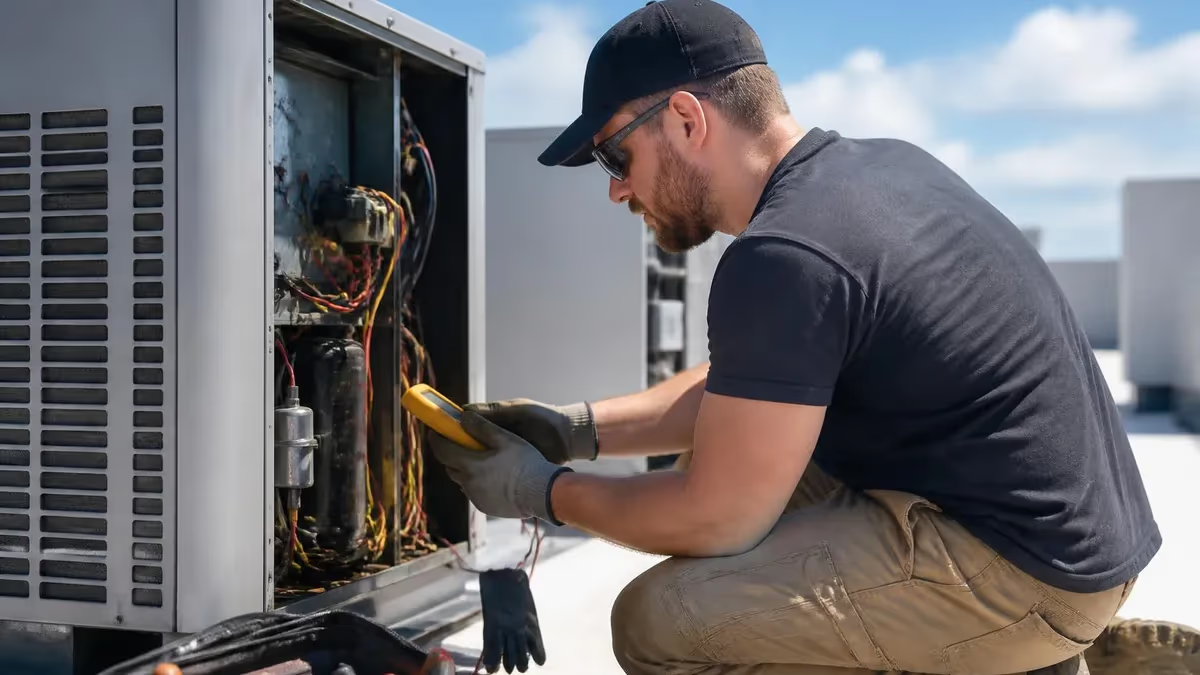
If you run an HVAC company and your phone isn't ringing, the problem usually isn't your service. It's that the homeowner two miles away never saw your name on Google. HVAC SEO fixes that. It's the digital marketing strategy that gets your website and your Google Business Profile in front of people typing "AC repair near me" or "furnace install Phoenix" at 2pm on a 105-degree day.
Here's the kicker. About 87% of HVAC customer journeys start on Google. That's not a stat from 2015 — it's where the buying decision begins right now. And 76% of "near me" searches end with a same-day visit or call. If you're not on page one, you're invisible to most of the homeowners ready to spend money today.
This guide walks you through everything you need to know about HVAC SEO in 2026. We'll cover what works, what wastes money, how much it costs, and how long it takes. It's written for shop owners and operations managers, not marketing agencies trying to upsell you.
Quick definition: HVAC SEO is the practice of optimizing your website, Google Business Profile, and local citations so your heating and cooling company appears in the top organic results and the Google Map Pack for service-related searches in your local market. The goal is simple: when someone in your service area searches for AC or furnace help, your name shows up first — above competitors, above directories, above national chains.
Why HVAC SEO Matters
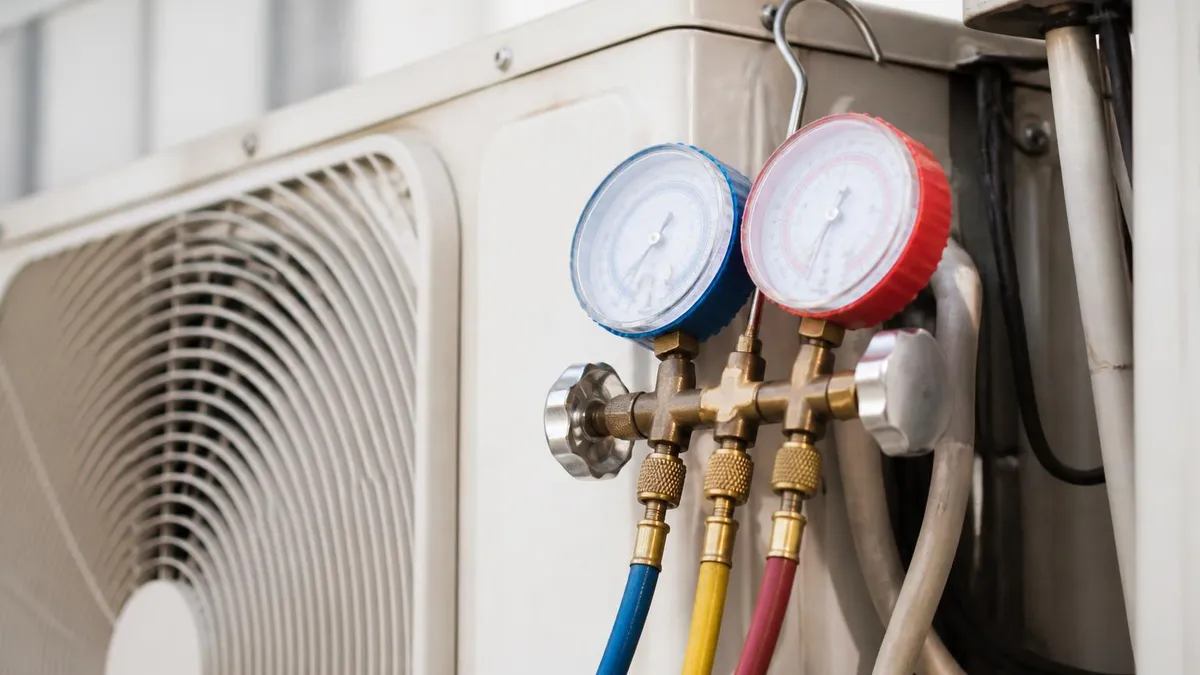
HVAC SEO isn't the same as general SEO. A SaaS company chasing rankings cares about backlinks from tech blogs and ten-thousand-word guides. You don't. Your customers live within a 5-mile radius of your shop. They're searching local terms. They're ready to buy. The intent gap is massive — a homeowner Googling "AC not cooling" is going to call somebody in the next hour, not bookmark a 5,000-word article for later.
Local SEO dominates everything for service-area businesses. Your Google Business Profile is often more important than your website. Service areas, customer reviews, and consistent business info across the web are what move the needle. Skip those, and even a beautiful site won't generate leads. The flip side is encouraging: most of your local competitors are doing local SEO badly or not at all, which means the bar to outrank them is lower than you think.
The three pillars below — local basics, content and reviews, paid ads — are how every successful HVAC marketing strategy gets built. Click through them. Each one matters, and skipping one of them is the most common reason contractors stall out at month 6 wondering why their phone still isn't ringing.
The Three Pillars of HVAC SEO
This is the foundation. Set up and verify your Google Business Profile (GBP). Add your business to Bing Places and Apple Maps. Make sure your Name, Address, and Phone (NAP) are identical everywhere — even minor differences confuse Google. Build out 50-100 local citations on directories like Yelp, Angi, HomeAdvisor, and the Better Business Bureau. Don't forget your local Chamber of Commerce. Without these basics, nothing else you do will rank.
Let's talk about the single most important asset you own: your Google Business Profile. For service-area businesses, GBP outranks your website almost every time. The Map Pack — those three local results that show under the map — generates 44% of clicks for local searches. If you're not in the top three, you're losing roughly half your potential leads to competitors before they ever click anything else.
Setting it up isn't hard, but most contractors miss obvious wins. Verify your business with Google. Fill out every single field. Pick the right primary category (Heating Contractor) and add secondary categories like Air Conditioning Contractor, HVAC Contractor, and Furnace Repair Service. List every city you serve in your service-area settings — usually a 3-5 mile radius around your shop, though larger if you cover rural territory. Photos, posts, and Q&A all carry ranking weight too. Treat GBP like its own mini-website, because functionally, that's what it is.
Google Business Profile Setup Checklist
- ✓Verify your business with Google (postcard or video verification)
- ✓Complete every profile field — services, hours, attributes, payment methods
- ✓Set primary category to Heating Contractor; add HVAC and AC as secondary
- ✓List all cities and zip codes you serve
- ✓Upload 20+ real photos: trucks, team, jobs, before/after
- ✓Post weekly updates: specials, seasonal tips, recent jobs
- ✓Monitor and answer the Q&A section
- ✓Respond to every review within 24 hours
- ✓Enable booking integration if your CRM supports it
- ✓Add service descriptions with pricing ranges where allowed
After GBP, citations are your next priority. A citation is any online mention of your business name, address, and phone — even without a link. Google uses citations to confirm your business is real and where you say it is. Inconsistent NAP (say, "123 Main St" on one site and "123 Main Street" on another) actively hurts your rankings, and a surprising number of contractors have NAP errors they don't even know about because old listings linger for years.
Hit the big general directories first: Yelp, Angi, HomeAdvisor, Better Business Bureau, Citysearch, and MerchantCircle. Then target HVAC-specific platforms like HVACDirectory.com, FurnaceCompare.com, and ContractorReferenceList.com. Local citations matter too — your Chamber of Commerce, local business directories, and any city-specific sites. Aim for 50-100 accurate citations within your first 90 days, and audit them every 6 months because phone numbers and addresses change.
Service-area pages are where most HVAC sites fail. You can't rank for "AC repair Mesa" with a single "Service Areas" page that lists every city. You need a unique, well-written page for each city — 800 to 1,500 words, mentioning local neighborhoods, climate, landmarks, and testimonials from that area.
If you serve 12 cities, that's 12 pages. Yes, it's work. It's also how you outrank competitors who are still using the lazy one-page approach. Embed a Google Map of that city. List 3-5 nearby zip codes. Mention 2-3 specific neighborhoods so the page reads like a local wrote it instead of a marketer who's never set foot in town.
Knowing what type of HVAC operation you run matters when you pick a marketing strategy. A single-truck operator focused on residential needs a different approach than a 30-truck commercial outfit. Understanding the HVAC unit types you specialize in shapes which keywords to chase.
A shop handling residential HVAC targets homeowners with terms like "AC repair" and "furnace tune-up." A team running commercial hvac services in leeds al goes after "commercial HVAC contractor [city]" with longer sales cycles and bigger ticket sizes. Don't try to rank for both at once — pick the lane that matches 80% of your revenue and focus there first. Trying to be everything to everyone usually means ranking for nothing.
Top HVAC SEO Agencies in 2026
- Specialty: HVAC, plumbing, electrical
- Cost: $2,500 - $10,000/mo
- Best for: Mid-to-large shops, full-service marketing
- Specialty: Pay-per-lead model
- Cost: $50 - $200 per lead
- Best for: Shops wanting predictable lead cost
- Specialty: Large agency, HVAC vertical
- Cost: $2,000 - $5,000/mo
- Best for: Multi-location HVAC companies
- Specialty: Contractor-focused (HVAC, roofing)
- Cost: $1,500 - $3,500/mo
- Best for: Small-to-mid HVAC shops
- Specialty: HVAC + plumbing
- Cost: $1,500 - $3,000/mo
- Best for: Local contractors, transparent pricing
- Specialty: HVAC marketing tools + DIY
- Cost: $300 - $1,500/mo
- Best for: Owner-operators on a budget
Customer reviews deserve their own section because they're that important. Google factors review quantity, quality, and recency directly into local rankings. They also drive conversions — homeowners read 4-6 reviews before calling, and a string of recent 5-star feedback often closes the deal before you ever pick up the phone. Recency matters as much as star count: a shop with 200 reviews from three years ago looks dead next to a competitor with 80 reviews from the past 90 days, and Google ranks them accordingly.
Build a review engine. Send a text with a direct Google review link the moment a tech marks the job complete. Train your team to mention it in person: "If we did good work today, a quick Google review really helps us out." Goal: 5+ new reviews per month, 4.5+ star average. Don't fake them. Google catches review fraud and tanks offending businesses.
You also have to respond to bad reviews — calmly, professionally, with an offer to fix it offline. A measured response to a 1-star review actually helps your reputation more than ignoring it. Future customers read those replies and notice when an owner takes ownership instead of getting defensive. Make it part of your weekly routine, not a fire drill.
Don't fake reviews. Google's algorithm flags suspicious patterns: bursts of 5-star reviews from new accounts, identical phrasing, IPs from outside your service area. Penalties range from review removal to GBP suspension. If you've been suspended once, getting reinstated takes weeks and sometimes never happens. Build reviews the slow, honest way — it's the only way that lasts.
Now let's talk paid traffic, because SEO takes time and you need leads now. Two channels matter for HVAC: Google Local Service Ads (LSA) and Google Ads (PPC). They work differently and they work together.
LSA is Google's pay-per-lead program for home service businesses. Your ad shows above the Map Pack with a green "Google Guaranteed" badge. You pay only when a qualified lead contacts you. Costs run $5-$50 per lead depending on your market and service. To qualify, Google requires license verification, insurance proof, and background checks for your techs. The setup takes 2-4 weeks but it's worth it — LSA leads convert at higher rates than regular Google Ads because the Google Guarantee builds trust on first impression.
Standard Google Ads still have a place. Run service-specific campaigns: AC repair, furnace install, duct cleaning. Avoid broad terms like "HVAC" — CPCs hit $30+ and most clicks aren't buyers. Target long-tail keywords ($1-$5 CPC) like "emergency AC repair Mesa" or "furnace install cost Phoenix." Use call-only ads for emergency service campaigns and add negative keywords like "DIY," "free," and "how to" so you're not paying for clicks from people who'll never hire you.
Let's get into the money question: how much does HVAC SEO actually cost? Pricing varies wildly based on your market, competition, and growth goals. The numbers below give you realistic ranges so you can budget honestly instead of getting blindsided by an agency contract that locks you in for 12 months at $5,000 a pop with no clear deliverables to hold them accountable to.
What HVAC SEO Costs
Add Google Ads or LSA spend on top, and the typical established HVAC contractor invests $3,000-$15,000/month total on marketing. That sounds like a lot until you remember a single AC install is worth $5,000-$15,000. One job from SEO often covers a month's marketing budget. A transparent hvac installation leeds page on your site captures research-stage homeowners before they call competitors.
So should you hire in-house or use an agency? It depends on your size. If you're running 1-9 trucks, an agency almost always makes sense — they have the specialists you can't afford to hire, and you avoid the risk of one employee taking your knowledge when they leave. Once you cross 10+ trucks, an in-house SEO specialist at $50-$80K/year starts to pencil out. Even then, most large shops use a hybrid: agency for technical SEO and content, office staff for review responses and weekly GBP posts.
HVAC SEO: The Honest Trade-Offs
- +Long-term lead pipeline that compounds over time
- +Lower cost-per-lead than paid ads once rankings stick
- +Builds business asset value (rankings transfer if you sell)
- +Top-of-funnel brand awareness in your service area
- +Defensive: hard for new competitors to displace established rankings
- −Slow to start — meaningful results take 6-12 months
- −Algorithm changes can shift rankings overnight
- −Requires consistent ongoing investment, not one-time
- −Hard to attribute every lead to SEO without call tracking
- −Bad agencies can damage your site for years (negative SEO, link spam)
Pros and Cons at a Glance
| Pros | Cons |
|---|---|
| Long-term lead pipeline that compounds over time | Algorithm changes can shift rankings overnight |
| Lower cost-per-lead than paid ads once rankings stick | Requires consistent ongoing investment, not one-time |
| Builds business asset value (rankings transfer if you sell) | Hard to attribute every lead to SEO without call tracking |
| Top-of-funnel brand awareness in your service area | Bad agencies can damage your site for years (negative SEO, link spam) |

Before you commit to a strategy, know the mistakes that kill most HVAC SEO efforts. The list below comes from auditing dozens of contractor sites — the same problems show up over and over, and they're cheap to fix once you know to look.
Common HVAC SEO Mistakes
- ✓Skipping Google Business Profile setup or only half-completing it
- ✓One generic Service Areas page instead of dedicated city pages
- ✓Inconsistent NAP across Yelp, Angi, BBB, and your own site
- ✓Asking for too few reviews — under 1 per month from active shops
- ✓Slow website, especially on mobile (over 3-second load time)
- ✓No HTTPS certificate (Google ranking factor since 2018)
- ✓Duplicate content across service-area pages (copy-paste with city swap)
- ✓Keyword stuffing — "best HVAC company HVAC service HVAC repair"
- ✓No call tracking, so you can't tell what marketing actually works
- ✓Picking the cheapest agency that uses spam tactics (cheap link farms)
- ✓Targeting overly broad terms like "HVAC" instead of "AC repair [city]"
- ✓Blogging once and abandoning it — you need monthly publishing
- ✓Ignoring negative reviews instead of responding professionally
Tools matter, but only if you use them. Free tools alone get you most of the way there. Paid tools start paying off once you're scaling past 5 trucks. Don't waste money on a $300/month review platform when you only have 20 reviews to manage — start free, upgrade as you grow.
Your website itself needs to do the basics right. Mobile is non-negotiable — most homeowners search from their phone, often outside next to a broken AC unit. Click-to-call buttons should be huge and obvious. Service area in the footer. Customer testimonials above the fold. "Get Quote" forms on every page. Live chat is gold for after-hours leads when techs are off the clock.
Speed matters too. Run your site through PageSpeed Insights. Anything over 3 seconds on mobile is bleeding leads. Compress images, use a CDN, and dump heavy WordPress themes for something fast. HTTPS isn't optional anymore — Google penalizes sites without it, and modern browsers literally warn visitors that your site is "not secure." Schema markup is the cherry on top. LocalBusiness schema for your homepage, Service schema for each service page, Review schema for rich snippets. Most of it can be added with free generators in an hour.
Essential HVAC SEO Tool Stack
Tracking ROI is where most contractors give up. They spend money on marketing and have no idea what's working. Don't be that shop. The math is simple once you set up the plumbing.
Set up Google Analytics 4 and Google Search Console day one — both free. Add CallRail or a similar call tracking tool that assigns a unique phone number to each marketing source: Google organic, GBP, LSA, Yelp, even your truck wraps. Now when a call comes in, you know exactly where it came from.
Tag your CRM with the source so you can calculate cost-per-lead and lead-to-job conversion rate (10-20% is typical for HVAC). After 90 days, kill what's not working and double down on what is. Knowing your numbers is what separates the shops that grow from the ones that plateau. Most contractors who quit SEO at month 6 actually had positive ROI — they just couldn't see it because they weren't tracking. Don't be that contractor either.
The timeline below shows what to expect month by month. Print it. Tape it to your office wall. Manage your expectations against it instead of against the agency promise of "first page in 90 days" — that promise is almost always a lie unless your competition is asleep at the wheel.
12-Month HVAC SEO Roadmap
Months 1-3: Foundation
Months 3-6: Content build
Months 6-9: Authority phase
Months 9-12: Compounding returns
Year 1+: Expansion
One more thing worth covering before we wrap: how SEO ties into your hiring and growth. As your rankings climb, you'll need more techs to handle the leads. A good hvac service co career page on your site does double duty — it ranks for hiring searches AND signals to Google that you're a real, growing business. List your benefits, training, and pay range. Job seekers and homeowners are both looking, and a strong careers page builds trust with both audiences.
Bottom line: HVAC SEO is a slow-burn marketing investment with the highest long-term ROI of any channel for established service-area contractors. Start with your Google Business Profile. Get reviews coming in consistently. Build out service-area pages for every city. Track what works with call tracking. Stay patient through months 1-6 because the real payoff hits between months 9 and 12 — and it keeps growing year over year as your domain authority compounds and your review count climbs.
If you're a one-truck operator, start with the free stuff and DIY for 6 months while you save up for an agency. If you're at 5+ trucks, hire an HVAC-focused agency now — the lost opportunity from doing it slowly is worth way more than the $2-$5K/month spend. Either way, the contractors who win in 2026 are the ones who treat SEO as a core business system, not a side project bolted on between service calls. Pick a lane, commit for 12 months, measure everything, and the leads will follow.
HVAC SEO Questions and Answers
About the Author

NATE Certified HVAC Technician & Licensing Exam Trainer
Universal Technical InstituteMike Johnson is a NATE-certified HVAC technician and EPA 608 universal-certified refrigerant handler with a Bachelor of Science in HVAC/R Technology. He has 19 years of commercial and residential HVAC installation and service experience and specializes in preparing technicians for NATE certification, EPA 608, A2L refrigerant safety, and state HVAC contractor licensing examinations.