
HVAC Tape: Types, Uses, and Common Misuses 2026 October
HVAC tape types and uses: foil tape, mastic, butyl, fiberglass mesh, and why duct tape isn't actually for ducts. UL 181 standards explained. 🎓
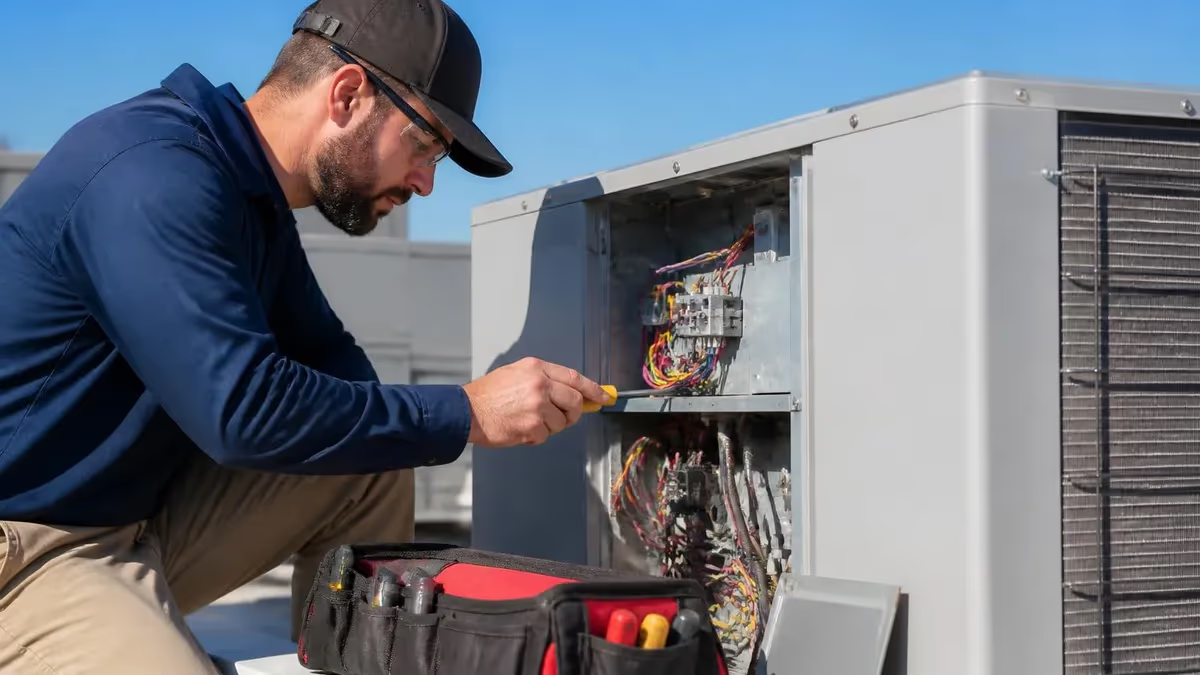
HVAC tape is one of those topics where common knowledge is mostly wrong. The tape labeled "duct tape" at hardware stores — that silver-gray cloth-backed adhesive tape used for everything from hvac emergency repair mc leans to art projects — is specifically not approved for actual HVAC ductwork by any major code or standard.
The cloth backing degrades within months in attic temperature swings, the rubber adhesive hardens and falls off, and seams sealed with duct tape begin leaking within a year or two of installation. Yet ironically, the misnamed product remains widely used by uninformed installers and homeowners who don't realize they're creating problems instead of fixing them.
Real HVAC tape used by professional installers and approved by codes is fundamentally different from common duct tape. UL 181 listed foil tapes, butyl mastic tapes, and other approved products are specifically engineered for the temperature swings, humidity exposure, and structural demands of actual ductwork.
They use aluminum foil or other backing materials that don't degrade like cloth, adhesives engineered to maintain bond strength across temperature ranges from below freezing to over 200°F, and construction that supports decades of service rather than months of decline. Knowing the difference between approved HVAC tapes and the misleadingly-named duct tape matters enormously for system performance and code compliance.
HVAC Tape Quick Facts
The truth about duct tape: The cloth-backed silver tape called "duct tape" is NOT approved for ducts. UL 181 prohibits its use for ductwork. Approved HVAC tapes: UL 181A-listed (rigid duct) and UL 181B-listed (flexible duct) products. Common types: Foil tape (aluminum), butyl mastic tape, fiberglass mesh tape, foam closure tape. Better alternatives: Mastic sealant (paint-on adhesive) for joint sealing — superior to any tape for long-term performance. Cost: $5-$30 per roll for quality HVAC tape.
The UL 181 standard from Underwriters Laboratories specifies fire and performance requirements for HVAC duct components and accessories including tapes. UL 181A applies to closure systems for rigid metal ducts; UL 181B applies to closure systems for flexible ducts. Tapes meeting these standards are tested for adhesion, durability, fire resistance, and performance in HVAC environments. Code-compliant duct sealing requires using UL 181-listed products. Tape rolls show their UL 181A or UL 181B listing prominently. Products without these markings are not approved for HVAC use regardless of marketing claims about being "duct tape" or similar.
HVAC Tape Types
Aluminum foil with pressure-sensitive adhesive. Most common for rigid metal duct sealing. Various widths and thicknesses available.
Aluminum foil specifically tested for flexible duct applications. Different from rigid duct foil tape due to flexible duct stress requirements.
Black tar-like adhesive tape with backing. Excellent long-term seal but messy to work with. Used for joint sealing and gasket applications.
Open-mesh fabric used over mastic to add reinforcement at joints. Doesn't seal alone — used in combination with mastic.
Paint-on or trowel-on adhesive sealant — not technically tape but most effective duct sealing method. Indefinite service life.
Closed-cell foam with adhesive backing. Used for sealing flat surfaces, gasket applications, and noise reduction.
Foil tape is the most commonly used HVAC tape in residential applications. The aluminum foil backing reflects radiant heat (slightly), resists puncture, doesn't degrade in temperature extremes like cloth does, and provides good vapor barrier characteristics. The pressure-sensitive adhesive bonds aggressively when properly applied to clean dry surfaces. Quality foil tape applied correctly produces durable seals lasting many years. The aluminum backing also provides some structural reinforcement beyond just sealing — useful at joints where minor flexing might occur.
Application technique substantially affects whether foil tape provides reliable sealing. Surfaces must be clean and dry before applying — dust, oil, moisture all prevent good adhesion. Apply at room temperature when possible since cold surfaces reduce adhesive performance. Press firmly along the entire tape length using a roller or firm hand pressure to ensure full contact with the substrate.
Avoid stretching the tape during application since stretched tape tries to return to original length, lifting from the surface. Apply with sufficient overlap on long seams (typically 2 inches) to prevent leakage at tape edges. Quality application makes the difference between tape lasting decades versus lifting within months.
Mastic sealant — paint-on adhesive applied with brush, trowel, or specialized applicators — provides superior duct sealing compared to any tape product. Mastic doesn't have the adhesive failure modes that even quality tapes can develop over time. Once cured, mastic produces near-permanent seals lasting indefinitely. The trade-off is application messiness — mastic applies wet, requires curing time, and creates substantial cleanup compared to tape application. Professional installers typically use mastic for primary sealing with tape supplementing in specific applications. For homeowner DIY duct sealing, mastic produces dramatically better long-term results than tape despite the increased application effort.
Best practices for duct sealing: Use mastic sealant on all joints when possible — superior long-term performance compared to any tape. UL 181 listed foil tape for situations where mastic isn't practical. Combine mastic with fiberglass mesh tape at large joints for added reinforcement. Tape over mastic when additional protection or appearance is needed. Avoid generic "duct tape" entirely for actual HVAC use. Verify any product is UL 181 listed before relying on it for code-compliant duct sealing.
The history of why "duct tape" became misnamed traces back to World War II. The U.S. military developed waterproof cloth tape (originally called "duck tape" because water rolled off it like a duck's back) for sealing ammunition cases and other military applications. After the war, the product entered civilian markets and somehow became associated with sealing ducts despite never being designed or tested for that purpose.
Later actual duct sealing tapes (foil tapes designed for HVAC use) entered the market but the name "duct tape" remained attached to the cloth-backed product. The result is a permanent terminology confusion where the product called "duct tape" is the wrong product for actual ducts.
Even today, building inspectors regularly find new construction with cloth duct tape sealing HVAC components — work that should fail inspection but sometimes passes when inspectors don't catch the violation. Older homes commonly have failed cloth duct tape requiring replacement before duct systems perform properly. The failed tape produces leaky ducts, energy waste, and sometimes microbial growth where aged adhesive provides nutrients. Replacing failed cloth duct tape with proper sealing methods is one of the most common improvements in older homes' HVAC systems. The work is tedious but produces measurable energy savings and comfort improvements.
Cost considerations for HVAC tape are modest compared to other system costs. Quality UL 181 foil tape costs $5-$15 per roll typically (varies by width and roll length). Specialty tapes like butyl or specific OEM products may cost more. Mastic sealant costs $15-$40 per gallon, with smaller containers available for limited applications.
Total tape and sealant costs for a residential duct sealing project typically run $50-$200 — a small fraction of total project cost when professional labor is included. The premium for quality products versus generic cloth duct tape is small enough that there's no economic justification for using inappropriate products.
Cloth-backed silver duct tape is NOT for ducts. UL 181 specifically prohibits this product for HVAC use. The cloth backing degrades quickly in attic temperature swings. Adhesive hardens and fails within 1-3 years. Code violations may fail inspections. Energy losses from failed seals waste thousands of dollars annually in heating and cooling costs. Use UL 181 listed foil tape or mastic sealant for actual HVAC sealing. Save the cloth duct tape for non-HVAC repairs where its quick adhesion serves well.
Beyond joint sealing, HVAC tape applications include vapor barrier sealing on insulated ducts, repair of small holes or cracks in duct surfaces, attaching insulation to duct surfaces, sealing connections between flex duct and rigid duct, sealing penetrations through walls, ceilings, and floors, and various other situations where airtight or weather-resistant seals are needed. Each application has specific tape recommendations based on the conditions involved. Foil tape suits most general purposes; specialty products serve specific needs like extreme temperatures, chemical exposure, or architectural appearance requirements.
Insulation work in HVAC systems uses several specific tape types. Foil tape covers seams in insulation jackets to maintain vapor barrier integrity. Adhesive-backed insulation pads attach to duct surfaces using their own adhesive but may need supplemental tape at edges. Foam pipe insulation tape seals joints in foam insulation around piping. Each insulation application has specific tape products designed for its requirements. General-purpose tapes often don't perform well in insulation applications due to specific demands like preventing condensation, maintaining vapor barrier integrity, and tolerating temperature swings.
For DIY homeowners attempting basic duct sealing, foil tape from quality manufacturers serves most common needs. Apply mastic to major joints when possible despite the messier application — the long-term performance benefits justify the effort. Reserve foil tape for tight spots where mastic application is impractical. Avoid the temptation to use cloth duct tape from your existing tool collection — the failure mode timeline (1-3 years) means the work needs redoing soon rather than producing lasting improvement. Quality DIY duct sealing projects can save significant energy costs when done correctly.
Selecting Quality HVAC Tape
- ✓Verify UL 181A or UL 181B listing prominently displayed
- ✓Choose foil construction over cloth for HVAC applications
- ✓Match tape type to specific application (rigid duct vs flexible)
- ✓Check temperature rating against expected service conditions
- ✓Verify width adequate for the seam being sealed
- ✓Consider mastic as primary sealing method when practical
- ✓Avoid generic "duct tape" labeled products for actual ducts
- ✓Plan for proper application including clean surfaces and pressure
For HVAC technicians and contractors, knowing the differences between approved and inappropriate tape products affects professional reputation and code compliance. Using cloth duct tape on duct systems suggests amateur work even if other aspects of installation are competent. Building owners who later have problems trace failures to inappropriate materials, damaging contractor reputation. Quality contractors specify approved sealing materials in their work, document the materials used, and educate customers about proper materials for any DIY supplemental work. The professional standard is consistently using UL 181 listed products and mastic sealing rather than generic cloth tape.
Manufacturer recommendations for specific equipment may specify particular sealing methods. Some equipment manufacturers test specific tape products with their equipment and recommend particular brands or types for warranty compliance. Reading installation instructions for new equipment reveals these specifications. Following manufacturer recommendations preserves warranty coverage and ensures compatibility with equipment-specific connection systems. Generic best practices are typically appropriate but specific manufacturer guidance overrides general advice.
For commercial HVAC applications, sealing standards are typically more stringent than residential due to larger systems, longer service expectations, and code requirements. Commercial duct systems often use rigid duct construction with specific joint seal requirements. Mastic sealing dominates commercial installation. UL 181 tape supplements mastic in specific applications. Specialty products like butyl mastic tape see common use at architectural joints, expansion joints, and similar special applications. The investment in quality sealing materials and proper installation produces commercial duct systems that perform reliably for decades.
Specialty HVAC tape products beyond standard foil and mastic include high-temperature tapes for industrial applications (200°F+ continuous service), chemical-resistant tapes for laboratory and process applications, decorative tapes for architecturally-exposed ductwork, fiber-reinforced tapes for high-stress applications, color-coded tapes for specific identification systems, and various OEM-branded products for specific equipment lines. Each specialty fills specific needs that general products don't address. Most residential and commercial installations don't need specialty products, but specialized applications do require purpose-specific selections.
Newer materials including elastomeric foil tapes, EPDM-backed tapes, and high-performance acrylic adhesive systems offer improved performance compared to traditional foil tapes. These products may cost more but provide better long-term performance, easier application, or specific advantages for particular conditions. Manufacturer comparisons help identify which premium products justify higher costs through better outcomes. For most homeowners, standard foil tape suffices; for high-performance applications or critical systems, premium products may be worth the additional cost.
Looking ahead at sealing trends, increased focus on building airtightness for energy efficiency drives continued attention to duct sealing quality. Energy code requirements continue tightening with stricter leakage standards in new construction. Retrofit programs targeting existing buildings increasingly include comprehensive duct sealing as standard improvement measure. Federal and state efficiency programs offer rebates for verified duct sealing work, supporting investment in proper materials and techniques. The economic and regulatory environment continues making quality duct sealing materials and techniques more important rather than less.

HVAC Tape Quick Stats
HVAC Tape Selection Guide
UL 181A-P foil tape primary; mastic sealant for primary sealing in better installations.
UL 181B-FX foil tape specifically rated for flex duct applications. Different from rigid duct tape.
Foil tape matching jacket material. Maintains vapor barrier integrity.
Foam pipe insulation tape or specific products designed for refrigerant line insulation.
Mastic sealant primary; supplementary foam tape for fire-rated assemblies.
Foil tape works for most homeowner needs. Consider mastic for major joints despite messier application.
For HVAC apprentices and students, understanding sealing materials is fundamental knowledge affecting installation quality. Trade education programs typically cover sealing principles in their first year. Field experience develops practical skills with both mastic and foil tape applications. Quality contractors invest in apprentice training including proper material selection and application technique. Building strong sealing habits early in your career produces consistently good work throughout decades of service installation. The opposite — developing sloppy sealing habits — produces work that returns for warranty issues and damages your reputation across multiple installations.
The relationship between sealing quality and overall HVAC system performance is direct and substantial. A perfectly designed and installed duct system with poor sealing leaks 20-30% of conditioned air through joints — meaning 20-30% of system capacity is wasted. Conversely, marginally-sized duct systems with excellent sealing often perform better than oversized systems with leakage. The investment in quality sealing during installation produces better long-term system performance than equivalent investment in larger equipment compensating for losses. This principle is well-understood among hvac company local seo servicess but sometimes lost on installers focused on equipment selection.
Quality control on duct sealing work involves several practical checks. Visual inspection identifies obvious problems like missing tape, lifting edges, gaps in mastic application, and physical damage. Pressure testing measures actual leakage rates using duct blaster equipment that pressurizes the duct system separately from the building envelope. Pressure pan testing identifies leaks at registers and returns through pressure differentials. Smoke testing visualizes air movement at suspected leak locations. Comprehensive sealing work verifies completion through measurement rather than just visual confirmation. Many quality contractors include pressure testing in their installation processes to verify their work meets specifications.
Building science research continues developing better understanding of duct sealing impacts on overall building performance. Studies measuring before-and-after conditions of duct sealing improvements consistently show 10-30% energy reductions in homes with poorly-sealed ducts. Comfort improvements often exceed energy savings in occupant satisfaction surveys. Indoor air quality improvements come through reduced contamination from unconditioned spaces (attics, crawlspaces, garages). The health and comfort benefits frequently outweigh the energy benefits for occupants making decisions about home improvements. Organizations like ENERGY STAR, Building Performance Institute (BPI), and RESNET develop standards and certification programs supporting quality duct sealing practice.
For homeowners making decisions about HVAC improvements, duct sealing typically offers excellent return on investment. Compared to equipment replacement, duct sealing costs less and often produces comparable energy improvements when starting from poor sealing condition. Compared to weatherization improvements like insulation upgrades, duct sealing addresses HVAC-specific losses that other improvements don't address.
Energy audits often identify duct sealing as highest-priority improvement based on measured leakage rates. Federal and state incentive programs increasingly cover duct sealing work, reducing customer cost. The combination of low cost, fast payback, and substantial benefits makes quality duct sealing one of the more attractive home improvement investments available.
Looking at duct sealing within broader home performance context, it represents one piece of comprehensive building envelope improvement work that addresses energy efficiency holistically. Air sealing the building envelope, insulating attics and walls properly, sealing ductwork, upgrading HVAC equipment, addressing infiltration around windows and doors, and improving moisture management all work together to produce comfortable, efficient, durable buildings. Duct sealing alone produces meaningful improvements but works best as part of comprehensive whole-home approach addressing multiple systems. Building performance professionals consider these systems together rather than addressing each component independently in isolated separate projects across many years of incremental work.
Foil Tape vs Mastic for Duct Sealing
- +Foil tape: Quick application without mess
- +Foil tape: Works in tight spaces difficult for mastic
- +Foil tape: No drying time before further work
- +Mastic: Superior long-term seal performance
- +Mastic: Self-healing for minor movements
- +Mastic: Indefinite service life when properly applied
- −Foil tape: Adhesive can fail over many years
- −Foil tape: Application technique substantially affects performance
- −Foil tape: Limited self-healing capability
- −Mastic: Messy application requiring cleanup
- −Mastic: Requires curing time before stress
- −Mastic: Difficult application in tight spaces
HVAC Questions and Answers
About the Author

NATE Certified HVAC Technician & Licensing Exam Trainer
Universal Technical InstituteMike Johnson is a NATE-certified HVAC technician and EPA 608 universal-certified refrigerant handler with a Bachelor of Science in HVAC/R Technology. He has 19 years of commercial and residential HVAC installation and service experience and specializes in preparing technicians for NATE certification, EPA 608, A2L refrigerant safety, and state HVAC contractor licensing examinations.