
Local HVAC Contractors: How to Find, Vet, and Hire Trusted Heating and Cooling Pros in Your Area
✏️ Local HVAC contractors guide: how to find, vet, and hire trusted heating and cooling pros near you. Licensing, pricing, red flags, and questions to ask.

Finding reliable local HVAC contractors can feel overwhelming, especially when your furnace dies in January or your air conditioner quits during a 95-hvac emergency repair mc lean wave. The right contractor saves you thousands over the life of your system, while the wrong one can leave you with poor airflow, sky-high energy bills, and warranty headaches. This guide walks you through every step of the search, from verifying licenses and insurance to interpreting quotes, so you can hire with confidence rather than panic.
The HVAC industry in the United States employs more than 415,000 technicians, according to the Bureau of Labor Statistics, and that workforce is projected to grow steadily through 2032. That means most homeowners have plenty of options nearby, but it also means quality varies widely. A neighbor might love their contractor while a person two streets over had a terrible experience with the same company. Knowing what to look for narrows the field fast.
This article is written for homeowners, small business owners, property managers, and even apprentices who want to understand how reputable local companies operate. We cover licensing, bonding, NATE certification, EPA Section 608 requirements, written estimates, load calculations, warranty terms, financing pitfalls, and the questions you should never skip during a sales call. We also explain how to spot the high-pressure tactics that flag a shop more interested in commissions than craftsmanship.
Hiring is only half the battle. Once you find a contractor you trust, you also want to understand the work itself so you can evaluate what they propose. That includes basic concepts like static pressure, refrigerant type, SEER2 ratings, and combustion safety testing. If you want a deeper dive on the science behind airflow and sizing, our companion guide on CFM HVAC Basics is a great primer that pairs well with everything covered here.
You'll also see real-world cost ranges, regional differences, and the kinds of seasonal discounts that are genuinely worth waiting for versus the ones that are just marketing. We'll show you how to compare three bids the right way, why the cheapest quote almost never wins on a five-year horizon, and how to negotiate scope without insulting a good contractor. There are also tips for renters and landlords who share repair responsibilities under most state laws.
Finally, we include a strong FAQ that answers the most common questions homeowners search for, from "do I tip my HVAC guy?" to "what does a clean install actually look like?" By the end of this article, you'll have a repeatable process you can use any time you need heating or cooling help, whether it's a $99 tune-up or a $15,000 full-system replacement. Let's get into it.
Local HVAC Contractors by the Numbers

Where to Search for Local HVAC Contractors
Brands like Trane, Carrier, Lennox, and Rheem publish lists of factory-authorized dealers by ZIP code. These dealers typically receive ongoing training and stock OEM parts.
ACCA, PHCC, and BBB Accredited Business directories let you filter for licensed, insured firms that follow industry quality standards like ACCA Manual J load calculations.
Google Business Profile, Yelp, and Nextdoor surface honest neighbor feedback. Look for 100+ reviews with a 4.5+ average and recent activity within the last 60 days.
Many electric and gas utilities maintain approved contractor lists tied to rebate programs. Hiring from this list often unlocks $500-$3,000 in incentives.
Plumbers, electricians, and home inspectors work with HVAC pros daily. Their referrals are gold because their reputation rides on the recommendation.
Before you let anyone touch your equipment, verify their credentials. Every state regulates HVAC work differently, but most require a state mechanical or HVAC contractor license, a separate refrigerant handling certification, and general liability insurance with workers' compensation coverage. A legitimate contractor will hand you their license number without hesitation, and you can verify it on your state's contractor licensing board website in under two minutes. Skipping this step is how homeowners end up holding the bag when an uninsured worker gets hurt on their property.
The federal EPA Section 608 certification is non-negotiable for anyone handling refrigerant. There are four levels: Type I for small appliances, Type II for high-pressure systems like split AC, Type III for low-pressure systems, and Universal which covers all three. Ask which technicians on the crew hold which certifications. If they can't answer, that's a red flag, because charging refrigerant without certification is a federal violation that can void your warranty and bring fines.
NATE (North American Technician Excellence) certification is voluntary but well-regarded. NATE-certified techs have passed industry-standard exams in areas like installation, service, air distribution, and heat pumps. Roughly 30 percent of US technicians hold at least one NATE credential. It's not a guarantee of perfection, but it does indicate a tech invested time and money in formal validation of their skills. Many factory-authorized dealers require NATE certification for their lead installers.
Insurance verification is more important than most homeowners realize. Ask for a certificate of insurance (COI) listing general liability of at least $1 million per occurrence and workers' compensation. Reputable contractors will email you a COI directly from their insurance broker within an hour. If they push back or send a screenshot of a policy declarations page that looks photoshopped, walk away. You're protecting yourself from premises liability if an injury happens during the job.
Bonding is a separate protection. A surety bond means a third party will pay if the contractor fails to complete work or violates licensing rules. Bond amounts vary by state, from $2,000 in some southern states to $20,000 or more in places like California. Check your state's requirements and ask the contractor for proof. Bonded contractors take their reputations more seriously because they have skin in the game beyond their personal liability.
Don't forget to confirm the contractor pulls permits when required. Major work like a full system replacement, ductwork modifications, or gas line changes typically requires a municipal permit and inspection. Contractors who offer to skip the permit to save you money are creating a future liability for you, the homeowner. Unpermitted work shows up during home sales, can void insurance claims, and may not satisfy warranty requirements. For deeper guidance on credentials, see our piece on Certified HVAC Contractors.
Finally, check how long the company has been in business under its current name. Some shady operators dissolve and reincorporate to escape bad reviews and warranty obligations. Look up the business entity on your secretary of state website, confirm the formation date, and cross-reference it with their website's "established" claim. A ten-year-old company with hundreds of reviews and consistent ownership is dramatically less risky than a six-month-old LLC with a flashy ad budget.
HVAC Practice Test Questions
Prepare for the HVAC - Heating Ventilation and Air Conditioning exam with our free practice test modules. Each quiz covers key topics to help you pass on your first try.
HVAC Air Conditioning
HVAC Exam Questions covering Air Conditioning. Master HVAC Test concepts for certification prep.
HVAC Code Compliance
Free HVAC Practice Test featuring Code Compliance. Improve your HVAC Exam score with mock test prep.
HVAC Electrical Controls
HVAC Test Prep for Electrical Controls. Practice HVAC Quiz questions and boost your score.
HVAC Energy Efficiency
HVAC Questions and Answers on Energy Efficiency. Free HVAC practice for exam readiness.
HVAC Heating Systems
HVAC Mock Test covering Heating Systems. Online HVAC Test practice with instant feedback.
HVAC Load Calculations
Free HVAC Quiz on HVAC Load Calculations. HVAC Exam prep questions with detailed explanations.
HVAC Tools and Equipment
HVAC Practice Questions for HVAC Tools and Equipment. Build confidence for your HVAC certification exam.
HVAC Refrigeration
HVAC Test Online for Refrigeration. Free practice with instant results and feedback.
HVAC Safety Practices
HVAC Study Material on Safety Practices. Prepare effectively with real exam-style questions.
HVAC System Design
Free HVAC Test covering System Design. Practice and track your HVAC exam readiness.
HVAC Thermodynamics
HVAC Exam Questions covering Thermodynamics. Master HVAC Test concepts for certification prep.
Questions Smart Homeowners Ask Local HVAC Contractors
Start by asking how the contractor diagnoses problems. A reputable shop will describe a process that includes checking thermostat operation, static pressure readings, refrigerant pressures, and combustion analysis on gas equipment. Avoid anyone who says they can quote a repair over the phone without seeing the system, because real diagnostics require measurements no homeowner can provide accurately.
Confirm the service-call fee, whether it's waived if you authorize repairs, and what hours are considered after-hours. Ask if the technician is W-2 or a subcontractor, because employed techs tend to follow standardized procedures. Also ask whether they bring common parts on the truck for your brand, since same-day repair often hinges on having a blower motor or capacitor in stock.

Hiring Local vs. Big-Box Installer: Pros and Cons
- +Owners often live in your community and answer their own phones
- +Faster emergency response, sometimes within two hours
- +Personalized recommendations based on local climate and home stock
- +Easier accountability if something goes wrong post-install
- +Greater flexibility on scheduling, payment, and scope
- +Stronger relationships with local code inspectors and permit offices
- +Money stays in the local economy and supports your neighbors
- −Smaller crews can mean longer waits during peak heat or cold snaps
- −May not stock every brand, limiting your equipment options
- −Financing offers can be less competitive than national chains
- −Smaller marketing budgets make vetting research harder
- −Vacation coverage may rely on a single backup technician
- −Pricing transparency varies widely from shop to shop
Local HVAC Contractor Hiring Checklist
- ✓Verify state mechanical or HVAC contractor license on the official state board website
- ✓Request a current certificate of insurance with at least $1M liability and active workers' comp
- ✓Confirm EPA Section 608 certification for any tech handling refrigerant
- ✓Ask whether lead installers hold NATE or factory-authorized brand certifications
- ✓Get at least three written, itemized quotes with model numbers and AHRI references
- ✓Require a Manual J load calculation for any replacement system
- ✓Confirm permits will be pulled and inspections scheduled for major work
- ✓Read 25+ recent Google reviews and check Better Business Bureau complaints
- ✓Ask for and call three references from installations within the past 12 months
- ✓Get warranty terms in writing, including who registers the equipment and when
If your three bids vary by more than 30 percent, something is off.
Three quotes from reputable local HVAC contractors for the same scope should land within 10-20 percent of each other. A bid that's 40 percent lower usually means missing equipment, skipped permits, or a substituted lower-tier system. A bid 40 percent higher often signals oversized equipment or unnecessary add-ons. Always ask each contractor to walk you through the differences line by line before deciding.
Understanding HVAC pricing prevents sticker shock and helps you spot inflated quotes. National averages from 2024-2025 data put a full central AC replacement between $5,500 and $11,000 installed, with high-efficiency variable-speed systems pushing $14,000-$18,000. Furnace replacements range from $3,500 to $8,000, while a full dual-fuel or heat pump system commonly lands at $9,000-$15,000. Your region, equipment tier, and ductwork condition swing those numbers significantly, so use national figures only as a sanity check.
Service-call pricing is more straightforward. Most local HVAC contractors charge $75-$150 for a diagnostic visit, often credited toward the repair. Common repairs include capacitor replacement ($150-$400), blower motor ($400-$900), evaporator coil ($1,200-$2,800), and compressor replacement ($1,500-$3,200). Refrigerant top-offs vary wildly by type: R-410A still runs $75-$150 per pound, while older R-22 systems may cost $200 per pound or more, which is why many techs recommend full replacement instead of recharging aging R-22 equipment.
Maintenance plans typically cost $150-$300 per year for one tune-up on a single system, or $250-$450 for biannual service covering both heating and cooling. A good plan should include filter changes, coil cleaning, refrigerant pressure checks, capacitor testing, and combustion analysis on gas furnaces. Avoid plans that bury automatic price escalators or lock you into multi-year terms with cancellation penalties. The best plans simply pay for themselves through priority scheduling and a 10-15 percent repair discount.
Financing is where buyers get burned most often. Promotional 0 percent APR offers usually require payoff within 12-24 months, after which retroactive interest at 24-29 percent kicks in. Read the loan documents carefully, especially the words "deferred interest." If you can't pay the full balance by the promo deadline, a traditional fixed-rate home improvement loan at 7-10 percent is almost always cheaper in the long run. Some contractors push their in-house finance partners because they receive kickbacks, so always compare to your credit union.
Don't overlook rebates and tax credits. The Inflation Reduction Act extended federal tax credits worth up to $2,000 for qualifying heat pumps and 30 percent of installation costs (capped) for geothermal systems. State and utility rebates stack on top, sometimes adding $500-$3,000 more. Your contractor should know which rebates apply and help you file paperwork. If they shrug when you ask about incentives, that's a sign they aren't keeping current with industry programs.
Seasonal pricing matters too. Late spring and early fall are the cheapest times to schedule installation because demand drops and crews have open calendar slots. Manufacturers also offer dealer incentives that get passed through as $500-$1,500 rebates on premium equipment during shoulder seasons. Emergency replacements in July or January cost more not just because of overtime, but because contractors lose the negotiating room they have during slow weeks. Plan ahead when possible.
Finally, beware of the "today only" discount. Legitimate contractors can wait for your decision and don't need to pressure you into signing tonight. High-pressure tactics—especially "if you don't sign in the next hour, this $2,000 discount disappears"—are designed to short-circuit the comparison shopping process. A real professional will email a quote, follow up politely once or twice, and trust the work to speak for itself. For a fuller cost breakdown by job type, see our companion guide on hvac installation leeds.
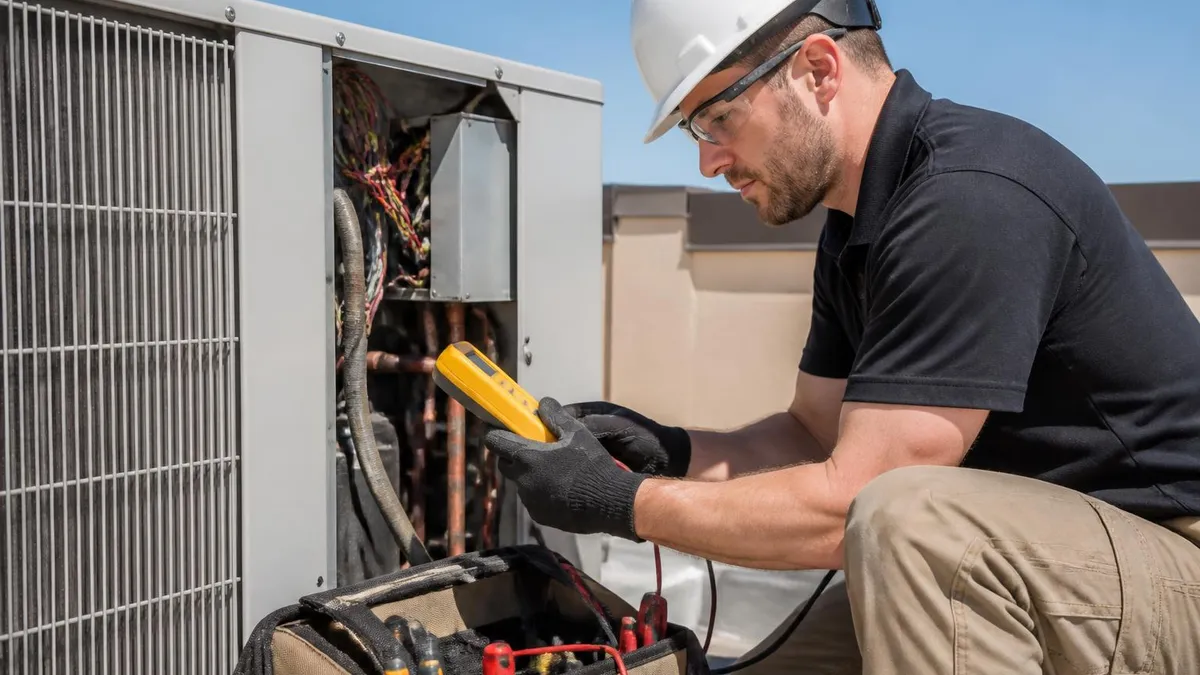
Be cautious of contractors who demand more than 30-50 percent upfront, refuse to provide written quotes, push same-day decisions with disappearing discounts, or insist on cash-only payment. These are classic indicators of unlicensed work, scam operations, or financially unstable companies. A trustworthy local HVAC contractor will give you time, transparency, and traceable payment options.
Once you've selected a contractor, your role shifts from shopper to project partner. The day before installation, clear a path from the front door to the equipment, remove fragile items from nearby shelves, secure pets in another room, and confirm the start time in writing. A reputable crew arrives in marked vehicles with uniformed techs and floor protection. They'll walk you through the scope before turning a wrench, which is your last chance to confirm everything matches the signed quote.
During the install, ask politely if you can observe key moments like the load calculation review, refrigerant pressure check, and combustion analysis. Good crews welcome curious homeowners because educated customers leave better reviews and refer more business. They should never make you feel intrusive for asking questions about what they're doing. If a crew gets defensive when you watch, that often signals they're cutting corners they don't want documented.
The post-install walkthrough is critical. Your lead installer should demonstrate thermostat operation, show you the air filter and replacement schedule, point out the condensate drain, and explain how to recognize trouble signs like unusual smells or short cycling. Get the model and serial numbers in writing for warranty registration. Confirm permit inspection dates if applicable, and ask for digital copies of the load calculation, AHRI matched system certificate, and any commissioning measurements.
Maintenance is where most homeowners drop the ball. Skipping annual tune-ups voids many manufacturer warranties and shortens equipment life by 20-40 percent. Change filters every 1-3 months depending on type, keep outdoor condenser units clear of debris within two feet, and rinse the coil gently each spring with a garden hose. These small habits add years to your system and keep efficiency from drifting downward as components age and dirt accumulates.
Build a relationship with your contractor over years rather than treating each call as a transaction. Loyal customers get faster emergency response, better pricing on accessories like UV lights or whole-home humidifiers, and first dibs on appointment slots before peak season. Many local shops keep notes on your system in their CRM, so a tech showing up for the first time already knows you have a 2018 Trane XR16 with a known thermostat quirk. That continuity is worth a lot when things go wrong.
Know when to call versus DIY. Filter changes, thermostat battery replacement, condenser cleaning, and resetting tripped breakers are reasonable homeowner tasks. Refrigerant charging, gas line work, electrical replacements beyond a thermostat, and anything involving the heat exchanger require a licensed technician for safety, code, and warranty reasons. Trying to save $200 on a DIY refrigerant top-off can void a $5,000 warranty and create a federal violation if you're not EPA certified.
If you ever need to find emergency or routine service while traveling or after a move, our guide on Best HVAC Repair walks through how to vet a contractor quickly when you don't have a relationship yet. The framework is the same: licensing, insurance, written quotes, and reviews. Even under time pressure, ten minutes of homework saves enormous headaches compared to grabbing the first ad that pops up in a Google search.
Putting all of this into practice doesn't have to be intimidating. Start with one weekend of homework: list three to five local HVAC contractors from manufacturer locators, utility rebate pages, and Google reviews. Spend twenty minutes verifying each company's license on your state board, screenshotting the active status. Then call each one to schedule a quote, paying attention to how quickly they answer the phone, how professionally the dispatcher handles your questions, and whether they offer to email a service agreement before the visit.
During the visit, take notes. A great estimator will spend at least 30-45 minutes walking your home, measuring rooms, inspecting ductwork, checking insulation in the attic, and asking about hot or cold spots. A weak estimator glances at the existing equipment, scribbles a number on a clipboard, and leaves in fifteen minutes. The thoroughness of the estimate directly predicts the thoroughness of the install. Use that as your primary tiebreaker when quotes are within range of each other.
Compare written proposals side by side using a simple spreadsheet. List equipment brand, model, SEER2, HSPF2 (for heat pumps), AFUE (for gas furnaces), warranty terms, included accessories, financing options, permit cost, and total price. When you see the numbers laid out, the value gaps become obvious. Sometimes the middle bid wins because it includes a UV light, smart thermostat, and 10-year labor warranty that the cheap bid omits. Other times the highest bid wins because the equipment is genuinely higher tier.
Don't be shy about negotiating. Local HVAC contractors often have $300-$800 of wiggle room on a $10,000 job, especially if you can sign quickly during a slow week. Polite, fact-based negotiation works better than aggressive haggling. Saying "Contractor B offered a 10-year labor warranty for the same price—can you match it?" gets results. Saying "Just knock $2,000 off the price" usually gets refused. Frame requests around specific items rather than vague discounts.
After signing, document everything. Keep a folder (physical or digital) with the contract, payment receipts, permit and inspection paperwork, warranty registration confirmations, manuals for thermostats and equipment, and a written maintenance schedule. When you sell the home, this folder adds resale value because buyers can verify the system is recent, properly installed, and under transferable warranty. Real estate agents consistently report that documented HVAC work helps homes sell faster and at higher prices.
If problems arise post-install, address them in writing. Email the contractor with specific symptoms, dates, and any photos or videos. Reputable companies respond within 24-48 hours and schedule a service visit promptly. If you hit silence, escalate by contacting the manufacturer (who has use with their authorized dealers), the state licensing board, or the Better Business Bureau. Most disputes resolve quickly once a third party gets involved, but only if you've kept your documentation organized.
The bottom line is that hiring the right local HVAC contractor is less about luck and more about following a repeatable process. Verify credentials, get written itemized quotes, demand a Manual J for replacements, check reviews and references, and refuse to be pressured. Build the relationship over time and treat your contractor as a partner in keeping your home comfortable, efficient, and safe. Do that, and your HVAC system will quietly outlast its design life while your neighbors are calling for emergency service.
HVAC Questions and Answers
HVAC Technician Jobs Near Me: How to Find, Land, and Grow in Local HVAC Careers
CFM HVAC Basics: How Airflow, Sizing, and System Performance Work Together
Certified HVAC Contractors: How to Find, Vet, and Hire the Right Professional for Your Home or Business

Best HVAC Repair in Bandon, OR: Local Services Near Me Guide
HVAC Installations: The Complete Guide to Planning, Pricing, and Getting It Right the First Time
About the Author

NATE Certified HVAC Technician & Licensing Exam Trainer
Universal Technical InstituteMike Johnson is a NATE-certified HVAC technician and EPA 608 universal-certified refrigerant handler with a Bachelor of Science in HVAC/R Technology. He has 19 years of commercial and residential HVAC installation and service experience and specializes in preparing technicians for NATE certification, EPA 608, A2L refrigerant safety, and state HVAC contractor licensing examinations.