
HVAC Business for Sale: How to Buy, Value, and Succeed with an Existing HVAC Company
Looking at an HVAC business for sale? Learn how to value, evaluate, finance, and successfully acquire an existing HVAC company in the US. 🎯

An hvac business for sale can represent one of the most attractive acquisition opportunities in the trades sector. The HVAC industry generates over $150 billion in annual revenue across the United States, and demand for heating, ventilation, and air conditioning services continues to climb as new construction expands and aging systems require replacement. For an entrepreneur or experienced technician looking to skip the startup phase, purchasing an established HVAC company offers immediate cash flow, an existing customer base, trained technicians, and brand recognition that would otherwise take years to build from scratch. Practice with the free HVAC practice test on PracticeTestGeeks (750+ questions with answer explanations).
Unlike starting a new HVAC business from the ground up, buying an existing operation means you inherit proven systems, licensed staff, supplier relationships, and sometimes even exclusive service contracts with commercial or residential clients. That running start dramatically reduces the risk profile of your investment, though it introduces its own set of due diligence challenges. Understanding what you are buying, what it is worth, and how to finance the deal are all critical before you sign anything.
The market for HVAC business acquisitions is active in every region of the country. Baby Boomer business owners who built their companies over decades are retiring in large numbers, creating a sustained wave of well-run companies hitting the market. According to business brokerage data, HVAC service companies typically command multiples between 2.5x and 5x seller's discretionary earnings (SDE), depending on revenue concentration, contract quality, fleet condition, and geographic exclusivity. Knowing how to read those numbers is the first skill any serious buyer must develop.
Before you begin touring businesses or signing letters of intent, it pays to understand the full landscape. Residential service companies operate very differently from commercial HVAC contractors, and each has its own risk profile, licensing requirement, and valuation methodology. A residential company with strong seasonal demand and high repeat-customer rates may look different on paper than a commercial outfit with long-term maintenance agreements, but both can be excellent acquisitions when purchased at the right price and with the right transition plan in place.
Financing is another dimension that stops many would-be buyers before they start. The good news is that HVAC businesses qualify for SBA 7(a) loans, seller financing, and private equity backing because of their stable cash flows and tangible asset bases. Down payments typically range from 10% to 30% of the purchase price, and SBA loan terms can stretch to 10 years for working capital and equipment purchases, making monthly debt service very manageable relative to operating income on a healthy business.
This guide will walk you through every stage of the acquisition process: where to find HVAC businesses for sale, how to evaluate them, what due diligence looks like in the trades, how to structure and finance the deal, and what steps to take in your first 90 days as the new owner. Whether you are a licensed technician buying your first company or a seasoned investor adding an HVAC operation to your portfolio, the framework here will help you avoid the most common and costly mistakes buyers make in this space.
Free HVAC Study Tools
Interactive HVAC resources on PracticeTestGeeks, free to start:
- HVAC EPA 608 Refrigerant Certification — 35 questions with instant scoring and answer explanations
- HVAC flashcards — review key terms and concepts card by card
- HVAC study guide — topic-by-topic overview of what the exam covers
- HVAC cheat sheet — one-page printable summary for last-minute review
HVAC Business Acquisition by the Numbers
Where to Find HVAC Businesses for Sale
Certified business intermediaries list HVAC companies on BizBuySell, BusinessBroker.net, and proprietary databases. They pre-screen sellers, gather financials, and manage NDAs, making them the fastest route to serious listings with vetted documentation.
Many of the best HVAC acquisitions never hit public marketplaces. Cold outreach to owners of established local companies — especially those nearing retirement age — can surface off-market deals with less competition and more negotiating room on price and terms.
ACCA, PHCC, and regional HVAC trade groups host events where owners openly discuss succession plans. Attending chapter meetings or sponsoring local events puts you in front of sellers who trust referrals over anonymous online listings.
Search funds and PE-backed HVAC roll-up platforms sometimes divest individual locations or partner with operator-buyers. These deals can include seller financing, earnout structures, and operational support during transition — ideal for first-time buyers.
BizBuySell, Acquire.com, and LoopNet list hundreds of active HVAC listings at any given time. Filter by revenue, location, and asking price. Always verify financials independently since self-reported figures on public platforms vary in accuracy.
Valuing an HVAC business correctly is the most important skill you will exercise during the acquisition process. Most small HVAC companies are valued on a multiple of seller's discretionary earnings (SDE), which represents the total financial benefit to a full-time owner-operator. SDE is calculated by starting with net income and adding back owner's salary, owner perks, depreciation, amortization, interest, and any one-time or non-recurring expenses. A company generating $400,000 in SDE priced at a 3.5x multiple would carry an asking price of $1.4 million — a common deal size in this market.
Larger HVAC companies, particularly those with multiple crews, significant commercial contracts, or over $3 million in annual revenue, are often valued on EBITDA multiples instead. EBITDA — earnings before interest, taxes, depreciation, and amortization — normalizes profitability across capital structures and is the standard metric used by institutional acquirers. Commercial-focused companies with recurring maintenance agreements typically trade at higher EBITDA multiples than purely residential service companies, reflecting the predictability and length of their revenue streams.
Asset value is the third component of any valuation. HVAC businesses carry meaningful tangible assets: service vans, diagnostic equipment, refrigerant recovery machines, sheet metal tools, spare parts inventory, and sometimes owned real estate. A company with $300,000 in book value of equipment and vehicles provides a floor under any goodwill-based valuation, since those assets can be liquidated or redeployed even if the business underperforms after the sale. Always get an independent equipment appraisal as part of due diligence to confirm condition and replacement cost.
Customer concentration risk is a major valuation discount factor that buyers often overlook. If a single commercial client accounts for more than 20% of a company's annual revenue, that creates meaningful downside risk. What happens to the business if that client switches providers after ownership changes? Sellers with diversified customer bases — hundreds of residential accounts rather than a handful of large commercial contracts — command premium multiples precisely because their revenue is more resilient. When reviewing financials, always map the top 10 customers and their percentage of total revenue.
The quality and transferability of the company's license also affects value significantly. In most states, HVAC work requires a licensed contractor to pull permits and supervise installations. If the current owner holds the qualifying license personally and has not groomed a successor within the company, you may be purchasing a business you legally cannot operate without securing your own license or hiring a licensed qualifier. Confirm the license situation early in the conversation and plan accordingly, since getting licensed yourself may take 12 to 24 months depending on your state's requirements.
Goodwill — the premium above hard assets — reflects brand reputation, customer loyalty, trained staff, and established supplier relationships. For a well-run HVAC company with a strong Google rating, a loyal residential base, and low technician turnover, goodwill is very real and bankable. For a company with aging reviews, high employee churn, or a seller who is the sole relationship manager for all major accounts, goodwill is fragile and should be discounted accordingly. The seller transition period you negotiate is the primary mechanism for protecting goodwill value after the deal closes.
HVAC Practice Test Questions
Prepare for the HVAC - Heating Ventilation and Air Conditioning exam with our free practice test modules. Each quiz covers key topics to help you pass on your first try.
HVAC Air Conditioning
HVAC Exam Questions covering Air Conditioning. Master HVAC Test concepts for certification prep.
HVAC Code Compliance
Free HVAC Practice Test featuring Code Compliance. Improve your HVAC Exam score with mock test prep.
HVAC Electrical Controls
HVAC Test Prep for Electrical Controls. Practice HVAC Quiz questions and boost your score.
HVAC Energy Efficiency
HVAC Questions and Answers on Energy Efficiency. Free HVAC practice for exam readiness.
HVAC Heating Systems
HVAC Mock Test covering Heating Systems. Online HVAC Test practice with instant feedback.
HVAC Load Calculations
Free HVAC Quiz on HVAC Load Calculations. HVAC Exam prep questions with detailed explanations.
HVAC Tools and Equipment
HVAC Practice Questions for HVAC Tools and Equipment. Build confidence for your HVAC certification exam.
HVAC Refrigeration
HVAC Test Online for Refrigeration. Free practice with instant results and feedback.
HVAC Safety Practices
HVAC Study Material on Safety Practices. Prepare effectively with real exam-style questions.
HVAC System Design
Free HVAC Test covering System Design. Practice and track your HVAC exam readiness.
HVAC Thermodynamics
HVAC Exam Questions covering Thermodynamics. Master HVAC Test concepts for certification prep.
Due Diligence Categories for HVAC Acquisitions
Request three years of tax returns, profit and loss statements, balance sheets, and bank statements. Cross-reference reported revenue against bank deposits to detect discrepancies. Pay special attention to seasonality patterns — an HVAC company in a northern climate may generate 60% of annual revenue in summer months, which affects working capital planning significantly after you take ownership.
Examine accounts receivable aging carefully. Slow-paying or delinquent commercial accounts inflate revenue numbers on paper while masking real cash flow problems. Ask for a complete accounts receivable report broken down by customer and aging bucket. Receivables older than 90 days should be discounted heavily in your valuation, and anything over 180 days is essentially uncollectible and should be excluded entirely from the purchase price calculation.

Buying an Existing HVAC Business vs. Starting from Scratch
- +Immediate revenue and cash flow from day one of ownership
- +Established customer base with repeat service history reduces sales ramp time
- +Trained technicians and existing operational systems already in place
- +Existing supplier accounts and negotiated pricing with distributors
- +Proven brand reputation and online reviews built over years
- +Easier to qualify for SBA financing with documented financial history
- −Higher upfront capital required compared to bootstrapping a startup
- −Inheriting unknown liabilities including warranty obligations and disputes
- −Staff may resist new ownership or leave during transition period
- −Existing equipment and fleet may be aging and require near-term replacement
- −Difficult to change culture or processes without alienating existing clients
- −Seller may have overstated goodwill value tied to personal relationships
Pros and Cons at a Glance
| Pros | Cons |
|---|---|
| Immediate revenue and cash flow from day one of ownership | Higher upfront capital required compared to bootstrapping a startup |
| Established customer base with repeat service history reduces sales ramp time | Inheriting unknown liabilities including warranty obligations and disputes |
| Trained technicians and existing operational systems already in place | Staff may resist new ownership or leave during transition period |
| Existing supplier accounts and negotiated pricing with distributors | Existing equipment and fleet may be aging and require near-term replacement |
| Proven brand reputation and online reviews built over years | Difficult to change culture or processes without alienating existing clients |
| Easier to qualify for SBA financing with documented financial history | Seller may have overstated goodwill value tied to personal relationships |
HVAC Business Acquisition Readiness Checklist
- ✓Obtain three years of federal tax returns and reconcile to bank statements.
- ✓Confirm all contractor licenses are current, valid, and transferable.
- ✓Verify EPA 608 certification status for all refrigerant-handling technicians.
- ✓Inspect the entire fleet independently and document repair and replacement costs.
- ✓Map the top 10 customers by revenue and assess relationship transferability.
- ✓Review all existing service agreements and maintenance contracts for assignment clauses.
- ✓Audit accounts receivable aging and discount or exclude balances over 90 days.
- ✓Interview at least three key technicians to gauge likelihood of post-sale retention.
- ✓Confirm workers' compensation, general liability, and vehicle insurance are active.
- ✓Get an independent equipment appraisal to verify book value against replacement cost.
The Transition Period Is Worth More Than the Price Discount
Many buyers focus exclusively on negotiating a lower purchase price, but a well-structured seller transition period — typically 90 to 180 days of paid consulting — is often more valuable. Having the previous owner introduce you to key clients, ride along with technicians, and transfer institutional knowledge protects the goodwill you paid for and dramatically reduces post-closing customer attrition.
Financing an HVAC business acquisition is more accessible than many buyers expect, particularly because HVAC companies have the two characteristics that lenders love most: stable recurring revenue and tangible collateral. The SBA 7(a) loan program is the most common financing vehicle for deals in the $500,000 to $5 million range. It allows buyers to put as little as 10% down, offers loan terms up to 10 years, and carries interest rates tied to prime plus a spread — currently making them among the most affordable acquisition financing options available to individual buyers without institutional backing.
Seller financing is the second most common structure and often works in combination with an SBA loan. In a typical blended deal, the buyer puts 10% to 15% down, the SBA covers 70% to 75%, and the seller carries a note for the remaining 10% to 15% at a negotiated interest rate.
Seller financing signals that the previous owner believes in the ongoing health of the business — they would not be willing to be paid over time from future cash flows if they thought the business was about to decline. It also aligns incentives for a smooth transition since the seller is motivated for you to succeed.
Earnout provisions are a third deal structure worth understanding. An earnout ties a portion of the purchase price to future business performance — for example, the seller receives an additional $100,000 if the company achieves $1.2 million in revenue in the first year under new ownership. Earnouts can bridge valuation gaps when buyer and seller disagree on growth potential, but they require careful legal drafting to define exactly how revenue and profit are measured and what events trigger or forfeit payment. Poorly written earnouts are a leading cause of post-acquisition disputes.
Private equity and search fund financing represent a path for buyers who lack personal capital but have strong operational credentials. A growing number of PE-backed HVAC roll-up platforms actively recruit operator-partners to acquire and run businesses within their portfolios. In exchange for day-to-day management, the operator receives a salary, equity stake, and the benefit of platform-level purchasing power, shared back-office resources, and a clear exit path. This model sacrifices some autonomy but dramatically reduces the personal financial risk of acquisition.
Home equity lines of credit (HELOCs), self-directed IRA funds (ROBS — Rollover for Business Startups), and strategic partnerships with investors or family offices round out the financing landscape. Each structure carries different tax implications, legal requirements, and risk profiles. Consulting with a CPA and a business attorney experienced in acquisitions before selecting a structure is essential — the wrong financing approach can cost significantly more in interest, taxes, and legal fees over the life of the deal than the savings from a slightly better purchase price negotiation.
Working capital is one of the most underestimated aspects of HVAC acquisition financing. Even when you buy a healthy, profitable company, you will likely need 60 to 90 days of operating expenses in reserve to cover payroll, fuel, insurance premiums, and parts orders before receivables from your first months as owner flow into your bank account.
Many acquisition loans include a working capital tranche for exactly this purpose. Building adequate reserves into your financing plan before closing prevents the painful situation of being cash-strapped in the first weeks of ownership — a time when demonstrating stability to employees and clients is critically important.
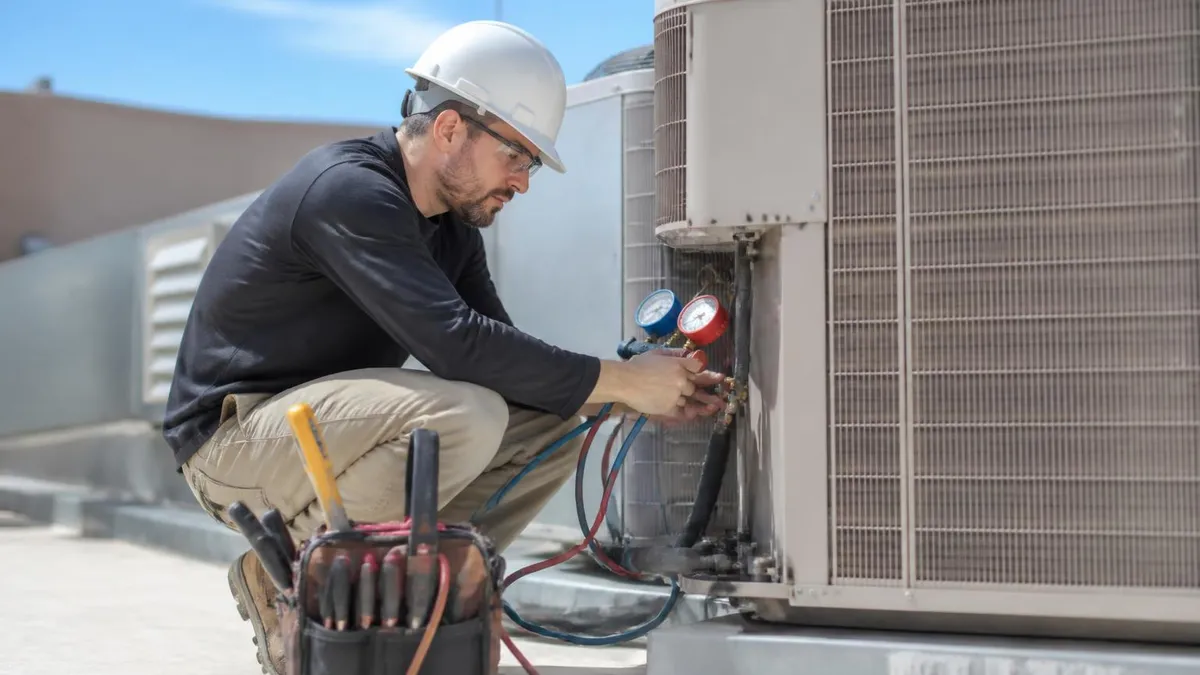
In many states, HVAC contractor licenses are held by an individual — not the business entity — and cannot simply be transferred to a new owner. If the seller's license is the qualifying license for the company, you may face a gap between closing and your ability to legally pull permits or supervise installations. Plan for this scenario early by confirming your state's requirements, identifying a licensed qualifier you can hire as a bridge, or structuring the deal to close only after your own license is in place.
The first 90 days after you acquire an HVAC company are the most consequential period of your ownership. The decisions you make — and avoid making — in this window will largely determine whether you retain the customer relationships, employee loyalty, and operational momentum that you paid a premium for. The single most important principle for new HVAC business owners is: do not change anything major in the first 30 days unless it presents an immediate legal or financial risk. Customers and employees need to see stability, not disruption, before they will trust the new ownership.
Start with a listening tour. Ride along with your top two or three technicians on service calls during the first two weeks. You will learn more about how the business really operates in those field hours than you will from any documentation or financial statement. Pay attention to how technicians interact with customers, how they diagnose problems, what parts they commonly stock or order, and what they say about the previous owner's management style. Their candid observations will surface operational improvement opportunities and flag any retention risks before they become crises.
Customer communication should be warm, personal, and early. Send a letter or email to every customer on the active service list introducing yourself, acknowledging the transition, and reaffirming the company's commitment to the same quality of service they have always received. For commercial accounts and longtime residential clients, a personal phone call or visit from you — ideally alongside the previous owner during the transition period — can be the difference between retaining and losing a relationship that represents tens of thousands of dollars in annual revenue.
Review the pricing structure within the first 30 days. Many owner-operated HVAC companies have pricing that has not been systematically updated in years — hourly labor rates, service call fees, and equipment markups that no longer reflect current material costs, labor market rates, or competitive benchmarks. Modest, well-communicated price adjustments in the first quarter are generally better received than larger increases down the road. Customers who receive advance notice and a clear explanation for changes are far more likely to stay than those who feel blindsided by a sudden bill increase.
Hire or designate a service coordinator if the previous owner was handling dispatch personally. Owner-managed dispatch is one of the most common operational bottlenecks in small HVAC companies. A professional dispatcher who manages scheduling, parts ordering, and customer follow-up calls frees you to focus on sales, strategy, and business development — the activities that grow enterprise value rather than just service the existing base. This is often the highest-ROI operational hire you will make in year one.
Set up proper financial reporting from day one. If the previous owner was managing the business from a shoebox of receipts and a single QuickBooks file, invest immediately in clean bookkeeping, job costing, and weekly cash flow reporting. You cannot manage what you cannot measure, and the first year under new ownership is precisely when you need accurate data to identify where money is being made, where it is being lost, and what growth investments will generate the best returns going forward.
Growing an acquired HVAC business requires a deliberate strategy that builds on the foundation you purchased rather than abandoning it. The fastest path to increased enterprise value in the HVAC industry is almost always deepening service relationships with existing customers rather than chasing new ones. Maintenance agreement programs — annual service contracts that include seasonal tune-ups, priority scheduling, and discounted repair rates — convert one-time service customers into predictable recurring revenue. Companies with high maintenance agreement penetration (25% or more of their active customer base on agreements) consistently command higher acquisition multiples when they eventually sell.
Expanding your service menu is the second growth lever. Many HVAC companies are built around installation and repair but underinvest in adjacent high-margin services like indoor air quality assessments, duct cleaning, smart thermostat installation, whole-home energy audits, and mini-split retrofits. These services require minimal additional capital investment, use your existing customer relationships, and command strong margins because they are perceived as specialized expertise rather than commodity repair work. Training your technicians to identify and present these opportunities during every service call is one of the highest-ROI activities in your growth playbook.
Digital marketing and online reputation management deserve focused investment in the first year. In most markets, HVAC companies live and die by their Google Business Profile, online reviews, and local search ranking. A company with 4.8 stars and 200+ reviews converts dramatically more inbound calls to booked jobs than one with 3.9 stars and 40 reviews.
Implement a systematic review request process — text or email customers a direct review link within 24 hours of a completed service call — and respond to every review, positive or negative. This consistency compounds over time into a powerful competitive moat that is very difficult for newer competitors to replicate quickly.
Geographic expansion is a medium-term growth strategy that many successful HVAC acquirers pursue once their initial acquisition is running smoothly. Adding a second service area, opening a satellite office in an adjacent market, or acquiring a smaller competitor in a nearby territory can double your addressable market without doubling your fixed overhead. The operational infrastructure you built in your first year — dispatching systems, CRM, fleet management, brand standards — scales more efficiently across two locations than it did when you first built it, creating real use on each incremental revenue dollar.
Employee development and retention deserve equal attention as growth strategies. In a tight labor market, the HVAC technician shortage is one of the most significant constraints on industry growth. Companies that invest in ongoing training, clear career pathways, competitive compensation, and a positive workplace culture consistently outperform those that treat technicians as commodities. Consider partnering with local HVAC trade schools, offering apprenticeship programs, or subsidizing EPA certification and advanced training for promising employees. The return on these investments comes in the form of lower turnover costs, higher productivity, and a reputation as an employer of choice in your market.
Finally, keep an eye on your own exit strategy even as you focus on building the business. Every operational improvement you make — recurring revenue programs, diversified customer base, clean financial reporting, trained management bench — also increases the enterprise value you will eventually capture when you sell.
The best HVAC business owners think like both operators and investors simultaneously, running the business for day-to-day profitability while systematically building the attributes that drive acquisition multiples. A business you bought at 3x SDE can very plausibly sell at 4x or 5x SDE five years later if you execute this playbook with discipline and consistency.
Sample HVAC Practice Questions
Try these questions from our free HVAC practice tests. The correct answer and an explanation follow each question.
When retrofitting insulation on existing sheet metal ducts in an unconditioned attic, what minimum R-value does IECC 2021 typically require for climate zones 4 and above?
- A. R-4
- B. R-6
- C. R-8
- D. R-11
Answer: C. R-8
IECC 2021 requires a minimum of R-8 duct insulation for ducts in unconditioned spaces in climate zones 4 and above to limit thermal losses.
When retrofitting a new high-efficiency condensing furnace to an existing chimney-vented system, what must the technician do with the chimney?
- A. Line the chimney with stainless steel liner and connect the PVC vent to it
- B. Abandon the chimney for flue venting and run PVC vent pipes directly through a wall or roof
- C. Install a barometric draft damper at the chimney base
- D. Increase chimney height by 2 feet to improve natural draft for the new unit
Answer: B. Abandon the chimney for flue venting and run PVC vent pipes directly through a wall or roof
Condensing furnaces produce cool, moist flue gases unsuitable for masonry chimneys; they require PVC or CPVC direct vent piping routed through an exterior wall or roof.
When installing a new HVAC system that requires brazing in a space with existing insulation, what precaution must be taken to prevent fire?
- A. Work quickly so the insulation does not have time to ignite
- B. Use a heat shield or wet cloth to protect surrounding materials and have a fire watch
- C. Spray the insulation with water immediately after brazing
- D. Remove insulation only within 1 inch of the work area
Answer: B. Use a heat shield or wet cloth to protect surrounding materials and have a fire watch
A heat shield or wet cloth protects flammable surrounding materials, and a fire watch ensures any smoldering materials are caught after the torch is extinguished.
A thermostat wired with an 'R', 'C', 'Y', 'G', and 'W' terminal set: which terminal, when energized alone, activates indoor fan only?
- A. Y
- B. W
- C. G
- D. C
Answer: C. G
The G terminal energizes the indoor (air handler) fan relay, running the fan independently of heating or cooling calls.
HVAC Questions and Answers
HVAC Sales: The Complete Guide to Selling Heating and Cooling Systems, Building Customer Trust, and Closing More Deals

HVAC Air Duct Sealing: The Complete Homeowner and Contractor Guide to Sealing Ductwork for Efficiency, Comfort, and Indoor Air Quality
HVAC Solutions: The Complete Guide to Heating, Cooling, and Indoor Air Quality Systems for Homes and Buildings

Commercial HVAC Repair: Systems, Costs, and Service Strategies
HVAC Schooling: Complete Training Guide, Program Requirements, and Career Pathways
How this page was made: written with AI tools. We have not yet matched this exam's facts to an official source, so confirm fees, dates and rules with the exam body. Not reviewed by a subject-matter expert. Editorial policy