
HVAC Digital Marketing: The Complete Guide to Growing Your HVAC Business Online
Master hvac digital marketing with proven strategies for SEO, 💡 PPC, social media, and local search to attract more customers and grow revenue.
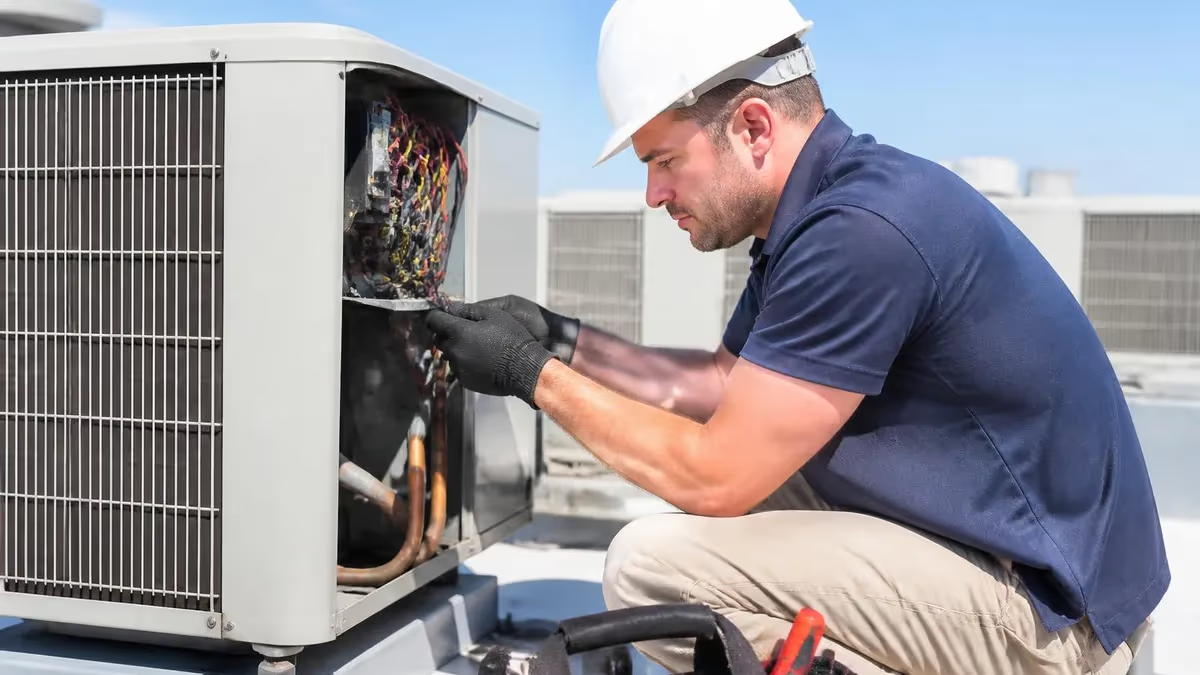
HVAC digital marketing has become the single most important growth lever for heating and cooling companies across the United States. In an industry where homeowners turn to Google the moment their air conditioner fails on a 95-degree afternoon, the contractors who dominate local search results capture the overwhelming majority of new service calls. Understanding hvac digital marketing is no longer optional — it is the difference between a fully booked calendar and a slow season that drains your operating capital.
The HVAC industry is intensely local and intensely competitive. In most mid-sized American cities, a homeowner searching for emergency AC repair will see three to five paid ads, a local map pack showing nearby contractors, and then organic listings — all before they scroll past the first screen.
If your company does not appear in at least one of those positions, you are effectively invisible to that customer, even if your technicians are the most skilled in the region. Digital marketing builds the visibility infrastructure that puts your phone number in front of buyers at exactly the moment they are ready to spend money.
What makes HVAC digital marketing uniquely challenging is the seasonality of demand. Search volume for cooling-related terms spikes dramatically in May through August, while heating queries dominate November through February. A well-structured digital strategy must account for these swings, front-loading ad spend and content production so that your brand is already established when peak season demand surges. Companies that wait until summer to launch marketing campaigns consistently pay two to three times more per lead than those who build their digital presence during slower months.
Beyond seasonal timing, HVAC digital marketing spans a wide range of channels and tactics: Google Local Services Ads, pay-per-click campaigns, search engine optimization, Google Business Profile management, email marketing, social media content, and online reputation management. Each channel serves a different purpose in the customer acquisition funnel. Some, like Local Services Ads, generate immediate phone calls. Others, like SEO and content marketing, build compounding value over months and years. A balanced strategy uses both short-term lead generation and long-term brand equity simultaneously.
The financial stakes are significant. Industry data consistently shows that HVAC companies investing in structured digital marketing programs generate 30 to 60 percent more leads than those relying solely on word-of-mouth and yellow-pages-era directories. For a company with 10 technicians, that incremental lead volume can translate to $400,000 or more in additional annual revenue. Understanding which digital channels deliver the best return on investment in the HVAC space — and how to execute them properly — is therefore a core business competency, not just a marketing nice-to-have.
This guide walks through every major component of a high-performing HVAC digital marketing system: local SEO, paid advertising, website conversion optimization, social media, reputation management, and email nurture campaigns. Whether you are the owner of a two-truck operation looking to grow, a marketing manager at a regional HVAC company, or a technician preparing for your own business launch, the strategies covered here are grounded in what actually works in the current digital landscape for heating and cooling companies.
HVAC Digital Marketing by the Numbers
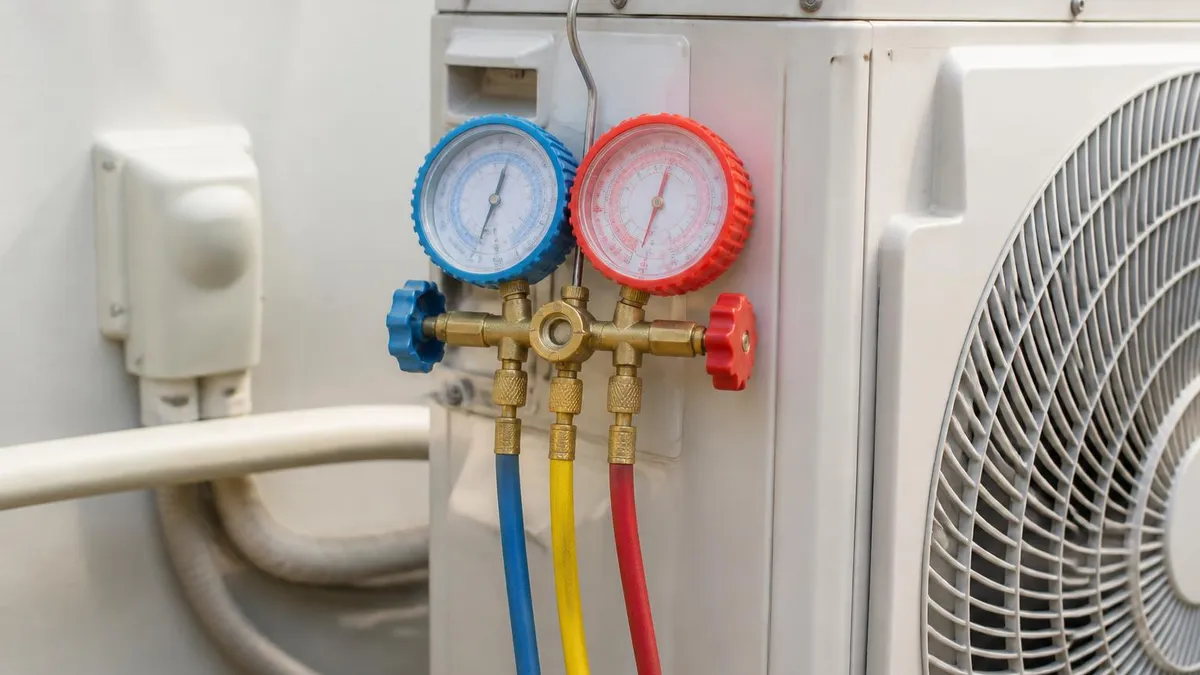
Core Digital Marketing Channels for HVAC Companies
Pay-per-lead ads appearing at the very top of Google search results. The Google Guaranteed badge builds instant trust. HVAC companies typically pay $25–$90 per verified lead, making this one of the highest-intent, lowest-funnel channels available.
Long-term strategy to rank organically for local HVAC keywords. Combines on-page content, technical site health, local citations, and backlink building. Takes 4–9 months to gain traction but delivers the lowest cost-per-lead over time.
Google Ads and Microsoft Ads campaigns targeting high-intent keywords like 'AC repair near me' and 'furnace installation cost.' Immediate visibility with precise geographic targeting. Best used to fill capacity while organic rankings are being built.
Facebook, Instagram, and Nextdoor for brand awareness, before-and-after content, and retargeting website visitors. Less direct intent than search, but powerful for building local brand recognition and generating referral-style social proof.
Maintenance reminders, seasonal tune-up offers, and service plan renewals sent to your existing customer database. Email marketing delivers $36–$42 in revenue for every $1 spent, making it the highest-ROI channel for HVAC retention marketing.
Local SEO is the foundation of any effective HVAC digital marketing strategy. When a homeowner searches for 'HVAC repair near me' or 'furnace tune-up [city name],' Google serves results based on three core factors: relevance, distance, and prominence. Your Google Business Profile — formerly Google My Business — is the single most important asset you can optimize, because it directly controls whether your company appears in the local map pack, which captures 40 to 50 percent of all clicks on local service searches.
Optimizing your Google Business Profile starts with ensuring every field is completely and accurately filled out. This means selecting the correct primary and secondary business categories (use 'HVAC Contractor' as your primary), writing a keyword-rich business description that mentions your service area and key offerings, uploading at least 20 high-quality photos of your trucks, technicians, and completed jobs, and listing your services with individual descriptions and pricing ranges where available. Profiles that are fully completed receive dramatically more views than sparse profiles, and Google's algorithm treats completeness as a trust signal.
Review acquisition is arguably the most impactful single action an HVAC company can take for local SEO. Google's algorithm weights both the quantity and recency of reviews heavily in local ranking calculations. Companies with 200 or more reviews at a 4.7-star average consistently outrank competitors with fewer reviews, even when those competitors have stronger websites.
The most effective review generation systems send an automated text message or email immediately after a job is completed, with a direct link to the Google review form. Response rate typically reaches 15 to 25 percent with this approach, versus under 5 percent with manual follow-up.
On-page local SEO for your HVAC website requires creating dedicated service area pages for every city and suburb you serve. A contractor working across a metropolitan area should have individual pages for each major city and town in their service radius, each containing unique content about local climate conditions, common HVAC problems in that area, and specific service offerings. These pages must be genuinely useful — not thin, keyword-stuffed text — because Google's Helpful Content algorithm aggressively demotes pages that exist solely to capture search traffic without providing real value to readers.
Technical SEO factors that specifically impact HVAC companies include page load speed (emergency searchers on mobile abandon sites that take more than three seconds to load), mobile responsiveness, and click-to-call functionality. Every HVAC website should have a prominently displayed phone number that functions as a tap-to-call button on mobile devices.
Companies that make it frictionless for mobile visitors to call typically see conversion rates 40 to 60 percent higher than those with buried or non-functional contact mechanisms. Google also uses Core Web Vitals — Largest Contentful Paint, Cumulative Layout Shift, and Interaction to Next Paint — as ranking signals, so technical performance directly affects search visibility.
Citation building and NAP (Name, Address, Phone number) consistency across online directories reinforce your local SEO authority. Your company's name, address, and phone number must be identical across Google Business Profile, Yelp, Angi, HomeAdvisor, the Better Business Bureau, Bing Places, Apple Maps, and dozens of industry-specific directories. Even minor inconsistencies — 'HVAC' versus 'Heating and Cooling,' a suite number listed on some directories but not others — dilute your local authority signals and can suppress your map pack rankings. A structured citation audit and cleanup process should be conducted at least annually.
HVAC Practice Test Questions
Prepare for the HVAC - Heating Ventilation and Air Conditioning exam with our free practice test modules. Each quiz covers key topics to help you pass on your first try.
HVAC Air Conditioning
HVAC Exam Questions covering Air Conditioning. Master HVAC Test concepts for certification prep.
HVAC Code Compliance
Free HVAC Practice Test featuring Code Compliance. Improve your HVAC Exam score with mock test prep.
HVAC Electrical Controls
HVAC Test Prep for Electrical Controls. Practice HVAC Quiz questions and boost your score.
HVAC Energy Efficiency
HVAC Questions and Answers on Energy Efficiency. Free HVAC practice for exam readiness.
HVAC Heating Systems
HVAC Mock Test covering Heating Systems. Online HVAC Test practice with instant feedback.
HVAC Load Calculations
Free HVAC Quiz on HVAC Load Calculations. HVAC Exam prep questions with detailed explanations.
HVAC Tools and Equipment
HVAC Practice Questions for HVAC Tools and Equipment. Build confidence for your HVAC certification exam.
HVAC Refrigeration
HVAC Test Online for Refrigeration. Free practice with instant results and feedback.
HVAC Safety Practices
HVAC Study Material on Safety Practices. Prepare effectively with real exam-style questions.
HVAC System Design
Free HVAC Test covering System Design. Practice and track your HVAC exam readiness.
HVAC Thermodynamics
HVAC Exam Questions covering Thermodynamics. Master HVAC Test concepts for certification prep.
Paid Advertising Strategies for HVAC Companies
Google Local Services Ads (LSAs) appear above all other search results, including standard pay-per-click ads, and display a 'Google Guaranteed' or 'Google Screened' badge that dramatically increases click-through rates. HVAC companies pay per verified lead rather than per click, typically between $25 and $90 per lead depending on the service type and market. Emergency services like AC repair and furnace replacement command premium lead prices but also carry the highest close rates, often exceeding 70 percent for companies with strong phone answering protocols.
To qualify for LSAs, HVAC contractors must pass a background check, verify their business license, and carry minimum insurance coverage. Optimizing your LSA profile requires maintaining a high Google review score (aim for 4.7 or above), responding promptly to incoming leads within minutes rather than hours, and disputing bogus leads through the platform's credit process. Companies that answer LSA calls within 60 seconds convert at nearly twice the rate of those with slower response times, making call handling a direct extension of your paid advertising strategy.
Pros and Cons of DIY HVAC Digital Marketing vs. Hiring an Agency
- +Full control over brand messaging, timing, and creative direction without agency approval delays
- +No management fees, allowing more of your budget to flow directly into ad spend and tools
- +Deeper institutional knowledge of your business, service area, and customer pain points
- +Faster iteration on campaigns — you can pause, adjust, and relaunch without waiting for account meetings
- +Builds in-house marketing expertise that compounds in value over time as staff learn the platforms
- +Direct access to customer conversation data from calls and chats, enabling more authentic content
- −Steep learning curve across Google Ads, Meta Ads Manager, SEO tools, and email platforms simultaneously
- −Time cost is substantial — effective digital marketing requires 10–20 hours per week minimum
- −Costly mistakes are common early on, including overbidding on keywords, poor campaign structure, and wasted ad spend
- −Agencies have access to Google Partner beta features and dedicated account representatives not available to self-managed accounts
- −Keeping up with algorithm changes, policy updates, and platform UI shifts is a near-full-time job on its own
- −Objectivity is harder to maintain — agency data analysts can spot patterns an owner emotionally invested in the business may miss
HVAC Website Conversion Optimization Checklist
- ✓Display your phone number in a click-to-call format in the top right corner of every page header
- ✓Add an online booking or quote request form that takes fewer than 60 seconds to complete
- ✓Include trust badges: BBB accreditation, NATE certification, manufacturer authorizations, and Google Guaranteed status
- ✓Load your homepage in under 2.5 seconds on mobile — test with Google PageSpeed Insights monthly
- ✓Feature at least 15 real customer reviews with full names and star ratings on your homepage
- ✓Create a separate landing page for every major service: AC repair, AC installation, furnace repair, furnace installation, heat pump, and maintenance
- ✓Use location-specific title tags and meta descriptions for every service area page
- ✓Add schema markup (LocalBusiness, Service, and Review schema) to help Google display rich results
- ✓Install call tracking software to measure which marketing channels generate actual phone calls
- ✓Place a prominent financing options section on high-ticket service pages like system replacements
HVAC Companies That Answer Calls Within 60 Seconds Close 2× More Leads
Research across home services industries consistently shows that the first contractor to answer or return a call wins the job more than 70 percent of the time. No amount of digital marketing investment compensates for slow or missed calls. Pair your lead generation efforts with an answering service, a dedicated dispatcher, or call routing to on-call technicians — your marketing ROI depends on it.
Social media marketing for HVAC companies operates on a fundamentally different logic than search advertising. On Google, you are capturing existing demand — someone already knows they need an HVAC contractor and is actively searching. On social platforms, you are creating awareness and building a brand that homeowners will recall when a need arises. This distinction shapes every aspect of effective HVAC social media strategy, from the content you create to the metrics you use to measure success.
The most consistently high-performing content type for HVAC companies on social media is educational video. Short-form videos explaining how to change an air filter, what those strange noises from a furnace mean, why a properly sized AC unit outperforms an oversized one, and how to read an energy efficiency rating earn organic reach that polished promotional content cannot achieve. Platforms like Facebook, Instagram Reels, and TikTok algorithmically favor content that generates saves and shares — and genuinely useful homeowner education drives both. A 60-second video answering a common HVAC question can reach thousands of local homeowners at zero ad cost.
Before-and-after content is the second most effective social media format for HVAC contractors. Photos showing a filthy, deteriorating old system next to a clean, properly installed new unit, or an attic with crumbling ductwork contrasted with properly sealed and insulated new ducts, communicate value instantly without requiring the viewer to read a single word. These posts also perform exceptionally well in paid social campaigns because they demonstrate transformation — the emotional core of every home improvement purchase decision. Always obtain customer permission before posting job photos, and consider including the neighborhood name to reinforce local relevance.
Online reputation management is inseparable from social media strategy. Your Google rating, Yelp reviews, Facebook recommendations, and Angi scores collectively form a digital trust signal that influences purchasing decisions before a potential customer ever visits your website. HVAC companies should have a systematic process for requesting reviews at the conclusion of every job — not just satisfied customers, but every completed service call. A consistent review request process, combined with rapid professional responses to any negative reviews, typically achieves a 4.6 to 4.9-star average within 12 to 18 months even for companies starting from a weak review base.
Responding to negative reviews deserves special attention because HVAC companies are particularly vulnerable to one-star reviews driven by price shock (customers unhappy about the cost of an emergency repair), misdiagnosis complaints, and warranty disputes. The correct response to a negative review is never defensive. Acknowledge the customer's frustration, offer to make it right, and provide a direct phone number or email address for follow-up. Research shows that a professionally handled negative review — one that demonstrates accountability and a commitment to resolution — actually increases consumer trust more than a business with only glowing reviews, because it signals authenticity.
Facebook Groups and Nextdoor communities offer HVAC contractors a low-cost opportunity to build genuine community presence without advertising spend. Participating in neighborhood home improvement discussions, answering questions about HVAC symptoms, and occasionally offering members-only seasonal discounts creates organic brand affinity. The key is to provide genuine value rather than promotional content — most neighborhood groups have strict rules against overt advertising, but consistently helpful contributions from a recognizable local contractor account build the kind of trusted reputation that generates referrals for years.
LinkedIn is often overlooked by HVAC companies but delivers real value for contractors targeting commercial accounts. Property managers, building owners, facilities directors, and construction project managers are active on LinkedIn and regularly make vendor decisions for HVAC service contracts worth $50,000 to $500,000 annually. A well-maintained LinkedIn company page, combined with personal thought leadership posts from the owner or sales team, positions your company as a professional commercial partner rather than a purely residential service provider. Even small HVAC companies can use LinkedIn to punch well above their weight in commercial business development.
Many HVAC contractors waste significant budget on digital marketing because they direct paid traffic to a homepage rather than a dedicated landing page, skip call tracking so they cannot measure ROI, or pause all marketing spend in slow seasons — which actually makes peaks more expensive. Set a minimum baseline monthly spend year-round to maintain algorithm learning and avoid restarting campaigns from scratch each season.
Email and SMS marketing represent the highest-ROI digital channels available to HVAC companies, yet they remain dramatically underutilized in the industry. The reason is simple: your existing customer database is a captive audience of homeowners who already know your brand, have experienced your work quality, and have demonstrated willingness to pay for HVAC services.
Marketing to this audience costs a fraction of acquiring new leads through paid search, and the conversion rates are consistently three to five times higher. Building a disciplined retention marketing program around this list is one of the most profitable investments an HVAC business owner can make.
The foundation of HVAC email marketing is the maintenance reminder sequence. HVAC systems should be professionally serviced twice per year — once before cooling season and once before heating season — and most homeowners know this intellectually but fail to schedule the appointment proactively.
An automated email sequence that sends a reminder in late March or early April for AC tune-ups, and again in late September or early October for furnace inspections, captures this latent demand at minimal cost. Companies running structured maintenance reminder campaigns report 20 to 35 percent email-to-appointment conversion rates on their existing customer lists, which is extraordinary by any marketing benchmark.
Segmentation dramatically improves email marketing performance for HVAC companies. Rather than sending identical messages to your entire list, divide customers by equipment type (those with central air conditioning, those with heat pumps, those with gas furnaces, those with boilers), by equipment age (systems 8 to 12 years old warrant proactive replacement messaging), and by service plan status (members versus non-members). A homeowner with a 12-year-old furnace should receive different messaging than one who just purchased a new high-efficiency system last spring.
Personalized, relevant emails generate open rates of 35 to 45 percent versus 18 to 22 percent for generic broadcast campaigns.
SMS marketing deserves particular attention for appointment confirmations, technician arrival notifications, and time-sensitive offers. Text messages have a 98 percent open rate and most are read within three minutes of receipt. HVAC companies using two-way SMS communication for appointment management report no-show rates below 5 percent, compared to industry averages of 15 to 20 percent for phone-confirmed appointments. Seasonal flash sales sent via SMS — 'Spring AC tune-up special: $79 through Friday only, reply BOOK to schedule' — generate immediate phone and web traffic that can fill a slow week with paying jobs within hours of sending.
Service agreement programs (also called maintenance plans or service clubs) are both a revenue stream and a marketing asset. A customer enrolled in a $15 to $25 per month HVAC maintenance agreement stays in your database, receives planned service visits twice annually, and is actively managed through email and SMS communications.
These customers spend 2 to 4 times more with their HVAC contractor over a five-year period than non-agreement customers, and they refer new customers at significantly higher rates because they have an ongoing relationship rather than a one-time transaction. Growing your service agreement base should be treated as a core digital marketing objective, not just a sales goal.
Automated review request campaigns integrate naturally with your email and SMS marketing infrastructure. Configure your field management software (ServiceTitan, Housecall Pro, FieldEdge, or similar) to trigger a review request message one to two hours after a job is marked complete. This timing captures customers while the positive experience is fresh, before the afternoon of their day has eroded the emotional high of a working AC unit.
Include a direct link to your Google Business Profile review form — every additional click required reduces completion rates by approximately 20 percent. Companies with 500 or more Google reviews dominate local map packs in competitive markets and effectively lock out competitors with thin review profiles.
Content marketing, while slower to produce results than paid advertising, creates compounding organic traffic that reduces your overall customer acquisition cost over time. Publishing genuinely useful articles on your website covering topics like 'How to Tell If Your AC Needs Refrigerant,' 'Signs Your Furnace Heat Exchanger Is Cracked,' and 'What SEER Rating Should I Buy' attracts homeowners in the research phase of the buying journey — before they are in emergency mode.
These readers bookmark your site, share your content with neighbors, and disproportionately convert into long-term customers. A consistent content publishing cadence of two to four articles per month, maintained over 18 to 24 months, typically produces enough organic traffic to meaningfully reduce dependence on paid advertising.
Measuring the return on investment of your HVAC digital marketing requires a disciplined approach to tracking that most small contractors have never implemented. The starting point is call tracking — assigning unique phone numbers to each marketing channel so that you can attribute inbound calls to specific sources: Google LSAs, paid search, organic search, social media, direct mail, or truck wraps.
Without call tracking, you are flying blind, unable to determine which channels are actually generating revenue and which are consuming budget without return. Platforms like CallRail, WhatConverts, and CallTrackingMetrics integrate directly with Google Analytics and your CRM to close the attribution loop.
Beyond call tracking, setting up conversion tracking in Google Ads and Google Analytics is essential for paid campaign optimization. Every web form submission, click-to-call event, and online booking should fire a conversion event that feeds back into your ad campaigns, enabling Google's machine learning algorithms to optimize toward actions that actually result in customers rather than just clicks. HVAC companies that implement proper conversion tracking typically see cost-per-lead decrease by 20 to 40 percent within 60 to 90 days as the algorithm learns which keywords, audiences, and ad formats drive real business outcomes.
Customer Lifetime Value (CLV) should be the north star metric for HVAC digital marketing investment decisions. An HVAC customer who books an annual maintenance agreement, replaces their system once every 12 to 15 years, and refers two new customers during that relationship is worth $8,000 to $15,000 in lifetime revenue.
When you understand CLV, you can rationally justify spending $200 or even $300 to acquire a new customer through digital advertising — a cost that looks prohibitively expensive in isolation but becomes a compelling investment when viewed through the lens of long-term value. Document your CLV calculation and use it as the benchmark against which you evaluate every marketing channel's acceptable cost-per-acquisition.
Competitor analysis is a continuous process in HVAC digital marketing, not a one-time exercise. Tools like SEMrush, SpyFu, and Google's own Auction Insights report reveal which keywords your competitors are bidding on, what their ad copy looks like, and how their organic search rankings compare to yours. Reviewing competitor Google Business Profiles reveals their service offerings, photo strategies, and review acquisition cadence.
This competitive intelligence informs both defensive moves (defending your position on core keywords) and offensive opportunities (identifying keywords where competitors are weak and your content could dominate). The HVAC digital landscape shifts constantly as companies enter and exit markets, increase or decrease ad spend, and adjust their SEO strategies seasonally.
Budgeting for HVAC digital marketing depends heavily on market size, competition level, and growth ambitions. A useful starting framework is to allocate 5 to 10 percent of target annual revenue to marketing, with roughly 60 percent of that budget directed toward digital channels.
For a company targeting $1.5 million in annual revenue, this implies a total marketing budget of $75,000 to $150,000, with $45,000 to $90,000 allocated to digital. Within that digital budget, a reasonable initial allocation might be 40 percent to paid search and LSAs, 30 percent to SEO and content, 20 percent to website development and optimization, and 10 percent to email marketing tools and social media management.
Seasonal budget adjustments are critical for maximizing HVAC advertising efficiency. Rather than spending a flat monthly amount throughout the year, increase paid search budgets by 30 to 50 percent during the two to three weeks preceding and during peak demand periods — late April through June for cooling season, and October through November for heating season.
Conversely, use slower months (typically January through March in most markets) to invest in SEO, website improvements, and content creation that will generate organic traffic during the next peak season. This counter-cyclical approach ensures your paid budget works hardest when the maximum number of ready-to-buy homeowners are searching, while your off-peak investment builds long-term assets.
The integration of marketing technology — your CRM, field management software, email platform, call tracking, and advertising accounts — is what separates scalable HVAC digital marketing programs from fragmented, manual efforts.
When a customer's service history flows automatically from ServiceTitan into your email platform, triggering personalized maintenance reminders based on actual equipment data; when a completed job automatically requests a Google review via SMS; when a website form submission automatically creates a lead in your CRM and triggers a follow-up call workflow — the entire system compounds on itself, generating more revenue from the same marketing spend with each passing quarter. Technology integration is the use that allows a small team to execute the kind of sophisticated, data-driven marketing that once required large internal marketing departments.
HVAC Questions and Answers
HVAC Sales: The Complete Guide to Selling Heating and Cooling Systems, Building Customer Trust, and Closing More Deals
HVAC Air Duct Sealing: The Complete Homeowner and Contractor Guide to Sealing Ductwork for Efficiency, Comfort, and Indoor Air Quality
HVAC Solutions: The Complete Guide to Heating, Cooling, and Indoor Air Quality Systems for Homes and Buildings

Commercial HVAC Repair: Systems, Costs, and Service Strategies
HVAC Apprenticeship Programs: Your Complete Guide to Starting a Hands-On Career in Heating, Ventilation, and Air Conditioning
About the Author

NATE Certified HVAC Technician & Licensing Exam Trainer
Universal Technical InstituteMike Johnson is a NATE-certified HVAC technician and EPA 608 universal-certified refrigerant handler with a Bachelor of Science in HVAC/R Technology. He has 19 years of commercial and residential HVAC installation and service experience and specializes in preparing technicians for NATE certification, EPA 608, A2L refrigerant safety, and state HVAC contractor licensing examinations.