
Components of HVAC System: Chiller HVAC, Furnaces, Air Handlers and Controls Explained
❓ Chiller HVAC and every major component of an HVAC system explained: compressors, evaporators, air handlers, ductwork, controls and refrigerant circuits.
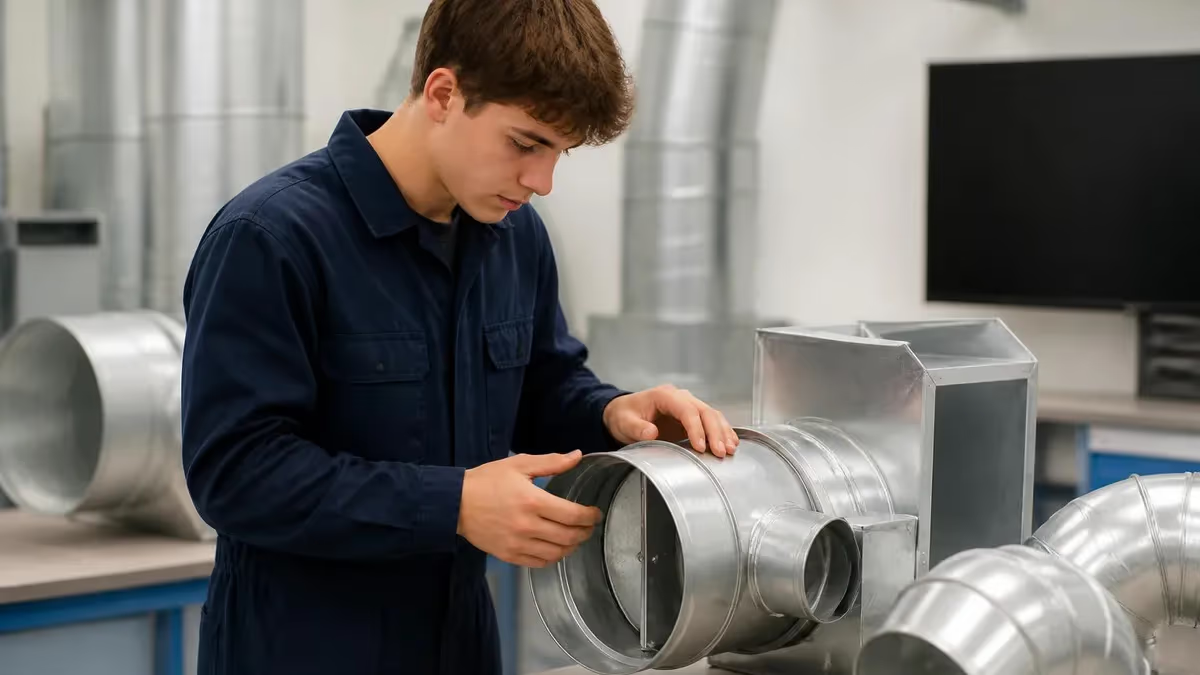
Understanding the components of an HVAC system starts with one of the most powerful pieces of equipment in hvac rtu 3d cad york: the chiller HVAC unit. A chiller removes heat from a liquid through a vapor-compression or absorption refrigeration cycle, then distributes that chilled water through coils inside air handlers. Whether you work on rooftop units, split systems, or central plants, every HVAC technician needs to recognize how compressors, condensers, evaporators, expansion valves, and refrigerant lines work together to move heat from one place to another efficiently.
A complete HVAC system is far more than a furnace and an air conditioner. It is an integrated network of mechanical, electrical, and control components that maintains temperature, humidity, air quality, and pressure inside a conditioned space. The acronym itself, Heating, Ventilation, and Air Conditioning, captures three distinct functions that share ductwork, fans, filters, sensors, thermostats, and refrigerant circuits. Each component plays a measurable role in comfort, energy use, indoor air quality, and equipment lifespan, and one weak link can drag the entire system down.
In residential applications, you typically see a split system with an outdoor condenser, indoor evaporator coil, gas or electric furnace, blower assembly, and a network of supply and return ducts. Commercial buildings scale this up with chillers, cooling towers, boilers, variable air volume boxes, economizers, and building automation systems. Light commercial spaces often use packaged rooftop units that bundle the compressor, condenser, evaporator, blower, and heating section into a single weather-tight cabinet that sits on the roof.
Regardless of size, every system relies on the same four refrigeration components: compressor, condenser, metering device, and evaporator. The compressor raises refrigerant pressure and temperature. The condenser rejects heat outdoors. The metering device drops pressure and temperature. The evaporator absorbs heat from indoor air. Pair that loop with a heating source like a gas furnace, heat pump reversing valve, or hydronic boiler, and you have the backbone of nearly every HVAC system installed in North America today.
Air-side components move the conditioned air from the equipment to the room. The blower or fan pushes air across a coil, a filter cleans particulates, and ductwork delivers the air to diffusers and registers. Returns pull air back to the equipment, dampers control flow direction, and economizers introduce outside air for ventilation. Without properly sized fans and sealed ductwork, even a premium chiller or 96 percent efficient furnace cannot deliver the comfort homeowners and building owners expect from a modern system.
Controls tie everything together. Thermostats, sensors, contactors, relays, transformers, capacitors, control boards, and building automation panels orchestrate when equipment runs, how fast fans spin, when dampers open, and how compressor stages or variable-speed drives modulate output. As systems get smarter, technicians must understand both the physical refrigeration circuit and the low-voltage logic that drives it. This guide walks through every major component category so you can troubleshoot, design, or simply pass your certification exam with confidence and clarity.
HVAC System Components by the Numbers
Major HVAC Component Categories
Compressors, condensers, evaporators, metering devices, refrigerant lines, accumulators, receivers, and filter driers form the closed loop that moves heat from indoors to outdoors using phase change.
Gas furnaces, electric strip heat, hydronic boilers, heat pump reversing valves, burners, heat exchangers, ignitors, flame sensors, and induced draft motors deliver warm air or hot water on demand.
Blowers, ECM motors, belt drive fans, variable frequency drives, plenums, duct trunks, branch runs, registers, grilles, dampers, and economizers move conditioned air through the structure.
Pleated filters, HEPA media, electronic air cleaners, UV lights, humidifiers, dehumidifiers, ERVs, and HRVs manage particulate, biological, and moisture loads for healthy indoor environments.
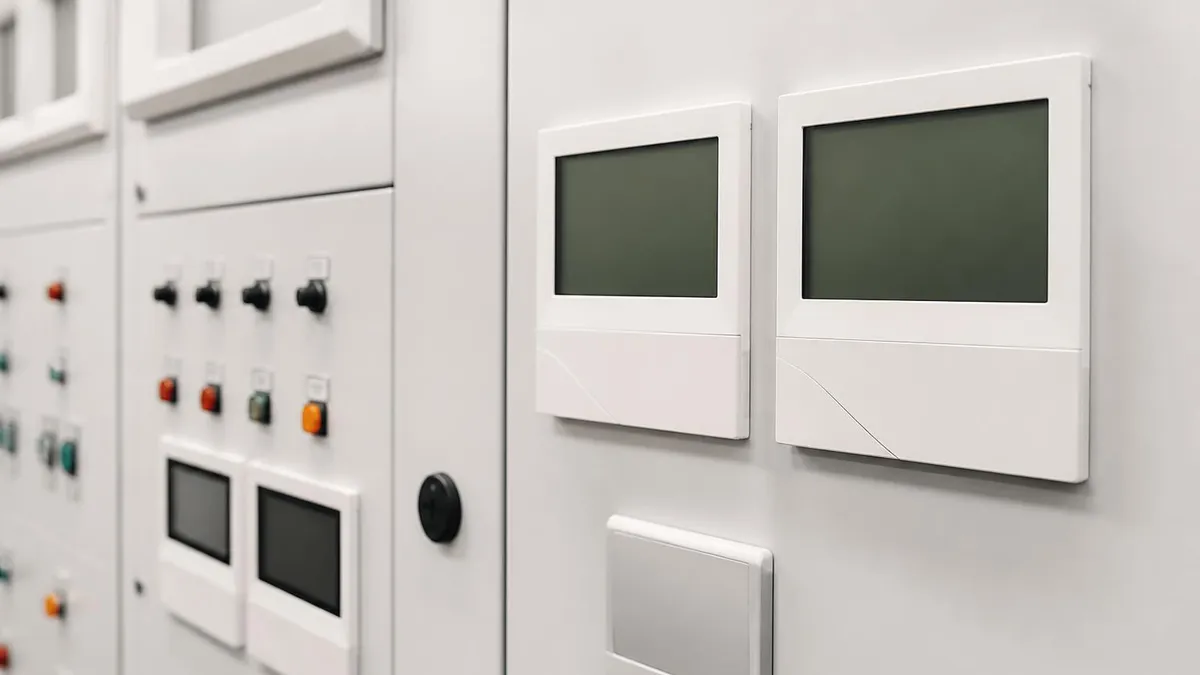
Thermostats, humidistats, pressure switches, limit switches, contactors, relays, transformers, capacitors, control boards, BACnet panels, and zone controllers orchestrate every system function.
The refrigeration circuit is the heart of every cooling system, and chillers represent its most sophisticated commercial expression. A chiller HVAC system uses the same four core components as a residential air conditioner but on a much larger scale. The compressor, typically a scroll, screw, or centrifugal type, draws low-pressure refrigerant vapor from the evaporator and compresses it into a high-pressure, high-temperature gas. This compression is what makes heat transfer possible because heat naturally flows from hot to cold, never the reverse without work being added to the system.
From the compressor, hot refrigerant gas enters the condenser. In air-cooled equipment, a large fan pulls outdoor air across finned tubes to reject heat. In water-cooled chillers, refrigerant passes through a shell-and-tube heat exchanger where condenser water absorbs the heat and carries it to a cooling tower outside. As the refrigerant gives up heat, it condenses into a high-pressure liquid. This phase change releases enormous amounts of energy, which is why heat pumps and air conditioners can move several times more thermal energy than the electrical energy they consume.
The high-pressure liquid refrigerant then reaches the metering device. Common types include thermostatic expansion valves, electronic expansion valves, fixed orifices, and capillary tubes. The metering device creates a pressure drop, which causes a portion of the liquid to flash into vapor and cool dramatically. The remaining cold liquid enters the evaporator at low pressure and low temperature, ready to absorb heat from the conditioned space or from a chilled water loop in commercial systems.
Inside the evaporator, the cold refrigerant absorbs heat from indoor air passing across the coil or from water circulating through the tube bundle. As it absorbs heat, the refrigerant boils and changes back into a low-pressure vapor. That vapor returns to the compressor suction line through an accumulator, which protects the compressor from liquid slugging, and the cycle repeats continuously. Properly charged systems show specific superheat at the evaporator outlet and specific subcooling at the condenser outlet, two diagnostic values every technician must master.
Supporting components keep the circuit healthy. Filter driers remove moisture and acid, sight glasses confirm proper liquid flow, receivers store excess refrigerant during low-load periods, and service valves allow gauge connection without breaking the seal. Pressure switches protect against dangerously high head pressure and low suction conditions. For deeper installation details on the air-side that pairs with these refrigeration components, see our guide on HVAC Duct Installation for sizing the airflow side correctly.
Refrigerant selection matters too. R-410A remains common in residential systems, but the industry is transitioning to lower-GWP refrigerants like R-32 and R-454B under the AIM Act. Commercial chillers may run on R-134a, R-1234ze, or R-513A depending on age and capacity. Each refrigerant has different pressure curves, oil compatibility requirements, and safety classifications, so technicians must always verify the nameplate before connecting gauges, recovering, or charging any equipment in the field.
HVAC Practice Test Questions
Prepare for the HVAC - Heating Ventilation and Air Conditioning exam with our free practice test modules. Each quiz covers key topics to help you pass on your first try.
HVAC Air Conditioning
HVAC Exam Questions covering Air Conditioning. Master HVAC Test concepts for certification prep.
HVAC Code Compliance
Free HVAC Practice Test featuring Code Compliance. Improve your HVAC Exam score with mock test prep.
HVAC Electrical Controls
HVAC Test Prep for Electrical Controls. Practice HVAC Quiz questions and boost your score.
HVAC Energy Efficiency
HVAC Questions and Answers on Energy Efficiency. Free HVAC practice for exam readiness.
HVAC Heating Systems
HVAC Mock Test covering Heating Systems. Online HVAC Test practice with instant feedback.
HVAC Load Calculations
Free HVAC Quiz on HVAC Load Calculations. HVAC Exam prep questions with detailed explanations.
HVAC Tools and Equipment
HVAC Practice Questions for HVAC Tools and Equipment. Build confidence for your HVAC certification exam.
HVAC Refrigeration
HVAC Test Online for Refrigeration. Free practice with instant results and feedback.
HVAC Safety Practices
HVAC Study Material on Safety Practices. Prepare effectively with real exam-style questions.
HVAC System Design
Free HVAC Test covering System Design. Practice and track your HVAC exam readiness.
HVAC Thermodynamics
HVAC Exam Questions covering Thermodynamics. Master HVAC Test concepts for certification prep.
Heating Components: Furnaces, Boilers and Heat Pumps
A modern gas furnace contains a burner assembly, primary and secondary heat exchangers, an inducer motor, hot surface ignitor, flame sensor, gas valve, blower, control board, and pressure switches. Air from the return duct passes across the heat exchanger, picks up heat without contacting combustion gases, and delivers warmed air through the supply ductwork at temperatures typically between 120 and 140 degrees Fahrenheit during steady operation.
High-efficiency condensing furnaces rated 90 to 98 percent AFUE add a secondary heat exchanger that captures latent heat from flue gas water vapor. They require PVC venting and a condensate drain because acidic condensate forms during combustion. Two-stage and modulating furnaces match output to load, improving comfort and reducing short cycling that wastes fuel and shortens component life in colder climate residential applications.
Chiller Systems vs Direct Expansion: Which Component Configuration Wins?
- +Chillers centralize maintenance in one mechanical room instead of dozens of rooftop units
- +Water as a heat transfer medium moves more BTUs per pound than air, reducing duct sizes
- +Variable primary flow and VFD pumps deliver excellent part-load efficiency
- +Long equipment life of 25 to 30 years on well-maintained centrifugal chillers
- +Quieter operation in occupied zones since compressors live in a dedicated plant room
- +Easier integration with thermal storage, heat recovery, and waterside economizers
- +Refrigerant charge is contained in the plant, reducing leak risk in occupied spaces
- −Higher upfront cost for chiller plant, pumps, piping, and cooling tower infrastructure
- −Requires water treatment program to prevent scale, corrosion, and biological growth
- −Single point of failure if redundancy is not designed into the plant
- −More complex controls and sequencing demand trained operators or BAS specialists
- −Water leaks inside buildings can cause significant damage compared to refrigerant leaks
- −Cooling towers require makeup water and add freeze protection concerns in cold climates
- −Not cost effective for buildings under approximately 100 tons of cooling load
HVAC Component Inspection Checklist
- ✓Verify compressor amp draw matches nameplate RLA and check for hot spots with infrared thermometer
- ✓Measure superheat at the evaporator outlet and subcooling at the condenser liquid line
- ✓Inspect condenser coil for bent fins, debris, and corrosion, then clean with approved coil cleaner
- ✓Check evaporator coil for dirt buildup, ice accumulation, and proper condensate drainage
- ✓Test capacitors with a meter and confirm microfarad rating within ten percent of nameplate value
- ✓Tighten all electrical connections in disconnects, contactors, and terminal blocks to spec torque
- ✓Replace filter driers any time the refrigeration circuit has been opened to atmosphere
- ✓Confirm thermostat calibration against a known accurate temperature reference instrument
- ✓Inspect ductwork for leaks, disconnected joints, crushed flex, and missing insulation in unconditioned spaces
- ✓Verify combustion analyzer readings on gas equipment for CO, O2, and steady-state efficiency
Symptoms point to systems, but readings point to components
A complaint of poor cooling could stem from a failing compressor, low refrigerant charge, dirty evaporator coil, restricted metering device, undersized ductwork, or a stuck zone damper. Skilled technicians use temperature splits, static pressure, superheat, subcooling, and amperage readings to isolate the exact component at fault rather than guessing or shotgunning parts. Mastering each component is what separates parts changers from professionals.
The air side of an HVAC system is where comfort actually reaches the occupant. Even a perfectly charged chiller or a flawlessly tuned furnace will disappoint if the blower cannot move air or the ductwork leaks half its capacity into the attic. The air handler or furnace cabinet houses the blower assembly, which today is most often a backward-curved or forward-curved centrifugal wheel driven by an electronically commutated motor. ECM motors automatically adjust torque to maintain commanded airflow even as filters load up over time.
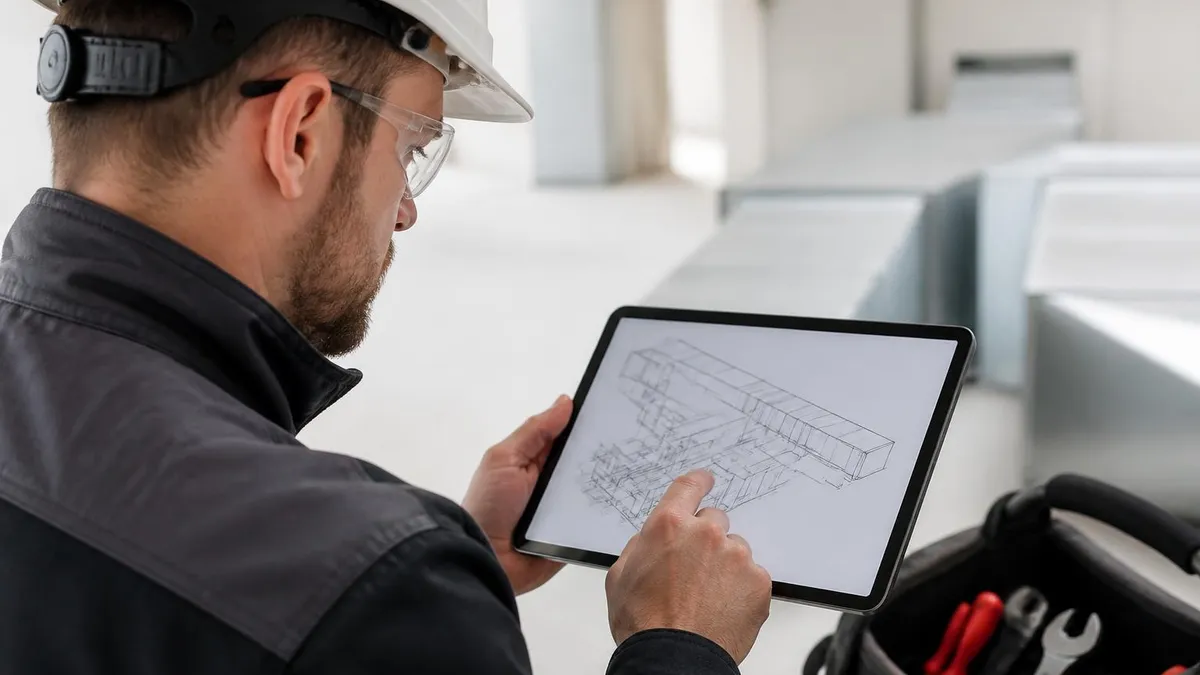
Ductwork comes in three primary materials. Galvanized sheet metal is the gold standard for durability, low pressure drop, and cleanability. Fiberglass duct board is lighter and includes built-in insulation but resists cleaning. Flexible duct is fast to install for branch runs but suffers high friction losses when stretched poorly or sagging between supports. SMACNA standards specify minimum gauge thickness, joint construction, support spacing, and pressure class for residential, low-pressure commercial, and medium-pressure VAV duct systems across the United States.
Proper duct design follows Manual D for residential and ASHRAE methods for commercial. Trunk lines deliver the bulk of airflow from the equipment, branches feed individual rooms, and registers diffuse air into the space without creating drafts or dead zones. Return ducts must be sized to handle full system airflow with low pressure drop, ideally with a return in every bedroom or jumper ducts to prevent pressurization. Undersized returns are the single most common installation defect in residential HVAC systems nationwide.
Filters protect both the equipment and the occupants. MERV ratings from 1 to 16 indicate particle capture efficiency, with most residential systems running MERV 8 to 13. Higher MERV ratings catch smaller particles but add pressure drop, so filter cabinet size must increase proportionally. Healthcare and cleanroom applications use HEPA filters rated MERV 17 or higher. Always verify that filter pressure drop fits within the blower's external static pressure budget before specifying a high-efficiency upgrade for any installation.
Ventilation introduces outdoor air to dilute indoor contaminants. ASHRAE 62.1 and 62.2 specify minimum ventilation rates for commercial and residential buildings respectively. Energy recovery ventilators and heat recovery ventilators precondition incoming outdoor air against the outgoing exhaust stream, recovering 60 to 80 percent of the temperature and, for ERVs, moisture differential. Economizers on commercial units sense outdoor conditions and use free cooling whenever outside air is cooler and drier than return air.
Humidity control is the often-forgotten fourth function of HVAC. Air conditioners and chillers remove latent moisture by condensing water on cold evaporator coils. Steam, bypass, or fan-powered humidifiers add moisture in winter. Standalone dehumidifiers handle shoulder season loads when sensible cooling is not needed but humidity remains high. For a detailed look at maintaining all these air-side components year-round, our hvac maintenance leeds guide covers seasonal tasks and inspection intervals in depth.
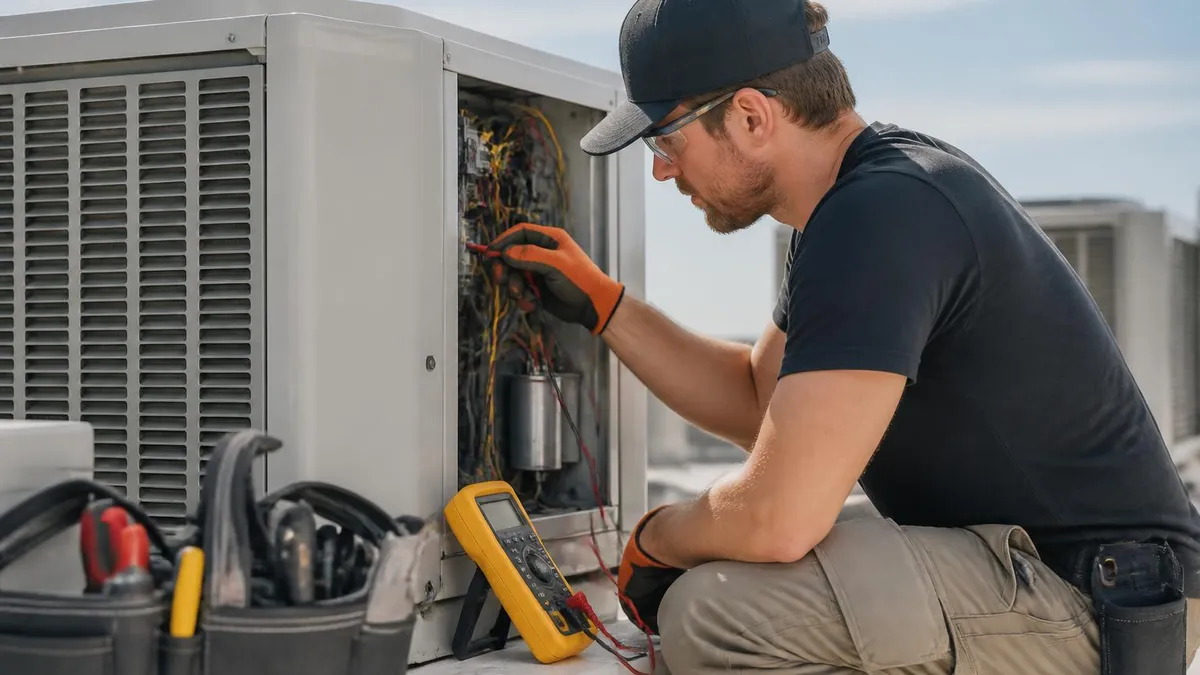
It is a federal violation to knowingly vent refrigerant during service, maintenance, or disposal of HVAC equipment. Technicians must hold EPA Section 608 certification appropriate to the equipment type, and recovery equipment must meet specific evacuation levels. Fines reach $44,000 per day per violation, and certification card must be available on the job site whenever refrigerant work is performed.
Controls are the nervous system that turns disconnected hardware into a responsive HVAC system. At the residential level, a thermostat reads room temperature, compares it to setpoint, and closes a 24-volt circuit to energize cooling, heating, or fan operation. Modern smart thermostats add WiFi connectivity, learning algorithms, occupancy sensing, and integration with utility demand response programs. They also support multi-stage and variable-speed equipment by sending pulse-width or proprietary digital signals beyond simple Y, W, and G calls.
Inside the equipment, low-voltage signals energize relays and contactors that switch line-voltage power to compressors, fans, and pumps. A transformer steps 120 or 240 volt line voltage down to 24 volts for control circuits. Capacitors provide the phase shift needed to start and run single-phase motors. Pressure switches, limit switches, flame rollout switches, and door interlocks provide safety shutdowns when conditions exceed safe operating ranges programmed into the integrated furnace control board.
Commercial buildings layer building automation systems on top of unit-level controls. A BAS uses protocols like BACnet, Modbus, or LonWorks to connect thousands of points across chillers, boilers, air handlers, VAV boxes, exhaust fans, and lighting. Operators monitor and trend data, schedule equipment, reset setpoints based on outdoor conditions, and detect faults before occupants complain. Modern analytics platforms apply machine learning to identify simultaneous heating and cooling, stuck dampers, and drifting sensors across large portfolios.
Variable frequency drives have transformed component efficiency. By varying the frequency supplied to a motor, a VFD slows fans, pumps, and compressors to match actual load. Cube law fan and pump affinity laws mean a fifty percent reduction in speed produces roughly an eighty-seven percent reduction in power consumption. VFDs also provide soft starting, which reduces inrush current and mechanical stress, extending the life of belts, couplings, bearings, and the motor itself across countless commercial and industrial installations.
Sensors and transmitters feed data into both unit and building controls. Common types include thermistors, RTDs, thermocouples for temperature, capacitive and resistive sensors for humidity, differential pressure transducers for static pressure and filter monitoring, CO2 sensors for demand-controlled ventilation, and current transducers for status confirmation. Sensor accuracy directly affects control loop performance, so calibration intervals belong in every commissioning and recommissioning plan for high-performance buildings seeking LEED or ENERGY STAR certification.
Career-wise, controls expertise commands premium wages because it sits at the intersection of mechanical, electrical, and software disciplines. Field technicians who can program a BAS, troubleshoot a network, and still pull a refrigeration vacuum are among the most sought-after professionals in the industry. To learn how to develop these layered skills, our overview of an HVAC Trade School walks through accredited programs that combine refrigeration, electrical, and controls training in structured curricula.
Putting component knowledge into practice starts with developing a systematic diagnostic routine. Before touching a single screw, gather the symptom history from the customer, then verify thermostat operation, filter condition, and breaker status. These three checks resolve a surprising percentage of no-cool and no-heat calls without ever opening the equipment cabinet. From there, take amp readings, temperature splits across the coil, and refrigerant pressures with the system running for at least fifteen minutes to reach steady state operating conditions.
Always carry the manufacturer service manual or have it available digitally. Specific values for superheat, subcooling, gas pressure, temperature rise, and combustion analysis vary widely between models and refrigerants. Generic rules of thumb like ten degrees of superheat or twenty-degree temperature split are starting points only. Modern variable-capacity equipment with electronic expansion valves and inverter compressors often operates well outside textbook values when running at part-load conditions and require specific manufacturer charging methods.
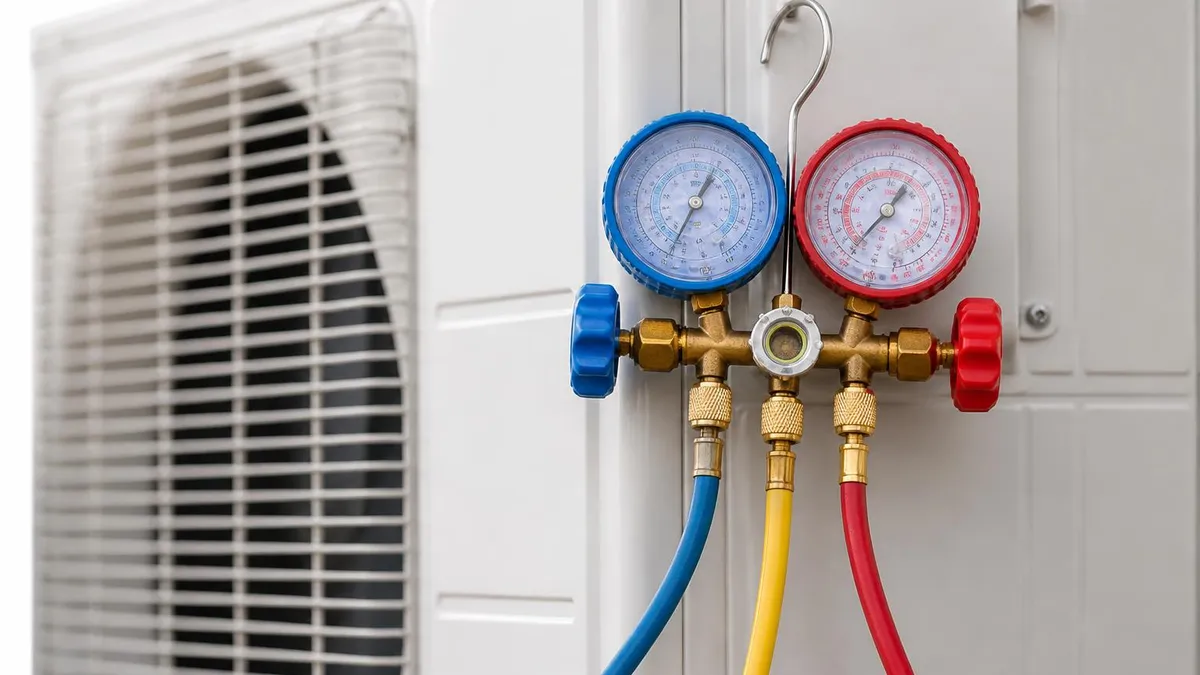
Invest in quality test instruments. A good digital multimeter, clamp-on ammeter, refrigerant manifold with micron gauge, combustion analyzer, manometer, infrared thermometer, and psychrometer pay for themselves quickly through accurate diagnosis and reduced callbacks. Newer wireless probes that pair with smartphone apps make documentation, trending, and reporting dramatically faster. Calibrate instruments annually or per manufacturer recommendations because drift in any one reading can mask or fabricate symptoms that send you chasing the wrong component.
Document every service call thoroughly. Record nameplate data, observed readings, parts replaced, refrigerant added or recovered, and any deviations from manufacturer specifications. Photographs of model and serial numbers, before and after conditions, and unusual installations protect you legally and provide invaluable history for the next technician. Many service software platforms now integrate directly with wireless probes and parts ordering, streamlining the entire workflow from arrival on site through invoicing the customer the same day.
Continuous learning is non-negotiable in this trade. Refrigerants change, efficiency standards tighten, and new control protocols emerge every few years. Manufacturer factory schools, NATE certification, RSES technical training, ASHRAE publications, and union or merit shop apprenticeships all offer pathways to keep current. Online practice tests and structured study guides help you prepare for state license, EPA 608, and NATE specialty exams that increasingly determine which employers will hire you and at what wage tier.
Finally, treat every component as part of a larger system. A new high-efficiency furnace installed on undersized ductwork will short cycle. A premium chiller paired with a neglected cooling tower will lose efficiency monthly. The most successful technicians and contractors think holistically, measuring system-level performance through energy bills, comfort surveys, and indoor air quality metrics rather than just whether individual pieces of equipment turn on. This mindset is what transforms a parts replacer into a true HVAC professional capable of designing, diagnosing, and optimizing complete systems.
Whether you are studying for your first certification or expanding into commercial work, mastering each component category gives you the foundation to grow throughout a long career. Refrigeration, heating, air movement, filtration, and controls are the five pillars that support everything else, and every advanced topic from variable refrigerant flow to geothermal to thermal storage builds directly on these fundamentals you can learn and reinforce through deliberate practice every day.
HVAC Questions and Answers


About the Author

NATE Certified HVAC Technician & Licensing Exam Trainer
Universal Technical InstituteMike Johnson is a NATE-certified HVAC technician and EPA 608 universal-certified refrigerant handler with a Bachelor of Science in HVAC/R Technology. He has 19 years of commercial and residential HVAC installation and service experience and specializes in preparing technicians for NATE certification, EPA 608, A2L refrigerant safety, and state HVAC contractor licensing examinations.