
HVAC Preventive Maintenance: The Complete Guide to Keeping Your System Running Efficiently Year-Round
Learn hvac preventive maintenance schedules, tasks, costs, and benefits. 🎓 Extend system life, cut energy bills, and avoid costly breakdowns.

HVAC preventive maintenance is one of the smartest investments a homeowner or building manager can make. Rather than waiting for a breakdown in the middle of a heat wave or a frigid January night, a structured maintenance schedule keeps your heating, ventilation, and air conditioning system running at peak efficiency throughout the year. Studies consistently show that systems receiving regular service last 40 to 50 percent longer than neglected units, and they consume significantly less energy in the process, translating directly into lower monthly utility bills. Practice with the free HVAC practice test on PracticeTestGeeks (750+ questions with answer explanations).
The concept behind preventive maintenance is straightforward: small, routine tasks catch problems before they escalate into expensive failures. A technician who spots a worn fan belt, a refrigerant leak, or a corroded electrical connection during a scheduled visit can fix the issue for a fraction of what an emergency repair would cost. According to the Department of Energy, a well-maintained HVAC system can reduce energy consumption by 15 to 25 percent compared to a system that receives only reactive care, meaning the investment in service calls pays for itself many times over.
Preventive maintenance also has a direct impact on indoor air quality. Filters that are changed on schedule, coils that are cleaned regularly, and drain pans that are flushed of standing water all work together to reduce allergens, mold spores, and particulate matter circulating through your living or working spaces. For households with asthma sufferers, young children, or elderly residents, this aspect of routine HVAC care is just as important as the mechanical benefits.
The scope of a proper preventive maintenance program extends well beyond swapping out air filters. It encompasses inspecting heat exchangers for cracks, checking refrigerant charge levels, lubricating motors and bearings, testing safety controls, verifying thermostat calibration, and examining ductwork for leaks. Each of these tasks addresses a specific failure mode that, left unattended, can cascade into a system-wide problem. Understanding what goes into a comprehensive maintenance visit helps you evaluate service agreements and make informed decisions about your equipment.
Seasonal timing matters enormously in HVAC preventive maintenance. Ideally, cooling systems should be serviced in the spring before demand surges, and heating systems should be inspected in the fall before the first cold snap. Scheduling service during off-peak periods also tends to mean faster appointments and sometimes lower rates. Many HVAC contractors offer annual maintenance agreements that bundle spring and fall visits at a discounted price, making it easy to stay on schedule without having to remember to call each season.
For those pursuing a career in the HVAC trade, understanding preventive maintenance is foundational knowledge for licensing exams and customer relations alike. Technicians who can explain the value of routine service tend to build stronger client relationships and generate steady recurring revenue for their employers. If you want to deepen your technical knowledge, exploring resources on hvac preventive maintenance can show you how maintenance programs connect to broader customer retention strategies in the industry.
Whether you own a modest residential split system, manage a commercial rooftop unit, or oversee a large campus of equipment, the principles of preventive maintenance remain consistent: inspect systematically, clean thoroughly, test rigorously, and document everything. The sections that follow break down each dimension of an effective maintenance program, from seasonal checklists and cost expectations to the pros and cons of DIY versus professional service, giving you everything you need to protect your investment and keep occupants comfortable year-round.
Free HVAC Study Tools
Interactive HVAC resources on PracticeTestGeeks, free to start:
- HVAC practice test — 750+ questions with instant scoring and answer explanations
- HVAC flashcards — review key terms and concepts card by card
- HVAC study guide — topic-by-topic overview of what the exam covers
- HVAC cheat sheet — one-page printable summary for last-minute review
HVAC Preventive Maintenance by the Numbers
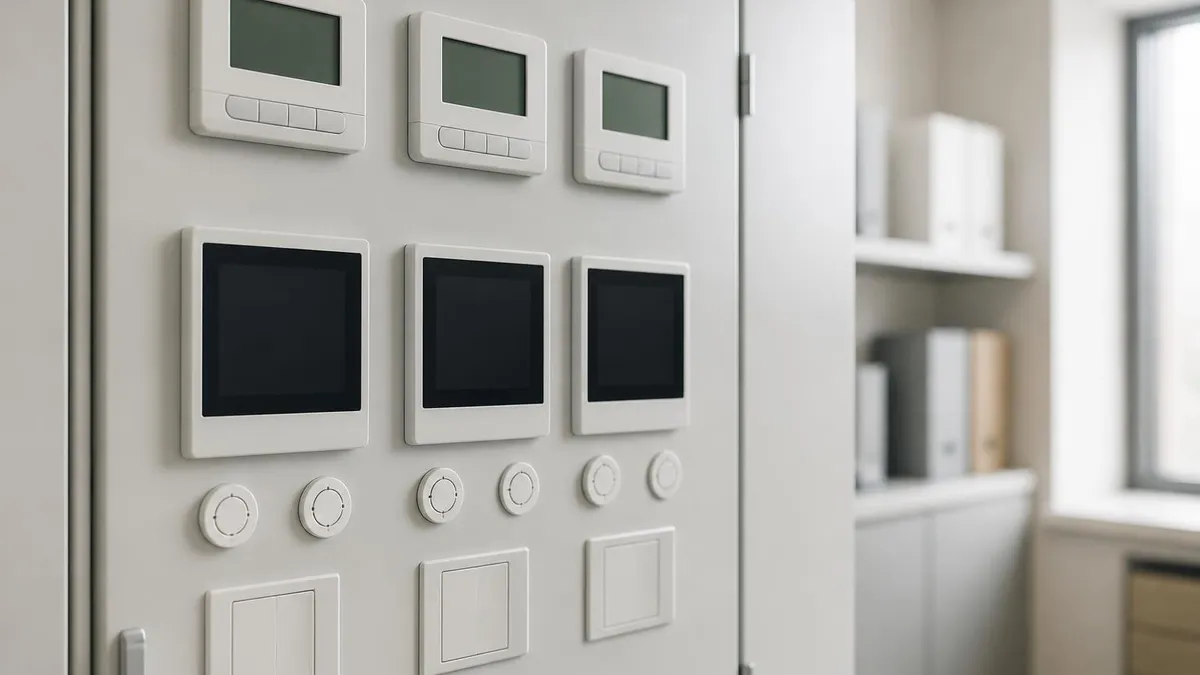
Seasonal HVAC Preventive Maintenance Schedule
Spring — Cooling System Prep (March–April)
Summer — Mid-Season Check (July)
Fall — Heating System Prep (September–October)
Winter — Monitoring and Spot Checks (December–February)
A professional HVAC maintenance visit covers far more ground than most homeowners realize. When a technician arrives for a scheduled inspection, they begin by examining the air filter and airflow through the system, because restricted airflow is the single most common cause of both efficiency loss and compressor failure. A clogged filter forces the blower motor to work harder, raises operating temperatures, and accelerates wear on every downstream component. Depending on filter type and indoor air quality, replacements are needed every one to three months in residential settings.
The electrical side of an HVAC system deserves careful attention during every maintenance visit. Technicians measure voltage and amperage on the compressor, condenser fan motor, and blower motor to verify each component is drawing current within its rated range. They inspect capacitors, which store and release the electrical charge needed to start motors, because a weakening capacitor is a leading predictor of motor failure. Tightening loose terminals and cleaning corroded contacts takes only minutes but can prevent an expensive service call during a holiday weekend.
Refrigerant levels are another critical element of cooling system maintenance. An air conditioner or heat pump that is undercharged with refrigerant loses efficiency rapidly, struggles to reach setpoint temperatures, and risks damaging the compressor through overheating. A technician checks refrigerant charge using manifold gauges and compares readings against manufacturer specifications. If the system is low, they locate the source of the leak before adding refrigerant, because recharging a leaking system without finding the cause is only a temporary fix that wastes money and harms the environment.
Evaporator and condenser coils accumulate dirt, dust, and biological growth over time, which insulates the coil surface and drastically reduces heat transfer efficiency. Cleaning coils with a no-rinse foaming cleaner or a low-pressure water rinse restores heat transfer capacity and can reduce energy consumption by 5 to 10 percent on its own. The condensate drain line, which carries moisture removed from indoor air to a floor drain or outdoors, must also be flushed and inspected for algae or debris that could cause a backup and subsequent water damage to ceilings or flooring.
For gas furnaces, the heat exchanger inspection is arguably the most safety-critical task in the entire maintenance checklist. A cracked heat exchanger allows combustion gases, including carbon monoxide, to mix with supply air and circulate through the building. This is a life-threatening hazard that produces no odor and is invisible without proper inspection. Technicians examine heat exchangers visually and sometimes with a combustion gas analyzer or smoke test. Any confirmed crack warrants immediate system shutdown until the exchanger is repaired or the furnace is replaced.
Blower motors and fan assemblies require lubrication on systems that have oil ports, and belts on older belt-drive systems must be checked for cracking, fraying, and proper tension. A belt that slips wastes energy; one that snaps leaves the system unable to move air at all. Modern direct-drive blower motors are sealed and require no lubrication, but their bearings still need to be monitored for vibration or noise that indicates early wear. Technicians also verify that the blower wheel is free of debris buildup, which causes imbalance and vibration that shortens bearing life dramatically.
Finally, every maintenance visit should conclude with a system performance test: the technician measures supply and return air temperatures, calculates the temperature differential, and compares it to the expected range for the equipment type. They verify that the thermostat controls are responding correctly, that all zones are opening and closing as commanded, and that safety switches such as the high-pressure cutout and limit controls are functioning. This end-to-end performance verification confirms that the system is ready to handle the demands of the coming season without interruption.
HVAC Practice Test Questions
Prepare for the HVAC - Heating Ventilation and Air Conditioning exam with our free practice test modules. Each quiz covers key topics to help you pass on your first try.
HVAC Air Conditioning
HVAC Exam Questions covering Air Conditioning. Master HVAC Test concepts for certification prep.
HVAC Code Compliance
Free HVAC Practice Test featuring Code Compliance. Improve your HVAC Exam score with mock test prep.
HVAC Electrical Controls
HVAC Test Prep for Electrical Controls. Practice HVAC Quiz questions and boost your score.
HVAC Energy Efficiency
HVAC Questions and Answers on Energy Efficiency. Free HVAC practice for exam readiness.
HVAC Heating Systems
HVAC Mock Test covering Heating Systems. Online HVAC Test practice with instant feedback.
HVAC Load Calculations
Free HVAC Quiz on HVAC Load Calculations. HVAC Exam prep questions with detailed explanations.
HVAC Tools and Equipment
HVAC Practice Questions for HVAC Tools and Equipment. Build confidence for your HVAC certification exam.
HVAC Refrigeration
HVAC Test Online for Refrigeration. Free practice with instant results and feedback.
HVAC Safety Practices
HVAC Study Material on Safety Practices. Prepare effectively with real exam-style questions.
HVAC System Design
Free HVAC Test covering System Design. Practice and track your HVAC exam readiness.
HVAC Thermodynamics
HVAC Exam Questions covering Thermodynamics. Master HVAC Test concepts for certification prep.
HVAC Maintenance Costs, Agreements, and DIY vs. Professional Service
A residential HVAC maintenance agreement typically costs between $150 and $350 per year for a standard two-visit plan covering spring cooling and fall heating tune-ups. Commercial agreements vary widely based on equipment count and complexity, ranging from $500 for a small office to tens of thousands annually for large facilities. Most agreements include discounted rates on parts and labor for repairs discovered during maintenance visits, which can represent significant savings if a capacitor, contactor, or ignitor needs replacement.
Paying per-visit without a contract usually runs $80 to $175 per tune-up for residential equipment. While this appears cheaper upfront, you lose the priority scheduling and parts discounts that agreements provide. Some contractors sweeten maintenance agreements with extras like refrigerant top-offs, filter replacements, or extended warranty coverage. Always compare what is included in the agreement versus what costs extra, since some contracts exclude refrigerant and certain replacement parts that could add substantially to your annual maintenance spend.
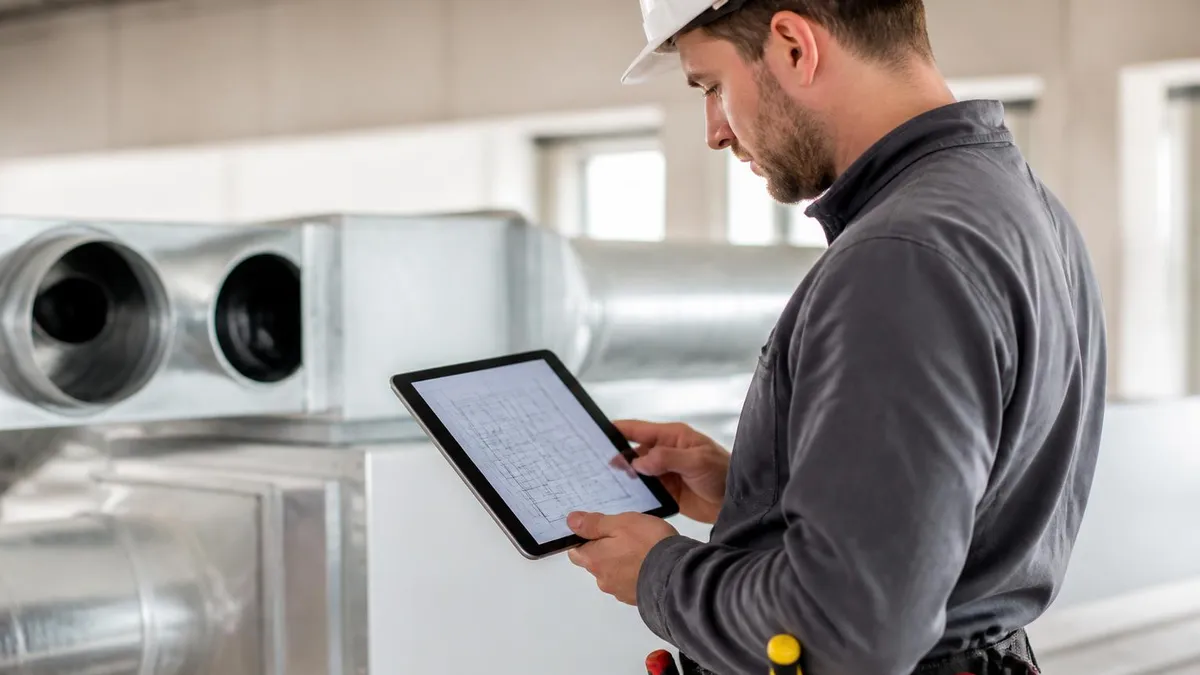
Pros and Cons of HVAC Preventive Maintenance Agreements
- +Priority scheduling during peak demand seasons when appointments are scarce
- +Discounted labor and parts rates compared to emergency or one-off service calls
- +Consistent documentation of service history, useful for warranty claims and resale
- +Technician familiarity with your specific equipment leads to faster, more accurate diagnostics
- +Early detection of refrigerant leaks, cracked heat exchangers, and electrical faults before failure
- +Potential 15–25% reduction in annual energy costs through maintained system efficiency
- −Upfront annual cost regardless of whether the system actually needs significant work
- −Quality varies widely between contractors — a poor technician can miss critical issues
- −Some agreements include exclusions for parts, refrigerant, or certain repair categories
- −Scheduling constraints mean visit timing may not perfectly align with your preferences
- −Over-reliance on annual visits may reduce homeowner engagement with monthly filter changes
- −Cancellation penalties or auto-renewal clauses can make agreements difficult to exit
Pros and Cons at a Glance
| Pros | Cons |
|---|---|
| Priority scheduling during peak demand seasons when appointments are scarce | Upfront annual cost regardless of whether the system actually needs significant work |
| Discounted labor and parts rates compared to emergency or one-off service calls | Quality varies widely between contractors — a poor technician can miss critical issues |
| Consistent documentation of service history, useful for warranty claims and resale | Some agreements include exclusions for parts, refrigerant, or certain repair categories |
| Technician familiarity with your specific equipment leads to faster, more accurate diagnostics | Scheduling constraints mean visit timing may not perfectly align with your preferences |
| Early detection of refrigerant leaks, cracked heat exchangers, and electrical faults before failure | Over-reliance on annual visits may reduce homeowner engagement with monthly filter changes |
HVAC Preventive Maintenance Checklist: Annual Tasks
- ✓Replace or clean air filters every 1–3 months based on filter type and indoor air quality.
- ✓Inspect and clean evaporator and condenser coils to restore full heat-transfer efficiency.
- ✓Flush and clear the condensate drain line to prevent water backup and mold growth.
- ✓Check refrigerant charge with manifold gauges and repair any detected leaks before recharging.
- ✓Test and replace capacitors, contactors, and relays showing signs of wear or out-of-spec readings.
- ✓Inspect the heat exchanger for cracks, corrosion, or separation that could allow CO infiltration.
- ✓Lubricate blower motor bearings and inspect belt-drive systems for cracking or improper tension.
- ✓Clean burners and inspect ignition system components on all gas-fired heating equipment.
- ✓Verify thermostat calibration and test all control sequences including emergency heat on heat pumps.
- ✓Inspect ductwork connections, insulation, and sealing at accessible joints for air leakage.
The 15-Minute Filter Change That Saves Thousands
Replacing a clogged air filter is the single highest-return maintenance task any homeowner can perform. A dirty filter restricts airflow, which raises compressor discharge temperatures, accelerates wear, and can trigger premature compressor failure — a $1,500–$3,000 repair. A $10 filter changed on schedule prevents that cascade entirely. Set a phone reminder for the first of every month and check the filter; replace it if it looks gray or dense with debris, regardless of what the calendar says.
One of the most compelling arguments for consistent HVAC preventive maintenance is the dramatic effect it has on equipment longevity. A central air conditioning system that receives annual tune-ups, prompt filter changes, and coil cleanings routinely lasts 15 to 20 years. The same model neglected for years typically fails within 10 to 12 years, sometimes sooner. Given that a full central system replacement costs $5,000 to $12,000 or more depending on size and efficiency rating, extending equipment life by even five years represents a return on maintenance investment that dwarfs the cost of service agreements many times over.
The compressor is the heart of any air conditioning or heat pump system, and it is also the most expensive single component to replace. Compressor failures are rarely random; they almost always trace back to one of three root causes: restricted airflow from dirty filters or coils, liquid refrigerant slugging caused by low charge or metering device malfunction, or electrical damage from voltage irregularities and failing capacitors. Each of these root causes is detectable and correctable during a routine maintenance visit, which is why compressor failures are so much rarer in well-maintained systems than in neglected ones.
Heat exchangers in gas furnaces have a finite service life, typically 15 to 25 years, but their lifespan is heavily influenced by maintenance practices. Overheating caused by restricted airflow is the leading accelerant of heat exchanger cracking. When a dirty filter or blocked register causes the furnace to run at elevated temperatures cycle after cycle, the repeated thermal stress fatigues the metal and accelerates micro-cracking. A maintenance program that keeps filters clean and airflow unrestricted dramatically reduces this thermal cycling stress and protects the heat exchanger through its full intended life.
Refrigerant leaks are another progressive failure mode that maintenance catches early. A system that is five percent undercharged on refrigerant loses roughly 20 percent of its cooling capacity and forces the compressor to run longer to achieve the same setpoint. Over months and years, that extended run time accelerates wear on every moving part.
Left unaddressed, a slow leak can eventually starve the compressor of the refrigerant-carried lubrication oil it depends on, leading to a seized compressor that must be replaced rather than repaired. Catching and fixing a small leak during a routine maintenance visit costs far less than a compressor replacement.
Ductwork integrity is often overlooked in maintenance discussions but has a significant impact on system lifespan and efficiency. Leaky ducts in unconditioned spaces like attics or crawlspaces cause the system to work harder to deliver conditioned air to living areas, increasing runtime and wear. The EPA estimates that duct leakage wastes 20 to 30 percent of conditioned air in the average home. Maintenance programs that include duct inspection and sealing — either through mastic sealant application or professional aerosol-based duct sealing — address this efficiency drain and reduce the load on the air handler and compressor.
Thermostat and controls maintenance is a subtler but real contributor to system longevity. A thermostat that is miscalibrated, reading temperatures incorrectly, or sending erratic signals to the equipment causes short-cycling — the system turning on and off in rapid succession — which is extremely hard on compressors and motors. Verifying thermostat calibration, ensuring proper placement away from heat sources and drafts, and confirming that control wiring is secure and corrosion-free all contribute to smooth, predictable system operation that minimizes unnecessary stress on mechanical components.
Documenting every maintenance visit creates a service history that serves multiple purposes. When a system eventually needs a major repair, the service history helps technicians understand how the equipment has been operated and maintained, leading to faster diagnosis. If you ever sell a home or commercial property, documented HVAC maintenance history is a tangible asset that buyers and commercial tenants value, often justifying a higher sale price or more favorable lease terms. Many manufacturer warranty claims also require proof of regular professional maintenance, making documentation a prerequisite for warranty coverage on expensive component replacements.
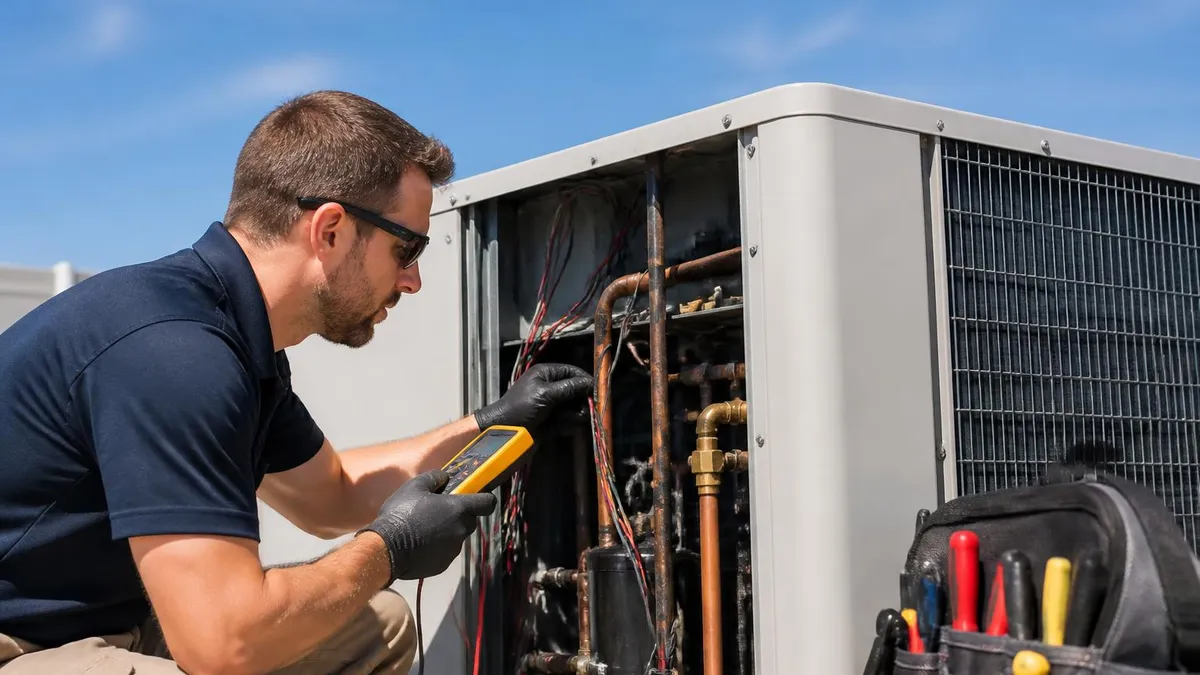
A cracked heat exchanger allows odorless, colorless carbon monoxide to enter your home's air supply — a potentially fatal hazard. Carbon monoxide poisoning kills hundreds of Americans annually and hospitalizes thousands more. Before running your furnace for the first time each heating season, schedule a professional inspection. Do not rely solely on CO detectors as a substitute for proactive equipment inspection, as detectors alert only after CO is already present in dangerous concentrations.
Selecting the right HVAC maintenance provider is as important as the maintenance itself. A poorly performed tune-up — one that skips refrigerant checks, glosses over the heat exchanger, or fails to test electrical components under load — provides false reassurance while leaving real problems in place. When evaluating contractors, start by verifying that they hold an active state HVAC contractor license and that their technicians carry EPA Section 608 certification for refrigerant handling. These credentials are the minimum baseline for legitimate professional service.
Experience with your specific equipment brand and type matters more than general credentials alone. A technician who services dozens of Carrier rooftop units monthly will diagnose issues on that platform far more quickly and accurately than one who encounters it only occasionally. Ask prospective contractors which brands and system types they service most frequently, and choose one whose primary work aligns with your equipment. For commercial buildings with building automation systems, ensure the contractor has controls expertise or a dedicated controls partner, since many modern HVAC issues originate in the control logic rather than the mechanical components.
Reputation and reviews are valuable signals, but look beyond star ratings to the content of reviews. Positive reviews that mention technician professionalism, accurate diagnoses, and transparent pricing are more predictive of a good experience than generic five-star ratings. Negative reviews citing missed problems, unauthorized charges, or poor communication should be weighted heavily. Trade associations such as ACCA (Air Conditioning Contractors of America) maintain member directories that include contractors who adhere to quality installation and service standards, providing an additional filter beyond online reviews alone.
The structure of the maintenance agreement itself deserves careful scrutiny before signing. Read what is explicitly included and what requires additional payment. A solid agreement should clearly cover both heating and cooling equipment, specify the number of annual visits, list what is inspected during each visit, and state the discounted labor and parts rates that apply to any repairs discovered. Agreements that are vague about scope or that list exclusions in fine print can be far less valuable than their headline price suggests, so take time to compare agreements from multiple contractors before committing.
Response time guarantees are particularly important for commercial clients and for homeowners in climates with extreme summers or winters. Some agreements include guaranteed same-day or next-day emergency response for agreement holders, which is a meaningful benefit when an equipment failure poses a health or business continuity risk. Confirm whether emergency response is included or whether it carries an additional dispatch fee, and verify that the contractor has adequate staffing to honor the guarantee during peak demand periods when the entire region is calling for service simultaneously.
For property managers overseeing multiple buildings or units, consolidated maintenance agreements that cover an entire portfolio often deliver the best value. A single contractor familiar with all of your equipment can build institutional knowledge across the portfolio, standardize documentation practices, and provide volume pricing that reduces per-unit costs substantially. This approach also simplifies vendor management and creates accountability — one contractor is responsible for the performance of all equipment rather than multiple providers pointing fingers at each other when systems underperform.
Finally, do not underestimate the value of technician consistency. When the same person services your equipment season after season, they develop an intuitive sense of how it should sound, how it should perform, and what its quirks are. They notice when something is subtly different from last year — a vibration that wasn't there before, a compressor that takes a fraction of a second longer to start, a filter that is dirtier than usual suggesting an air quality issue in the building.
That continuity of observation is a form of predictive maintenance that no single inspection by a stranger can replicate, and it is a compelling reason to stay with a contractor who performs well rather than chasing the lowest price each year.
Putting an effective HVAC preventive maintenance program into practice requires more than scheduling a single annual visit and forgetting about it. The most successful maintenance programs combine professional service visits with consistent owner engagement between appointments. Start by setting up recurring calendar reminders to check your air filter on the first of every month. Buy a small supply of the correct filter size and store them near the equipment so the replacement takes less than five minutes and requires no special trip to the hardware store. This single habit prevents more compressor failures than any other maintenance task.
Keep a simple log of everything that happens with your HVAC system: filter changes, any unusual noises or performance changes you notice, the date and findings of every professional service visit, and any repairs made along with the parts replaced. A notebook kept near the equipment works perfectly well, as does a simple spreadsheet or note-taking app on your phone. This log becomes invaluable when you need to make a warranty claim, when you sell the property, or when a new technician needs to quickly understand the system's history without spending billable time on detective work.
Learn to recognize the early warning signs that something is developing between maintenance visits. Unusual sounds — grinding, squealing, banging, or rattling — almost always indicate a mechanical problem that will worsen without attention. A system that runs significantly longer than it used to before reaching setpoint, or one that short-cycles on and off every few minutes, is signaling an efficiency or control problem.
Ice forming on the refrigerant lines or on the outdoor unit during cooling season indicates either low refrigerant or severely restricted airflow. Catching these signals early and calling your contractor promptly prevents minor issues from becoming major repairs.
Thermostat programming is an underutilized tool in the maintenance and efficiency toolkit. Modern programmable and smart thermostats allow you to set temperature schedules that reduce system runtime when the building is unoccupied, cutting energy consumption and mechanical wear simultaneously. A home that drops its cooling setpoint from 72 to 78 degrees during the eight hours its residents are at work runs the air conditioner far less, accumulating far fewer run-hours on the compressor over the summer. Fewer run-hours mean slower wear and longer equipment life, making smart thermostat programming a legitimate maintenance strategy, not just an energy-saving tip.
Outdoor unit clearance is a simple but often neglected maintenance task that homeowners can manage entirely on their own. The condenser unit needs at least two feet of clear space on all sides to draw in ambient air efficiently. Overgrown shrubs, tall grass, and accumulated leaves and debris all restrict airflow and force the condenser to operate at elevated temperatures.
Trim vegetation seasonally, clear debris after storms, and gently rinse the condenser fins with a garden hose from the inside out annually to remove accumulated dirt. Never use a pressure washer, which can bend the delicate aluminum fins and reduce coil efficiency.
Indoor air quality improvements and HVAC maintenance are deeply interconnected. Upgrading to a higher-MERV filter catches more particulate matter but also restricts airflow more, so confirm with your contractor that your system can handle the increased resistance before making the switch. Whole-home air purifiers, UV germicidal lights installed in the air handler, and standalone dehumidifiers all reduce the biological load on your HVAC system and improve indoor air quality simultaneously. These upgrades work best as part of a comprehensive maintenance program rather than as standalone solutions.
Finally, budget proactively for eventual component replacements. Even a perfectly maintained HVAC system will eventually need a new capacitor, contactor, ignitor, or eventually a compressor or heat exchanger. Setting aside a small emergency fund — $50 to $100 per month is a reasonable target for a residential system — means that when these repairs arise, they are a manageable expense rather than a financial crisis.
Homeowners who budget proactively also make better decisions about repair versus replacement, since they are not forced to choose the cheapest option under pressure. A well-funded, well-documented, professionally maintained HVAC system is both a more reliable asset and a more financially manageable one over its full service life.
Related reading: hvac preventive maintenance covers the next step in more detail.
Sample HVAC Practice Questions
Try these questions from our free HVAC practice tests. The correct answer and an explanation follow each question.
A technician is troubleshooting a hydronic system where one zone heats adequately but a second zone produces no heat despite the circulator running. What should be checked first?
- A. Boiler firing rate and aquastat setpoint
- B. Zone valve operation and thermostat signal to the valve
- C. Expansion tank pre-charge pressure
- D. System fill pressure at the boiler gauge
Answer: B. Zone valve operation and thermostat signal to the valve
When one zone works and another does not, the most likely cause is a failed zone valve that is not opening, or no electrical signal from the thermostat commanding the valve to open.
Which heat pump system configuration is MOST appropriate for a building that requires process cooling year-round regardless of outdoor temperature?
- A. Air-source heat pump with electric auxiliary heat
- B. Water-source heat pump connected to a cooling tower and boiler loop
- C. Dual-fuel heat pump with gas furnace backup
- D. Ground-source heat pump with horizontal loop field
Answer: B. Water-source heat pump connected to a cooling tower and boiler loop
Water-source heat pumps on a shared loop with a cooling tower can reject heat effectively year-round without being dependent on outdoor air temperature, making them ideal for year-round cooling loads.
In a refrigeration system, 'head pressure' refers to which pressure?
- A. Suction line pressure at the compressor inlet
- B. Discharge pressure at the compressor outlet
- C. Evaporator pressure measured at the inlet
- D. Pressure drop across the expansion valve
Answer: B. Discharge pressure at the compressor outlet
Head pressure is the high-side discharge pressure measured at the compressor outlet, representing the condensing pressure of the refrigerant.
What is the function of a 'differential pressure bypass valve' in a variable flow hydronic system?
- A. To maintain minimum boiler water temperature
- B. To bypass excess water flow when zone valves close off, protecting the pump and boiler
- C. To prevent backflow in the system
- D. To regulate boiler firing rate
Answer: B. To bypass excess water flow when zone valves close off, protecting the pump and boiler
When zone valves close simultaneously, pressure increases. The differential pressure bypass valve opens to allow excess flow to bypass, maintaining minimum boiler flow.
HVAC Questions and Answers
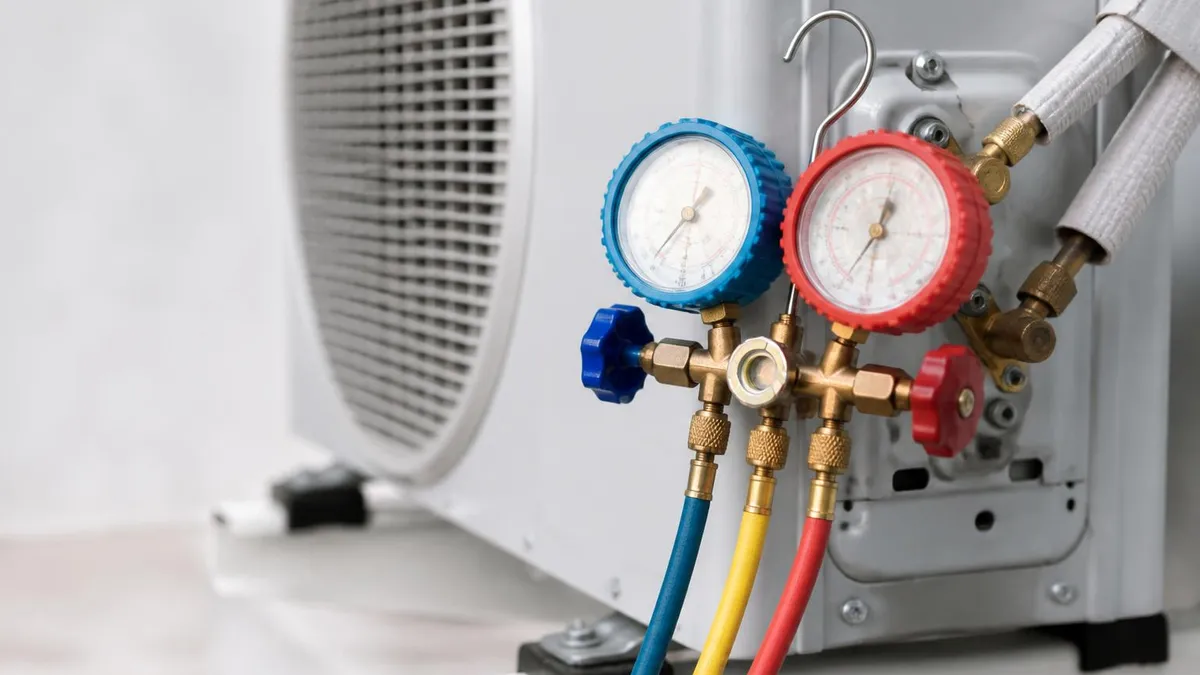
HVAC Sales: The Complete Guide to Selling Heating and Cooling Systems, Building Customer Trust, and Closing More Deals
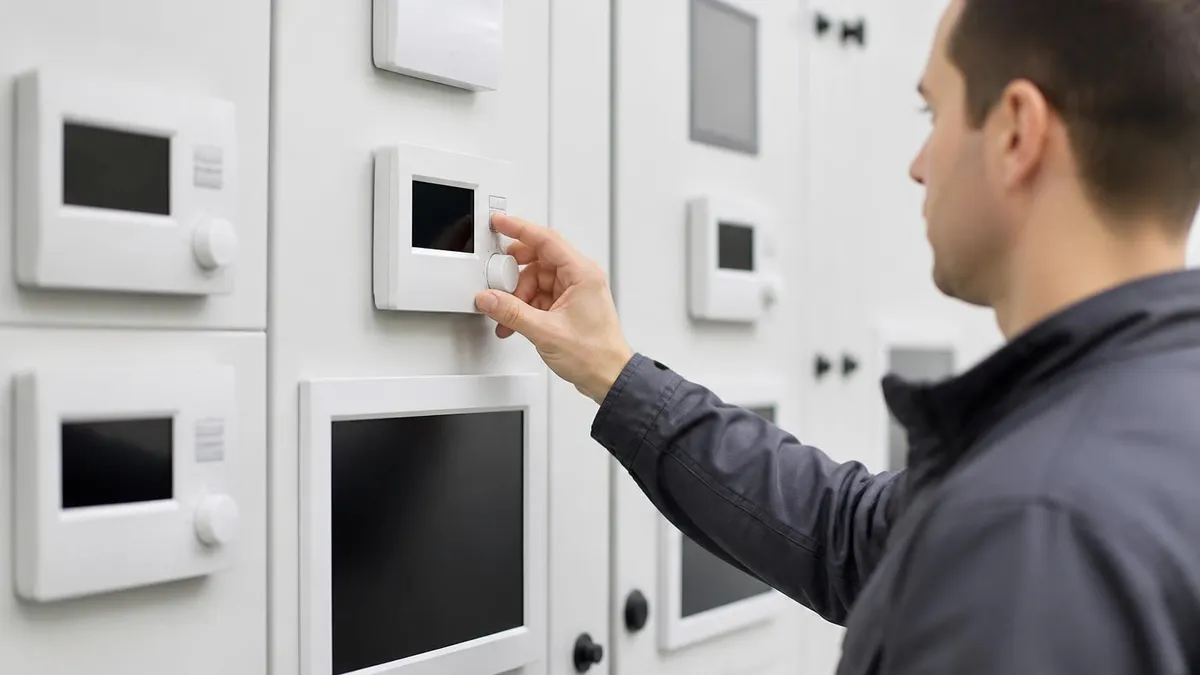
HVAC Air Duct Sealing: The Complete Homeowner and Contractor Guide to Sealing Ductwork for Efficiency, Comfort, and Indoor Air Quality
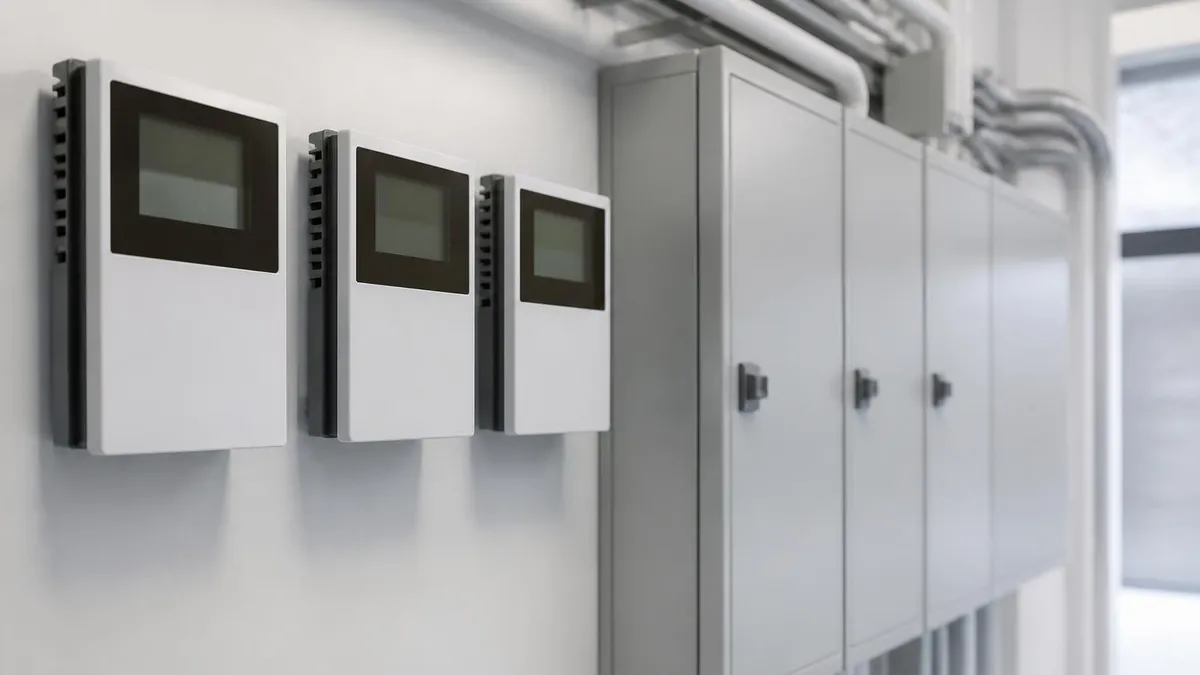
HVAC Solutions: The Complete Guide to Heating, Cooling, and Indoor Air Quality Systems for Homes and Buildings

Commercial HVAC Repair: Systems, Costs, and Service Strategies
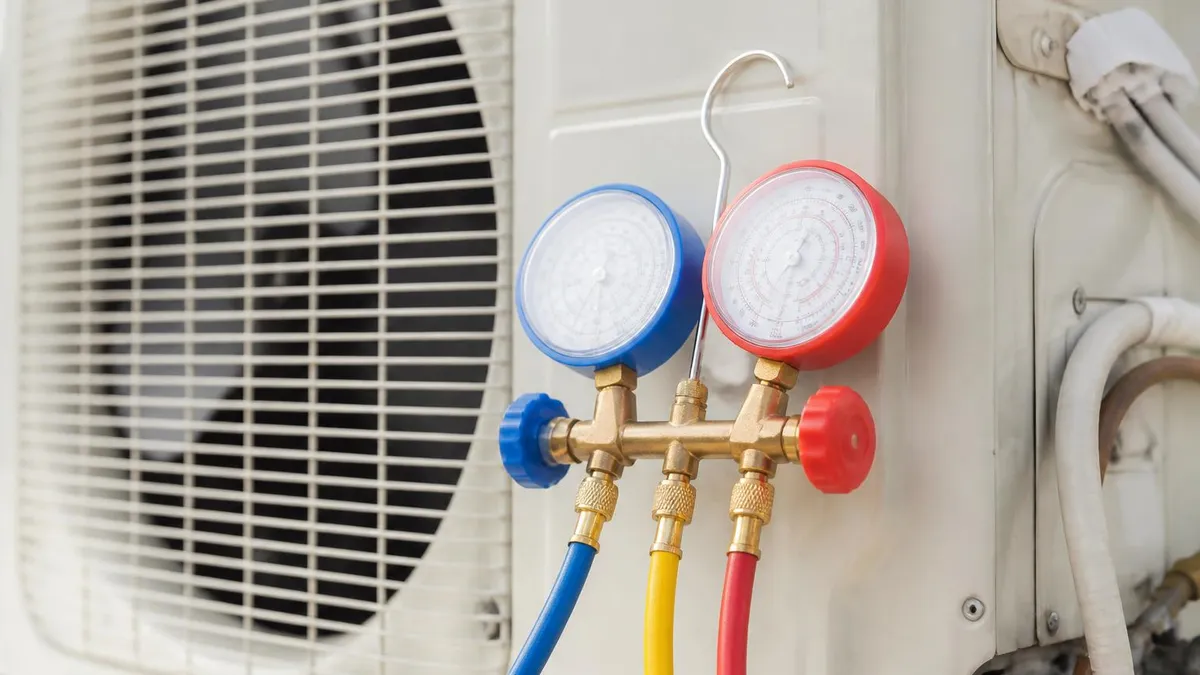
HVAC Apprenticeship Programs: Your Complete Guide to Starting a Hands-On Career in Heating, Ventilation, and Air Conditioning
About the Author

NATE Certified HVAC Technician & Licensing Exam Trainer
Universal Technical InstituteMike Johnson is a NATE-certified HVAC technician and EPA 608 universal-certified refrigerant handler with a Bachelor of Science in HVAC/R Technology. He has 19 years of commercial and residential HVAC installation and service experience and specializes in preparing technicians for NATE certification, EPA 608, A2L refrigerant safety, and state HVAC contractor licensing examinations.