
HVAC Contractor License: Complete Guide to Requirements, Career Path, and Earning Potential
📝 An HVAC contractor license guide covering requirements, costs, exams, salary, and career steps for heating and cooling professionals in the US.

Earning an HVAC contractor license is the defining milestone that separates a hired technician from a business owner who can pull permits, sign contracts, and bid jobs in their own name. In most US states the license is the legal gateway to installing, servicing, and replacing heating, ventilation, air conditioning, and refrigeration systems for paying customers. Without it, you cannot legally advertise as a contractor, hire apprentices under your supervision, or take on work that requires a building permit, which means understanding the credential early shapes your entire career. Practice with the free HVAC practice test on PracticeTestGeeks (750+ questions with answer explanations).
The path to a contractor license is more involved than many newcomers expect. You typically need documented field experience, a passing score on a trade exam, a separate business and law exam, proof of insurance, and in many states a surety bond. Each state board sets its own thresholds, so the journey for a Texas air conditioning contractor differs from the requirements in California, Florida, or North Carolina. Knowing these differences before you begin saves months of wasted effort and avoids costly application rejections that delay your launch.
Beyond the paperwork, the license signals competence to homeowners and commercial clients who are increasingly cautious about who they let touch expensive equipment. A licensed contractor commands higher rates, qualifies for manufacturer rebate programs, and gains access to wholesale distributor accounts that are closed to unlicensed installers. Many of these professionals also move into related revenue streams, and a strong grasp of hvac contractor license fundamentals helps them close larger system replacement deals with confidence and credibility.
This guide walks through every major component of the credentialing process: eligibility and experience hours, the structure of the licensing exams, application costs, insurance and bonding, and the day-to-day duties that define the role. We will also cover the realistic salary ranges, the pros and cons of going independent, and the renewal obligations that keep your license active. The goal is to give you a clear, US-focused roadmap whether you are an apprentice planning ahead or a journeyman ready to launch a company today.
It helps to understand what a contractor actually does compared with a technician. A technician diagnoses and repairs equipment under someone else's authority, while a licensed contractor carries legal and financial responsibility for the work, the permits, the warranty, and the safety of the installation. That responsibility is exactly why states require proof of knowledge in refrigerant handling, electrical controls, load calculations, gas piping, and code compliance before issuing the credential. The exam is designed to confirm you can be trusted with all of it.
Finally, the license is not a one-time achievement but an ongoing professional commitment. States require continuing education, periodic renewals, and adherence to evolving energy codes and refrigerant regulations such as the phasedown of high-GWP HFCs. Treating the license as a living credential, rather than a box to check, positions you to grow a durable business. By the end of this article you will know exactly what to expect, how much it costs, and how to prepare for the exams that stand between you and your own HVAC company.
Free HVAC Study Tools
Interactive HVAC resources on PracticeTestGeeks, free to start:
- HVAC EPA 608 Refrigerant Certification — 35 questions with instant scoring and answer explanations
- HVAC flashcards — review key terms and concepts card by card
- HVAC study guide — topic-by-topic overview of what the exam covers
- HVAC cheat sheet — one-page printable summary for last-minute review
HVAC Contractor Licensing by the Numbers
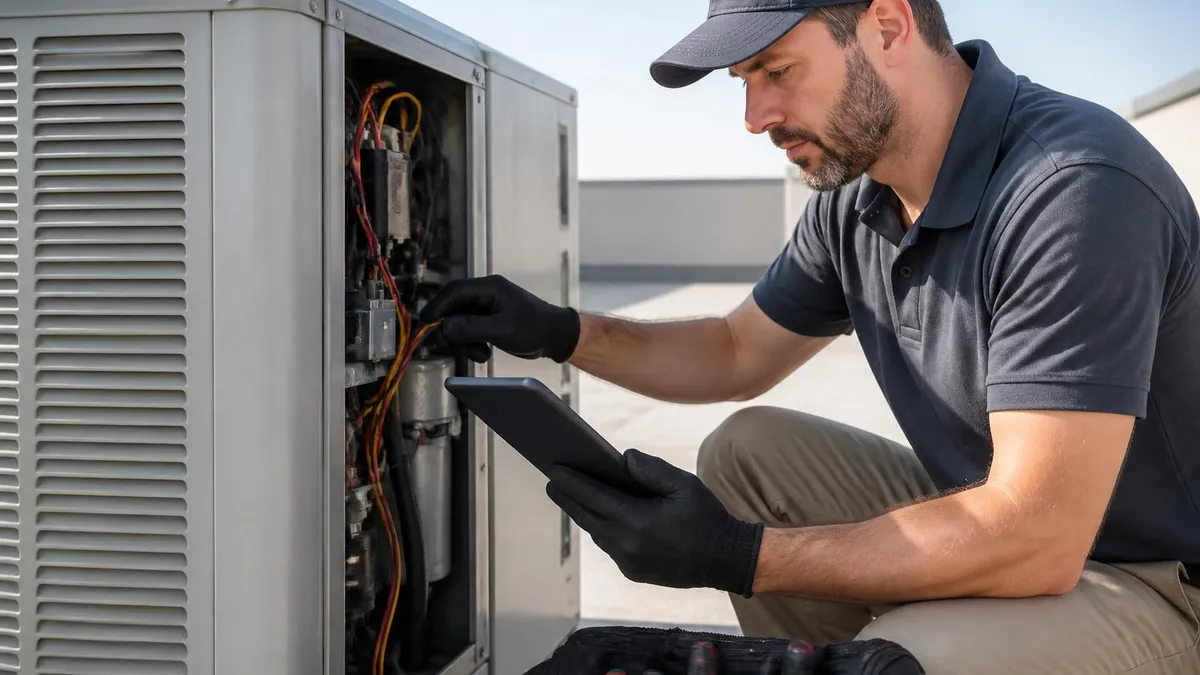
Types of HVAC Contractor Licenses
Covers single-family and small multi-family heating and cooling work. Often has lower experience and bonding thresholds, making it the common entry point for technicians launching their first independent business.
Authorizes work on larger rooftop units, chillers, boilers, and complex controls in office, retail, and industrial buildings. Usually requires more documented hours and higher insurance limits than residential.
The broadest tier, permitting projects of any size and value with no monetary cap. Demands the most experience and the strongest financial statements, but opens the widest range of bidding opportunities.
Narrower endorsements such as refrigeration-only, gas piping, or ductwork. These let specialists operate legally within a defined scope without testing on every HVAC discipline at once.
Eligibility for an HVAC contractor license almost always begins with verifiable field experience. Most state boards want between two and five years of full-time work under a licensed contractor, often translated into a specific number of hours such as 4,000 or 8,000. This experience must usually be documented with W-2s, employer affidavits, or apprenticeship records. Boards scrutinize these submissions closely, so keeping organized timesheets and signed verification letters throughout your apprenticeship is one of the smartest long-term moves you can make.
Education can shorten the experience requirement in many states. Completing an accredited HVAC program at a community college or technical school may substitute for one or two years of field hours, and registered apprenticeships frequently count toward the total. Some states also recognize military training in HVAC-R systems. Because each board weighs schooling differently, you should request the exact substitution rules in writing before enrolling, so your tuition dollars actually advance your licensing timeline rather than simply teaching skills you must still re-verify.
You will also need to meet baseline personal qualifications. Applicants generally must be at least eighteen years old, hold legal authorization to work in the US, and pass a criminal background check. A felony conviction is not always disqualifying, but boards review the nature of the offense and may require additional documentation. Maintaining a clean professional record, paying any outstanding judgments, and resolving prior contractor complaints all strengthen an application and reduce the risk of a delayed or denied license.
Federal certification sits alongside the state license and is non-negotiable. Anyone who purchases or handles refrigerants must hold EPA Section 608 certification, and many contractors also carry Section 609 for motor vehicle air conditioning. These credentials are separate from the contractor license but are frequently checked during the application. Earning your 608 early, ideally during your apprenticeship, removes a common bottleneck and demonstrates to the board that you already meet the environmental compliance standards that the contractor exam will test in greater depth.
Financial readiness is another quiet eligibility factor. Several states require applicants to demonstrate a minimum net worth or working capital to ensure the business can cover obligations to customers and suppliers. You may need to submit a balance sheet prepared by a CPA, especially for unlimited or commercial tiers. Building this financial cushion before applying not only satisfies the board but also gives your young company the runway it needs to survive seasonal swings in heating and cooling demand.
Finally, plan for the qualifying party structure if you intend to operate as a company. Many states allow a corporation or LLC to hold the license through a designated qualifying individual who passes the exams and accepts responsibility for the work. Understanding whether you will license as a sole proprietor or as a qualifying party for an entity affects taxes, liability, and how easily you can add partners later. Some contractors who expand into consultative roles lean on their hvac contractor license credibility to win commercial accounts that demand a fully licensed firm.
If you want the full picture, the hvac contractor license guide walks through it step by step.
Related reading: hvac contractor license covers the next step in more detail.
For a deeper look at this topic, see our guide to hvac contractor license.
Inside the HVAC Contractor License Exams
The trade portion is the technical heart of the HVAC contractor license. Expect questions on the refrigeration cycle, superheat and subcooling, electrical controls, motor types, gas and oil heating, load calculations, and proper ductwork sizing. Many boards draw from Manual J, Manual D, and the mechanical code, so candidates should be comfortable reading equipment specifications and interpreting wiring diagrams under timed conditions without hesitation.
This section usually contains the largest number of questions and carries the heaviest weight toward your final score. It is open-book in some states, meaning you may bring approved code references, while others administer it closed-book. Either way, success depends on knowing where information lives and applying it quickly. Practicing with full-length simulated exams builds the speed and recall needed to finish comfortably within the allotted time window.
Is Getting Your HVAC Contractor License Worth It?
- +Legally bid jobs, pull permits, and sign contracts in your own name
- +Command significantly higher rates than unlicensed technicians
- +Access wholesale distributor accounts and manufacturer rebate programs
- +Build equity in a business you own rather than working for wages
- +Qualify to hire and supervise your own apprentices and technicians
- +Gain customer trust through verifiable, board-issued credentials
- −Upfront costs for exams, bonds, insurance, and application fees
- −Years of documented experience required before you can even apply
- −Ongoing continuing education and renewal obligations
- −Personal liability for permits, warranties, and code compliance
- −Income can swing seasonally with heating and cooling demand
- −Administrative burden of payroll, taxes, and regulatory paperwork
Pros and Cons at a Glance
| Pros | Cons |
|---|---|
| Legally bid jobs, pull permits, and sign contracts in your own name | Upfront costs for exams, bonds, insurance, and application fees |
| Command significantly higher rates than unlicensed technicians | Years of documented experience required before you can even apply |
| Access wholesale distributor accounts and manufacturer rebate programs | Ongoing continuing education and renewal obligations |
| Build equity in a business you own rather than working for wages | Personal liability for permits, warranties, and code compliance |
| Qualify to hire and supervise your own apprentices and technicians | Income can swing seasonally with heating and cooling demand |
| Gain customer trust through verifiable, board-issued credentials | Administrative burden of payroll, taxes, and regulatory paperwork |
HVAC Contractor License Application Checklist
- ✓Confirm your state board's exact experience hour requirement.
- ✓Gather W-2s, affidavits, or apprenticeship records as proof.
- ✓Complete EPA Section 608 refrigerant certification.
- ✓Verify whether schooling can offset required field hours.
- ✓Pass a criminal background check and clear any judgments.
- ✓Prepare financial statements if a net worth minimum applies.
- ✓Register your business entity and designate a qualifying party.
- ✓Secure general liability insurance at required coverage limits.
- ✓Obtain a surety bond if your state mandates one.
- ✓Schedule and pass both the trade and business exams.
- ✓Submit the application with all fees before any deadline.
- ✓Calendar your first renewal and continuing education due date.
Most failed applications stumble on law, not the trade portion
Many skilled technicians ace the technical exam yet fail the business and law section because they never studied contracts, liens, or payroll rules. Treat both halves with equal seriousness. Your state's contractor reference manual is the single most valuable study resource, since exam questions mirror its jurisdiction-specific rules almost word for word.
The financial case for licensure is compelling. According to the US Bureau of Labor Statistics, HVAC mechanics and installers earned a median annual wage of roughly $61,000 in 2024, but that figure reflects employees, not owners. Licensed contractors who run their own crews routinely clear six figures once they build a steady customer base and add service agreements. The license itself does not guarantee that income, but it removes the legal ceiling that caps what an unlicensed technician can charge or whom they can legally serve.
Geography and specialization shape earnings dramatically. Contractors in high-cost metros and regions with extreme climates, where systems run hard year-round, command premium rates. A commercial refrigeration specialist or a contractor focused on high-efficiency heat pump retrofits can charge far more than a general residential repair tech. Diversifying into maintenance contracts smooths the seasonal income swings that otherwise leave contractors busy in summer and lean in the shoulder months, building predictable recurring revenue that lenders and partners value.
Job security in the trade is strong and getting stronger. The BLS projects HVAC employment to grow about nine percent through 2033, faster than the average for all occupations, driven by aging building stock, stricter energy codes, and the nationwide shift toward electrification and heat pumps. Skilled labor shortages mean licensed contractors who can deliver clean, code-compliant installations have more work than they can handle, giving them pricing power that few other small businesses enjoy in today's economy.
The license also unlocks revenue channels that are simply closed to the unlicensed. Manufacturers reserve their best rebate and warranty programs for credentialed installers, utility efficiency incentives often require a licensed contractor's signature, and many commercial clients will not even accept a bid from an unlicensed firm. Wholesale distributors extend trade pricing and credit lines to licensed businesses, improving margins on every system you install and giving you a structural cost advantage over fly-by-night competitors.
Career growth rarely stops at running a service truck. Many licensed contractors expand into multi-truck operations, hire and train apprentices, and eventually shift from wrench-turning to estimating, project management, and ownership. Others specialize in design-build, building automation, or energy auditing. Some use their field credibility to move into manufacturer rep roles or technical sales, where deep system knowledge translates directly into commissions. The license is the foundation on which all of these higher-margin paths are built over time.
It is worth being realistic about the early years. Launching a contracting business means fronting the cost of tools, a vehicle, insurance, and marketing before the first big job pays out. Cash flow is tight at first, and you wear every hat from technician to bookkeeper. But contractors who survive the first two years and reinvest in their reputation typically see their earnings climb well past what any hourly position could offer, making the upfront grind a worthwhile trade for long-term independence and control.

Performing contractor-level HVAC work without the required license can trigger fines, stop-work orders, and even misdemeanor charges in many states. Unlicensed contractors also void manufacturer warranties and cannot enforce contracts in court. Always confirm your scope of work falls within your license tier before bidding a job.
Holding the license is only the beginning; keeping it active requires ongoing diligence. Nearly every state sets a renewal cycle, commonly every one to three years, tied to a fee and a continuing education requirement. Continuing education hours typically cover code updates, safety, business practices, and emerging technology. Letting a license lapse can mean reinstatement fees, a waiting period, or in the worst cases retaking the exams, so calendaring your renewal date the moment you are licensed protects the investment you worked so hard to earn.
Insurance and bonding obligations also persist throughout the life of your license. General liability insurance protects against property damage and injury claims, while a surety bond guarantees that you will perform work according to code and honor contractual obligations. If a bond claim is paid out, you must reimburse the surety, and repeated claims raise your premiums or jeopardize renewal. Maintaining clean records and resolving customer disputes quickly keeps these costs manageable and your standing with the board intact over the years.
Refrigerant regulations deserve special attention because they evolve quickly. The EPA's phasedown of high-global-warming-potential HFCs under the AIM Act is reshaping which refrigerants are legal in new equipment, and many states layer their own rules on top. Licensed contractors must stay current on approved refrigerants, leak-repair thresholds, and recordkeeping requirements. Falling behind here risks both fines and the inability to service the latest equipment, so treating refrigerant compliance as a continuing-education priority is simply good business sense.
Energy codes are another moving target. The International Energy Conservation Code and state amendments increasingly demand higher equipment efficiency, tighter ductwork, and detailed commissioning documentation. Contractors who understand these codes can guide customers toward rebate-eligible upgrades and pass inspections on the first visit, avoiding the costly callbacks that erode profit. Many of these efficiency upgrades pair naturally with proper sealing work, and a contractor fluent in hvac contractor license-level system knowledge can turn a code requirement into a value-added sale.
Reciprocity can extend the reach of your license. Some states honor licenses from neighboring jurisdictions or waive certain exam requirements for contractors already licensed elsewhere, which matters if you operate near a state line or plan to expand. Reciprocity agreements are uneven and change frequently, so always confirm the current terms with both state boards before accepting work across the border. A misread reciprocity rule can expose you to the same unlicensed-work penalties discussed earlier in this guide.
Finally, your license is a reputation asset that compounds over time. Boards publish license status publicly, and savvy customers verify it before hiring. Maintaining an unblemished record, responding professionally to complaints, and keeping every credential current builds a track record that wins referrals and repeat business. The contractors who treat compliance not as a burden but as a competitive advantage are the ones who build durable, profitable companies that outlast the inevitable swings of the heating and cooling market.
Preparing for the licensing exams is where many candidates either accelerate or stall, so a deliberate study plan matters. Start by downloading your state board's candidate bulletin, which lists the exact topics, reference materials, and question counts for each section. Build your study schedule backward from your test date, dedicating the most time to your weakest areas. Most successful candidates spend eight to twelve weeks preparing, blending reading, hands-on review, and repeated practice testing to cement both knowledge and recall speed.
Use the approved reference books actively rather than passively. For open-book trade exams, tab and index your code book and Manual J so you can locate answers in seconds; on a timed exam, knowing where information lives is as valuable as memorizing it. Work through sample calculations for load sizing, duct sizing, and refrigerant charging until the steps feel automatic. The faster you handle the computational questions, the more time you reserve for the tricky code and scenario items at the end.
Practice exams are the single highest-use study tool available. Full-length, timed practice tests reveal your pacing, expose blind spots, and reduce test-day anxiety by making the format familiar. Review every missed question until you understand not just the right answer but why the others are wrong. Cycling through topic-specific quizzes on heating systems, electrical controls, ductwork, and energy efficiency builds the broad coverage the trade exam demands without overwhelming you all at once.
Do not neglect the business and law section in your study rotation. Set aside dedicated blocks to read your state's contractor handbook cover to cover, paying close attention to lien deadlines, contract requirements, and tax obligations. Create flashcards for the numeric thresholds, since those specific figures are exactly what the exam tests. Many candidates schedule the business exam first because it is shorter, banking an early pass that builds momentum and confidence for the heavier trade portion ahead.
On exam day, logistics matter as much as knowledge. Confirm your testing center location, bring two forms of valid identification, and pack only the references and calculator the bulletin permits. Arrive early to settle your nerves, read each question fully before answering, and flag difficult items to revisit rather than burning time. Budget your minutes so you never leave easy points unanswered at the end. A calm, methodical approach often lifts a borderline score above the passing line.
After you pass, move quickly on the remaining paperwork while your momentum is high. Secure your insurance and bond, finalize your business registration, and submit the complete application before any deadline. Then shift your attention to landing those first jobs: build a simple professional website, claim your business listings, ask satisfied customers for reviews, and price your work to cover overhead while staying competitive. The license opens the door, but consistent, code-compliant craftsmanship is what keeps customers calling back year after year.
Sample HVAC Practice Questions
Try these questions from our free HVAC practice tests. The correct answer and an explanation follow each question.
When installing a rooftop HVAC unit in a seismic design category D zone, which additional requirement applies per the International Mechanical Code?
- A. Painted bright orange
- B. Seismic bracing and anchorage
- C. Double insulation wrap
- D. Dual disconnect switches
Answer: B. Seismic bracing and anchorage
The IMC requires that mechanical equipment in high seismic zones be anchored and braced to resist seismic forces as specified in the International Building Code.
Which ASHRAE standard governs ventilation requirements specifically for healthcare facilities?
- A. ASHRAE 55
- B. ASHRAE 62.1
- C. ASHRAE 170
- D. ASHRAE 90.1
Answer: C. ASHRAE 170
ASHRAE 170 'Ventilation of Health Care Facilities' sets specific ACH, pressure relationships, filtration, and humidity requirements for hospitals and clinics.
Which of the following refrigerants has the highest Global Warming Potential (GWP)?
- A. R-32 (GWP ~675)
- B. R-134a (GWP ~1,430)
- C. R-410A (GWP ~2,088)
- D. R-404A (GWP ~3,922)
Answer: D. R-404A (GWP ~3,922)
R-404A has the highest GWP of the listed options at approximately 3,922, making it one of the refrigerants being phased down under the AIM Act due to its significant climate impact.
A potential relay used in a single-phase compressor motor is installed in which circuit?
- A. Common winding
- B. Start winding in parallel
- C. Run capacitor circuit
- D. Discharge line
Answer: B. Start winding in parallel
The potential relay coil is wired in parallel with the start winding and its normally-closed contacts are in series with the start capacitor, opening once back-EMF rises.
HVAC Questions and Answers
HVAC Sales: The Complete Guide to Selling Heating and Cooling Systems, Building Customer Trust, and Closing More Deals

HVAC Air Duct Sealing: The Complete Homeowner and Contractor Guide to Sealing Ductwork for Efficiency, Comfort, and Indoor Air Quality

HVAC Drain Pan: Complete Guide to Function, Maintenance, and Troubleshooting

HVAC Solutions: The Complete Guide to Heating, Cooling, and Indoor Air Quality Systems for Homes and Buildings

Commercial HVAC Repair: Systems, Costs, and Service Strategies
How this page was made: written with AI tools and published by Nathan Beja, founder of Practice Test Geeks, who is responsible for its content. We have not yet matched this exam's facts to an official source, so confirm fees, dates and rules with the exam body. Not reviewed by a subject-matter expert. Editorial policy