
Trane HVAC Service: What Homeowners Need to Know About Maintenance, Repairs, and Keeping Your System Running
Everything about Trane HVAC service: maintenance schedules, repair costs, warranty tips, and how to keep your system running efficiently. ✅
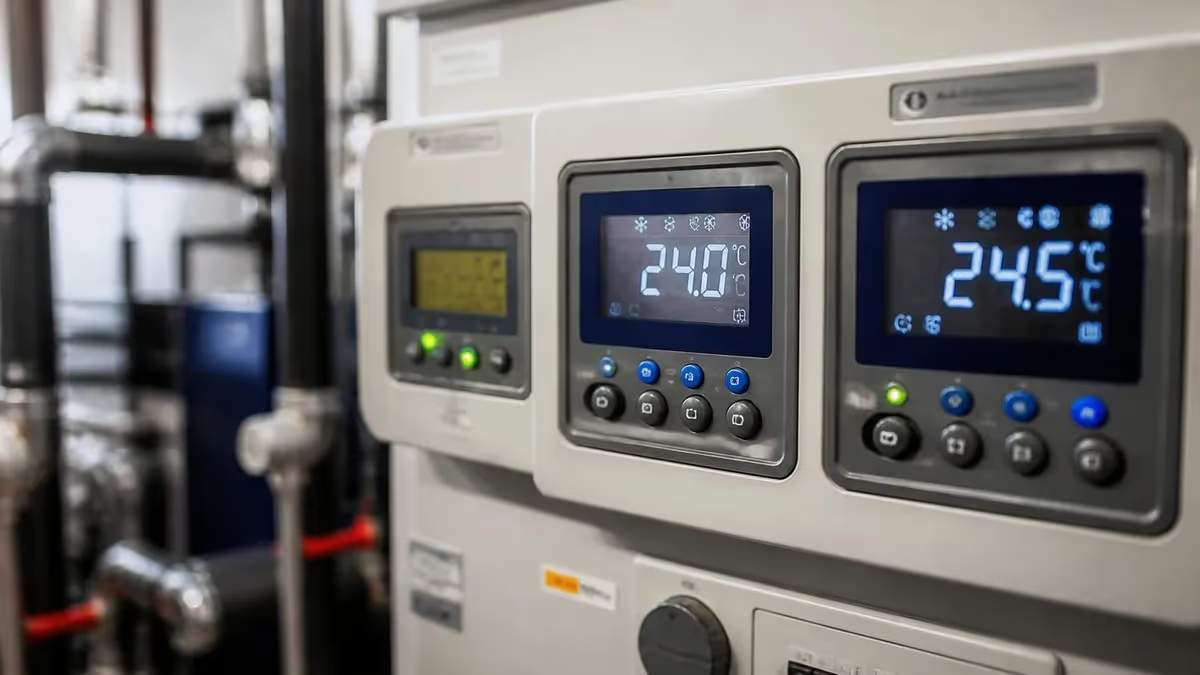
Trane HVAC service is one of the most searched topics among homeowners who have invested in one of America's most recognized heating and cooling brands. Trane systems are built with the company's well-known durability in mind — their tagline, "It's hard to stop a Trane," isn't just marketing. But even the most strong HVAC equipment requires consistent professional attention to perform at its best over the long haul. Understanding what service your Trane system needs, when to schedule it, and what to expect from a technician visit can save you hundreds of dollars annually and extend equipment life by years.
Most Trane residential systems — whether a central air conditioner, heat pump, or gas furnace — are engineered to last 15 to 20 years when properly maintained. That longevity is not automatic, however. It depends on annual tune-ups, timely filter replacements, coil cleaning, refrigerant level checks, and prompt attention to early warning signs. Skipping even one season of professional maintenance can result in reduced efficiency ratings, higher utility bills, and accelerated wear on compressors and heat exchangers that are expensive to replace.
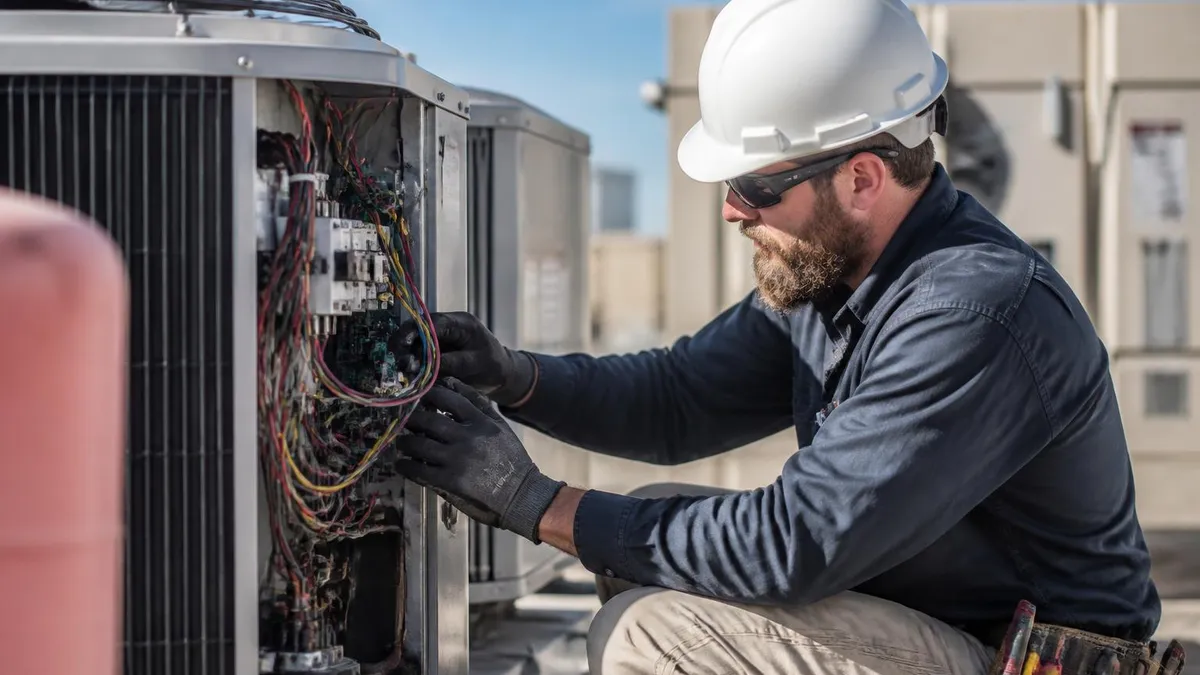
Trane offers a network of independent Trane Comfort Specialists across the United States — contractors who are trained and certified to work on Trane equipment. These technicians receive product-specific training and have access to genuine Trane replacement parts, which matters because using off-brand components can void manufacturer warranties. When scheduling service, always verify that the contractor holds current Trane Comfort Specialist status, as this credential indicates ongoing training requirements and commitment to quality standards.
One of the first things homeowners should understand about trane hvac service is the difference between preventive maintenance and reactive repair. Preventive maintenance — scheduled annually in spring for cooling systems and fall for heating systems — is designed to catch small issues before they become system failures. Reactive repair, by contrast, happens when something has already broken. The cost difference is stark: a typical annual maintenance visit runs $80 to $150, while an emergency repair on a failed compressor can easily cost $1,200 to $2,800 or more depending on the system size and refrigerant type.
Homeowners who enroll in a service agreement or maintenance plan with a local Trane dealer often receive priority scheduling, discounted labor rates on repairs, and reminders when service is due. These plans typically cost $150 to $350 per year for a single system and cover one or two professional tune-up visits. For households with both a furnace and an air conditioner — or a dual-fuel system — bundled plans covering all equipment can represent significant savings compared to scheduling individual service calls each season.
The refrigerant landscape has changed significantly for Trane systems. Older units manufactured before 2020 may use R-22 refrigerant (Freon), which has been phased out under EPA regulations and now costs $50 to $100 per pound to recharge — if you can find it. Trane's newer systems use R-410A or the increasingly common R-454B (Puron Advance), which comply with current environmental regulations.
If your Trane system is leaking refrigerant, a technician must locate and repair the leak before recharging, since simply adding refrigerant without fixing the source is both wasteful and an EPA violation. Understanding your system's refrigerant type is essential when discussing service needs with any contractor.
Finally, Trane's warranty structure is something every owner should understand before calling for service. Standard limited warranties cover the compressor for 10 years and other parts for 5 years when the equipment is registered within 60 days of installation. Some Trane systems qualify for extended warranty upgrades. Critically, most Trane warranties require that service be performed by a licensed HVAC contractor using approved procedures. DIY repairs or service from an uncertified technician can void coverage, leaving you responsible for parts costs that might otherwise be covered. Always check your warranty documentation before authorizing any repair work on your Trane system.
Trane HVAC Service by the Numbers

Trane HVAC Annual Maintenance Schedule
Spring — Air Conditioning Tune-Up
Summer — Filter and Airflow Checks
Fall — Heating System Tune-Up
Winter — Monitor and Respond
Year-Round — Thermostat and Controls
Understanding the most common Trane repairs and their associated costs helps homeowners budget appropriately and recognize when a technician's diagnosis sounds reasonable. Trane systems are generally reliable, but every mechanical system has components that wear out over time. The compressor is the heart of the refrigeration system and the most expensive single component to replace.
A Trane compressor replacement typically costs $1,200 to $2,800 installed, depending on the system's tonnage and whether the unit uses a standard scroll compressor or a two-stage or variable-speed unit. Given these costs, a compressor failure on a system older than 12 years often triggers a serious conversation about full system replacement instead of repair.
Capacitors are one of the most frequently replaced components in Trane air conditioners and heat pumps. The run capacitor helps the compressor and fan motors start and maintain operation, and it degrades over time, especially in climates with extreme heat. A failed capacitor causes the system to struggle to start or fail to run entirely.
The good news is that capacitor replacement is relatively inexpensive — typically $150 to $350 including labor — and a competent technician can complete the job in under an hour. This is one repair where the cost-to-benefit ratio strongly favors prompt service rather than waiting to see if the problem resolves.
Refrigerant leaks are another common issue in Trane systems, particularly in older units where copper tubing joints may develop pinhole leaks over years of thermal cycling. A technician must first locate the leak using a refrigerant detector or UV dye, repair it — typically by brazing the joint or replacing a leaking component like a schrader valve — and then recharge the system to the manufacturer's specified pressure.
The total cost depends heavily on how much refrigerant was lost and the current cost of the refrigerant type. For R-410A systems, expect to pay $150 to $400 for a leak repair and recharge on a smaller residential unit.
Blower motor failures affect airflow throughout the home and can cause both heating and cooling problems. Variable-speed ECM blower motors, used in Trane's higher-efficiency systems, are more expensive to replace ($400 to $700) but more energy efficient than standard PSC motors ($200 to $400). Signs of blower issues include weak airflow from vents, unusual humming or rattling noises from the air handler, or the system running but not moving air effectively. A technician will check motor amperage draw, inspect the capacitor associated with the motor, and test control board outputs before recommending replacement.
The heat exchanger in a Trane gas furnace deserves special attention because a cracked heat exchanger is a safety issue, not just a comfort issue. Combustion gases — including carbon monoxide — can enter the home's air supply through a cracked exchanger. Trane's aluminized steel and stainless steel heat exchangers are built for durability, but thermal fatigue over many heating cycles can eventually cause cracks.
A technician should inspect the heat exchanger annually using a combustion analyzer, mirror inspection, and sometimes a camera. If a crack is confirmed, the exchanger must be replaced or the furnace retired — operating a furnace with a cracked heat exchanger is genuinely dangerous.
Control board failures are less common but can mimic many other problems, making diagnosis tricky. The control board manages the sequencing of all system components — ignition, blower motor, gas valve, safety switches. A faulty board may cause the system to short-cycle, fail to ignite, or throw error codes. Trane's communicating systems display diagnostic codes on the thermostat screen, which significantly simplifies troubleshooting.
Replacement control boards for Trane furnaces typically cost $200 to $600 for the part alone, plus an hour or two of labor. Before condemning a control board, a thorough technician will test the inputs and outputs to confirm the board is actually at fault rather than a failed safety switch sending a false signal.
Drain line clogs are among the simplest and most common issues in Trane air handlers and air conditioners. The evaporator coil removes moisture from the air as it cools, and that condensate must drain away through a PVC drain line. Algae, mold, and debris accumulate in the drain pan and line over time, eventually causing a clog that triggers the float switch and shuts the system down — or worse, causes water to overflow and damage ceilings or walls.
Flushing the drain line with a wet-vac, compressed air, or a dilute bleach solution annually during the tune-up prevents this common and frustrating problem. Homeowners can often perform this task themselves between professional visits as part of a simple DIY maintenance routine.
Trane HVAC Service: Heating, Cooling, and Heat Pump Systems
Trane central air conditioners — from the entry-level XR series to the premium XV series with variable-speed compressors — all require annual evaporator and condenser coil cleaning, refrigerant charge verification, electrical component inspection, and airflow measurement. The XV20i and XV18 models use a two-stage or variable-speed scroll compressor that should be monitored for proper staging behavior. A certified technician will use manifold gauges to verify subcooling and superheat values that confirm correct refrigerant charge rather than simply estimating by pressure alone.
Trane's communicating ClimaTuff compressors in premium systems can be queried for operational data via the ComfortLink II thermostat, giving technicians historical runtime information, fault codes, and performance trends. This diagnostic capability allows for predictive service rather than purely reactive repair. Homeowners with these systems should ensure their Trane dealer is familiar with communicating system diagnostics, as not every general HVAC technician has experience with Trane's proprietary communication protocols used in XL and XV series equipment.
Trane Service Agreements: Are They Worth It?
- +Priority scheduling during peak seasons when HVAC companies are busiest
- +Discounted labor rates on repairs, typically 10% to 15% off standard rates
- +Automatic reminders so tune-ups never get skipped or forgotten
- +Technicians become familiar with your specific system's history and quirks
- +Some plans include free filter replacements or discounted parts pricing
- +Peace of mind knowing a qualified technician inspects the system before each season
- −Annual cost of $150 to $350 per system adds up if repairs are infrequent
- −Locked into a specific contractor, limiting your ability to get competitive repair bids
- −Plan benefits vary significantly between Trane dealers — no standardized coverage
- −Some plans do not cover refrigerant costs, which can be a significant expense
- −Cancellation terms may be unfavorable if you move or change contractors
- −A well-maintained system may go years without needing anything beyond the tune-up itself
Pros and Cons at a Glance
| Pros | Cons |
|---|---|
| Priority scheduling during peak seasons when HVAC companies are busiest | Locked into a specific contractor, limiting your ability to get competitive repair bids |
| Automatic reminders so tune-ups never get skipped or forgotten | Plan benefits vary significantly between Trane dealers — no standardized coverage |
| Technicians become familiar with your specific system's history and quirks | Some plans do not cover refrigerant costs, which can be a significant expense |
| Some plans include free filter replacements or discounted parts pricing | Cancellation terms may be unfavorable if you move or change contractors |
| Peace of mind knowing a qualified technician inspects the system before each season | A well-maintained system may go years without needing anything beyond the tune-up itself |
Trane HVAC Maintenance Checklist for Homeowners
- ✓Replace or inspect the air filter every 30 to 60 days during peak heating and cooling seasons.
- ✓Keep a 2-foot clearance around the outdoor condenser unit — trim shrubs and remove debris after storms.
- ✓Register your Trane equipment online within 60 days of installation to activate the full warranty period.
- ✓Schedule a professional tune-up in spring for cooling and fall for heating every single year without exception.
- ✓Flush the condensate drain line with diluted bleach solution at the start of each cooling season.
- ✓Test your thermostat by raising and lowering the setpoint to confirm the system responds correctly in both modes.
- ✓Listen for new or unusual sounds — banging, clicking, hissing, or grinding — and call a technician promptly.
- ✓Check your utility bills monthly and investigate any unexplained spike in energy consumption immediately.
- ✓Inspect accessible ductwork for visible disconnections, holes, or areas where insulation has fallen away.
- ✓Keep all service records, including receipts and technician notes, in a dedicated folder for warranty documentation.
Registering Within 60 Days Doubles Your Parts Warranty
Trane's standard limited warranty extends parts coverage from 5 years to 10 years when you register the equipment on Trane's website within 60 days of the original installation date. This free registration step is one of the most valuable things a homeowner can do immediately after a new Trane system is installed. Many homeowners miss this window and lose out on five additional years of parts coverage that could be worth thousands of dollars on a compressor replacement.
Trane's warranty structure is more nuanced than many homeowners realize, and navigating it correctly can save substantial money when repairs are needed. The base limited warranty covers functional parts for five years from the installation date for most residential equipment. When the equipment is registered within 60 days, that coverage extends to ten years for the compressor and five years for all other functional parts.
Some Trane product lines, including the XV series and select XL products, may include additional coverage tiers. The warranty covers parts costs but explicitly does not cover labor, refrigerant, or diagnostic fees — which is why the out-of-pocket cost for a warranty repair can still reach several hundred dollars even when the part itself is free.
The warranty's requirement for licensed contractor installation is strictly enforced. If you discover during a repair that your Trane system was installed by an unlicensed contractor or as a DIY project, Trane can deny warranty claims even if the equipment is within the coverage period. This is one reason why verifying contractor licensing and pulling the appropriate permits at installation is so important — permit inspections confirm that the installation meets local codes, and the permit record can serve as documentation that the work was done professionally if a warranty dispute arises years later.
Trane also offers optional extended service agreements called Trane Service Agreements, sold through participating dealers. These contracts, distinct from the manufacturer's warranty, cover both parts and labor for a defined period beyond the standard warranty. Coverage terms vary by dealer and agreement level, so reading the fine print carefully before purchasing is essential. Key things to verify include: whether refrigerant is covered, what the diagnostic or trip fee structure is, whether there are caps on repair costs per incident, and how disputes about covered versus non-covered repairs are resolved.
When a repair is submitted as a warranty claim, the process typically works as follows: the Trane dealer or Comfort Specialist technician diagnoses the failure, obtains a warranty parts authorization from Trane's dealer portal, receives the replacement part, and completes the repair. The homeowner pays labor and any non-covered costs at the time of service.
Trane reimburses the dealer for the part. This process generally runs smoothly when the dealer is active in Trane's authorized network, but disputes can arise when a non-authorized technician diagnoses the failure or when the root cause involves an installation error that the dealer is reluctant to acknowledge.
One area where warranty coverage becomes complicated is refrigerant leaks. If the leak stems from a defective component covered under warranty — such as a faulty TXV valve or a defective coil from the factory — Trane will typically cover the part replacement. However, if the leak is caused by installation damage, corrosion from formicary pitting (caused by formic acid reacting with copper in certain indoor air quality environments), or physical damage, the repair is generally not covered.
Formicary corrosion is particularly common in homes with high concentrations of cleaning products or off-gassing materials, and it can eat through copper refrigerant coils within five to eight years. If this is a concern in your home, your Trane dealer can discuss coil protection coatings or alternative coil materials.
For heat pumps, warranty claims require special attention because the same refrigeration components provide both heating and cooling. Compressor failures that occur in heating mode are covered the same as cooling-mode failures, but intermittent failures that only appear in one mode can be more difficult to document and diagnose. Keeping a log of when problems occur — noting the outdoor temperature, operating mode, and system behavior — gives the technician and warranty administrator more information to work with and can prevent legitimate claims from being denied due to insufficient documentation of the failure condition.
Finally, understand that Trane's warranty is transferable when a home is sold, which adds measurable value to a property. The remaining warranty period transfers to the new owner, though Trane may require notification of the transfer.
If you are purchasing a home with an existing Trane system, ask the seller for all warranty documentation and service records, verify the original installation date, and confirm whether the equipment was registered. A Trane system with seven years of remaining parts warranty and a complete service history is a meaningful selling point that reduces the buyer's risk of facing major HVAC expenses shortly after purchase.
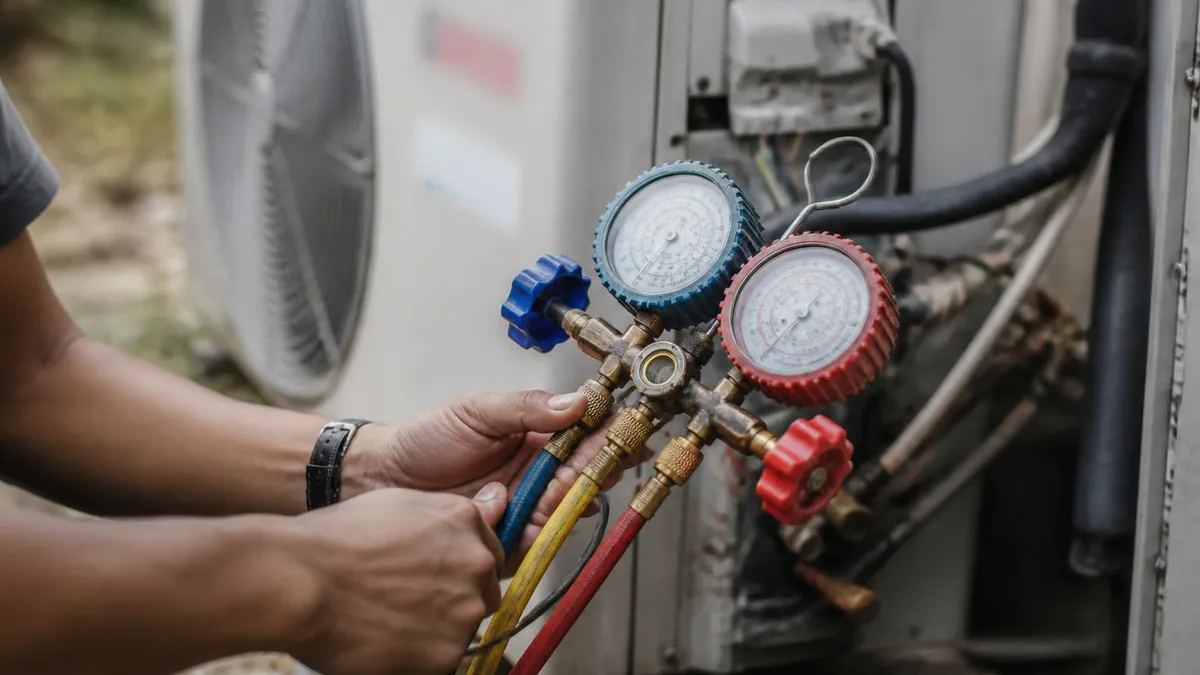
Performing your own refrigerant work, replacing covered components, or allowing an unlicensed technician to service your Trane system can void your manufacturer's warranty entirely. Trane's limited warranty explicitly requires service by a licensed HVAC contractor. Even seemingly minor repairs — like replacing a capacitor or resetting a safety switch incorrectly — can create documentation problems if a larger warranty claim arises later. When in doubt, call a certified Trane Comfort Specialist rather than attempting to DIY any repair beyond basic filter replacement and thermostat programming.
Choosing the right technician for your Trane HVAC service is arguably as important as the service itself. The quality of diagnosis, the accuracy of refrigerant charging, the thoroughness of a heat exchanger inspection, and the correctness of control board programming all depend heavily on the technician's training and experience with Trane-specific equipment. The Trane Comfort Specialist designation is the primary indicator of brand-specific competency, but it is a baseline, not a guarantee. Within that network, technicians vary considerably in experience level and areas of specialization.
When evaluating a Trane service provider, ask specifically whether their technicians hold current EPA Section 608 certification, which is required by federal law for any technician who handles refrigerants. Beyond that baseline, ask whether technicians have completed Trane's factory training programs, which cover communicating system diagnostics, variable-speed equipment commissioning, and heat pump service. Trane offers multiple training tiers, and a dealer that invests in advanced training for their team is generally more capable of handling complex diagnostics on premium Trane equipment than one that relies solely on on-the-job experience.
Online reviews are a useful but imperfect tool for evaluating HVAC service providers. Look for patterns in reviews rather than individual data points — a company with 200 reviews averaging 4.7 stars tells you more than one with 12 reviews at 5.0 stars. Pay particular attention to reviews that mention how the company handled problems or disputes, since every HVAC company eventually deals with difficult situations and their response reveals company culture. Reviews that specifically mention Trane experience are especially valuable when you are seeking service for a Trane system.
Get multiple quotes for any repair over $500, and be specific when requesting quotes — provide the system model number, the age of the equipment, and the diagnosis from your current technician. A legitimate HVAC contractor should be able to provide a written estimate that breaks out parts and labor separately.
Beware of unusually low quotes that do not include parts details, as these can lead to surprise charges once the technician is already on-site. Similarly, be cautious of any technician who diagnoses a major failure (compressor, heat exchanger, control board) on the first visit without thorough diagnostic testing — some less scrupulous contractors recommend major repairs that are not actually necessary.
The question of whether to repair or replace an aging Trane system comes up frequently, and it deserves a thoughtful framework rather than a snap decision. The general rule of thumb used in the industry is the 5,000 rule: multiply the system's age in years by the estimated repair cost in dollars. If the result exceeds $5,000, replacement is generally more economical than repair.
For example, a 12-year-old system facing a $500 repair would score 6,000 — suggesting replacement consideration. A 5-year-old system with the same $500 repair would score 2,500 — clearly worth repairing. This heuristic accounts for the reality that older systems facing one major repair often face additional failures soon after, and that newer systems offer substantially better energy efficiency that reduces operating costs.
When replacement does make sense, the decision about which Trane product line to choose involves balancing upfront cost against long-term efficiency savings. Trane's product line ranges from the XR series (entry-level, single-stage, SEER2 ratings from 14.3 to 17.0) to the XV series (variable-speed, SEER2 ratings up to 22.0). The efficiency difference between entry and premium can translate to $300 to $800 per year in energy savings depending on climate, home size, and utility rates.
In climates with long hot summers or cold winters, premium variable-speed equipment often pays back the price premium within eight to twelve years through energy savings alone — before accounting for the superior comfort of variable-speed operation.
HVAC technicians who service Trane systems should also be knowledgeable about indoor air quality accessories that integrate with Trane equipment. Trane's CleanEffects whole-home air filtration system, UV air purifiers, ventilation dampers, and whole-home humidifiers and dehumidifiers all connect to the Trane air handler and require periodic service separate from the HVAC system itself.
The CleanEffects filter, for example, requires cleaning every three to nine months depending on air quality conditions, and its performance deteriorates significantly when neglected. A comprehensive Trane service agreement from a quality dealer should include inspection of these accessories during tune-up visits, not just the core heating and cooling equipment.
If you are an HVAC technician or student preparing for certification exams, understanding Trane-specific systems provides real-world context for the concepts tested on national and state licensing exams. The refrigeration cycle, psychrometrics, electrical diagnostics, and combustion analysis that appear on the EPA 608 exam, NATE certification tests, and state licensing exams are all directly applicable to servicing Trane equipment in the field. Studying with practice questions that mirror real diagnostic scenarios helps bridge the gap between textbook theory and hands-on service work.
The NATE (North American Technician Excellence) certification is widely recognized as the premier technical credential for HVAC professionals, and Trane actively encourages its dealer network to employ NATE-certified technicians. NATE exams cover core areas including air conditioning, heat pumps, gas heating, and commercial refrigeration at both the installation and service levels. Technicians who hold NATE certification have demonstrated competency through rigorous testing rather than simply completing a training course, which gives homeowners a meaningful benchmark for evaluating a service technician's qualifications beyond just years of experience.
State licensing requirements for HVAC contractors vary significantly across the United States. Some states require both a contractor's license at the company level and individual technician licenses or certifications. Others regulate only at the contractor level. In most states, handling refrigerants requires EPA Section 608 certification regardless of other licensing. Homeowners hiring someone to service a Trane system should ask for proof of relevant licenses and certifications before work begins — not because most technicians are unqualified, but because licensing provides both a quality baseline and legal recourse if the work causes damage or injury.
The increasing complexity of modern Trane systems — particularly those in the XV and XL series with variable-speed compressors, communicating controls, and high-efficiency heat exchangers — means that the skill gap between a minimally trained technician and an experienced Trane specialist has grown considerably. A technician unfamiliar with Trane's communicating system protocols may spend hours troubleshooting a problem that a specialist could identify in minutes through the thermostat's diagnostic menu. Investing in finding a genuinely qualified Trane technician often costs less in the long run than paying for repeated visits from a general technician who lacks brand-specific knowledge.
Energy efficiency improvements from properly serviced Trane equipment can be substantial and measurable. Research by the Air Conditioning Contractors of America (ACCA) and the Department of Energy suggests that a typical residential HVAC system operating with dirty coils, a low refrigerant charge, and inadequate airflow may be operating at 60% to 70% of its rated efficiency — even if it is producing the target temperature.
Restoring the system to factory specifications through a thorough tune-up can reduce energy consumption by 15% to 30% on a neglected system. On a home spending $200 per month on cooling, that represents $30 to $60 in monthly savings — enough to pay for the tune-up visit within two to four months of cooling season.
Smart thermostat integration has become an important part of modern Trane HVAC service. Trane's own ComfortLink II thermostats, as well as compatible third-party smart thermostats like the ecobee and certain Google Nest models, can significantly enhance system performance when properly configured. Features like geofencing, learning schedules, remote monitoring, and runtime reporting help homeowners identify performance anomalies between service visits. Some Trane dealers offer remote monitoring services that alert them to fault codes or unusual operating patterns on connected systems, allowing proactive scheduling before a breakdown occurs during extreme weather.
The bottom line for homeowners is that Trane HVAC service is not an area to defer or cut corners. The investment in consistent professional maintenance, prompt attention to warning signs, proper warranty management, and qualified technician selection pays returns in system longevity, energy efficiency, and avoided emergency repair costs that far exceed the cost of the service itself. A well-serviced Trane system can comfortably exceed 20 years of reliable operation, while a neglected one of identical original quality might fail within ten years. The difference is almost entirely in how well the equipment is cared for over its service life.
Sample HVAC Practice Questions
Try these questions from our free HVAC practice tests. The correct answer and an explanation follow each question.
A technician is troubleshooting a hydronic system where one zone heats adequately but a second zone produces no heat despite the circulator running. What should be checked first?
- A. Boiler firing rate and aquastat setpoint
- B. Zone valve operation and thermostat signal to the valve
- C. Expansion tank pre-charge pressure
- D. System fill pressure at the boiler gauge
Answer: B. Zone valve operation and thermostat signal to the valve
When one zone works and another does not, the most likely cause is a failed zone valve that is not opening, or no electrical signal from the thermostat commanding the valve to open.
What is the required vacuum level that must be achieved before opening most HVACR systems containing high-pressure refrigerants for major service work?
- A. 0 psig
- B. 500 microns or below
- C. 1,000 microns
- D. 29 inches Hg
Answer: B. 500 microns or below
Before major service work, high-pressure refrigerant systems must be evacuated to 500 microns (0.5 mm Hg) or below to remove moisture and non-condensable gases, verified with an electronic micron gauge.
What is the maximum system pressure that technicians must achieve before opening a low-pressure chiller system for service according to EPA regulations?
- A. 0 psig (must be evacuated to atmospheric pressure)
- B. The pressure must be at or above atmospheric (0 psig)
- C. 15 psig above atmospheric
- D. Vacuum of 1 inch Hg
Answer: B. The pressure must be at or above atmospheric (0 psig)
Before opening a low-pressure system for service, the pressure must be raised to at or above atmospheric pressure (0 psig / 14.7 psia) to prevent air infiltration, which could cause moisture and non-condensable gas contamination.
An HVAC technician is asked to service a split system in a confined crawlspace. Which atmospheric hazard should be tested for BEFORE entering?
- A. Carbon dioxide levels only
- B. Oxygen deficiency, flammable gases, and toxic gases
- C. Temperature and humidity only
- D. Only refrigerant concentration
Answer: B. Oxygen deficiency, flammable gases, and toxic gases
Confined space entry requires testing for oxygen deficiency, flammable/explosive gases, and toxic gases before any worker enters.
HVAC Questions and Answers
FCU HVAC: The Complete Guide to Fan Coil Units, How They Work, Where They Excel, and How to Choose the Right System
Finance a New HVAC System: 2026 Loans, 0% APR, and Rebates
HVAC Duct Repair: Common Issues, Costs, and DIY vs Professional
HVAC School -- Programs, Costs, and Career Paths in 2026
HVAC Advertising: The Complete Playbook for Generating Leads, Booking Calls, and Growing Your Heating and Cooling Business
About the Author

NATE Certified HVAC Technician & Licensing Exam Trainer
Universal Technical InstituteMike Johnson is a NATE-certified HVAC technician and EPA 608 universal-certified refrigerant handler with a Bachelor of Science in HVAC/R Technology. He has 19 years of commercial and residential HVAC installation and service experience and specializes in preparing technicians for NATE certification, EPA 608, A2L refrigerant safety, and state HVAC contractor licensing examinations.