
HVAC Pro: The Complete Guide to Becoming a Professional HVAC Technician in 2026 October
Become an HVAC pro with our complete 2026 October guide covering training, certifications, salary, tools, and the skills every professional technician needs. 🔎
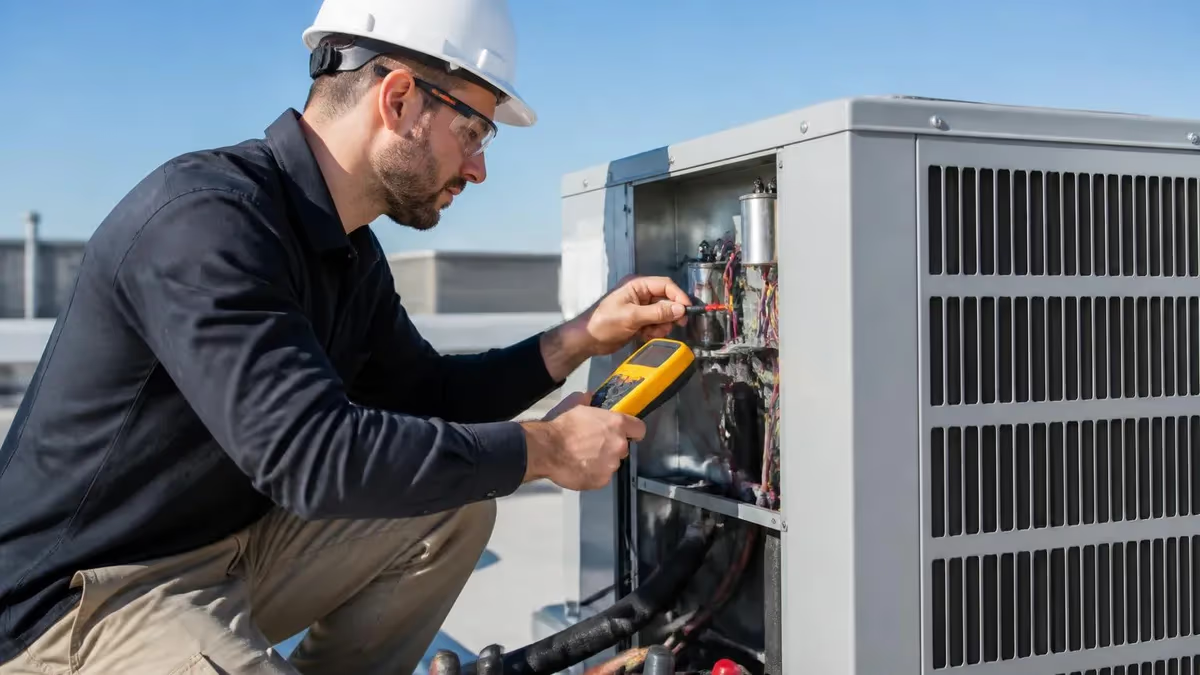
Becoming an HVAC pro in 2026 means stepping into one of the most stable, technically demanding, and financially rewarding skilled trades in the country. The heating, ventilation, and air conditioning industry employs more than 415,000 technicians across the United States, and the Bureau of Labor Statistics projects 6 percent job growth through 2032, faster than the average for all occupations. Whether you are an apprentice troubleshooting your first rooftop unit or a seasoned journeyman managing a service truck, the path forward demands both hands-on skill and continuous learning to keep pace with evolving refrigerants, controls, and efficiency standards.
The term HVAC pro covers a wide spectrum of specialists, from residential install crews and commercial service technicians to building automation experts and refrigeration mechanics. What unites them is a shared foundation of knowledge: refrigeration cycle theory, electrical diagnostics, airflow calculations, combustion safety, and code compliance. Every professional builds on this base, then layers specialty knowledge in heat pumps, VRF systems, geothermal, or industrial chillers depending on the niche they pursue and the regional market in which they work.
The barrier to entry has never been lower, but the ceiling has never been higher. Most states require some combination of trade school education, registered apprenticeship hours, EPA Section 608 certification for refrigerant handling, and a state or municipal license to perform work independently. Top earners in major metros routinely clear $90,000 to $120,000 annually, with business owners and specialty contractors crossing six figures comfortably. The trade rewards technicians who treat learning as a lifelong commitment rather than a one-time credential.
This guide walks through every milestone of the HVAC career path, from picking the right school and securing an apprenticeship to passing your licensing exam, mastering diagnostics, and eventually scaling into ownership or specialty work. We pull from current industry data, contractor surveys, and the actual experiences of working professionals across the country. If you want a quick refresher on system fundamentals before diving in, the CFM HVAC basics article covers the core airflow and sizing concepts every technician must understand.
Whether you are considering a career change at 30, supplementing a high school diploma at 18, or transitioning from military service through a Helmets to Hardhats program, the HVAC trade offers a defined ladder with measurable progress. Apprentice wages start around $18 to $22 per hour in most markets and scale predictably as you accumulate hours and pass examinations. Unlike many four-year degrees, the financial math works from day one: you earn while you learn, and you graduate without crushing student debt.
The work itself is demanding. Crawl spaces in July, attics in August, rooftops in January, and emergency calls at 2 a.m. when a furnace fails during a cold snap. But the satisfaction of restoring comfort to a family with a newborn or keeping a hospital data center cool is real, tangible, and immediate. HVAC pros solve problems that matter, and the customer sees the result the moment cool air starts flowing again.
This article serves as a comprehensive roadmap. We cover training pathways, certification requirements, daily responsibilities, tool investments, salary benchmarks, specialization options, business considerations, and the practical study strategies that help apprentices pass their first licensing exam on the first attempt. By the end you will have a clear picture of what it takes to become and remain a competitive HVAC pro in today's market.
HVAC Pro Career by the Numbers
Four Pathways to Become an HVAC Pro
Six-month to two-year programs at community colleges and technical institutes that combine classroom theory with hands-on labs, covering refrigeration, electrical, controls, and EPA 608 preparation in a structured environment.
Department of Labor registered programs that pair 144 hours of annual classroom instruction with 2,000 hours of paid on-the-job training each year for three to five years, leading to journeyman status.
UA Local programs through the United Association of plumbers and pipefitters offering five-year apprenticeships with industry-leading wages, benefits, and pension contributions starting on day one of employment.
Veterans with utilities, refrigeration, or facilities maintenance MOS codes can fast-track through Helmets to Hardhats, SkillBridge, and direct-entry employer programs that grant credit for prior experience.
Certifications and licensing form the legal and practical foundation of every HVAC pro career. The single most important credential is EPA Section 608, which the federal Clean Air Act requires for anyone who purchases, handles, or disposes of refrigerants. The exam has four parts: Core (universal regulations), Type I (small appliances), Type II (high-pressure systems), and Type III (low-pressure systems). Most working technicians earn Universal certification, which covers all three appliance types and signals to employers that you can work on any refrigerant system you encounter in the field.
Beyond EPA 608, the certification landscape branches into voluntary credentials that boost employability and pay. NATE certification, administered by North American Technician Excellence, is the gold standard for proving technical competence in specific specialties like air conditioning, gas heating, heat pumps, and commercial refrigeration. HVAC Excellence offers parallel credentials with strong recognition in educational settings. R-410A and the newer A2L refrigerant safety certifications have become essential as the industry transitions to lower global warming potential refrigerants under the AIM Act phasedown schedule.
State licensing requirements vary dramatically across the country. Texas, Florida, California, North Carolina, and Georgia all require state-issued HVAC contractor or technician licenses with specific experience hours, examination requirements, and continuing education obligations. Other states like Pennsylvania, Illinois, and Wisconsin delegate licensing to municipalities, which means a technician working in Philadelphia faces different requirements than one working in Pittsburgh. Always check both state and local jurisdiction rules before performing paid work, and budget for license fees, exam costs, and required insurance bonds.
The licensing exam itself typically covers four content domains: refrigeration theory and practice, electrical fundamentals and motor controls, heating systems and combustion, and code compliance based on the International Mechanical Code or local amendments. Most candidates spend 8 to 16 weeks preparing using a combination of code books, exam prep manuals, and practice question banks. The pass rate for first-time test takers hovers around 60 to 70 percent, which means meaningful preparation matters and rushing into the exam wastes both money and time.
For HVAC pros aiming to work as independent contractors or business owners, additional credentials come into play. Most states require a separate contractor license that proves business knowledge, including law, finance, project management, and worker safety. The NASCLA Accredited Examination for Commercial General Building Contractor satisfies the trade portion of contractor licensing in many states, simplifying multi-state expansion. Bonding, general liability insurance, workers compensation, and commercial auto coverage all become non-negotiable once you carry your own license.
Continuing education is not optional for serious HVAC pros. Most licensing jurisdictions require 4 to 16 hours of approved continuing education each renewal cycle to stay current. Manufacturers like Carrier, Trane, Lennox, Daikin, and Mitsubishi all offer free or low-cost training programs that count toward CEU requirements while teaching you the specific quirks of their equipment. Building relationships with local distributors also pays dividends in technical support and warranty processing. For more on hiring and vetting professionals, review our guide to certified HVAC contractors.
Specialty certifications like BPI Building Analyst, RESNET HERS Rater, and LEED Green Associate open doors into the lucrative home performance and green building markets. Building Automation System credentials from Tridium Niagara, Johnson Controls Metasys, or Honeywell Webs put you at the forefront of commercial controls work, which often pays 20 to 40 percent more than residential service. The pattern is clear: more certifications correlate strongly with higher hourly rates, better employer benefits, and faster career advancement.
HVAC Practice Test Questions
Prepare for the HVAC - Heating Ventilation and Air Conditioning exam with our free practice test modules. Each quiz covers key topics to help you pass on your first try.
HVAC Air Conditioning
HVAC Exam Questions covering Air Conditioning. Master HVAC Test concepts for certification prep.
HVAC Code Compliance
Free HVAC Practice Test featuring Code Compliance. Improve your HVAC Exam score with mock test prep.
HVAC Electrical Controls
HVAC Test Prep for Electrical Controls. Practice HVAC Quiz questions and boost your score.
HVAC Energy Efficiency
HVAC Questions and Answers on Energy Efficiency. Free HVAC practice for exam readiness.
HVAC Heating Systems
HVAC Mock Test covering Heating Systems. Online HVAC Test practice with instant feedback.
HVAC Load Calculations
Free HVAC Quiz on HVAC Load Calculations. HVAC Exam prep questions with detailed explanations.
HVAC Tools and Equipment
HVAC Practice Questions for HVAC Tools and Equipment. Build confidence for your HVAC certification exam.
HVAC Refrigeration
HVAC Test Online for Refrigeration. Free practice with instant results and feedback.
HVAC Safety Practices
HVAC Study Material on Safety Practices. Prepare effectively with real exam-style questions.
HVAC System Design
Free HVAC Test covering System Design. Practice and track your HVAC exam readiness.
HVAC Thermodynamics
HVAC Exam Questions covering Thermodynamics. Master HVAC Test concepts for certification prep.
Core Technical Skills Every HVAC Pro Must Master
The refrigeration cycle is the beating heart of every air conditioner, heat pump, and commercial chiller you will ever service. HVAC pros must read pressure-temperature charts in their sleep, calculate superheat and subcooling under varying load conditions, and diagnose refrigerant charge problems by interpreting suction and liquid line readings against ambient and indoor wet bulb temperatures.
Beyond charging, you need to recover, recycle, and recharge refrigerant safely while complying with EPA leak repair rules for systems containing 50 or more pounds. Brazing, evacuation to 500 microns, and proper nitrogen purging are daily skills. As the industry transitions to A2L refrigerants like R-454B and R-32, understanding flammability classifications and updated safety protocols becomes non-negotiable for every working pro.

Is an HVAC Pro Career Right for You?
- +Strong job security with consistent demand across economic cycles
- +Earn-while-you-learn apprenticeship model avoids student debt
- +Clear career ladder from apprentice to journeyman to master to owner
- +Six-figure earning potential for specialists and business owners
- +Geographic flexibility — skills transfer to any climate or market
- +Tangible daily wins from restoring comfort and solving real problems
- −Physically demanding work in extreme heat, cold, and tight spaces
- −On-call rotations and emergency overnight service calls
- −Significant upfront investment in tools, gauges, and meters
- −Continuing education and certification renewals never stop
- −Refrigerant exposure and electrical hazards require constant vigilance
- −Customer-facing pressure during stressful no-cooling situations
Pros and Cons at a Glance
| Pros | Cons |
|---|---|
| Strong job security with consistent demand across economic cycles | Physically demanding work in extreme heat, cold, and tight spaces |
| Earn-while-you-learn apprenticeship model avoids student debt | On-call rotations and emergency overnight service calls |
| Clear career ladder from apprentice to journeyman to master to owner | Significant upfront investment in tools, gauges, and meters |
| Six-figure earning potential for specialists and business owners | Continuing education and certification renewals never stop |
| Geographic flexibility — skills transfer to any climate or market | Refrigerant exposure and electrical hazards require constant vigilance |
| Tangible daily wins from restoring comfort and solving real problems | Customer-facing pressure during stressful no-cooling situations |
Essential HVAC Pro Tools and Truck Setup
- ✓Digital multimeter with capacitance, microamp, and temperature functions
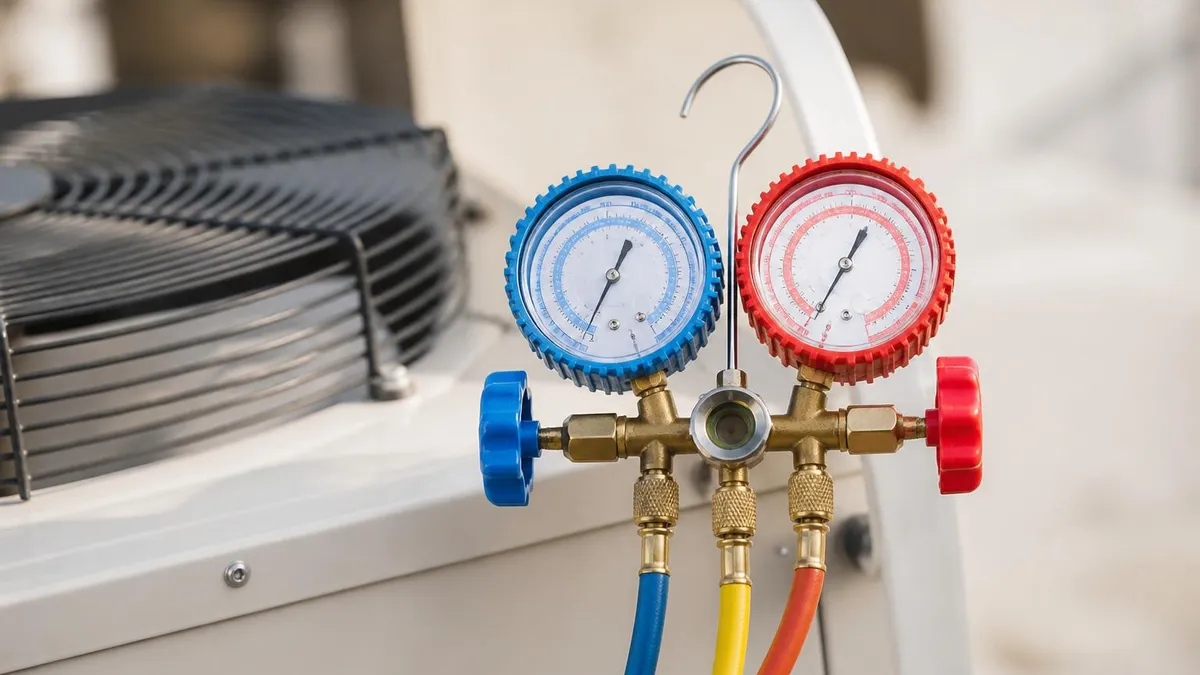
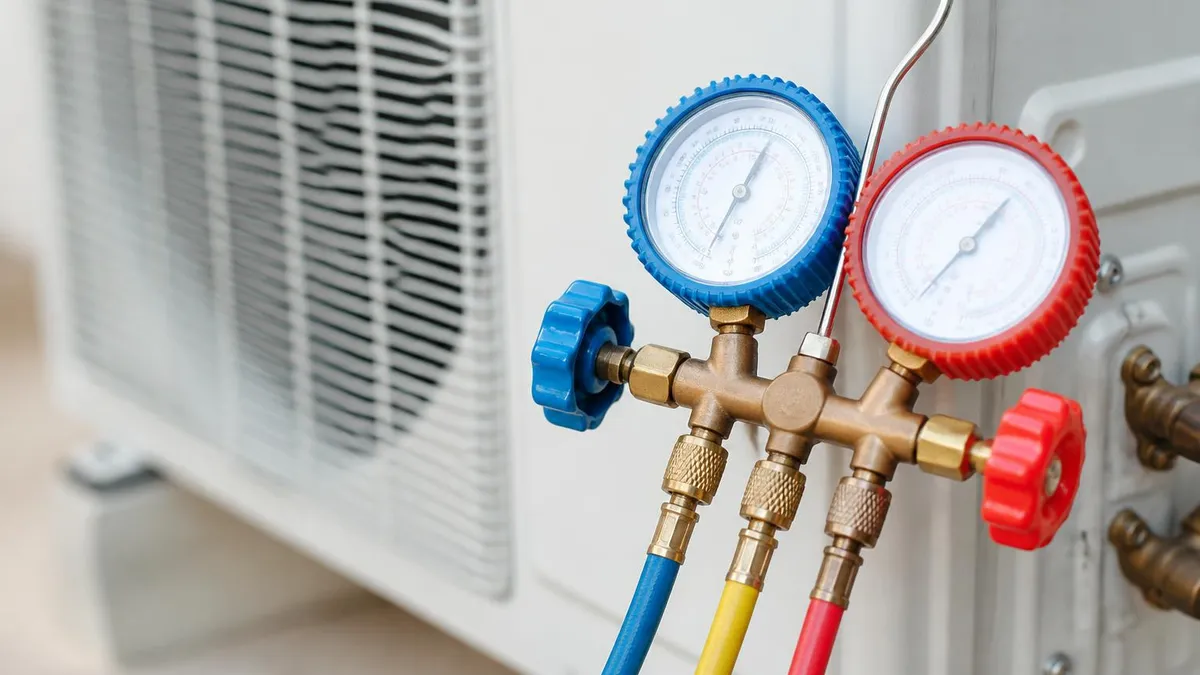
- ✓Wireless digital manifold gauge set with Bluetooth probe connectivity
- ✓Vacuum pump rated for 6 CFM or higher with isolation valve
- ✓Micron gauge capable of reading to 50 microns or lower
- ✓Recovery machine with oil-less compressor and dedicated recovery tank
- ✓Nitrogen tank, regulator, and high-pressure hoses for pressure testing
- ✓Combustion analyzer for gas furnace tuning and CO safety verification
- ✓Pipe wrenches, tubing cutters, deburring tool, and flaring kit
- ✓Anemometer, manometer, and flow hood for airflow diagnostics
- ✓Personal protective equipment including safety glasses, gloves, and arc-rated clothing
Budget $4,000 to $8,000 for your first complete tool kit
Most new HVAC pros underestimate the cost of building out a professional toolbox. A quality digital manifold runs $500 to $900, a vacuum pump $300 to $600, and a combustion analyzer can cross $1,500. Many employers reimburse a tool allowance or offer payroll deduction programs to spread the cost, but the long-term investment is yours to protect, maintain, and upgrade as your specialty develops.
Salary expectations for HVAC pros vary widely by region, specialty, and experience level. According to the Bureau of Labor Statistics May 2024 data, the median annual wage for HVAC mechanics and installers is $57,300, with the top 10 percent earning more than $89,000 and the bottom 10 percent earning under $39,000. These figures undersell the reality for many working pros because they exclude overtime, on-call pay, performance bonuses, spiffs from manufacturers, and the substantial earnings of business owners and independent contractors.
Geographic location dramatically influences earnings. HVAC pros in Alaska, Hawaii, California, Massachusetts, and Washington State earn the highest median wages, with experienced commercial technicians in San Francisco, Seattle, and Boston routinely clearing $110,000 in base wages alone. Conversely, technicians in rural markets across Mississippi, Arkansas, and West Virginia may top out around $55,000 even with full journeyman credentials. Cost of living adjustments soften the gap, but high cost markets generally pay more than the price difference justifies.
Specialty choice is the single biggest lever you can pull to increase earnings. Commercial refrigeration technicians, building automation specialists, industrial process cooling experts, and clean room HVAC pros all command premium wages because the technical complexity narrows the labor pool. A controls technician fluent in BACnet, Modbus, and proprietary protocols like Tridium Niagara can earn $90,000 to $140,000 in major metros, often with a company truck, fuel card, and comprehensive benefits package.
Service technicians on residential routes typically earn through a combination of hourly wages and commission on parts, accessories, and maintenance agreements sold during calls. Top residential service pros routinely earn $90,000 to $130,000 by combining strong diagnostic skills with consultative customer communication. Install crews working on new construction or replacement systems generally earn lower hourly rates but accumulate more billable hours with less customer-facing time, appealing to technicians who prefer focused work over sales pressure.
Business ownership represents the highest earning path for ambitious HVAC pros. A solo operator running a one-truck residential service business in a healthy market can clear $150,000 to $250,000 in personal income after expenses within three to five years of launch. Multi-truck operations with five to twenty employees produce owner earnings of $300,000 to $1,000,000 annually, though they demand significantly more administrative, marketing, and management skill than purely technical work. Many pros use service experience as a deliberate stepping stone toward ownership.
Benefits packages matter as much as base wages when evaluating opportunities. Union signatory contractors typically offer pension plans, annuity contributions, fully paid family health coverage, and supplemental dental and vision insurance. Large non-union employers compete with 401(k) matches, performance bonuses, take-home trucks, paid training, and tuition reimbursement for continuing education. Smaller residential contractors may offer lower benefits but greater scheduling flexibility, faster promotion paths, and direct mentorship from owner-operators.
The HVAC pro who consistently invests in skills, certifications, and reputation outpaces colleagues who treat the trade as a clock-in, clock-out job. Learning new equipment lines, adding controls competency, mastering load calculations, and developing customer communication skills compound into career-long earning advantages. Tools like a quality HVAC duct calculator become daily companions that help technicians validate designs, identify retrofit opportunities, and explain technical concepts to customers in language that drives confident purchase decisions.
Anyone who purchases, handles, or disposes of refrigerant in the United States must hold valid EPA Section 608 certification. Civil penalties for violations can exceed $50,000 per day per violation. Earn your Universal certification before your first day on a service truck, and keep the wallet card on you at all times when buying refrigerant from a supply house.
Building a long-term HVAC pro career means thinking beyond your next service call and intentionally constructing the skills, relationships, and reputation that will sustain you for thirty or forty years in the trade. The technicians who thrive at fifty and sixty did not stumble into longevity. They made deliberate choices in their twenties and thirties about specialization, body protection, ongoing education, and financial planning that compound over decades into freedom and stability.
Physical longevity starts with treating your body as professional equipment. Knee pads, lifting belts, ear protection, anti-fatigue mats, ergonomic tools, and disciplined stretching routines extend careers by years. Many veteran pros wish they had taken hearing protection more seriously in their twenties or invested in proper rooftop fall protection earlier. The trade has a tendency to reward toughness in the short term and punish it in the long term, so build sustainable habits before injuries force unwanted career pivots.
Career capital accumulates through reputation as much as resume. The pros who get the best assignments, the most referrals, and the highest pay are almost always the ones whose name carries weight with customers, distributors, manufacturers, and colleagues. Show up on time, communicate clearly, take pride in workmanship that holds up to inspection, and protect customer property like your own. These habits cost nothing but pay dividends for decades. Local guides like our HVAC repair Philadelphia resource show how regional expertise and reputation drive repeat business.
Mentorship runs in both directions for sustainable HVAC pros. Early in your career, attach yourself to a journeyman who teaches generously, asks good questions, and treats apprentices with respect. Later, return the favor by training the next generation. Mentoring forces you to articulate why you do what you do, exposes gaps in your own understanding, and builds relationships that often become business partnerships or referral pipelines years down the line. The trade is a long game, and the people you invest in tend to invest back.
Financial planning separates HVAC pros who retire comfortably from those who work into their seventies because they have to. Apprentice and journeyman wages are strong enough to support aggressive saving, but the trade attracts plenty of high earners who never build wealth because they never establish disciplined habits. Maximize employer 401(k) matches, contribute to a Roth IRA, build an emergency fund covering six months of expenses, and keep lifestyle inflation in check during high-earning specialty or business ownership years.
Technology adoption is no longer optional. HVAC pros who refuse to learn modern diagnostic apps, customer relationship management software, electronic invoicing, and connected equipment platforms will watch younger technicians leapfrog them in earnings and opportunity. Embrace mobile manifold sets, Bluetooth combustion analyzers, smart thermostats, and digital documentation tools. The skill curve flattens quickly, and the productivity gains translate directly into more calls completed per day and higher customer satisfaction scores.
Finally, define success on your own terms. Some HVAC pros find deep fulfillment running a one-truck operation that serves the same neighborhood for thirty years. Others build regional companies with hundreds of trucks and sell to private equity. Both paths are valid, and neither is intrinsically better. The trade offers genuine flexibility to design a career that matches your temperament, ambition, family situation, and values. The pros who burn out are often the ones chasing somebody else's definition of success rather than their own.
Practical exam preparation tips separate first-time passers from repeat test takers. Start by acquiring the exact code book and reference materials your licensing jurisdiction uses, typically the International Mechanical Code, International Fuel Gas Code, and your state's specific amendments. Read these cover to cover at least twice, marking tabs at frequently referenced sections like venting tables, duct sizing requirements, and combustion air calculations. The exam allows reference materials in most states, but only candidates who know exactly where to find answers can use that privilege effectively under time pressure.
Build a study schedule that respects how adult learning actually works. Three focused hours four nights a week beats one twelve-hour cram session on Saturday. Use spaced repetition for memorization-heavy topics like refrigerant temperature-pressure relationships, electrical formulas, and combustion ratios. Take practice exams under realistic timed conditions, then review every missed question to identify whether the error came from knowledge gaps, careless reading, or formula errors. Track your scores week over week to confirm progress before scheduling the actual exam.
Form a study group with two or three other apprentices preparing for the same exam. Teaching concepts to peers exposes the gaps in your own understanding faster than any other study technique. Quiz each other on refrigeration cycle states, motor starting components, and code clearances during lunch breaks and ride-alongs. Groups also help maintain accountability during the long preparation grind when motivation flags, and they often become professional networks that benefit careers for decades after the exam.
Field experience beats textbook study for diagnostic questions. Volunteer for the calls your supervisor offers as learning opportunities, even when they extend your day or involve unfamiliar equipment. Pay attention to how veteran technicians approach unknown systems, what they check first, and how they interpret ambiguous symptoms. Keep a small notebook in your tool bag for capturing tricky diagnoses, unusual failures, and lessons learned. Review these notes during exam preparation to anchor abstract concepts in concrete memories.
Day-of-exam logistics matter more than candidates expect. Sleep eight hours the night before, eat a real breakfast, and arrive at the testing center thirty minutes early to handle parking, check-in, and identification verification without stress. Bring approved calculators, reference books, and backup batteries. Read every question completely before looking at answer choices, watch for negative wording like except and not, and flag uncertain questions for review rather than burning time on the first pass. Confidence and pacing win exams as reliably as raw knowledge.
After passing your initial licensing exam, immediately begin planning your next credential. Continuing education is required for license renewal in most jurisdictions, and the technicians who treat learning as a continuous discipline rather than a deadline-driven obligation accumulate skills, certifications, and earnings faster than peers who only study when forced. Set a personal goal of one new manufacturer training, one new certification, and one new equipment specialty every twelve months for the first decade of your career.
Finally, remember that becoming an HVAC pro is a marathon rather than a sprint. The first two years are brutal as you absorb a firehose of unfamiliar concepts, equipment, and customer interactions. The middle years reward disciplined skill building with rapid wage increases and growing autonomy. The later years bring choice: deeper specialization, business ownership, training and mentorship, or simply the satisfaction of mastering a trade that pays well and matters to the communities you serve. Wherever you are on the path, the next step is always within reach.
Sample HVAC Practice Questions
Try these questions from our free HVAC practice tests. The correct answer and an explanation follow each question.
What is the most important professional competency for HVAC certification in electrical controls?
- A. Speed of task completion
- B. Deep knowledge combined with practical application skills
- C. Ability to work alone exclusively
- D. Memorization of all reference materials
Answer: B. Deep knowledge combined with practical application skills
Professional competency requires both deep knowledge of the subject matter and the ability to apply that knowledge in practical situations.
What is the most important professional competency for HVAC certification in ductwork?
- A. Speed of task completion
- B. Deep knowledge combined with practical application skills
- C. Ability to work alone exclusively
- D. Memorization of all reference materials
Answer: B. Deep knowledge combined with practical application skills
Professional competency requires both deep knowledge of the subject matter and the ability to apply that knowledge in practical situations.
An HVAC technician notices condenser coil fins are bent and restricting airflow. What is the most likely energy impact?
- A. Increased condensing pressure and reduced system efficiency
- B. Lower suction pressure and more cooling capacity
- C. Reduced compressor amperage draw
- D. Improved latent cooling due to slower airflow
Answer: A. Increased condensing pressure and reduced system efficiency
Restricted condenser airflow raises head pressure, forcing the compressor to work harder and reducing overall system efficiency.
What is the most important professional competency for HVAC certification in refrigeration?
- A. Speed of task completion
- B. Deep knowledge combined with practical application skills
- C. Ability to work alone exclusively
- D. Memorization of all reference materials
Answer: B. Deep knowledge combined with practical application skills
Professional competency requires both deep knowledge of the subject matter and the ability to apply that knowledge in practical situations.
HVAC Questions and Answers

HVAC Duct Supplies: The Complete Buyer's Guide to Ductwork Components, Sizing, and Installation Materials
CFM HVAC Basics: How Airflow, Sizing, and System Performance Work Together
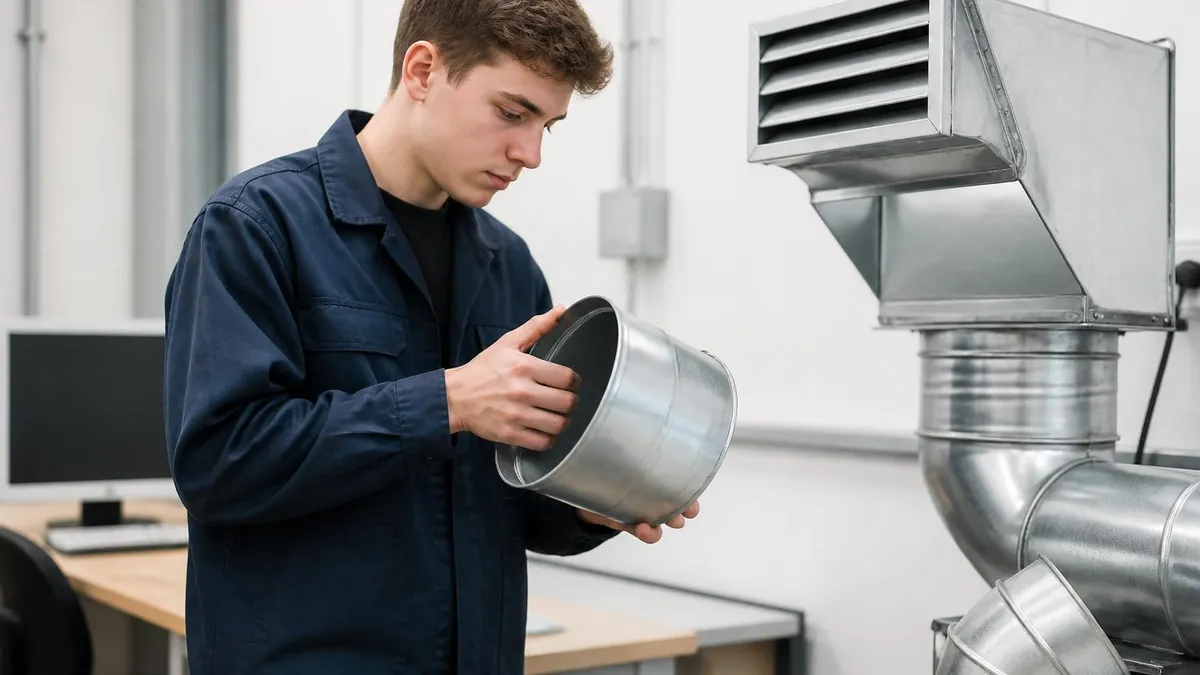
HVAC Duct Calculator: The Complete Guide to Sizing Ductwork for Airflow, Static Pressure, and System Efficiency
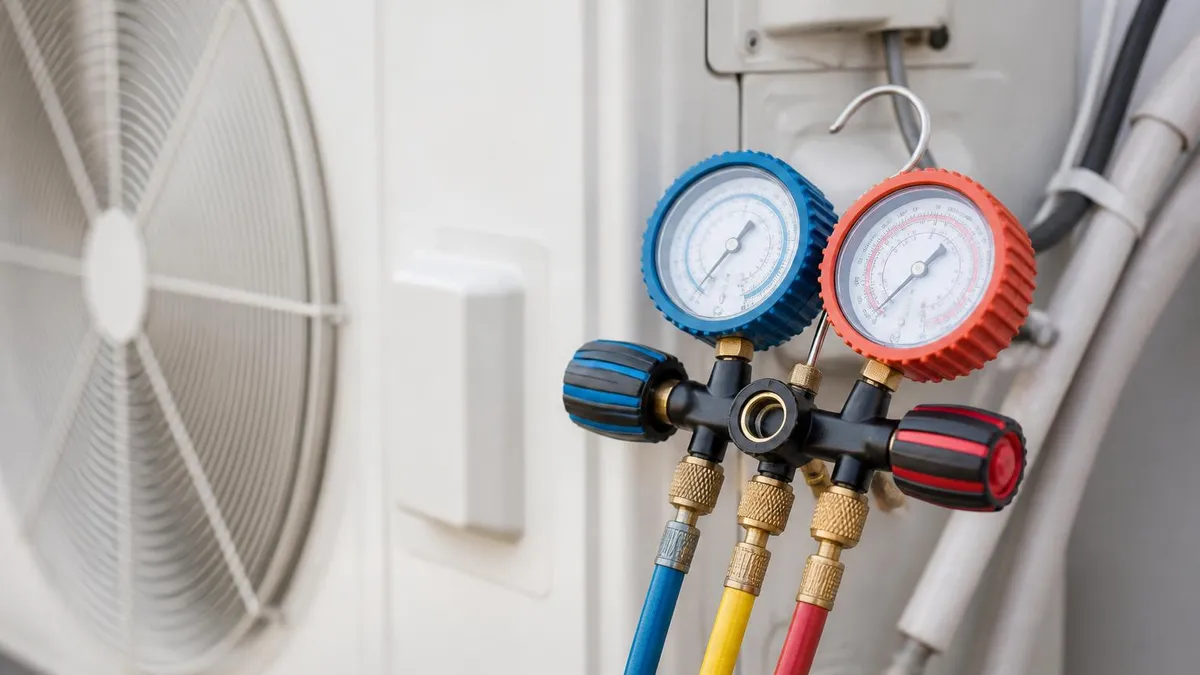
Certified HVAC Contractors: How to Find, Vet, and Hire the Right Professional for Your Home or Business

HVAC Repair Philadelphia: The Complete Homeowner's Guide to Finding, Hiring, and Working With Local Heating and Cooling Pros
About the Author

NATE Certified HVAC Technician & Licensing Exam Trainer
Universal Technical InstituteMike Johnson is a NATE-certified HVAC technician and EPA 608 universal-certified refrigerant handler with a Bachelor of Science in HVAC/R Technology. He has 19 years of commercial and residential HVAC installation and service experience and specializes in preparing technicians for NATE certification, EPA 608, A2L refrigerant safety, and state HVAC contractor licensing examinations.