
HVAC Worker Career Guide: Skills, Salary, Certifications, and How to Become a Successful Technician in 2026 September
HVAC worker career guide covering salary ranges, required certifications, daily tasks, training paths, and how to land your first job in the trade. 📝
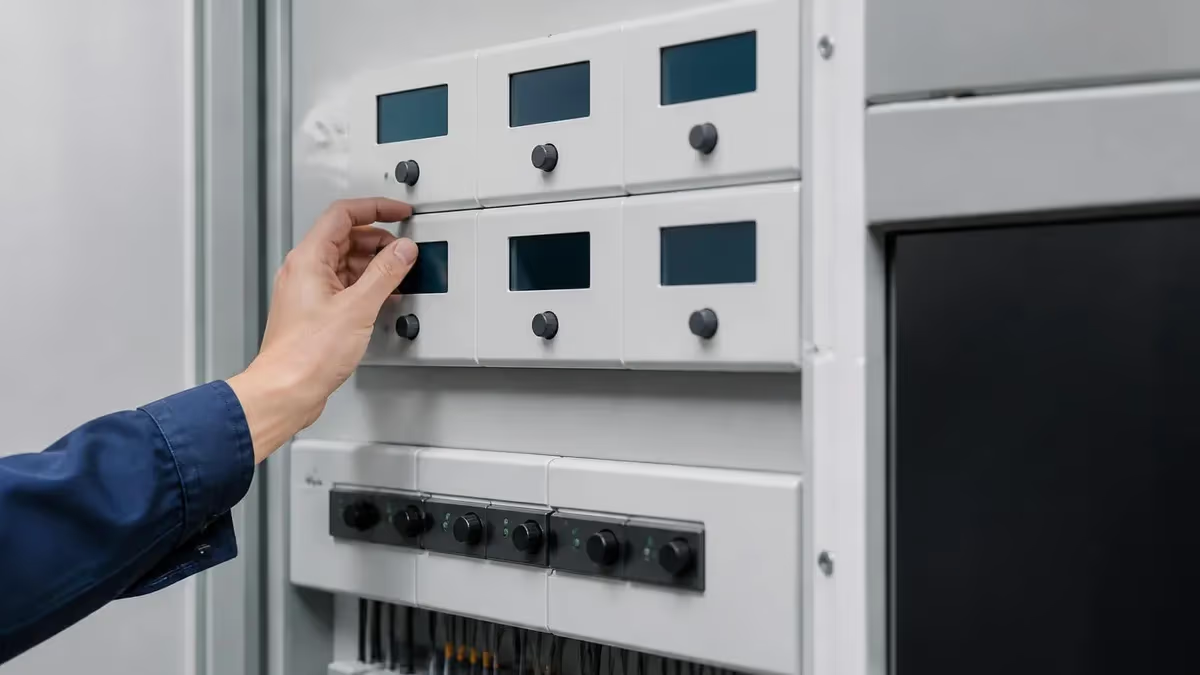
Becoming an hvac worker is one of the smartest moves a hands-on person can make in today's skilled trades economy, where demand for heating, ventilation, air conditioning, and refrigeration technicians keeps outpacing supply. With Baby Boomers retiring, residential housing stock aging, and commercial buildings adopting tighter energy codes, the work pipeline for qualified HVAC professionals stretches well into the next decade. This guide unpacks what the role actually looks like, what you earn, and how to build a durable career from your first apprenticeship to running your own service truck.
Unlike many office jobs, an HVAC worker spends days solving real puzzles: diagnosing a refrigerant leak, sizing ductwork, wiring a thermostat, or commissioning a rooftop unit. Each call is different. Each season brings new challenges, from frozen heat pumps in January to overloaded condensers in July. The variety keeps the job mentally engaging, and the constant problem-solving builds skills that pay compounding dividends as you accumulate experience and specialty certifications over five, ten, and twenty year horizons.
Compensation reflects the technical demands. Entry-level helpers in most US markets start at $17 to $22 per hour, while journeymen with EPA Section 608 certification, NATE credentials, and a few years of field experience routinely clear $70,000 to $95,000 annually. Master technicians, commercial controls specialists, and refrigeration leads in industrial or healthcare settings can push past $120,000 once overtime, on-call premiums, and bonuses are factored in. Many also leverage skills into side service businesses on weekends.
Education paths are flexible. You can enter through a union apprenticeship, a community college HVAC program, a private trade school, or a non-union company that hires green helpers and pays for night school. Most workers earn their first EPA card within six months and a state license or journeyman card within two to five years, depending on jurisdiction. If you want to vet companies before committing, browsing hvac contractors in your area is a useful first step.
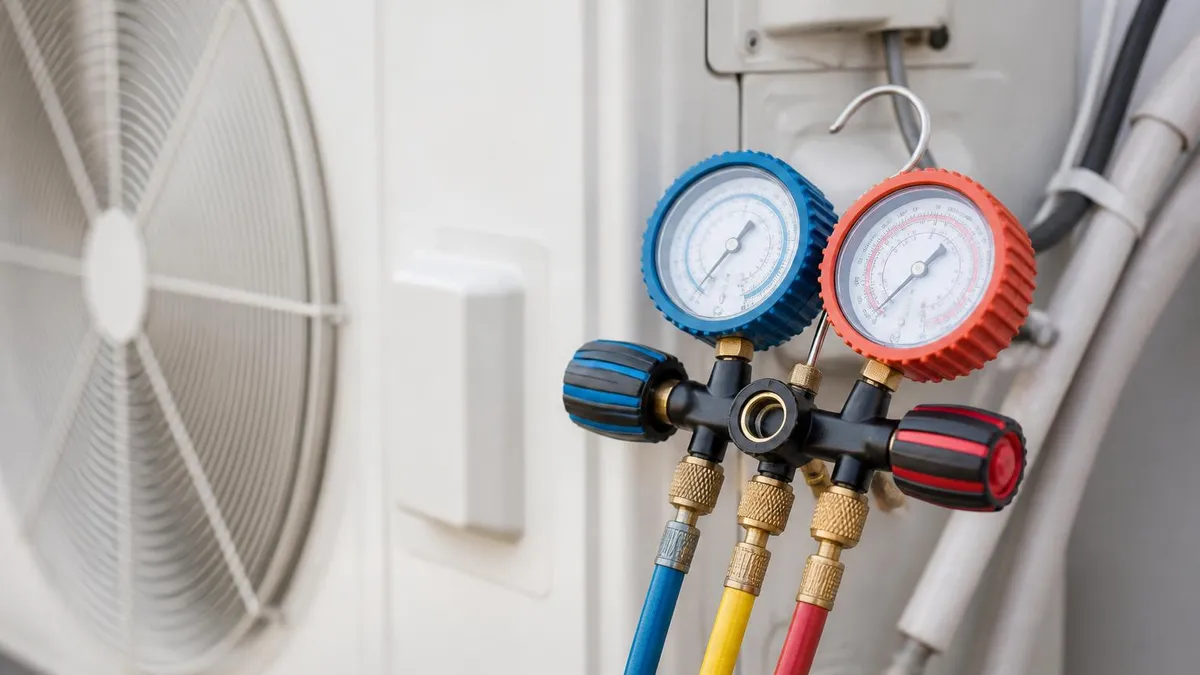
The job is physically demanding. Expect crawl spaces, attics hitting 130 degrees in summer, brazing torches, electrical hazards, and 70 pound compressors. Safety training is non-negotiable. But the trade also rewards intelligence: modern systems integrate variable-speed inverters, BACnet controls, smart thermostats, and EPA-regulated low-GWP refrigerants. Workers who lean into the technology side, learn to read manometers and hvac digital gaugess, and stay current on code changes separate themselves from the pack quickly.
This article walks through everything a prospective or working HVAC hvac terms: realistic salary data, certification roadmaps, daily responsibilities, equipment lists, advancement paths, and common pitfalls. Whether you are seventeen and weighing trade school versus college, or thirty-five and pivoting from a desk job, the following sections give you a concrete view of what the next twelve months and next twelve years can look like in the HVAC field. By the end, you will know your first three steps and your five-year plan.
HVAC Worker Career by the Numbers

HVAC Worker Career Path: From Helper to Master Tech
Entry role, typically 0-2 years. Carries equipment, performs basic installs under supervision, attends night classes, earns EPA 608 certification. Hourly pay $17-$22.
2-4 years experience. Handles routine service calls, maintenance contracts, simple diagnostics. Works mostly independently but escalates complex calls to seniors. Earns $24-$32 per hour.
Fully licensed, 4-6 years field time. Diagnoses any residential or light commercial issue, mentors apprentices, handles refrigerant work. Pay range $32-$45 hourly plus overtime.
8+ years. Runs crews on large installs, designs systems, troubleshoots controls, signs off on permits in master-license states. $45-$60 per hour plus bonuses.
10-15+ years. Manages techs, schedules dispatch, handles estimating, or owns a service truck and runs solo. Income $90K to $200K+ depending on book of business.
The daily life of an HVAC worker varies enormously depending on whether you focus on residential service, new construction installation, commercial maintenance, or refrigeration. A residential service tech might run six to eight calls a day during peak summer, rotating between no-cool diagnostics, capacitor replacements, refrigerant top-offs, and full system tune-ups. A new construction installer, by contrast, spends weeks on the same job site mounting air handlers, hanging ductwork, brazing line sets, and pulling thermostat wire alongside electricians and framers.
Mornings typically start with a dispatch meeting or route review. Service techs check truck inventory, review the day's tickets in their mobile app, and load any parts pulled from the warehouse the night before. Installers gather blueprints, mechanical schedules, and review with the foreman where the day's work fits into the construction timeline. Both groups perform a quick safety briefing, especially around energized panels, ladder use, and confined-space entry for crawl spaces and mechanical rooms.
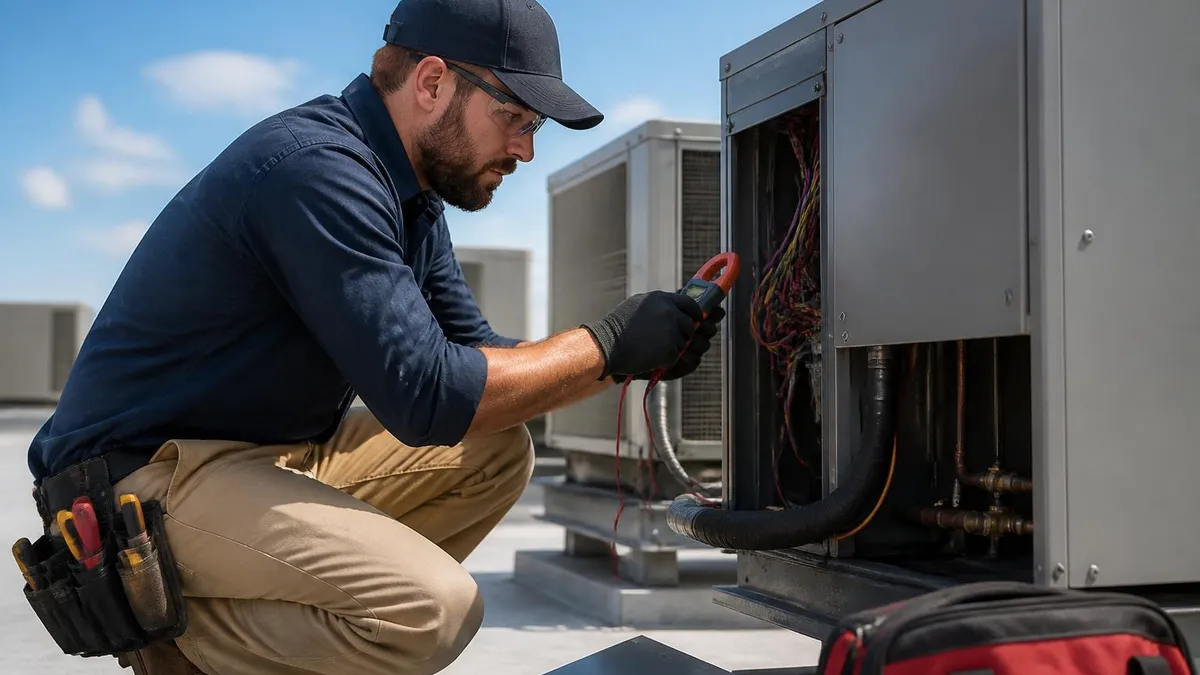
Diagnostic work is where experience pays. A skilled hvac worker can often narrow down a no-cool complaint within ten minutes by checking thermostat behavior, line temperatures, capacitor microfarad readings, and contactor voltage. Versus a green tech who might swap parts hoping to get lucky. Modern digital manifolds, infrared thermometers, combustion analyzers, and clamp meters all factor in. The best techs treat every call like a small engineering project: gather data, form a hypothesis, test, then act decisively.
Customer interaction is half the job. Homeowners are often anxious, hot, and worried about cost. A confident, clear explanation of what is wrong, what it will cost, and what options exist builds trust and drives repeat business. Many companies tie commission or spiff bonuses to the techs who close the most repair or replacement work, so communication skill directly translates into income. Learning to listen, repeat the problem back, and offer a good-better-best estimate is a learnable skill that pays dividends.
Documentation has become critical. Most service companies use field service management apps where techs log refrigerant added, parts used, photos of nameplates, before-and-after pressure readings, and customer signatures. EPA refrigerant tracking is legally required for any system over 50 pounds of charge. Permit applications, warranty registrations, and AHRI matching certificates all flow from accurate field documentation. Sloppy paperwork can void warranties and create EPA compliance issues for the employer.
End of day is often the most physically taxing — restocking the truck, cleaning tools, filing receipts, and returning to the shop for tomorrow's parts. If you want a deeper look at what installation days specifically involve, the hvac installation leeds guide breaks down the typical project lifecycle from load calculation through start-up. Most workers average 45 to 55 hours per week in peak season, dropping to a steady 40 in shoulder months, with on-call rotations adding overtime opportunities.
Weather drives the rhythm. Summer cooling season runs roughly Memorial Day through Labor Day in most US markets, with the busiest period being mid-July through mid-August. Heating season picks up in October and peaks January-February. Spring and fall are maintenance season — when companies push tune-up contracts to keep crews busy and customer systems healthy. Smart workers use slow periods to study for certifications, learn new product lines, and ride along with senior techs on unusual calls to expand their experience.
HVAC Practice Test Questions
Prepare for the HVAC - Heating Ventilation and Air Conditioning exam with our free practice test modules. Each quiz covers key topics to help you pass on your first try.
HVAC Air Conditioning
HVAC Exam Questions covering Air Conditioning. Master HVAC Test concepts for certification prep.
HVAC Code Compliance
Free HVAC Practice Test featuring Code Compliance. Improve your HVAC Exam score with mock test prep.
HVAC Electrical Controls
HVAC Test Prep for Electrical Controls. Practice HVAC Quiz questions and boost your score.
HVAC Energy Efficiency
HVAC Questions and Answers on Energy Efficiency. Free HVAC practice for exam readiness.
HVAC Heating Systems
HVAC Mock Test covering Heating Systems. Online HVAC Test practice with instant feedback.
HVAC Load Calculations
Free HVAC Quiz on HVAC Load Calculations. HVAC Exam prep questions with detailed explanations.
HVAC Tools and Equipment
HVAC Practice Questions for HVAC Tools and Equipment. Build confidence for your HVAC certification exam.
HVAC Refrigeration
HVAC Test Online for Refrigeration. Free practice with instant results and feedback.
HVAC Safety Practices
HVAC Study Material on Safety Practices. Prepare effectively with real exam-style questions.
HVAC System Design
Free HVAC Test covering System Design. Practice and track your HVAC exam readiness.
HVAC Thermodynamics
HVAC Exam Questions covering Thermodynamics. Master HVAC Test concepts for certification prep.
HVAC Worker Training Paths and Certifications
Union apprenticeships through the UA, Sheet Metal Workers, or SMART unions remain the gold standard for HVAC training in many US markets. Programs run four to five years, combine 8,000 hours of on-the-job training with roughly 800 classroom hours, and pay you progressively higher wages as you advance through periods. Health insurance, pension contributions, and tool stipends are typically included from day one of the apprenticeship.
Non-union apprenticeships exist too, run by contractor associations like ACCA, ABC, or PHCC. These tend to be shorter, often three years, with similar OJT requirements but lower benefit packages. Both paths end with you holding a journeyman card recognized statewide. The decision between union and non-union usually comes down to your local labor market, the kind of work you want to do, and whether large commercial projects or residential service better fits your personality.
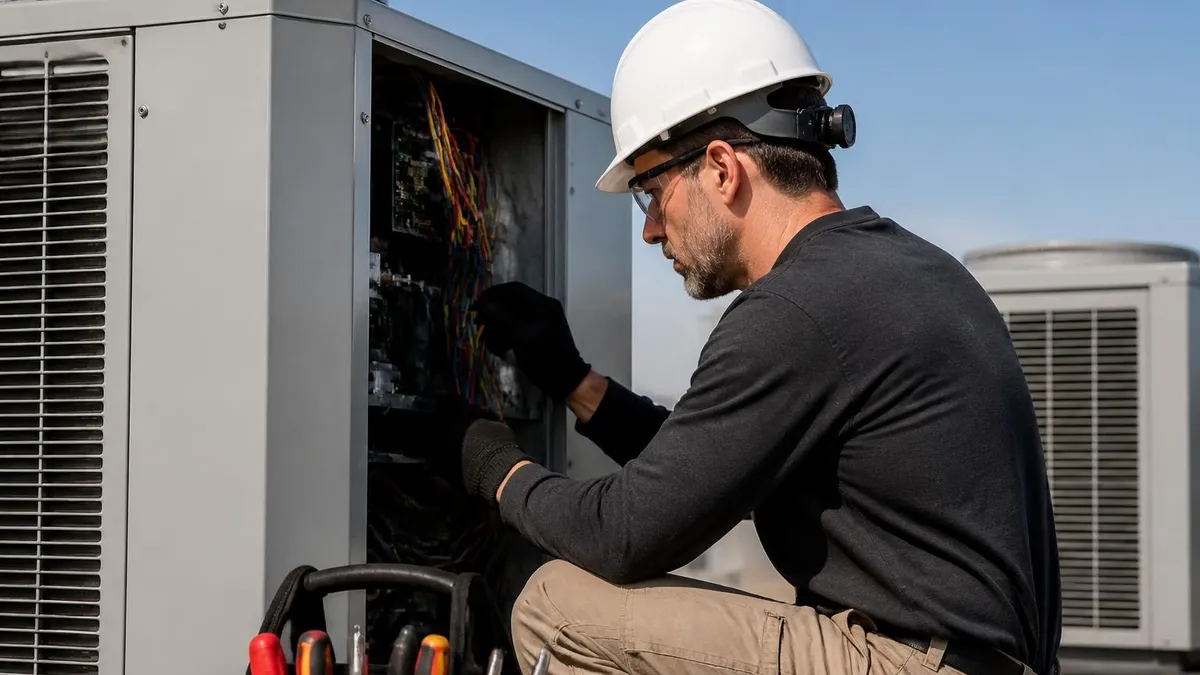
Is the HVAC Worker Career Right for You? Pros and Cons
- +Strong job security with sustained demand across all US regions and climate zones
- +Above-average pay with clear path to six figures for licensed senior technicians
- +Hands-on problem-solving keeps work mentally engaging and varied day to day
- +Low barrier to entry — no four-year college degree required to start earning
- +Skills transfer to self-employment, allowing you to launch your own service business
- +Strong overtime opportunities during peak cooling and heating seasons each year
- +Tangible work product — you can see and feel the systems you fix every single day
- −Physical demands include heat, cold, ladders, lifting, crawl spaces, and roof work
- −Seasonal swings mean very long summer hours and occasional slow winter weeks
- −On-call rotations including nights, weekends, and holidays are typical for service techs
- −Refrigerant, electrical, and combustion hazards require constant safety vigilance
- −Customer-facing role means dealing with frustrated homeowners and pricing pushback
- −Investment in tools can exceed $5,000 to $10,000 over your first few years
- −Continuous learning required to keep up with refrigerant phase-outs and new tech
Essential HVAC Worker Skills Checklist
- ✓Read and interpret wiring schematics, ladder diagrams, and mechanical blueprints accurately
- ✓Diagnose refrigeration cycle issues using superheat, subcooling, and pressure-temperature relationships
- ✓Braze copper line sets and silver-solder fittings to leak-tight standards every time
- ✓Calculate Manual J residential heat loads and Manual D duct designs for proper sizing
- ✓Use digital manifolds, micron gauges, clamp meters, and combustion analyzers competently
- ✓Recover, recycle, and recharge refrigerants in full EPA Section 608 compliance
- ✓Wire low-voltage thermostats, zoning panels, and standard 24V control circuits without errors
- ✓Troubleshoot ECM and PSC blower motors, capacitors, contactors, and run capacitors quickly
- ✓Communicate diagnostic findings and repair options clearly to non-technical homeowners
- ✓Document jobs with photos, readings, and parts used in field service software
- ✓Follow OSHA safety practices for ladders, lockout-tagout, PPE, and confined spaces
- ✓Stay current on refrigerant phase-out timelines and low-GWP alternative installations
Your EPA 608 Card Is Worth $5,000 a Year
Holding an EPA Section 608 Universal certification typically boosts an HVAC worker's pay by $3 to $5 per hour over uncertified helpers. That difference adds up to roughly $5,000 to $10,000 in extra annual income for an exam that costs under $150 and can be passed with two weekends of focused study. It is the single highest-ROI credential in the entire trade.
Salary progression in HVAC follows a fairly predictable curve, but smart career choices can compress the timeline dramatically. Bureau of Labor Statistics data pegs the national median at $57,300 in 2024, but that figure obscures huge regional and specialty variations. A first-year helper in rural Mississippi might earn $32,000 while a journeyman in San Francisco or Boston pulls in $110,000 plus benefits. Cost of living explains part of the spread, but local labor union strength and commercial construction demand explain even more.
The biggest salary jumps happen at three career milestones. First, when you earn your EPA 608 Universal card — typically a $3 to $5 per hour raise within months. Second, when you complete your apprenticeship or journeyman exam and can run calls independently — usually another $8 to $12 per hour bump. Third, when you specialize in commercial controls, refrigeration, or high-end residential — the top end of the trade where pay routinely exceeds $100,000 in major metros. Each step requires intentional effort and continuing education.
Specialty paths matter more than people realize. Supermarket and cold-storage refrigeration techs typically out-earn straight HVAC techs by 15 to 25 percent because the equipment is more complex, the consequences of failure are higher (think spoiled inventory worth $50,000), and fewer techs have the skillset. Building automation and controls technicians who can program BACnet, LonWorks, or Tridium Niagara systems sit at the top of the pay scale, often clearing $40 per hour even in lower cost markets without the same physical demands as residential service.
Bonuses, commission, and overtime stack on top of base pay. Most residential service companies pay techs spiffs for selling maintenance agreements, indoor air quality upgrades, and full system replacements. A productive senior tech can earn $15,000 to $30,000 per year in commission on top of hourly. Overtime during cooling season often adds another $10,000 to $20,000. Combined, a motivated journeyman can routinely take home $85,000 to $110,000 even in mid-cost markets without owning a company or managing crews.
Self-employment is the ultimate income lever. An owner-operator running a single service truck with no employees can net $90,000 to $150,000 after expenses within two to three years of going independent, assuming reasonable marketing and a clean license. Scaling to two or three trucks with employees pushes net income past $250,000 for owners who can manage people, dispatch, and finances. Many techs use evenings and weekends to build a side business before going full-time independent — a low-risk way to test entrepreneurial fit.
Benefits also matter when comparing offers. Union shops typically offer pension plans worth $5 to $10 per hour in employer contributions on top of wages, plus full family health insurance and apprenticeship-paid tuition. Non-union employers vary wildly. Some offer matching 401k and full health coverage; others offer almost nothing. When evaluating two job offers, calculate the total package — wages plus benefits plus tools plus vehicle plus training — rather than just hourly rate. The lower hourly rate often wins on total compensation.
Geographic arbitrage works in HVAC. A tech who builds skills in a high-pay metro and then relocates to a moderate cost-of-living city often enjoys substantially better quality of life on the same nominal salary. Texas, Florida, the Carolinas, Arizona, and Tennessee combine strong year-round HVAC demand, no state income tax in several cases, and reasonable housing costs. Plenty of mid-career techs make this move in their thirties to maximize savings, raise families, and eventually buy into or start their own shops in less competitive markets.
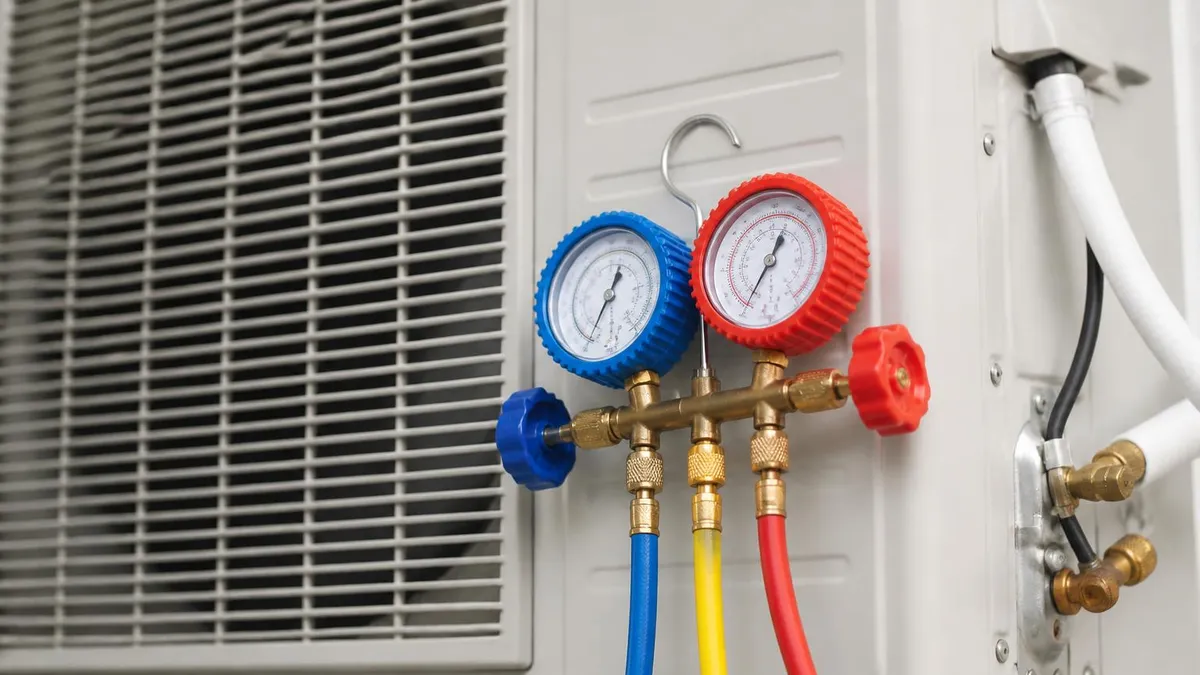
The 2026 AIM Act phase-down restricts new HFC systems and requires low-GWP refrigerants like R-454B and R-32 in most new residential equipment. Every HVAC worker must stay current — improper handling of A2L mildly-flammable refrigerants can void warranties, violate EPA rules, and create real safety hazards on the job site. Continuing education is no longer optional.
Tools define an HVAC worker more than almost any other trade. A typical first-year helper invests around $1,200 in basic hand tools: nut drivers, channel locks, side cutters, screwdrivers, a small inverter drill, a digital multimeter, a flashlight, and a basic refrigeration gauge set. By year three a journeyman has accumulated $5,000 to $8,000 worth of equipment including a quality digital manifold, a vacuum pump, a recovery machine, a hvac leak detector, a combustion analyzer, and specialized brazing gear. Tool purchases are tax deductible when you itemize as a W2 employee in many states.
Truck stock is the next layer. Service companies usually equip techs with a fully stocked van containing capacitors in common sizes, contactors, blower motors, ignition modules, gas valves, common refrigerant cylinders, fittings, hvac filter driers, and hardware. Smart techs catalog what they pull every week and request restock proactively so they are not running parts mid-call. Lost time chasing parts is the single biggest productivity killer in residential service, and supervisors notice which techs manage their inventory well.
Software has become a daily tool. ServiceTitan, Housecall Pro, FieldEdge, Jobber, and similar platforms run the dispatch, invoicing, customer history, and parts ordering for most modern shops. Techs use tablets or rugged phones to receive calls, capture photos, log refrigerant, and collect signatures. Comfort with technology is now a baseline expectation — companies hiring techs in 2026 expect candidates to learn new software in days, not weeks. Workers who struggle with apps and digital documentation fall behind quickly regardless of mechanical skill.
hvac career researchflow optimization separates top performers from average ones. The best techs prep their truck the night before, know their first three stops before leaving the shop, batch nearby calls to minimize windshield time, and finish paperwork between calls rather than at end of day. Many use simple Bluetooth headsets for hands-free dispatch communication while driving. Top techs average 8 to 10 billable hours from a 10-hour workday; average techs only manage 5 to 6 billable. That efficiency gap directly drives commission and bonus pay.
Continuing education must be scheduled, not optional. Manufacturers like Carrier, Trane, Lennox, and Daikin run free hvac certification programs for installers and service techs at their distribution centers and online. NATE offers specialty certifications in air conditioning, heat pumps, gas heating, oil heating, and hydronics that signal competence to employers and customers. Two evenings a month invested in training compounds enormously over a decade. Many top techs trace their salary jumps directly to specific manufacturer certifications they completed in years three to five.
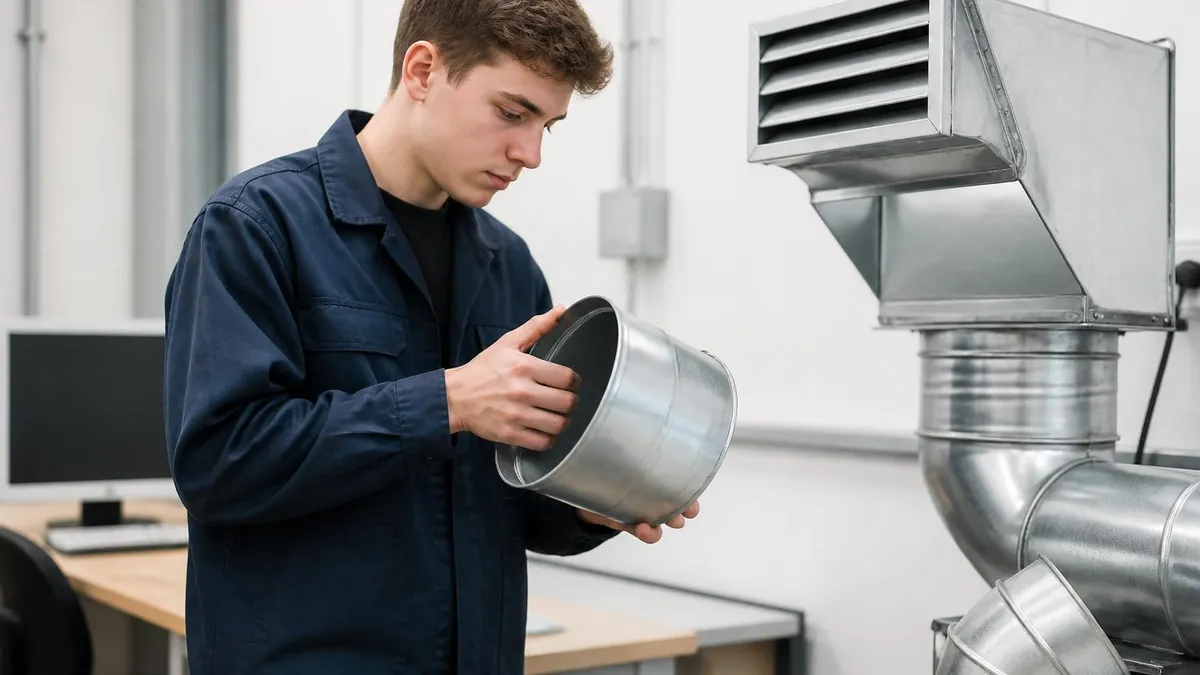
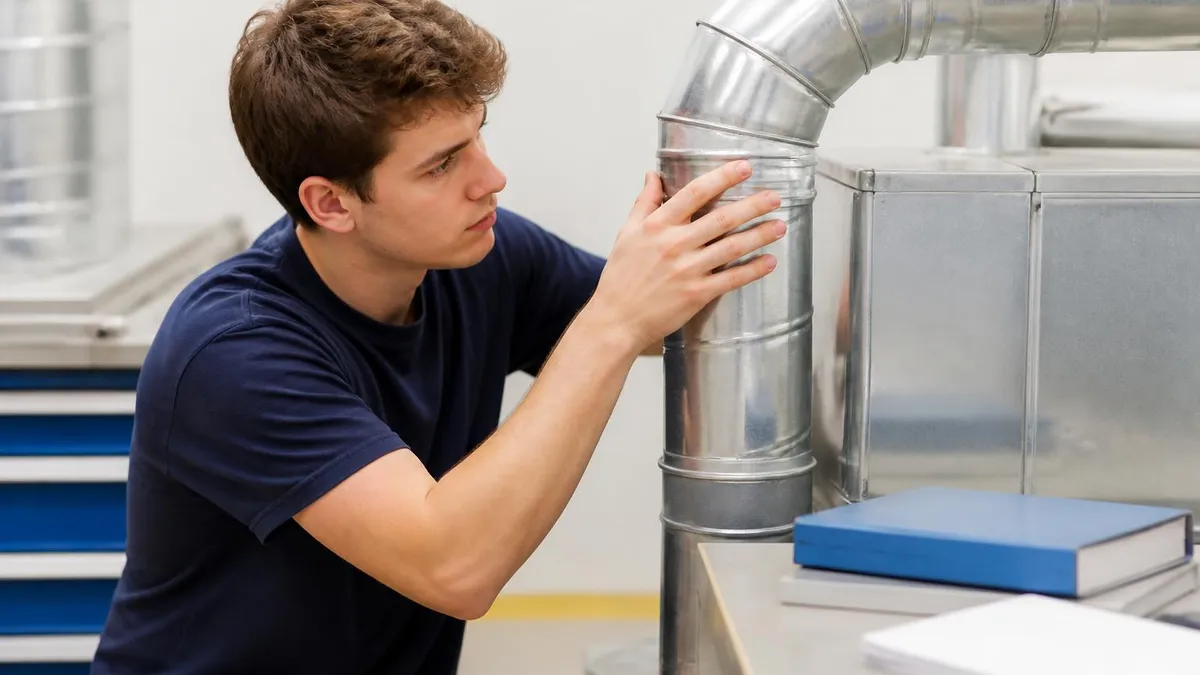
If you plan to run residential service or installation work, understanding ducts is non-negotiable. The HVAC Duct Calculator guide explains the Manual D sizing process that drives proper airflow, static pressure, and equipment performance. Workers who can confidently size and design ductwork command higher pay than those who only handle equipment swaps, because duct issues are the root cause of more comfort complaints than equipment problems themselves. Investing time to master this aspect of the trade pays back for decades.
Physical fitness is also a tool. The trade rewards strong cores, healthy backs, and good knees. Techs who lift with their legs, use mechanical aids for compressor swaps, stay hydrated in summer heat, and stretch in the morning extend their careers by years. Twenty-year veterans who still work the truck almost universally credit injury prevention habits started in their twenties. Skipping these habits ends careers prematurely — back injuries are the single most common reason HVAC workers leave the field before retirement age.
Practical advice for anyone entering or advancing in the HVAC field starts with picking the right first employer. Look for a company that runs at least a dozen trucks, has a documented training program, pays for your EPA 608 exam, and pairs you with an experienced tech for ride-alongs your first six months. Avoid shops that hand a green helper the keys to a van and expect them to figure it out. Bad initial training creates bad habits that take years to unlearn, and shortens careers through avoidable injuries and mistakes.
Treat your first two years like college tuition you are getting paid to attend. Volunteer for the calls nobody wants — attics in August, crawl spaces, old equipment, weird brands. Each of those uncomfortable jobs teaches lessons you will use for decades. Ask questions constantly. Take photos of unusual equipment, weird wiring, and interesting failures so you can study them later. Keep a small notebook in your truck where you log unusual diagnoses and what fixed them. Your future self will refer back to those notes regularly.
Build relationships with parts counter staff at your local Ferguson, Johnstone, US Air Conditioning Distributors, or Baker Distributing branch. They control the speed at which you get hard-to-find parts. A tech who is friendly, respectful, and pays attention to counter staff gets warranty claims processed faster, special-order parts located quicker, and tips on which equipment is failing prematurely. These relationships translate directly into customer satisfaction and your billable hour count.
Get serious about your finances early. HVAC workers earn solid incomes but often blow through paychecks on truck upgrades, tools they do not need, and lifestyle creep. Open a Roth IRA in your first year. Max out your employer's 401k match. Save 20 percent of every paycheck. By thirty-five many of your white-collar peers will be saddled with debt; you can be debt-free with $200,000 invested if you start the habit in your first year on the job. The trade pays well, but only people who save build wealth.
Network outside your own shop. Join your local ACCA chapter, attend AHR Expo when it comes to a nearby city, follow respected technicians on YouTube and LinkedIn, and participate in HVAC forums. The trade has surprisingly strong online and in-person communities where information flows freely. Many job opportunities, partnership deals, and side projects come through these networks. Workers who isolate themselves at one company miss the broader trends, technologies, and compensation benchmarks that drive smart career decisions.
When you have three to five years of solid field experience, evaluate the next move deliberately. Options include specialization (commercial controls, refrigeration, hydronics), management (lead tech, service manager), entrepreneurship (own truck), or sales (selling residential replacements full-time). Each path uses your field experience differently and pays differently. There is no universally right answer — match it to your personality, family situation, and risk tolerance. Many techs cycle through two or three of these paths over a 30-year career and find the best fit through experience rather than planning.
Finally, prioritize safety relentlessly. Wear the safety glasses. Use the lockout tags. Refuse to work on energized panels when you can de-energize them. Tie off on roofs. Use the proper ladder. The veterans who make it to age sixty in this trade share one habit: they never cut safety corners to save five minutes. The shops that pressure techs to skip safety steps are also the shops you should leave at the first opportunity. Local hvac repair services near me directories often highlight which employers treat their workers right — use them when shopping for your next role.
HVAC Questions and Answers

HVAC Duct Supplies: The Complete Buyer's Guide to Ductwork Components, Sizing, and Installation Materials
HVAC Duct Calculator: The Complete Guide to Sizing Ductwork for Airflow, Static Pressure, and System Efficiency
Certified HVAC Contractors: How to Find, Vet, and Hire the Right Professional for Your Home or Business
Best HVAC Repair in Bandon, OR: Local Services Near Me Guide
HVAC Installations: The Complete Guide to Planning, Pricing, and Getting It Right the First Time
About the Author

NATE Certified HVAC Technician & Licensing Exam Trainer
Universal Technical InstituteMike Johnson is a NATE-certified HVAC technician and EPA 608 universal-certified refrigerant handler with a Bachelor of Science in HVAC/R Technology. He has 19 years of commercial and residential HVAC installation and service experience and specializes in preparing technicians for NATE certification, EPA 608, A2L refrigerant safety, and state HVAC contractor licensing examinations.