
HVAC Certification Programs: The Complete Guide to Training, Credentials, Costs, and Career Paths in 2026 October
⏳ HVAC certification programs explained: compare EPA 608, NATE, HVAC Excellence, costs, training length, exam prep, and career paths for 2026 October.
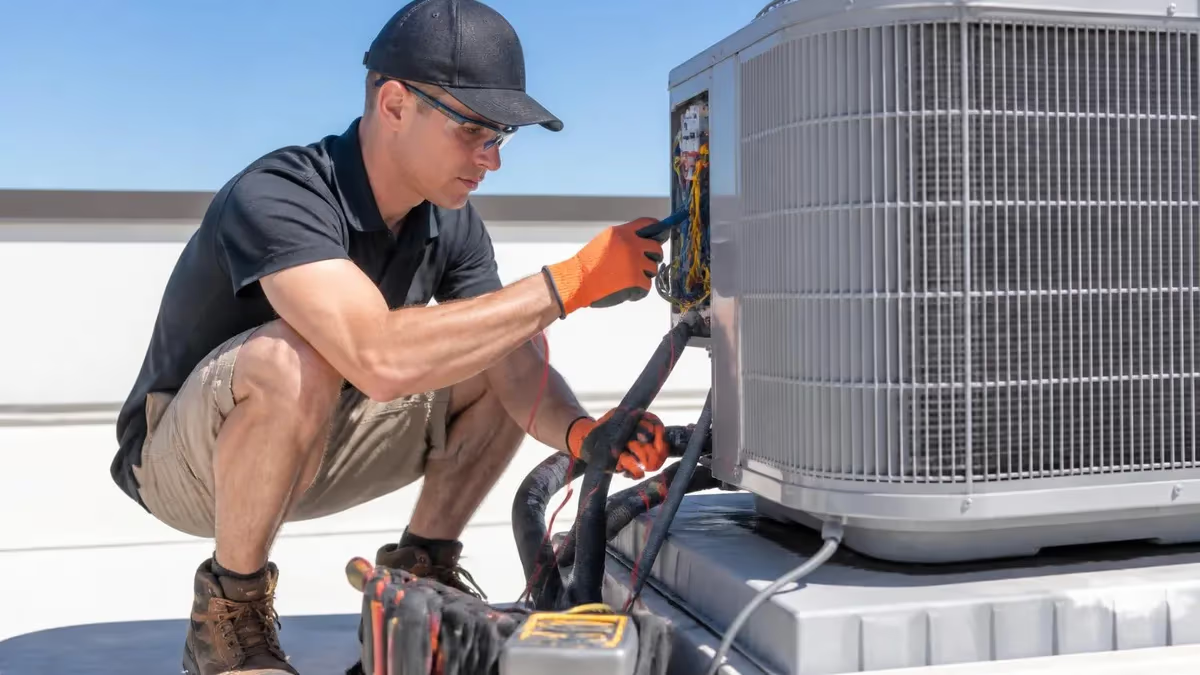
HVAC certification programs are the structured training and credentialing pathways that transform aspiring technicians into qualified professionals capable of installing, servicing, and repairing heating, ventilation, air conditioning, and refrigeration systems. Whether you are entering the trade from high school, transitioning from another industry, or upgrading your skills after years on the job, choosing the right program shapes how quickly you earn a livable wage, which states you can legally work in, and how many specialty doors open later. The right credential signals competence to employers, customers, and code inspectors alike.
The HVAC field has become one of the most reliable middle-skill career tracks in the United States. Bureau of Labor Statistics data shows roughly 42,500 openings per year for HVAC mechanics and installers through 2032, driven by retiring baby boomers, stricter refrigerant rules, and the electrification push toward heat pumps. Certifications are how the industry sorts qualified candidates from the rest. A credentialed technician typically commands a wage premium of 10 to 25 percent compared with uncertified peers performing similar work.
Most newcomers are surprised to learn that the United States does not have a single federal HVAC license. Instead, certification is layered: the federal EPA 608 credential is required nationwide to handle refrigerants, individual states administer journeyman and contractor licenses, and third-party organizations such as hvac certifications and RSES issue voluntary competency credentials that employers prize. Comprehensive HVAC solutions training programs typically prepare students for several of these credentials at once.
Training delivery has also diversified. You can enroll in a six-month trade school certificate, a two-year community college associate degree, a four-to-five-year registered apprenticeship that pays you to learn, or a self-paced online curriculum that you finish in evenings while working a day job. Each pathway has tradeoffs in cost, hands-on hours, employer recognition, and earning trajectory. Picking the right one depends on your timeline, your budget, and the kind of work you ultimately want to do.
This guide walks through every major HVAC certification program available in 2026, including who accredits them, what they cost, how long they take, what is on the exams, and how each one stacks up in the labor market. We will also cover the order in which credentials are usually earned, common mistakes to avoid, study strategies that actually work, and how to layer specialty endorsements such as heat pump, geothermal, and commercial refrigeration once you have a foundation.
If you are deciding between programs right now, focus first on regional employer demand and state license requirements, then on cost and schedule. A certificate that prepares you for the local journeyman exam and EPA 608 is worth more than a fancy national credential your future boss has never heard of. Local trade school advisors, union halls, and the contractor licensing board in your state are excellent free sources of guidance before you commit.
By the time you finish reading, you should know exactly which certification to pursue first, what it will cost, how long it will take, and how to sequence additional credentials over your first five years in the field. The goal is to give you a clear, actionable roadmap rather than a vague overview, so you can stop researching and start enrolling.
HVAC Certification Programs by the Numbers
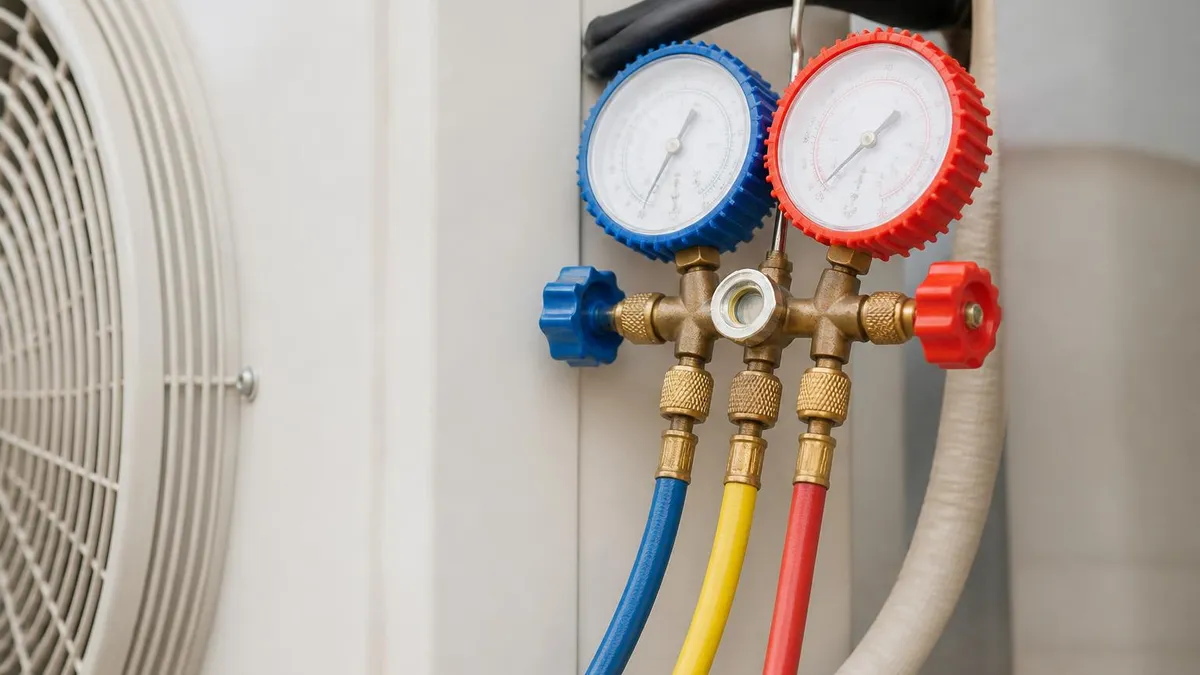
Major HVAC Certification Programs Compared
The federal credential required to purchase, handle, and recover refrigerants. Four certification types: Type I (small appliances), Type II (high pressure), Type III (low pressure), and Universal. Lifetime validity, no renewal required.
North American Technician Excellence is the industry's most recognized voluntary credential. Core exam plus specialty tests in air conditioning, heat pumps, gas furnaces, oil furnaces, hydronics, and light commercial refrigeration. Two-year recertification cycle.
Offers both Professional Technician and Master Specialist tiers. Master level requires three years of field experience plus passing a written and a hands-on practical exam. Widely accepted by employers and accreditors of training programs.
The Refrigeration Service Engineers Society offers CM and CMS designations covering electrical, controls, heat pumps, commercial refrigeration, and dynamic compression. Strong reputation in commercial and industrial refrigeration sectors.
Required in roughly 33 states to perform HVAC work independently or pull permits. Typically requires 2–5 years documented field experience plus a written and business law exam. License must be renewed every 1–3 years with continuing education.
The EPA Section 608 certification sits at the foundation of every HVAC career in the United States. Under the Clean Air Act, anyone who opens a refrigerant circuit on stationary equipment must hold this credential, and supply houses will not sell you regulated refrigerants without proof. The exam has a 25-question core section plus 25 questions per specialty type. Most schools build EPA 608 prep into the first semester because no employer can legally let you touch a sealed system without it. Plan to test within your first 90 days of training.
NATE certification is the gold standard for proving competence beyond the legal minimum. Employers running residential service trucks frequently require NATE within the first two years of hire because the credential correlates with fewer callbacks and higher customer satisfaction scores. The Core exam covers safety, tools, soft skills, principles of heat transfer, and electrical basics, while specialty exams dive deep into a chosen track. Recertification every two years requires 16 continuing education hours, ensuring techs stay current with new equipment and refrigerants.
HVAC Excellence operates two parallel programs. The student-level Employment Ready certificate is earned at the end of an accredited training program and demonstrates entry-level competence to employers. The Professional Technician certifications, by contrast, are designed for working techs and cover topics such as electrical, air conditioning, heat pumps, gas heat, hvac duct design refrigeration, and combustion analysis. The Master Specialist tier adds a hands-on component, requiring candidates to demonstrate brazing, charging, leak detection, and troubleshooting in a proctored lab setting.
RSES has a long history in the refrigeration side of the industry and remains the credential of choice for techs aiming at supermarket racks, food processing, ice plants, and other industrial work. The CM (Certificate Member) and CMS (Certificate Member Specialist) designations require passing a general exam plus one or more specialty exams. The organization also publishes the widely used RSES Service Application Manual, an encyclopedic technical reference that many techs keep in their trucks for the entire careers.
State journeyman and contractor licenses are where certification gets jurisdiction-specific. In Texas, for example, you need an Air Conditioning Technician registration to work as an apprentice, then move to a Class A or Class B Contractor License to run your own shop. California uses the C-20 Warm-Air Heating, Ventilating, and Air-Conditioning classification administered by the CSLB. Florida, Washington, North Carolina, and many others have similar tiered systems. Always check your state board first.
Some states, including Illinois, Indiana, Wyoming, and Kansas, have no statewide HVAC license at all and instead leave regulation to cities and counties. In these jurisdictions, employer-issued cards, EPA 608, and a NATE or HVAC Excellence credential effectively become your license. Other states recognize reciprocity, meaning a journeyman license in Alabama may transfer to Georgia, Mississippi, or Tennessee with minimal paperwork. Reciprocity rules change often, so verify before relocating with a credential you assume will travel.
The smartest sequence for most new techs is EPA 608 Universal first, then an accredited training program certificate, then NATE Core plus one specialty within two years, then a state journeyman or contractor credential once you hit the experience threshold. This order maximizes earning power at each stage and avoids the common mistake of pursuing exotic credentials before locking in the basics that supply houses, employers, and code officials actually require. Many HVAC contractors use this exact ladder when developing their service teams.
HVAC Practice Test Questions
Prepare for the HVAC - Heating Ventilation and Air Conditioning exam with our free practice test modules. Each quiz covers key topics to help you pass on your first try.
HVAC Air Conditioning
HVAC Exam Questions covering Air Conditioning. Master HVAC Test concepts for certification prep.
HVAC Code Compliance
Free HVAC Practice Test featuring Code Compliance. Improve your HVAC Exam score with mock test prep.
HVAC Electrical Controls
HVAC Test Prep for Electrical Controls. Practice HVAC Quiz questions and boost your score.
HVAC Energy Efficiency
HVAC Questions and Answers on Energy Efficiency. Free HVAC practice for exam readiness.
HVAC Heating Systems
HVAC Mock Test covering Heating Systems. Online HVAC Test practice with instant feedback.
HVAC Load Calculations
Free HVAC Quiz on HVAC Load Calculations. HVAC Exam prep questions with detailed explanations.
HVAC Tools and Equipment
HVAC Practice Questions for HVAC Tools and Equipment. Build confidence for your HVAC certification exam.
HVAC Refrigeration
HVAC Test Online for Refrigeration. Free practice with instant results and feedback.
HVAC Safety Practices
HVAC Study Material on Safety Practices. Prepare effectively with real exam-style questions.
HVAC System Design
Free HVAC Test covering System Design. Practice and track your HVAC exam readiness.
HVAC Thermodynamics
HVAC Exam Questions covering Thermodynamics. Master HVAC Test concepts for certification prep.
HVAC Training Pathways and Schools
Trade school certificate programs deliver focused HVAC training in 6 to 12 months and typically cost $1,200 to $15,000 depending on whether the school is public, nonprofit, or for-profit. Curriculum centers on electrical fundamentals, refrigeration theory, system installation, and EPA 608 preparation. Many programs also embed HVAC Excellence Employment Ready testing so graduates leave with both a diploma and a recognized industry credential.
Look for programs with hands-on lab hours that exceed classroom hours, instructors who hold current NATE and EPA credentials, and active employer partnerships that funnel graduates into apprenticeships or direct hire. Federal financial aid, GI Bill benefits, and Workforce Innovation and Opportunity Act funding cover many students. Check accreditation through HVAC Excellence, the Partnership for Air-Conditioning Heating Refrigeration Accreditation (PAHRA), or regional accrediting bodies before paying tuition.
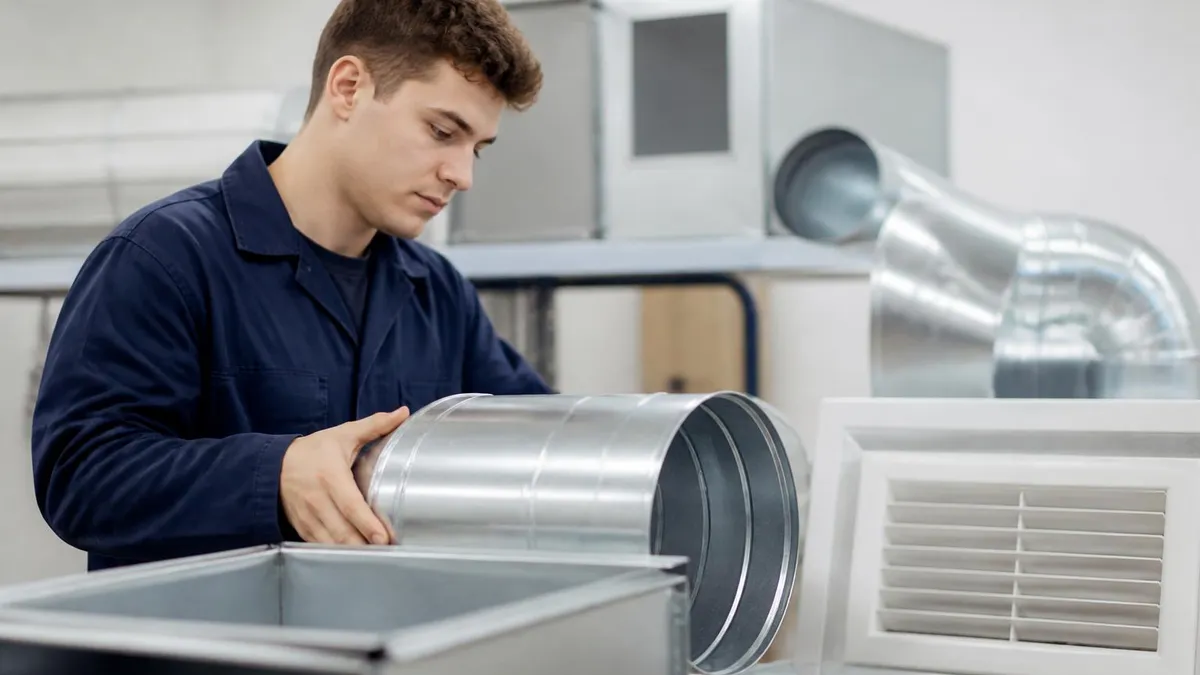
Pros and Cons of Formal HVAC Certification Programs
- +Higher starting wages and faster pay raises compared to uncertified hires
- +Legal authority to handle refrigerants and pull mechanical permits in most states
- +Stronger resume signal that opens doors to commercial and industrial employers
- +Structured curriculum prevents knowledge gaps common in self-taught technicians
- +Access to financial aid, GI Bill funding, and employer tuition reimbursement
- +Built-in networking with instructors, classmates, and visiting contractor recruiters
- +Path to supervisory, estimating, and contractor-license roles later in your career
- −Upfront tuition and lost wages while attending school full-time
- −Some for-profit schools overpromise placement and underdeliver on lab hours
- −Exam fees, renewal costs, and continuing education add ongoing expenses
- −Curriculum can lag behind newer refrigerants, smart controls, and heat pump tech
- −Credential alphabet soup confuses customers who do not recognize the value
- −Geographic mismatch if you train in one state and try to work in another
- −Time pressure: balancing study, work, and family during accelerated programs
Pros and Cons at a Glance
| Pros | Cons |
|---|---|
| Higher starting wages and faster pay raises compared to uncertified hires | Upfront tuition and lost wages while attending school full-time |
| Legal authority to handle refrigerants and pull mechanical permits in most states | Some for-profit schools overpromise placement and underdeliver on lab hours |
| Stronger resume signal that opens doors to commercial and industrial employers | Exam fees, renewal costs, and continuing education add ongoing expenses |
| Structured curriculum prevents knowledge gaps common in self-taught technicians | Curriculum can lag behind newer refrigerants, smart controls, and heat pump tech |
| Access to financial aid, GI Bill funding, and employer tuition reimbursement | Credential alphabet soup confuses customers who do not recognize the value |
| Built-in networking with instructors, classmates, and visiting contractor recruiters | Geographic mismatch if you train in one state and try to work in another |
HVAC Certification Programs Enrollment Checklist
- ✓Verify the school is accredited by HVAC Excellence, PAHRA, or a regional accreditor
- ✓Confirm the curriculum includes embedded EPA 608 Universal preparation and testing
- ✓Compare total cost of attendance, not just sticker tuition, including tools and fees
- ✓Tour the lab and count the number of working units, gauges, and recovery machines
- ✓Ask for graduate placement rates, average starting wage, and employer hiring partners
- ✓Check whether financial aid, GI Bill, WIOA, or employer reimbursement applies to you
- ✓Review instructor credentials: current EPA, NATE, and recent field experience matter
- ✓Match the schedule to your life: day, evening, weekend, or hybrid online formats
- ✓Confirm the program prepares you for your state journeyman or contractor exam
- ✓Request the syllabus to verify coverage of heat pumps, controls, and new refrigerants
Accreditation drives employer trust and credit transferability
Programs accredited by HVAC Excellence or PAHRA meet industry-developed standards for lab hours, instructor qualifications, and curriculum depth. Employers consistently rank graduates of accredited programs higher on competency assessments, and accredited credits transfer cleanly to bachelor's degree programs if you later pursue engineering technology or construction management.
The cost of HVAC certification programs spans a wide range, and understanding the full picture prevents sticker shock and bad debt. A short EPA 608 prep course with the certification exam costs $20 to $150 online. A trade school certificate runs $1,200 at the low end to roughly $15,000 at high-end for-profit schools. Community college associate degrees fall between $4,000 and $12,000 total tuition for in-district students, while online-only certificate programs from accredited providers often land in the $1,000 to $4,000 range, depending on whether labs are included.
Add the cost of tools, books, uniforms, and exam fees. A basic tech tool roll runs $400 to $1,200, refrigerant gauges and a recovery machine add another $600 to $1,500, and exam fees for NATE and HVAC Excellence range from $50 to $200 per attempt. State licensing exams typically cost $50 to $100 to register plus application fees of $100 to $400. Plan for $1,500 to $3,000 in non-tuition expenses across your first year of training and credentialing.
Earning potential climbs steeply with each credential. According to BLS data, the median HVAC technician wage was $57,300 in 2024, but the top 10 percent earned over $84,250. NATE-certified technicians report 8 to 15 percent higher hourly rates than uncertified peers in the same market. Master Specialist holders, state contractor licensees, and commercial refrigeration techs frequently break $100,000 once they reach senior service tech or lead installer roles. Geography matters too: Alaska, Hawaii, the Northeast, and California pay the highest wages.
Return on investment is among the best in any middle-skill trade. A $10,000 community college associate degree typically pays back within 14 to 24 months once you reach journeyman wages. A no-cost registered apprenticeship begins paying immediately and graduates you with both experience and a journeyman card debt-free. Self-paced online certificates pay back even faster because you keep working while studying. Avoid for-profit schools charging $20,000+ unless they offer documented placement and starting wages well above the local median.
Employer-paid training is increasingly common because the skilled-labor shortage forces shops to grow their own techs. National chains like Service Experts, ARS/Rescue Rooter, and One Hour Heating and Air Conditioning often pay full tuition for new hires who agree to a one or two-year retention commitment. Manufacturer training programs from Carrier, Trane, Lennox, Daikin, and Mitsubishi add brand-specific certifications that translate into higher dispatch priority and warranty work eligibility once you are placed.
Financial aid significantly reduces upfront cost. Federal Pell Grants cover up to $7,395 per year for eligible students attending accredited programs. The Workforce Innovation and Opportunity Act funds training for displaced workers and low-income adults through your local American Job Center. Veterans can apply GI Bill benefits to many HVAC programs, and Vocational Rehabilitation programs cover tools, books, and tuition for individuals with qualifying disabilities. Industry scholarships from ASHRAE, RSES, and Women in HVACR add thousands more.
Track your total cost of attendance and your expected post-program wage before signing any enrollment agreement. A reasonable rule of thumb is to keep total tuition debt below your expected first-year earnings, ideally below half of that figure. If a program quotes $30,000 for a 10-month certificate and local entry-level techs earn $40,000, you are paying too much. Negotiate, shop around, or pivot to a community college or apprenticeship before committing.

Some for-profit HVAC schools charge $25,000 or more for programs that community colleges deliver for under $10,000. Verify accreditation, demand placement data with verifiable employer references, and read the enrollment agreement carefully. If a recruiter pressures you to sign on the spot or hides total cost behind monthly payment language, walk away and call your local community college instead.
Once you hold an entry credential and a couple years of field time, specialty endorsements become the fastest way to grow your income. Heat pump specialty certifications from NATE, the Building Performance Institute, and individual manufacturers like Mitsubishi Diamond Contractor or Daikin Comfort Pro qualify you for utility rebate programs and federal Inflation Reduction Act incentive work. Heat pump installs now make up a rising share of residential replacements, and certified installers earn premium dispatch and commission rates in most markets.
Geothermal certification through the International Ground Source Heat Pump Association (IGSHPA) opens doors in the residential and light commercial geothermal market. The program requires a multi-day training plus a written exam and is increasingly required by utilities and tax credit programs to verify installer competence. Combined with a state journeyman license and a NATE heat pump endorsement, an IGSHPA accredited installer can command $40 to $60 per hour as a lead tech in markets where geothermal is established.
Commercial refrigeration is another high-paying lane. Certifications such as RSES CMS in Commercial Refrigeration, supermarket-specific manufacturer training from Hussmann or Hill Phoenix, and CO2 transcritical training open opportunities in supermarkets, cold storage, food processing, and ice rinks. Wages frequently exceed $90,000 for senior commercial refrigeration techs, and overnight and on-call premiums push experienced techs well past six figures in major metros. Quality hvac installation leeds skills translate directly into this specialty.
Indoor air quality and building performance credentials add a complementary revenue stream. BPI Building Analyst, Healthy Home Evaluator, and RESNET HERS Rater certifications let you bundle blower-door testing, duct leakage diagnostics, and ventilation design with traditional HVAC services. These skills are particularly valuable in performance-contracting work, weatherization assistance programs, and high-end new construction where homeowners want comfort and energy guarantees backed by measurement.
Controls and building automation is the highest-paying specialty in the field. Niagara Framework certification, Tridium TCP, and Distech Controls credentials qualify you to design, install, and troubleshoot building automation systems in commercial offices, hospitals, universities, and data centers. Entry into this lane usually requires an associate degree in HVAC or mechatronics plus several years of field experience, but the payoff is significant: BAS techs and engineers routinely earn $90,000 to $150,000.
Beyond technical credentials, business and leadership certifications round out a career. ACCA's Quality Installation and Quality Maintenance specialist programs codify residential best practices and earn favorable utility partnerships. NCCER's Project Supervisor and Foreman certifications prepare experienced techs for crew leadership. A state contractor license with bonding and insurance turns a tech into an owner, opening the door to running a hvac service co, building equity, and eventually selling the business as a retirement asset.
The smartest career strategy is to layer credentials in deliberate two-year intervals. Year one: EPA 608 plus an accredited certificate. Year two: NATE Core plus one specialty. Year three: a second NATE specialty plus state journeyman. Year four: heat pump or geothermal endorsement. Year five: state contractor license or BAS controls credential. This sequence steadily increases your income, your job security, and your optionality without burning out on continuous testing.
Passing HVAC certification exams takes more than reading textbooks. The most successful candidates blend three study modes: structured course content, hands-on lab practice, and high-volume practice testing. Aim for 60 percent of your time on practice problems and mock exams once you have a baseline knowledge of the material. The brain retains information much better when it is forced to retrieve answers under timed conditions than when it passively re-reads chapters. Use spaced repetition apps for formulas, charge calculations, and code references.
Build a study schedule that respects your actual life. For EPA 608, two to four weeks of evening study is sufficient for most students who completed a prep course. For NATE Core plus a specialty, plan eight to twelve weeks. For state journeyman or contractor exams, plan twelve to twenty weeks because business law, code, and calculation questions all carry weight. Block 45-minute focused study sessions with five-minute breaks rather than long unfocused stretches, and protect at least one full rest day each week.
Take a full-length practice exam at the start of your prep cycle to identify weak areas. Most test-takers discover their weak spots are not where they expected. Common surprises include psychrometric calculations, thermostat wiring color codes for legacy systems, refrigerant pressure-temperature relationships for newer A2L refrigerants, and the nuances of CO and combustion testing. Spend 70 percent of your remaining study time on your three weakest topics rather than reviewing material you already know.
Hands-on practice cements concepts in a way reading cannot. If your training program has open lab hours, use them aggressively, especially for brazing, vacuum and charging, leak detection, electrical troubleshooting, and gas pressure testing. If you are studying independently, ask your employer for a few extra hours each week to shadow senior techs and reproduce diagnostic procedures on real equipment. Document each procedure in your own words, including the why behind every step, so you can recall it under exam pressure.
Use multiple resources rather than relying on a single textbook or course. Pair an industry standard like Whitman, Johnson, and Tomczyk's Refrigeration and Air Conditioning Technology with a code book, manufacturer service literature, and free YouTube channels run by working technicians such as HVAC School, AC Service Tech, and Quality HVAC Lessons. Diversity of sources exposes you to different explanations, visual styles, and edge cases that single sources miss. Keep a notebook of unfamiliar terms and review it weekly.
On exam day, prepare logistically as well as academically. Confirm the test center location and arrival time, bring two forms of identification, eat a real meal beforehand, and avoid caffeine spikes that crash mid-exam. Read each question carefully and watch for absolutes like always, never, only, and except, which often change the correct answer. Mark difficult questions and return to them after answering the easy ones first to bank confidence and time. Most certification exams allow review before final submission.
After passing, set a calendar reminder for your renewal date and continuing education obligations immediately. NATE requires 16 hours of CEUs every two years. State contractor licenses typically require 4 to 16 hours per renewal period depending on the state. Letting a credential lapse can mean retaking the entire exam, paying late fees, or losing eligibility to pull permits. Treat your credentials like assets that need yearly maintenance, and budget the time and money accordingly.
Sample HVAC Practice Questions
Try these questions from our free HVAC practice tests. The correct answer and an explanation follow each question.
What is the primary reason galvanized steel is the most common material for HVAC ductwork?
- A. It provides corrosion resistance without requiring additional coatings
- B. It has the highest thermal conductivity of any duct metal
- C. It is the lightest duct material available
- D. It is the only metal approved by SMACNA for duct fabrication
Answer: A. It provides corrosion resistance without requiring additional coatings
The zinc coating on galvanized steel provides inherent corrosion resistance, making it durable and cost-effective for most HVAC duct applications.
Which professional attribute is most valued in electrical controls within the HVAC field?
- A. Working in isolation
- B. Accountability and commitment to standards
- C. Avoiding challenging situations
- D. Prioritizing personal convenience
Answer: B. Accountability and commitment to standards
Accountability and commitment to professional standards build trust and ensure consistent, high-quality practice.
If an HVAC system has a higher outdoor ambient temperature, what typically happens to the condensing pressure?
- A. It decreases
- B. It remains unchanged
- C. It increases
- D. It drops to evaporating pressure
Answer: C. It increases
Higher ambient temperatures reduce the temperature difference available for heat rejection, requiring higher condensing pressure and temperature.
What is 'parallel pattern development' used for in HVAC sheet metal layout?
- A. Developing the flat pattern of cylinders and prisms that have parallel lateral edges
- B. Laying out fittings that taper from a large to a small opening
- C. Calculating the surface area of a cone-shaped fitting
- D. Marking hole locations for duct hangers on a flat sheet
Answer: A. Developing the flat pattern of cylinders and prisms that have parallel lateral edges
Parallel pattern development (parallel line development) is used to unfold fittings such as cylinders, rectangular ducts, and elbows whose lateral edges are parallel.
HVAC Questions and Answers

HVAC Solutions: The Complete Guide to Heating, Cooling, and Indoor Air Quality Systems for Homes and Buildings
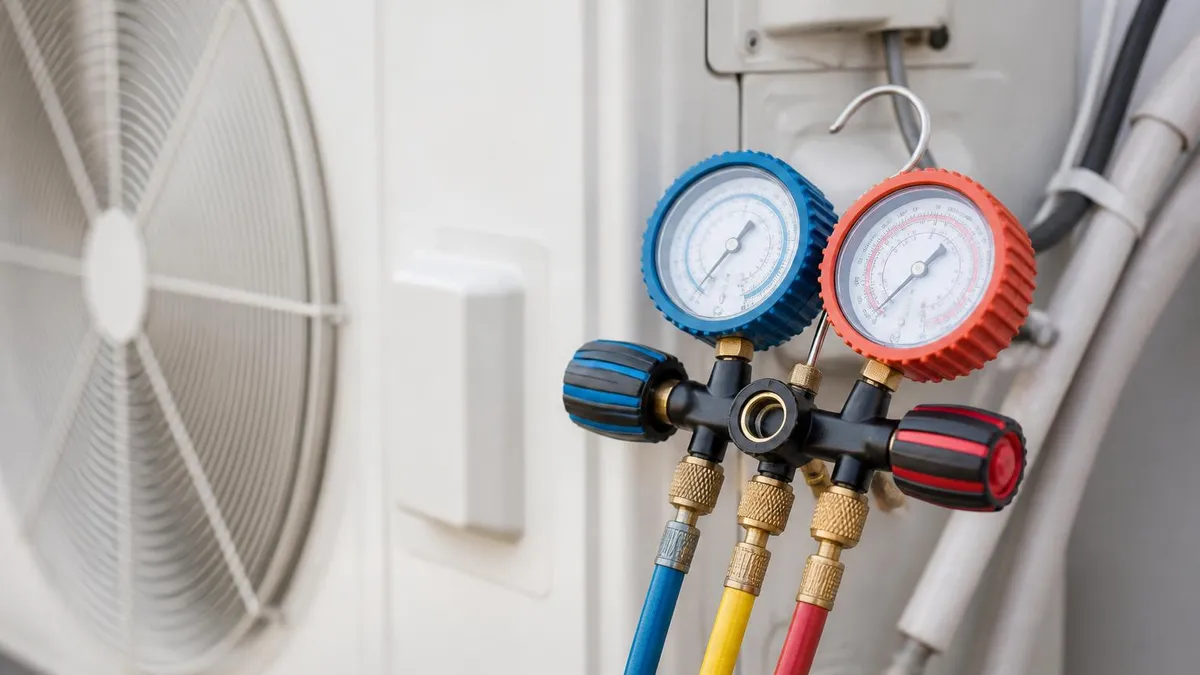
Certified HVAC Contractors: How to Find, Vet, and Hire the Right Professional for Your Home or Business
Best HVAC Repair in Bandon, OR: Local Services Near Me Guide
HVAC Installations: The Complete Guide to Planning, Pricing, and Getting It Right the First Time
EPA Certification for HVAC: The Complete Guide to Section 608 Requirements, Exam Prep, and Career Impact
About the Author

NATE Certified HVAC Technician & Licensing Exam Trainer
Universal Technical InstituteMike Johnson is a NATE-certified HVAC technician and EPA 608 universal-certified refrigerant handler with a Bachelor of Science in HVAC/R Technology. He has 19 years of commercial and residential HVAC installation and service experience and specializes in preparing technicians for NATE certification, EPA 608, A2L refrigerant safety, and state HVAC contractor licensing examinations.