
HVAC Certifications: The Complete 2026 Guide to EPA 608, NATE, HVAC Excellence, and State Licensing Requirements
🎯 HVAC certifications explained: EPA 608, NATE, HVAC Excellence, state licenses, costs, timelines, and how to choose the right credential for your career.

HVAC certifications are the credentials that separate licensed professionals from unqualified handymen, and in 2026 they matter more than ever as systems grow increasingly complex with variable-speed compressors, low-GWP refrigerants, hvac industry trends and stringent efficiency mandates. Whether you are a brand-new apprentice, a seasoned installer pivoting toward service, or a contractor preparing your crew for new EPA refrigerant rules, understanding the certification landscape is the first step toward higher pay, better job security, and access to manufacturer warranty work that fuels the most profitable shops in the country. Practice with the free HVAC practice test on PracticeTestGeeks (750+ questions with answer explanations).
The HVAC industry recognizes a layered system of credentials: federally mandated certifications like EPA Section 608, voluntary skills certifications like NATE and HVAC Excellence, manufacturer-specific training from Carrier, Trane, Lennox, Daikin, and Mitsubishi, and state or local contractor licenses that legally authorize you to pull permits and bid jobs. Each layer serves a different purpose, and stacking them strategically is how technicians break past the $80,000 ceiling and how owners qualify for high-margin commercial contracts.
The Bureau of Labor Statistics projects 6% growth in HVAC technician employment through 2032, faster than the all-occupations average, driven by aging building stock, heat pump electrification incentives under the Inflation Reduction Act, and a shrinking pool of experienced workers as baby boomers retire. Employers are responding by paying signing bonuses, tuition reimbursement, and certification bonuses ranging from $500 to $3,000 per credential earned. The technicians who capture this premium are the ones who treat certification as a continuous career investment, not a one-time hurdle.
This guide walks you through every meaningful HVAC certification available in the United States: who issues it, what it costs, how long it takes, what the test covers, how it boosts pay, and which order to pursue them in. We include up-to-date 2026 pricing, real pass rates, study schedules used by successful candidates, and a candid look at which credentials are worth the time and which are mostly marketing fluff. By the end you will have a personalized roadmap that matches your career stage and goals.
We also tackle the questions that confuse new technicians most: the difference between certification and licensing, why EPA 608 universal trumps the lower types, what NATE specialty exams actually test, whether HVAC Excellence is recognized by employers in your region, and how to handle reciprocity when you move between states. If you are evaluating training programs, talk to experienced hvac contractors in your area to understand which credentials their hiring managers prioritize before you commit thousands of dollars to a school or boot camp.
One blunt truth before we dive in: no certification replaces hands-on field experience. The best technicians combine deep theoretical knowledge with thousands of hours of attic, rooftop, and mechanical room reps. Certifications open doors, but reputation closes deals. Treat every credential as a structured way to fill knowledge gaps you would otherwise discover the hard way on a customer's $15,000 system. That mindset transforms studying from a chore into a profitable career accelerant.
Finally, recognize that the certification landscape evolves constantly. The 2024 EPA refrigerant management rule, the phasedown of HFCs under the AIM Act, the rise of A2L mildly flammable refrigerants like R-454B and R-32, and the explosive growth of inverter-driven heat pumps have all triggered new training requirements in the last 24 months. What was current in 2022 is partially obsolete today. This guide reflects the rules and best practices effective for 2026 and points you toward continuing education paths that keep your credentials sharp.
Free HVAC Study Tools
Interactive HVAC resources on PracticeTestGeeks, free to start:
- HVAC EPA 608 Refrigerant Certification — 35 questions with instant scoring and answer explanations
- HVAC flashcards — review key terms and concepts card by card
- HVAC study guide — topic-by-topic overview of what the exam covers
- HVAC cheat sheet — one-page printable summary for last-minute review
HVAC Certifications by the Numbers in 2026
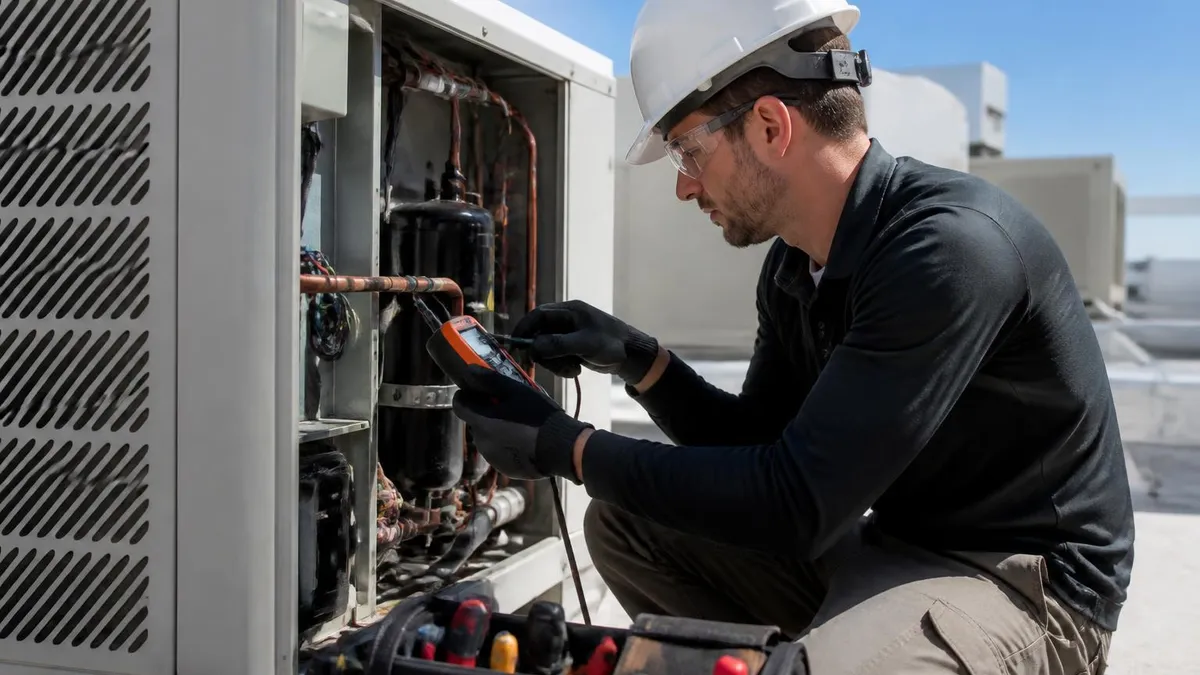
Major HVAC Certifications Compared
Federally mandated for anyone who purchases, handles, or services equipment containing regulated refrigerants. Four certification levels including Universal. Lifetime credential, no renewal required, $24-$150 depending on provider and proctoring format.
Industry-leading skills credential from North American Technician Excellence. Requires Core exam plus a specialty (Air Conditioning, Heat Pumps, Gas Heating, etc.). Recognized by virtually every major manufacturer and contractor nationwide.
Comprehensive certification family covering employment-ready, professional, and master specialist levels. Strong in technical schools and adopted by many state apprenticeship programs as the standard skills assessment.
Refrigeration Service Engineers Society offers CM (Certificate Member) and CMS (Certified Member Specialist) credentials with deep refrigeration cycle focus. Strong reputation in commercial refrigeration and supermarket sectors.
Legally required to bid jobs, pull permits, and operate as a contractor in most states. Combines a trade exam, business and law exam, bonding, insurance, and documented experience, typically 2-4 years on the job.
EPA Section 608 is the only HVAC certification that is federally required by law, and it sits at the foundation of every legitimate technician's career. Under the Clean Air Act, anyone who maintains, services, repairs, or disposes of appliances containing regulated refrigerants must hold a current 608 card. That includes anyone purchasing refrigerant cylinders larger than two pounds at the supply house. Working on systems without certification can trigger fines up to $44,539 per violation per day under updated EPA enforcement guidance, and supply houses now scan and log every card.
The certification comes in four flavors. Type I covers small appliances with five pounds or less of refrigerant, such as window units, packaged terminal AC, and household refrigerators. Type II covers high-pressure systems above 50 psi, which is essentially every split-system air conditioner, heat pump, and supermarket rack you will ever touch. Type III covers low-pressure systems like older centrifugal chillers using R-123. Universal certification combines all three and is the credential 90% of working technicians should pursue, because it costs the same as taking individual sections and unlocks every type of work.
The exam itself is 100 multiple-choice questions divided into a 25-question Core section plus 25 questions for each type. You need 70% on Core and 70% on each type to pass that section. The Core section is the trickiest because it covers regulations, recovery requirements, leak rates, sales restrictions, and ozone depletion science rather than hands-on diagnostics. Most failures happen on Core, not on the type sections, which is counterintuitive for technicians coming from a practical background.
Pricing varies widely depending on provider and proctoring format. ESCO Institute charges $24.95 for the online proctored Universal exam, making it the cheapest legitimate path. Mainstream Engineering, RSES, and HVAC Excellence offer paper versions at trade schools and union halls for $50 to $150, sometimes bundled with a prep course. Trade-only Type I can be self-study and mail-in for as little as $20, but if you ever plan to touch a residential split system you need at least Type II, so pay the small premium for Universal up front.
Preparation is straightforward for anyone with even basic refrigeration knowledge. Most candidates pass with 15 to 25 hours of study using the official EPA 608 prep manual, ESCO study guide, or HVAC School podcast episodes. The free EPA online resource library plus YouTube channels like AC Service Tech LLC provide more than enough material. The key trap to avoid is memorizing 2010-era recovery rates and leak repair triggers that have since been updated under the AIM Act and 2024 refrigerant management rule.
Once you pass, the certification is permanent and never expires. You receive a wallet card and a digital credential ID you will be asked for at every supply house, and many contractors will scan it during onboarding. Lost cards can be replaced for $5 to $10 through the original issuer. There is no continuing education requirement, but you should informally update your knowledge every few years because refrigerant regulations evolve faster than any other area of the trade.
If you are managing an entire crew or operating a service business, you can use the hvac maintenance service to align certification levels with the maintenance work your team performs daily. New A2L refrigerants like R-454B and R-32 introduced safety considerations, and while they do not require a new EPA card, most manufacturers now require supplementary A2L training before honoring warranties on equipment charged with these blends. Plan to add a 4-hour A2L module to your 2026 training calendar regardless of how long you have held your 608 credential.
HVAC Practice Test Questions
Prepare for the HVAC - Heating Ventilation and Air Conditioning exam with our free practice test modules. Each quiz covers key topics to help you pass on your first try.
HVAC Air Conditioning
HVAC Exam Questions covering Air Conditioning. Master HVAC Test concepts for certification prep.
HVAC Code Compliance
Free HVAC Practice Test featuring Code Compliance. Improve your HVAC Exam score with mock test prep.
HVAC Electrical Controls
HVAC Test Prep for Electrical Controls. Practice HVAC Quiz questions and boost your score.
HVAC Energy Efficiency
HVAC Questions and Answers on Energy Efficiency. Free HVAC practice for exam readiness.
HVAC Heating Systems
HVAC Mock Test covering Heating Systems. Online HVAC Test practice with instant feedback.
HVAC Load Calculations
Free HVAC Quiz on HVAC Load Calculations. HVAC Exam prep questions with detailed explanations.
HVAC Tools and Equipment
HVAC Practice Questions for HVAC Tools and Equipment. Build confidence for your HVAC certification exam.
HVAC Refrigeration
HVAC Test Online for Refrigeration. Free practice with instant results and feedback.
HVAC Safety Practices
HVAC Study Material on Safety Practices. Prepare effectively with real exam-style questions.
HVAC System Design
Free HVAC Test covering System Design. Practice and track your HVAC exam readiness.
HVAC Thermodynamics
HVAC Exam Questions covering Thermodynamics. Master HVAC Test concepts for certification prep.
NATE, HVAC Excellence, and RSES Compared
NATE is the most widely recognized voluntary HVAC certification in North America, established in 1997 and now administered by ESCO Institute. It validates real-world job competency through the Core exam plus a specialty exam in installation or service for areas including Air Conditioning, Air Distribution, Heat Pumps, Gas Heating, Oil Heating, Hydronics, Light Commercial Refrigeration, and Commercial Refrigeration. Roughly 30,000 technicians earn or renew NATE annually, and most major manufacturers offer warranty extensions or partner discounts to NATE-certified contractors.
Cost is approximately $75 for the Core exam and $75 per specialty through authorized testing organizations, though many employers cover the fee. Each certification is valid for two years and requires 16 hours of continuing education for renewal, which is easily satisfied through manufacturer training, NATE-approved seminars, or online courses. Surveys consistently show NATE-certified technicians earn 10% to 23% more than uncertified peers, and many service companies reserve their highest-margin maintenance contracts for crews holding active NATE credentials.
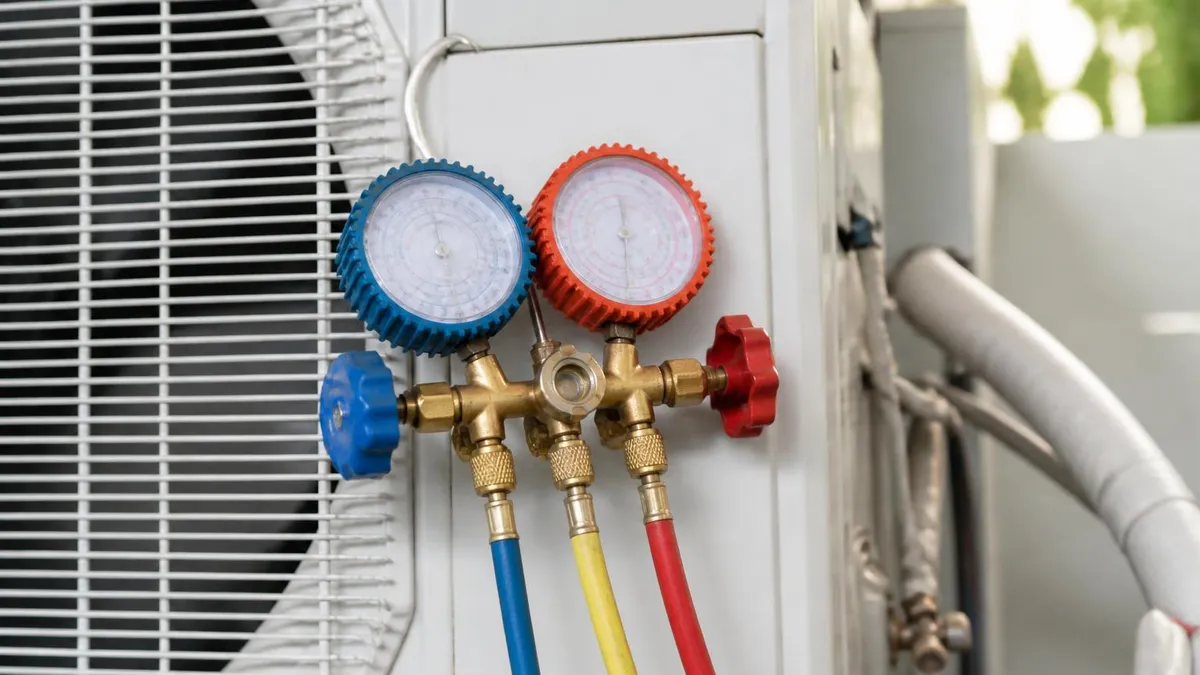
Is Pursuing Multiple HVAC Certifications Worth the Investment?
- +Documented pay premiums of 10-23% over uncertified technicians in nearly every regional market
- +Access to manufacturer warranty programs and rebate-eligible installer networks worth thousands annually
- +Faster promotion to lead technician, foreman, and service manager roles inside service companies
- +Stronger résumé positioning when bidding on commercial, federal, or institutional maintenance contracts
- +Reduced liability exposure because certified work meets industry standards of care in lawsuits
- +Tangible proof of competency that justifies higher billable rates when you start your own company
- +Continuing education hours that keep your skills sharp as refrigerants, controls, and codes evolve
- −Upfront costs of $500-$2,500 in exam fees, study materials, and prep courses when pursued aggressively
- −Significant study time, typically 50-150 hours per credential, on top of full-time field work
- −Renewal requirements for NATE and state licenses demand ongoing CEUs every 1-3 years
- −Some employers value brand-specific manufacturer training over generic third-party certifications
- −Credentials do not substitute for the field experience hiring managers ultimately verify in interviews
- −Marketing of low-value certifications by certain online schools can drain your budget with no payoff
Pros and Cons at a Glance
| Pros | Cons |
|---|---|
| Access to manufacturer warranty programs and rebate-eligible installer networks worth thousands annually | Some employers value brand-specific manufacturer training over generic third-party certifications |
| Faster promotion to lead technician, foreman, and service manager roles inside service companies | Credentials do not substitute for the field experience hiring managers ultimately verify in interviews |
| Stronger résumé positioning when bidding on commercial, federal, or institutional maintenance contracts | Marketing of low-value certifications by certain online schools can drain your budget with no payoff |
Your HVAC Certifications Prep Checklist
- ✓Identify which state license your jurisdiction requires before choosing optional certifications
- ✓Earn EPA Section 608 Universal certification as your absolute foundational first step
- ✓Complete an OSHA 10-hour Construction safety card if your employer has not already provided one
- ✓Document at least 1,000 hours of supervised field experience before sitting for NATE specialty exams
- ✓Build a structured 8-12 week study calendar with daily 45-minute focused review sessions
- ✓Use the official ESCO, NATE, or HVAC Excellence prep manuals rather than random YouTube content
- ✓Take at least two full-length timed practice exams to identify and patch your weakest knowledge domains
- ✓Schedule manufacturer factory training on the brands your shop installs most frequently
- ✓Track all certifications, expiration dates, and CEU credits in a single spreadsheet or app
- ✓Set calendar reminders 90 days before any renewal deadline to avoid expensive lapses
- ✓Review updated refrigerant regulations and A2L training requirements every January
- ✓Budget $750-$1,500 annually for ongoing certification renewals and continuing education
Don't Skip OSHA 10 or Manufacturer Factory Training
Hiring managers consistently report that OSHA 10 Construction and brand-specific factory training (Carrier, Trane, Mitsubishi Diamond Contractor, Daikin Comfort Pro) move the needle on starting pay almost as much as NATE. These low-cost or free credentials signal that you understand jobsite safety and manufacturer-specific commissioning, which directly reduces a contractor's warranty exposure. Stack them with EPA 608 in your first six months and your résumé will outrank technicians who only chase the famous brand-name credentials.
The financial case for HVAC certifications is straightforward when you run the numbers honestly. The Bureau of Labor Statistics pegs the 2024 median wage for HVAC mechanics and installers at $59,810, with the top 10% exceeding $87,840. Inside that distribution, certified technicians cluster heavily in the upper quartiles. NATE's own salary surveys, corroborated by independent contractor association data, show NATE holders earning between $4,500 and $13,000 more per year than uncertified peers performing similar work in the same market. Stack EPA 608, NATE, and a state journeyman license and you typically clear the $75,000 threshold within five years.
The return on investment math is hard to beat. Spending $400 on study materials and exam fees to earn NATE Core plus a specialty exam typically pays back in two to four months through pay increases, signing bonuses, or certification incentive payments. Many large national service companies including ARS, One Hour Heating, and Service Experts pay one-time bonuses of $500 to $2,000 per NATE specialty earned. State journeyman licenses unlock even larger jumps because they qualify you to run jobs solo, which most companies reward with a $4 to $8 hourly bump.
The compensation ceiling rises further if you parlay certifications into a leadership track. Service managers at well-run residential shops earn $85,000 to $130,000 plus performance bonuses, and almost all hiring postings for these roles list NATE, HVAC Excellence Master Specialist, or RSES CMS as preferred. Commercial controls technicians fluent in Tridium Niagara, BACnet, and major manufacturer BAS platforms can reach $120,000 to $150,000 in major metros, and that pay scale is essentially unattainable without certifications proving you can configure, commission, and troubleshoot complex systems.
Owners and operators see even larger gains. Holding a state contractor license lets you bid jobs at full margin instead of subcontracting through someone else's license, which can swing $50,000 to $200,000 in annual gross profit on a small four-truck shop. Manufacturer partner status, which generally requires certified installers and ongoing training, brings 5% to 15% rebates on equipment plus consumer financing options that close more sales. Insurance carriers also offer reduced general liability premiums for contractors who can document certified workforce credentials annually.
There is also the harder-to-quantify benefit of career durability. The technicians who lose work during recessions or industry shifts are almost universally those who never invested in formal credentials and built their careers on tribal knowledge alone. When 2008 and 2020 hit, certified techs with documented résumés found new jobs in weeks while uncertified peers sat idle for months. Credentials are portable career insurance, especially valuable if you move states, want to pivot from residential to commercial, or need to step back from physical work into estimating, training, or sales roles.
The opportunity cost of not getting certified compounds yearly. Every year you delay EPA 608 Universal is a year you cannot legally buy refrigerant or charge a system. Every year without NATE is a year you are leaving roughly $5,000 to $13,000 on the table compared to your certified coworker. Over a 30-year career, that gap easily exceeds $250,000 in lost lifetime earnings, more than enough to fund a retirement comfortably. Treat the small upfront cost of testing as the highest-ROI investment available in the trade.
Finally, certifications shape the kind of work you actually get to perform. Top-tier residential service, premium replacement installations, geothermal systems, mini-split conversions, hvac duct design refrigeration, and building automation work all flow naturally to certified technicians. Truck-stock vans, take-home company vehicles, on-call premium pay, and the right to refuse miserable jobs all become more accessible when your résumé speaks for itself. The work-life quality difference between a certified senior tech and an entry-level installer is dramatic, and certifications are the bridge.

EPA 608, NATE, and HVAC Excellence are certifications that prove skills but do NOT grant you legal authority to operate as a contractor in most states. Pulling permits, bidding jobs, and advertising HVAC services require a state-issued contractor license, which is a separate process involving exams, bonding, insurance, and experience verification. Operating without a required state license can result in fines, criminal misdemeanor charges, and civil liability if work later fails. Always confirm both certification and licensing requirements with your state's labor or contractor board.
State licensing is the most confusing layer of HVAC credentials because requirements vary wildly across the country. Roughly 36 states require some form of HVAC contractor license at the state level, while others delegate licensing to counties or cities. Texas, California, Florida, North Carolina, Georgia, Washington, and Oregon all maintain rigorous state programs with separate journeyman, contractor, and specialty endorsements. States like Colorado, Indiana, Kansas, and New York leave most licensing to municipalities, which means a tech licensed in Denver may not be recognized 50 miles away in Boulder without an additional application.
The typical state license process requires documented work experience (commonly 2 to 4 years as a journeyman or apprentice), passing a trade exam, passing a business and law exam, posting a surety bond ranging from $5,000 to $50,000, and carrying general liability insurance with minimums between $300,000 and $2 million. Many states also require workers compensation coverage if you employ technicians. The exams themselves are open-book in most states and draw heavily from the International Mechanical Code, IFGC, NFPA 54, NEC, and state-specific amendments.
Reciprocity agreements ease moves between certain states but rarely eliminate the application process. The Southern Building Code Congress reciprocity network covers movements among Alabama, Georgia, Louisiana, Mississippi, North Carolina, South Carolina, and Tennessee with reduced retesting. Other regional compacts exist for the Northwest and Mountain West. Even with reciprocity, you typically still file a full application, pay fees, and pass the local business and law exam. Plan on 90 to 180 days for an interstate move-and-relicense even under favorable reciprocity terms.
If you are evaluating contractors for a specific market, the commercial hvac contractors near me walks through the license verification questions you should always ask before signing a service agreement. The same checks apply when you are looking for a job: ask your prospective employer to confirm their state license number, verify it on the state board website, and confirm whether your apprentice or journeyman hours under them will count toward your own future application. Reputable shops welcome these questions because credentialed labor is the foundation of their business model.
Local jurisdictions add a third layer of complexity through permitting, gas piping endorsements, refrigerant handling registration, and city business licenses. Many large cities maintain separate journeyman exam programs that supplement state licenses, with notable examples in Phoenix, Los Angeles, San Diego, and most New York City boroughs. Always call the building department in the city where you plan to work and ask for a written list of credentials required to pull HVAC and gas piping permits in their jurisdiction. Get the answer in email so you have documentation if a permit clerk later challenges your paperwork.
Specialty endorsements expand your earning power beyond standard licenses. Boiler operator licenses, ammonia refrigeration certifications, hydronic specialty endorsements, geothermal accreditation through IGSHPA, building automation certifications (Tridium NCQT, BACnet certified professional), and indoor air quality credentials from ASHRAE all unlock niche markets where competition is thinner and margins are healthier. Industrial and process cooling work, in particular, rewards heavy specialty credentialing with hourly rates 50% to 100% higher than residential service.
For technicians early in their careers, the smartest licensing path is to first nail down EPA 608 Universal, then complete a state-recognized apprenticeship while logging documented hours under a licensed master, then sit for the journeyman exam at the earliest eligible date, then layer on NATE specialties to differentiate yourself in the local labor market. Aim to hold a contractor-level state license by year five or six if you want the option of starting your own company. Each step builds on the previous and compounds your earning capacity in a way few other trade career paths can match.
Practical exam preparation strategy makes a much larger difference than raw study hours. The most successful candidates use a three-phase study approach: foundation building, targeted gap closure, and timed simulation. Foundation building means reading the official prep manual cover to cover at a comfortable pace over four to six weeks. Targeted gap closure happens after you take a baseline practice exam, identify the two or three weakest domains, and drill those specifically for two to three weeks. Timed simulation is the final week of full-length practice exams under exam conditions, which conditions you to manage pacing and reduce test anxiety.
For EPA 608, expect to invest 15 to 25 study hours if you have shop experience and 40 to 60 hours if you are starting from scratch. The Core section is where almost everyone underestimates difficulty, so allocate at least a third of your study time to refrigerant regulations, recovery requirements, leak rate calculations, and sales restrictions.
ESCO's online prep includes a question bank that closely mirrors the actual exam, and HVAC School's podcast episode on Section 608 is one of the most efficient free resources available anywhere. Schedule the proctored online exam through ESCO once you consistently score above 85% on practice tests.
For NATE Core and a specialty, plan on 60 to 100 hours of structured prep. The Core exam covers safety, tools, soft skills, electrical theory, refrigeration cycle fundamentals, and basic system components. The specialty exam dives deep into a particular system type with both installation and service variants. NATE publishes detailed Knowledge Areas of Technician Expertise (KATEs) documents that explicitly list every topic the exam can test. Use those KATE documents as your study syllabus rather than guessing at scope, and you will avoid wasting hours on irrelevant material.
For state journeyman and contractor exams, the prep landscape is more fragmented. Most states publish a reference list with editions of the IMC, IFGC, NFPA 54, NEC, and state amendments. Buy or borrow the exact editions listed, even if they look outdated, because the exam questions are written against those specific code cycles. Tab and highlight your books strategically because most state exams are open-book and timed. Companies like Brightwood, Builders License Training Institute, and 1ExamPrep offer state-specific prep courses ranging from $200 to $800 that dramatically improve first-attempt pass rates.
Test-day execution is its own skill set. Arrive early, bring two forms of ID, bring approved code books with no loose papers stuffed inside, and use a non-programmable calculator. Manage time by answering easy questions first and flagging hard ones for a second pass. For 100-question exams, aim to complete the first sweep in 60% of allotted time, leaving 40% for flagged questions and review.
Trust your preparation: changed answers are correct less often than original answers when guessing between two plausible options. Do not leave any question blank, because unanswered questions count against you while educated guesses give you partial odds.
After passing, the work shifts to maintenance. Build a master credentials spreadsheet with columns for credential name, issuing body, issue date, expiration date, CEU requirements, credential number, and renewal contact information. Set calendar alerts 120 days, 60 days, and 30 days before any expiration. Lapsed NATE certifications require retesting, which is expensive and time-consuming. Lapsed state licenses can require new applications and even reposting bonds. The five minutes a year you spend updating that spreadsheet may be the highest-use administrative work of your career.
Finally, use your employer's resources aggressively. Most well-managed HVAC companies budget $1,000 to $3,000 per technician annually for training and certification, but the money goes unspent unless you ask for it. Bring a written training plan to your performance review showing which credentials you want to pursue, how much they cost, and how they benefit the company. Frame it in terms of company benefit: better warranty compliance, manufacturer partner status, marketing credibility, and reduced liability. Owners say yes to investments that produce returns, and certifications produce some of the highest documented returns in the industry.
Sample HVAC Practice Questions
Try these questions from our free HVAC practice tests. The correct answer and an explanation follow each question.
Which document provides the minimum ventilation requirements adopted by most US state and local building codes for commercial buildings?
- A. SMACNA HVAC Systems and Equipment
- B. ASHRAE 62.1
- C. ACCA Manual Q
- D. NFPA 90A
Answer: B. ASHRAE 62.1
ASHRAE 62.1 'Ventilation for Acceptable Indoor Air Quality' is the industry standard referenced by the International Mechanical Code and adopted by most US jurisdictions.
Which document typically outlines the compliance requirements for HVAC professionals?
- A. Employee handbook
- B. Marketing brochure
- C. Standards of practice and code of conduct
- D. Annual financial report
Answer: C. Standards of practice and code of conduct
Standards of practice and codes of conduct define the professional and ethical requirements practitioners must follow.
In HVAC practice, what is the best approach to quality improvement in refrigeration?
- A. Make changes without measuring results
- B. Use data-driven methods with measurable outcomes
- C. Wait for problems to occur before acting
- D. Copy what other organizations do without analysis
Answer: B. Use data-driven methods with measurable outcomes
Data-driven quality improvement with measurable outcomes ensures that changes actually produce the intended improvements and can be verified.
HVAC Questions and Answers
HVAC Repair Portland: The Complete 2026 Homeowner's Guide to Furnace, AC, and Heat Pump Service in the Rose City

Commercial HVAC Contractors Near Me: How to Find, Vet, and Hire the Right Local Pro for Your Building
HVAC Tune Up Service: The Complete Guide to Professional HVAC Maintenance and Why It Pays for Itself
HVAC Solutions: The Complete Guide to Heating, Cooling, and Indoor Air Quality Systems for Homes and Buildings
Certified HVAC Contractors: How to Find, Vet, and Hire the Right Professional for Your Home or Business
How this page was made: written with AI tools. We have not yet matched this exam's facts to an official source, so confirm fees, dates and rules with the exam body. Not reviewed by a subject-matter expert. Editorial policy