
HVAC Terms: The Complete Glossary of Heating, Ventilation, and Air Conditioning Terminology Every Technician Needs
💡 Learn essential HVAC terms and definitions. This complete glossary covers heating, cooling, ventilation, and air quality terminology for technicians.
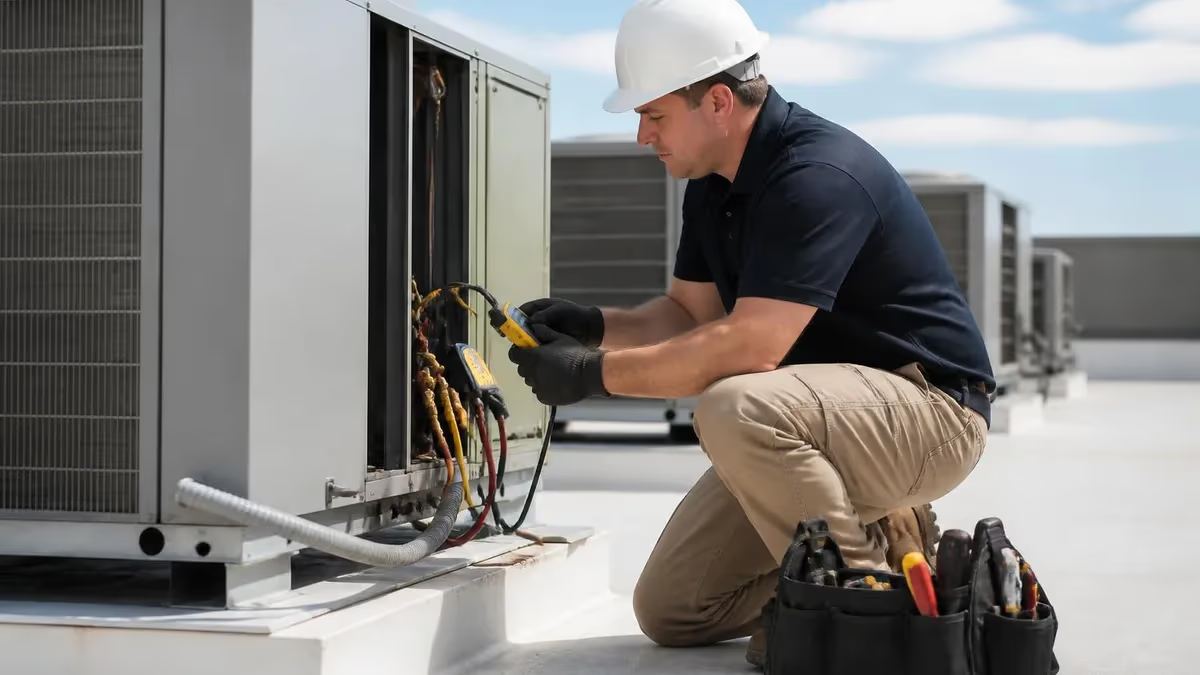
Understanding HVAC terms is the first step toward becoming a competent heating, ventilation, and air conditioning professional. Whether you are preparing for an EPA 608 certification exam, studying for a state journeyman license, or simply trying to communicate more effectively with contractors and clients, knowing the precise meaning of industry-specific vocabulary gives you a measurable advantage. The HVAC field uses hundreds of specialized terms drawn from thermodynamics, refrigeration science, electrical engineering, and building code standards that govern every installation and service call.
Many newcomers to the trade feel overwhelmed by the sheer volume of acronyms and technical phrases they encounter during their first year of training. Terms like SEER, AFUE, HSPF, and MERV appear on equipment datasheets, energy audits, and certification exams with little explanation. Each abbreviation represents a measurable performance metric that directly influences system selection, installation procedures, and long-term operating costs for residential and commercial buildings across every climate zone in the United States today.
Beyond acronyms, HVAC professionals must also understand concepts related to airflow dynamics, heat transfer, refrigerant behavior, and electrical controls. A technician who cannot distinguish between sensible heat and latent heat will struggle to diagnose comfort complaints accurately. Similarly, confusing static pressure with velocity pressure can lead to undersized ductwork, excessive noise, and premature equipment failure that costs building owners thousands of dollars in unnecessary repairs and increased energy bills every single year.
The importance of mastering HVAC terminology extends beyond fieldwork and into business operations. When writing proposals, explaining repair options to homeowners, or documenting warranty claims, precise language prevents misunderstandings and protects your professional reputation. Customers trust technicians who can clearly explain what a thermal expansion valve does, why a cracked heat exchanger poses a carbon monoxide risk, or how a variable-speed blower motor reduces electricity consumption compared to a standard single-speed unit.
Regulatory compliance adds another layer of vocabulary that every HVAC professional must learn thoroughly. The Environmental Protection Agency mandates specific handling procedures for refrigerants under Section 608 of the Clean Air Act. Building codes reference terms like minimum efficiency standards, combustion air requirements, and flue gas venting categories that vary by jurisdiction. Failing to understand these regulatory terms can result in code violations, fines, and liability exposure that threaten both your career and your company license.
This comprehensive glossary organizes the most essential HVAC terms into logical categories so you can study them efficiently and retain what you learn. Each section covers a specific domain within the trade, from basic heating and cooling concepts to advanced refrigeration cycle terminology and indoor air quality metrics. Whether you are reviewing for an exam or building your professional knowledge base, this resource provides clear definitions backed by real-world context that makes every term easier to remember and apply correctly.
Throughout this guide, you will find practical examples that connect abstract definitions to actual equipment, diagnostic scenarios, and code requirements you will encounter in the field. Understanding these terms is not merely academic preparation — it is the foundation of professional competence that separates entry-level helpers from skilled technicians who can troubleshoot complex systems, recommend appropriate solutions, and earn the trust of clients who depend on reliable heating and cooling for their homes and commercial buildings.
HVAC Industry by the Numbers
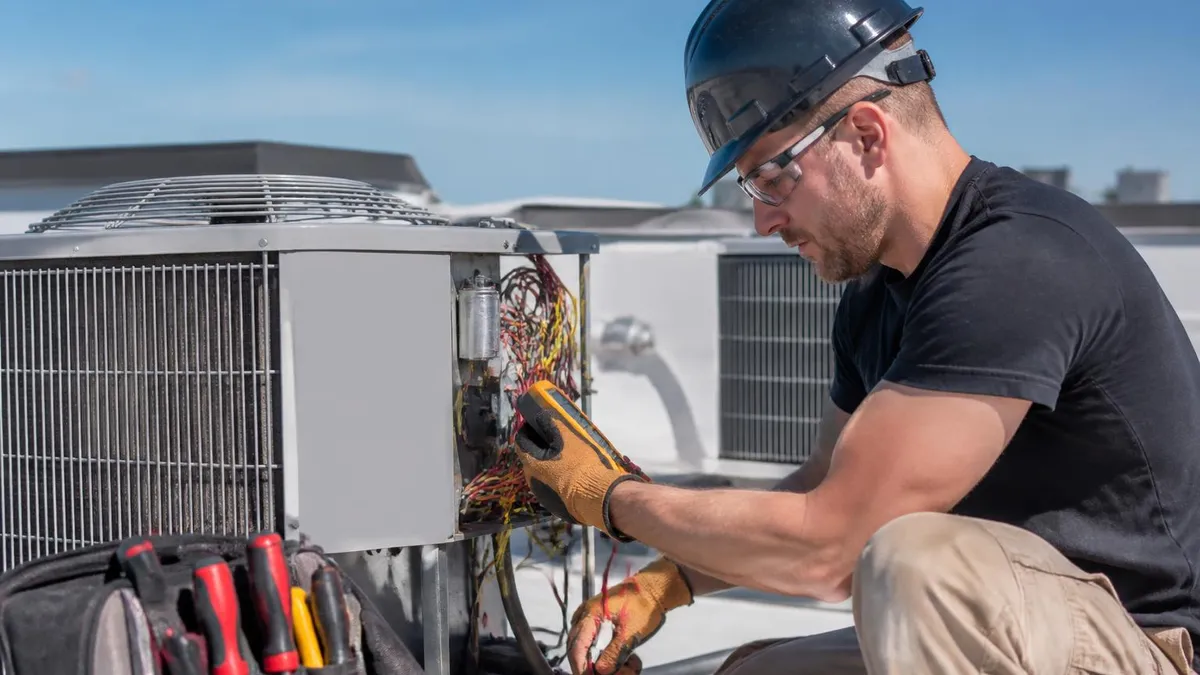
Core HVAC Term Categories You Need to Know
Covers furnace components, boiler terminology, heat pump modes, combustion analysis vocabulary, BTU ratings, and heat exchanger terminology. These terms appear on every heating-related certification exam and are essential for diagnosing furnace and boiler problems in the field.
Includes refrigerant types, compressor terminology, evaporator and condenser functions, subcooling, superheat, and metering device vocabulary. Understanding these terms is critical for EPA 608 certification and every air conditioning service call you will perform.
Covers static pressure, CFM calculations, duct sizing terminology, return air, supply air, and mechanical ventilation standards. Proper airflow vocabulary helps technicians diagnose comfort complaints, noise issues, and humidity problems in residential and commercial systems accurately.
Includes SEER2, EER, AFUE, HSPF2, COP, and ENERGY STAR criteria. These metrics determine equipment selection, rebate eligibility, and code compliance. Technicians must explain these ratings to customers when recommending system upgrades or replacement equipment for their properties.
Covers MERV ratings, HEPA filtration, VOCs, relative humidity, fresh air ventilation rates, and UV germicidal irradiation. Indoor air quality terminology has grown significantly since 2020 as homeowners and building managers prioritize healthier indoor environments and pathogen mitigation strategies.
Heating system terminology forms the backbone of HVAC vocabulary because heating equipment has been installed in American homes for well over a century. The most fundamental heating term is BTU, which stands for British Thermal Unit and measures the amount of energy required to raise one pound of water by one degree Fahrenheit. Furnaces are rated in BTU output per hour, and understanding this measurement helps technicians properly size equipment for each building's calculated heat loss during peak winter design conditions.
AFUE, or Annual Fuel Utilization Efficiency, is perhaps the single most important heating performance term that every technician must know. Expressed as a percentage, AFUE indicates how much fuel a furnace or boiler converts into usable heat versus how much escapes through the flue or is otherwise wasted. A furnace rated at 96 percent AFUE converts 96 cents of every energy dollar into heat, while the remaining four cents exits through the exhaust vent as combustion byproducts.
Heat exchanger terminology is critical for safety diagnostics and customer communication. The primary heat exchanger transfers combustion heat to the supply airstream in a gas furnace, while the secondary heat exchanger in condensing furnaces extracts additional heat from flue gases. A cracked heat exchanger can allow carbon monoxide to enter the living space, making this one of the most safety-critical components that technicians inspect during annual maintenance visits and system evaluations.
Heat pump terminology introduces unique vocabulary because these systems provide both heating and cooling from a single piece of equipment. The reversing valve switches the refrigerant flow direction to change between heating and cooling modes. During heating mode, the outdoor coil functions as the evaporator while the indoor coil serves as the condenser — the exact opposite of cooling mode. Auxiliary heat, emergency heat, and defrost cycles are additional heat pump terms that technicians encounter during winter service calls.
Boiler systems add another layer of heating terminology that differs significantly from forced-air furnace vocabulary. Terms like hydronic heating, radiant floor systems, expansion tanks, circulator pumps, aquastats, and pressure relief valves are specific to water-based heating systems. Boiler efficiency is also measured in AFUE, but the distribution system uses piping instead of ductwork, and technicians must understand terms like supply water temperature, return water temperature, and delta T to properly diagnose performance issues.
Combustion analysis terminology is essential for any technician who services gas-fired equipment in the field. Terms like flue gas temperature, carbon monoxide parts per million, oxygen percentage, excess air, and combustion efficiency appear on combustion analyzer readings that technicians must interpret correctly. Draft measurements using a manometer, gas pressure readings in inches of water column, and manifold pressure adjustments are additional terms that directly affect equipment safety and operational performance during every heating season.
Understanding ignition system terminology helps technicians diagnose no-heat calls efficiently and communicate findings to customers clearly. Standing pilot, intermittent pilot, hot surface ignition, and direct spark ignition are the four main ignition types found in modern gas furnaces. Each type uses different components and produces different diagnostic codes when failures occur. Flame rectification, flame rollout switches, and limit switches are related safety terms that appear on virtually every furnace troubleshooting flowchart in the industry.
HVAC Practice Test Questions
Prepare for the HVAC - Heating Ventilation and Air Conditioning exam with our free practice test modules. Each quiz covers key topics to help you pass on your first try.
HVAC Air Conditioning
HVAC Exam Questions covering Air Conditioning. Master HVAC Test concepts for certification prep.
HVAC Code Compliance
Free HVAC Practice Test featuring Code Compliance. Improve your HVAC Exam score with mock test prep.
HVAC Electrical Controls
HVAC Test Prep for Electrical Controls. Practice HVAC Quiz questions and boost your score.
HVAC Energy Efficiency
HVAC Questions and Answers on Energy Efficiency. Free HVAC practice for exam readiness.
HVAC Heating Systems
HVAC Mock Test covering Heating Systems. Online HVAC Test practice with instant feedback.
HVAC Load Calculations
Free HVAC Quiz on HVAC Load Calculations. HVAC Exam prep questions with detailed explanations.
HVAC Tools and Equipment
HVAC Practice Questions for HVAC Tools and Equipment. Build confidence for your HVAC certification exam.
HVAC Refrigeration
HVAC Test Online for Refrigeration. Free practice with instant results and feedback.
HVAC Safety Practices
HVAC Study Material on Safety Practices. Prepare effectively with real exam-style questions.
HVAC System Design
Free HVAC Test covering System Design. Practice and track your HVAC exam readiness.
HVAC Thermodynamics
HVAC Exam Questions covering Thermodynamics. Master HVAC Test concepts for certification prep.
HVAC Terms by System Type and Application
Residential HVAC terminology focuses on equipment commonly found in single-family homes, townhouses, and small multifamily buildings. Split systems, packaged units, mini-splits, and window units each have their own vocabulary sets. Residential technicians must understand terms like tonnage, which measures cooling capacity in units of 12,000 BTU per hour. A three-ton system provides 36,000 BTU per hour of cooling capacity. Load calculations using Manual J determine the correct equipment size based on the home's square footage, insulation levels, window orientation, and local climate data.
Thermostat terminology is heavily residential-focused and includes programmable, non-programmable, smart, and communicating thermostat types. Residential systems also introduce terms like zoning, which uses motorized dampers to direct conditioned air to specific areas of the home independently. Single-stage, two-stage, and variable-capacity equipment descriptions refer to how the system modulates its output to match the actual heating or cooling demand. Understanding these residential terms helps technicians recommend appropriate upgrades and explain energy savings to homeowners during consultations and maintenance appointments.

Benefits and Challenges of Mastering HVAC Terminology
- +Faster and more accurate troubleshooting of heating, cooling, and ventilation equipment
- +Better communication with customers, inspectors, and fellow technicians on every job
- +Higher scores on EPA 608, NATE, and state licensing certification examinations
- +Improved ability to read and interpret equipment specifications and technical manuals
- +Greater confidence writing proposals, work orders, and warranty documentation
- +Career advancement into supervisory, engineering, and sales positions within the industry
- −The sheer volume of over 600 terms can feel overwhelming for new technicians entering the trade
- −Industry standards and terminology evolve as new technologies and refrigerants are introduced
- −Regional code variations mean some terms have different applications across jurisdictions
- −Many acronyms overlap or sound similar, creating confusion during study and testing
- −Manufacturer-specific terminology adds proprietary vocabulary beyond standard industry terms
- −Some terms have different meanings in residential versus commercial HVAC contexts
Pros and Cons at a Glance
| Pros | Cons |
|---|---|
| Faster and more accurate troubleshooting of heating, cooling, and ventilation equipment | Industry standards and terminology evolve as new technologies and refrigerants are introduced |
| Better communication with customers, inspectors, and fellow technicians on every job | Regional code variations mean some terms have different applications across jurisdictions |
| Improved ability to read and interpret equipment specifications and technical manuals | Many acronyms overlap or sound similar, creating confusion during study and testing |
| Greater confidence writing proposals, work orders, and warranty documentation | Manufacturer-specific terminology adds proprietary vocabulary beyond standard industry terms |
| Career advancement into supervisory, engineering, and sales positions within the industry | Some terms have different meanings in residential versus commercial HVAC contexts |
HVAC Terms Mastery Checklist for Technicians
- ✓Memorize all major HVAC efficiency ratings including SEER2, EER, AFUE, HSPF2, and COP.
- ✓Learn the four components of the refrigeration cycle and their functions in both cooling and heating modes.
- ✓Understand superheat and subcooling definitions and their diagnostic significance for charging refrigerant.
- ✓Study combustion analysis terms including CO parts per million, oxygen percentage, and draft pressure.
- ✓Master airflow terminology including static pressure, CFM, velocity pressure, and total external static pressure.
- ✓Review electrical terms including voltage, amperage, resistance, capacitance, and relay operation.
- ✓Learn indoor air quality vocabulary including MERV ratings, HEPA standards, VOCs, and ventilation rates.
- ✓Study building code terms related to combustion air, clearances, venting categories, and minimum efficiency standards.
- ✓Practice interpreting equipment nameplates using model number nomenclature and rating data.
- ✓Review thermostat and controls terminology including staging, setpoints, deadband, and anticipator settings.
Start With the Refrigeration Cycle — Everything Else Builds on It
More than 60 percent of HVAC certification exam questions reference refrigeration cycle terminology directly or indirectly. If you master superheat, subcooling, saturation temperature, and the four major components first, every other term becomes easier to learn because you already understand the underlying science that connects them all together.
Efficiency and performance rating terms are among the most frequently tested vocabulary on HVAC certification exams and the most commonly discussed during customer consultations. SEER2, which stands for Seasonal Energy Efficiency Ratio 2, replaced the original SEER metric in January 2023 under updated Department of Energy testing procedures. SEER2 measures cooling efficiency over an entire season by dividing the total cooling output in BTU by the total electrical energy input in watt-hours, using a revised testing protocol with higher external static pressure.
EER, or Energy Efficiency Ratio, differs from SEER2 because it measures cooling efficiency at a single set of operating conditions rather than across a full season. EER is calculated at 95 degrees Fahrenheit outdoor temperature, 80 degrees indoor dry bulb, and 67 degrees indoor wet bulb. This makes EER particularly useful for evaluating equipment performance in consistently hot climates where air conditioners operate near full capacity for extended periods throughout the summer cooling season each year.
AFUE remains the standard efficiency metric for gas furnaces and boilers, and it is one of the most straightforward HVAC terms to understand and explain. Current federal minimum AFUE requirements are 80 percent for non-weatherized furnaces in southern states and 90 percent for furnaces installed in northern climate zones. High-efficiency condensing furnaces achieve AFUE ratings of 95 to 98 percent by extracting additional heat from combustion gases before they exit the building through PVC vent piping.
HSPF2, or Heating Seasonal Performance Factor 2, measures heat pump heating efficiency over an entire season using the updated M1 testing procedure. Like SEER2, HSPF2 replaced the original HSPF metric to provide more realistic performance data under conditions that better represent actual installed operating environments. Higher HSPF2 numbers indicate greater heating efficiency, and current minimum federal requirements vary by region and equipment capacity to ensure appropriate performance in colder climates where heat pumps work hardest.
COP, or Coefficient of Performance, is a universal efficiency term that applies to any heating or cooling device and expresses the ratio of useful energy output to energy input. A heat pump with a COP of 3.0 produces three units of heating energy for every one unit of electrical energy consumed. COP varies with outdoor temperature, declining as conditions become more extreme, which is why heat pump performance specifications always reference specific outdoor temperature conditions for accurate comparison between competing models.
ENERGY STAR certification is a term that technicians encounter constantly when recommending equipment to customers seeking efficiency rebates and tax credits. ENERGY STAR requirements exceed federal minimum efficiency standards by a defined margin, and the qualifying thresholds change periodically as technology improves. As of 2026, ENERGY STAR-certified central air conditioners must meet SEER2 and EER2 minimums that are roughly 15 percent above the federal baseline, making them a reliable benchmark for identifying genuinely high-performing equipment.
Understanding the relationship between these efficiency terms helps technicians make accurate equipment recommendations based on each customer's specific needs and climate zone. A homeowner in Phoenix benefits more from high EER equipment that performs well under sustained extreme heat, while a homeowner in Minnesota should prioritize high HSPF2 for winter heating performance. Explaining these distinctions in plain language builds customer confidence and demonstrates the technical expertise that differentiates professional HVAC contractors from competitors.
Do not confuse SEER2 with EER — SEER2 is a seasonal average while EER measures performance at a single condition. Similarly, static pressure and velocity pressure are distinct measurements that combine to form total pressure. Mixing up these terms on a certification exam or during a system diagnosis can lead to incorrect answers, improper equipment sizing, and costly callbacks that damage your professional reputation.
Electrical and controls terminology represents one of the most challenging vocabulary domains for HVAC students because it requires understanding both electrical theory and its practical application to heating and cooling equipment. Voltage, measured in volts, describes the electrical pressure that pushes current through a circuit. Amperage, measured in amps, describes the volume of electrical current flowing through a conductor. Resistance, measured in ohms, describes how much a material opposes the flow of current. These three terms are connected by Ohm's Law.
Capacitors are among the most commonly replaced HVAC components, and understanding capacitor terminology is essential for diagnosing motor problems efficiently. A run capacitor provides continuous phase-shifted current to help single-phase motors operate smoothly, while a start capacitor provides a temporary boost of starting torque and then disconnects from the circuit via a potential relay or start relay. Microfarads measure capacitance, and technicians use multimeters to test whether a capacitor's measured value falls within the manufacturer's specified tolerance range, typically plus or minus five percent.
Relay and contactor terminology describes the electromagnetic switches that control power delivery to major HVAC components like compressors, condenser fan motors, and blower motors. A contactor uses a low-voltage control signal, usually 24 volts from the thermostat circuit, to close a set of high-voltage contacts that deliver line voltage power to the compressor and outdoor fan motor. Understanding terms like coil voltage, contact rating, and normally open versus normally closed positions is critical for diagnosing control circuit failures accurately.
Transformer terminology is fundamental because nearly every HVAC system uses a step-down transformer to convert line voltage to the 24-volt control voltage that operates the thermostat circuit. The primary winding connects to the line voltage supply, while the secondary winding delivers 24 volts to the control circuit. VA rating, which stands for volt-amperes, indicates the transformer's power capacity. An undersized transformer can cause intermittent control problems that are notoriously difficult to diagnose without proper understanding of transformer vocabulary and testing procedures.
Safety device terminology includes several critical terms that technicians must recognize during troubleshooting. A limit switch opens the circuit when the furnace plenum temperature exceeds a safe threshold, preventing heat exchanger damage and potential fire hazards. A flame rollout switch detects flames escaping the combustion chamber, which indicates a dangerous condition often caused by a cracked heat exchanger or blocked flue. Pressure switches verify that the inducer motor is creating proper draft before allowing the gas valve to open and ignition to proceed.
Variable frequency drive terminology has become increasingly important as the HVAC industry adopts electronically commutated motors and inverter-driven compressor technology. A VFD controls motor speed by adjusting the frequency and voltage of the electrical power supplied to the motor, allowing the system to modulate its output to match the actual load precisely. Terms like PWM (pulse width modulation), hertz, and inverter board appear in service literature for modern variable-capacity heat pumps and ductless mini-split systems installed nationwide.
Control board diagnostics introduce terminology related to LED fault codes, sequence of operations, and input-output verification that technicians use daily. Modern furnace control boards flash specific LED patterns to indicate different fault conditions, and each manufacturer uses unique code sequences documented in the equipment installation manual. Understanding terms like soft lockout versus hard lockout, retry attempts, and fault history helps technicians distinguish between intermittent problems and permanent failures that require component replacement for proper system restoration.
Building your HVAC vocabulary requires a systematic approach that combines structured study with hands-on reinforcement in real-world service scenarios. Start by creating flashcards for the most foundational terms — the refrigeration cycle components, basic electrical concepts, and primary efficiency ratings. Study these cards in short daily sessions of fifteen to twenty minutes rather than marathon cramming sessions, because spaced repetition has been proven to dramatically improve long-term retention of technical vocabulary across all fields of professional education.
Practice using HVAC terms in context rather than memorizing isolated definitions that quickly fade from memory. When you learn that superheat is the temperature increase above the saturation temperature at the evaporator outlet, immediately connect that definition to a real diagnostic scenario. For example, low superheat on an air conditioning system could indicate an overcharge of refrigerant, a restricted airflow condition, or an oversized metering device. This contextual learning approach transforms abstract definitions into practical diagnostic tools you carry with you.
Reading equipment installation manuals is one of the most underrated strategies for building HVAC vocabulary naturally and thoroughly. Every manufacturer publishes detailed installation and service manuals that use industry-standard terminology in the context of specific equipment operation. By reading the manual for a furnace you are installing or servicing, you encounter terms like rise temperature, external static pressure rating, gas pipe sizing requirements, and venting specifications in their natural professional context rather than in a disconnected study guide.
Certification exam preparation provides a structured framework for organizing your HVAC term study by topic area and priority level. EPA 608 certification focuses heavily on refrigerant handling terminology, safety procedures, and environmental regulations. NATE certification covers a broader range of terms across heating, cooling, air distribution, and system performance. State licensing exams often emphasize code-related terminology specific to your jurisdiction, including local amendments that modify national model codes for your region's climate and construction practices.
Joining online HVAC communities and forums exposes you to terminology used in real troubleshooting discussions by working technicians across the country. When a technician describes a problem using terms like low delta T across the evaporator coil, high head pressure, or a weak capacitor reading, you can see vocabulary applied to genuine diagnostic scenarios that reinforce your understanding. These communities also highlight regional terminology differences that you might not encounter in standardized study materials or classroom instruction alone.
Teaching HVAC terms to someone else is the most powerful learning technique available because it forces you to organize your understanding clearly enough to explain complex concepts in simple language. When you can explain the difference between sensible heat ratio and latent heat ratio to a first-year apprentice, you have truly internalized those terms at a level that will serve you throughout your entire career. Study groups, mentoring relationships, and even informal discussions with colleagues all provide opportunities for this type of reinforcing practice.
Finally, commit to learning at least five new HVAC terms every week throughout your first two years in the trade, and review previously learned terms regularly to prevent knowledge decay over time. Keep a running vocabulary journal organized by category, and mark terms that you find particularly difficult for additional review before certification exams. This disciplined approach builds a comprehensive professional vocabulary that supports accurate diagnostics, clear communication, regulatory compliance, and the career advancement that rewards technicians who invest in their own knowledge and professional development consistently.
Sample HVAC Practice Questions
Try these questions from our free HVAC practice tests. The correct answer and an explanation follow each question.
A technician measures suction pressure lower than normal and discharge pressure lower than normal during heat pump heating operation. What is the MOST likely cause?
- A. Overcharge of refrigerant
- B. Undercharge of refrigerant or low outdoor ambient temperature
- C. Faulty reversing valve stuck in cooling position
- D. Plugged liquid line filter drier
Answer: B. Undercharge of refrigerant or low outdoor ambient temperature
Low suction and discharge pressures in heating mode typically indicate a low refrigerant charge or very low outdoor ambient temperature reducing the available heat source.
A technician needs to work on an HVAC unit energized at 480V. According to NFPA 70E, what PPE category likely applies for this voltage level?
- A. PPE Category 0 — no PPE needed
- B. PPE Category 1 — safety glasses only
- C. PPE Category 2 or higher — arc flash suit and face shield
- D. Standard work clothes are sufficient
Answer: C. PPE Category 2 or higher — arc flash suit and face shield
480V systems typically require PPE Category 2 or higher per NFPA 70E, including arc-rated clothing, face shield, and insulated gloves.
What is the primary consideration when implementing changes to ventilation design?
- A. Speed of implementation
- B. Impact assessment and change management
- C. Vendor preference
- D. Personal convenience
Answer: B. Impact assessment and change management
Impact assessment and proper change management ensure that modifications do not introduce unexpected problems or service disruptions.
What is 'demand-controlled ventilation' (DCV)?
- A. A strategy that adjusts outdoor air intake based on occupancy, typically using CO2 sensors
- B. A method to reduce refrigerant flow at peak demand
- C. A technique for cycling compressors to match load
- D. A system for controlling duct static pressure
Answer: A. A strategy that adjusts outdoor air intake based on occupancy, typically using CO2 sensors
DCV uses CO2 or occupancy sensors to modulate outdoor air quantities, reducing unnecessary ventilation energy during low-occupancy periods.
HVAC Questions and Answers

HVAC Air Duct Sealing: The Complete Homeowner and Contractor Guide to Sealing Ductwork for Efficiency, Comfort, and Indoor Air Quality

HVAC Replacement Services: Complete Guide to System Replacement, Costs, and What to Expect
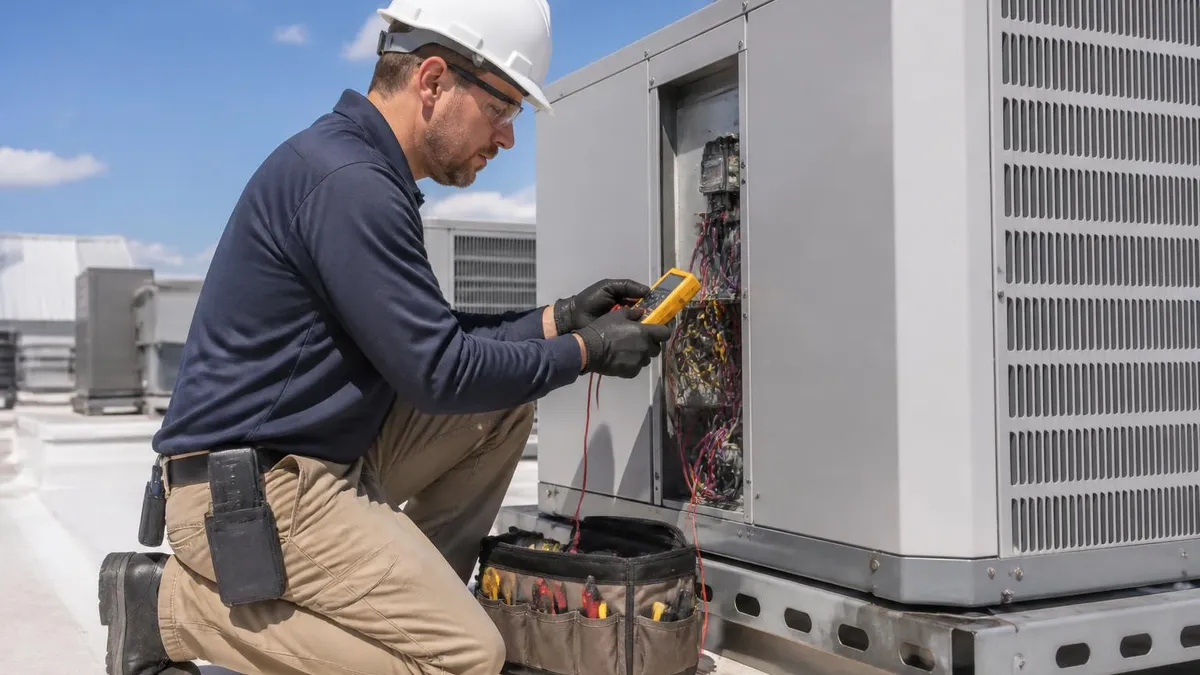
HVAC Repair Portland: The Complete 2026 Homeowner's Guide to Furnace, AC, and Heat Pump Service in the Rose City
HVAC Heating: The Complete Guide to Furnaces, Heat Pumps, Boilers, and Modern Home Heating Systems
HVAC Solutions: The Complete Guide to Heating, Cooling, and Indoor Air Quality Systems for Homes and Buildings
About the Author

NATE Certified HVAC Technician & Licensing Exam Trainer
Universal Technical InstituteMike Johnson is a NATE-certified HVAC technician and EPA 608 universal-certified refrigerant handler with a Bachelor of Science in HVAC/R Technology. He has 19 years of commercial and residential HVAC installation and service experience and specializes in preparing technicians for NATE certification, EPA 608, A2L refrigerant safety, and state HVAC contractor licensing examinations.