
Forklift Trucks: Complete 2026 September Guide to Types, Rental Costs, Operator Certification, and Buying Decisions
🎓 Forklift trucks guide: rental costs, electric vs LP, OSHA certification, operator training, and buying tips. Compare prices and pass your test.
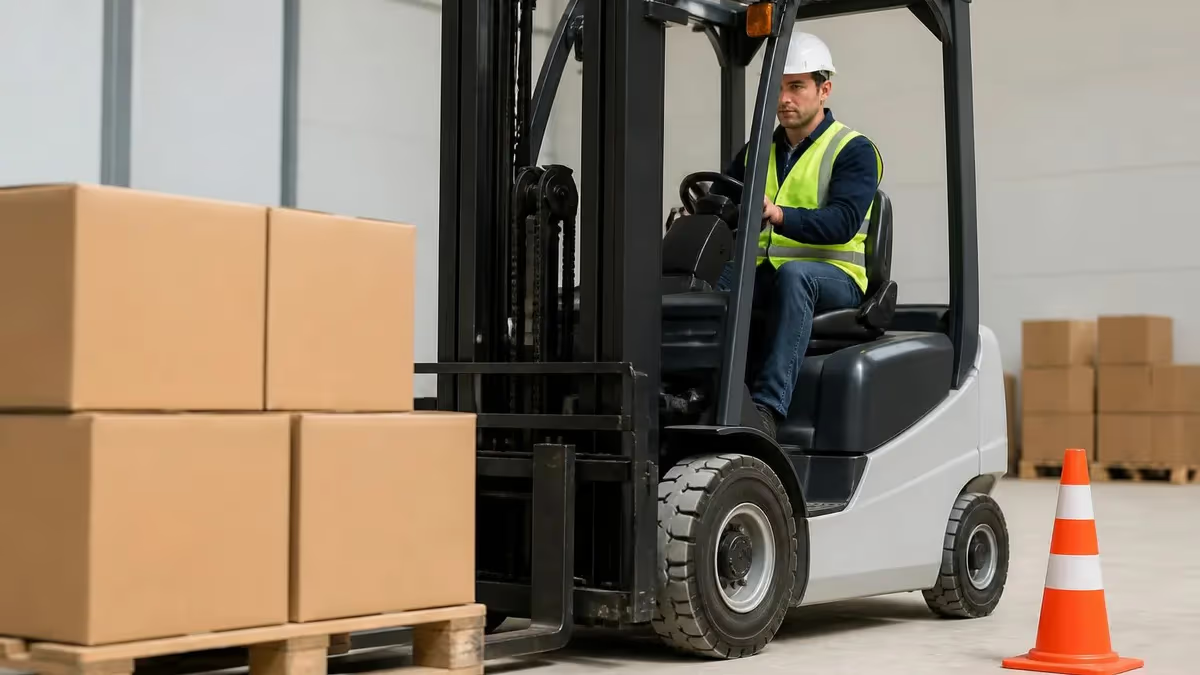
Forklift trucks are the backbone of nearly every warehouse, distribution center, manufacturing plant, and construction yard in the United States, moving an estimated 1.4 billion pallets every year across roughly 855,900 active machines. Whether you are searching for a forklift rental for a weekend project, comparing electric forklift models for a new facility, or pursuing OSHA certification of forklift operators on your team, understanding the equipment is the first step toward safer, more productive material handling and lower long-term operating costs.
The modern forklift industry includes counterbalanced sit-down trucks, narrow-aisle reach trucks, stand up forklift models, pallet jacks, order pickers, and rough-terrain machines designed for outdoor lumber yards. Each class serves a specific job, and choosing the wrong truck can cost you thousands in wasted rental fees, damaged product, and injured workers. The good news is that with a basic framework you can match the machine to your load, aisle width, and duty cycle in under ten minutes.
Cost is usually the first question. Daily forklift rental rates in 2026 range from $150 for a 3,000 lb electric walkie to $650 for a 10,000 lb diesel pneumatic, while monthly rentals fall between $1,500 and $4,200 depending on capacity, fuel type, and attachments. Buying outright costs $18,000 to $55,000 new and $8,000 to $25,000 used, before you factor in batteries, chargers, training, and OSHA-mandated daily inspections. Knowing when to rent, lease, or buy can save a mid-size operation $15,000 or more per truck over five years.
Safety and certification are non-negotiable. OSHA standard 1910.178 requires every forklift operator in the United States to complete formal classroom training, hands-on evaluation, and a written test before driving on the job, with refresher training every three years or after any near-miss incident. Tip-overs alone account for roughly 24% of forklift fatalities, and pedestrian strikes cause another 20%. A well-trained operator on a properly maintained truck reduces incidents by an estimated 70% compared to an untrained one.
This guide pulls together everything a buyer, manager, or new operator needs in one place. We will walk through the seven OSHA truck classes, compare electric versus internal-combustion power, break down rental versus purchase math, explain the certification process step by step, and answer the questions readers most often ask before signing a lease or sitting for a practical exam. We will also point you to free practice questions you can use to prepare for your operator card.
If you are weighing maintenance contracts or wondering how worn wheels affect stability, our companion piece on forklift repair near me covers tire wear, hydraulic leaks, and the inspection points fleet managers monitor most closely. By the time you finish reading you will know which truck to request, what fair pricing looks like in your region, and how to keep your operation compliant with federal safety law in 2026.
Let's start with the numbers that frame every forklift decision, from the size of the rental market to the average pay of a certified operator across the United States today.
Forklift Trucks by the Numbers (2026)

Seven OSHA Forklift Classes Explained
Sit-down or stand up forklift powered by industrial batteries. Best for indoor warehouse work, food processing, and clean environments. Capacities range from 3,000 to 12,000 lbs with zero emissions.
Reach trucks, order pickers, and turret trucks designed for aisles under 9 feet. They lift 20–35 feet and dominate high-bay distribution centers where storage density matters most.
Walkie pallet jacks and powered riders for short hauls. Capacities 3,000–8,000 lbs at low cost, making them ideal for retail back rooms, trucks, and grocery distribution.
Internal combustion forklifts running on propane, gas, or diesel. Class IV uses cushion tires for indoors; Class V uses pneumatic tires for outdoor lumber and construction yards.
Class VI tow tractors pull trailers in airports and factories. Class VII rough-terrain machines handle gravel, mud, and uneven ground at construction sites and farms.
Forklift rental pricing in the United States follows a predictable structure once you know what drives it. The four biggest cost variables are lift capacity, fuel type, rental duration, and delivery distance. A 5,000 lb electric forklift rents for roughly $175 to $225 per day, $700 to $900 per week, and $1,800 to $2,400 per month from national chains like Sunbelt, United Rentals, and Toyota Material Handling dealers. Smaller independent dealers often beat those rates by 10 to 15 percent, especially on month-to-month contracts that roll into annual leases.
Daily rentals make sense for one-off projects under five days, such as inventory counts, trade-show setups, or seasonal spikes. Weekly rates typically save 30 percent compared to seven daily rentals, while monthly rates cut the daily equivalent in half. If you expect to need a truck for more than four months, a long-term rental or operating lease at $1,200 to $1,800 per month with full maintenance included almost always beats short-term rates and removes repair risk from your budget.
Searches for forklift rental near me have climbed 22 percent year over year as more contractors and small manufacturers avoid capital purchases. Local availability still matters: in major metros like Houston, Atlanta, Chicago, and Los Angeles you can typically secure a 5,000 lb truck within 24 hours, but in rural areas plan on a 3 to 5 day lead time and a delivery surcharge of $150 to $400 per leg. Always confirm whether the quoted rate includes propane refills, battery service, and a damage waiver.
Hidden fees are where rental budgets blow up. Environmental fees of 7 to 12 percent are common, fuel surcharges add another 4 to 6 percent, and most dealers charge a flat $75 to $150 for a pre-rental inspection. If you return the truck with a damaged forks, cracked mast cylinder, or worn drive tires, expect repair invoices that mirror full retail labor rates. Photographing the equipment at delivery and pickup is the single best way to avoid surprise charges.
For buyers, the math shifts. A new 5,000 lb electric forklift with a lithium-ion battery package runs $32,000 to $45,000, while a comparable propane truck costs $26,000 to $36,000. Used forklifts with 4,000 to 8,000 hours sell for $9,000 to $18,000 and remain a strong value if you verify maintenance records, hydraulic pressure, and mast operation. A reconditioned dealer-certified truck typically carries a 90-day powertrain warranty and adds $2,000 to $4,000 to the price.
Total cost of ownership over five years is the metric that matters. A purchased electric forklift averages $58,000 all-in, including the battery replacement around year four, while five years of monthly rental on the same machine totals roughly $96,000. The break-even point is generally 32 to 38 months of full-time use. For pointers on extending equipment life, see our deep dive into forklift rentals near me attachments, tires, and productivity upgrades.
One final tip: negotiate. Rental managers have 10 to 15 percent discretion on published rates, and almost all will waive delivery fees on multi-truck orders or contracts longer than 60 days. Asking for a printed total-cost quote with every line item visible separates serious buyers from tire-kickers and unlocks the best pricing in the industry.

Forklift certification Practice Test Questions
Prepare for the Forklift certification Certification exam with our free practice test modules. Each quiz covers key topics to help you pass on your first try.
Forklift certification Certification Forkl...
Forklift certification Exam Questions covering Certification Forklift certification Maintenance and Repairs. Master Forklift certification Test concepts for certification prep.
Forklift certification Certification Forkl...
Free Forklift certification Practice Test featuring Certification Forklift certification Maintenance and Repairs Questions and Answers. Improve your Forklift certification Exam score with mock test prep.
Forklift certification Certification Forkl...
Forklift certification Mock Exam on Certification Forklift certification Operator Training and Certification Requirements. Forklift certification Study Guide questions to pass on your first try.
Forklift certification Certification Forkl...
Forklift certification Test Prep for Certification Forklift certification Operator Training and Certification Requirements Questions and Answers. Practice Forklift certification Quiz questions and boost your score.
Forklift certification Load Handling and S...
Forklift certification Questions and Answers on Load Handling and Stability. Free Forklift certification practice for exam readiness.
Forklift certification OSHA Regulations an...
Forklift certification Mock Test covering OSHA Regulations and Compliance. Online Forklift certification Test practice with instant feedback.
Forklift certification Pre-Operation Inspe...
Free Forklift certification Quiz on Pre-Operation Inspections. Forklift certification Exam prep questions with detailed explanations.
Forklift certification Refueling and Recha...
Forklift certification Practice Questions for Refueling and Recharging Procedures. Build confidence for your Forklift certification certification exam.
Forklift certification Safe Driving and Ma...
Forklift certification Test Online for Safe Driving and Maneuvering. Free practice with instant results and feedback.
Forklift certification Workplace Hazard Id...
Forklift certification Study Material on Workplace Hazard Identification. Prepare effectively with real exam-style questions.
Forklift certification Forklift Instructions
Free Forklift certification Test covering Forklift Instructions. Practice and track your Forklift certification exam readiness.
Forklift certification Forklift MCQ
Forklift certification Exam Questions covering Forklift MCQ. Master Forklift certification Test concepts for certification prep.
Forklift certification Forklift Employer R...
Free Forklift certification Practice Test featuring Forklift Employer Responsibilities. Improve your Forklift certification Exam score with mock test prep.
Forklift certification Forklift Penalties ...
Forklift certification Mock Exam on Forklift Penalties for Non-Compliance. Forklift certification Study Guide questions to pass on your first try.
Electric Forklift vs LP vs Diesel: Choosing Power
An electric forklift uses an 24 to 80 volt industrial battery pack to power AC or DC drive motors. Lead-acid batteries last 1,500 cycles and cost $4,000 to $7,000 to replace, while lithium-ion packs last 3,000 cycles and cost $10,000 to $18,000 but charge in 1 to 2 hours instead of 8.
Electric forklifts produce zero tailpipe emissions, making them mandatory for food, pharmaceutical, and cold-storage applications. They run quieter at roughly 65 decibels, cost about 60 percent less per hour to operate than propane, and require fewer scheduled maintenance items because they have no engine oil, spark plugs, or exhaust system to service over a typical eight-year life.
Renting vs Buying a Forklift Truck: Which Wins?
- +No capital outlay or financing required for short-term needs
- +Maintenance, repairs, and tire replacement included in rental rate
- +Easy to scale fleet up or down with seasonal demand
- +Access to newest models with latest safety and telematics features
- +No depreciation hit on your balance sheet at year-end
- +Test multiple capacities before committing to a purchase
- −Long-term rental costs 60–80% more than ownership over 5 years
- −No equity or resale value at end of contract term
- −Damage charges and overtime hour fees stack quickly
- −Limited customization for specialty attachments or branding
- −Availability shortages during peak seasons cause downtime
- −Operator must adapt to different truck models on each rental

Daily Forklift Pre-Shift Inspection Checklist
- ✓Check tire condition, inflation pressure, and look for chunks or splits
- ✓Inspect forks for cracks, bent heels, and proper locking pin engagement
- ✓Test mast operation through full raise, lower, tilt, and side-shift cycles
- ✓Verify hydraulic fluid level and look for leaks under the truck
- ✓Confirm operating brakes, parking brake, and inching pedal work correctly
- ✓Test horn, backup alarm, headlights, and strobe or blue spotlight
- ✓Check seatbelt operation and seat presence switch engagement
- ✓Inspect load backrest extension and overhead guard for damage
- ✓Verify data plate is legible and matches the truck and attachment
- ✓Document the inspection on the OSHA-required daily checklist log
- ✓Report any defects to a supervisor and tag out the truck if unsafe
- ✓Confirm propane tank or battery charge level before starting work
A 5-minute walkaround prevents 73% of in-shift breakdowns
OSHA citations for skipped daily inspections average $4,500 per violation, and a single missed hydraulic leak can ground a $35,000 truck for two days waiting on parts. Operators who complete written pre-shift checks every shift cut unscheduled downtime by nearly three quarters and reduce minor accidents by half, according to NIOSH fleet data published in 2025.
The certification of forklift operators in the United States is governed by OSHA standard 29 CFR 1910.178(l), and the rules apply to every powered industrial truck regardless of size or fuel type. Federal law requires that no employee under the age of 18 operate a forklift in non-agricultural employment, and every adult operator must complete a three-part training program before driving solo. Skipping any single step exposes the employer to fines that start at $16,131 per violation and can climb to $161,323 for willful or repeat offenses in 2026.
Step one is formal instruction, which can be delivered in a classroom, online module, or hybrid format. Topics include truck stability, capacity plates, attachments, surface conditions, pedestrian traffic, ramp operation, narrow-aisle work, and the specific hazards of the operator's actual workplace. A typical online course runs 90 minutes to 4 hours and ends with a written test. Reputable providers like CertifyMe, ForkliftCertification.com, and OSHA Education Center charge $50 to $150 per operator for the classroom portion.
Step two is hands-on evaluation by a designated qualified trainer at the actual job site. The evaluator watches the operator perform a structured set of tasks: mounting and dismounting, traveling loaded and unloaded, stacking pallets at height, navigating tight aisles, operating on inclines, and parking properly with forks lowered and tilted forward. A standard evaluation runs 30 to 90 minutes and produces a signed written record that becomes the operator's permanent training file.
Step three is documentation. The employer must issue a wallet-sized operator card listing the operator's name, date of training, evaluator's name, and the specific truck classes the operator is approved to drive. An operator certified on a Class I sit-down truck is not automatically authorized on a Class II reach truck or Class V rough-terrain machine; each class requires its own evaluation. Forklift training records must be retained for three years and produced on demand during OSHA inspections.
Refresher training is required every three years at minimum, but several events trigger immediate retraining regardless of the calendar. These include any accident or near-miss, an unsafe operating observation by a supervisor, assignment to a different truck class, or a change in workplace conditions like new aisle layouts or different load types. A refresher typically covers only the deficient areas and can be completed in 1 to 2 hours rather than the full initial program.
Employers, not training companies, are legally responsible for certification. Buying an online course does not transfer liability; the employer must still evaluate hands-on performance and sign the operator card. This is why DIY one-day certification websites that mail a card without a workplace evaluation do not satisfy OSHA, and operators carrying those cards are technically uncertified in the eyes of federal inspectors. Always confirm your program includes employer-side evaluation.
Total program cost for a single operator typically runs $75 to $200, including classroom, evaluation time, and card issuance. Group rates at large employers drop to $35 to $60 per head. Compared to the $16,000 minimum fine for an uncertified operator, the investment is trivial, and a well-trained workforce reduces insurance premiums, lowers turnover, and produces measurable productivity gains within the first 90 days.
Any provider that issues a forklift card without a hands-on workplace evaluation is selling an incomplete product. OSHA requires the employer to observe the operator on the actual truck in the actual workplace before signing the certification. If your card was mailed to you after only watching videos, you are not legally certified to operate a forklift on the job.
Forklift operator safety hinges on three fundamentals: stability, visibility, and pedestrian awareness. The stability triangle formed by the front wheels and the center of the rear axle defines whether a loaded truck stays upright or tips over. When the combined center of gravity of the truck and load moves outside that triangle, the forklift will fall sideways, often within one second and faster than an operator can react. Every operator should be able to draw the stability triangle from memory and explain how load height, tilt angle, and turning speed affect it under typical warehouse conditions.
Capacity plates exist for a reason. A truck rated to lift 5,000 pounds at a 24-inch load center may only safely lift 3,200 pounds when forks are extended to 48 inches or when a paper-roll clamp attachment replaces the standard carriage. Always read the load chart on your specific truck before lifting an unfamiliar load, and remember that attachments derate capacity even when the truck is empty. Exceeding the chart is the single most common cause of tip-over fatalities in the United States each year.
Pedestrian strikes are the second leading cause of forklift fatalities, accounting for about 20 percent of deaths. Defensive strategies include sounding the horn at every blind intersection, traveling at walking speed in pedestrian zones, making eye contact before crossing aisles, and using blue spotlights or red zone laser projectors that warn workers from 15 feet away. Many warehouses now enforce strict separation policies that physically route forklifts and people through different doors and corridors during the same shift.
Traveling with the load is its own discipline. Forks should be carried 4 to 6 inches off the ground with the mast tilted slightly back to cradle the load. Never raise a load while moving, never travel with the load tilted forward, and always reverse down grades when the load blocks forward visibility. Speed should never exceed what allows you to stop safely within the distance you can see, generally 5 mph indoors and 10 mph in open yards with full visibility and dry pavement.
Charging and refueling areas pose their own hazards. Electric forklift batteries generate hydrogen gas during charging and must be charged in well-ventilated areas with no open flame, no smoking, and an emergency eyewash station within 25 feet. Propane tanks should be exchanged outdoors or in dedicated rooms with explosion-proof fixtures, and operators should wear gloves and safety glasses because liquid propane can cause severe frostbite if a fitting fails during a tank change.
Maintenance discipline directly affects safety. A truck with worn drive tires has 30 percent less stability in a hard turn, a leaky hydraulic cylinder can drop a load unexpectedly, and a failed seat switch defeats the operator-presence safety system. Daily inspections catch most of these issues, but quarterly preventive maintenance by a certified technician is what keeps the truck inside its original safety envelope. Our companion article on forklift rentals near me... wait that anchor is taken. Routine PMs typically cost $150 to $350 and pay back the investment within the first year through avoided breakdowns.
Finally, never let pride override training. If a load looks too heavy, a ramp too steep, or a stack too high, stop and ask. The best forklift operators in America are the ones with the lowest accident rates over decades, and almost without exception they describe the same habit: when something feels wrong, they get off the truck and walk around the load before committing. Slow is smooth, and smooth is safe.
If you are preparing for your forklift operator card, a structured study plan beats cramming the night before the evaluation. Most adults need 4 to 6 hours of focused review across two or three sessions to feel confident on the written exam, and roughly 2 hours of seat time before the hands-on test. Start with the OSHA 1910.178 standard itself, which is freely available online and short enough to read in one sitting. Pair the regulation with your specific employer's site-specific procedures so you understand both the federal rules and the local application.
Use a mix of media. Written manuals from Toyota, Crown, Hyster, and Yale are available as free PDFs and cover the mechanical fundamentals every operator needs to know. YouTube channels run by OSHA-authorized trainers walk through real-world scenarios that text alone cannot capture. Then drill yourself with practice questions until you can answer 90 percent correctly on first read. The free quizzes linked throughout this guide cover both maintenance and operator-training topics aligned with the actual exam question pool.
Master the math before exam day. Capacity calculations, load center adjustments, and stack height arithmetic appear on nearly every written test. Practice converting a 24-inch load center capacity to a 36-inch or 48-inch load center, since the relationship is not linear and many candidates lose easy points by guessing. Memorize the most common formulas and walk into the test ready to show work on scratch paper if the proctor allows it.
For the hands-on evaluation, rehearse the exact sequence of mount, inspection, start, travel, lift, place, retrieve, return, and park. Smooth, deliberate movements score higher than fast ones, and evaluators are explicitly looking for safe habits more than speed. Always wear the seatbelt before starting the engine, always sound the horn at corners and door openings, and always lower forks and set the parking brake before dismounting even briefly. These small habits separate a pass from a fail.
If you are buying or renting a truck for the first time, build a one-page spec sheet before calling dealers. List the maximum load weight you will lift, the highest stack height in your facility, the narrowest aisle width, the dock height if applicable, and the average run-time hours per shift. Armed with that sheet you can compare quotes apples to apples and avoid being upsold to a 6,000 lb truck when a 4,000 lb model meets every requirement at lower cost.
Finally, plan ahead for the long haul. Every forklift program should include written PM schedules, replacement battery or engine budgeting at year four, attachment audits every six months, and an operator refresher calendar that puts everyone back through training before their three-year deadline. Operations that treat forklift management as a continuous process instead of a one-time purchase consistently report 25 to 40 percent lower total cost per pallet moved compared to peers who react only when something breaks.
Whether you are sitting for your first operator card or replacing a 15-truck fleet, the principles in this guide will keep you safe, compliant, and within budget. Bookmark the practice quizzes, share the inspection checklist with your team, and revisit the rental pricing tables next time you negotiate a renewal. A few hours of preparation today prevents thousands of dollars of unexpected costs later this year.
Forklift Questions and Answers
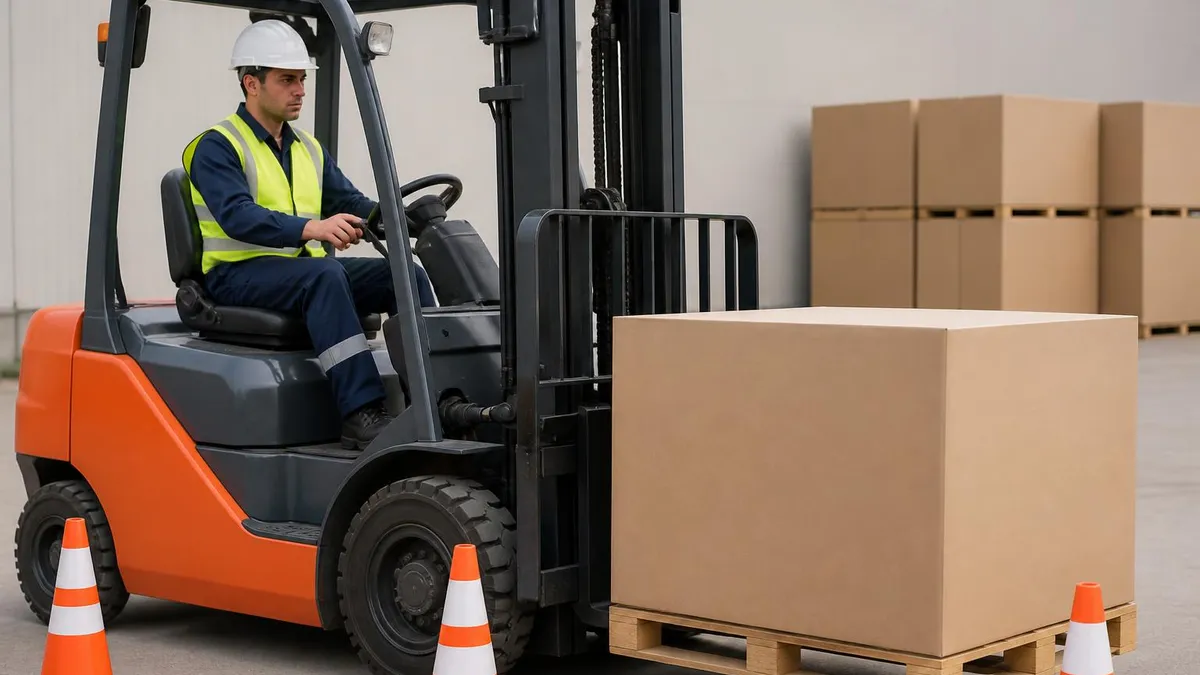
Forklift Tires: Complete Guide to Types, Sizing, Wear Patterns, and Replacement Costs
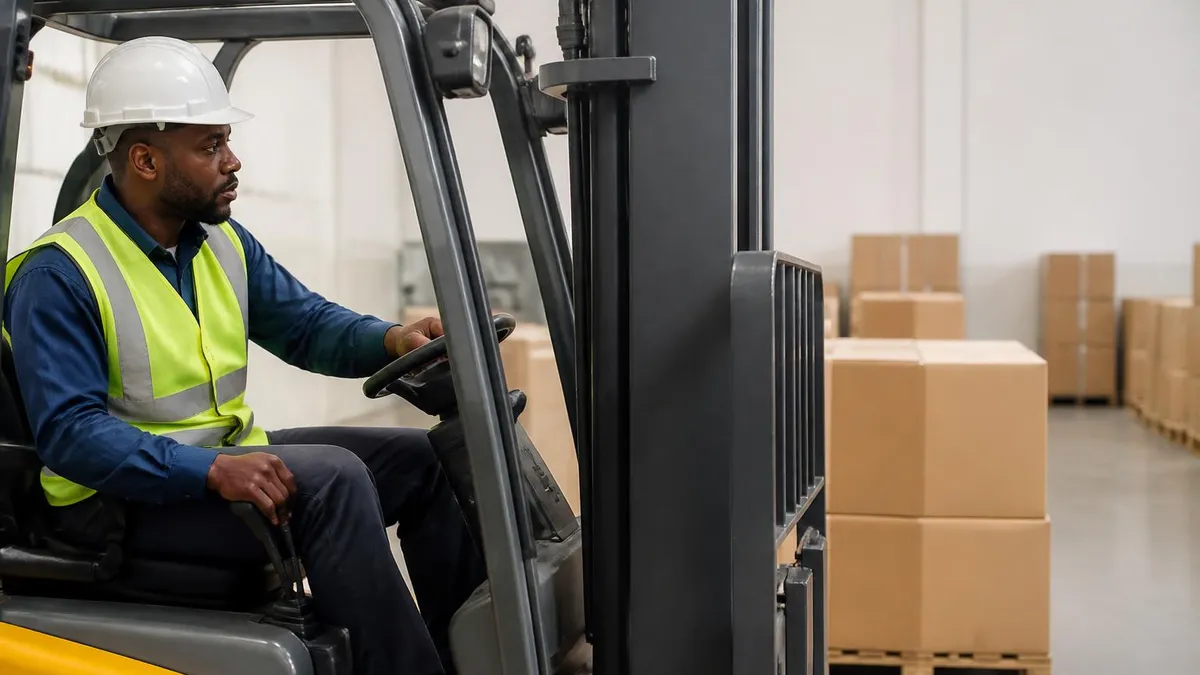
Forklift Accessories: Complete Guide to LED Lights, Attachments, Safety Gear, and Productivity Upgrades for 2026
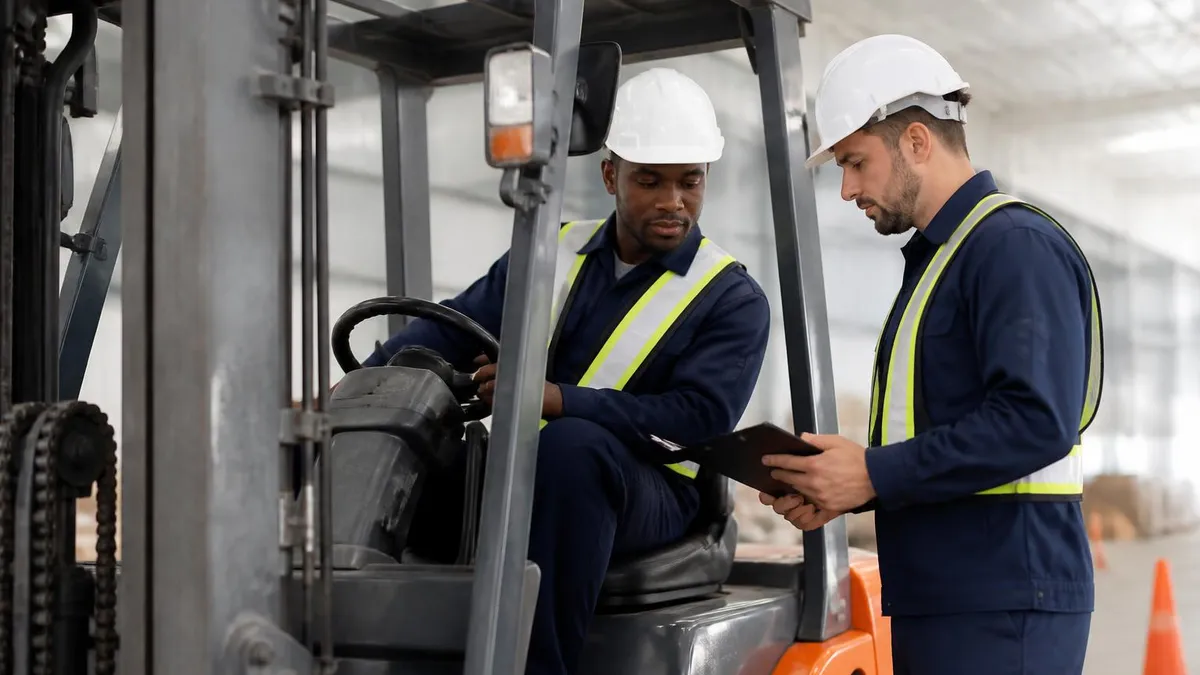
Forklift Operator Duties: Complete Guide to Daily Responsibilities, Safety Tasks, and Career Path for 2026
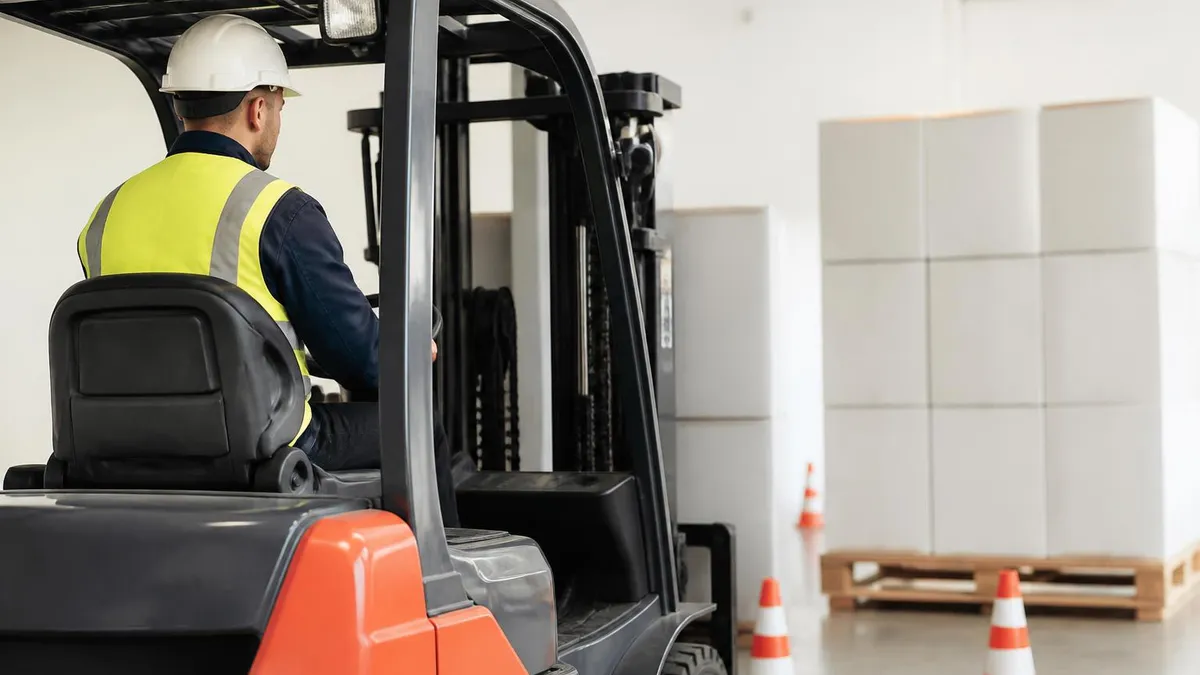
Forklift License Renewal: Complete Guide to Forklift License Expiry, OSHA Recertification, and Operator Requirements for 2026
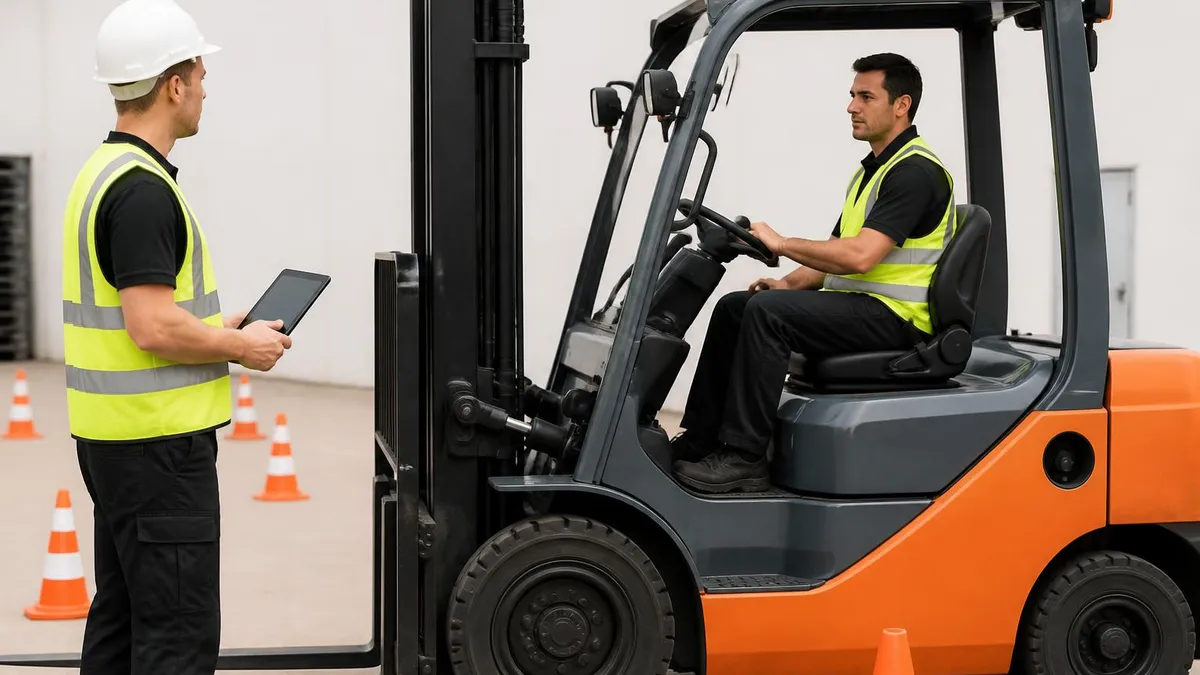
Forklift Safety Training: Complete OSHA Compliance Guide for Operators and Employers
About the Author

Certified Crane Operator & Skilled Trades Exam Specialist
Ferris State UniversityRobert Martinez is a Journeyman Ironworker, NCCCO-certified crane operator, and forklift trainer with a Bachelor of Science in Construction Technology from Ferris State University. He has 21 years of ironworking, rigging, and heavy equipment operation experience across high-rise and industrial construction sites. Robert prepares candidates for crane operator, rigger, forklift, and skilled trades certification examinations.