
Forklift Salary 2026 September: Complete Guide to Operator Pay, Certifications, and Career Growth
Complete 2026 September forklift salary guide: 💡 average pay by state, certification impact, overtime, shift premiums, and career paths to boost your forklift
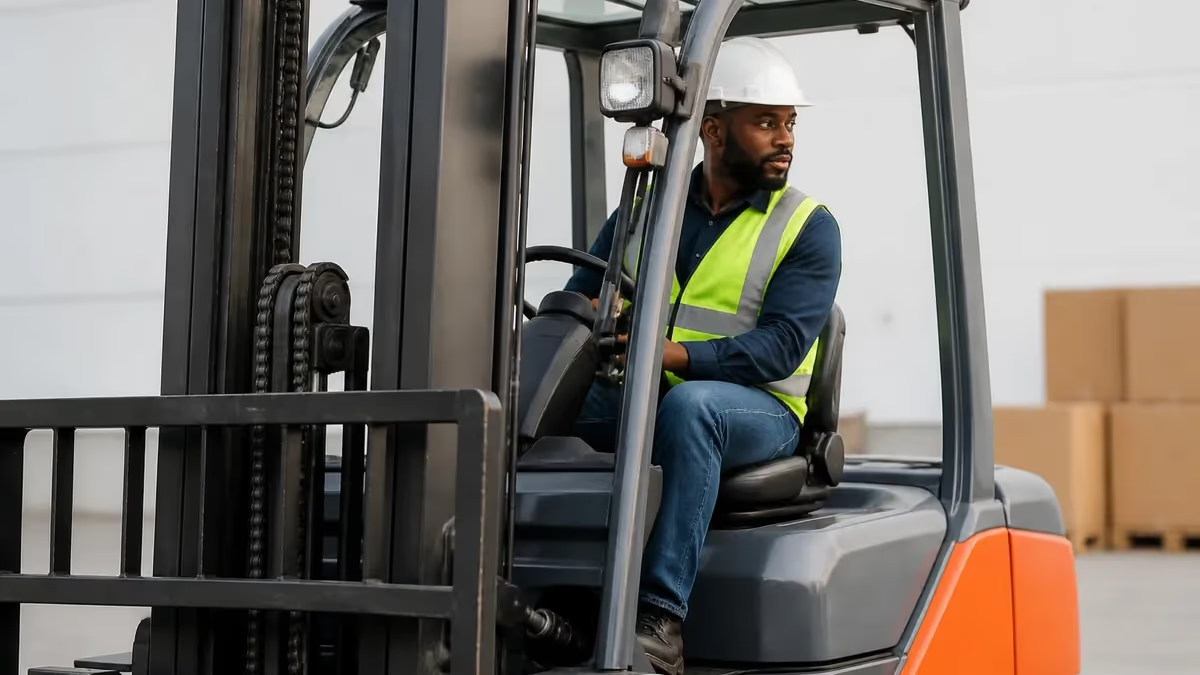
The average forklift salary in the United States sits at roughly $42,000 per year as of 2026, but that single number hides a massive range. Entry-level warehouse operators in rural areas often start around $32,000, while certified reach-truck drivers at port terminals, cold-storage hubs, or unionized distribution centers can clear $75,000 with overtime. Understanding where your pay falls on that spectrum — and what specifically pushes it upward — is the difference between a job and a genuine logistics career.
Pay for forklift work has climbed sharply over the past four years. Labor shortages following 2021, the explosion of e-commerce fulfillment, and the rapid build-out of regional distribution networks all pressured employers to raise base wages. Even small companies that rely on forklift rental fleets rather than owning equipment now offer signing bonuses, shift differentials, and certification reimbursement to keep skilled operators on the floor.
Certification is the single biggest lever most operators can pull. OSHA requires every powered industrial truck operator to be trained and evaluated under 29 CFR 1910.178, and employers consistently pay credentialed operators 10 to 18 percent more than uncertified workers doing similar tasks. A current card on common forklifts — sit-down counterbalance, stand up forklift, reach truck, order picker — opens doors that uncertified candidates never see.
The type of forklift you run also matters. Operators rated on electric forklift equipment in clean indoor warehouses earn less on average than those qualified on internal combustion units handling outdoor lumber yards or scrap operations. Specialty endorsements — high-reach narrow-aisle, side-loader, rough terrain, container handlers — command the highest wages because the training is longer and the candidate pool is small.
Geography drives another large chunk of variation. California, Washington, New Jersey, Illinois, and Alaska top the salary charts thanks to port traffic, union density, and cost-of-living adjustments. Meanwhile, states with heavy distribution-center growth like Tennessee, Pennsylvania, and Texas have seen the fastest wage increases — sometimes 8 to 12 percent year-over-year — as companies fight for talent.
Industry also reshapes the paycheck. Cold storage and food distribution pay premiums for working in freezers. Construction sites pay more than warehouses because the equipment is bigger and the conditions are tougher. Manufacturing plants often pair forklift duties with machine operation, lifting overall compensation. Hazmat-rated operators in chemical or fuel facilities sit near the top of the scale.
This guide walks through every variable that shapes a forklift operator's pay in 2026 — base wages, overtime, shift premiums, certifications, geography, industry, and career paths upward into trainer, supervisor, and warehouse-manager roles. By the end you should know exactly where you stand today and what specific moves will push your annual income up by $5,000, $10,000, or more.
Forklift Salary by the Numbers (2026)

Forklift Operator Pay Structure Breakdown
Forklift salary varies dramatically by state, and the gap between the highest and lowest paying regions can exceed $25,000 per year for the same job title. California consistently leads, with an average operator salary near $58,000 driven by port traffic at Los Angeles and Long Beach, strong union representation, and a cost-of-living adjustment baked into nearly every warehouse pay scale. Washington, Alaska, New Jersey, and Massachusetts round out the top five.
Mid-tier states like Illinois, Minnesota, Oregon, Connecticut, and New York pay between $46,000 and $52,000 on average. These markets benefit from large distribution corridors, a mix of union and non-union employers, and high demand from third-party logistics providers. Operators willing to commute into metro areas or work split shifts often earn even more, particularly when they hold endorsements on multiple equipment classes.
Southern and Mountain West states tell a more nuanced story. Tennessee, Georgia, Texas, and Indiana have seen the largest year-over-year wage increases — sometimes 9 to 12 percent — as Amazon, Walmart, FedEx, and regional grocers expand fulfillment networks. Base pay still trails the coasts, but lower living costs and aggressive signing bonuses can make the take-home picture surprisingly competitive for experienced forklift operators.
The lowest published forklift wages tend to come from rural areas in Mississippi, Arkansas, West Virginia, and parts of Alabama, where averages can dip below $35,000. However, these markets often have less competition for jobs, and the relationship between wages and rent is much friendlier than in San Francisco or Newark. A $34,000 salary in a small town can buy more lifestyle than $52,000 in a major metro.
Within any state, metropolitan areas pay more than rural ones. Houston, Dallas-Fort Worth, Atlanta, Memphis, Columbus, Phoenix, Salt Lake City, and the Inland Empire of Southern California all sit well above their state averages because they serve as major freight hubs. Operators who relocate even 60 to 90 miles into a logistics corridor can pick up $5,000 to $10,000 a year without changing employers or job titles.
Union membership is another regional variable. In states like Michigan, Ohio, Pennsylvania, and Washington, Teamsters and UFCW agreements set scale rates that climb predictably with seniority. A non-union forklift operator at a similar facility down the road may earn $4 to $7 less per hour for the same work — though they may also have more flexible scheduling and faster advancement opportunities.
If you're researching forklift rental near me costs as an employer, expect to pay your operators a corresponding premium when the equipment is specialized. Renting a high-reach truck, telehandler, or rough-terrain unit without staffing a qualified operator at the matching wage is a common — and expensive — mistake.

Forklift certification Practice Test Questions
Prepare for the Forklift certification Certification exam with our free practice test modules. Each quiz covers key topics to help you pass on your first try.
Forklift certification Certification Forkl...
Forklift certification Exam Questions covering Certification Forklift certification Maintenance and Repairs. Master Forklift certification Test concepts for certification prep.
Forklift certification Certification Forkl...
Free Forklift certification Practice Test featuring Certification Forklift certification Maintenance and Repairs Questions and Answers. Improve your Forklift certification Exam score with mock test prep.
Forklift certification Certification Forkl...
Forklift certification Mock Exam on Certification Forklift certification Operator Training and Certification Requirements. Forklift certification Study Guide questions to pass on your first try.
Forklift certification Certification Forkl...
Forklift certification Test Prep for Certification Forklift certification Operator Training and Certification Requirements Questions and Answers. Practice Forklift certification Quiz questions and boost your score.
Forklift certification Load Handling and S...
Forklift certification Questions and Answers on Load Handling and Stability. Free Forklift certification practice for exam readiness.
Forklift certification OSHA Regulations an...
Forklift certification Mock Test covering OSHA Regulations and Compliance. Online Forklift certification Test practice with instant feedback.
Forklift certification Pre-Operation Inspe...
Free Forklift certification Quiz on Pre-Operation Inspections. Forklift certification Exam prep questions with detailed explanations.
Forklift certification Refueling and Recha...
Forklift certification Practice Questions for Refueling and Recharging Procedures. Build confidence for your Forklift certification certification exam.
Forklift certification Safe Driving and Ma...
Forklift certification Test Online for Safe Driving and Maneuvering. Free practice with instant results and feedback.
Forklift certification Workplace Hazard Id...
Forklift certification Study Material on Workplace Hazard Identification. Prepare effectively with real exam-style questions.
Forklift certification Forklift Instructions
Free Forklift certification Test covering Forklift Instructions. Practice and track your Forklift certification exam readiness.
Forklift certification Forklift MCQ
Forklift certification Exam Questions covering Forklift MCQ. Master Forklift certification Test concepts for certification prep.
Forklift certification Forklift Employer R...
Free Forklift certification Practice Test featuring Forklift Employer Responsibilities. Improve your Forklift certification Exam score with mock test prep.
Forklift certification Forklift Penalties ...
Forklift certification Mock Exam on Forklift Penalties for Non-Compliance. Forklift certification Study Guide questions to pass on your first try.
Forklift Operator Pay by Equipment Type
The most common forklift type and the baseline for most operator wages. Drivers running standard sit-down counterbalance forklifts in general warehouse settings earn between $18 and $22 per hour on average, with experienced workers reaching $25. The training curve is the shortest of any class, which keeps the labor pool large and base wages competitive rather than premium.
Despite being entry-level equipment, sit-down counterbalance work still rewards consistency. Operators who maintain clean safety records, hit pick rates, and pass annual recertifications often receive merit raises of two to four percent yearly. Cross-training onto reach trucks or pallet jacks adds another $1 to $2 per hour and sets up movement into specialty roles within 18 to 24 months.
Is a Forklift Operator Career Worth It?
- +Strong entry-level wages — $18 to $24 per hour out of training
- +Low barrier to entry: certification costs $75 to $200 and takes 1-2 days
- +Consistent demand across e-commerce, manufacturing, construction, and food distribution
- +Overtime, shift differentials, and signing bonuses are widely available in 2026
- +Clear advancement path into trainer, supervisor, and warehouse-manager roles
- +Skills transfer easily between employers, states, and industries
- +Union opportunities offer predictable raises, benefits, and pensions
- −Physically demanding — long hours standing, twisting, and looking up
- −Shift work, including nights, weekends, and rotating schedules, is common
- −Cold-storage and outdoor environments wear on the body over time
- −OSHA recertification every three years is required to keep working
- −Pay ceiling without specialty endorsements caps around $50,000-$55,000
- −Workplace injuries can be serious; safety vigilance is non-negotiable

10 Steps to Maximize Your Forklift Salary in 2026
- ✓Get OSHA-compliant certified on at least two forklift classes (sit-down and stand-up)
- ✓Add a reach-truck or narrow-aisle endorsement within your first year
- ✓Apply at distribution centers, ports, and cold-storage hubs — not just retail warehouses
- ✓Negotiate signing bonuses; they're standard in 2026 logistics hiring
- ✓Volunteer for second or third shift to capture shift differential pay
- ✓Track your annual recertification dates and never let a card lapse
- ✓Cross-train on telehandlers, side loaders, or container handlers when offered
- ✓Join a union shop if available in your metro area for guaranteed scale raises
- ✓Pursue a forklift trainer certification after 2-3 years of clean operating history
- ✓Document every safety milestone and pick-rate achievement for performance reviews
Specialty endorsements pay back faster than any other investment
Adding a reach-truck or narrow-aisle endorsement typically costs $150 to $400 and takes one to three days. The average pay bump? $2 to $5 per hour — which translates to $4,000 to $10,000 per year. No other career move in warehouse work delivers a faster return on investment than a second forklift certification.
Forklift work is one of the most reliable on-ramps into a full logistics career, and the salary trajectory above operator looks very different than the entry-level numbers people quote online. A certified forklift operator with three to five years of clean experience is the natural candidate for lead operator, trainer, and shift supervisor roles, and each step up adds meaningful annual income — usually $5,000 to $15,000 at a time.
The first promotion most operators reach is lead operator or working supervisor, paying $24 to $30 per hour. The role still involves driving but adds responsibility for assigning tasks, conducting brief safety huddles, and signing off on equipment inspections. Employers generally promote internally for this position because they want someone who already knows the layout, the staff, and the specific forklift fleet.
Forklift trainer is the next major step. Trainers must complete a train-the-trainer program — often offered through equipment dealers, OSHA outreach providers, or in-house safety departments — and demonstrate at least two to three years of incident-free operating history. The pay sits between $28 and $38 per hour at most facilities, and the role typically comes with day-shift hours, predictable schedules, and reduced physical wear.
Warehouse supervisors and shift managers, often promoted from the trainer or lead-operator ranks, earn $55,000 to $85,000 in 2026. The job moves further from driving and deeper into people management, scheduling, inventory accuracy, and KPI reporting. Many supervisors still spend an hour or two per shift on a forklift covering breaks, which keeps their certifications current and their floor credibility high.
Above supervisor sits the operations or warehouse manager tier, generally paying $75,000 to $110,000 depending on facility size. Reaching this level typically requires either a degree or a long internal track record. Forklift operators who pursue an associate's degree in supply chain or logistics while continuing to work nights or weekends are common — and they tend to move into manager roles faster than outside hires because they already understand the operation from the floor up.
Specialty career paths branch off in other directions too. Equipment mechanics, parts managers, dealer technicians, OSHA safety officers, and even forklift sales representatives are all roles regularly filled by former operators. Forklifts for sale dealerships especially favor candidates with hands-on operating experience because the customer conversations are technical and trust-based. Salary ranges in these tracks span $50,000 to $100,000+.
One often-overlooked path is contract or temp-to-perm operation. Skilled operators willing to work through staffing agencies during peak seasons — Q4 retail, harvest, summer construction surges — can earn $30 to $45 per hour with premium overtime. The trade-off is benefits and predictability, but for the right operator the math can outperform a traditional W-2 role by a wide margin.
OSHA certification is valid for three years under 29 CFR 1910.178. If your card expires, your employer is legally required to remove you from forklift duty until you are re-evaluated. Operators who let their card lapse routinely lose one to three weeks of shift differential and overtime — sometimes thousands of dollars — while waiting on a new evaluation slot.
Negotiating a higher forklift salary in 2026 is easier than it has been in a decade. The combination of e-commerce growth, ongoing retirements, and tighter labor markets means employers are more willing than ever to move on base wages, signing bonuses, and certification reimbursement. The operators who actually capture those gains are the ones who walk into the conversation prepared with specific numbers rather than vague requests.
Start by benchmarking. Pull the most recent BLS Occupational Employment Statistics data for your metro area, then cross-reference Indeed, ZipRecruiter, and Glassdoor postings for the exact equipment class you operate. Three independent sources give you a defensible range. If similar reach-truck operators in your county are advertising at $24 to $27 per hour and you're earning $20, you have a clear, factual basis for a raise request.
Bring documentation. Pick-rate reports, attendance records, safety milestones, and any product or training awards strengthen your case far more than tenure alone. Managers approving raises almost always have to justify the increase to finance or HR, and operators who arrive with printed evidence make that justification easy. A one-page summary of accomplishments often closes more deals than thirty minutes of conversation.
Time the conversation well. The best windows are immediately after a major peak-season push, after you've completed a new certification, or just before annual review cycles when budgets are still being finalized. Avoid asking immediately after a workplace incident, no matter how minor, or during periods when your facility is publicly cutting costs. Context matters as much as content.
Don't ignore non-wage compensation. Certification reimbursement, tuition assistance, attendance bonuses, paid time off, and shift-bid priority all have real dollar value. If your manager can't move on base pay, asking for $1,500 in annual training credit or guaranteed first pick of overtime shifts may net you more than a $0.50/hour raise would over the same period.
Be ready to walk if the numbers don't work. The single most reliable way to raise a forklift operator's salary is changing employers — operators who switch jobs every two to three years in active hiring markets typically out-earn loyal operators by $4,000 to $8,000 per year. That doesn't mean job-hopping aggressively, but it does mean keeping your resume current and quietly interviewing once a year to stay calibrated.
Finally, treat your certifications as the asset they are. Forklift training is portable: an OSHA-compliant card earned in Ohio is just as valid in Arizona, Florida, or Oregon. Operators relocating to a higher-paying metro often pick up a $6,000 to $12,000 raise without changing companies — sometimes the same employer simply moves them to a different facility. Mobility is leverage.
Beyond the negotiation tactics, a few practical habits separate operators stuck near entry-level pay from those steadily climbing toward the top quartile. The first is treating your safety record as a financial document. Every near-miss avoided, every clean weekly inspection, every documented training completion is leverage at review time. Operators who track these wins in a simple notebook or phone app outperform those who don't, almost without exception.
The second habit is making yourself the obvious cross-train candidate. When your supervisor needs someone to step onto a reach truck, a side loader, or even a telehandler for a day, raise your hand. The first time you cover an unfamiliar machine, you'll be slower and probably a little nervous — but you've just put yourself at the front of the line for the next certification slot the company pays for. That's how operators end up with three or four endorsements on their card by year three.
Third, invest in the soft skills the warehouse floor rarely teaches. Basic spreadsheet literacy, written communication, and the ability to run a five-minute safety meeting are what move operators into trainer and supervisor roles. None of these require a degree. A few hours on YouTube and a willingness to volunteer for the next tailgate talk can move your career forward by years.
Fourth, build relationships across departments. Operators who know the inventory team, the maintenance crew, and the receiving supervisors tend to hear about promotions, transfers, and new equipment purchases before they're posted. Internal moves are almost always faster and higher-paying than external job changes, and the operators who get them are usually the ones who've already shown they can collaborate beyond their own shift.
Fifth, watch the industry, not just your facility. Subscribe to a logistics newsletter, follow a couple of forklift dealer accounts on LinkedIn, and pay attention to which companies are building new distribution centers in your region. New facilities almost always over-pay for the first six months while they staff up, and operators who apply early frequently capture both signing bonuses and accelerated promotions.
Sixth, take care of your body. Forklift operating looks sedentary but is surprisingly hard on the neck, shoulders, lower back, and knees. Operators who invest in basic mobility work, supportive footwear, and consistent sleep extend their earning years by a decade or more. The highest career earners in this field aren't necessarily the fastest pickers — they're the ones who are still on the seat at 55, 60, and beyond.
Finally, remember that your forklift career is portable in every direction: across states, industries, and even adjacent roles like equipment sales, training, safety consulting, and dealer service. The skills you build in your first three years compound for the rest of your working life. Treat each shift, each certification, and each negotiation as one more deposit into that long-term account.
Forklift Questions and Answers
Forklift Tires: Complete Guide to Types, Sizing, Wear Patterns, and Replacement Costs
Forklift Operator Duties: Complete Guide to Daily Responsibilities, Safety Tasks, and Career Path for 2026
Forklift License Renewal: Complete Guide to Forklift License Expiry, OSHA Recertification, and Operator Requirements for 2026
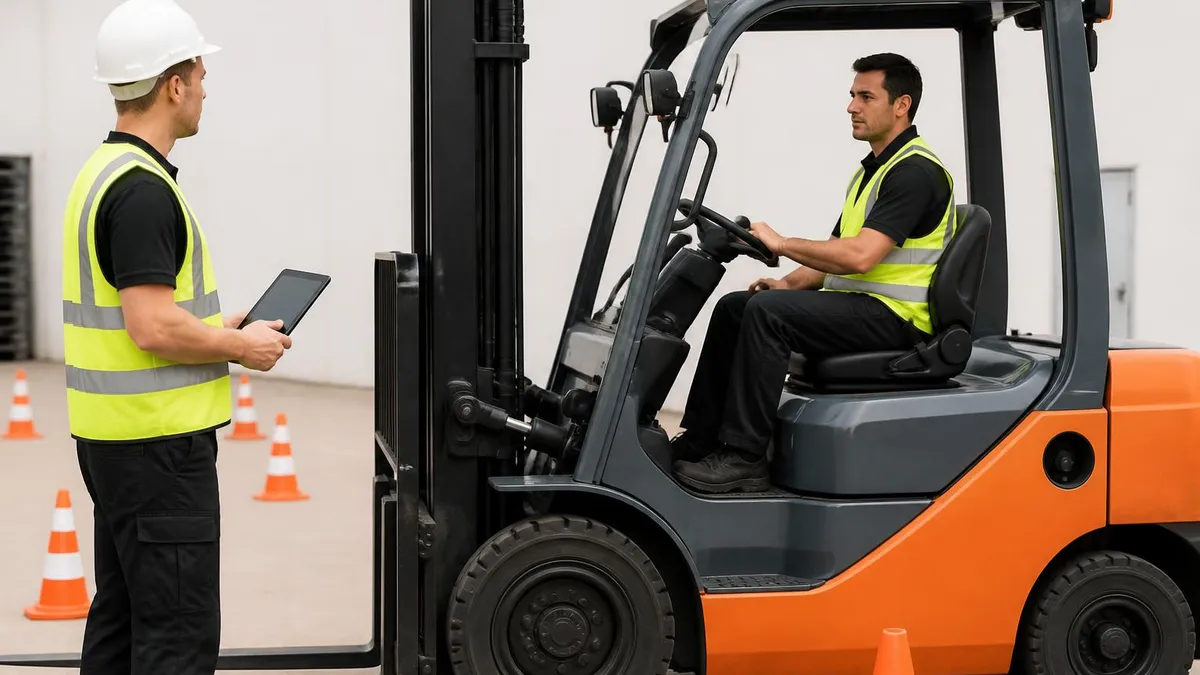
Forklift Safety Training: Complete OSHA Compliance Guide for Operators and Employers
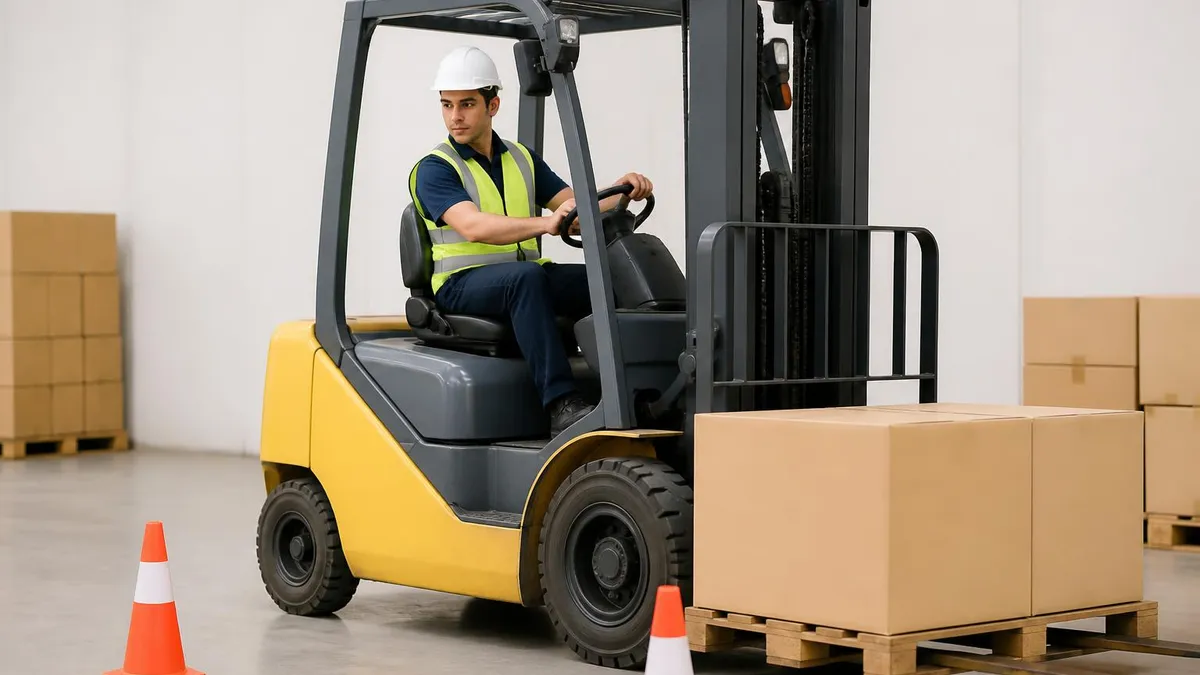
Forklift Repair Service: Complete Guide to Costs, Common Repairs, and Choosing the Right Technician
About the Author
Certified Crane Operator & Skilled Trades Exam Specialist
Ferris State UniversityRobert Martinez is a Journeyman Ironworker, NCCCO-certified crane operator, and forklift trainer with a Bachelor of Science in Construction Technology from Ferris State University. He has 21 years of ironworking, rigging, and heavy equipment operation experience across high-rise and industrial construction sites. Robert prepares candidates for crane operator, rigger, forklift, and skilled trades certification examinations.