
Forklift Career Guide: Duties, Experience, Training, and How to Advance as a Forklift Operator
Everything about a forklift career: experience required, certification of forklift, training paths, pay scales, and tips to advance. 🎯 US guide.

Forklift rental demand has surged across American warehouses, construction sites, and distribution centers, and the professionals who operate these machines are more valuable than ever. Building genuine forklift experience is the foundation of a long, well-paying career in material handling — and employers consistently rank hands-on seat time above almost every other hiring criterion. Whether you are just starting out or looking to move into a supervisory role, understanding what the job actually involves, what certifications you need, and how pay scales with experience is the first step toward a rewarding career in this skilled trade.
A forklift operator is responsible for safely transporting raw materials, finished goods, and heavy equipment within a facility or across a job site. On any given shift, an operator may handle counterbalance forklifts, reach trucks, order pickers, or specialized stand up forklift models, each requiring a distinct set of skills. The work is physical and mentally demanding — operators must read load charts, calculate weight distributions, navigate tight aisles, and coordinate with warehouse management systems, all while following OSHA safety standards to the letter.
The certification of forklift is a legal requirement in the United States under OSHA 29 CFR 1910.178. Every employer must ensure that operators are trained and evaluated before they are permitted to operate powered industrial trucks unsupervised. That means formal forklift training is not optional — it is the price of admission. Training programs typically cover pre-operation inspections, load handling, fueling or charging procedures, and emergency response, providing the structured knowledge base that hands-on experience builds upon.
Many workers enter the field by renting equipment to learn on before landing their first job. If you have wondered about forklift rental near me options in your area, short-term rental arrangements through national chains and regional dealers can give you access to a variety of machine types. Spending a few hours operating a sit-down counterbalance truck, then switching to an electric forklift, dramatically accelerates skill development. Some vocational programs even partner with rental companies to offer supervised seat time as part of their curriculum.
Pay is one of the most compelling reasons to pursue this career. According to Bureau of Labor Statistics data, median wages for material moving equipment operators hover near $40,000 to $48,000 annually, with experienced forklift operators in high-demand industries like automotive manufacturing or cold-storage logistics routinely earning $55,000 to $70,000 per year. Overtime, shift differentials, and union agreements can push total compensation well above those figures, making this one of the most financially accessible skilled trades in the country.
There is also meaningful upward mobility. Operators who accumulate diverse forklift experience — across machine classes, industries, and work environments — frequently advance into lead operator roles, forklift trainer positions, warehouse supervisor jobs, and eventually logistics management careers. Some operators transition into sales or technical support roles for companies that sell forklifts, inspecting and demonstrating the very machines they once drove professionally. The path is wide open for those willing to invest in their skills.
This guide covers every dimension of a forklift career: the types of forklifts you will encounter, the training and certification process, pay scales at every experience level, the pros and cons of the profession, and practical steps you can take right now to build the credentials employers want. Read on to get a complete picture of what it takes to thrive as a forklift operator in the modern American workplace.
Forklift Career by the Numbers

Types of Forklifts Operators Drive
The most common forklift type in US warehouses, these sit-down machines lift loads on front-mounted forks and use a rear counterweight to offset the cargo. They handle capacities from 3,000 to 12,000 lbs and are the standard starting point for new operators building their first forklift experience.
Designed for narrow-aisle racking systems, reach trucks extend their forks forward independently of the mast, allowing operators to work in aisles as tight as 8 feet. They require additional training over standard counterbalance operation and are found in high-density distribution centers across the country.
A stand up forklift — also called a stand-up rider or end-rider — lets the operator stand rather than sit, improving visibility and making it easier to jump on and off repeatedly. These machines dominate grocery and retail distribution environments where operators make hundreds of short trips per shift.
An electric forklift runs on battery power rather than propane or diesel, making it ideal for indoor facilities where emissions and noise must be minimized. Battery technology has advanced dramatically, with lithium-ion models now capable of 8-plus hour runtimes. These machines are increasingly preferred for cold-storage and food-grade environments.
Used outdoors on construction sites and lumber yards, rough-terrain forklifts feature large pneumatic tires and higher ground clearance. Telehandlers add a telescoping boom for reaching elevated positions. Both require specialized certification beyond standard warehouse forklift training and command premium wages.
Forklift training in the United States is governed by OSHA Standard 29 CFR 1910.178(l), which establishes the minimum requirements every employer must meet before allowing an operator to work unsupervised. The regulation requires training to cover formal instruction — classroom or online lessons covering safety rules, load principles, and equipment operation — followed by practical hands-on exercises and a workplace-specific evaluation conducted by a qualified trainer. There is no national government-issued forklift license; instead, each employer bears responsibility for certifying their own operators, which means the quality and depth of training can vary significantly from one workplace to the next.
Third-party certification programs fill an important gap for job seekers who want documented credentials they can carry from employer to employer. Organizations like the National Safety Council, IVES Training Group, and numerous community college workforce development programs offer full certification of forklift courses that include written exams, practical evaluations, and wallet cards that many employers recognize as proof of baseline competency.
These programs typically run one to two days and cost between $150 and $450 depending on location and the number of equipment classes covered. Online theory components have made it easier than ever to complete the classroom portion on your own schedule.
Gaining diverse forklift experience across multiple equipment classes dramatically improves your employability. An operator who is only certified on sit-down counterbalance trucks is limited to one segment of the market. Add reach truck and order picker endorsements and you qualify for high-throughput distribution center roles. Add rough-terrain certification and construction logistics jobs become available. The best strategy early in your career is to seek employers — or short-term forklift rental arrangements — that expose you to as many machine classes as possible, building a versatile skill set that stands out on a resume.
Recertification is mandatory under OSHA rules whenever an operator is observed operating the vehicle unsafely, is involved in an accident or near-miss, receives an evaluation indicating unsafe operation, or is assigned to operate a different type of truck. Beyond those triggering events, OSHA recommends — and most industry best practices require — refresher training at least every three years. Staying current with recertification not only keeps you legally compliant but also reinforces muscle-memory habits around pre-shift inspections, load-handling procedures, and emergency response that can save lives.
For workers who are ready to invest in their forklift career, pursuing certification proactively — before being hired — is a genuine competitive advantage. Employers hiring for entry-level positions often receive dozens of applications from candidates with no formal training. A candidate who walks in with a completed certification card, documented seat time, and knowledge of OSHA regulations immediately signals that they are serious, safety-conscious, and ready to contribute from day one. That differentiator can be the difference between landing a job quickly and waiting months for an opportunity.
Forklift training programs vary in scope: some cover only the theory and written exam, requiring your employer to complete the practical evaluation, while others include supervised equipment operation in a controlled environment. When evaluating programs, look for curricula that cover pre-operation inspection procedures, refueling and battery charging safety, load chart reading, stability triangle principles, and pedestrian safety protocols. Programs that align with ANSI/ITSDF B56.1 safety standards offer the most comprehensive preparation and are more likely to be recognized by large national employers.
The timeline from zero experience to first job can be remarkably short. A motivated candidate who completes an online forklift theory course (typically 4 to 6 hours), arranges hands-on practice through a rental facility or vocational program, and passes a practical evaluation can be job-ready in as little as one week. From there, accumulating 6 to 12 months of documented operational hours in a structured work environment is generally what it takes to move beyond entry-level pay and qualify for better-paying positions at larger facilities.
Forklift Operator Pay: Entry, Mid, and Senior Level
Entry-level forklift operators with fewer than two years of forklift experience typically earn between $16 and $20 per hour in most US markets, translating to roughly $33,000 to $42,000 annually. These positions are most common in general warehousing, retail distribution, and light manufacturing, where counterbalance forklifts and pallet jacks make up the majority of equipment. Employers at this level often provide on-the-job training to OSHA standards, making this a realistic starting point even for candidates without prior certification.
Advancement from entry level is relatively fast for operators who demonstrate reliability, attention to safety, and willingness to cross-train on additional equipment types. Most entry-level operators who stay engaged and seek additional certifications see their first raise within 6 to 12 months. Geographic location matters significantly — operators in California, Washington, and the Northeast consistently earn $2 to $5 per hour more than the national median even at the entry level, reflecting higher costs of living and stronger union presence in those markets.

Is a Forklift Career Right for You?
- +Relatively low barrier to entry — no college degree required, just OSHA-compliant forklift training
- +Strong and consistent demand across warehousing, manufacturing, construction, and logistics sectors
- +Competitive wages that exceed many jobs requiring similar or longer educational investment
- +Clear advancement path from operator to lead, trainer, supervisor, and logistics manager
- +Diverse work environments — cold storage, automotive, retail, ports, outdoor construction sites
- +Union opportunities through Teamsters and LIUNA offering strong wage scales and benefits
- −Physical demands can cause strain — prolonged sitting, vibration exposure, and repetitive neck rotation
- −OSHA compliance burden is constant — any lapse in paperwork or training can result in fines
- −Shift work is common, with many facilities operating 24/7 and requiring night or weekend availability
- −Risk of serious injury is real — forklift accidents cause approximately 85 fatalities and 34,900 injuries annually in the US
- −Automation and AGV technology is gradually reducing demand for operators in the highest-volume facilities
- −Entry-level wages in rural or low-cost-of-living markets may feel insufficient given the physical demands
Forklift Experience Checklist: What Employers Verify
- ✓Complete OSHA-compliant forklift training that covers both formal instruction and hands-on practical evaluation.
- ✓Obtain a signed operator evaluation card from a qualified trainer at your current or previous employer.
- ✓Document the specific forklift classes you are certified to operate (Class I through Class VII).
- ✓Log your cumulative seat hours across different machine types to quantify your operational experience.
- ✓Complete and retain records of all pre-shift inspection checklists for the past 12 months.
- ✓Maintain a clean safety record — document any incidents and the corrective actions taken.
- ✓Pursue recertification on schedule and keep your training records current and accessible.
- ✓Obtain endorsements for specialized equipment such as order pickers, reach trucks, or rough-terrain forklifts.
- ✓Familiarize yourself with the warehouse management systems (WMS) used at your facility, such as SAP or Manhattan.
- ✓Complete a first aid and CPR certification to demonstrate safety preparedness beyond minimum OSHA requirements.
Your Certification Card Is Only the Starting Point
OSHA certification proves you completed training — but employers hiring above entry level want documented seat hours on specific equipment classes. Keep a personal log of every machine type you have operated, the approximate hours on each, and the facilities where you gained that experience. Operators who can present this log during interviews consistently receive higher starting offers than those who can only show a wallet card.
Career advancement for forklift operators follows a well-worn but genuinely rewarding path, and the key to moving up is deliberate skill accumulation rather than simply waiting for time to pass. The operators who advance fastest are those who actively seek exposure to new equipment classes, volunteer for cross-training opportunities, and take on informal mentoring responsibilities before those duties are formally assigned. Employers notice who shows up early to check equipment, who keeps the cleanest inspection logs, and who other operators turn to when they have questions — those are the people who get promoted.
The first major advancement milestone for most operators is the lead operator or material handling lead role. In this position, you are still operating equipment regularly, but you also coordinate the work of a small team, troubleshoot equipment issues, and communicate with supervisors about throughput targets and inventory discrepancies. Pay typically increases 10 to 20 percent at this stage, and the role is excellent preparation for the next level: warehouse supervisor or operations coordinator. The lead role is often the point at which operators begin working closely with inventory management software and developing the analytical skills that management careers require.
Forklift trainer is a parallel advancement path that appeals to operators who enjoy teaching and want to stay hands-on with equipment. Becoming a certified trainer typically requires completing a train-the-trainer program from an accredited provider, demonstrating mastery of OSHA regulations, and maintaining a flawless personal safety record.
Trainers earn a premium over standard operator wages — often $3 to $6 per hour more — and hold a position of real responsibility within the organization, because their work directly determines whether operators are legally qualified to do their jobs. It is one of the most respected titles in the material handling world.
Some experienced operators make a lateral move into equipment sales or technical support, joining companies that sell forklifts or offer forklift rentals. These roles leverage deep product knowledge in a customer-facing context, often including demonstrating machines to prospective buyers, advising on fleet composition, and troubleshooting operational issues for rental clients. Many forklifts dealer representatives started their careers in the seat, and their firsthand operational knowledge is their most marketable asset. Base salaries in these roles range from $50,000 to $80,000, with strong commission potential layered on top.
Logistics and supply chain management is the highest-ceiling advancement path for operators willing to invest in education alongside their operational career. Many community colleges and online universities offer associate and bachelor's degree programs in supply chain management, business logistics, and operations management that can be completed part-time while working full-time as an operator. Workers who combine five or more years of material handling experience with a logistics credential regularly qualify for operations manager roles paying $70,000 to $100,000 per year, with significant room to grow into director-level positions at large national distribution networks.
Geographic mobility is a powerful accelerator for career advancement. Operators willing to relocate to high-demand markets — Northern California's port and logistics hub, the Dallas-Fort Worth mega-distribution corridor, or the automotive manufacturing belt stretching from Michigan through Tennessee — can leap past peers who stay in lower-demand local markets. Large employers like Amazon, Walmart Distribution, FedEx, and UPS all operate multiple facilities in these corridors and actively promote from within, giving experienced operators exposure to cutting-edge warehouse technology and management development programs that smaller regional employers simply cannot match.
Finally, professional networking plays a more significant role in forklift career advancement than most operators realize. Industry associations like the Industrial Truck Association (ITA), the Material Handling Industry (MHI), and local safety councils host events where operators, trainers, and managers interact. Attending even one or two conferences or trade shows per year can surface job opportunities, mentoring relationships, and continuing education resources that are invisible to operators who stay heads-down in their home facility. Building a professional LinkedIn profile that documents your certifications, equipment classes, and major accomplishments is increasingly important as hiring managers move their candidate searches online.

While employers bear primary legal liability for OSHA compliance, individual operators can face personal consequences for knowingly operating unsafe equipment, bypassing safety procedures, or falsifying inspection records. If you are ever directed by a supervisor to operate a forklift that you believe is unsafe — whether due to a mechanical defect, an overloaded mast, or unsafe ground conditions — you have the legal right to refuse that assignment without retaliation under OSHA's whistleblower protection provisions. Document the refusal and the reason in writing.
Standing out as a forklift operator in a competitive job market comes down to three things: documentation, versatility, and professionalism. On the documentation front, the single most impactful thing you can do is maintain your own personal training file — completely independent of whatever records your employer keeps. This file should include copies of every OSHA training certificate, every equipment-specific evaluation sheet, and every refresher training record you have completed. When you change jobs, having this file ready to hand over demonstrates organizational discipline and seriousness that most candidates lack entirely.
Versatility is built by deliberately seeking exposure to forklifts you have not yet operated. If your current employer primarily uses sit-down counterbalance machines, ask your supervisor about cross-training opportunities on the reach trucks or order pickers in the back of the facility. If cross-training is not available where you currently work, consider arranging weekend practice sessions through a local equipment rental company. Many dealers who offer forklift rental services will allow certified operators to arrange supervised demonstration time on equipment classes they want to learn, especially if you express genuine interest as a potential future customer.
Professionalism in the material handling world is expressed primarily through your safety behaviors and your reliability record. Arriving for your shift on time, conducting thorough pre-shift inspections rather than rushing through them, and reporting hazards and near-misses promptly — rather than hoping no one notices — are the behaviors that build a reputation for professionalism. Supervisors and safety managers talk to each other, both within organizations and across the industry, and a reputation as a meticulous, safety-first operator is worth more than any single certification card.
Understanding the business context of your work also sets exceptional operators apart. Forklifts exist to serve a supply chain, and operators who understand throughput targets, inventory accuracy metrics, and the downstream consequences of delays or mispicks are far more valuable than those who simply move pallets from point A to point B. Ask your supervisor to walk you through how the warehouse management system tracks your productivity. Learn what the facility's key performance indicators are — cases per hour, pick accuracy percentage, damage rate — and work consciously to improve your performance against those benchmarks.
Technology fluency is an increasingly important differentiator. Modern distribution centers use barcode scanners, voice-directed picking headsets, RFID readers, and tablet-based WMS interfaces as standard equipment alongside the forklifts themselves. Operators who adapt quickly to these tools and can troubleshoot basic connectivity or calibration issues are more productive and require less supervision, both of which translate directly into higher value for the employer. If your current facility uses any of these technologies, invest time in truly mastering them rather than just meeting the minimum functional threshold.
Mentoring relationships with more experienced operators and supervisors can compress the time it takes to build a meaningful career. Identify the most technically skilled operators in your facility and find ways to work near them, ask questions during breaks, and observe how they handle challenging load configurations or unusual machine behavior. Most experienced operators are happy to share knowledge with genuinely curious colleagues — the culture of material handling is generally collaborative rather than competitive, especially around safety topics where everyone benefits from collective competence.
Finally, keeping one eye on the forklift technology landscape prepares you for the future of the profession. Lithium-ion electric forklifts are rapidly displacing propane-powered machines in indoor environments, and operators who understand battery management, charging protocols, and energy consumption monitoring are better positioned for the facilities of the next decade.
Automated guided vehicles (AGVs) and autonomous mobile robots (AMRs) are taking over the most repetitive tasks in the highest-volume centers, but they require human operators for exception handling, complex maneuvering, and maintenance oversight — all skills that experienced human operators are best positioned to provide. The forklift operator of 2030 will be more of a technology-enabled logistics professional than a pure equipment driver, and building that broader skill set now is the smartest long-term career investment you can make.
Preparing for your forklift certification exam requires a structured approach that mirrors real OSHA content and the specific question formats you will encounter. The written portion of most employer-administered evaluations covers the same core topics: the stability triangle and center of gravity principles, load capacity ratings and the data plate, pre-operation inspection procedures using the standardized OSHA checklist, refueling and battery-charging safety, pedestrian right-of-way rules, and emergency procedures including tipover response and fire suppression. Knowing these topics cold is what separates first-time passers from those who need retesting.
The most effective study strategy combines multiple learning modalities: reading the OSHA 29 CFR 1910.178 standard itself (it is publicly available and surprisingly readable), watching video walkthroughs of pre-shift inspection procedures, and — most importantly — completing practice questions that simulate the format and difficulty level of real certification exams. Practice tests reveal knowledge gaps that passive reading misses entirely. If you consistently miss questions about load weight distribution or nameplate data interpretation, you know exactly where to focus your remaining study time before the formal evaluation.
For the practical evaluation component, preparation means performing a complete pre-shift inspection from memory at least five times before your formal evaluation date. The evaluator will be watching whether you check fluid levels, test the horn, inspect forks for cracks and heel wear, verify the data plate is legible, test the brakes and the overhead guard integrity, and confirm that seatbelts or operator restraint systems function correctly. Operators who hesitate, skip steps, or need prompting during the practical portion rarely receive a passing evaluation on the first attempt, regardless of how well they scored on the written component.
Simulator training is increasingly available through community colleges, workforce development programs, and third-party training companies, and it offers significant advantages for building muscle memory in a zero-risk environment. Modern forklift simulators replicate the controls, cockpit ergonomics, and load dynamics of real equipment with surprising fidelity, and studies have shown that simulator-trained operators develop safer habits and make fewer errors during their initial months of real-world operation. If a simulator program is available in your area, it is well worth the additional training investment.
On the day of your practical evaluation, treat the session exactly as you would an actual shift: arrive early, wear appropriate personal protective equipment including steel-toed footwear and a high-visibility vest if required by the facility, and approach the equipment with the deliberate, methodical mindset of a professional rather than the casual attitude of someone going through the motions. Evaluators consistently report that the operators who pass on the first attempt are those who demonstrate genuine respect for the process — not necessarily those with the smoothest driving technique.
After you pass your certification, the learning process does not stop. OSHA requires refresher training whenever an operator is involved in an accident or near-miss, receives an unsatisfactory evaluation, or is assigned to a different type of truck.
But beyond those mandatory triggers, the best operators self-initiate ongoing learning: reading industry publications like Modern Materials Handling and Forklift Action, attending webinars offered by equipment manufacturers, and periodically reviewing OSHA enforcement actions and case studies to understand what types of violations and accidents are most common in their industry segment. This kind of continuous professional development keeps skills sharp and demonstrates the kind of commitment that earns promotions.
The forklift profession rewards preparation, safety-mindedness, and continuous improvement in equal measure. Workers who approach certification as a one-time hurdle to clear and then coast often plateau at entry-level wages within a few years.
Workers who treat every shift as an opportunity to refine their technique, every near-miss as a learning event, and every certification requirement as a professional obligation tend to advance steadily and build careers that are genuinely satisfying — financially, professionally, and in terms of the real skill and expertise they develop over time. The material handling world needs serious professionals, and the operators who bring that mindset consistently find that the industry has a great deal to offer them in return.
Forklift Questions and Answers
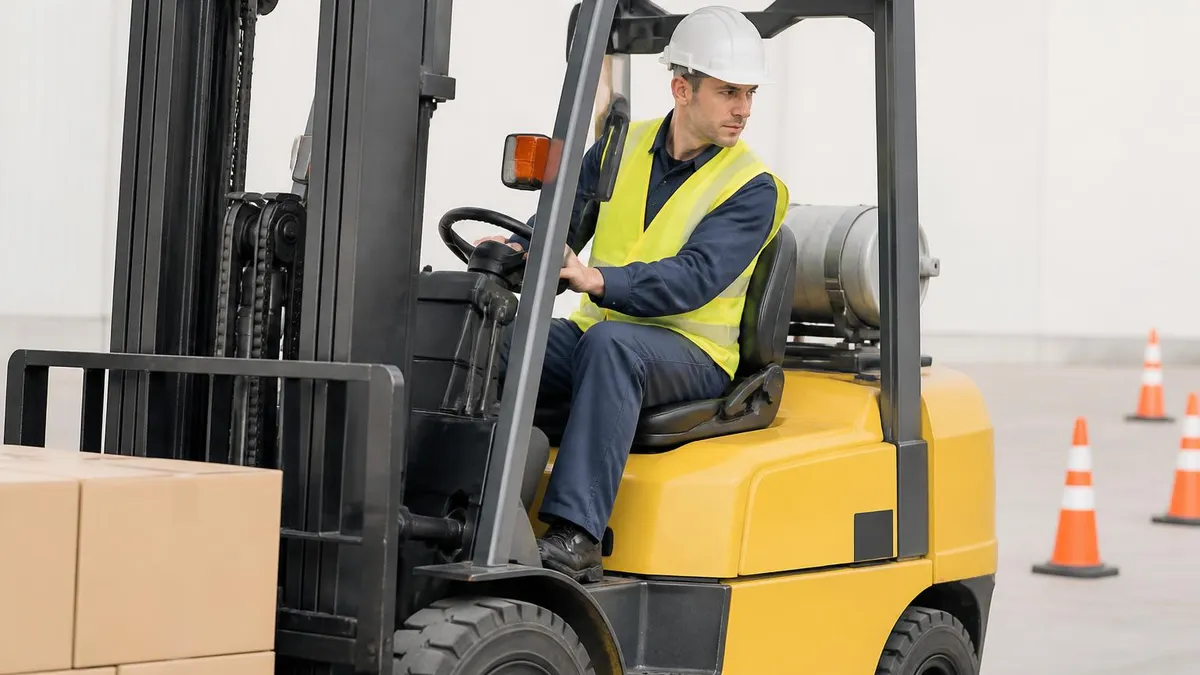
Forklift Rentals: Complete Guide to Pricing, Types, and Operator Requirements
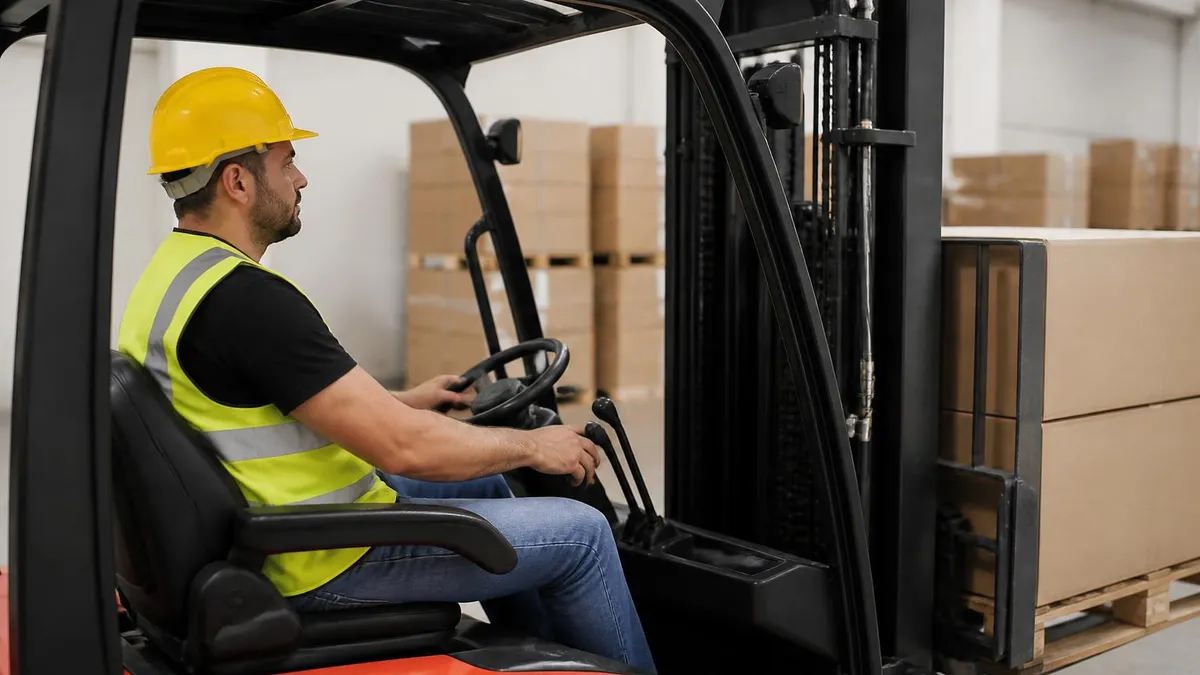
Forklift Hydraulic Fluid: Complete Guide to Types, Specifications, Change Intervals, and Troubleshooting for 2026
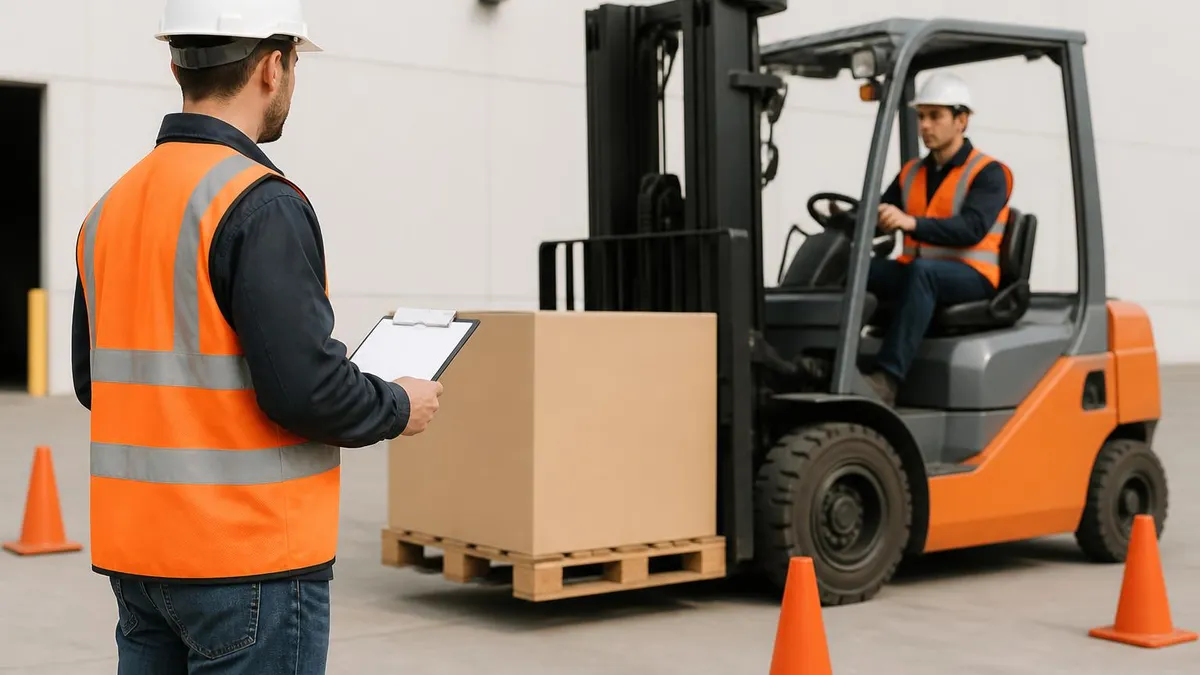
Forklift Parts and Maintenance: Complete Guide to Batteries, Chargers, and Replacement Components
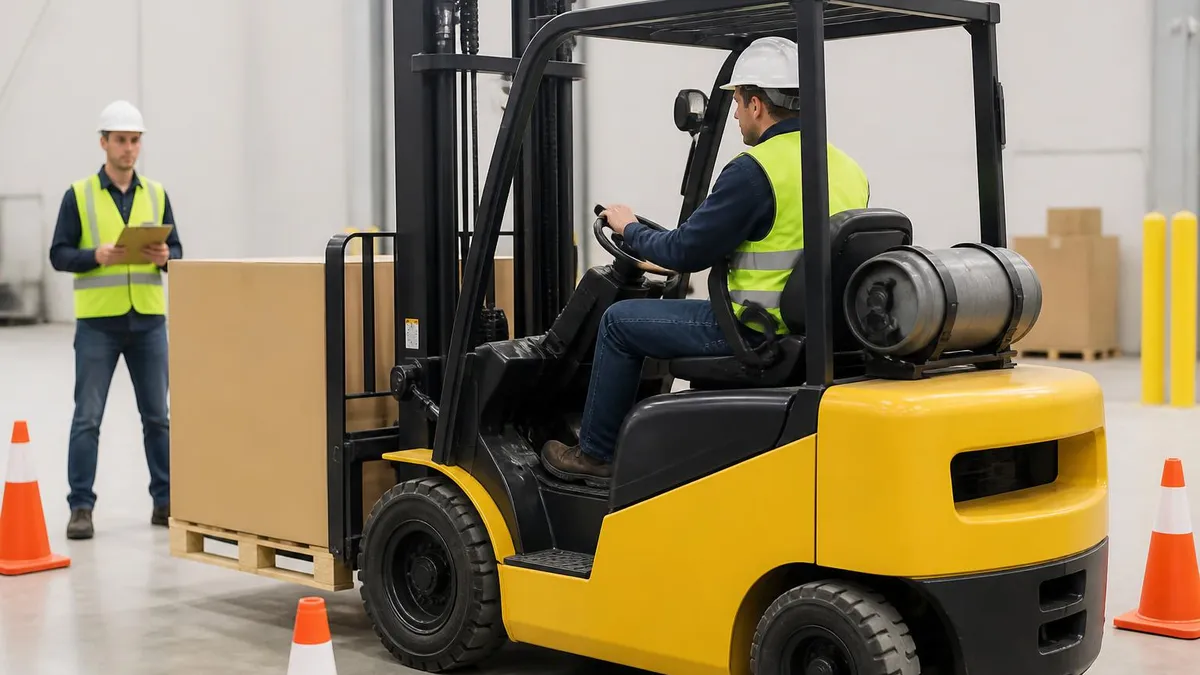
Big Forklift Guide: Heavy-Duty Lift Trucks, Capacity Classes, Rental Costs, and Operator Requirements
Forklift License Renewal: Complete Guide to Forklift License Expiry, OSHA Recertification, and Operator Requirements for 2026
About the Author

Certified Crane Operator & Skilled Trades Exam Specialist
Ferris State UniversityRobert Martinez is a Journeyman Ironworker, NCCCO-certified crane operator, and forklift trainer with a Bachelor of Science in Construction Technology from Ferris State University. He has 21 years of ironworking, rigging, and heavy equipment operation experience across high-rise and industrial construction sites. Robert prepares candidates for crane operator, rigger, forklift, and skilled trades certification examinations.