
How to Renew CPR Certification: Complete 2026 September Guide to Recertification, Costs, and Requirements
🗨️ Learn how to renew CPR certification fast in 2026 September: renewal timelines, costs, online vs in-person options, BLS, ACLS, PALS, and infant CPR recertification.
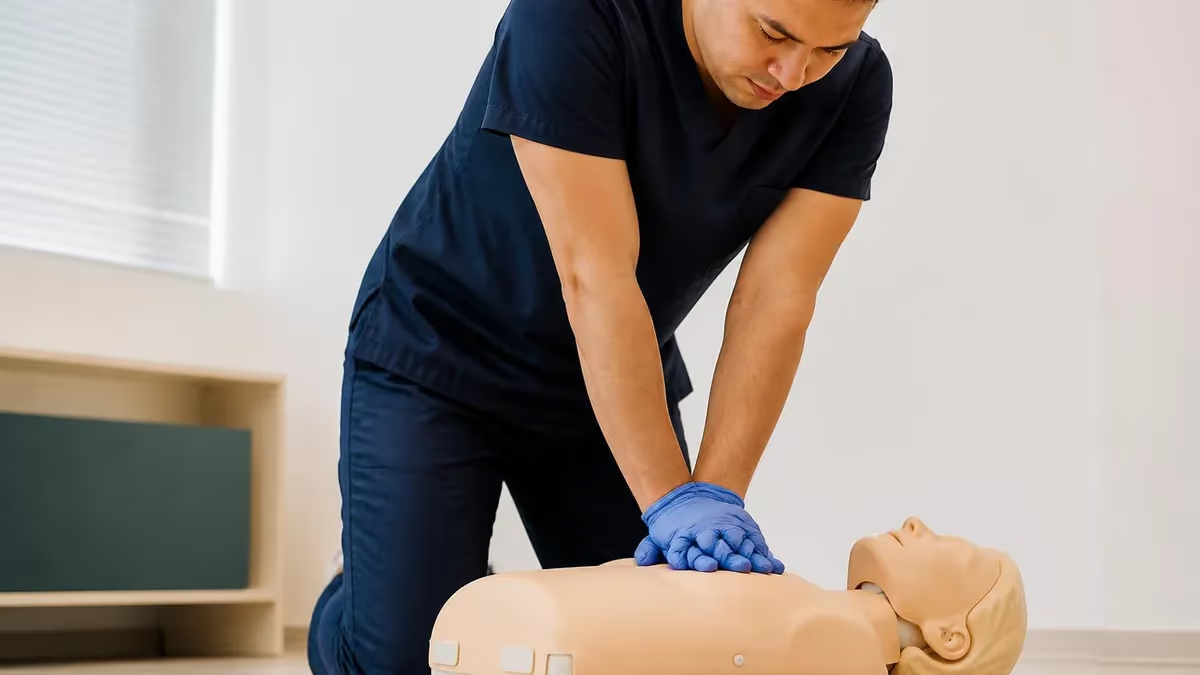
Knowing how to renew cpr certification on time keeps your skills current and your credential valid, whether you are a nurse, lifeguard, teacher, or trained bystander. Most CPR cards expire exactly two years from the issue date, and renewing before that deadline prevents the hassle of retaking a full initial course. The renewal process verifies that you can still perform compressions, rescue breaths, and AED use correctly, because guidelines and techniques evolve every few years through organizations like the American Heart Association and Red Cross.
Renewing your certification is faster and cheaper than starting over from scratch. A typical recertification course condenses the original curriculum into a focused refresher, emphasizing skill demonstration over lengthy lectures. You review the chain of survival, practice on a manikin, and complete a short written test. Many providers now offer blended learning, where you finish the cognitive portion online and attend a brief in-person skills check. Understanding the timeline, the eligibility window, and the format options helps you choose the renewal path that fits your schedule and budget best.
CPR certification is not a single, uniform credential. Basic Life Support, Heartsaver CPR/AED, and advanced courses such as ACLS and PALS each carry their own renewal rules. The depth of your training determines how rigorous your recertification will be. A healthcare provider renewing BLS faces different testing than a daycare worker renewing Heartsaver. Knowing exactly which card you hold is the essential first step, since renewing the wrong level wastes money and may leave you non-compliant with your workplace or licensing board requirements.
Timing matters more than most people realize. Almost every certifying body builds a grace consideration into the process, but waiting until your card lapses can force a longer, pricier full course. The smartest approach is to mark your expiration date the day you receive your card and schedule renewal roughly 30 to 60 days before. This buffer protects you against scheduling conflicts, instructor availability gaps, and the rare situation where your employer audits credentials without warning. Proactive renewal is always less stressful than reactive scrambling at the deadline.
The 2026 landscape offers more flexibility than ever before. Online and blended renewal options have expanded dramatically, letting busy professionals complete coursework from home. However, fully online certificates are not universally accepted, especially in clinical settings that demand hands-on skill verification. This guide walks you through every renewal route, compares costs, explains which credentials require in-person testing, and clarifies how advanced certifications like ACLS and PALS fit into the picture. By the end, you will know exactly how to renew efficiently and avoid the most common pitfalls.
Beyond compliance, renewal is genuinely worth doing well. Skills decay measurably within months of training, and confident, correct technique saves lives in the critical minutes before paramedics arrive. Treat recertification as a real opportunity to sharpen your response, not just a box to check off. We will also point you toward free practice questions throughout this article so you can test your knowledge before sitting for the renewal exam. Let's start by reviewing the key numbers that define CPR certification renewal in today's training environment.
CPR Certification Renewal by the Numbers
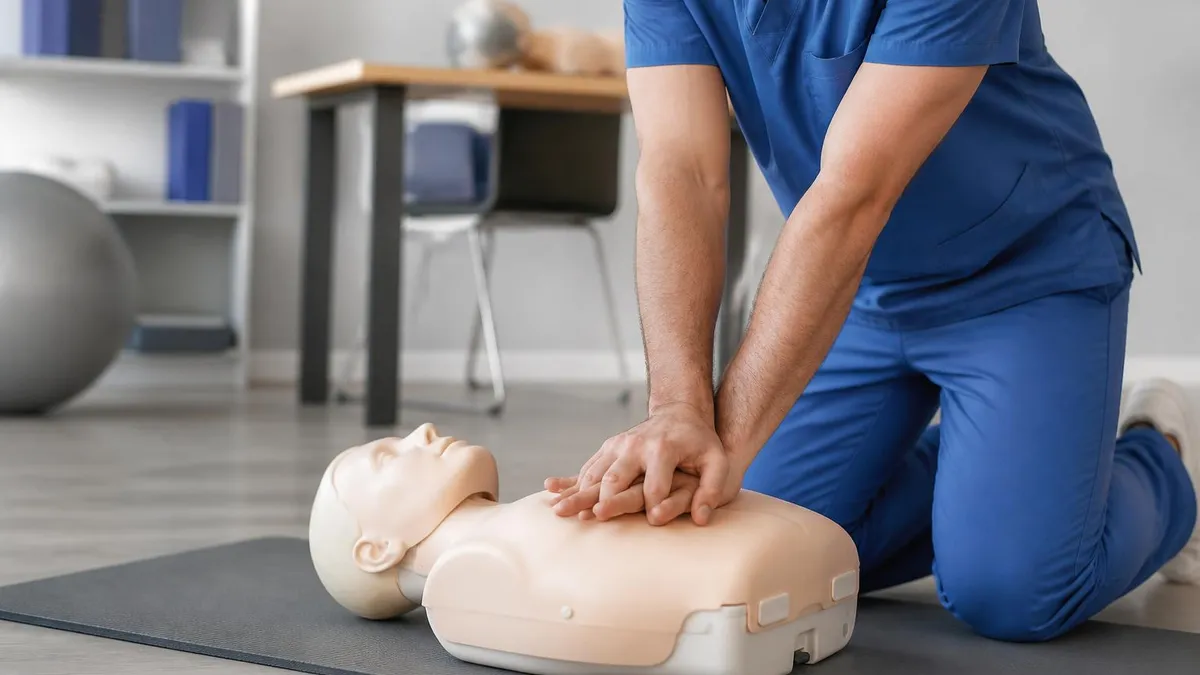
How to Renew CPR Certification Step by Step
Check Your Expiration Date
Identify Your Credential Level
Choose Online, Blended, or In-Person
Complete the Refresher & Exam
Pass the Skills Check
Download Your New Card
Eligibility for renewal hinges primarily on holding a current or recently expired certification at the level you intend to recertify. If you let your card lapse far beyond the grace window, most providers require a full initial course instead of an abbreviated refresher. Reviewing how to renew cpr certification requirements early ensures you do not discover an eligibility problem the week before a job starts. Always confirm whether your specific employer or state board recognizes the issuing organization you plan to use.
The single most important requirement is matching the credential level. Basic Life Support is the workhorse certification for healthcare providers, covering high-quality compressions, bag-mask ventilation, AED operation, and team-based resuscitation. Heartsaver CPR/AED targets non-clinical workers like teachers and security staff. Confusing the two leads to compliance failures. Before renewing, read your current card carefully and check any workplace policy that names a required course. When in doubt, ask your supervisor or training coordinator which exact credential satisfies your particular role.
Renewal also demands current knowledge of the guidelines. Resuscitation science updates roughly every five years, so a refresher may introduce changes to compression-to-ventilation ratios, recommended compression depth, or AED protocols. Reviewing the proper respiratory rate for rescue breathing and the correct hand placement for infant cpr are common focus areas. Candidates who study briefly beforehand consistently pass the written portion on the first attempt, avoiding costly retests and saving time during the in-person skills evaluation that follows the cognitive section of the course.
Some advanced credentials carry prerequisites. To renew ACLS, you generally must hold a valid BLS card, because advanced cardiac life support builds directly on basic skills. Similarly, PALS recertification assumes current BLS competency. If your BLS lapsed alongside your ACLS, you may need to renew both, sometimes in a bundled course. Planning the sequence prevents wasted trips. Mapping out which cards you hold, their expiration dates, and their dependencies is a small effort that saves significant frustration and money later on.
Documentation requirements vary but are usually light. You will need a valid photo ID and your existing certification card or its digital equivalent. Some online platforms ask you to upload a photo of the front and back of your current card to verify eligibility for the discounted renewal rate. Keep a backup image of your card stored securely on your phone. Having documentation ready streamlines registration and prevents last-minute scrambling that could push your renewal past the expiration deadline you worked hard to beat.
Finally, consider continuing-education obligations tied to your profession. Nurses, EMTs, and respiratory therapists often need CPR or BLS as part of broader licensure renewal cycles. Coordinating your CPR renewal with these larger requirements can simplify your year and sometimes qualifies for continuing-education credit. Check whether your professional board accepts your chosen provider's contact hours. Aligning these timelines means one organized push rather than several scattered deadlines, reducing the chance that an overlooked card jeopardizes your ability to work when you need it.
Life Support Renewal: Online vs Blended vs In-Person
Fully online renewal lets you complete the entire course and exam from home in about two hours. It suits lay rescuers and some workplace credentials where hands-on verification is not mandated. You watch instructional videos, answer knowledge checks, and print a certificate immediately upon passing the final test, making it the fastest and most convenient renewal option available to many people today.
The trade-off is acceptance. Many hospitals and licensing boards reject purely online cards because they lack a manikin skills check. Always confirm with your employer before paying. For roles that demand demonstrated competence in compressions and AED use, an online-only certificate may leave you non-compliant despite passing the written material, so verify acceptance carefully before you register.
Is Online CPR Renewal Right for You?
- +Complete coursework anytime from home at your own pace
- +Lowest cost option with no travel expenses
- +Immediate certificate download upon passing the exam
- +Ideal for lay rescuers and non-clinical workplace requirements
- +Self-paced video lessons let you re-watch tricky sections
- +Saves hours compared to a full classroom session
- −Often rejected by hospitals and clinical licensing boards
- −No hands-on manikin skills verification
- −Skill decay risk without supervised practice
- −Some employers explicitly prohibit online-only cards
- −Limited instructor feedback on compression technique
- −May require a costly redo if acceptance is denied
Infant CPR and Renewal Prep Checklist
- ✓Locate your current card and confirm the exact expiration date.
- ✓Identify your credential level: Heartsaver, BLS, ACLS, or PALS.
- ✓Verify which issuing organizations your employer accepts.
- ✓Choose online, blended, or classroom renewal based on requirements.
- ✓Review current compression depth, rate, and respiratory rate guidelines.
- ✓Practice infant cpr hand placement and rescue-breath technique.
- ✓Take free practice questions to test your knowledge first.
- ✓Gather your photo ID and a digital copy of your card.
- ✓Register at least 30 to 60 days before expiration.
- ✓Download and back up your new certification after passing.
Renew 30–60 days early to avoid retaking the full course
If your certification lapses beyond the grace window, most providers require a complete initial course rather than a shorter refresher. That means more hours, higher cost, and a longer wait. Scheduling renewal a month or two before your expiration date protects you against instructor availability gaps and surprise employer audits.
Advanced certifications demand more from the renewal process than basic CPR. Advanced Cardiovascular Life Support, built around the acls algorithm, is the standard for nurses, paramedics, and physicians who manage cardiac arrest and peri-arrest emergencies. Renewing ACLS requires demonstrating command of rhythm recognition, drug administration timing, and team dynamics during megacode scenarios. Because the acls algorithm governs split-second decisions, recertification testing is notably more rigorous than a Heartsaver refresher, often including a written exam and a high-fidelity simulation station with an instructor.
Pediatric Advanced Life Support follows a parallel structure for clinicians who treat children. A valid pals certification proves you can recognize and manage pediatric respiratory distress, shock, and arrhythmias. Renewal emphasizes the pediatric assessment triangle, age-appropriate medication dosing, and the seamless integration of infant cpr into broader resuscitation. Like ACLS, PALS recertification typically assumes you hold current BLS, so confirm your basic card is valid before registering for the advanced refresher to avoid a frustrating eligibility roadblock on test day.
The American Heart Association is the dominant issuer for these advanced credentials, though other bodies, including the national cpr foundation, offer courses as well. Acceptance varies sharply by employer and setting. Hospitals almost universally require AHA-issued ACLS and PALS, while some non-clinical workplaces accept alternatives. Before paying for any advanced renewal, verify in writing that your specific institution recognizes the provider. This single confirmation prevents the expensive mistake of completing a course your employer will simply not honor afterward.
Advanced renewals also reinforce concepts that overlap with everyday emergency recognition. Understanding what does aed stand for, an automated external defibrillator, remains foundational even at the advanced level, because early defibrillation drives survival. Recertification revisits how the AED integrates with the broader resuscitation sequence, when to interrupt compressions for analysis, and how advanced airway management changes the compression-ventilation rhythm. Mastering these transitions separates a competent provider from one who hesitates during a real, high-pressure code situation.
Preparation for advanced renewal benefits enormously from structured study. Reviewing the megacode scenarios, the bradycardia and tachycardia algorithms, and the post-cardiac-arrest care pathway before class reduces test-day stress. Many candidates use pre-course self-assessments offered by their provider, which flag weak areas to focus on. Pairing that with targeted practice questions on rhythm interpretation and dosing builds the confidence needed to pass the written exam and perform fluidly during the simulated resuscitation evaluation that follows it.
Finally, recognize that advanced certification renewal is a professional investment, not merely compliance. The skills you sharpen translate directly into better patient outcomes during the most time-critical emergencies a clinician faces. Treat the simulation stations seriously, request feedback on your team leadership, and refine your communication. A provider who renews thoughtfully, rather than rushing through, emerges genuinely more capable. That competence is the true purpose behind every renewal cycle, far more meaningful than the plastic card you carry away afterward.
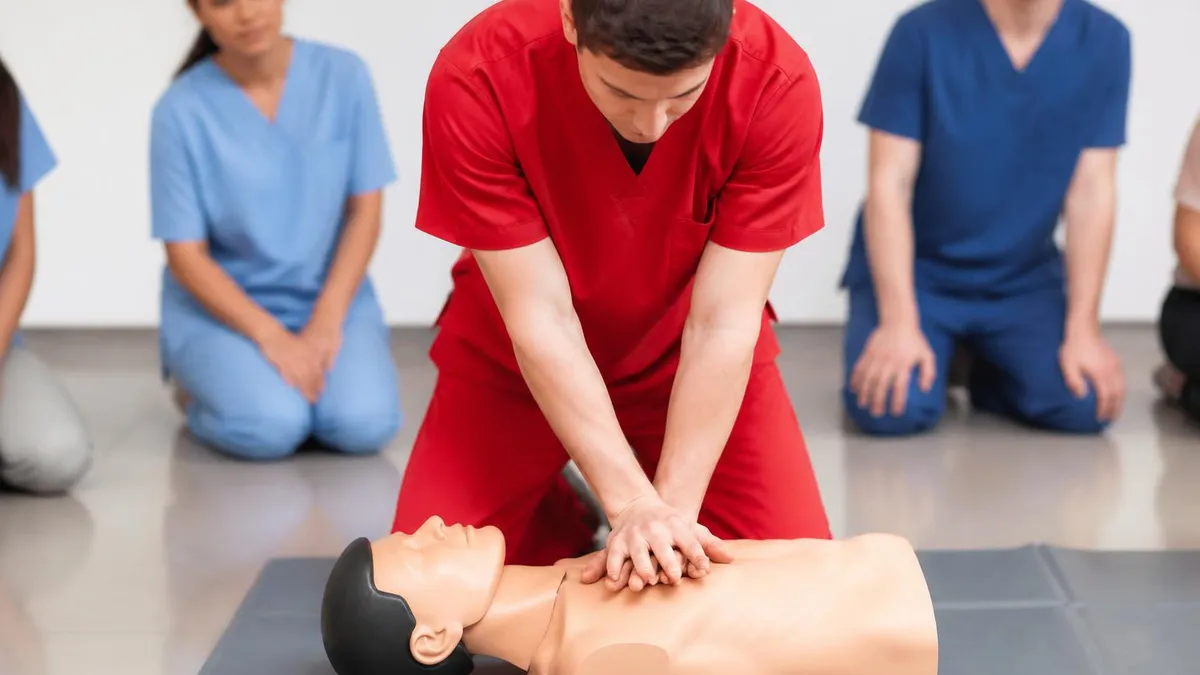
Not every online or low-cost certification is recognized by hospitals, schools, or licensing boards. Confirm in writing that your employer accepts the issuing organization before registering. Paying for a course that your workplace later rejects forces a costly second renewal and can delay your start date.
Cost is a major factor when deciding how to renew cpr certification, and prices vary widely by level and format. Basic CPR and Heartsaver renewals typically range from $30 to $60, while BLS recertification runs $50 to $90. Advanced courses cost considerably more, with ACLS and PALS renewals often falling between $150 and $300. Online-only options sit at the lower end, but remember that the cheapest path is wasteful if your employer ultimately rejects it.
When comparing providers, look beyond the sticker price. Some training centers bundle the skills check into the listed fee, while others charge a separate testing surcharge. Blended courses may advertise a low online price but add an in-person evaluation cost at checkout. Read the full breakdown carefully so the total reflects what you will actually pay. A transparent provider lists every fee upfront, including card replacement or expedited processing if you need your documentation quickly.
Reputation and recognition should outweigh small price differences. The American Heart Association and American Red Cross are the most universally accepted issuers, and choosing them virtually guarantees your card satisfies employer requirements. Other organizations, such as the national cpr foundation, may offer convenience or savings but require you to verify acceptance first. The few dollars you save with an unrecognized provider mean nothing if you must redo the entire course at full price just weeks later.
Interestingly, the abbreviation CPR appears in unrelated industries, which can confuse online searches. Phrases like cpr cell phone repair and cpr phone repair refer to device repair franchises, not resuscitation training. When researching renewal, add terms like certification or first aid to filter out cpr phone repair listings. This small search refinement saves time and ensures you land on legitimate medical training providers rather than electronics shops that happen to share the same three-letter acronym.
Group and employer-sponsored renewals can dramatically lower per-person cost. If several coworkers need recertification, ask whether your workplace will host an on-site instructor or negotiate a group rate. Many hospitals and schools cover renewal entirely as a condition of employment. Before paying out of pocket, check with your human resources or training department. You may discover that your renewal is already funded, or that a convenient on-site session is scheduled within your eligibility window already.
Finally, factor in the hidden cost of time. A fully online renewal saves travel but may not be accepted, forcing a redo. A blended course costs slightly more but reliably satisfies clinical employers in a single attempt. When you weigh tuition against the risk of repeating a rejected course, the moderately priced, well-recognized option almost always delivers the best value. Choose the provider that gets you compliant correctly the first time, not merely the cheapest one available.
With your provider chosen and registration complete, focused preparation turns renewal from a stressful obligation into a smooth, confident experience. Start by reviewing the chain of survival and the latest compression standards: a rate of 100 to 120 compressions per minute and a depth of at least two inches for adults. Refreshing these numbers before class means the written exam feels like confirmation rather than discovery, and your skills check flows naturally from well-rehearsed muscle memory developed through deliberate practice.
Pay special attention to age-specific techniques, since renewal exams frequently test them. Adult, child, and infant cpr each use distinct hand placement, compression depth, and rescue-breath approaches. For infants, use two fingers or the two-thumb encircling technique and compress about one and a half inches. Knowing the correct respiratory rate for rescue breathing across age groups prevents the most common errors examiners flag during the practical evaluation. Practice these distinctions out loud until they become completely automatic.
Take advantage of free practice questions before your scheduled session. Working through realistic scenarios on adult CPR, choking response, and emergency recognition exposes gaps while you still have time to close them. Many candidates discover they had forgotten a detail, such as when to switch from compressions to AED analysis or how recovery position recovery steps differ for a breathing, unconscious patient. Catching these gaps days early is far better than fumbling during the live skills check.
On exam day, arrive a few minutes early, bring your photo ID and current card, and wear comfortable clothing that allows you to kneel and perform compressions. Hydrate and eat beforehand, because effective compressions are physically demanding. Communicate clearly with your instructor, narrating each step as you would in a real emergency. Examiners reward candidates who verbalize scene safety, call for help, and check responsiveness, since this demonstrates the systematic thinking that real resuscitation genuinely requires under pressure.
During the skills evaluation, prioritize quality over speed. Full chest recoil between compressions is just as important as depth, because incomplete recoil reduces blood flow. If you blank momentarily, pause, breathe, and restart the sequence from scene safety. Instructors generally allow you to correct minor errors as long as your overall technique is sound. Confidence and composure signal competence, so treat the evaluation as a demonstration of skills you have already mastered through your preparation beforehand.
After you pass, download your new card immediately and store it in at least two places, such as your phone and email. Submit it to your employer or licensing board promptly to update your compliance record. Then set a calendar reminder for 60 days before the next expiration so you never face a lapse again. Renewing on a predictable rhythm transforms certification from a recurring scramble into a routine, manageable part of your professional life, keeping both your card and your skills current.
Above all, remember why this matters. The minutes before emergency responders arrive belong to you, and well-practiced CPR roughly doubles or triples a victim's odds of survival. Each renewal is a chance to ensure that if someone collapses near you, your hands know exactly what to do. Approach preparation with that purpose in mind, and the entire process becomes meaningful rather than merely procedural, leaving you genuinely ready to act decisively when it counts most.
CPR Questions and Answers
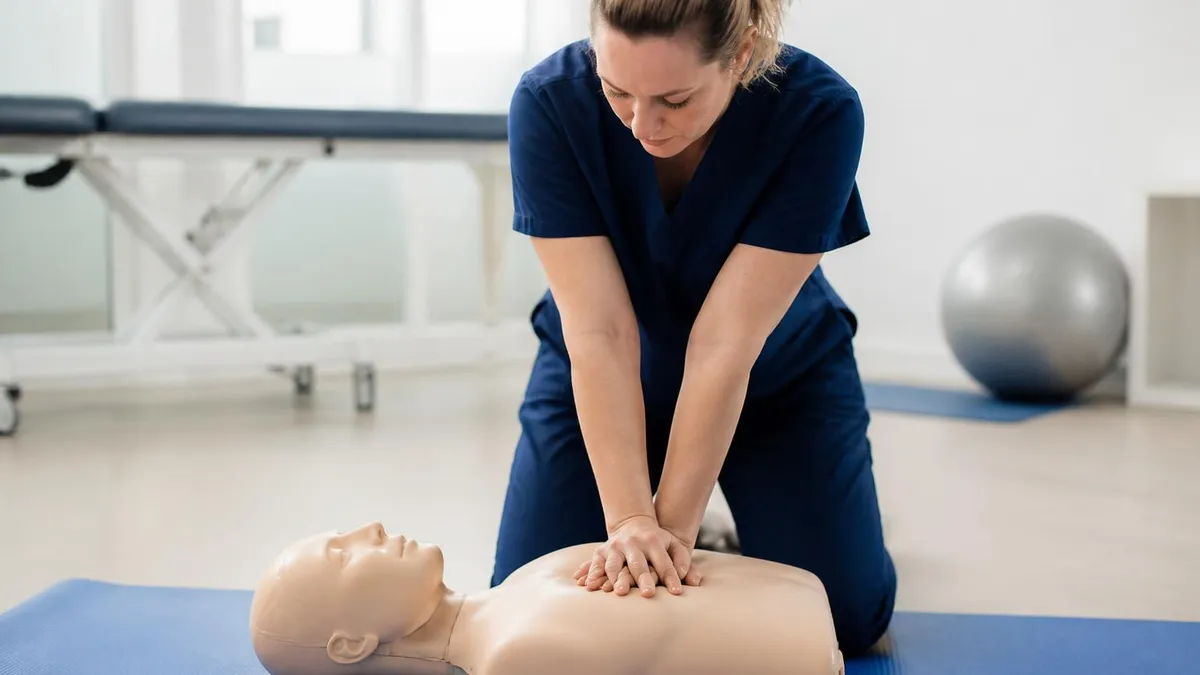
CPR Full Form: What CPR Stands For and Why It Matters

CPR Courses: Complete Guide to ACLS Algorithm, PALS Certification, and Life Support Training in 2026
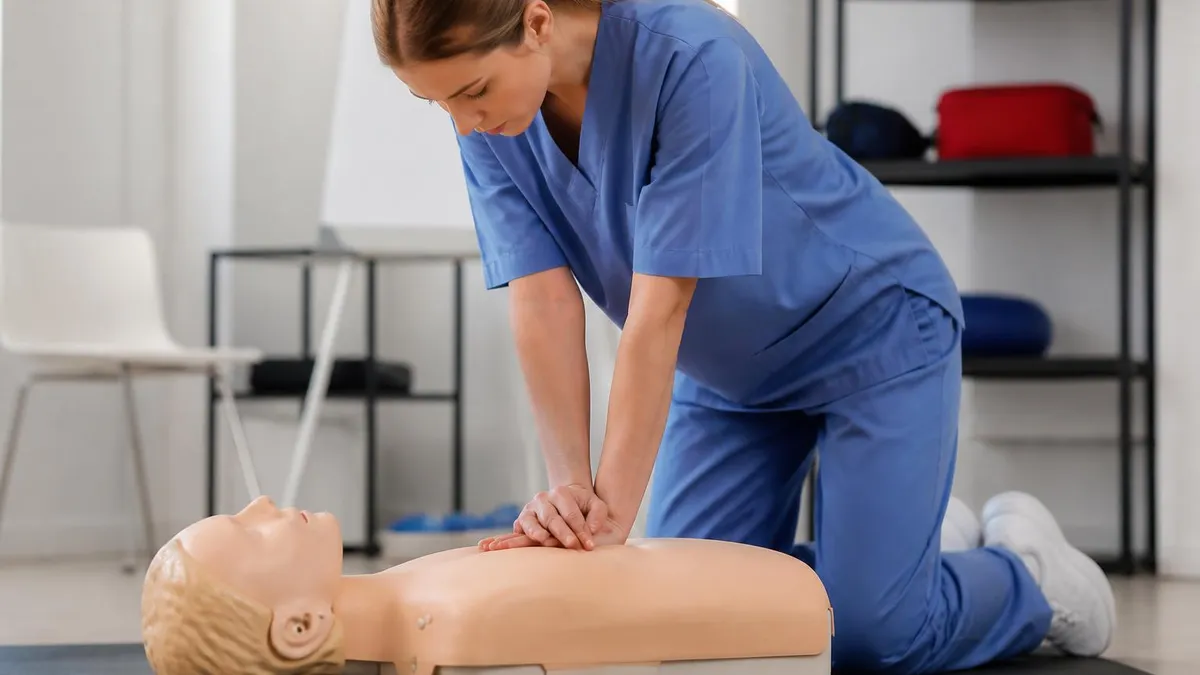
Types of CPR Training: From Basic Life Support to ACLS Algorithm Mastery in 2026
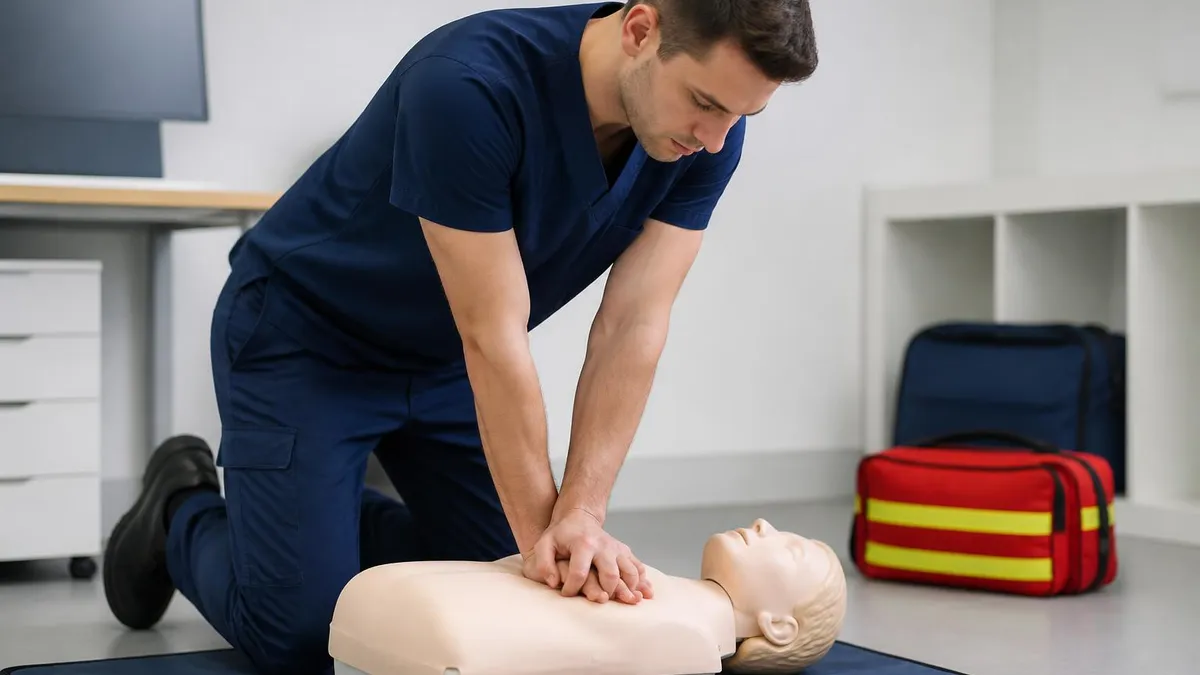
Adult CPR: Complete Step-by-Step Guide to Hands-Only and Standard CPR in 2026
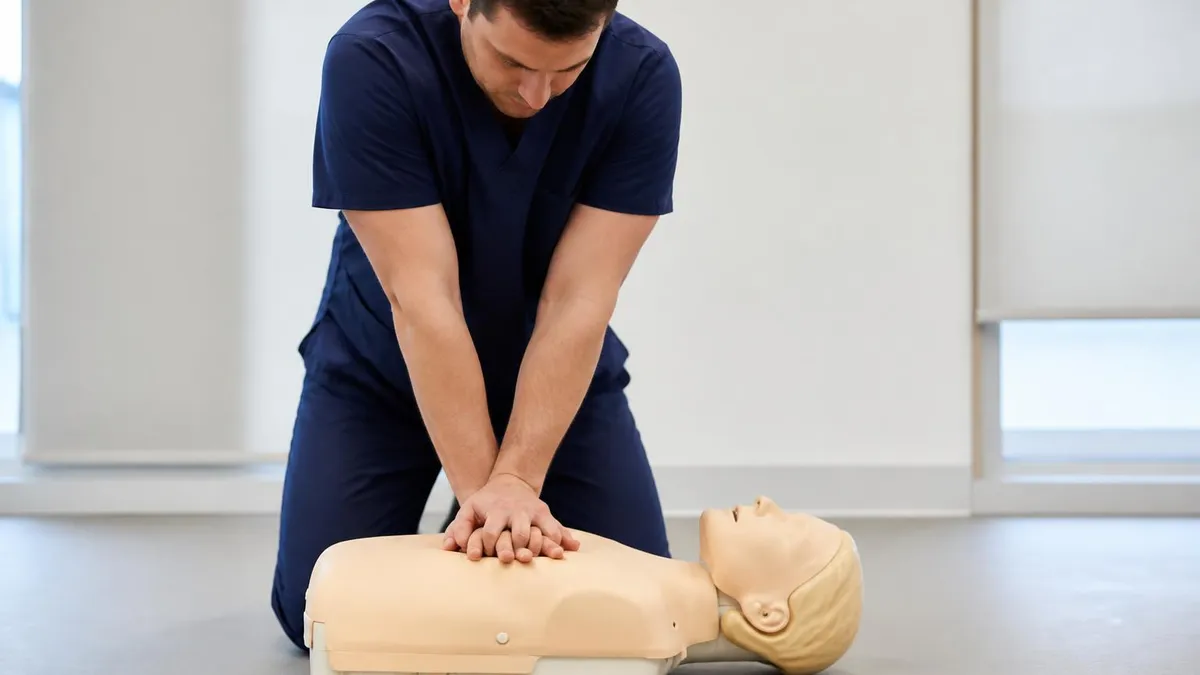
BLS vs CPR: Is BLS the Same as CPR? Complete 2026 Guide
About the Author

Registered Nurse & Healthcare Educator
Johns Hopkins University School of NursingDr. Sarah Mitchell is a board-certified registered nurse with over 15 years of clinical and academic experience. She completed her PhD in Nursing Science at Johns Hopkins University and has taught NCLEX preparation and clinical skills courses for nursing students across the United States. Her research focuses on evidence-based exam preparation strategies for healthcare certification candidates.
Join the Discussion
Connect with other students preparing for this exam. Share tips, ask questions, and get advice from people who have been there.
View discussion (5 replies)