
How Long Does It Take for CPR Certification? Complete 2026 August Timing Guide
How long does it take for CPR certification? Class times range 2-8 hours. 🟢 Full guide to in-person, blended, and online CPR certification timing.
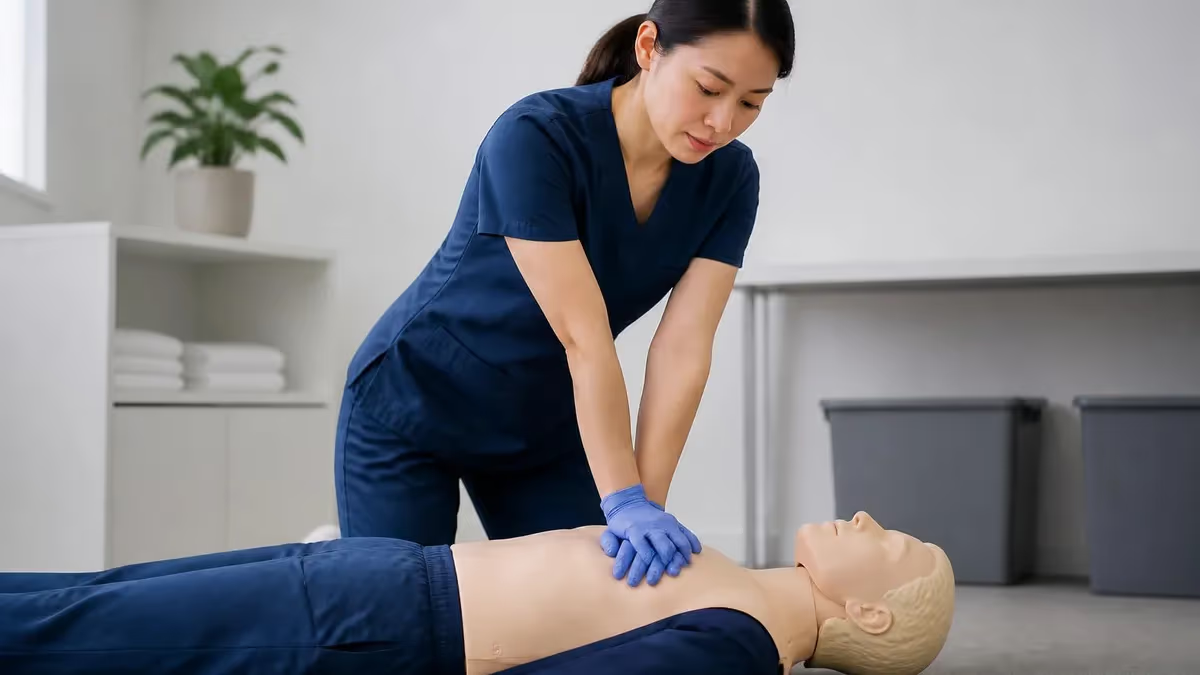
If you are wondering how long does it take for cpr certification, the honest answer is that most adults can earn a valid CPR card in a single afternoon, but the exact time varies based on the provider, the format, and the level of certification you choose.
A standard adult CPR and AED course from the American Heart Association or Red Cross runs about three to four hours in person, while a fully online course from the national cpr foundation can be completed in roughly sixty to ninety minutes. Bundled courses that add first aid or pediatric content stretch the timeline to five or six hours.
Blended learning has become the most popular format in 2026 because it splits the experience into a self-paced online portion of one to two hours followed by an in-person skills check that lasts only thirty to forty-five minutes. That structure shortens the classroom commitment for working professionals while still meeting the hands-on requirement that most employers and state licensing boards demand. It is the format we recommend for first-time learners who want flexibility without sacrificing credibility.
Healthcare providers face a longer path. A Basic Life Support, or BLS, course typically runs four to four and a half hours, while advanced courses such as ACLS and PALS require eight to sixteen hours of instruction depending on whether you are testing for the first time or renewing. Anyone studying the acls algorithm for a hospital position should plan a full day, plus additional self-study time before the in-person megacode evaluation.
Renewals are dramatically faster than first-time certifications. A CPR renewal can be completed in ninety minutes to two hours, an online refresher in under an hour, and a BLS renewal in about two and a half hours. Because skills decay quickly after twelve months, the AHA and most state boards still require a hands-on skills check even for renewals, though the cognitive portion can be shortened significantly for experienced rescuers.
The total time investment also depends on how you count travel, payment, paper card printing, and skills practice at home. A two-hour class can easily turn into a four-hour day when you factor in commute, parking, and waiting for your card to print. Online programs sidestep that overhead entirely, which is one reason their popularity has grown sharply year over year.
Finally, do not confuse the time to complete the course with the time the certification stays valid. Most CPR and BLS cards are good for two years from the issue date, although some employers in long-term care and emergency response require annual refreshers. Knowing both numbers, the class length and the recertification cycle, helps you build a realistic training calendar instead of scrambling the week before your card expires.
This guide walks through every certification format, gives realistic hour ranges, explains what slows people down, and shows you how to compress the timeline without losing credibility with employers. By the end, you will know exactly how much of your weekend a card will cost, and how to plan recertification two years from now so you never lose active status.
CPR Certification Timing by the Numbers

Course Length by Certification Type
The basic adult, child, and infant cpr course for laypeople, teachers, and workplace responders. Plan three to four hours in person, or about ninety minutes online plus a thirty-minute skills check.
Required for nurses, EMTs, and medical students. The initial course runs four to four and a half hours and covers team dynamics, two-rescuer CPR, and bag-valve-mask ventilation with respiratory rate timing.
Eight to twelve hours for renewals and twelve to sixteen for first-timers. Covers the acls algorithm, rhythm recognition, medication dosing, and a megacode simulation that tests team leadership.
Pediatric Advanced Life Support takes twelve to fourteen hours initially and eight to ten for renewal. Covers pediatric respiratory rate, shock, arrest, and post-resuscitation care for infants and children.
Adding first aid to a CPR class typically extends the day by two to three hours. Bundled Heartsaver CPR/AED with First Aid runs five to seven hours total in person.
The single biggest factor in how long your certification takes is whether you choose in-person, fully online, or blended learning. Each path has tradeoffs, and the right choice depends on whether your employer or state regulator accepts the resulting card. Always verify acceptance before paying — a one-hour online card from an unaccredited provider is worthless if your hospital only honors AHA-issued credentials.
In-person classes remain the gold standard for healthcare credentialing because the instructor watches you perform every compression, every ventilation, and every AED pad placement in real time. The downside is the time commitment: you cannot pause the class, you cannot skip content you already know, and you cannot finish early even if you mastered the material in the first hour. Most hospital-based BLS classes run a strict four-hour block.
Fully online courses compress the entire experience into a video-based module ending with a multiple-choice exam. The national cpr foundation is one of the larger providers in this space, and learners typically finish in sixty to ninety minutes. These cards are widely accepted by employers in non-clinical settings such as childcare, fitness, construction, and corporate safety teams, but they are generally not accepted for clinical roles where hands-on evaluation is mandatory.
Blended learning is the fastest route to a credentialed card. You complete the cognitive portion online in about ninety minutes, then schedule a thirty to forty-five minute hands-on skills session with a certified instructor. The total seat time is roughly half of a traditional in-person class, and AHA-blended cards are accepted everywhere a fully in-person AHA card is accepted. This is why blended has overtaken in-person as the most common format.
Group classes at community centers, fire stations, and YMCAs are often the slowest because the instructor must wait for the entire class to demonstrate each skill before moving forward. A class of fifteen learners can stretch a three-hour curriculum into five hours. Private one-on-one instruction is the fastest in-person option, often finishing in two and a half hours, but it costs significantly more per learner.
Workplace on-site training is a middle path. An instructor comes to your office or facility, certifies a group of six to twenty employees in a single block, and handles paperwork on the spot. Most employers schedule a half-day window, which absorbs about four hours including setup. This is the most efficient option when you need to certify a whole team at once.
Finally, consider time-to-card-in-hand, not just classroom time. Some providers issue digital cards the moment you finish, others mail a plastic card that arrives in seven to ten business days, and a few require you to download a certificate that you print yourself. If your employer's deadline is Monday morning, choose a provider with instant digital issuance.
CPR Practice Test Questions
Prepare for the CPR Cardiopulmonary Resuscitation Practice exam with our free practice test modules. Each quiz covers key topics to help you pass on your first try.
CPR Basic CPR
CPR Exam Questions covering Basic CPR. Master CPR Test concepts for certification prep.
CPR and First Aid
Free CPR Practice Test featuring and First Aid. Improve your CPR Exam score with mock test prep.
CPR (Cardiopulmonary Resuscitation) Adult ...
CPR Mock Exam on (Cardiopulmonary Resuscitation) Adult CPR and AED Usage. CPR Study Guide questions to pass on your first try.
CPR (Cardiopulmonary Resuscitation) Airway...
CPR Test Prep for (Cardiopulmonary Resuscitation) Airway Obstruction and Choking. Practice CPR Quiz questions and boost your score.
CPR (Cardiopulmonary Resuscitation) Cardio...
CPR Questions and Answers on (Cardiopulmonary Resuscitation) Cardiopulmonary Emergency Recognition. Free CPR practice for exam readiness.
CPR (Cardiopulmonary Resuscitation) Child ...
CPR Mock Test covering (Cardiopulmonary Resuscitation) Child and Infant CPR. Online CPR Test practice with instant feedback.
CPR (Cardiopulmonary Resuscitation) High-P...
Free CPR Quiz on (Cardiopulmonary Resuscitation) High-Performance Team Dynamics. CPR Exam prep questions with detailed explanations.
CPR (Cardiopulmonary Resuscitation) Legal ...
CPR Practice Questions for (Cardiopulmonary Resuscitation) Legal and Ethical Considerations. Build confidence for your CPR certification exam.
CPR for Specific Populations
CPR Test Online for for Specific Populations. Free practice with instant results and feedback.
CPR Airway & Breathing Management
CPR Exam Questions covering Airway & Breathing Management. Master CPR Test concepts for certification prep.
CPR Assessment & Recognition of Cardiac Ar...
Free CPR Practice Test featuring Assessment & Recognition of Cardiac Arrest. Improve your CPR Exam score with mock test prep.
CPR Chest Compressions & Defibrillation
CPR Mock Exam on Chest Compressions & Defibrillation. CPR Study Guide questions to pass on your first try.
CPR Post-Resuscitation Care & Recovery
CPR Test Prep for Post-Resuscitation Care & Recovery. Practice CPR Quiz questions and boost your score.
BLS, ACLS, and PALS Hours Explained
BLS, or Basic Life Support, is the certification most healthcare workers hold. The full initial course runs four to four and a half hours and covers high-quality compressions, bag-valve-mask ventilation, AED use, team dynamics, and child and infant cpr. Expect roughly ninety minutes of lecture and video, then two and a half hours of hands-on practice and testing on manikins.
BLS renewal is faster, typically two to two and a half hours, because the AHA assumes you already understand the cognitive material. You will still demonstrate every psychomotor skill, including switcher mechanics during two-rescuer compressions and proper respiratory rate during ventilation. Blended BLS shrinks the in-person portion to about forty-five minutes following a ninety-minute online module.

Fully Online vs Blended Learning: Which Saves More Time?
- +Online courses finish in sixty to ninety minutes with no scheduling required
- +Blended learning compresses in-person time to a thirty-minute skills check
- +Both formats let you pause and rewatch sections you find difficult
- +Digital cards are usually issued immediately upon completion
- +You can study at 2 a.m. without waiting for the next public class
- +Many employers reimburse blended courses the same as full in-person classes
- −Fully online cards are not accepted by most hospitals or licensing boards
- −Blended still requires you to travel to a skills session
- −Some self-paced learners drag the online module across several days
- −Technical issues with video proctoring can delay card issuance
- −You miss the camaraderie and questions that come from a live class
- −Skills check appointments fill up quickly in major metro areas
How to Get CPR Certified in the Shortest Time Possible
- ✓Pre-screen the provider's acceptance with your employer or licensing board before paying
- ✓Choose blended learning over fully in-person to cut classroom time by 50 percent
- ✓Finish the online module the day before your skills check to keep skills fresh
- ✓Bring photo ID and your online completion certificate to avoid registration delays
- ✓Eat before the class so you do not slow the group during practice
- ✓Wear comfortable clothes you can kneel and lean in for compressions
- ✓Practice compressions to a 100-120 bpm beat at home using a metronome app
- ✓Memorize the compression-to-ventilation ratio of 30:2 before arriving
- ✓Confirm whether your digital card is issued instantly or mailed in 7-10 days
- ✓Schedule your two-year renewal reminder on your phone the day you certify
Blended learning, completed in one calendar day
If you start the online module at 8 a.m., finish at 9:30 a.m., drive to a 10 a.m. skills check, and complete it by 10:45 a.m., you can walk out with a fully credentialed AHA card before lunch. Total elapsed time, including drive: under three hours. This is the single fastest path most working adults can take without sacrificing employer acceptance.
Renewal timelines look very different from first-time certifications, and understanding the difference is one of the most useful planning insights in this entire guide. The AHA, ARC, and national cpr foundation all build their renewal courses on the assumption that you already know the basics, so they compress cognitive content and emphasize psychomotor skills check-offs instead. A first-time Heartsaver class runs three to four hours; a renewal runs ninety minutes to two hours.
BLS renewal is similar. Where the initial course runs four to four and a half hours, renewal cuts the seat time to about two and a half hours, with most of that spent demonstrating compressions, ventilation with proper respiratory rate, two-rescuer coordination, and AED operation. The cognitive review is often replaced by a short quiz that confirms you still remember what does aed stand for and the correct compression depth.
ACLS and PALS renewals also drop several hours off the initial timeline. ACLS renewal usually finishes in eight to ten hours instead of twelve to sixteen, and PALS renewal in eight to ten hours instead of twelve to fourteen. The megacode is still required, and it is where most renewing providers stumble — not because they have forgotten the medications, but because team leadership rust sets in after two years away from the simulation lab.
You can renew as early as thirty days before your card expires and still get a full two-year renewal cycle dated from the original expiration. Renewing earlier than thirty days resets your cycle from the day you renew, which wastes time on your card. This timing trick is one of the most underused planning insights for working professionals who do not want to lose a full month.
If you let your card lapse, most providers require you to take the full initial course again rather than a renewal. The grace period varies: AHA does not officially recognize a grace period, while some Red Cross instructors allow a short window. Either way, missing the renewal deadline means restarting from scratch, which can double your time investment. Set a calendar reminder ninety days before your card expires.
Online-only renewals exist but are limited to non-clinical roles. They run forty-five to seventy-five minutes and end with a multiple-choice exam. These are useful for teachers, lifeguards in some states, fitness trainers, and corporate first responders. Healthcare workers will still need an in-person skills check for any renewal that counts toward licensure or hospital privileging.
Finally, remember that some employers require annual refreshers even though the certification itself is valid for two years. Emergency departments, ICUs, and some long-term care facilities run quarterly or yearly mock codes that count as continuing education but do not extend the card itself. Treat these as practice, not as substitutes for the formal two-year recertification.

The AHA does not offer a formal grace period. If your card expired yesterday, most training centers will require you to take the full initial course at full price and full duration, which can mean an extra four to twelve hours of seat time depending on your level. Set a renewal reminder ninety days out, not thirty, and book your renewal slot at least four weeks before expiration to avoid scheduling crunch.
Choosing the right provider is the second biggest variable in your total time investment, behind only the certification level itself. The AHA, ARC, and national cpr foundation are the three names you will see most often in 2026, and each has different class lengths, acceptance footprints, and renewal cycles. Picking the wrong one can mean repeating the entire course at a different provider that your employer actually accepts.
The AHA is the most widely accepted provider in clinical settings. Its classes are slightly longer than the ARC equivalents — typically thirty minutes longer for BLS, for example — but its cards are recognized by virtually every hospital, nursing program, and EMS agency in the United States. If you work in healthcare or are even considering it, AHA is the safest default.
The American Red Cross is competitive on price and class length, and its cards are accepted by most non-clinical employers and many clinical ones. ARC classes are often a touch shorter than AHA equivalents and are widely available through community centers. ARC also runs strong workplace programs and is a frequent choice for childcare and school district contracts.
Online-only providers, including the national cpr foundation, are the fastest path to a card but the narrowest in acceptance. They are excellent for low-stakes roles where any documented training satisfies the requirement: babysitters, fitness trainers in some states, corporate volunteers, and personal preparedness. They are not appropriate for clinical credentialing in most states. Confirm in writing before paying.
One side note: do not confuse CPR providers with cpr cell phone repair stores. The acronym CPR is used in retail for cpr phone repair franchises, which have nothing to do with cardiopulmonary resuscitation training. Search terms like "CPR class near me" can mix the two, so add "certification" or "BLS" or "AHA" to your query to filter out unrelated results. This is a surprisingly common source of confusion.
Format aside, location matters. A class twenty minutes from your home or workplace adds an hour of round-trip time to a three-hour course, effectively making it a four-hour commitment. In dense metro areas, blended learning often wins on total time once you account for traffic and parking. In smaller cities where the nearest training center is closer to home, a quick in-person session may actually be the faster option.
Finally, look at instructor reviews and skills check pass rates. A class with a strict instructor who runs over time consistently is functionally longer than the advertised three hours, even if the curriculum is identical. Reading recent reviews can warn you about classes that habitually run forty-five minutes long. Conversely, well-run private and on-site classes often finish slightly early.
Beyond raw class length, there are practical preparation moves that shave real time off your day. Walking in cold to a CPR class often adds thirty to sixty minutes of relearning basics that you could have refreshed at home in advance. A short pre-study session — even fifteen minutes the night before — pays back several times in faster skills check-offs and fewer instructor corrections during practice.
Start by memorizing the basic adult sequence: check responsiveness, call 911, get an AED, begin compressions at a rate of 100 to 120 per minute and a depth of two to two and a half inches, give two breaths after every thirty compressions. If you already know this, the lecture portion becomes review, not learning, and you will finish well within the scheduled time.
Learn what does aed stand for — automated external defibrillator — and how to operate one. AED handling is one of the most common reasons learners get held back during skills check-offs. The basic flow is: turn it on, expose the chest, attach pads, let the device analyze, deliver a shock if advised, then immediately resume compressions. Practicing this sequence mentally cuts evaluation time.
Learn the basics of position recovery for unresponsive but breathing victims, especially if you are taking first aid in the same session. The recovery position prevents airway obstruction in patients who still have a pulse and respiratory rate. Knowing the technique in advance keeps the first aid module short and prevents the instructor from spending extra time correcting your body mechanics.
For infant cpr, remember the key differences from adult CPR: two fingers on the sternum for compressions, gentler breaths, depth of about one and a half inches, and immediate calling for help. If your class covers child and infant cpr, having these numbers in your head before arrival cuts the lecture portion significantly and gives you more time to practice the harder skills.
Hydrate and eat a real meal before the class. CPR practice is physically demanding, and a hungry or dehydrated learner moves slower through compressions, takes more breaks, and fatigues faster on the skills check. Many learners are surprised by how tired they feel after performing two minutes of continuous compressions on a manikin. Light exercise the morning of class can also help.
Finally, treat your card like the credential it is. Photograph the front and back, store the image in a cloud folder, and add the expiration date to your calendar with a ninety-day-out reminder. This small step prevents the most common time-waster in CPR training: discovering an expired card the day a new employer asks for proof, and scrambling into a full initial course because the renewal window closed.
CPR Questions and Answers
CPR Card Lookup: How to Verify, Replace, and Access Your CPR Certification in 2026
Adult CPR: Complete Step-by-Step Guide to Hands-Only and Standard CPR in 2026
CPR - Cardiopulmonary Resuscitation: Complete Study Guide 2026
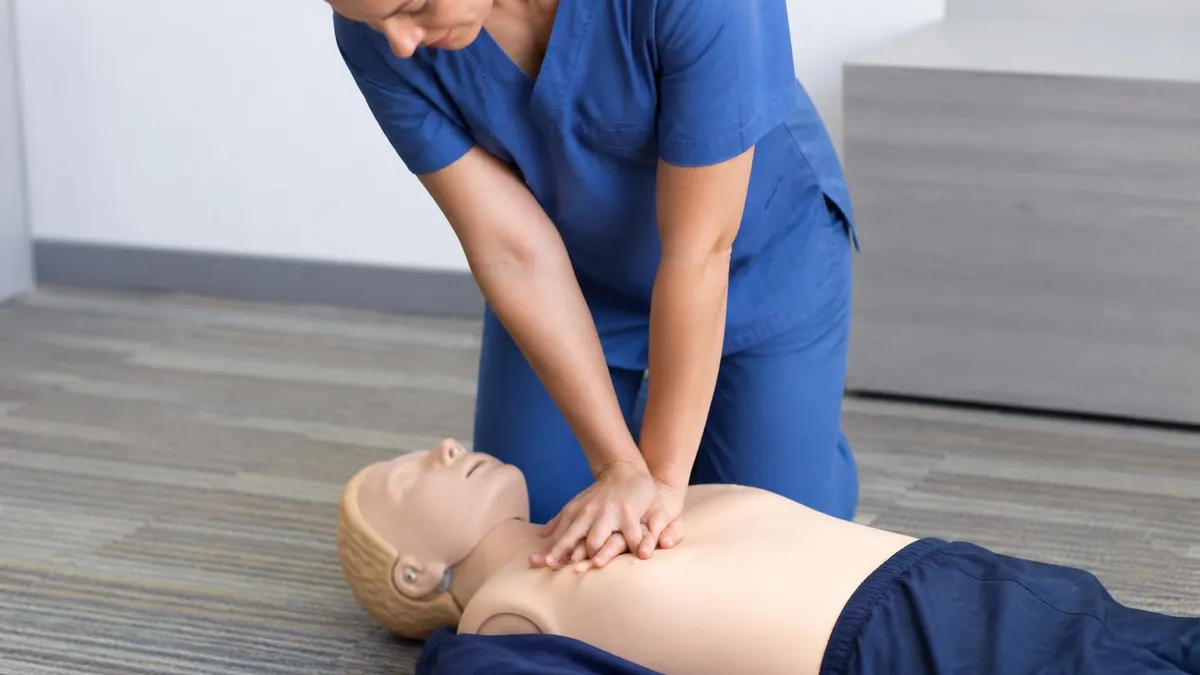
Inappropriate CPR Songs: What Not to Play, Why It Matters, and Better Beat-Per-Minute Alternatives
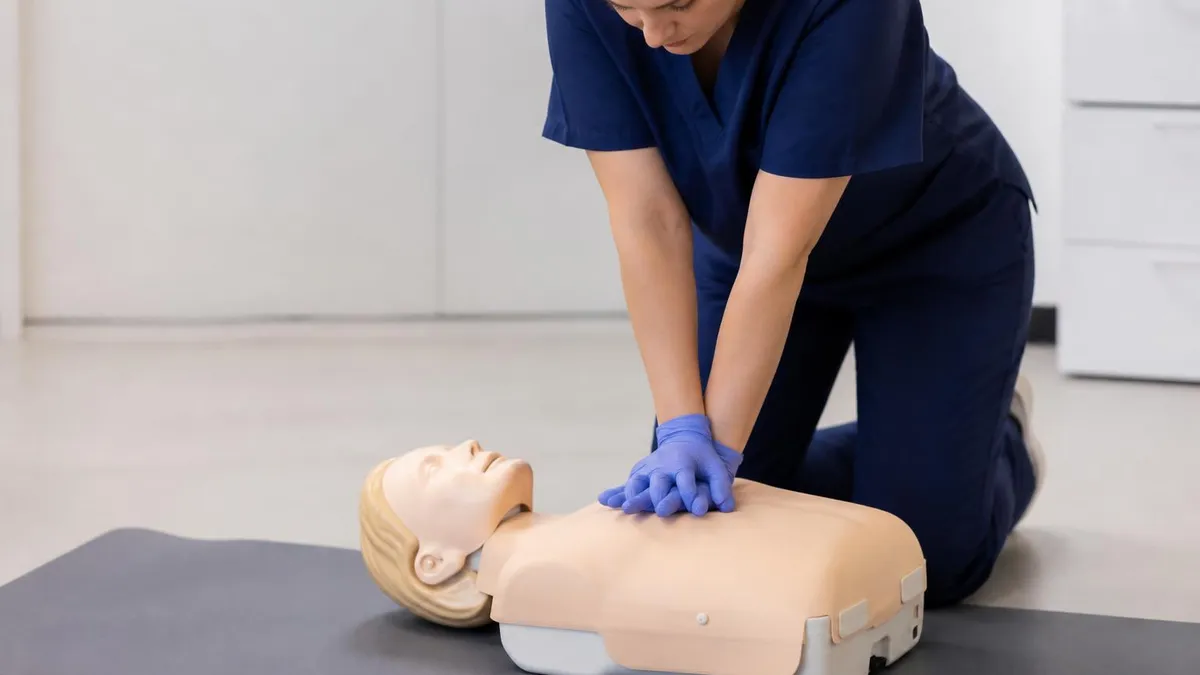
AHA CPR Recertification: How to Recertify CPR Online with the American Heart Association in 2026
About the Author

Registered Nurse & Healthcare Educator
Johns Hopkins University School of NursingDr. Sarah Mitchell is a board-certified registered nurse with over 15 years of clinical and academic experience. She completed her PhD in Nursing Science at Johns Hopkins University and has taught NCLEX preparation and clinical skills courses for nursing students across the United States. Her research focuses on evidence-based exam preparation strategies for healthcare certification candidates.
Join the Discussion
Connect with other students preparing for this exam. Share tips, ask questions, and get advice from people who have been there.
View discussion (5 replies)