
First Aid and CPR Certification Online: Complete 2026 October Guide to Courses, Costs, and Credentialing
First aid and cpr certification online guide: 🗨️ compare AHA, Red Cross, and National CPR Foundation courses, costs, ACLS algorithm prep, and instant cards.
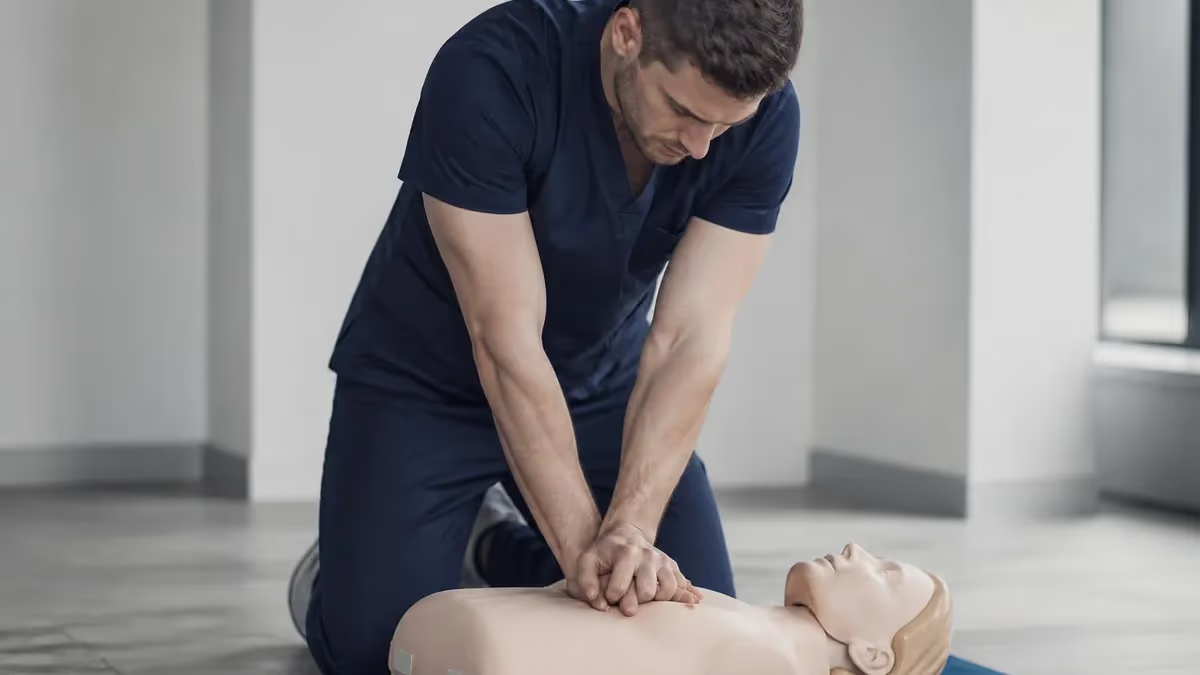
Earning your first aid and cpr certification online has become the default route for nurses, teachers, daycare workers, lifeguards, personal trainers, and corporate safety officers who need a verifiable card without sacrificing a Saturday in a classroom. In 2026, more than 4 million Americans renew or complete CPR training each year, and roughly 62% of those renewals now happen through fully online or blended programs that combine video instruction with a proctored skills check. The acls algorithm, BLS protocols, and pediatric resuscitation steps are all teachable through interactive video, simulation software, and timed compression-rate metronomes.
The challenge is that not every online certificate is equal in the eyes of an employer. A $14.99 PDF from an unaccredited vendor may technically say "CPR certified," but a hospital HR department will reject it the moment they verify it against their approved provider list. Knowing the difference between the American Heart Association (AHA), American Red Cross, American Safety & Health Institute (ASHI), and the national cpr foundation is the single most important decision you will make before you swipe your credit card.
This guide walks through every credentialing path available in 2026, what each one actually costs, how long the card stays valid, and which employers accept which provider. We will compare blended learning (online theory plus in-person skills test) against fully online, self-paced certificates, and we will explain why some states — California, New York, Texas, and Illinois — have specific occupational rules that override the provider's own claims of acceptance.
You will also learn the exact components of a complete first aid and CPR course: adult, child, and infant cpr cycles, two-rescuer technique, bag-valve-mask ventilation, AED operation, choking response for conscious and unconscious victims, recovery position, bleeding control, burns, fractures, anaphylaxis, stroke recognition using the FAST acronym, and opioid overdose response with naloxone. A real curriculum runs 4 to 8 hours; anything shorter than 90 minutes is a red flag.
We will also unpack the testing experience itself. Most reputable providers require a 25-to-50 question multiple-choice exam with a passing score of 80% or higher, plus a skills demonstration on a manikin equipped with a feedback device that measures compression depth (target 2 to 2.4 inches for adults), rate (100 to 120 per minute), and recoil. Knowing what to expect on test day removes anxiety and dramatically improves first-attempt pass rates, which currently sit at around 91% nationwide for blended courses.
Finally, we look at the legal side: Good Samaritan laws in all 50 states, scope-of-practice limits for lay rescuers, and what a card actually entitles you to do at the scene of an emergency. By the end of this article you will be able to pick a course, register, complete it, and walk away with a card that your employer, your state licensing board, and your insurance carrier will all accept.
For deeper anatomy and rate references, the normal respiratory rate for adults baseline used throughout these courses sits at 12 to 20 breaths per minute and matters for both assessment and rescue breathing pacing.
Whether you are a first-time learner racing a 30-day employer deadline or a healthcare provider renewing a BLS card that expires next month, the right online program exists for you. The trick is matching the course to the job, the budget, and the level of hands-on practice you genuinely need. Let's break it down.
Online CPR Certification by the Numbers

Major Online CPR Certification Providers Compared
Gold standard for healthcare. Heartsaver and BLS courses are blended only — online theory plus in-person skills test at a Training Center. Card valid 2 years, accepted by 99% of US hospitals and nursing programs.
Strong workplace and lifeguard acceptance. Offers fully online Adult First Aid/CPR/AED and blended healthcare BLS. Digital card delivered instantly via QR code; valid 2 years with optional review modules at 12 months.
Popular fully online, self-paced option around $19.95 for combined first aid and CPR. Accepted by many non-clinical employers, fitness chains, and schools — but verify with your specific employer before purchasing.
OSHA-compliant for workplace safety officers and industrial settings. Blended format with skills check at authorized centers; widely accepted by construction, manufacturing, and corporate occupational health programs.
Online-first provider with video-based skills verification via webcam. Accepted in many states for daycare, build care, and personal training, but not for hospital clinical roles requiring AHA BLS.
A complete first aid and CPR curriculum delivered online in 2026 should cover three resuscitation populations — adult, child, and infant cpr — plus a wide range of medical, environmental, and traumatic emergencies. The lessons are built around the Chain of Survival: early recognition, early CPR, early defibrillation, advanced life support, and post-arrest care. Knowing what does aed stand for (Automated External Defibrillator) is week-one material, but understanding when to apply the pads, when to clear the patient, and when to resume compressions is where most learners need repetition.
The adult portion centers on the 30:2 compression-to-ventilation ratio for single rescuers, hands-only CPR for untrained or unwilling-to-ventilate bystanders, and the transition to two-rescuer 15:2 for trained teams. You will practice (virtually with feedback software, then physically on a manikin) compressing to a depth of 2 to 2.4 inches at 100 to 120 per minute, allowing full chest recoil, and minimizing interruptions to under 10 seconds. Most modern cpr machine systems and feedback manikins now grade these metrics in real time.
Pediatric and infant content takes up roughly 25% of a complete course. For children 1 year to puberty, you use one or two hands depending on body size, compressing one-third the depth of the chest (about 2 inches). For infants under 1 year, you use two fingers or the two-thumb encircling technique at one-third depth (about 1.5 inches). The compression-to-ventilation ratio drops to 15:2 with two rescuers, and you initiate CPR after just 10 seconds of pulse check rather than the 10-second adult window.
First aid modules add a layer that pure CPR courses skip: severe bleeding control with direct pressure, tourniquets, and hemostatic dressings; recognition of stroke with FAST (Face, Arms, Speech, Time); heart attack signs in men and women (women often present atypically with jaw pain, nausea, and fatigue rather than crushing chest pain); diabetic emergencies; seizures; allergic reactions and epinephrine auto-injector use; heat stroke versus heat exhaustion; hypothermia and frostbite; poisoning and Poison Control protocols; and the position recovery technique for unresponsive but breathing patients.
Opioid overdose response has become a mandatory module in most 2026 curricula because of the fentanyl crisis. You learn to recognize pinpoint pupils, slow respiratory rate (under 12 breaths per minute or agonal gasping), and cyanosis, then administer intranasal naloxone (Narcan) at 4 mg per nostril, repeating every 2 to 3 minutes until EMS arrives or normal breathing returns. Many states have standing orders allowing lay rescuers to carry and administer naloxone without prescription.
Choking response is covered for all three age groups, with the conscious adult/child receiving abdominal thrusts (Heimlich), the conscious infant receiving five back blows alternated with five chest thrusts, and any unconscious choking victim immediately transitioning to standard CPR with airway inspection between cycles. The course also covers self-rescue for solo choking — leaning over a chair back to deliver an effective abdominal thrust.
Finally, AED operation is taught in detail: turning on the device, exposing dry skin, placing pads upper-right and lower-left for adults or anterior-posterior for infants, clearing for analysis, delivering shocks when advised, and immediately resuming compressions for two more minutes before re-analysis. You also learn the special cases — pacemakers, transdermal patches, water, and pediatric pad use on adults when only adult pads are available.

CPR Practice Test Questions
Prepare for the CPR Cardiopulmonary Resuscitation Practice exam with our free practice test modules. Each quiz covers key topics to help you pass on your first try.
CPR Basic CPR
CPR Exam Questions covering Basic CPR. Master CPR Test concepts for certification prep.
CPR and First Aid
Free CPR Practice Test featuring and First Aid. Improve your CPR Exam score with mock test prep.
CPR (Cardiopulmonary Resuscitation) Adult ...
CPR Mock Exam on (Cardiopulmonary Resuscitation) Adult CPR and AED Usage. CPR Study Guide questions to pass on your first try.
CPR (Cardiopulmonary Resuscitation) Airway...
CPR Test Prep for (Cardiopulmonary Resuscitation) Airway Obstruction and Choking. Practice CPR Quiz questions and boost your score.
CPR (Cardiopulmonary Resuscitation) Cardio...
CPR Questions and Answers on (Cardiopulmonary Resuscitation) Cardiopulmonary Emergency Recognition. Free CPR practice for exam readiness.
CPR (Cardiopulmonary Resuscitation) Child ...
CPR Mock Test covering (Cardiopulmonary Resuscitation) Child and Infant CPR. Online CPR Test practice with instant feedback.
CPR (Cardiopulmonary Resuscitation) High-P...
Free CPR Quiz on (Cardiopulmonary Resuscitation) High-Performance Team Dynamics. CPR Exam prep questions with detailed explanations.
CPR (Cardiopulmonary Resuscitation) Legal ...
CPR Practice Questions for (Cardiopulmonary Resuscitation) Legal and Ethical Considerations. Build confidence for your CPR certification exam.
CPR for Specific Populations
CPR Test Online for for Specific Populations. Free practice with instant results and feedback.
CPR Airway & Breathing Management
CPR Exam Questions covering Airway & Breathing Management. Master CPR Test concepts for certification prep.
CPR Assessment & Recognition of Cardiac Ar...
Free CPR Practice Test featuring Assessment & Recognition of Cardiac Arrest. Improve your CPR Exam score with mock test prep.
CPR Chest Compressions & Defibrillation
CPR Mock Exam on Chest Compressions & Defibrillation. CPR Study Guide questions to pass on your first try.
CPR Post-Resuscitation Care & Recovery
CPR Test Prep for Post-Resuscitation Care & Recovery. Practice CPR Quiz questions and boost your score.
Online vs Blended vs In-Person: Choosing Your Format
Fully online courses are completed entirely through a browser — video lessons, interactive scenarios, and a multiple-choice final exam with no physical skills check. Providers like the national cpr foundation, ProCPR, and CPR Today operate in this space, charging $15 to $35 for a combined first aid and CPR certificate delivered as an instant PDF.
This format works for daycare workers in states that accept online-only, personal trainers under most fitness association rules, build parents, real estate licensees, and corporate office staff. It does not work for clinical healthcare roles, EMS personnel, lifeguards, or anyone whose employer specifies AHA BLS Provider. Always verify acceptance in writing before purchasing.
Pros and Cons of Fully Online First Aid and CPR Certification
- +Complete on your own schedule — finish at 2 a.m. if needed
- +Significantly cheaper than classroom courses, often under $25
- +Instant digital card delivered by email or QR code
- +Replay video lessons unlimited times until concepts click
- +Accepted by many non-clinical employers and state licensing boards
- +No travel, no parking, no scheduling conflicts with work shifts
- +Built-in practice quizzes and unlimited exam retakes on most platforms
- −NOT accepted by hospitals, EMS, or most clinical healthcare employers
- −Zero hands-on practice — muscle memory for compressions is harder to build
- −Skills decay faster without physical manikin reps and instructor feedback
- −Some unaccredited providers issue cards that fail employer verification
- −Cannot satisfy OSHA workplace requirements in regulated industries
- −Webcam skills checks (when offered) can be technically frustrating
- −No peer learning or real-time question-and-answer with an instructor

Pre-Enrollment Checklist for Online CPR Certification
- ✓Confirm in writing which provider your employer or licensing board accepts
- ✓Verify the provider is on a recognized list (AHA, Red Cross, ASHI, NSC, or state-approved)
- ✓Check whether you need first aid included, CPR only, or BLS for healthcare providers
- ✓Confirm card validity period — most are 2 years, a few are 1 year
- ✓Make sure the course covers adult, child, and infant cpr if your job requires pediatric
- ✓Test your internet speed and webcam if a remote skills check is part of the course
- ✓Read recent reviews on Trustpilot or Better Business Bureau for the specific provider
- ✓Confirm the price includes both the certificate and a printable wallet card
- ✓Check refund policy in case your employer ultimately rejects the credential
- ✓Schedule 4 to 8 hours of focused, uninterrupted study time before starting
Always send the provider's name to your HR or licensing board before paying
A 30-second email to HR — "Will a certificate from [Provider Name] satisfy our CPR requirement?" — saves hundreds of dollars and weeks of delay. Get the answer in writing. Many candidates have completed a $19 online course only to be told on day one of orientation that they need AHA BLS instead, forcing them to retake and repay.
Employer acceptance is the single most important variable in choosing an online program, and it varies wildly by industry. Hospitals and inpatient clinical settings almost universally require American Heart Association BLS Provider — full stop. This is non-negotiable for registered nurses, certified nursing assistants on hospital floors, respiratory therapists, surgical technologists, paramedics, and physician assistants. The AHA card is the only one that integrates with electronic credentialing systems used by major hospital networks like HCA, Ascension, and Kaiser Permanente.
Outpatient clinical roles — dental offices, urgent care, dermatology clinics, physical therapy practices, and chiropractic offices — typically accept either AHA Heartsaver or American Red Cross BLS. Some smaller practices will also accept ASHI or MEDIC First Aid. The key term to look for in the job posting is "healthcare provider level" CPR; if you see that phrase, you need a course with two-rescuer technique and bag-valve-mask training, which rules out most fully-online-only courses.
Non-clinical workplaces have far more flexibility. OSHA's general duty clause requires employers in higher-risk industries to have trained responders available, but OSHA does not name a specific provider. That means construction, manufacturing, warehouse logistics, daycare centers, K-12 schools, fitness centers, hospitality, and corporate offices generally accept any nationally recognized provider, including the national cpr foundation, ProCPR, and similar online-only options. Always confirm with the specific employer.
State licensing boards add another layer. Childcare workers in California must hold a pediatric-focused CPR card from an EMSA-approved provider — and not every online vendor qualifies. New York build parents must complete a course that includes both adult and pediatric components. Texas school employees follow Texas Education Code requirements that specify in-person skills verification. Always cross-reference your state's specific occupational rules with the provider's claims of acceptance.
Personal trainers face provider-specific requirements set by their certifying body. NASM and ACE both accept AHA, Red Cross, and ASHI; some accept ProCPR and the national cpr foundation, but you must check the current list since it updates annually. Group fitness instructors at major chains like Equinox, LifeTime, and Orangetheory typically follow corporate policies that require AHA or Red Cross.
EMS, firefighters, and law enforcement universally use AHA BLS Provider or sometimes the Red Cross equivalent. Advanced providers will additionally hold ACLS, where mastery of the acls algorithm — including rhythm recognition, defibrillation timing, epinephrine dosing every 3 to 5 minutes, and post-arrest care — is essential. PALS certification follows a parallel track for pediatric advanced life support and is required for pediatric ICU and emergency department staff.
For commercial drivers, lifeguards, and aquatic facility staff, the American Red Cross dominates because of its long history in water safety. The American Lifeguard Association and YMCA also issue recognized credentials. These roles typically require in-person skills demonstration regardless of how the theory is delivered, so plan for at least one in-person session even if you start online.
Search engines surface dozens of cheap CPR sites with names that mimic legitimate providers. Some have no medical advisory board, no instructor verification, and issue cards that fail employer credential checks. Always confirm the provider is listed on a recognized accreditation body (CAPCE, ECC, or state EMS office) and read recent reviews before paying. A rejected card costs more than the most expensive legitimate course.
The standard validity period for a first aid and CPR card is 2 years from the date of completion, regardless of provider. A handful of state-specific occupational rules — notably in New York for certain childcare credentials — shorten this to 1 year, so always check the back of your card and the issuing employer's policy. Renewal generally costs 60 to 80 percent of the original course price because the curriculum is shorter and you skip introductory material.
Renewing online is straightforward when you stick with the same provider. AHA, Red Cross, ASHI, and the national cpr foundation all preserve your account history and let you re-enroll with a renewal-pricing code. The skills check for blended renewals is shorter — usually 30 to 45 minutes — and focuses on confirming you can still deliver effective compressions, ventilation, AED operation, and choking response. Adult normal respiration assessment, pulse checks, and the position recovery technique are all reviewed.
Card verification has moved almost entirely to QR codes and online lookup portals. AHA cards include a unique eCard ID that employers verify through the AHA's Atlas portal. Red Cross uses a similar digital ID with a public verification page. The national cpr foundation prints a verification URL directly on the card. If your card lacks any digital verification mechanism, treat that as a major red flag — most large employers now require it.
Replacing a lost card is usually free or under $10 if you bought from a reputable provider, because the card is just a re-issue of an existing digital record. If you cannot locate your provider's lookup portal, our adult normal respiration reference page also explains general CPR card lookup steps and links to the major provider verification systems. Keep a screenshot of your card in your phone's wallet app for fast access at job orientations.
Costs vary by provider and bundle. Fully online combined first aid and CPR runs $19 to $35 from providers like the national cpr foundation or ProCPR. AHA Heartsaver blended runs $65 to $110 depending on the Training Center. AHA BLS Provider blended runs $80 to $140. ACLS and PALS certifications, which build on BLS, cost $150 to $250 each. Group rates for employers often drop these prices by 20 to 30 percent per seat.
Employer reimbursement is increasingly common. Many hospitals, school districts, fire departments, and corporate safety programs reimburse the full cost of approved certifications, sometimes including a wage stipend for the hours spent training. Always ask HR about reimbursement before paying out of pocket. Save receipts and your completion certificate as proof.
Beyond the card itself, consider continuing competency. Studies show that CPR skills, particularly compression depth and rate, degrade significantly within 3 to 6 months of training. Several providers now offer free quarterly micro-refreshers, and apps like the AHA's CPR & First Aid app provide on-demand review. Setting a calendar reminder every 6 months to spend 15 minutes on a manikin or feedback device pays huge dividends when a real emergency arrives.
Test-day strategy makes a measurable difference in passing on the first attempt. Block 4 to 8 uninterrupted hours, close all other browser tabs and notifications, and treat the online portion like a real exam, not a video to watch passively. Take notes by hand on the key vitals — compression rate 100 to 120 per minute, depth 2 to 2.4 inches for adults, respiratory rate 12 to 20 for adult assessment baseline — because handwriting consistently outperforms typing for retention according to Princeton and UCLA research.
Use the built-in practice questions aggressively. Most platforms include between 50 and 200 practice items, and learners who complete all of them score an average 14 percentage points higher on the final exam than those who skip practice. If you fail a practice question, don't just review the correct answer — go back to the relevant lesson and re-watch it. Reading the explanation alone produces weaker retention than re-engaging with the original instruction.
For the skills check portion of a blended course, arrive 15 minutes early, wear comfortable clothing that allows kneeling and bending, and bring water. The most common skills-test failure is not compression depth or rate — it's failing to start CPR within 10 seconds of identifying unresponsiveness and absent normal breathing. Practice the sequence verbally: "Check scene, check responsiveness, call 911 or send someone, check breathing, no normal breathing — start compressions."
Memorize a few critical numbers before exam day. AED pads on adults: upper-right chest and lower-left side. AED pads on infants: front and back (anterior-posterior). Naloxone dose: 4 mg intranasal, half per nostril. Aspirin for suspected heart attack in adults: one 325 mg or four 81 mg chewable. Epinephrine auto-injector hold time: 3 seconds in the outer thigh, through clothing if necessary. These are high-yield items appearing on virtually every exam.
If you are renewing rather than certifying from scratch, dust off the muscle memory by watching one full demonstration video the night before your skills check. Your hands remember more than you think, but the cognitive sequence — scene safety, response, breathing check, compressions, AED, two-minute cycles — benefits from one fresh review. For deeper review across all categories, our malibu cpr reference compiles every algorithm in one place.
Plan what to do after you certify. Pin the digital card to your phone's home screen or save it in your wallet app. Email a PDF copy to yourself with a clear subject line so it is searchable. Print one physical card and store it with your driver's license or work ID. Add a calendar reminder 90 days before expiration so you can renew without a lapse — many employers treat a single expired day as a compliance violation.
Finally, consider going beyond the minimum. A Stop the Bleed course (free in many cities), a Mental Health First Aid certification, and naloxone-specific training each cost little to nothing and dramatically expand your usefulness in a real emergency. The vast majority of cardiac arrests happen at home, and your family is statistically the most likely beneficiary of your training. Spending an extra hour on infant cpr alone could be the most important hour of your life.
CPR Questions and Answers
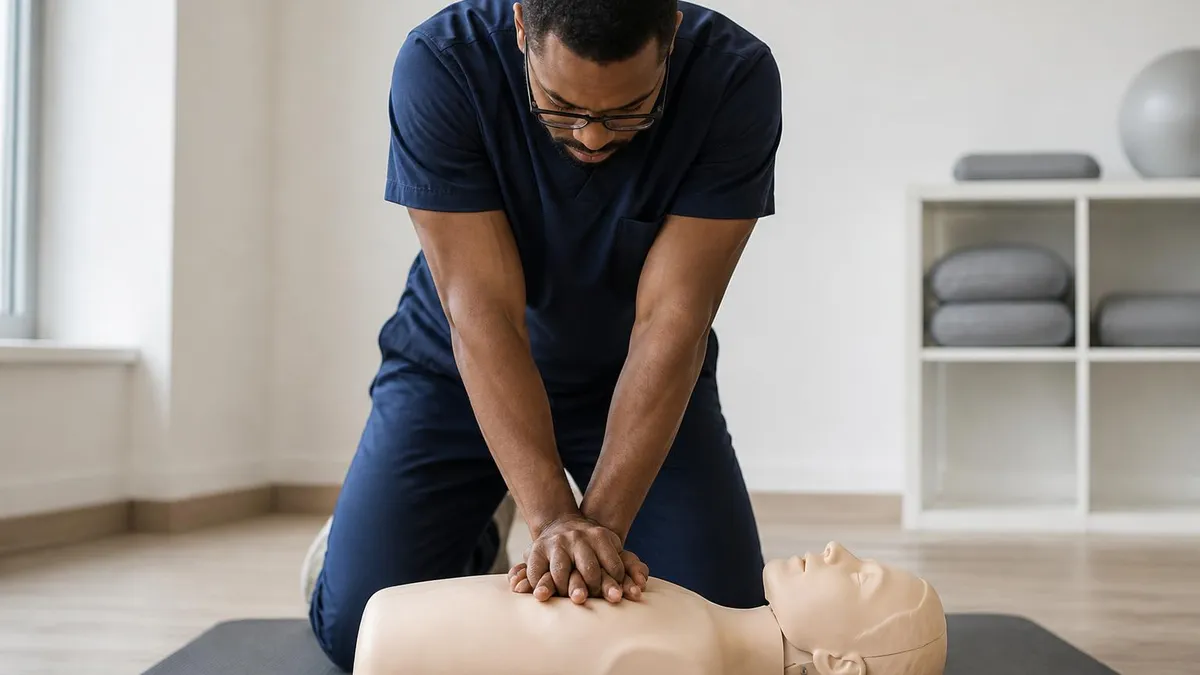
CPR Card Lookup: How to Verify, Replace, and Access Your CPR Certification in 2026
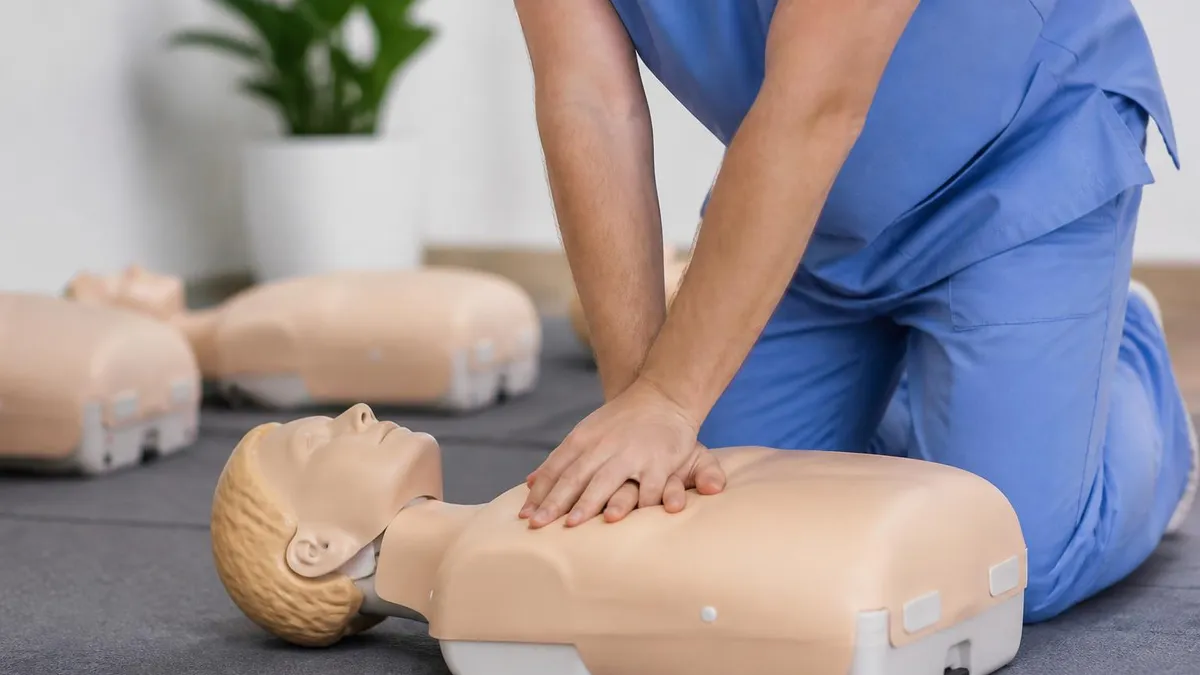
AHA CPR: What It Is, Which Course You Need, and How to Get Certified
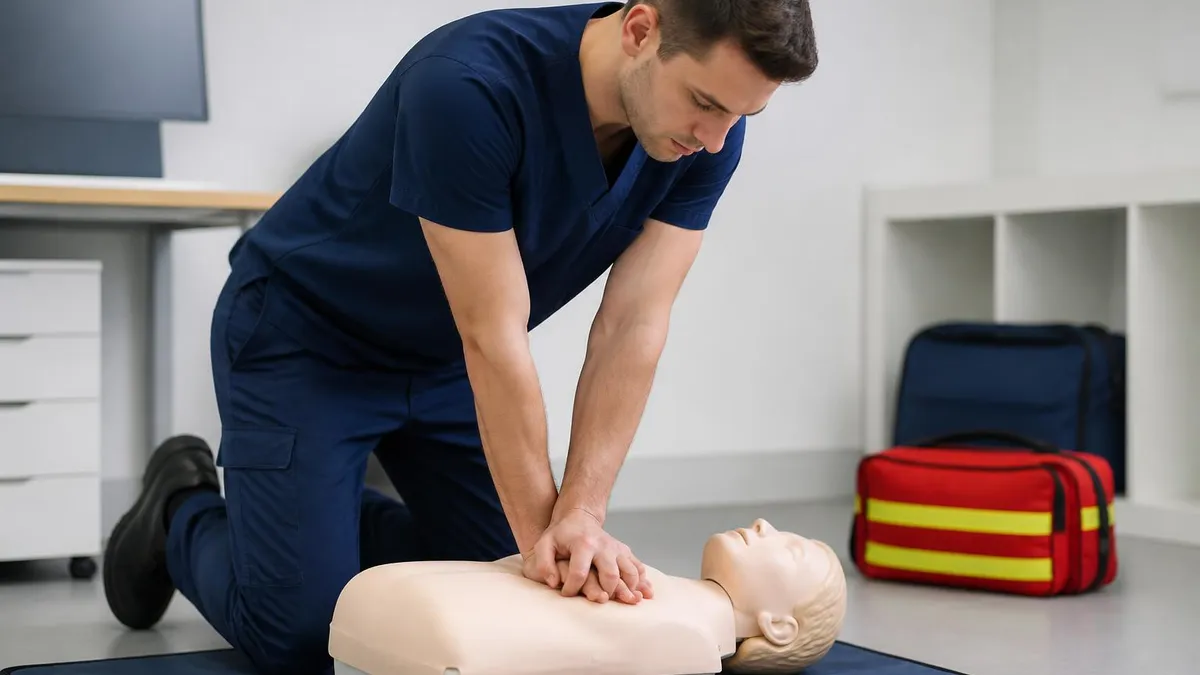
Adult CPR: Complete Step-by-Step Guide to Hands-Only and Standard CPR in 2026
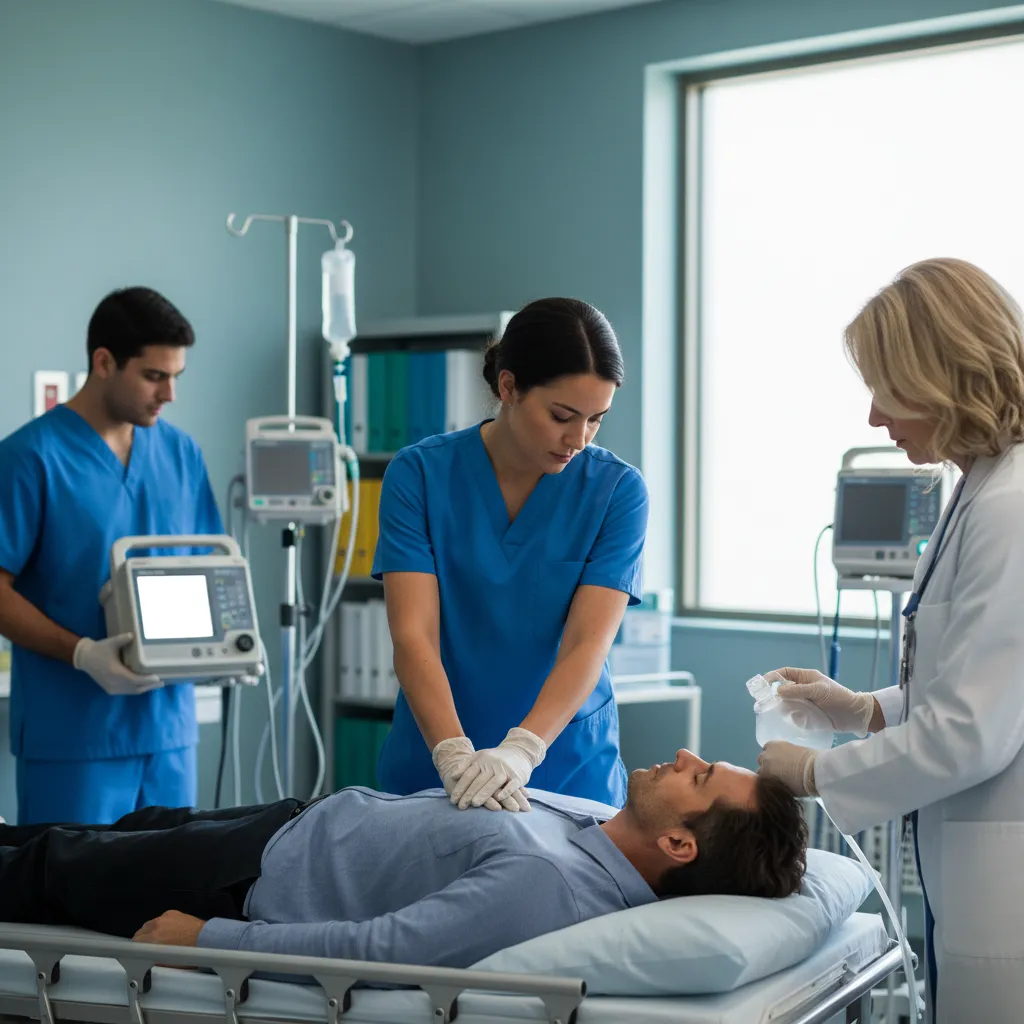
CPR - Cardiopulmonary Resuscitation: Complete Study Guide 2026
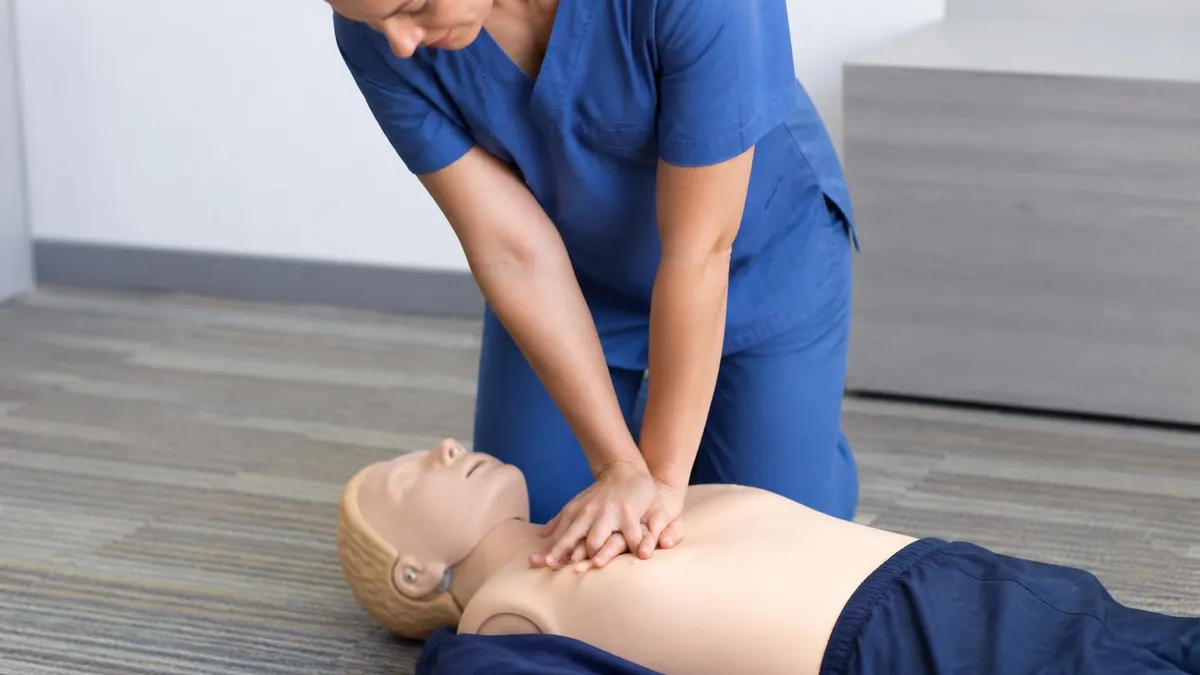
Inappropriate CPR Songs: What Not to Play, Why It Matters, and Better Beat-Per-Minute Alternatives
About the Author

Registered Nurse & Healthcare Educator
Johns Hopkins University School of NursingDr. Sarah Mitchell is a board-certified registered nurse with over 15 years of clinical and academic experience. She completed her PhD in Nursing Science at Johns Hopkins University and has taught NCLEX preparation and clinical skills courses for nursing students across the United States. Her research focuses on evidence-based exam preparation strategies for healthcare certification candidates.
Join the Discussion
Connect with other students preparing for this exam. Share tips, ask questions, and get advice from people who have been there.
View discussion (5 replies)