
First Aid CPR AED Training: Complete Guide to Certification, Skills, and Career Opportunities in 2026 August
Complete first aid CPR AED training guide covering ACLS algorithms, infant CPR, AED use, certification paths, and career opportunities for 2026 August. ✍🏼
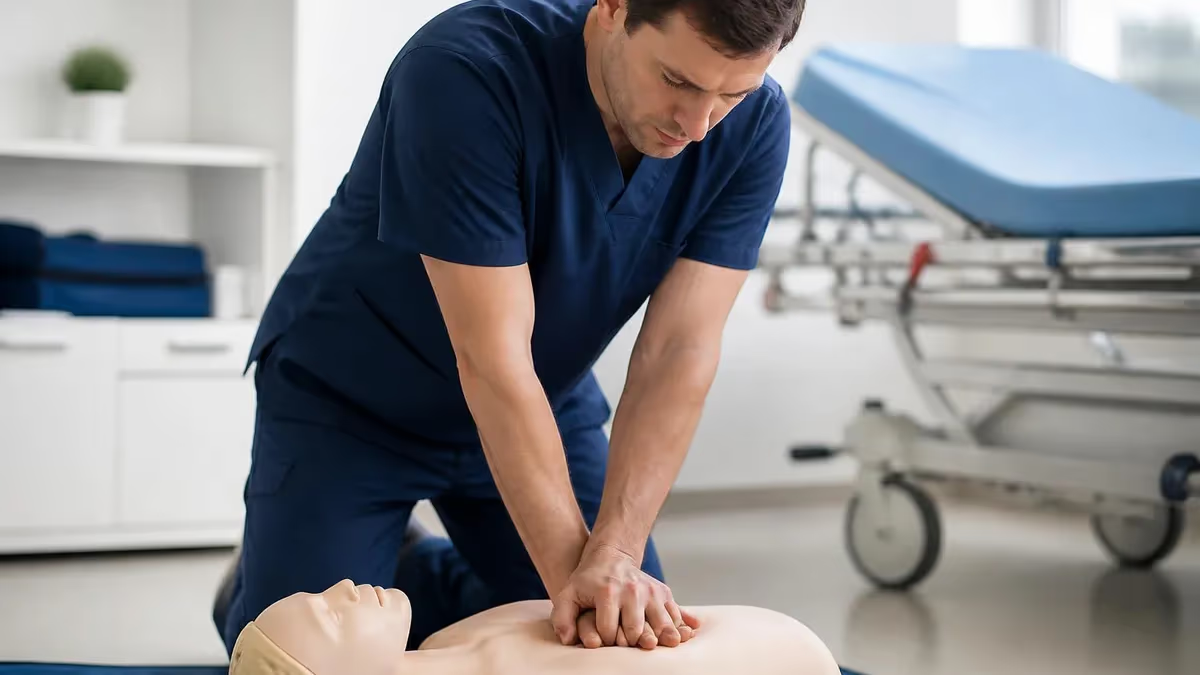
Comprehensive first aid CPR AED training has become one of the most valuable skill sets a modern American can carry into the workplace, school, gym, or family home. Whether you are a teacher, lifeguard, nurse, daycare worker, factory supervisor, or simply a concerned parent, knowing how to deliver high-quality chest compressions, manage an obstructed airway, and operate an automated external defibrillator can mean the difference between a tragic loss and a celebrated survival story. Programs now blend traditional skills with the ACLS algorithm framework so learners understand exactly how their actions fit into the larger chain of survival.
The American Heart Association, American Red Cross, and the National CPR Foundation each report sharp growth in enrollment numbers over the past three years, with workplace mandates and state-level legislation driving much of that demand. OSHA-regulated industries, healthcare systems, hospitality groups, and youth sports leagues are all pushing employees toward certified courses that combine cognitive learning, hands-on skills practice, and scenario-based simulation. The result is a training environment that is more accessible, more affordable, and more closely aligned with the latest 2025 ECC science update than ever before.
Modern first aid CPR AED training is structured around three core competencies. First, learners practice adult, child, and infant CPR using one-rescuer and two-rescuer techniques. Second, they learn to deploy an AED quickly, including pad placement, child mode activation, and integration with ongoing chest compressions. Third, they review first aid fundamentals such as bleeding control, burn care, seizure response, anaphylaxis, stroke recognition, and the proper position recovery for an unconscious but breathing patient. Each competency reinforces the others.
One reason the curriculum has expanded is the recognition that bystanders are the true first responders. According to the AHA, roughly 70 percent of out-of-hospital cardiac arrests occur in private residences, which means the person most likely to start CPR is a spouse, child, neighbor, or coworker. When that bystander has been through quality first aid CPR AED training, survival rates double or even triple. This is the public-health argument that has reshaped how schools and corporations approach safety culture and continuing education.
Training providers have also responded to the rise of digital learning by offering blended and fully online courses, although hands-on skills checks remain mandatory for most professional-level certifications. Adults who need a card for employment can typically finish a blended course in three to four hours, while comprehensive Heartsaver and BLS Provider courses generally run four to six hours including practical testing. Renewal cycles are typically two years, though some employers require annual refreshers to keep skills sharp and reduce skill decay between cycles.
If you are still deciding which course fits your situation, start by reviewing the CPR Card Lookup resources to confirm what your employer, licensing board, or state regulator will accept. From there, you can choose between Heartsaver-style community courses, BLS Provider courses for healthcare workers, and advanced pathways such as ACLS or PALS certification. Each of those tiers builds upon the same foundation: confident hands, clear communication, and a willingness to act in the critical first minutes of an emergency.
This guide walks through the full first aid CPR AED training landscape, including curriculum breakdowns, cost comparisons, exam structures, career applications, and study strategies. By the end, you will know exactly which course to enroll in, what to expect during your skills test, how to refresh your knowledge between certifications, and how to translate your training into real-world readiness — whether that means saving a stranger at the airport or protecting your own family at home.
First Aid CPR AED Training by the Numbers

Course Pathways & Certification Tiers
The community-level course aimed at teachers, coaches, parents, and workplace responders. Covers adult, child, and infant CPR with AED operation plus a full first aid module. Ideal for OSHA compliance and most non-clinical jobs.
Designed for healthcare professionals, EMTs, and nursing students. Emphasizes high-performance team CPR, bag-mask ventilation, and integration with advanced cardiac care. Required for clinical rotations and hospital employment.
Builds on BLS by teaching the ACLS algorithm for adult cardiac arrest, bradycardia, tachycardia, and stroke. Required for ICU, ER, cath-lab, and rapid-response clinicians who manage post-arrest care.
Pediatric Advanced Life Support focuses on infant CPR, child cardiac arrest, respiratory failure, and shock states. Required for pediatric units, NICUs, and emergency departments seeing children.
An online certification route popular with employers that accept fully digital courses. Offers fast turnaround, printable cards, and budget-friendly pricing for non-clinical professionals.
Curriculum design across modern first aid CPR AED training programs is remarkably consistent because all reputable providers align their lessons with the International Liaison Committee on Resuscitation (ILCOR) consensus and the 2025 ECC science update. A typical course begins with a brief overview of how the cardiovascular and respiratory systems interact, then moves directly into recognition of cardiac arrest, choking, stroke, severe bleeding, and shock. Instructors use video-led practice combined with manikin work to ensure every learner can demonstrate competence in real time.
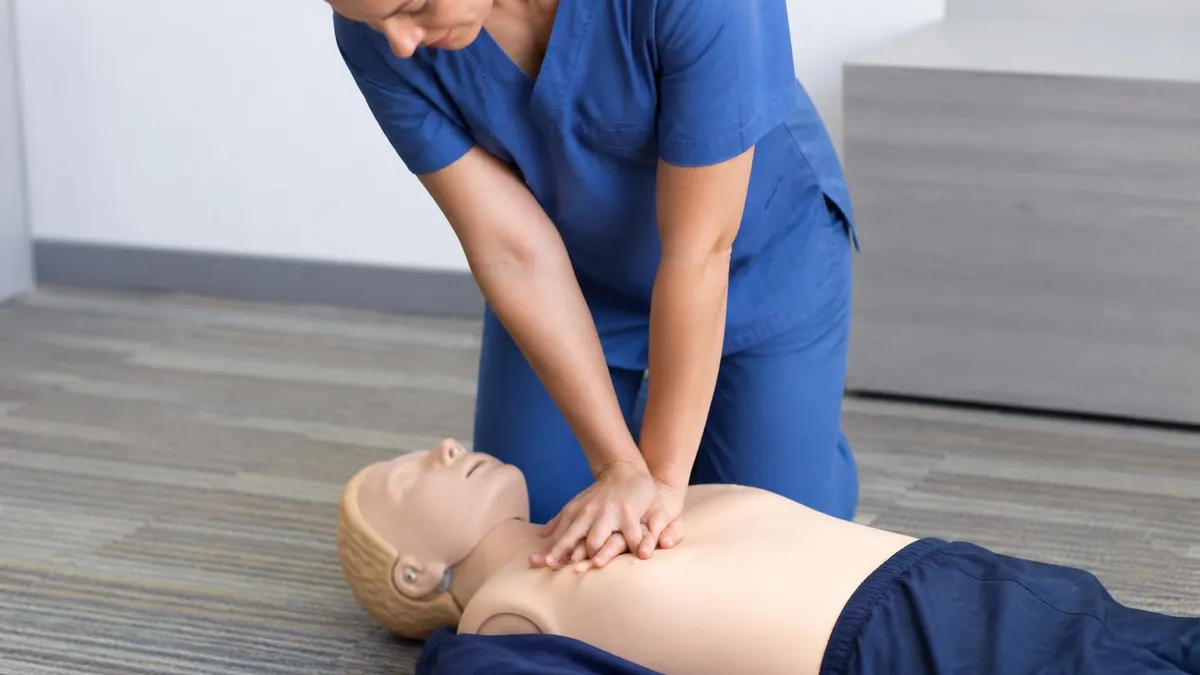
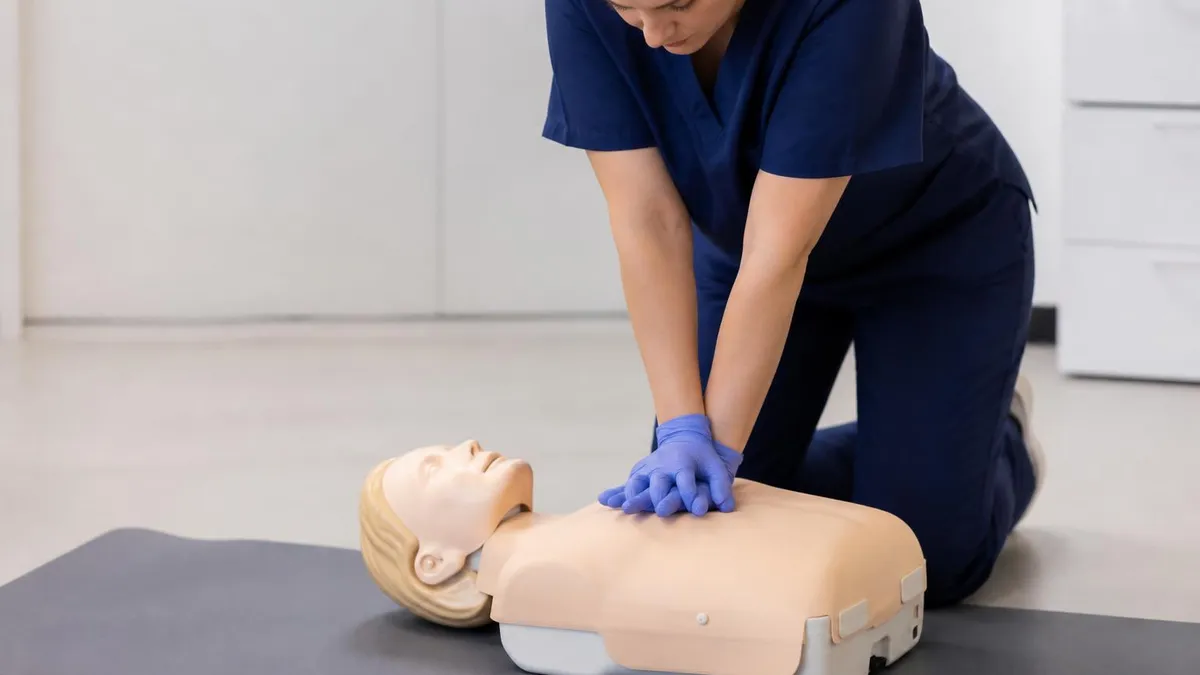
The first major skill block focuses on adult CPR. Students practice compressions at a depth of at least 2 inches and a rate of 100 to 120 compressions per minute, with full chest recoil between pushes. They learn to minimize interruptions during compressions to less than 10 seconds and to switch compressors every two minutes to prevent fatigue. For a complete review of adult technique, the Adult CPR guide is an excellent companion reference once you have completed the in-class portion.
The second block introduces pediatric and infant CPR. Child CPR uses one- or two-hand compressions depending on the rescuer and patient size, while infant CPR for babies under one year uses the two-finger technique for solo rescuers or the two-thumb-encircling-hands method for two rescuers. Compression depth shifts to about 1.5 inches in infants and roughly 2 inches in children. The respiratory rate for rescue breaths in pediatric patients is one breath every 2 to 3 seconds when a pulse is present but breathing is inadequate.
The third block addresses choking and airway obstruction. Learners practice abdominal thrusts for responsive adults and children, chest thrusts for pregnant or obese patients, and back blows alternated with chest thrusts for infants. Each technique is paired with a recognition cue — the universal choking sign for adults, ineffective coughing for children, and silence or weak cry for infants. Instructors stress that early intervention before the patient becomes unresponsive is the single best predictor of a good outcome.
The fourth block covers first aid emergencies. Topics include controlling bleeding with direct pressure and tourniquets, recognizing stroke with the FAST acronym, managing seizures by protecting the airway and head, responding to anaphylaxis with an epinephrine auto-injector, and stabilizing suspected spinal injuries. Burn care, hypothermia, heat stroke, diabetic emergencies, and poisoning are also taught at a level appropriate for lay responders, with referrals to 9-1-1 emphasized in every scenario.
The fifth block is AED integration, where students practice turning on the device, attaching pads, allowing rhythm analysis, and delivering a shock when advised. Modern AEDs guide rescuers with voice prompts, but training builds the muscle memory needed to use one quickly under stress. Learners also practice the position recovery technique for patients who regain a pulse and start breathing on their own, and they review when to leave a patient in place versus when to move them to safety.
The final block focuses on team dynamics and communication. Learners practice closed-loop communication, clear role assignment, and structured handoffs to arriving EMS. Most courses end with a megacode-style scenario where the class works through a simulated cardiac arrest from collapse to handoff. Successful completion requires demonstrating each skill independently and participating effectively in the team-based scenario.

CPR Practice Test Questions
Prepare for the CPR Cardiopulmonary Resuscitation Practice exam with our free practice test modules. Each quiz covers key topics to help you pass on your first try.
CPR Basic CPR
CPR Exam Questions covering Basic CPR. Master CPR Test concepts for certification prep.
CPR and First Aid
Free CPR Practice Test featuring and First Aid. Improve your CPR Exam score with mock test prep.
CPR (Cardiopulmonary Resuscitation) Adult ...
CPR Mock Exam on (Cardiopulmonary Resuscitation) Adult CPR and AED Usage. CPR Study Guide questions to pass on your first try.
CPR (Cardiopulmonary Resuscitation) Airway...
CPR Test Prep for (Cardiopulmonary Resuscitation) Airway Obstruction and Choking. Practice CPR Quiz questions and boost your score.
CPR (Cardiopulmonary Resuscitation) Cardio...
CPR Questions and Answers on (Cardiopulmonary Resuscitation) Cardiopulmonary Emergency Recognition. Free CPR practice for exam readiness.
CPR (Cardiopulmonary Resuscitation) Child ...
CPR Mock Test covering (Cardiopulmonary Resuscitation) Child and Infant CPR. Online CPR Test practice with instant feedback.
CPR (Cardiopulmonary Resuscitation) High-P...
Free CPR Quiz on (Cardiopulmonary Resuscitation) High-Performance Team Dynamics. CPR Exam prep questions with detailed explanations.
CPR (Cardiopulmonary Resuscitation) Legal ...
CPR Practice Questions for (Cardiopulmonary Resuscitation) Legal and Ethical Considerations. Build confidence for your CPR certification exam.
CPR for Specific Populations
CPR Test Online for for Specific Populations. Free practice with instant results and feedback.
CPR Airway & Breathing Management
CPR Exam Questions covering Airway & Breathing Management. Master CPR Test concepts for certification prep.
CPR Assessment & Recognition of Cardiac Ar...
Free CPR Practice Test featuring Assessment & Recognition of Cardiac Arrest. Improve your CPR Exam score with mock test prep.
CPR Chest Compressions & Defibrillation
CPR Mock Exam on Chest Compressions & Defibrillation. CPR Study Guide questions to pass on your first try.
CPR Post-Resuscitation Care & Recovery
CPR Test Prep for Post-Resuscitation Care & Recovery. Practice CPR Quiz questions and boost your score.
AED Operation & Life Support Basics
What does AED stand for? An AED is an Automated External Defibrillator, a portable medical device that analyzes the heart's electrical rhythm and delivers a shock when ventricular fibrillation or pulseless ventricular tachycardia is detected. The word automated means the device itself determines whether a shock is needed; the rescuer simply follows voice prompts. External refers to the pads placed on the skin rather than internal paddles, and defibrillator describes the therapeutic shock that resets the heart.
AEDs are now widely placed in airports, schools, gyms, casinos, government buildings, and corporate offices. Most are designed so a layperson with minimal training can use one effectively in under a minute. Pediatric pads or a child-mode key reduce the energy delivered for patients under eight years old or under 55 pounds. When pediatric equipment is unavailable, adult pads are used with anterior-posterior placement to ensure the shock vector still crosses the heart effectively.
In-Person vs Online First Aid CPR AED Training
- +Online theory portions let busy learners study at their own pace and on mobile devices
- +Blended courses cut total class time roughly in half compared to traditional all-day sessions
- +Hands-on skills checks build true muscle memory that pure video cannot replicate
- +Group classes encourage realistic team dynamics and closed-loop communication
- +Many providers now ship at-home manikin kits for remote skills verification
- +Recertification is often discounted when learners stay loyal to one provider
- −Fully online certifications are not accepted by all healthcare employers or state agencies
- −Self-paced learners sometimes skim modules and arrive at skills checks unprepared
- −At-home manikins are smaller and less realistic than in-class equipment
- −Class scheduling can be a barrier in rural areas with few local instructors
- −Course quality varies significantly between providers and individual instructors
- −Skill decay still occurs within months without refresher practice between cycles

Pre-Class Preparation Checklist for First Aid CPR AED Training
- ✓Confirm your employer accepts the certifying body before paying for the course
- ✓Download and read the student manual at least three days before class
- ✓Watch refresher videos covering compression depth and rate expectations
- ✓Review choking response sequences for adults, children, and infants
- ✓Practice mock AED placement using a household pillow or stuffed animal
- ✓Wear comfortable clothing that allows kneeling and bending during skills practice
- ✓Bring a water bottle and snack to stay hydrated through skills stations
- ✓Inform your instructor of any injuries that limit your ability to compress
- ✓Charge your phone and laptop to access digital course materials onsite
- ✓Arrive 15 minutes early to complete sign-in paperwork without rushing
Push hard, push fast, minimize interruptions
Studies repeatedly show that chest-compression fraction — the percentage of arrest time spent actively compressing — is the single strongest predictor of return of spontaneous circulation. Keep pauses under 10 seconds, rotate compressors every two minutes, and resume immediately after each shock to maximize the patient's odds of surviving with good neurological function.
First aid CPR AED training opens doors across a surprisingly wide range of careers, and many job seekers underestimate just how often a current card is required for employment. In healthcare, every clinical role from nursing assistant to physician must hold at least a BLS Provider certification, and most acute-care positions also require ACLS certification or PALS certification. Hospitals routinely audit credentials during onboarding and re-credentialing cycles, so allowing a card to lapse can sideline a clinician from patient care until renewal is completed and verified.
Outside healthcare, education is one of the largest employers of CPR-certified staff. Public school teachers, athletic coaches, bus drivers, and after-school care providers are usually required by state law or district policy to hold a Heartsaver-level card. Many states have moved toward requiring CPR training as a high school graduation requirement, which means classroom teachers must be prepared to demonstrate the skill in front of students each year. School nurses generally hold BLS Provider certification along with first aid training.
Public-facing service industries lean heavily on certified responders as well. Hotel concierge teams, cruise ship staff, theme park employees, restaurant managers, gym personal trainers, and fitness instructors are increasingly expected to demonstrate competence with AEDs because their venues are open to the public and likely to see emergencies. Liability insurance carriers in hospitality often offer premium discounts to properties that maintain a certified team and on-site AED equipment that has been inspected and serviced regularly.
Childcare and pediatric-focused work demands a stronger emphasis on infant CPR and pediatric first aid. Daycare centers, preschools, nanny services, and youth sports leagues require staff to hold certifications that specifically cover infants and children. Camp counselors and aquatic professionals often add Wilderness First Aid or Lifeguard certifications on top of their CPR card. These add-ons are valuable not only for compliance but also for personal confidence when supervising large groups of young children in dynamic environments.
Public safety roles such as firefighters, police officers, corrections officers, and military service members carry the highest training intensity. Many of these professionals progress from BLS Provider to ACLS or to Tactical Combat Casualty Care, depending on agency policy. The expectation is that they can run a full resuscitation independently while waiting for transport, and they often train monthly to keep their skills sharp. Their continuing education hours typically exceed civilian requirements by a wide margin every year.
Corporate workplaces have also embraced training as part of broader occupational safety programs. Manufacturing plants, warehouses, construction sites, and energy facilities frequently maintain dedicated response teams trained in first aid, CPR, AED use, and bleeding control. OSHA general industry rules expect prompt medical care, and employers usually satisfy that expectation by training a percentage of each shift in advanced first aid response. Pay differentials and shift premiums often accompany these voluntary safety-team assignments.
Finally, gig-economy and freelance workers are joining the certified ranks in greater numbers. Rideshare drivers, food delivery couriers, in-home caregivers, and pet sitters increasingly market themselves as certified, knowing that customers value the added peace of mind. For a quick refresher on what credentials look like and how to verify them, the CPR Complete Study Guide is a strong all-in-one reference covering every level discussed here.
The growth in online CPR training has attracted bad actors. Be cautious about sites with names that mimic legitimate brands — for example, search results for cpr cell phone repair and cpr phone repair can dominate certain queries and have nothing to do with cardiopulmonary resuscitation. Always verify your provider against your state board or employer-approved list before paying for a course.
Recertification is where many otherwise-prepared professionals stumble, often because they forget the two-year cycle is shorter than it sounds when life gets busy. Most certification bodies require recert before the printed expiration date, and any lapse — even by a single day — typically forces the learner to retake the full initial course rather than the shorter renewal course. Healthcare employers usually run automated credential checks 60 to 90 days before expiration and will lock out clinicians from documentation systems if the card is not refreshed in time.
The renewal process for most adults is shorter and less expensive than the initial certification, with the trade-off being a more compressed skills check. Heartsaver and BLS renewals typically run two to three hours and cost between $35 and $75 depending on provider and region. For ACLS and PALS, renewal courses generally take four to six hours and emphasize megacode simulations rather than repeating every foundational concept. Online cognitive portions for these higher-level renewals usually take an additional one to two hours.
Skill decay between renewals is real and well documented. Research consistently shows compression quality drops noticeably within three to six months of certification, even among healthcare professionals. To combat this, many hospitals and EMS agencies now offer short Resuscitation Quality Improvement, or RQI, sessions every quarter. Lay responders can mimic this approach by using a CPR feedback manikin at home or completing free practice scenarios online. Even five minutes of monthly practice meaningfully slows the decay curve over time.
Verification is another piece of the renewal puzzle. Modern certification cards are typically digital with QR codes that link to a verification portal. Employers, schools, and licensing boards can scan the code to confirm the card is genuine, the course code is valid, and the expiration date is correct. Paper cards are still issued in some settings but are gradually being phased out. Many learners now store digital cards directly in their phone wallet apps for instant access during job interviews and credential audits.
For learners thinking about a switch in certifying bodies, the transition is usually straightforward. Most employers accept any nationally recognized provider, although some hospital systems specify the AHA exclusively. If you are switching from a Red Cross or National CPR Foundation card to AHA, plan to take the full initial course rather than a renewal because cross-provider renewals are not typically allowed. Confirm employer policy first to avoid paying for a course that will not satisfy your credential file.
One useful resource for verifying your status is the AHA CPR Recertification guide, which walks through the AHA's specific renewal pathway, eligible providers, and any acceptable substitutes. Whether you are renewing for the first time or for the fifth, take a few minutes to plan your renewal at least a month in advance. Build the date into your calendar, schedule the class, and treat the prep period as a serious opportunity to refresh your skills, not just a box to check on your way back to work.
Finally, do not overlook the value of teaching CPR to others as a form of personal renewal. Even informal practice with family members, neighbors, or coworkers reinforces your own knowledge. Some learners pursue Instructor certification after several years of holding a Provider card, which adds an entirely new career dimension. Becoming an instructor not only deepens your own skills but also creates opportunities for part-time income, community service, and ongoing connection to the resuscitation community at large.
Once your course is booked and the date is set, the final week before class is the most important window for preparation. Begin by reviewing the student handbook cover to cover, paying special attention to the algorithms, performance metrics, and skills checklists that your instructor will use during testing. Resist the urge to skim — every section contains testable information, and learners who arrive having studied the manual consistently outperform those who try to pick up everything during class. Treat the handbook as your single most important pre-class resource and revisit it nightly.
Next, build a small home practice routine. Use a firm pillow on the floor to simulate a manikin and practice 30 compressions at a depth of about 2 inches and a rate of 100 to 120 per minute. A metronome app set to 110 beats per minute is the simplest pacing tool, and most learners find it surprisingly tiring after just a minute or two. Practicing in short bursts of two minutes — the time between compressor rotations — helps build the endurance you will need during the in-class megacode scenario at the end of training.
Take advantage of free practice quizzes online to reinforce key facts. Topics that frequently trip up learners include compression-to-ventilation ratios for one-rescuer versus two-rescuer scenarios, the difference between adult and pediatric AED energy levels, the location of the carotid pulse versus the brachial pulse, and the indications for using a tourniquet rather than direct pressure. Working through 20 or 30 practice questions each evening for the week before class is a low-cost, high-yield way to enter the classroom feeling sharp and confident.
On the day of class, eat a balanced meal beforehand, hydrate well, and dress in clothes you can move in. Skills stations involve kneeling on the floor, leaning over manikins, and using your full body weight for compressions. Tight pants or restrictive shoes will distract you and reduce your performance score. Bring a notebook for quick reference notes and a pen to mark up handouts. If the course is blended, complete the online portion at least 24 hours in advance so the system has time to register your progress with the instructor.
During class, ask questions early and often. Instructors are trained to clarify any confusion, and lingering doubts about hand position or compression depth will only grow worse during the high-pressure testing portion. When practicing with partners, give and receive feedback honestly — saying nothing while a classmate compresses incorrectly does them no favors and can become a habit that carries into real emergencies. The classroom is the safest place to make mistakes, so treat every mistake as a learning moment rather than a failure.
After the course, build a habit of monthly micro-practice. Choose one skill — say, infant CPR — and review it for ten minutes. The following month, review choking response. Rotating through your skill set keeps your knowledge fresh and prevents the steep decay curve that affects untrained or unrefreshed responders. Many learners also subscribe to monthly newsletters from their certifying body, which often include short scenario videos and updated guidance based on evolving resuscitation science from international consensus reviews.
Finally, treat your certification as a living credential rather than a static piece of plastic. The most effective first responders are those who think about emergencies before they happen — noticing where AEDs are mounted in their gym, knowing where the first aid kit lives at work, and identifying who else on their team is certified. This situational awareness costs nothing, takes only a moment, and dramatically increases the speed of your response when seconds count. Your training is the foundation, but your habits and mindset are what truly save lives.
CPR Questions and Answers
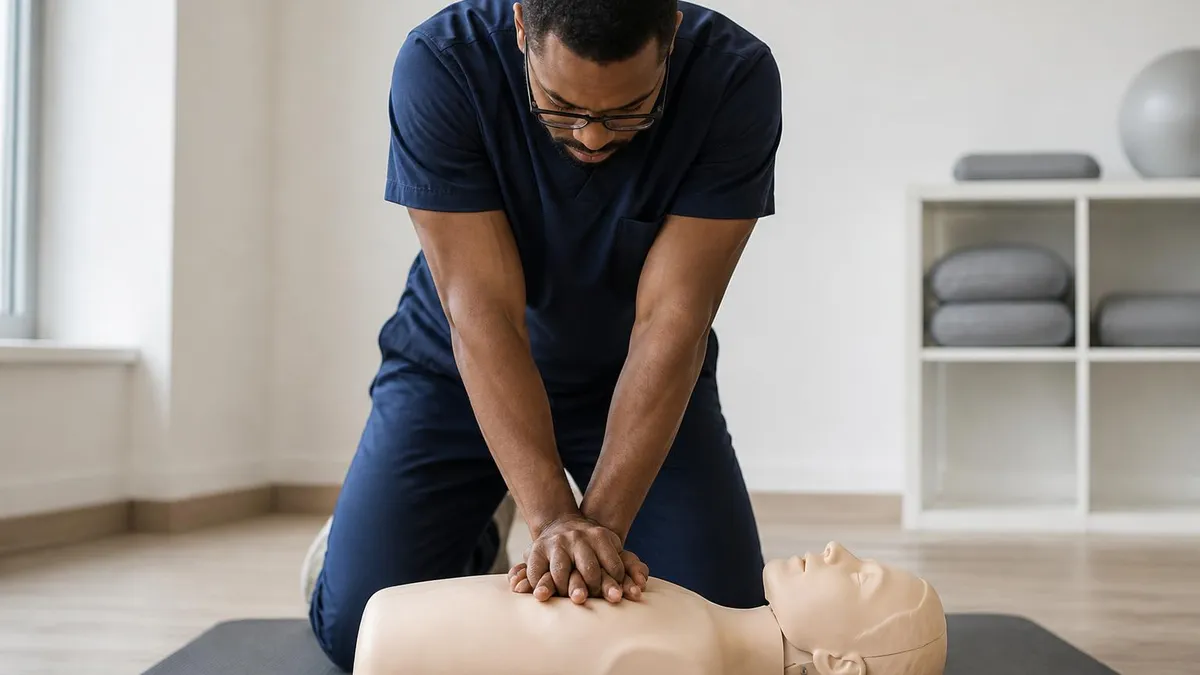
CPR Card Lookup: How to Verify, Replace, and Access Your CPR Certification in 2026
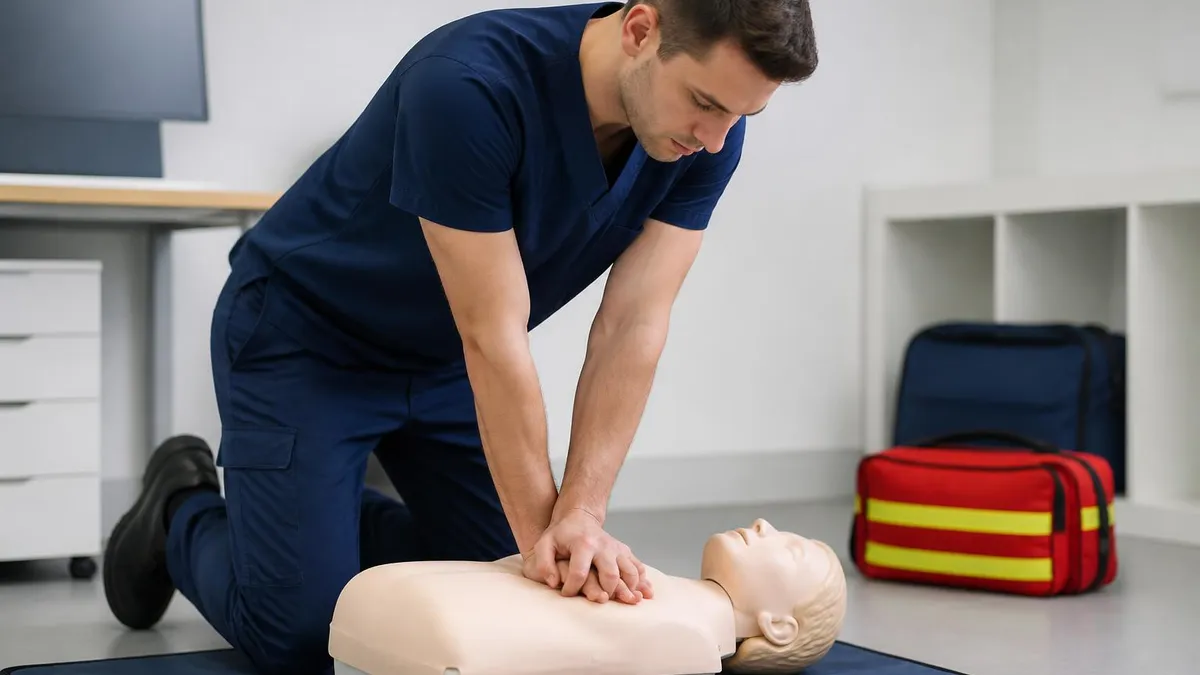
Adult CPR: Complete Step-by-Step Guide to Hands-Only and Standard CPR in 2026
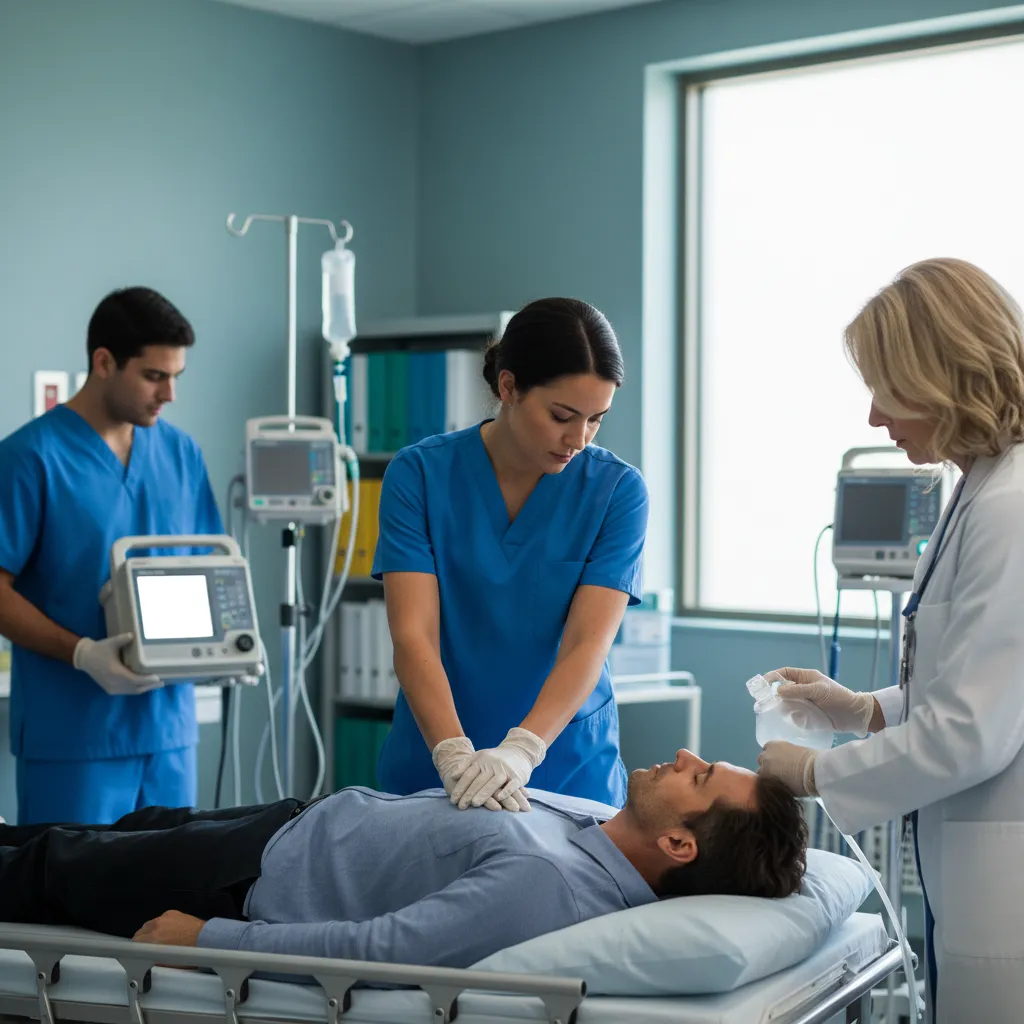
CPR - Cardiopulmonary Resuscitation: Complete Study Guide 2026
Inappropriate CPR Songs: What Not to Play, Why It Matters, and Better Beat-Per-Minute Alternatives
AHA CPR Recertification: How to Recertify CPR Online with the American Heart Association in 2026
About the Author

Registered Nurse & Healthcare Educator
Johns Hopkins University School of NursingDr. Sarah Mitchell is a board-certified registered nurse with over 15 years of clinical and academic experience. She completed her PhD in Nursing Science at Johns Hopkins University and has taught NCLEX preparation and clinical skills courses for nursing students across the United States. Her research focuses on evidence-based exam preparation strategies for healthcare certification candidates.
Join the Discussion
Connect with other students preparing for this exam. Share tips, ask questions, and get advice from people who have been there.
View discussion (5 replies)