
BLS CPR Certification Classes: Complete Study Guide and Certification Prep Hub for 2026 September
🏆 BLS CPR certification classes: formats, costs, skills, AED & infant CPR. Study guide to pass your BLS exam and earn certification in 2026 September.
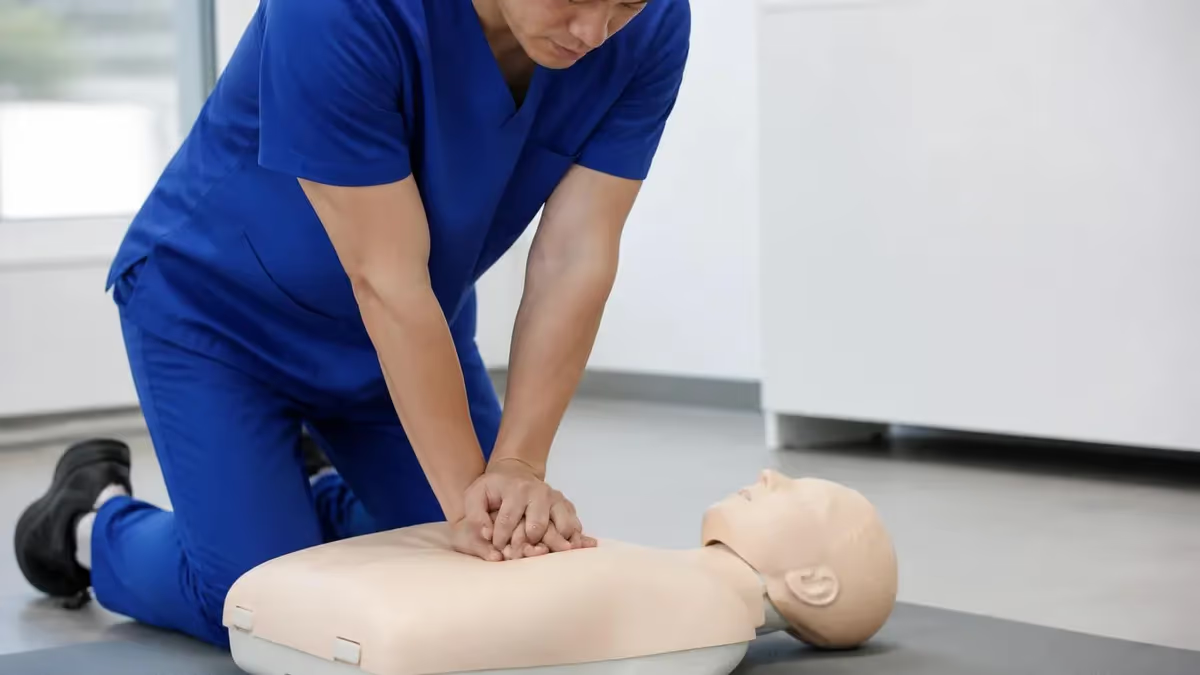
When you search for bls cpr certification classes, you are stepping into one of the most practical and lifesaving training paths in healthcare. Basic Life Support, commonly shortened to BLS, builds directly on standard CPR by adding team-based resuscitation skills, two-rescuer techniques, and structured airway management. Healthcare workers, nursing students, paramedics, lifeguards, and even office safety officers complete these courses every year. This guide acts as a certification prep hub, walking you through formats, costs, skills, and study strategies so you arrive on exam day confident and fully prepared.
The demand for quality bls cpr certification classes has grown sharply because hospitals, clinics, and emergency systems now require providers to demonstrate measurable competence rather than simply attend a lecture. Modern courses blend online modules with hands-on skills checks on a manikin. You learn high-quality chest compressions, proper depth and rate, effective ventilations, and how to integrate an automated external defibrillator. If you have ever wondered what does aed stand for, you will master that and far more inside a structured BLS program designed around the latest resuscitation science.
A strong foundation begins with understanding terminology, which is why many learners first review the bls cpr certification classes fundamentals before enrolling. BLS courses teach the chain of survival: early recognition, early CPR, rapid defibrillation, advanced care, and recovery. Each link matters. A delay of even one minute in starting compressions can reduce survival meaningfully, which is why instructors drill timing, hand placement, and minimizing interruptions until the motions feel automatic and you can perform them under realistic pressure.
These classes are not only for clinical staff. Teachers, coaches, gym employees, daycare workers, and corporate first responders increasingly pursue certification to meet workplace safety mandates. The skills translate across age groups, covering adults, children, and infants, with adjustments in compression depth, hand technique, and ventilation volume. Knowing infant cpr specifically can mean the difference between life and death in a daycare or pediatric setting, where airway sizes and bone flexibility demand a gentler, more precise approach than adult resuscitation requires.
Most reputable bls cpr certification classes follow guidelines published by major resuscitation councils and are recognized nationwide by employers. Providers such as the national cpr foundation and other accredited organizations issue credentials valid for roughly two years. Choosing an accepted provider is critical because an unrecognized card may force you to retake training. Throughout this hub we highlight what to verify before paying, how blended learning works, and how to confirm your certificate satisfies your employer or licensing board without unwelcome surprises later.
By the end of this article you will understand exactly how BLS compares to standalone CPR, what the skills test involves, how much you should budget, and how to study efficiently in the days leading up to your session. We also link related guides on adult technique, course types, and the broader life support family including pals certification and the acls algorithm. Whether you are certifying for the first time or renewing, this resource gives you the roadmap to pass on your first attempt and walk away genuinely capable of saving a life.
BLS CPR Certification by the Numbers
BLS Class Structure, Formats & Costs
Complete the knowledge portion online at your own pace, then attend a short in-person skills session on a manikin. This popular format balances flexibility with the hands-on evaluation that clinical employers require for a valid card.
Theory and skills are taught together in a single instructor-led session lasting three to four hours. Ideal for visual learners and complete beginners who want immediate feedback and the chance to ask questions throughout the course.
Shorter course for those holding a current card, often two hours or less. Focuses on refreshing skills and re-testing competence rather than re-teaching every concept from the ground up before expiration.
If you already passed a recognized knowledge portion, some centers let you demonstrate competence directly. This saves time but requires that your employer accepts the issuing provider, so verify recognition first.
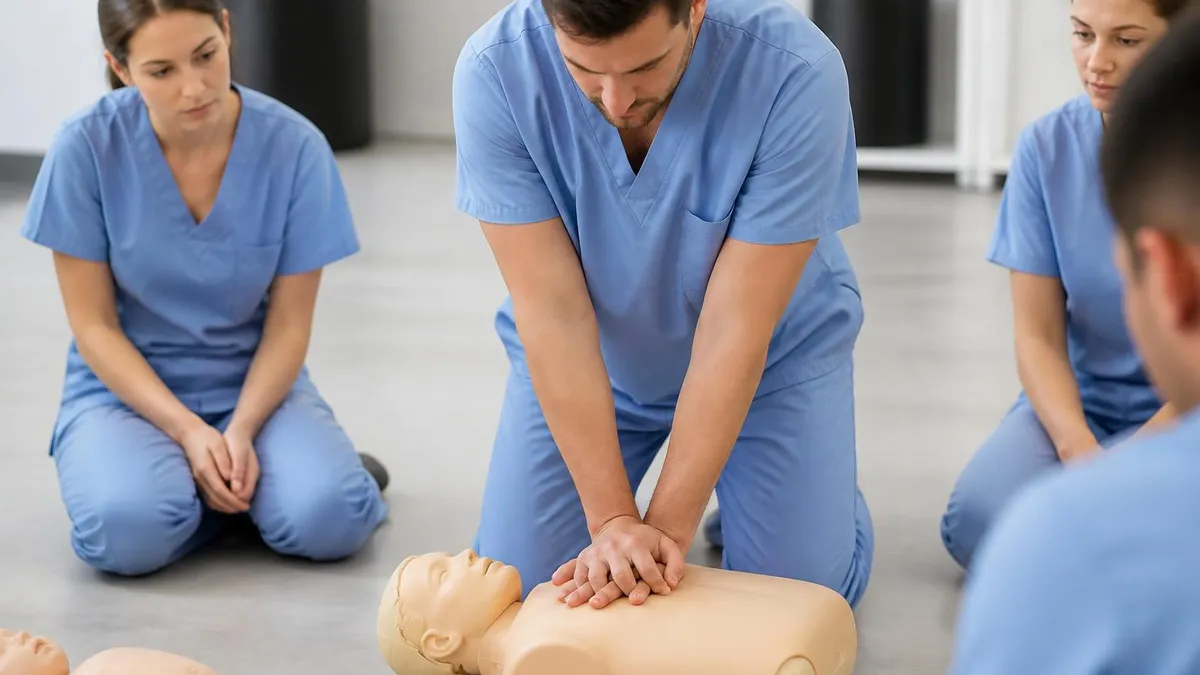
Understanding how bls cpr certification classes are structured helps you choose the right format and avoid wasting money. Most courses today use a blended model: an online knowledge portion you complete at home, followed by an in-person or virtual-instructor skills session. The online segment covers the science of resuscitation, recognition of cardiac arrest, and the steps for using an automated external defibrillator. The hands-on portion is where you prove competence on a manikin under the watchful eye of a certified instructor who corrects your technique in real time.
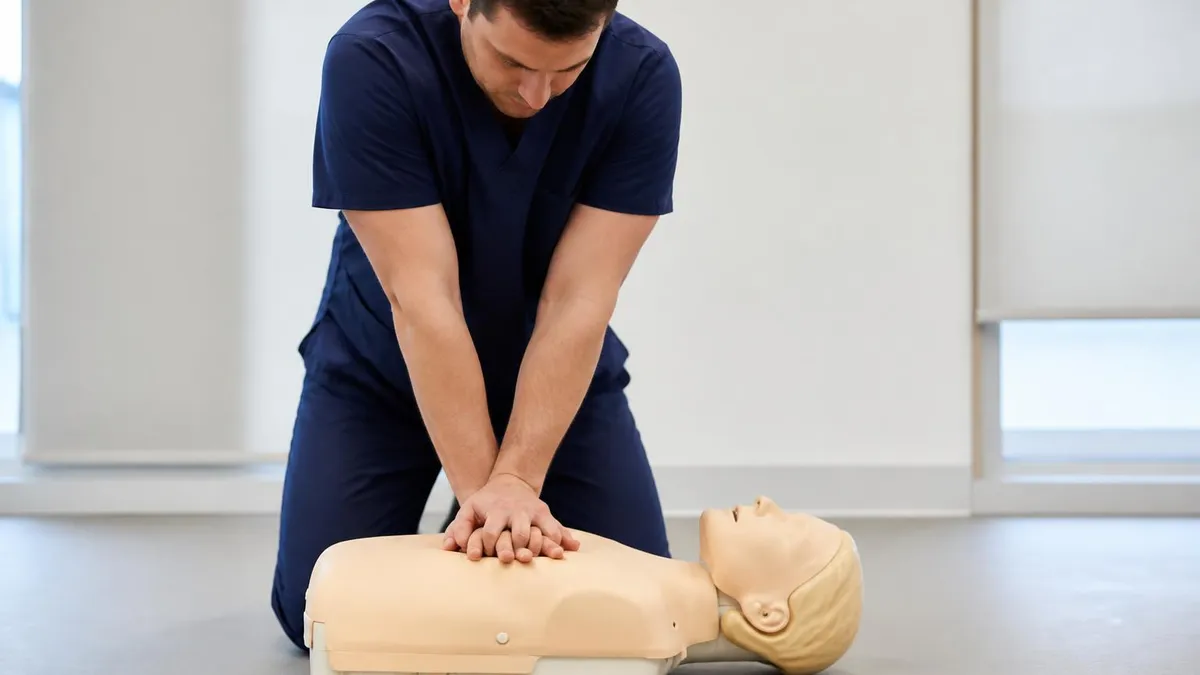
The skills evaluation is the heart of any BLS class. You must demonstrate high-quality compressions at a depth of at least two inches for adults, a rate between 100 and 120 per minute, and full chest recoil between pushes. You also show effective bag-mask ventilation, switch roles smoothly in two-rescuer scenarios, and operate an AED safely. Instructors watch for the most common errors, such as leaning on the chest, compressing too shallow, or pausing too long between cycles, and they will not pass you until these are corrected.
A full understanding of life support means recognizing where BLS sits in a larger family of credentials. After BLS, clinical professionals often pursue advanced training that includes the acls algorithm for adult cardiac emergencies or pals certification for pediatric patients. BLS is the prerequisite foundation for both. Knowing the difference helps you plan your career path, since an emergency nurse will eventually need all three, while a daycare worker may only ever require BLS with a strong emphasis on infant and child technique.
Class length varies by format and whether you are certifying or renewing. A first-time, in-person BLS course typically runs three to four hours of skills time on top of one to two hours of online study. Renewal courses are shorter because you already know the material, often finishing in two hours or less. Some accelerated same-day options compress everything into a single afternoon, which works well for experienced providers but can overwhelm complete beginners who benefit from spacing the learning across two sessions.
Verifying provider recognition before you pay protects both your wallet and your job. Reputable organizations issue cards accepted by hospitals, nursing programs, and licensing boards nationwide. Ask your employer which providers they accept, then confirm the class you are considering matches that list. Watch for purely online courses that promise certification without any hands-on skills check, because most clinical employers will reject those credentials. A legitimate BLS card always involves a live skills evaluation, even when the knowledge portion is delivered entirely online.
Cost is another factor worth understanding upfront. Pricing for bls cpr certification classes generally ranges from about forty dollars for a budget online-plus-skills option to over one hundred dollars for premium in-person group instruction. Renewal courses usually cost less than initial certification. Some employers cover the fee entirely or host on-site group sessions, which can dramatically reduce per-person pricing. Always confirm whether the quoted price includes the certification card, the skills check, and any required pocket mask or reference materials so there are no hidden charges.
Finally, consider the convenience and accessibility of your chosen format relative to your learning style and schedule. Visual learners often thrive in instructor-led settings where they can ask questions and receive immediate feedback, while self-directed learners may prefer completing theory online at their own pace. Whichever route you choose, remember that the goal is genuine competence, not just a card. The best class leaves you able to act decisively in a real emergency, which is ultimately why these certifications exist in the first place.
Adult, Child & Infant CPR: Respiratory Rate and Technique
Adult BLS focuses on compressions at least two inches deep at 100 to 120 per minute with full recoil. A normal adult respiratory rate sits around twelve to twenty breaths per minute, so during rescue ventilation you deliver one breath roughly every six seconds. The two-rescuer cycle uses a 30:2 compression-to-ventilation ratio until an advanced airway is placed, after which compressions become continuous with breaths layered in.
Recognition is the first skill. You check responsiveness, scan for normal breathing versus agonal gasps, and confirm pulselessness within ten seconds. Once arrest is confirmed, you begin compressions immediately and call for an AED. Minimizing interruptions is the single most important factor in survival, so instructors drill seamless rescuer switches and rapid AED pad placement to keep hands-on-chest time as high as possible throughout the entire resuscitation effort.
Online Blended vs Fully In-Person BLS Classes: Which Is Right for You?
- +Blended courses let you finish theory online at your own pace and on your own schedule
- +In-person skills sessions give immediate, hands-on instructor feedback on technique
- +Recognized provider cards are accepted by hospitals, nursing programs, and licensing boards
- +Group and employer-sponsored sessions can sharply reduce per-person cost
- +Renewal and skills-only options save time for experienced providers
- +Real manikin practice with feedback devices builds reliable muscle memory
- −Purely online courses without a live skills check are often rejected by clinical employers
- −Accelerated same-day classes can overwhelm complete beginners
- −Costs vary widely and may exclude the card, pocket mask, or materials
- −Skills decay within months without periodic practice or refreshers
- −An expired card can force a full re-certification instead of a short renewal
- −Unrecognized or discount providers may issue credentials your employer won't honor
BLS Skills Check Readiness Checklist for Life Support
- ✓Confirm scene safety before approaching the patient
- ✓Check responsiveness and shout for help immediately
- ✓Send someone to call emergency services and fetch the AED
- ✓Assess breathing and pulse within ten seconds
- ✓Begin compressions at least two inches deep at 100–120 per minute
- ✓Allow full chest recoil after every single compression
- ✓Deliver effective breaths with visible but not excessive chest rise
- ✓Place AED pads correctly and clear everyone during analysis
- ✓Announce rescuer switches clearly to minimize compression pauses
- ✓Demonstrate correct ratios for adult, child, and infant patients
High-quality compressions beat everything else
Studies consistently show that compression depth, rate, and full recoil—with minimal interruptions—are the strongest predictors of survival. Master the 100–120 per minute rhythm and at-least-two-inch depth, and you have already done the most important thing in any resuscitation.
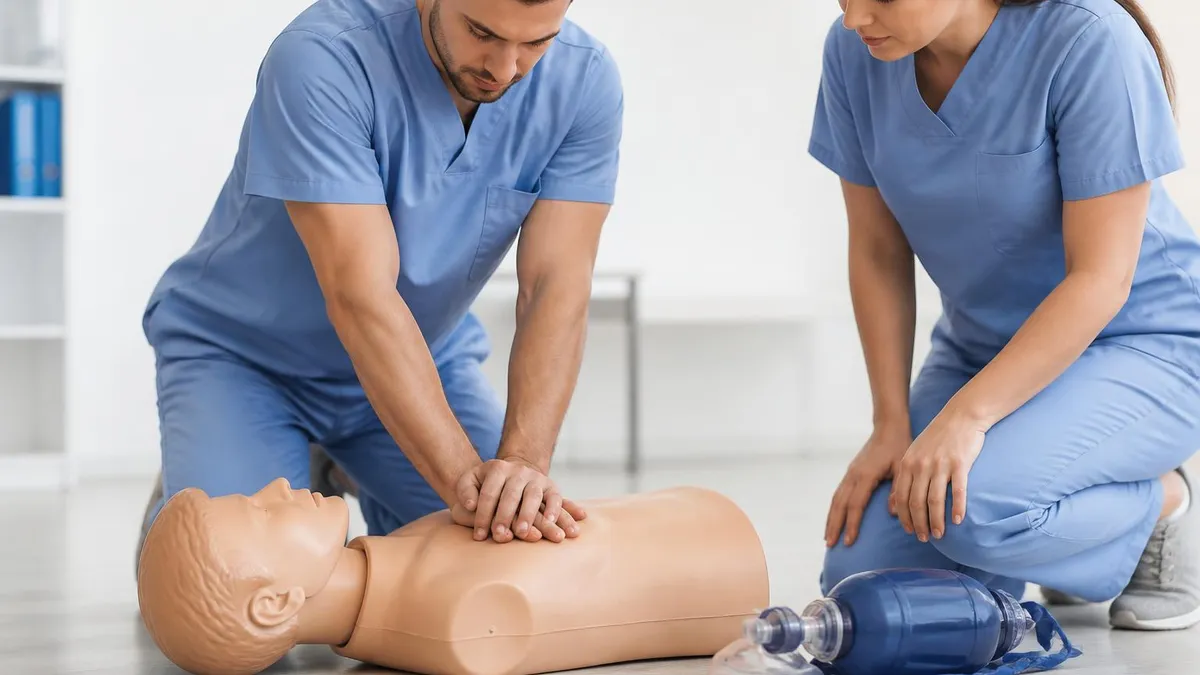
The skills check is where most nervous candidates focus their worry, but with preparation it becomes routine. The evaluator typically asks you to scene-size, confirm unresponsiveness, send someone to call emergency services and fetch the AED, then begin compressions within seconds. You will perform several cycles solo before a second rescuer joins, at which point you practice clean role swaps. Throughout, the manikin or a feedback device measures your depth, rate, and recoil, giving objective data the instructor uses to pass or coach you.
A common stumbling point is compression rate drift. Under stress, candidates tend to speed up past 120 per minute, which sacrifices depth and recoil. Practicing to the beat of a 100 to 120 bpm metronome or a familiar song trains your muscle memory so the correct tempo feels natural. Equally important is full chest recoil; leaning on the chest between compressions prevents the heart from refilling and reduces blood flow, so instructors remind you to lift your weight completely after every single push.
AED operation is tested as a discrete skill. You must turn the device on, expose and dry the chest, place pads correctly, ensure no one is touching the patient during analysis, and deliver a shock only when advised. Knowing what does aed stand for is just the beginning; the device walks you through every step with voice prompts, but the evaluator wants to see you follow them calmly and avoid dangerous mistakes like shocking someone who is touching the patient or applying pads over a medication patch.
Two-rescuer scenarios test communication as much as technique. You learn to announce switches clearly, count compressions aloud, and minimize the pause when changing roles. The bag-mask device requires a good seal, which many beginners find tricky; the evaluator looks for visible chest rise without excessive volume. When an advanced airway is in place in a clinical context, the team transitions to continuous compressions with asynchronous ventilations, a coordination skill that becomes second nature with deliberate practice and clear closed-loop communication among rescuers.
Choking and airway obstruction management often appear in the same course. For a responsive adult or child, you deliver abdominal thrusts until the object clears or the patient becomes unresponsive, at which point you begin CPR. For infants, you alternate back blows and chest thrusts. Recognizing the universal choking sign and acting fast separates a frightening but survivable event from a tragedy, which is why instructors integrate these scenarios alongside core resuscitation skills in a complete BLS curriculum.
Finally, the written or online knowledge test confirms you understand the why behind each action. Questions cover the chain of survival, compression metrics, AED safety, special populations, and recovery position management for patients who regain a pulse but remain unresponsive. The passing threshold is usually around eighty percent. Because the material is concrete and repetitive, most candidates who complete the online modules attentively pass comfortably, especially if they also work through realistic practice questions before sitting the assessment.
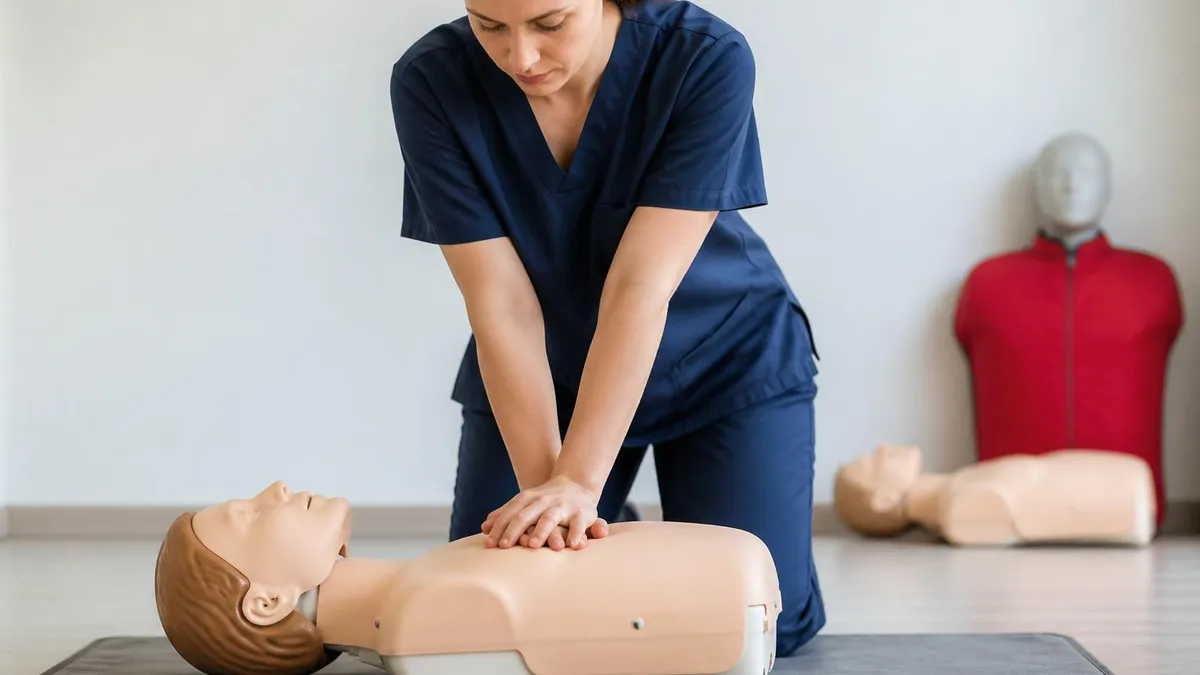
Most BLS cards are valid for only two years, and an expired credential can sideline you from clinical duties until you recertify. Letting it lapse often means retaking the full initial course instead of a shorter renewal. Set a calendar reminder ninety days before expiration so you have time to schedule.
Choosing between BLS and a general CPR class confuses many first-time learners, so it helps to clarify the distinction directly. A community CPR course teaches a single rescuer the essentials of compressions, breaths, and AED use, and it is perfect for parents, teachers, and bystanders. BLS goes further, adding two-rescuer coordination, bag-mask ventilation, pulse checks, and the team dynamics expected of healthcare providers. If your employer or program requires "Healthcare Provider" level training, you almost certainly need BLS rather than a basic course.
The terminology around providers can also be confusing. You may encounter the national cpr foundation, hospital-based training centers, community programs, and independent instructors all offering certification. What matters is recognition by the organization that will accept your card. Before enrolling, send a quick email or make a phone call to your HR department or nursing school to confirm which providers they honor. This five-minute step prevents the frustrating and costly experience of completing a class only to have the credential rejected.
For learners who serve specific populations, course emphasis matters. A pediatric clinic employee benefits from a class that drills child and infant cpr heavily, while an adult cardiac unit nurse should prioritize the acls algorithm pathway after completing BLS. Some providers offer combined CPR and first aid courses, which add wound care, bleeding control, and basic injury management. These bundles deliver excellent value for workplaces that want their staff prepared for a broad range of emergencies beyond cardiac arrest alone.
Renewal planning deserves attention well before your card expires. Most BLS certifications are valid for two years, and letting yours lapse can mean retaking the full initial course rather than a shorter renewal. Set a calendar reminder ninety days out so you have time to schedule, complete the online refresher, and book a skills session. Some employers track expiration dates for you, but never assume; an expired card can sideline you from clinical duties until you recertify, creating unnecessary stress and scheduling conflicts.
Accessibility has improved dramatically thanks to blended and skills-only options. If you already hold a valid card from another recognized provider, some centers offer a skills-only challenge that lets you demonstrate competence without repeating the full course. Voucher programs, group discounts, and employer-sponsored sessions further reduce cost and hassle. Investigate these before paying full price individually, especially if several coworkers need certification at the same time, since group rates can cut the per-person cost substantially while keeping everyone on the same schedule.
Beyond the card itself, think about retention. Skills decay measurably within months if never practiced, which is why some institutions now use brief, frequent refresher sessions rather than relying solely on the two-year cycle. Keeping a pocket mask handy, mentally rehearsing the steps, and occasionally watching technique videos all help maintain readiness. The ultimate purpose of any certification is the ability to respond effectively when seconds count, and that readiness is something you cultivate continuously, not just on the day you earn the credential.
With the structure and skills understood, the final piece is a smart preparation routine that gets you to exam day calm and capable. Start by completing the online modules at least three days before your skills session, not the night before. Spacing your study lets the material consolidate in memory, and it leaves room to revisit any concept that felt shaky. Treat the online portion as genuine learning rather than a box to tick, because everything you do hands-on builds directly on that foundation.
Practice the physical motions even without a manikin. You can rehearse compression hand placement and tempo on a firm couch cushion or a folded towel, counting aloud to lock in the 100 to 120 per minute rhythm. Mentally walk through the full sequence: check responsiveness, call for help, begin compressions, attach the AED, deliver breaths. This kind of mental rehearsal, used by athletes and surgeons alike, dramatically reduces freezing under pressure and helps the steps flow automatically when the evaluator starts your scenario.
Work through realistic practice questions to sharpen the knowledge portion. Quizzes that mirror the real format reinforce compression metrics, AED safety rules, choking response, and recovery position handling. Reviewing why each answer is correct cements understanding far better than rote memorization. Aim to consistently score above the passing threshold on practice sets before your assessment, and revisit any category where you repeatedly miss questions, whether that is pediatric ratios, respiratory rate norms, or the precise sequence of AED operation.
On the day before your session, prepare logistically so nothing derails you. Confirm the location, parking, and start time, and pack any required materials such as your online completion certificate, photo identification, and a pocket mask if requested. Wear comfortable clothing that lets you kneel and move freely, since compressions are physically demanding. A good night's sleep matters more than last-minute cramming; arriving rested and unhurried sets you up to perform the skills smoothly under the instructor's observation.
During the skills check itself, communicate clearly and do not rush. Verbalize each step so the evaluator knows your thought process, especially calling for help and confirming scene safety. If you make a small error, correct it calmly rather than panicking, because instructors evaluate your overall competence and decision-making, not perfection. Remember that they want you to succeed and will often coach you toward the right technique. Treating the session as guided practice rather than a high-stakes trap reduces anxiety considerably.
After you pass, protect your investment by keeping your card accessible and noting the expiration date immediately. Save a digital copy, add a renewal reminder to your calendar, and consider periodic self-refreshers to fight skill decay. If your role expands toward advanced care, plan your next steps toward the acls algorithm or pals certification, both of which assume a solid BLS foundation. Most importantly, carry the quiet confidence that you can now act decisively in an emergency, which is the real reward behind every certification card.
CPR Questions and Answers
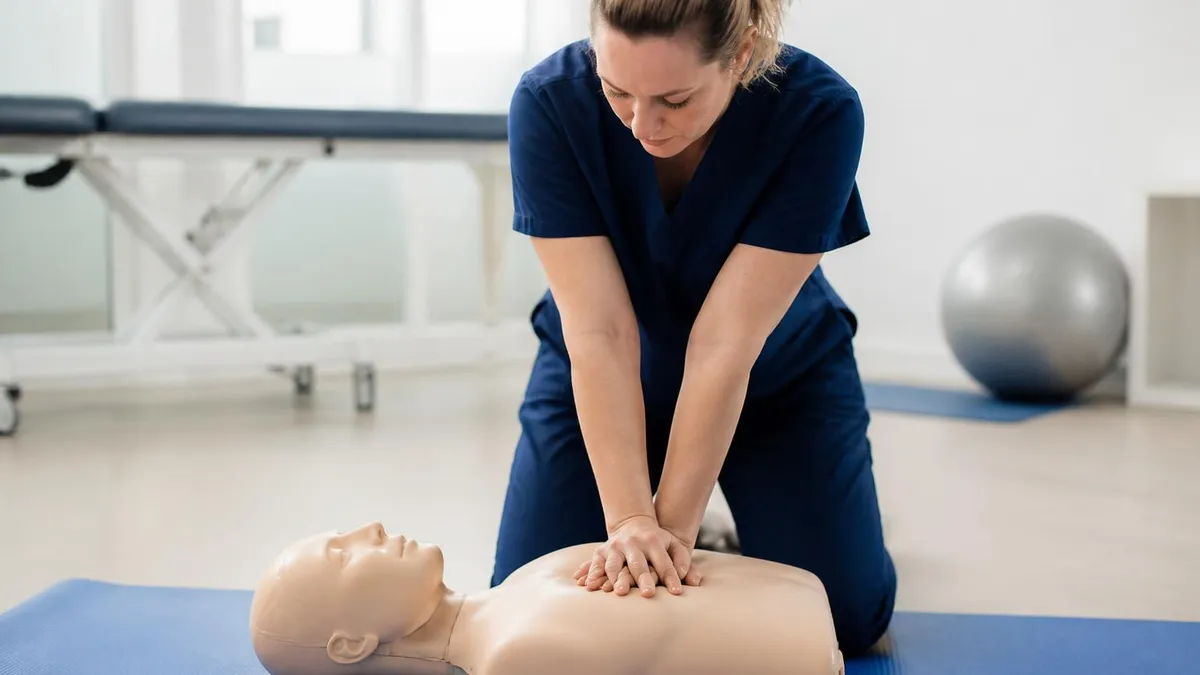
CPR Full Form: What CPR Stands For and Why It Matters
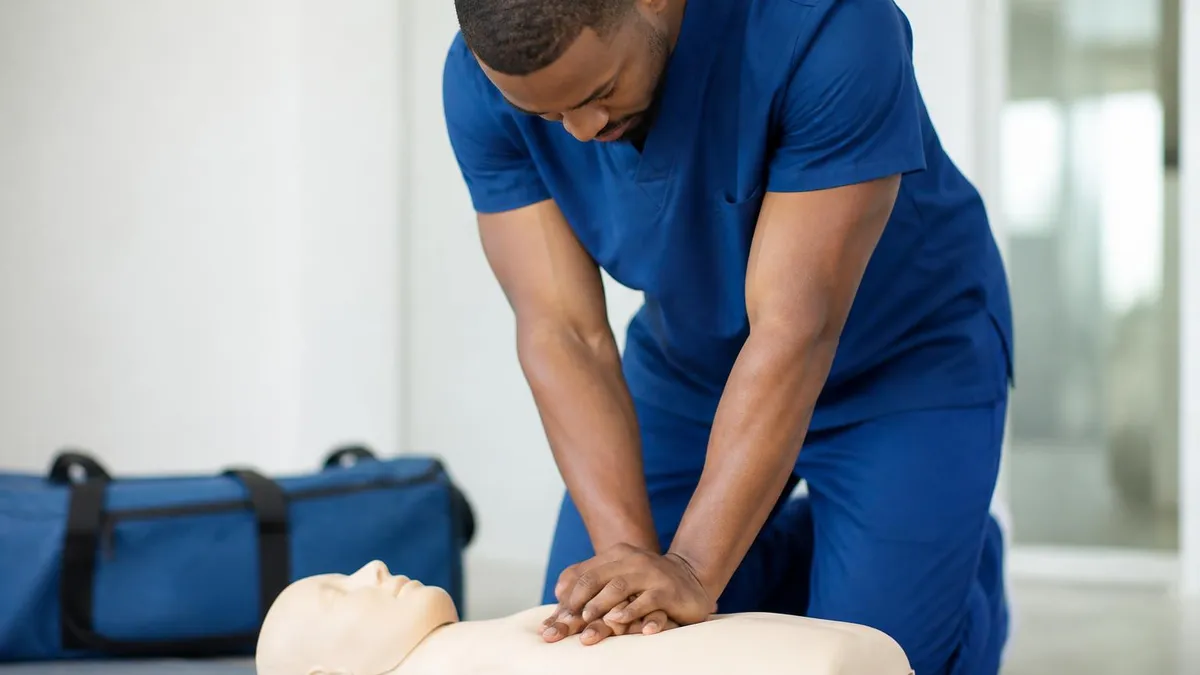
CPR Courses: Complete Guide to ACLS Algorithm, PALS Certification, and Life Support Training in 2026
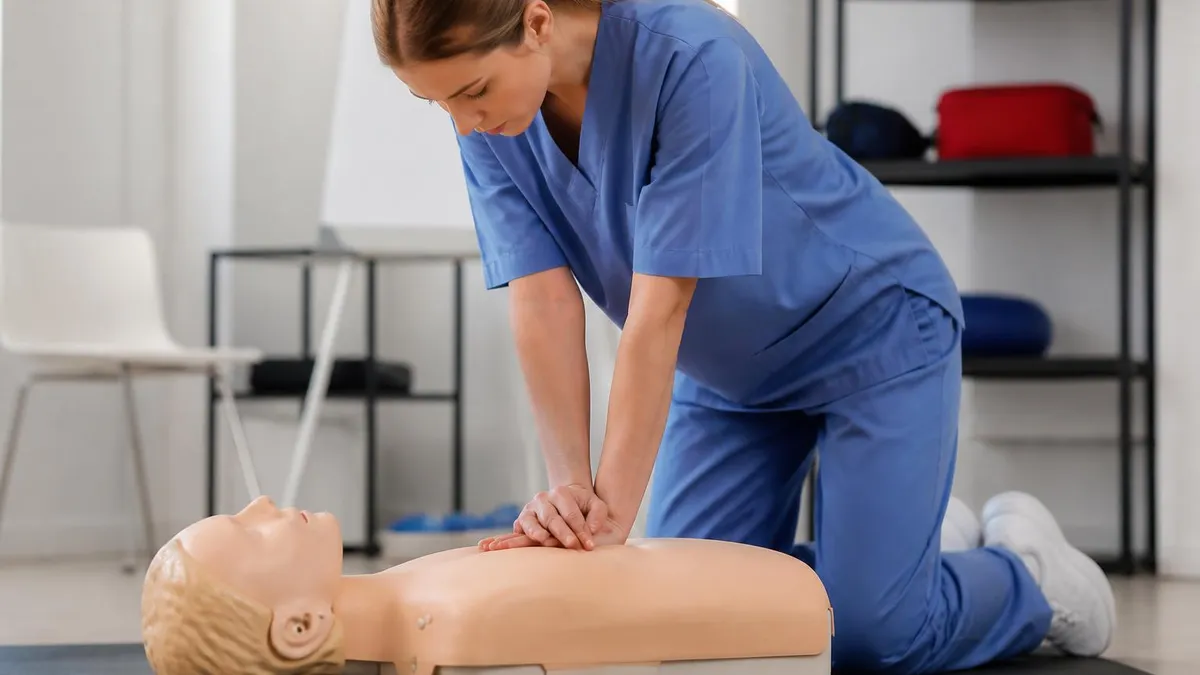
Types of CPR Training: From Basic Life Support to ACLS Algorithm Mastery in 2026
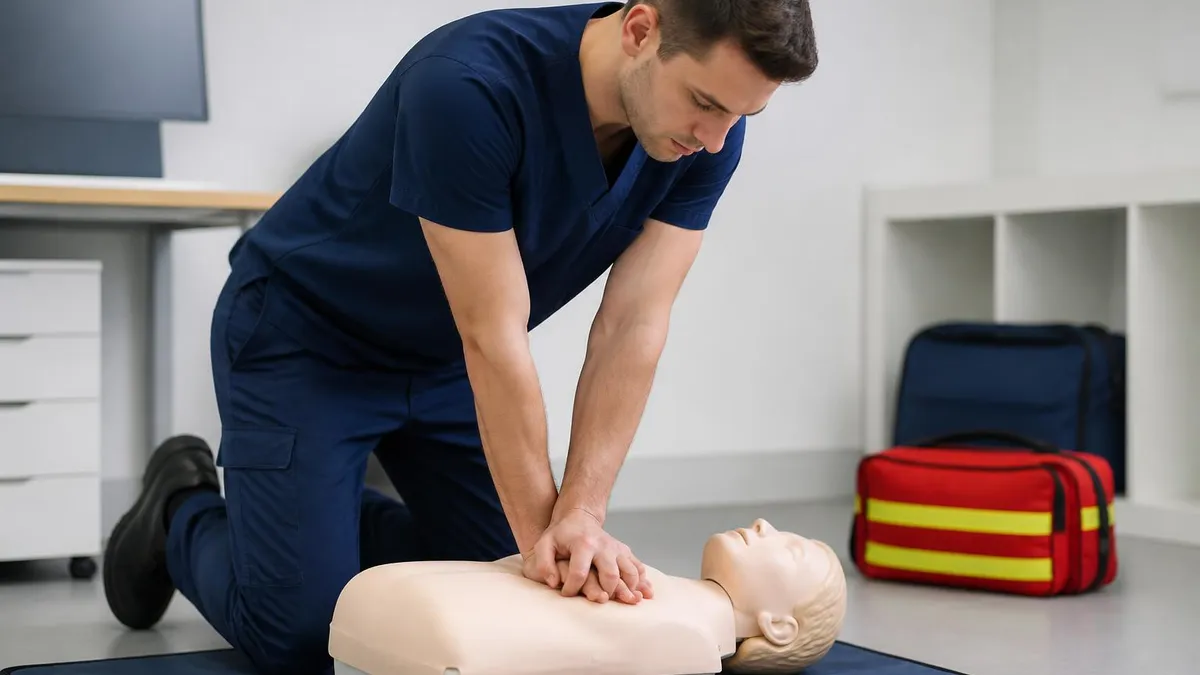
Adult CPR: Complete Step-by-Step Guide to Hands-Only and Standard CPR in 2026
BLS vs CPR: Is BLS the Same as CPR? Complete 2026 Guide
About the Author

Registered Nurse & Healthcare Educator
Johns Hopkins University School of NursingDr. Sarah Mitchell is a board-certified registered nurse with over 15 years of clinical and academic experience. She completed her PhD in Nursing Science at Johns Hopkins University and has taught NCLEX preparation and clinical skills courses for nursing students across the United States. Her research focuses on evidence-based exam preparation strategies for healthcare certification candidates.
Join the Discussion
Connect with other students preparing for this exam. Share tips, ask questions, and get advice from people who have been there.
View discussion (5 replies)