
AHA BLS CPR: Complete 2026 October Guide to American Heart Association Basic Life Support Certification, Course Requirements, and Skills
Complete AHA BLS CPR guide for 2026 October: ✍🏼 certification requirements, algorithms, skills checklist, costs, and exam tips for healthcare providers.
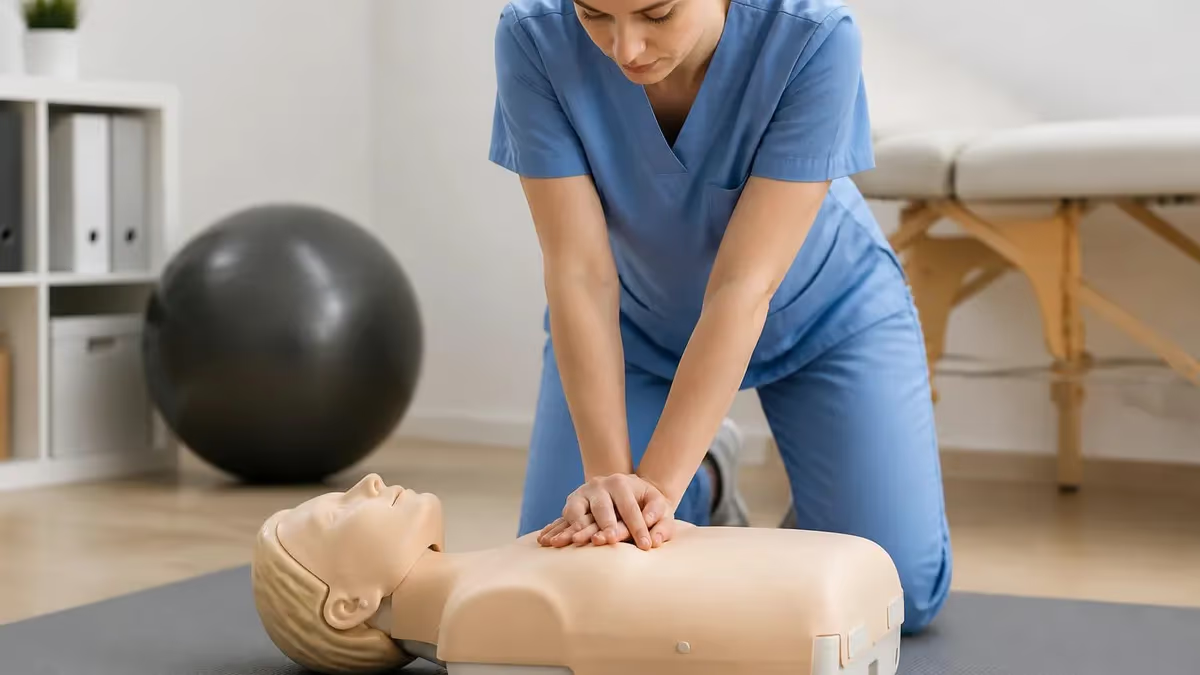
The aha bls cpr certification — formally known as the American Heart Association Basic Life Support course — is the gold standard credential for healthcare providers, first responders, lifeguards, and clinical students across the United States. It teaches the exact compression depth, ventilation ratios, and acls algorithm precursors that every emergency response depends on, and it is the single most requested certification in hospital job postings nationwide. Whether you are a nursing student preparing for clinicals or a paramedic renewing every two years, this credential anchors your scope of practice.
Unlike consumer-focused programs offered by the cpr fix phones distinction and other layperson tracks, AHA BLS is built for professional rescuers who must work as a team, manage advanced airways, and integrate with ACLS and PALS protocols. The course covers high-quality chest compressions, bag-mask ventilation, AED use, and recognition of cardiac arrest in adults, children, and infants. It also introduces the choking algorithm and the relief of foreign-body airway obstruction in conscious and unconscious victims.
This 2026 guide walks you through every component of the current AHA BLS curriculum, including the updated 2025 Guidelines emphasis on compression fraction above 80%, ventilation rates of 10 breaths per minute with an advanced airway, and the renewed focus on early defibrillation within two minutes. We also compare AHA BLS to alternatives like the national cpr foundation and the American Red Cross BLS program so you can pick the credential your employer actually accepts.
You will learn what a bls certification looks like in real clinical settings, how the skills test is scored, what to expect on the 35-question written exam, and how to renew without retaking the entire course. We break down costs ($60 to $110 in most cities), course length (roughly 4.5 hours blended or 4 hours classroom), and provider card validity (two years from issue date). Every figure cited here reflects current AHA pricing as of 2026.
Beyond mechanics, we cover the human side — how to lead a resuscitation team as code leader, how to communicate using closed-loop calls, and how to debrief after a save or a loss. These soft skills are now formally tested in the AHA BLS megacode scenario, and they often distinguish a certified provider from a confident one. We also include real numbers on how often BLS-certified bystanders actually intervene in public cardiac arrests.
By the end of this guide you will know exactly which AHA BLS course type fits your role (Provider, Instructor, or HeartCode blended learning), how to register through a certified Training Center, what to bring on exam day, and how to use your new card for higher-paying clinical positions. Let's start with the certification numbers that matter most.
AHA BLS CPR by the Numbers
AHA BLS CPR Course Structure & Format
The standard 4.5-hour classroom course for first-time learners. Includes lectures, video segments, hands-on skills practice with manikins, a written exam, and a one-on-one skills test administered by an AHA-certified instructor.
Self-paced online cognitive portion (about 1.5 to 2 hours) followed by an in-person skills session (roughly 60 to 90 minutes). Ideal for working professionals who prefer flexibility without sacrificing the hands-on requirement.
A condensed 3.5-hour refresher for current cardholders renewing before expiration. Skips foundational lectures but still requires passing both the written exam and the skills evaluation under instructor observation.
For experienced providers who want to teach AHA BLS. Requires current Provider card, completion of the Instructor Essentials course, and monitored teaching by a Training Center Faculty member before authorization.
What is a bls certification really worth in 2026? At its core, the AHA BLS card verifies that you can perform high-quality CPR on adults, children, and infants, operate an AED, relieve choking emergencies, and integrate seamlessly into a multi-rescuer resuscitation team. Hospitals, EMS agencies, dental offices, dialysis clinics, and physical therapy practices universally accept the AHA card as a baseline employment requirement. Many positions will not even schedule an interview without proof of current BLS.
The course curriculum is built around the 2020 AHA Guidelines updated with 2025 Focused Updates, which sharpened recommendations on compression depth (at least 2 inches for adults, no more than 2.4 inches), compression rate (100 to 120 per minute), full chest recoil between compressions, and minimizing interruptions to keep compression fraction above 80%. These metrics are not memorization trivia — they are tested live during your skills station, where a feedback manikin measures your performance in real time.
Ventilation training has evolved as well. With an advanced airway in place, providers now deliver one breath every 6 seconds (10 per minute) while compressions continue uninterrupted. Without an advanced airway, the 30:2 compression-to-ventilation ratio remains the standard for single rescuers, while two-rescuer pediatric CPR shifts to 15:2. The course also covers proper bag-mask seal technique, including the E-C clamp method and the two-person bag-mask approach for difficult airways.
Recognition of arrest is the first algorithmic step in every BLS scenario. The course teaches you to simultaneously check for responsiveness, normal breathing, and a carotid pulse within 10 seconds. Agonal gasps — irregular, snoring-like breaths seen in roughly 40% of witnessed cardiac arrests — must be recognized as a sign of arrest, not breathing. Mistaking agonal respirations for normal breathing is the single most common reason bystanders delay CPR in field studies.
The BLS algorithm also addresses opioid-associated emergencies, which now account for over 80,000 U.S. deaths annually. AHA BLS providers are trained to administer intramuscular naloxone if available, continue CPR if pulseless, and recognize that opioid overdose typically presents as respiratory arrest before cardiac arrest. Early ventilation and naloxone can sometimes reverse the situation before pulse loss occurs, which is why BLS providers are now expected to identify and respond to suspected overdoses.
Team dynamics are formally tested through the megacode scenario. You will rotate through roles — compressor, ventilator, AED operator, and team leader — practicing closed-loop communication, clear role assignment, and constructive intervention. The AHA evaluates how you swap compressors every two minutes to prevent fatigue (compression quality drops after 90 seconds) and how you announce shocks, pulse checks, and rhythm changes without confusion.
Finally, AHA BLS is the prerequisite gateway to advanced courses. You cannot enroll in ACLS or PALS without a current BLS Provider card. Many hospitals require all three credentials for critical-care nursing, emergency department roles, and rapid-response team membership. Treat your BLS card as the foundation of your professional resuscitation training portfolio.
CPR Practice Test Questions
Prepare for the CPR Cardiopulmonary Resuscitation Practice exam with our free practice test modules. Each quiz covers key topics to help you pass on your first try.
CPR Basic CPR
CPR Exam Questions covering Basic CPR. Master CPR Test concepts for certification prep.
CPR and First Aid
Free CPR Practice Test featuring and First Aid. Improve your CPR Exam score with mock test prep.
CPR (Cardiopulmonary Resuscitation) Adult ...
CPR Mock Exam on (Cardiopulmonary Resuscitation) Adult CPR and AED Usage. CPR Study Guide questions to pass on your first try.
CPR (Cardiopulmonary Resuscitation) Airway...
CPR Test Prep for (Cardiopulmonary Resuscitation) Airway Obstruction and Choking. Practice CPR Quiz questions and boost your score.
CPR (Cardiopulmonary Resuscitation) Cardio...
CPR Questions and Answers on (Cardiopulmonary Resuscitation) Cardiopulmonary Emergency Recognition. Free CPR practice for exam readiness.
CPR (Cardiopulmonary Resuscitation) Child ...
CPR Mock Test covering (Cardiopulmonary Resuscitation) Child and Infant CPR. Online CPR Test practice with instant feedback.
CPR (Cardiopulmonary Resuscitation) High-P...
Free CPR Quiz on (Cardiopulmonary Resuscitation) High-Performance Team Dynamics. CPR Exam prep questions with detailed explanations.
CPR (Cardiopulmonary Resuscitation) Legal ...
CPR Practice Questions for (Cardiopulmonary Resuscitation) Legal and Ethical Considerations. Build confidence for your CPR certification exam.
CPR for Specific Populations
CPR Test Online for for Specific Populations. Free practice with instant results and feedback.
CPR Airway & Breathing Management
CPR Exam Questions covering Airway & Breathing Management. Master CPR Test concepts for certification prep.
CPR Assessment & Recognition of Cardiac Ar...
Free CPR Practice Test featuring Assessment & Recognition of Cardiac Arrest. Improve your CPR Exam score with mock test prep.
CPR Chest Compressions & Defibrillation
CPR Mock Exam on Chest Compressions & Defibrillation. CPR Study Guide questions to pass on your first try.
CPR Post-Resuscitation Care & Recovery
CPR Test Prep for Post-Resuscitation Care & Recovery. Practice CPR Quiz questions and boost your score.
BLS Algorithm by Patient Age and Infant CPR Specifics
For adults and adolescents past puberty, the AHA BLS algorithm starts with scene safety, assessment, and activation of emergency response. Compressions are performed at the lower half of the sternum, at least 2 inches deep, at 100 to 120 per minute, with complete chest recoil between each compression. The compression-to-ventilation ratio is 30:2 without an advanced airway in place.
AED pads are placed in the anterolateral position — one upper-right chest below the clavicle, the other on the left mid-axillary line. The acls algorithm builds directly on this foundation, adding rhythm interpretation, vasopressors, and antiarrhythmics, but the underlying BLS performance metrics never change. High-quality compressions remain the most outcome-determinative intervention even after ACLS protocols engage.
AHA BLS vs Other CPR Certifications: Pros and Cons
- +Universally accepted by U.S. hospitals, EMS agencies, and clinical employers without exception
- +Builds directly into ACLS and PALS advanced courses with consistent algorithm logic
- +Includes hands-on skills test that validates real-world competence, not just theory
- +Updated to 2025 Focused Guidelines including opioid response and ventilation rate refinements
- +Two-year card validity matches most credentialing and renewal cycles in healthcare
- +Available in flexible blended-learning format that fits working professional schedules
- +Provider card is searchable in the AHA eCard database for instant employer verification
- −Higher cost than online-only certifications, typically $60 to $110 per course
- −Requires in-person skills check, which can be inconvenient in rural areas
- −Initial provider course runs 4 to 5 hours and cannot be fully self-paced
- −Some Training Centers add proctoring or facility fees on top of base tuition
- −Renewal still requires in-person skills test even for experienced providers
- −Course materials are not free — student manuals run $18 to $22 separately

AHA BLS CPR Skills Test Checklist
- ✓Verify scene safety and don personal protective equipment before approaching the victim
- ✓Check responsiveness with shoulder tap and shout, then activate emergency response
- ✓Assess breathing and carotid pulse simultaneously within 10 seconds
- ✓Begin compressions within 10 seconds of recognizing cardiac arrest
- ✓Compress at least 2 inches deep at 100 to 120 per minute with full recoil
- ✓Deliver two breaths over one second each with visible chest rise after 30 compressions
- ✓Apply AED pads in correct anterolateral placement once device arrives
- ✓Clear the patient verbally and visually before delivering each shock
- ✓Switch compressors every two minutes during rhythm checks to maintain quality
- ✓Demonstrate two-rescuer pediatric CPR using 15:2 ratio and bag-mask ventilation
- ✓Perform infant chest compressions using two-thumb encircling hands technique
- ✓Relieve choking in conscious adult using abdominal thrusts until obstruction clears
Keep hands on the chest above 80% of the code
The single strongest predictor of survival in cardiac arrest is compression fraction — the percentage of code time spent actively compressing. AHA targets above 80%, but field studies show most teams hover around 60% to 65% without coaching. Every 10-second pause for pulse checks, intubation, or rhythm analysis cuts coronary perfusion pressure dramatically, requiring 15 to 30 seconds of resumed compressions just to recover the baseline.
What does aed stand for? Automated External Defibrillator — the single most impactful intervention available to BLS providers. An AED analyzes the heart's rhythm and delivers a calibrated shock to terminate ventricular fibrillation or pulseless ventricular tachycardia. Defibrillation within the first three to five minutes of collapse yields survival rates as high as 70% in witnessed arrests; every minute of delay drops survival by approximately 7% to 10%. Time to first shock is therefore one of the most rigorously tracked metrics in resuscitation.
AHA BLS providers learn to apply AED pads while compressions continue, minimizing hands-off time. Adult pads go on a child older than 8 or weighing more than 55 pounds. For children under 8, pediatric pads or a pediatric dose attenuator are preferred, but adult pads are acceptable when pediatric pads are unavailable. Pads must not touch each other; on small chests, anterior-posterior placement prevents overlap and ensures effective current vectoring through the myocardium.
Special situations matter on the exam. For a hairy chest interfering with pad adhesion, remove hair quickly with the kit's razor or by pressing pads firmly and ripping them off to depilate, then applying a fresh set. For a wet chest, towel-dry briskly. For a patient with an implanted pacemaker or ICD, place pads at least one inch away from the visible bulge. For transdermal medication patches, remove the patch and wipe the skin before pad placement to avoid burns.
The AHA emphasizes "shock first vs CPR first" decision-making based on witnessed status. For a witnessed adult collapse with an AED immediately available, defibrillate first. For unwitnessed arrest or when the AED is more than a minute away, start compressions immediately and shock as soon as the device is ready. This bias toward early compressions reflects the metabolic decay of myocardial tissue and the importance of priming the heart with perfusion before defibrillation.
Public Access Defibrillation programs have transformed outcomes in airports, casinos, gyms, and schools. Locations with AED programs see survival rates of 41% or higher for witnessed shockable arrests, compared to 9% to 12% nationally. The AHA BLS course includes scenarios on locating and using publicly available AEDs, and learners are encouraged to map AEDs in their workplaces using crowdsourced apps like PulsePoint AED. Familiarity with your local AED network can shave critical minutes off response time.
Children and infants present unique AED considerations. Pediatric pads deliver a lower-energy shock (typically 50 joules versus 120 to 200 joules for adults) and place differently due to small body size. The AHA explicitly states that no AED use is preferable to delayed CPR — meaning if the AED setup takes more than 30 seconds, return to compressions and apply pads as you continue chest compressions when possible.
Maintenance of public AEDs is part of the BLS knowledge base for facility-based providers. Batteries last 2 to 5 years depending on model; pads expire every 18 to 30 months. AHA-certified providers in workplace roles are often the de facto AED stewards, expected to check status indicators monthly and replace consumables before they expire. A non-functional AED during an arrest is medicolegally indefensible if maintenance logs are absent.
As of 2025, virtually all U.S. hospitals verify AHA eCards through the official AHA Atlas database — paper cards are no longer accepted by Joint Commission-accredited facilities. If you completed your course before 2018 and still hold a paper card, retake the course to receive an eCard. Employers will not honor unverifiable credentials regardless of how recently the paper card was issued.
Renewing your AHA BLS card is straightforward if you plan ahead. The renewal course runs 3.5 hours and assumes you already know the foundational material. You will review the algorithm, refresh skills on the manikin, and complete the same 35-question written exam and skills station. Pass both and a new two-year eCard is issued, typically within 20 days of course completion. AHA recommends scheduling renewal 30 to 60 days before expiration to avoid any lapse in your professional credentialing.
If your card expires by more than 30 days at most Training Centers, you must take the full Provider course rather than the renewal version. Hospital credentialing offices are strict about lapsed cards — even a one-day expired card may disqualify you from clinical assignments until renewal is complete. Set a calendar reminder for 90 days before expiration to give yourself buffer time for scheduling, registration, and instructor availability, especially around peak hospital orientation seasons.
Cost-wise, renewal typically runs $55 to $85, slightly less than the initial Provider course. Some employers cover the cost directly or reimburse upon submission of the eCard. Travel nurses and contract therapists should keep digital copies of every eCard and the AHA eCard QR-verification page, since recruiters frequently request immediate proof during onboarding. The eCard system also lets you forward your credentials directly to a credentialing office via email link.
Career impact is significant. Holding a current AHA BLS card opens entry-level clinical roles ranging from medical assistant ($38,000 to $48,000) to emergency room technician ($42,000 to $58,000), patient care technician ($36,000 to $46,000), and registered nurse ($75,000 to $110,000+). For experienced providers, BLS is a launchpad to ACLS-only roles such as cath lab technician, critical care RN, and rapid response team member, all of which command premium salaries and shift differentials.
Becoming a BLS instructor adds another revenue stream. After completing the Instructor Essentials course and being authorized by an AHA Training Center, you can teach Provider and renewal classes either as an employee or as an independent contractor. Instructor pay ranges from $25 to $75 per hour depending on region and class size. Many emergency medicine professionals supplement their income through evening and weekend BLS classes; explore normal average respiratory rate in adults and instructor career pathways for a deeper breakdown.
Life support training also supports your continuing education portfolio. Many state nursing boards and EMS regulatory agencies accept AHA BLS hours as continuing education credit toward license renewal. Document each renewal carefully in your personal credentialing file alongside ACLS, PALS, and any specialty courses like NRP (Neonatal Resuscitation) or TNCC (Trauma Nursing Core Course). A well-organized credential portfolio accelerates job offers and credential verifications during cross-state licensure.
Finally, treat the renewal as more than a checkbox. Algorithms evolve every five years and quietly between updates. The 2025 Focused Updates introduced ventilation rate changes for advanced airways and clarified opioid-associated arrest pathways. Coming to renewal prepared — having reviewed the latest guidelines and practiced on a feedback manikin if possible — turns a routine course into a meaningful refresh of skills that may someday save a life in your hallway, lobby, or living room.
Practical preparation for the AHA BLS course starts with mindset. Treat the course not as an obstacle to clear but as a clinical skill rehearsal you will perform under stress at 3 a.m. someday. Read the Provider Manual or watch the HeartCode online modules at least twice. Practice the compression rate by counting along with a metronome app set to 110 bpm; the song "Stayin' Alive" famously hits that range and serves as a reliable mental tempo cue when no metronome is available.
Arrive at the in-person session rested, fed, and hydrated. Skills stations are physically demanding — five minutes of continuous compressions at proper depth is genuinely exhausting, and instructors will catch fatigue-related performance drops. Wear comfortable, loose-fitting clothes and closed-toe shoes; avoid bulky jewelry that interferes with hand placement. Bring your photo ID, course confirmation email, and any pre-course completion certificate if you used HeartCode blended learning before the skills appointment.
The written exam contains 35 multiple-choice questions covering algorithms, ratios, depths, AED use, choking, and team dynamics. The passing score is 84% (29 of 35 correct). You may use the Provider Manual during the test in many Training Centers, but you cannot use it during the skills station. Read each question carefully — common traps include age cutoffs (puberty distinguishes child from adult), single-rescuer versus two-rescuer ratios, and the difference between agonal gasps and normal breathing.
Skills station tips: speak your actions aloud. Instructors score what they observe, and verbalizing "scene is safe," "calling 911," "no normal breathing," "no pulse," "starting CPR" makes your decision tree explicit and unmistakable. Count compressions out loud ("1, 2, 3... 30") so the rate is verifiable. Announce shock delivery clearly: "Clear! I'm clear, you're clear, oxygen clear — shock delivered." Demonstrative communication is part of the rubric and often the difference between a pass and a remediation.
If you fail any portion, you get one remediation attempt the same day or within a short window depending on your Training Center's policy. Failure is rare — first-time pass rates run around 84% nationwide — but it does happen, most often on the choking station or two-rescuer infant CPR. Ask the instructor for specific feedback, practice the failed skill on the manikin for 10 minutes, and retake. There is no permanent mark; only a passing record is reported to AHA.
After certification, integrate BLS into your daily clinical mental model. Note AED locations whenever you enter a new building. Review your hospital's code blue protocol within your first week. Volunteer for mock codes — facilities running quarterly simulations show measurably better real-code outcomes. Periodically revisit the algorithm so you stay sharp; many providers forget the ventilation rate change with an advanced airway within 90 days of certification. Continuous low-stakes review prevents that decay.
Finally, recognize that BLS is one piece of a larger emergency response system. Effective bystander CPR triples survival, but only when paired with rapid EMS activation, early defibrillation, and post-arrest care. Talk about BLS with family and coworkers. Share what you learned — encourage non-clinical friends to take Heartsaver CPR or Hands-Only CPR. The more trained rescuers in any given building, the higher the chance of a survival outcome when minutes count. Your card is not just paperwork; it is a community asset.
CPR Questions and Answers
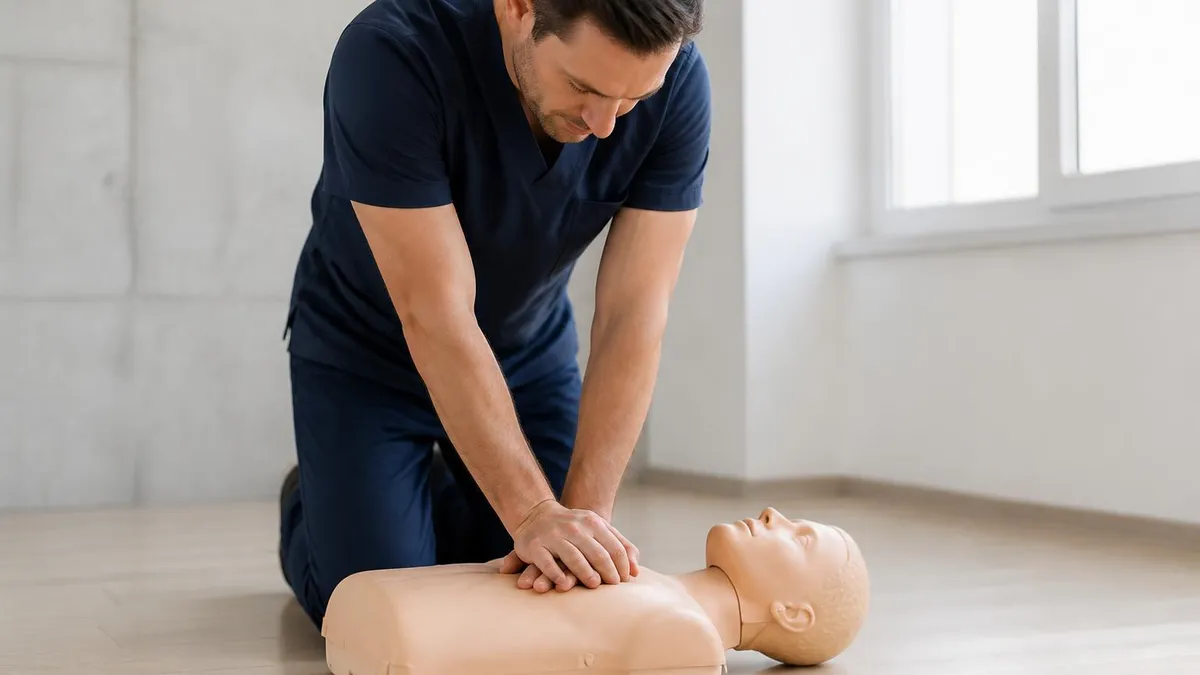
CPR vs BLS: Complete Comparison Guide for 2026 — Which Certification Do You Need?
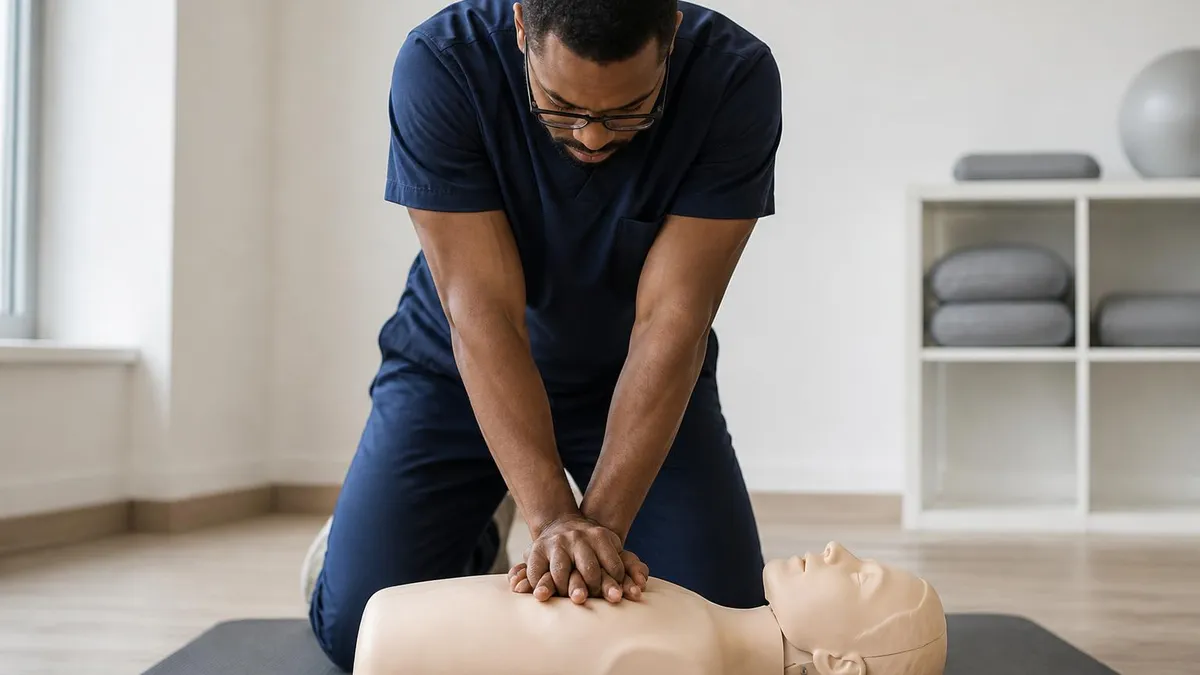
CPR Card Lookup: How to Verify, Replace, and Access Your CPR Certification in 2026
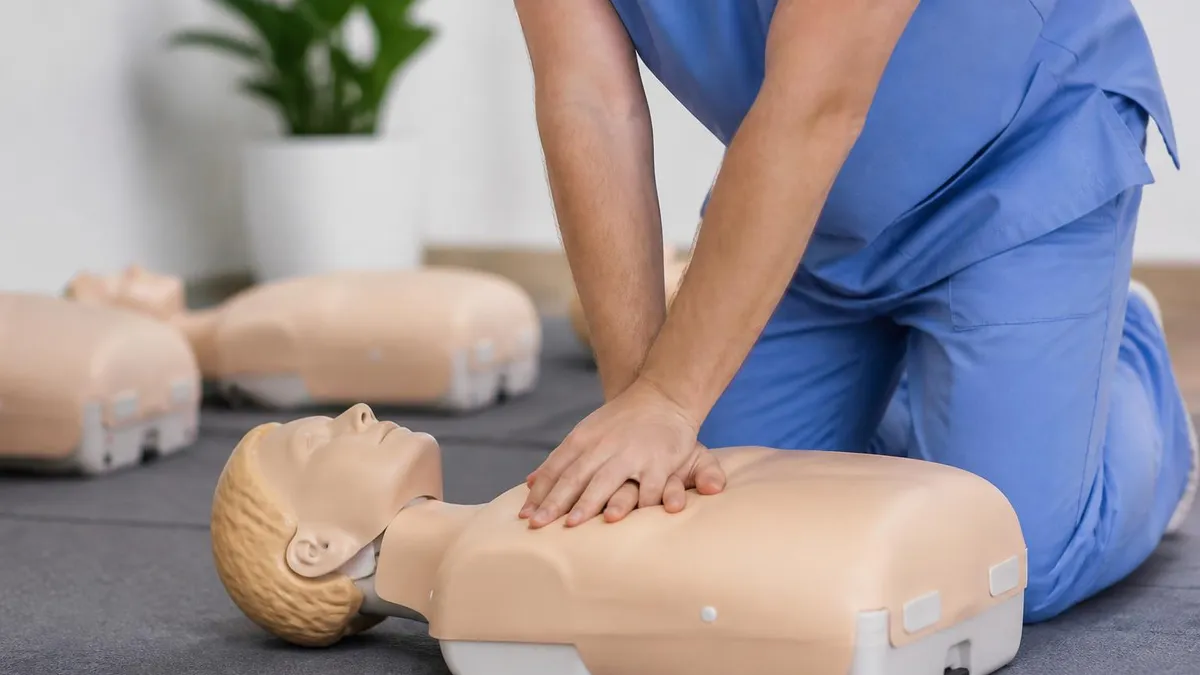
AHA CPR: What It Is, Which Course You Need, and How to Get Certified
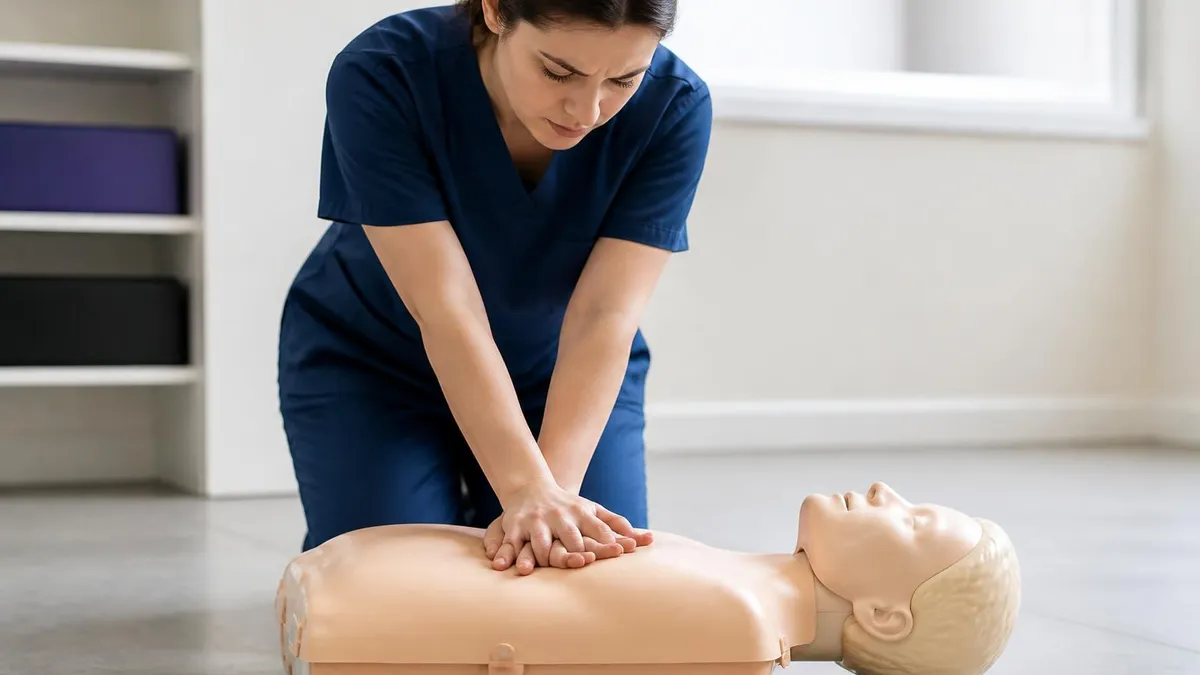
CPR Instructor Jobs 2026: How to Become a Certified Instructor, Salary Expectations, and Career Pathways
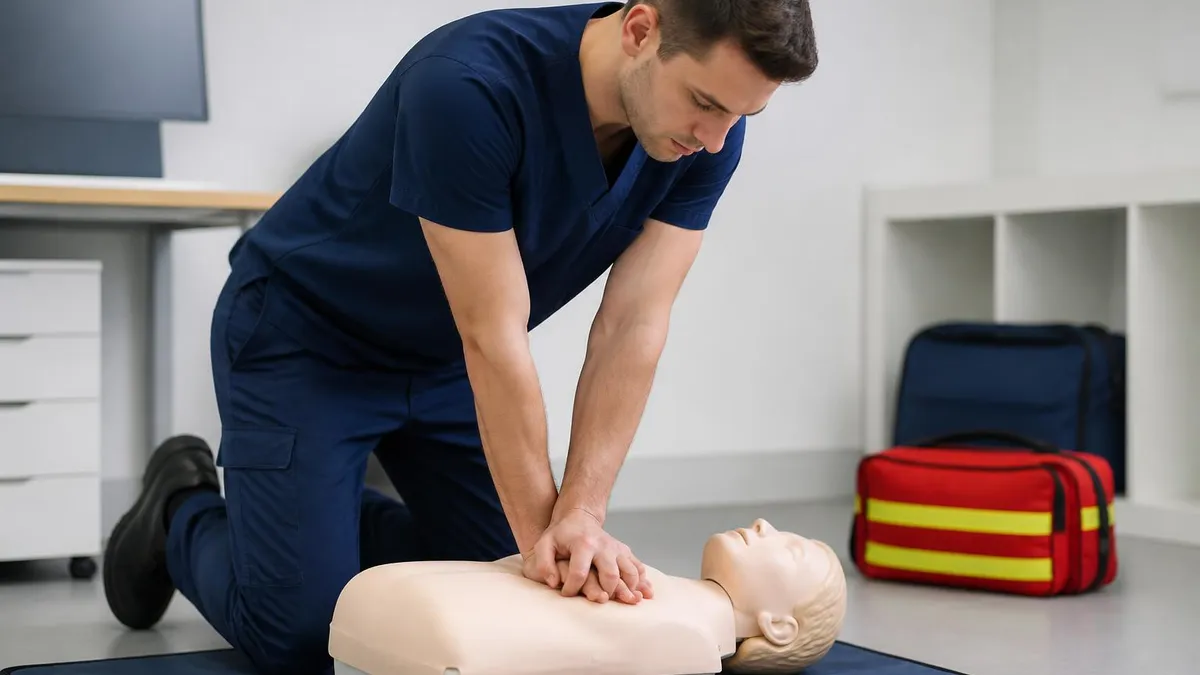
Adult CPR: Complete Step-by-Step Guide to Hands-Only and Standard CPR in 2026
About the Author

Registered Nurse & Healthcare Educator
Johns Hopkins University School of NursingDr. Sarah Mitchell is a board-certified registered nurse with over 15 years of clinical and academic experience. She completed her PhD in Nursing Science at Johns Hopkins University and has taught NCLEX preparation and clinical skills courses for nursing students across the United States. Her research focuses on evidence-based exam preparation strategies for healthcare certification candidates.
Join the Discussion
Connect with other students preparing for this exam. Share tips, ask questions, and get advice from people who have been there.
View discussion (5 replies)