
BLS for Healthcare Providers Course: Complete 2026 October Certification & Study Guide
📚 Learn everything about BLS for health providers — course format, AHA exam prep, renewal steps, costs, and free practice questions to pass your
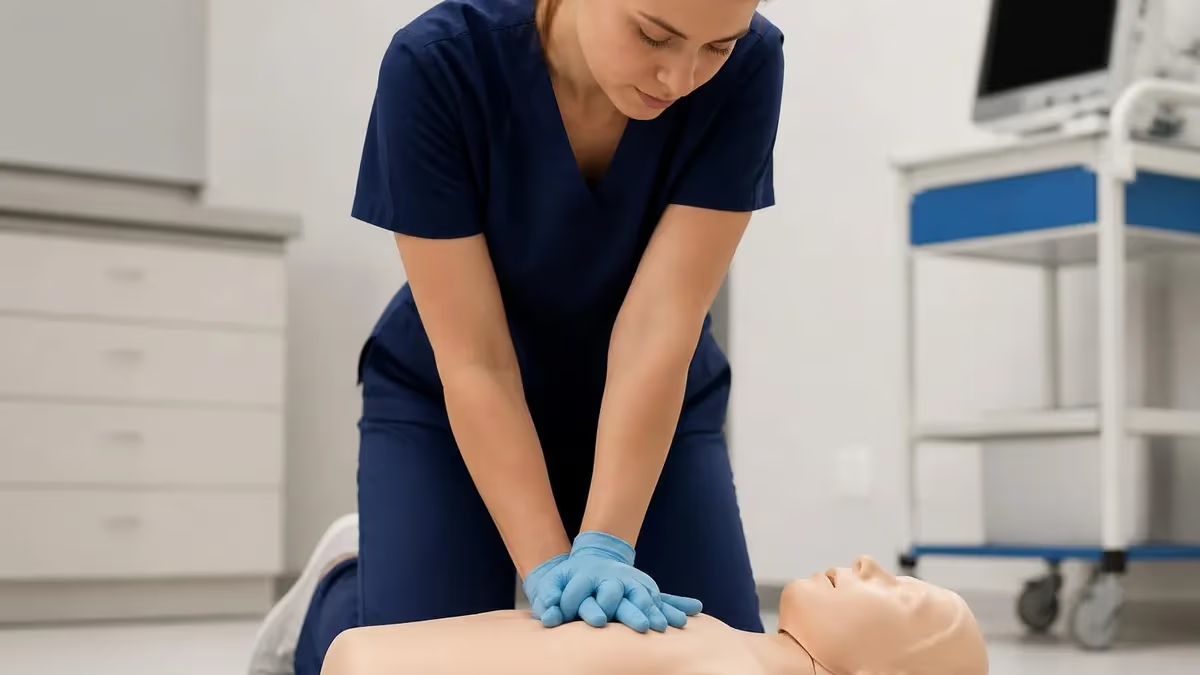
What is a BLS certification, and why does every healthcare professional in the United States need one? BLS for health providers is a structured, evidence-based training program designed to teach life-saving techniques including high-quality CPR, airway management, rescue breathing, and the proper use of automated external defibrillators. Whether you work as a nurse, paramedic, physician, dental hygienist, or respiratory therapist, earning your BLS credential demonstrates that you can respond effectively and confidently during a cardiac or respiratory emergency in any clinical environment.
The BLS for Healthcare Providers course is offered through multiple nationally recognized organizations, with the American Heart Association and the American Red Cross being the two most prominent. Each program follows resuscitation guidelines updated on a regular five-year cycle, ensuring that every student learns the most current science available. The course typically combines cognitive instruction with hands-on skills practice on manikins and culminates in both a written multiple-choice exam and a practical skills assessment that candidates must successfully pass to earn their certification card.
Understanding what does BLS stand for is the first step toward certification. BLS stands for Basic Life Support, a tier of emergency medical care that focuses on maintaining airway patency, supporting adequate breathing, and sustaining blood circulation until advanced medical interventions arrive. Unlike bystander-level CPR classes aimed at the general public, the BLS provider course is specifically tailored for healthcare professionals who are expected to perform structured resuscitation as part of their daily job responsibilities in hospitals, clinics, and pre-hospital settings.
A common question prospective students ask is whether is BLS the same as CPR. While cardiopulmonary resuscitation is a core component of BLS training, the BLS curriculum extends well beyond basic chest compressions and mouth-to-mouth rescue breathing. It includes team-based resuscitation dynamics, two-rescuer CPR techniques, bag-mask ventilation skills, recognition of life-threatening cardiac arrhythmias, and the coordinated use of an AED within a multi-provider response. Healthcare providers learn to function within a structured resuscitation team following standardized algorithms.
The demand for BLS-certified professionals continues to grow across the entire United States healthcare system. Hospitals, urgent care facilities, outpatient surgery centers, dental offices, and long-term care facilities all require current BLS credentials for their clinical staff members. Many employers mandate that new hires present a valid BLS provider card before their first scheduled shift, and maintaining active certification is frequently tied to annual performance evaluations, professional licensing renewals, and continuing education requirements that vary by state.
Organizations like the american red cross basic life support program and the AHA both offer courses that meet national competency standards for healthcare providers. Choosing between training providers often comes down to employer preference, local scheduling convenience, and course cost. Regardless of which organization ultimately issues your certification card, the clinical competencies you develop during training remain fundamentally consistent across both programs, preparing you to deliver high-quality compressions, provide ventilation, and use an AED correctly.
This comprehensive guide walks you through everything you need to know about the BLS for Healthcare Providers course in 2026. From understanding the exam format and navigating the renewal process to building a personalized study schedule and exploring realistic practice questions, you will find actionable and detailed information designed to help you succeed. Whether you are pursuing initial certification for the first time or preparing for a basic life support renewal class, the sections below cover every critical step of your journey.
BLS Certification by the Numbers
Key Facts at a Glance
| Item | Value | Details |
|---|---|---|
| Written Exam Questions | 25 | Multiple-choice format |
| Course Duration | 4-5 hrs | Classroom-based format |
| Minimum Passing Score | 84% | 21 of 25 correct |
| Certification Validity | 2 Years | Renewal required biennially |

Recommended BLS Study Schedule for Healthcare Providers
- ▸Read the AHA BLS Provider Manual chapters 1 through 3 covering adult CPR and AED
- ▸Memorize the BLS Adult Cardiac Arrest Algorithm step by step
- ▸Review compression-to-ventilation ratios for single-rescuer and two-rescuer scenarios
- ▸Watch AHA or Red Cross instructional videos demonstrating high-quality CPR technique
- ▸Study infant and child CPR differences including compression depth and hand placement
- ▸Review the pediatric BLS algorithm and choking relief for conscious and unconscious victims
- ▸Practice two-thumb encircling technique for infant compressions on a manikin if available
- ▸Complete one full-length practice quiz focusing on pediatric scenarios
- ▸Study multi-rescuer team roles including compressor, airway manager, and AED operator
- ▸Review special situations such as drowning, opioid overdose, and pregnant patients
- ▸Practice switching compressor roles every two minutes with a study partner
- ▸Take a timed practice exam simulating real test conditions
- ▸Review all algorithm charts one final time and fill any remaining knowledge gaps
- ▸Complete two to three full-length practice tests and review every incorrect answer
- ▸Review bag-mask ventilation technique and common mistakes to avoid
- ▸Prepare materials needed for class day including comfortable clothing and photo ID
The basic life support exam American Heart Association administers is the most widely recognized BLS assessment across the United States. The AHA basic life support exam consists of a written cognitive test paired with a hands-on skills evaluation, and candidates must pass both components to earn their provider certification. The written portion typically includes twenty-five multiple-choice questions covering adult, child, and infant CPR sequences, proper AED operation, foreign body airway obstruction management, and coordinated team-based resuscitation concepts that reflect real clinical scenarios.
The skills evaluation is where many candidates feel the most pressure during their certification attempt, but thorough preparation makes a significant difference in performance. During the practical assessment, a certified instructor observes you performing high-quality CPR on both adult and infant manikins, evaluating your hand placement, compression depth, compression rate, and chest recoil between each compression. You will also need to demonstrate proficiency with bag-mask ventilation, show correct AED pad placement on various patient sizes, and execute a complete multi-rescuer team resuscitation scenario from initial recognition through AED delivery.
If you are taking the red cross basic life support course, the exam structure follows a comparable format but may differ slightly in the total number of written questions and specific scenario configurations during skills testing. Both the AHA and Red Cross strictly align their course curricula with the International Liaison Committee on Resuscitation published guidelines, ensuring that the core clinical competencies tested remain equivalent regardless of which organization administers your course. Most employers across the country accept certifications from either provider equally.
Passing the BLS exam requires achieving a minimum score of eighty-four percent on the written cognitive test, which translates to answering at least twenty-one out of twenty-five questions correctly. While this passing threshold is certainly achievable with focused study and adequate preparation, candidates who underestimate the exam often struggle with scenario-based questions that require applying multiple clinical concepts simultaneously. Questions addressing compression-to-ventilation ratios for different age groups, the correct sequence of interventions when an AED arrives, and multi-rescuer coordination protocols are common areas where unprepared students lose critical points.
Effective preparation for the basic life support exam should begin at least one to two weeks before your scheduled course date for optimal results. Review the AHA BLS Provider Manual or equivalent Red Cross training materials thoroughly, paying special attention to the algorithm flowcharts that outline step-by-step responses for cardiac arrest, respiratory arrest, and choking emergencies across all age groups. These visual algorithms appear repeatedly on the written exam, and committing them to memory ensures you can answer questions quickly and accurately without hesitation or second-guessing during testing.
Practice questions remain one of the single most effective study tools available for BLS exam preparation. Working through realistic multiple-choice scenarios helps you identify specific knowledge gaps well before they cost you valuable points on the actual examination. Focus particularly on questions that present detailed clinical situations requiring you to select the most appropriate immediate intervention, because the BLS exam consistently emphasizes applied knowledge and clinical reasoning over simple factual recall of isolated data points or definitions.
Many healthcare facilities offer convenient group BLS courses that combine classroom instruction with immediate testing, allowing participants to complete the entire certification process in a single session lasting approximately four to five hours. Alternatively, blended learning options enable you to complete the cognitive didactic portion entirely online at your own pace before attending a shorter in-person skills verification session. Both pathways lead to the identical certification card with the same expiration date, so choosing between them comes down to personal learning style preference and scheduling logistics.
BLS Practice Test Questions
Prepare for the BLS - Basic Life Support exam with our free practice test modules. Each quiz covers key topics to help you pass on your first try.
BLS High-Quality CPR & Provider Skills
BLS Exam Questions covering BLS High-Quality CPR & Provider Skills. Master BLS Test concepts for certification prep.
BLS Special Situations & Scenarios
Free BLS Practice Test featuring BLS Special Situations & Scenarios. Improve your BLS Exam score with mock test prep.
BLS Adult, Child & Infant Resuscitation
BLS Mock Exam on Adult, Child & Infant Resuscitation. BLS Study Guide questions to pass on your first try.
BLS Airway Management & Ventilation
BLS Test Prep for Airway Management & Ventilation. Practice BLS Quiz questions and boost your score.
BLS Automated External Defibrillator (AED)...
BLS Questions and Answers on Automated External Defibrillator (AED) Use. Free BLS practice for exam readiness.
BLS Certification: Cardiac Arrest
BLS Mock Test covering Certification: Cardiac Arrest. Online BLS Test practice with instant feedback.
BLS Certification: Choking
Free BLS Quiz on Certification: Choking. BLS Exam prep questions with detailed explanations.
BLS Certification: Respiratory Arrest
BLS Practice Questions for Certification: Respiratory Arrest. Build confidence for your BLS certification exam.
BLS Chain of Survival
BLS Test Online for Chain of Survival. Free practice with instant results and feedback.
BLS CPR Techniques & Procedures
BLS Study Material on CPR Techniques & Procedures. Prepare effectively with real exam-style questions.
BLS Legal & Ethical Considerations
Free BLS Test covering Legal & Ethical Considerations. Practice and track your BLS exam readiness.
BLS Post-Resuscitation Care
BLS Exam Questions covering Post-Resuscitation Care. Master BLS Test concepts for certification prep.
Is BLS the Same as CPR? Comparing Certification Pathways
The American Heart Association BLS Provider course is the gold standard for healthcare professionals across the United States. This instructor-led program covers adult, child, and infant CPR with AED integration, bag-mask ventilation, team dynamics, and choking relief for all age groups. The classroom format runs approximately four and a half hours and concludes with a twenty-five question written exam plus a mandatory hands-on skills assessment on manikins supervised by an AHA-certified instructor.
AHA certification is accepted by virtually every hospital system, nursing school, medical school, and emergency medical services agency nationwide. The course follows guidelines from the International Liaison Committee on Resuscitation and is updated every five years to reflect the latest evidence. AHA also offers a HeartCode BLS blended learning option where students complete online modules before attending a shorter in-person skills session, typically lasting about ninety minutes with an instructor for hands-on competency verification and final testing.

Pros and Cons of BLS Certification for Healthcare Providers
- +Universally required credential that opens doors to virtually all clinical healthcare positions
- +Provides life-saving skills applicable in both professional and personal emergency situations
- +Relatively short course commitment of only four to five hours for initial certification
- +Affordable cost ranging from sixty to ninety dollars depending on provider and location
- +Blended learning options offer scheduling flexibility for busy healthcare professionals
- +Certification is transferable across all fifty states without additional testing requirements
- −Must be renewed every two years, requiring ongoing time and financial commitment
- −Hands-on skills assessment can cause anxiety for test-takers uncomfortable with manikin practice
- −Some employers only accept AHA certification and will not recognize Red Cross credentials
- −Online-only courses from third-party providers may not be accepted by employers or licensing boards
- −Course schedules may be limited in rural areas requiring travel to larger training centers
- −Skills can deteriorate between renewal cycles without regular real-world practice or refresher training
BLS Exam Day Preparation Checklist for Healthcare Providers
- ✓Review all BLS algorithms one final time the morning before your scheduled course
- ✓Bring a valid government-issued photo ID to verify your identity at check-in
- ✓Wear comfortable clothing that allows you to kneel on the floor for manikin practice
- ✓Arrive at least fifteen minutes early to complete any required registration paperwork
- ✓Bring your completed BLS Provider Manual or proof of online course completion if using blended format
- ✓Ensure you have payment ready if the course fee has not been prepaid by your employer
- ✓Eat a light meal beforehand since you will be physically active during skills stations
- ✓Bring a pen or pencil for the written exam and any note-taking during lecture portions
- ✓Silence your phone and remove jewelry or watches that could interfere with compressions
- ✓Review compression-to-ventilation ratios for adult, child, and infant one-rescuer and two-rescuer CPR

The Number One Reason Candidates Fail the BLS Skills Test
According to BLS course instructors, the most common reason healthcare providers fail the hands-on skills evaluation is inadequate compression depth. The AHA requires compressions of at least two inches deep for adults and at least one-third the depth of the chest for children and infants. Practicing on a feedback manikin before your course date dramatically improves your pass rate on the first attempt and builds the muscle memory needed for real emergencies.
Understanding the BLS certification renewal process is essential for every healthcare provider who wants to maintain uninterrupted clinical employment. BLS provider cards issued by both the American Heart Association and the American Red Cross are valid for exactly two years from the date of successful course completion. Once your card expires, you are no longer considered certified, and many employers will immediately restrict you from patient care activities until you complete a renewal course and present an updated, valid certification card to your human resources department.
The basic life support renewal class is designed to be shorter and more focused than the initial certification course, typically running between three and four hours compared to the original four to five hour format. Renewal courses assume that participants already possess foundational BLS knowledge and focus primarily on refreshing skills, introducing any updated guidelines that have been published since your last certification, and conducting the required written exam and practical skills assessment. You must still pass both components to earn your renewed credential successfully.
Planning ahead is crucial because BLS courses can fill up quickly, especially during peak renewal periods when large groups of hospital staff members are due for recertification simultaneously. Many experienced providers recommend scheduling your renewal course at least four to six weeks before your certification expiration date to avoid any gaps in coverage. If your certification lapses, you may need to complete the full initial provider course again rather than the abbreviated renewal version, depending on your training organization and how long your card has been expired.
You might wonder how long does basic life support certification last compared to other healthcare credentials. The standard two-year validity period applies universally across both AHA and Red Cross programs, though some employers establish internal policies requiring more frequent refresher training even when your certification card remains technically valid. For example, certain intensive care units and emergency departments conduct quarterly or semiannual BLS drills to keep staff skills sharp between formal recertification cycles.
The cost of BLS renewal typically ranges from forty to seventy dollars when taken through an authorized AHA or Red Cross training center, making it significantly less expensive than initial certification in most cases. Some healthcare employers cover the cost of renewal as part of their employee benefits package or continuing education reimbursement program. If your employer does not cover the expense, the investment remains modest relative to its importance for maintaining your professional standing and employment eligibility in any clinical healthcare setting.
Blended renewal options have become increasingly popular among busy healthcare professionals who prefer to complete the cognitive review portion on their own schedule. With blended renewal, you complete an online refresher module covering updated guidelines, algorithm changes, and knowledge review questions at home or during a break at work. You then attend a shorter in-person session lasting approximately sixty to ninety minutes solely for the hands-on skills verification component. This format minimizes time away from clinical duties while still ensuring competency through direct instructor observation.
Keeping track of your certification expiration date is your personal responsibility, even though many employers maintain internal tracking systems. Set a calendar reminder for ninety days before your expiration date so you have ample time to research available courses, compare pricing and scheduling options, and register for a session that fits your work schedule. Proactive renewal planning eliminates the stress and potential career disruption that comes with discovering your certification has already expired when your employer runs a routine compliance audit on staff credentials.
If your BLS provider card expires, many healthcare employers will immediately restrict you from performing patient care duties until you recertify. Some organizations allow a brief grace period, but others enforce a strict no-exceptions policy. Schedule your renewal course at least four to six weeks before your expiration date to avoid any employment disruption or the need to retake the full initial certification course instead of the shorter renewal version.
Developing a strategic approach to the BLS exam dramatically increases your chances of passing both the written and practical components on your first attempt. The written cognitive exam tests your understanding of BLS algorithms, compression and ventilation parameters, AED operation, and team communication protocols. Rather than memorizing isolated facts, focus on understanding the logical flow of each algorithm so you can work through scenario-based questions by mentally simulating the clinical situation being described and selecting the most appropriate immediate intervention from the available answer choices.
One of the most effective study strategies is to practice with realistic exam-style questions that mirror the format and difficulty level of the actual AHA basic life support exam or Red Cross equivalent assessment. Timed practice tests help you build the speed and confidence needed to complete all twenty-five questions within the allotted time without rushing through critical details. After each practice session, thoroughly review every question you answered incorrectly and research the underlying concept until you understand not just the correct answer but why each incorrect option was wrong.
For the hands-on skills evaluation, physical preparation matters just as much as cognitive study. Practice performing chest compressions on a manikin or firm pillow to build the upper body endurance and muscle memory needed for sustained high-quality CPR. The AHA requires adult compressions at a depth of at least two inches with a rate of one hundred to one hundred twenty compressions per minute. Many candidates fail because their compressions become too shallow or too slow as fatigue sets in during the two-minute assessment cycle, so building physical stamina through repeated practice is essential.
If you are wondering how long does bls certification last, the answer is two years from the date you successfully complete your course. This knowledge should motivate you to invest adequate preparation time upfront rather than rushing through the material. A solid foundation built during your initial certification makes every subsequent renewal faster and easier because you are reinforcing existing neural pathways rather than rebuilding knowledge from scratch each time you recertify every twenty-four months.
Team-based resuscitation scenarios are a significant component of both the written exam and skills assessment that many candidates overlook during their individual study sessions. The BLS curriculum emphasizes coordinated team response where each member has a defined role including compressor, airway manager, AED operator, and team leader. Practice verbalizing role assignments, calling out compression counts, and coordinating smooth two-minute compressor switches with a study partner or colleague. These communication skills are evaluated directly during your practical assessment.
Common pitfalls on the written exam include confusing compression-to-ventilation ratios between single-rescuer and two-rescuer scenarios, mixing up adult and pediatric compression depths, and incorrectly sequencing the steps to take when an AED arrives during an ongoing resuscitation. Create a simple reference chart summarizing these key parameters side by side for adults, children, and infants, then review it daily during your preparation period until the numbers become automatic. This systematic approach eliminates the most common sources of incorrect answers on test day.
Finally, approach both the written and practical exams with calm confidence built through thorough preparation rather than last-minute cramming. Arrive well-rested, hydrated, and having eaten a light meal. During the written exam, read each question stem completely before looking at the answer choices, and eliminate obviously incorrect options first to improve your odds on challenging questions. During the skills test, verbalize your actions clearly so the instructor can see that you know the correct sequence even if your physical technique needs minor refinement during the evaluation process.
Preparing for your BLS for Healthcare Providers course requires a balanced combination of cognitive study, physical skills practice, and strategic test-taking preparation that addresses both assessment components simultaneously. Start your preparation by obtaining the official course materials from whichever training organization you will be testing with, whether that is the AHA BLS Provider Manual or the Red Cross Basic Life Support training textbook. Reading through the complete manual at least once before your scheduled course date gives you a critical framework for understanding the hands-on demonstrations and practice scenarios you will encounter during in-person instruction.
Create a dedicated study environment free from distractions where you can focus on learning the BLS algorithms without interruption. Print or photocopy the major algorithm flowcharts for adult cardiac arrest, pediatric cardiac arrest, and foreign body airway obstruction, then post them in a visible location where you will see them multiple times throughout each day. This passive repetition technique reinforces your memory of the correct action sequences without requiring active study time, supplementing your focused review sessions with continuous visual reinforcement of the critical decision pathways.
Hands-on practice with a CPR manikin is the single most valuable preparation activity you can undertake before your BLS course. Many fire stations, community centers, and hospital education departments will allow healthcare professionals to borrow or use practice manikins during off-hours. If a manikin is not available, practice your compression technique on a firm surface while counting aloud to build the rhythm of one hundred to one hundred twenty compressions per minute. Use a metronome application on your smartphone set to one hundred ten beats per minute as a pacing guide during practice sessions.
Understanding the differences between adult, child, and infant resuscitation techniques is a frequent source of confusion that leads to exam errors for many candidates. Adults require two-hand compressions on the lower half of the sternum to a depth of at least two inches, while children need either one or two hands depending on their size to achieve a depth of approximately two inches. Infants require two-finger compressions or the two-thumb encircling hands technique when two rescuers are present, compressing to a depth of approximately one and a half inches on the lower third of the sternum.
Bag-mask ventilation is another skill area where many candidates struggle during the practical assessment because they have not practiced the proper seal technique before arriving at their course. The key to effective bag-mask ventilation is creating an airtight seal between the mask and the patient's face using the E-C clamp technique, where your thumb and index finger form a C shape pressing the mask down while your remaining fingers form an E shape lifting the jaw upward. Practice this grip repeatedly until it feels natural and comfortable in your hands before test day.
AED operation is typically the most straightforward component of the BLS skills evaluation, but candidates still make avoidable errors. Remember to always ensure the patient is dry before applying AED pads, place pads in the correct anatomical positions as illustrated on the pads themselves, and ensure that nobody is touching the patient during rhythm analysis and shock delivery. For pediatric patients, use pediatric pads or a dose attenuator if available, and place pads in an anterior-posterior configuration if the patient's chest is too small for standard pad placement without overlapping.
On the day of your course, give yourself permission to make mistakes during the learning portions of class because that is exactly what the practice stations are designed for. The formal skills evaluation only happens at the end of the course after you have had multiple opportunities to practice each technique with instructor feedback and correction. Use every practice station as a learning opportunity, ask questions when concepts are unclear, and request additional demonstrations from your instructor if you are struggling with any particular skill. Instructors want you to succeed and will provide coaching to help you improve.
Sample BLS - Basic Life Support Practice Questions
Try these questions from our free BLS - Basic Life Support practice tests. The correct answer and an explanation follow each question.
What action can a healthcare provider take if they believe they are being sued for providing emergency care?
- A. Consult a lawyer before providing care
- B. Ask the patient for forgiveness
- C. Consult with a legal professional about the Good Samaritan Law
- D. Stop treatment immediately
Answer: C. Consult with a legal professional about the Good Samaritan Law
If a healthcare provider believes they are being sued for providing emergency care, consulting a legal professional is the appropriate action. A lawyer can advise on the specifics of the situation and how Good Samaritan laws may apply to protect the provider from liability. This offers legal guidance and support, helping navigate potential legal challenges.
When can a healthcare provider breach patient confidentiality?
- A. If a legal subpoena is issued
- B. When the patient is under 18 years of age
- C. If the patient is unresponsive and unable to provide consent
- D. If it benefits the healthcare facility
Answer: C. If the patient is unresponsive and unable to provide consent
In emergency situations where a patient is unresponsive or incapacitated, implied consent allows healthcare providers to provide necessary life-saving treatment. It is presumed that a reasonable person would want to receive care in such a critical state. This is a crucial exception to the general rule of obtaining explicit consent, enabling immediate, critical care.
A healthcare provider fails to initiate CPR on a patient with a treatable cardiac arrest and the patient dies. This could constitute:
- A. Assault
- B. Negligence by omission
- C. Battery
- D. Informed consent violation
Answer: B. Negligence by omission
Negligence by omission occurs when a provider fails to perform a duty of care that a reasonably prudent provider would have performed.
What must a healthcare provider obtain before providing emergency treatment to an adult patient?
- A. Verbal consent
- B. Written consent
- C. Implied consent
- D. Consent from a family member
Answer: C. Implied consent
In emergency situations involving an adult patient who is unconscious, unresponsive, or otherwise unable to give explicit consent, healthcare providers operate under the principle of implied consent. It is assumed that the patient would consent to life-saving treatment if they were able to communicate. This allows for immediate, critical care without delay.
BLS Questions and Answers
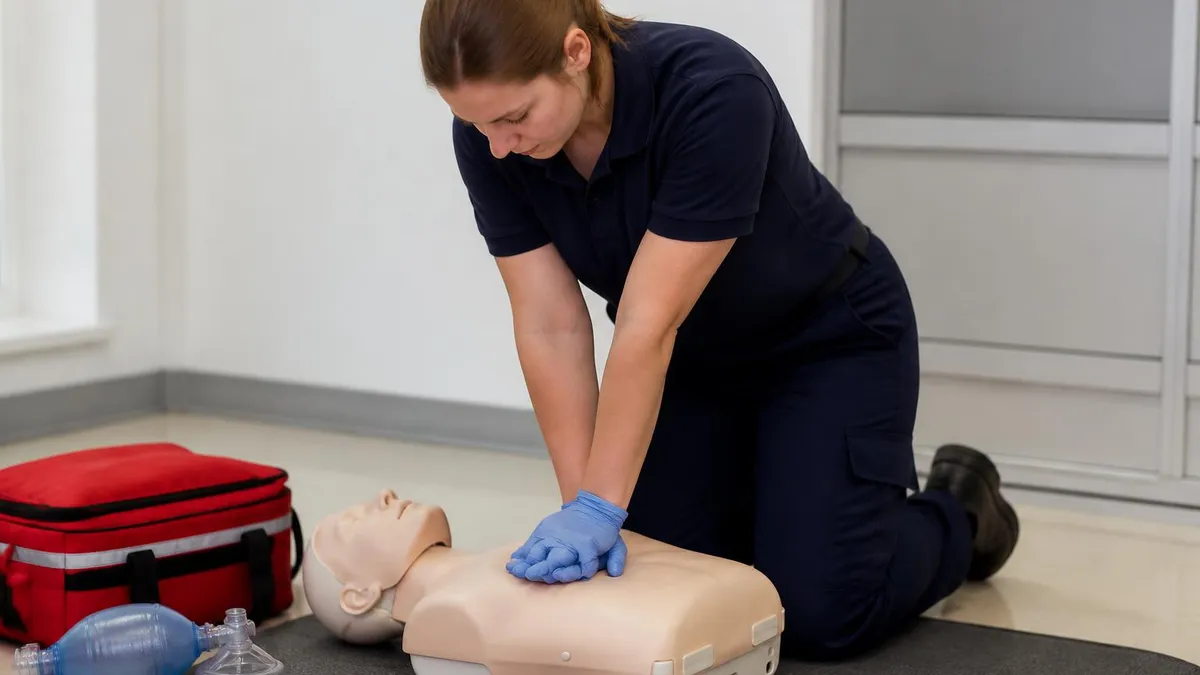
Pediatric BLS Algorithm: Complete 2026 Guide for Healthcare Providers
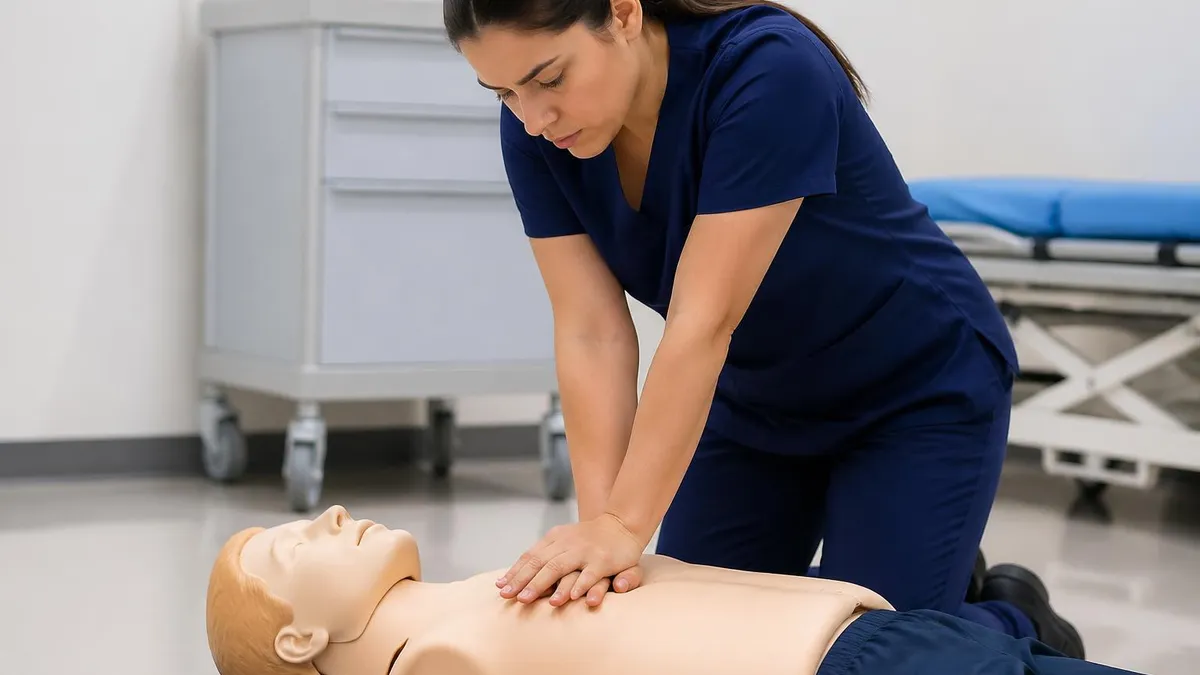
American Heart Association BLS: Certification, Renewal, Cost & What to Expect
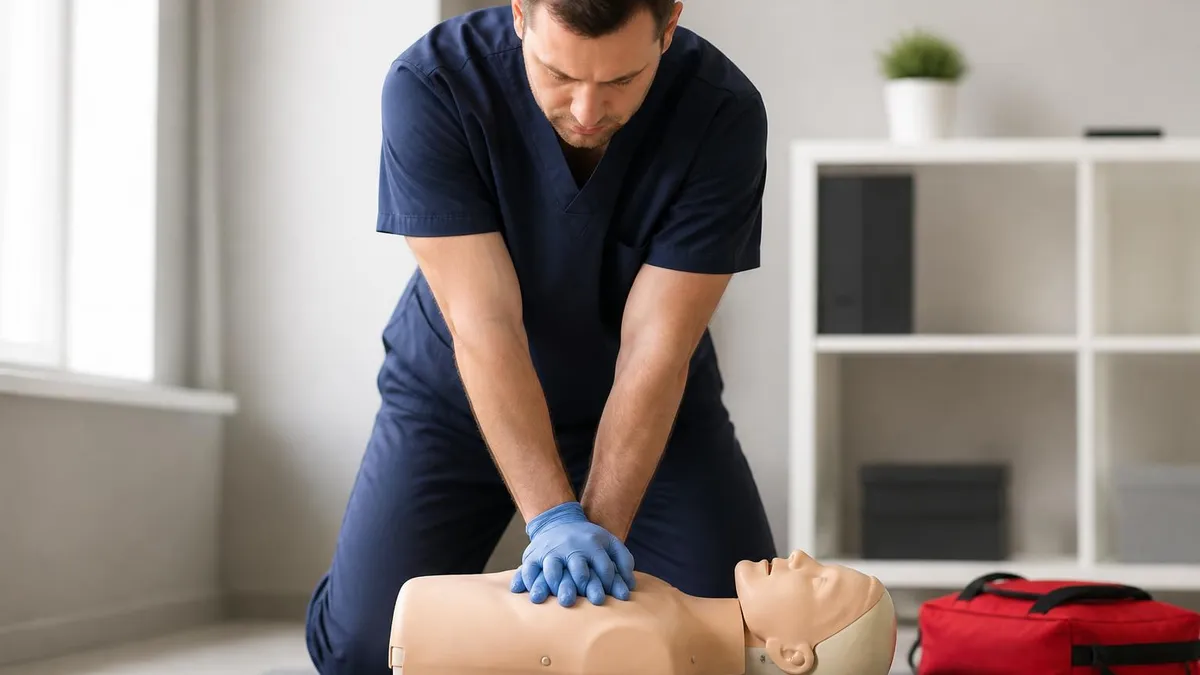
Online BLS Renewal: Complete 2026 Guide to Recertifying Your Basic Life Support Card
Are CPR and BLS the Same? Complete 2026 Guide to Differences, Certification & Training
How to Renew BLS Certification: Complete 2026 Guide to Recertifying Your Card
About the Author

Registered Nurse & Healthcare Educator
Johns Hopkins University School of NursingDr. Sarah Mitchell is a board-certified registered nurse with over 15 years of clinical and academic experience. She completed her PhD in Nursing Science at Johns Hopkins University and has taught NCLEX preparation and clinical skills courses for nursing students across the United States. Her research focuses on evidence-based exam preparation strategies for healthcare certification candidates.
Join the Discussion
Connect with other students preparing for this exam. Share tips, ask questions, and get advice from people who have been there.
View discussion (8 replies)