
Are CPR and BLS the Same? Complete 2026 October Guide to Differences, Certification & Training
Are CPR and BLS the same? Compare certifications, scope, training hours, cost, and who needs each. Complete 2026 October guide for healthcare providers. 🟢
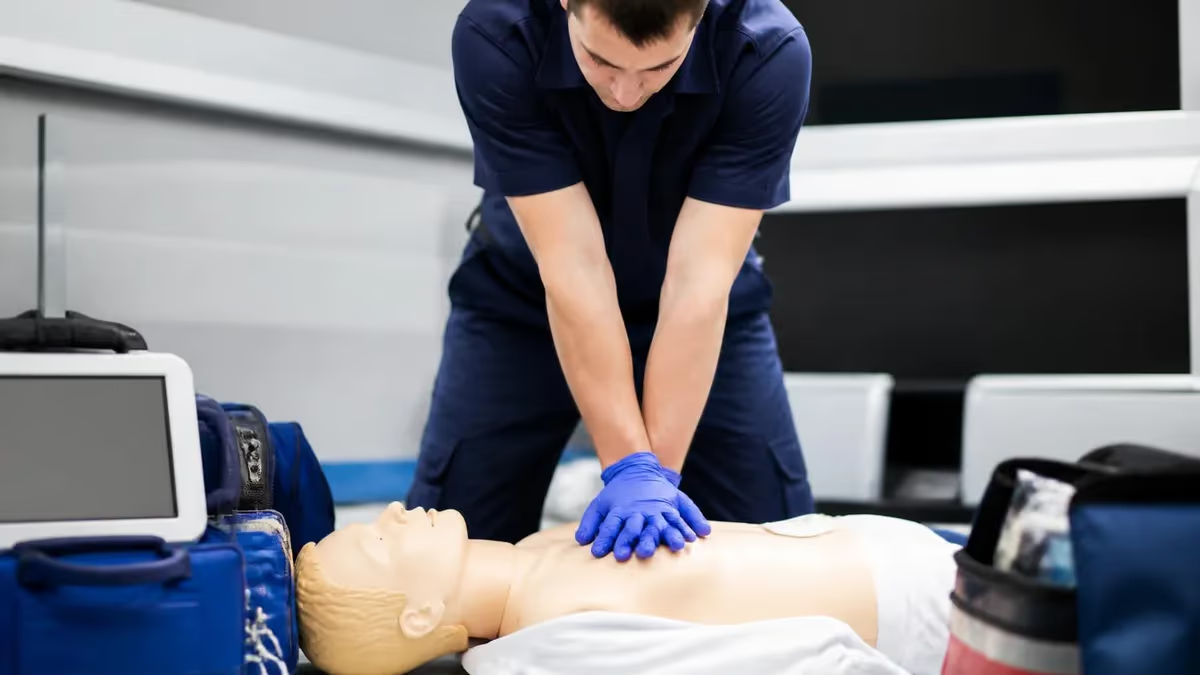
Are CPR and BLS the same? This is the single most common question asked by nursing students, EMT candidates, dental assistants, and anyone entering a healthcare career in the United States. The short answer is no — they overlap significantly, but they are not interchangeable credentials. CPR (cardiopulmonary resuscitation) is a specific lifesaving skill, while BLS (Basic Life Support) is a professional certification that includes CPR plus additional clinical competencies expected of healthcare providers in hospitals, clinics, and prehospital settings.
So what is a BLS certification, exactly? It is a credential — typically issued by the American Heart Association (AHA) or the American Red Cross — that verifies you can perform high-quality chest compressions, use an automated external defibrillator (AED), manage choking emergencies across age groups, deliver effective ventilations with a bag-valve mask, and function as part of a multi-rescuer resuscitation team. A standard community CPR class does not include all of these competencies.
The confusion between the two terms is understandable because every BLS course teaches CPR, and many people use "CPR class" as a casual shorthand for any resuscitation training. However, when a hospital, nursing school, or employer asks for proof of training, they almost always require BLS specifically, not just a community-level CPR card. This distinction matters because the wrong card can delay your hire date, clinical rotation, or licensure paperwork.
If you have searched phrases like is bls and cpr the same, you are likely trying to figure out which course to take, how long it lasts, and whether your existing card meets your employer's requirements. The honest answer depends on your role: a daycare worker, personal trainer, or lifeguard typically only needs Heartsaver CPR/AED, while a registered nurse, respiratory therapist, paramedic, or medical student needs the full BLS Provider course.
In this guide, we will break down every meaningful difference between CPR and BLS — including curriculum depth, target audiences, exam structure, renewal requirements, and pricing. We will also explain what BLS stands for, walk through what the AHA Basic Life Support exam looks like, compare the AHA and Red Cross programs, and help you decide which credential matches your career path.
Whether you are a brand-new nursing student trying to register for your first clinical rotation, a seasoned ICU nurse renewing every two years, or an HR director writing job descriptions for new hires, this article will give you a clear, accurate framework for understanding the relationship between CPR and BLS in 2026. By the end, you will know exactly which card you need, where to get it, and how to study for the certification exam.
CPR vs BLS by the Numbers

CPR vs BLS at a Glance: Key Differences
Community CPR teaches compression-only or basic compression-ventilation cycles. BLS adds high-performance team dynamics, advanced airway adjuncts, pulse checks for healthcare providers, and infant two-thumb technique.
CPR (Heartsaver) is designed for laypersons, teachers, coaches, and corporate employees. BLS Provider is built for clinicians: nurses, doctors, EMTs, dental staff, respiratory therapists, and medical students.
Heartsaver covers single-rescuer adult skills in 2-3 hours. BLS Provider takes 4.5 hours and covers one and two-rescuer CPR for adults, children, and infants, plus team-based resuscitation roles.
Heartsaver typically uses skill demonstration only. BLS requires both a hands-on skills test with an instructor AND a 25-question multiple-choice written exam scored at 84% or higher.
Hospitals, nursing programs, and EMS agencies almost always require BLS Provider — not Heartsaver CPR. Always verify which card your employer or school requires before enrolling.
So what is a BLS certification in concrete terms? BLS stands for Basic Life Support, and the certification confirms that a healthcare provider can recognize cardiac arrest, deliver high-quality chest compressions at the correct rate and depth, use an AED safely, provide rescue breaths through a pocket mask or bag-valve mask, perform infant and child resuscitation, and integrate seamlessly into a team-based response in a clinical environment. It is the foundational credential for nearly every clinical job in the US.
The American Heart Association introduced the modern BLS Provider course as a successor to several older programs, including BLS for Healthcare Providers. The current curriculum reflects the 2025 ECC Guidelines, which emphasize minimizing interruptions in chest compressions, prioritizing real-time CPR feedback devices when available, and assigning clear roles in multi-rescuer events. These updates make BLS substantially more sophisticated than a generic CPR class.
One key reason employers require BLS specifically is the scope of pediatric content. A standard community CPR class may mention infant CPR briefly, but the full BLS curriculum dedicates significant time to two-rescuer infant CPR using the two-thumb encircling-hands technique, pediatric AED pad placement, child compression depth (one-third the depth of the chest), and recognition of pediatric versus adult cardiac arrest causes — critical knowledge for any clinical role.
BLS also covers special populations and circumstances that laypeople rarely encounter: opioid overdose response with naloxone, drowning resuscitation, suspected spinal injury, pregnancy-related arrest, and arrests in hospital beds where standard floor compressions are impossible. These scenarios appear in the basic life support for healthcare providers curriculum because clinicians regularly face them.
Another differentiator is documentation and reporting. BLS providers learn how to record event times, transition care to advanced providers, and communicate using structured handoff tools like SBAR. This professional-level expectation is absent from community CPR training, which assumes the rescuer will simply call 911 and continue chest compressions until EMS arrives — a very different workflow from in-hospital response.
Finally, the BLS certification carries legal and regulatory weight. State nursing boards, the Joint Commission, CMS conditions of participation, and many state EMS bureaus require BLS specifically by name. A Heartsaver CPR card, even if technically valid for the underlying CPR skills, will not satisfy these requirements. This is why it is critical to enroll in the correct course the first time — particularly if your hire date or licensure timeline is tight.
If you are unsure which credential your role requires, ask your employer's HR or education department for the exact course name. They will typically respond with something like "AHA BLS Provider" or "American Red Cross BLS for Healthcare Providers" — both of which are acceptable BLS-level credentials accepted at most US hospitals and clinical programs.

BLS Practice Test Questions
Prepare for the BLS - Basic Life Support exam with our free practice test modules. Each quiz covers key topics to help you pass on your first try.
BLS High-Quality CPR & Provider Skills
BLS Exam Questions covering BLS High-Quality CPR & Provider Skills. Master BLS Test concepts for certification prep.
BLS Special Situations & Scenarios
Free BLS Practice Test featuring BLS Special Situations & Scenarios. Improve your BLS Exam score with mock test prep.
BLS Adult, Child & Infant Resuscitation
BLS Mock Exam on Adult, Child & Infant Resuscitation. BLS Study Guide questions to pass on your first try.
BLS Airway Management & Ventilation
BLS Test Prep for Airway Management & Ventilation. Practice BLS Quiz questions and boost your score.
BLS Automated External Defibrillator (AED)...
BLS Questions and Answers on Automated External Defibrillator (AED) Use. Free BLS practice for exam readiness.
BLS Certification: Cardiac Arrest
BLS Mock Test covering Certification: Cardiac Arrest. Online BLS Test practice with instant feedback.
BLS Certification: Choking
Free BLS Quiz on Certification: Choking. BLS Exam prep questions with detailed explanations.
BLS Certification: Respiratory Arrest
BLS Practice Questions for Certification: Respiratory Arrest. Build confidence for your BLS certification exam.
BLS Chain of Survival
BLS Test Online for Chain of Survival. Free practice with instant results and feedback.
BLS CPR Techniques & Procedures
BLS Study Material on CPR Techniques & Procedures. Prepare effectively with real exam-style questions.
BLS Legal & Ethical Considerations
Free BLS Test covering Legal & Ethical Considerations. Practice and track your BLS exam readiness.
BLS Post-Resuscitation Care
BLS Exam Questions covering Post-Resuscitation Care. Master BLS Test concepts for certification prep.
American Red Cross Basic Life Support vs AHA Basic Life Support Exam
The American Heart Association BLS Provider course is the most widely required healthcare credential in the United States. It includes a 4.5-hour blended or instructor-led format, a 25-question aha basic life support exam, and a hands-on skills test administered by an AHA-aligned instructor. Cards are valid for two years and accepted by virtually every US hospital, nursing school, and EMS agency.
AHA's strength is its tight alignment with the ECC Guidelines and its dominance in hospital systems. If you work in a Joint Commission-accredited facility, AHA BLS is almost always the default. The course emphasizes team-based resuscitation, minimizing pauses in compressions, and continuous quality improvement — concepts directly tied to in-hospital survival outcomes.
Should You Get BLS Instead of Community CPR?
- +Required by virtually all US hospitals, nursing programs, and EMS agencies
- +Includes pediatric and infant resuscitation in depth
- +Covers two-rescuer team dynamics for clinical settings
- +Accepted nationwide and recognized by Joint Commission
- +Card validity is identical to CPR (2 years) for the same money
- +Includes bag-valve mask training for hospital workflows
- +Provides a stronger legal defense in workplace emergencies
- −Slightly longer course time (4.5 hours vs. 2-3 hours)
- −Costs $15-25 more than basic community CPR
- −Requires passing a written exam, not just skills demonstration
- −Skills test is stricter and may require retesting
- −Overkill if you are not in a clinical or first-responder role
- −Renewal requires repeating both written and skills components
Pros and Cons at a Glance
| Pros | Cons |
|---|---|
| Required by virtually all US hospitals, nursing programs, and EMS agencies | Requires passing a written exam, not just skills demonstration |
| Includes pediatric and infant resuscitation in depth | Skills test is stricter and may require retesting |
| Covers two-rescuer team dynamics for clinical settings | Overkill if you are not in a clinical or first-responder role |
| Accepted nationwide and recognized by Joint Commission | Renewal requires repeating both written and skills components |
How to Choose Between CPR and BLS Certification
- ✓Confirm your employer or school's exact credential requirement in writing
- ✓Identify whether your role is clinical (BLS) or non-clinical (Heartsaver CPR)
- ✓Check whether your state nursing or EMS board specifies AHA or Red Cross
- ✓Decide between in-person, blended, or fully online renewal format
- ✓Verify your instructor is AHA-aligned or Red Cross-authorized
- ✓Budget for $40-70 based on initial certification vs renewal
- ✓Schedule at least 6 weeks before your clinical rotation start date
- ✓Download practice questions covering the 25-question written exam
- ✓Bring a pocket mask if your testing center requires personal equipment
- ✓Save your digital card PDF and email a copy to your HR contact
Heartsaver CPR will NOT satisfy hospital BLS requirements
Every year, thousands of new nursing students and EMT candidates accidentally enroll in Heartsaver CPR thinking it counts as BLS. It does not. Always confirm the exact course name on your registration receipt reads "BLS Provider" or "BLS for Healthcare Providers" before you pay. Re-enrolling in the correct course costs an extra $60 and delays your clinical start date by 1-3 weeks.
The AHA Basic Life Support exam is a 25-question multiple-choice test with a passing score of 84% — meaning you can miss no more than four questions. Questions are scenario-based and assess your understanding of compression quality, the chain of survival, team dynamics, AED operation, choking response, and special resuscitation circumstances. You have one hour to complete it, but most candidates finish in 20-30 minutes when adequately prepared.
The written exam is paired with a hands-on skills test, which is graded on a pass/fail basis using a structured checklist. Your instructor will observe you performing adult one-rescuer CPR with AED, adult two-rescuer CPR with bag-valve mask, infant one-rescuer CPR, infant two-rescuer CPR, and adult and infant choking management. Each station has specific critical actions that must be completed correctly — for example, you must check responsiveness, call for help, and begin compressions within 10 seconds of recognizing arrest.
Renewal follows the same exam-plus-skills structure but condenses the classroom time to roughly 2 hours because returning providers are presumed to already know the basics. A basic life support renewal class is the most cost-effective and time-efficient way to maintain your credential, and most major providers offer renewal pricing of $40-55 — significantly cheaper than initial certification. Renewal must occur before your card expires; lapsed cards generally require the full initial course.
Many candidates are surprised by how strict the skills test is. Instructors are required to fail you if you miss certain critical actions, such as failing to use the AED properly, skipping a pulse check, or providing fewer than 100 compressions per minute. Fortunately, retesting is allowed the same day at most centers, and the vast majority of candidates pass on either the first or second attempt. Practicing on a manikin with a feedback device dramatically improves first-attempt pass rates.
For the written portion, the most commonly missed questions involve specific numbers: compression rate (100-120/min), compression depth (at least 2 inches for adults, 2 inches for children, 1.5 inches for infants), ventilation rate during CPR with an advanced airway (1 breath every 6 seconds), and compression-to-ventilation ratios for one and two rescuers (30:2 adult, 30:2 child single, 15:2 child two-rescuer). Memorizing these numbers cold is essential.
The exam also tests recognition of agonal gasping (which is not normal breathing and should trigger CPR), proper AED pad placement in special circumstances (hairy chest, wet chest, implanted pacemaker, transdermal medication patch), and the steps of high-performance team CPR including the role of a timer/recorder and the team leader's responsibilities during code situations.
Finally, remember that exam content is updated to reflect the latest ECC Guidelines. The 2025 guidelines incorporated new evidence on naloxone administration during suspected opioid-related arrests, refined recommendations for AED use in pediatric patients without pediatric pads, and reinforced the importance of high compression fraction (the percentage of time during arrest that compressions are actively being delivered). Make sure your study materials are current.
If your BLS card expires — even by one day — most employers and certifying organizations require you to retake the full initial Provider course, not the cheaper renewal. This costs an extra $20-30 and adds 2+ hours to your training day. Set a calendar reminder 90 days before expiration and book your renewal early. Many hospitals will pull you off clinical duty if your card lapses, so do not let this slip through the cracks.
Cost is one of the biggest practical differences between community CPR and BLS. A Heartsaver CPR/AED course typically costs $45-65 depending on your region. A full BLS Provider course averages $60-80 initial certification, with renewal courses dropping to $40-55. Online-only blended-learning options are often the cheapest, with prices starting around $35 for the online module plus a $25-30 in-person skills check at a local testing site.
Time investment also differs significantly. Heartsaver CPR can usually be completed in a single 2-3 hour session. BLS Provider requires about 4.5 hours for initial certification or 2-3 hours for renewal. Blended learning splits this between a self-paced 1.5-2 hour online module and a 1-2 hour in-person skills session, which most working professionals find easier to fit into a busy schedule than a single half-day class.
Online BLS renewal options have exploded in availability since 2020, and they are now widely accepted by US employers as long as the issuing organization is AHA-aligned or Red Cross-authorized. Beware of "online-only" courses that issue a card without any skills verification — these are not accepted at hospitals and do not meet AHA or Red Cross standards. Always confirm the course includes a hands-on skills test before paying. If you want a flexible option, look at a american red cross basic life support blended course in your area.
For nursing students, the most cost-effective path is often through your nursing school directly, since many programs include BLS in tuition or offer discounted group classes. EMT and paramedic programs typically include BLS as a prerequisite or first-week module. Dental hygiene, respiratory therapy, and medical assistant programs frequently bundle BLS into orientation as well, so check with your registrar before paying out-of-pocket.
Healthcare workers seeking renewal often qualify for employer-sponsored training. Many hospital systems run free quarterly BLS classes for staff, contractors, and per-diem employees. If your employer offers this benefit, take advantage of it — the time savings and cost savings compound over a 30-year career. Just verify the in-house course issues a recognized AHA or Red Cross card, not an internal-only certificate.
If you live in a rural area without easy access to in-person training, the blended online format is your best bet. Major providers including AHA Training Centers, Red Cross, and several large national networks offer online modules paired with skills sessions at local fire departments, community colleges, and urgent care clinics. Search for "BLS skills check near me" along with your ZIP code to find the closest verified testing location.
Bottom line: budget about $65 and half a day for your initial BLS Provider course, then $45 and 2-3 hours every two years for renewal. Compared to other healthcare credentials, BLS is one of the most affordable and accessible certifications in the industry — yet it remains one of the most important, because it is required for nearly every clinical job in the United States and is the foundation for advanced credentials like ACLS, PALS, and NRP.
If you are preparing to take BLS for the first time, the single most valuable thing you can do is practice the written exam questions out loud before exam day. The AHA BLS exam is straightforward when you know the numbers, but it can feel surprisingly tricky under time pressure if you only skimmed the provider manual the night before. Aim for two to three short study sessions of 30-45 minutes each over the week leading up to your class — spaced repetition beats cramming.
Download the official AHA BLS Provider Manual or the Red Cross BLS Participant Manual PDF before your course and read it cover to cover at least once. Both manuals include practice quizzes at the end of each chapter, and these questions are extremely close in wording and format to the actual exam. If you can answer the manual's quizzes confidently, you will pass the written test on your first attempt.
For the skills portion, the best preparation is physical rehearsal. Watch the official skills videos on the AHA or Red Cross website at least twice, then practice the motion of compressions on a pillow or firm cushion at home. Use a metronome app set to 110 beats per minute to internalize the correct compression rate. This muscle memory is critical because the skills test grades you on rate and depth in real time using a feedback device.
On exam day, arrive at least 15 minutes early, bring a photo ID, and wear comfortable clothing that allows you to kneel beside a manikin without restriction. Most testing sites provide pocket masks, manikins, and AED trainers, but a few require you to bring your own pocket mask — confirm this when you register. Eat a light meal beforehand because kneeling for skills testing on a low blood sugar can make you lightheaded.
During the written exam, read each question twice before answering. The AHA writes BLS exam questions with one obviously wrong answer, one tempting distractor, and one clearly correct answer. If you are stuck between two choices, pick the one that emphasizes minimizing interruptions in chest compressions, immediate AED use, or calling for help early — these principles drive almost every correct answer in the BLS curriculum.
If you fail either the written or skills portion on your first attempt, do not panic. Instructors are required to offer at least one retest, and you can usually do it the same day after a brief review. The vast majority of candidates who fail initially pass on retest because the second attempt focuses specifically on the items missed.
Treat the first attempt as a diagnostic — not a definitive measure of your competence — and the retest as targeted remediation. If you need a refresher format, look into a red cross basic life support course with a flexible online module and a separate skills session.
Finally, remember that BLS certification is the foundation of your clinical career, not a one-time test to get out of the way. The skills you learn — high-quality compressions, effective ventilation, team-based resuscitation — directly translate into patient lives saved. Approach the course with the seriousness it deserves, ask questions during the hands-on portion, and treat each renewal as an opportunity to refresh your skills with the latest evidence-based updates.
Sample BLS - Basic Life Support Practice Questions
Try these questions from our free BLS - Basic Life Support practice tests. The correct answer and an explanation follow each question.
What is the main reason BLS courses emphasize simulation and team scenarios during training?
- A. To reduce the number of written tests required for certification
- B. To allow students to practice technical skills only
- C. To build muscle memory and communication habits under realistic stress before real events
- D. To satisfy regulatory requirements for hands-on training hours
Answer: C. To build muscle memory and communication habits under realistic stress before real events
Simulation allows learners to practice both technical skills and team communication under controlled stress, building automatic behaviors that transfer to real emergencies.
A bystander with no CPR training is present at a cardiac arrest scene. The BEST use of this person is to:
- A. Ask them to leave to reduce confusion
- B. Have them perform chest compressions immediately
- C. Assign them a simple task such as calling 911 or retrieving the AED
- D. Allow them to observe so they can learn
Answer: C. Assign them a simple task such as calling 911 or retrieving the AED
Untrained bystanders can perform simple tasks like calling EMS or fetching equipment, freeing trained rescuers for clinical tasks.
For a child victim in cardiac arrest, what is the two-rescuer compression-to-ventilation ratio?
- A. 30:2
- B. 15:2
- C. 15:1
- D. 30:1
Answer: B. 15:2
Two rescuers performing CPR on a child use a 15:2 ratio to deliver more frequent ventilations to the pediatric patient.
During CPR, a rescuer should avoid which of the following actions?
- A. Allowing full chest recoil after each compression
- B. Leaning on the chest between compressions
- C. Compressing at a rate of 100-120 per minute
- D. Switching compressors every 2 minutes
Answer: B. Leaning on the chest between compressions
Leaning on the chest between compressions prevents full recoil, which reduces venous return and decreases the effectiveness of CPR.
BLS Questions and Answers
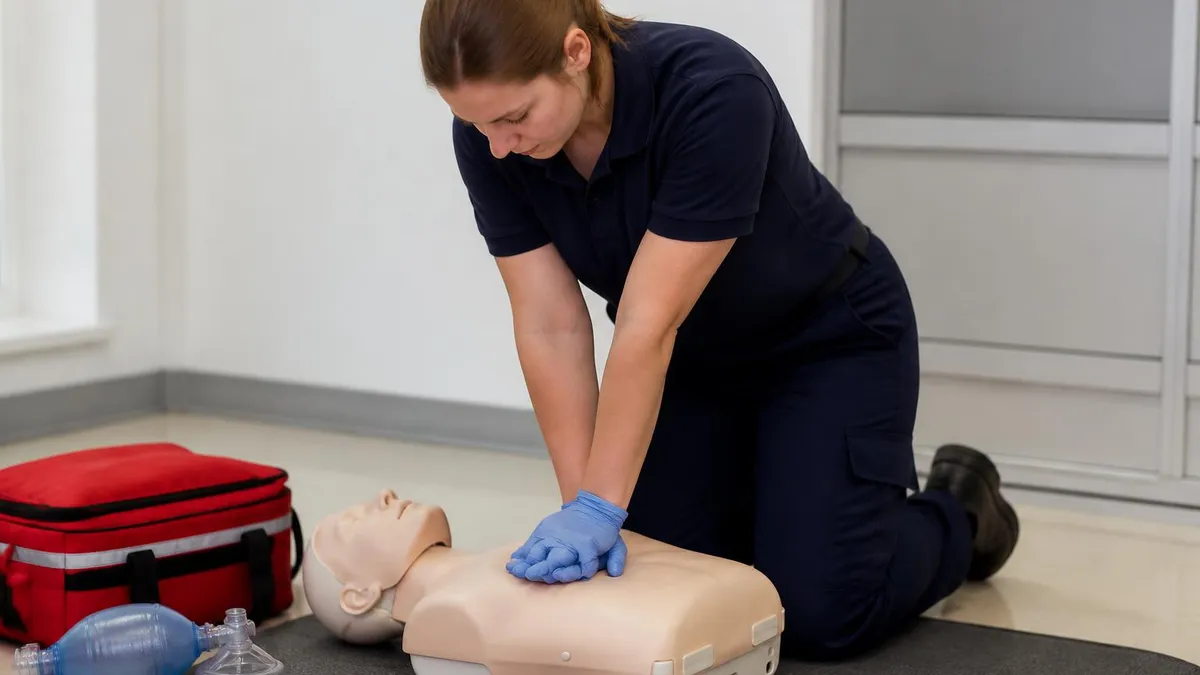
Pediatric BLS Algorithm: Complete 2026 Guide for Healthcare Providers
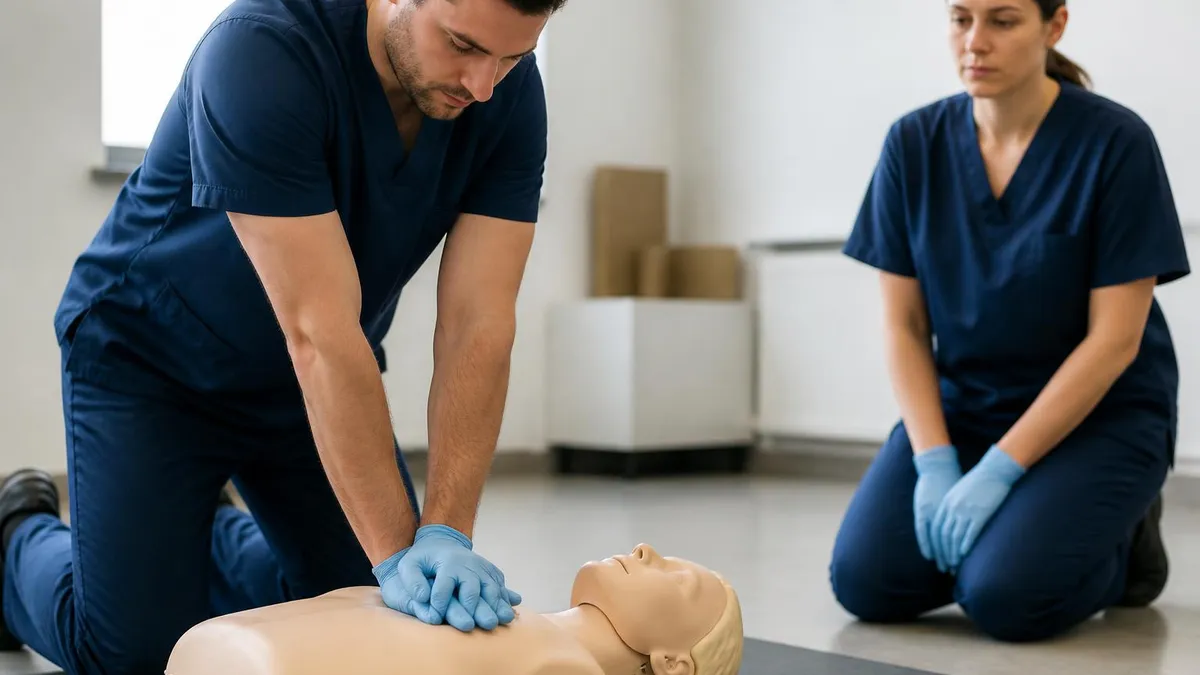
How Long Does BLS Certification Last? Complete 2026 Renewal Guide
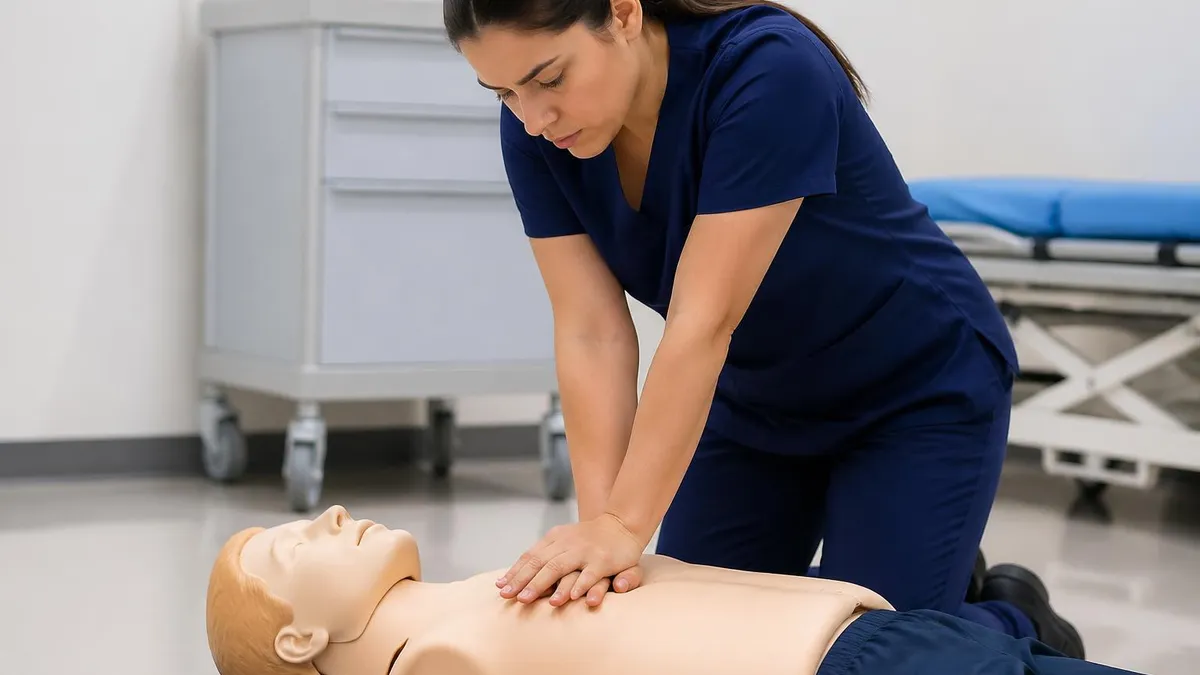
American Heart Association BLS: Certification, Renewal, Cost & What to Expect
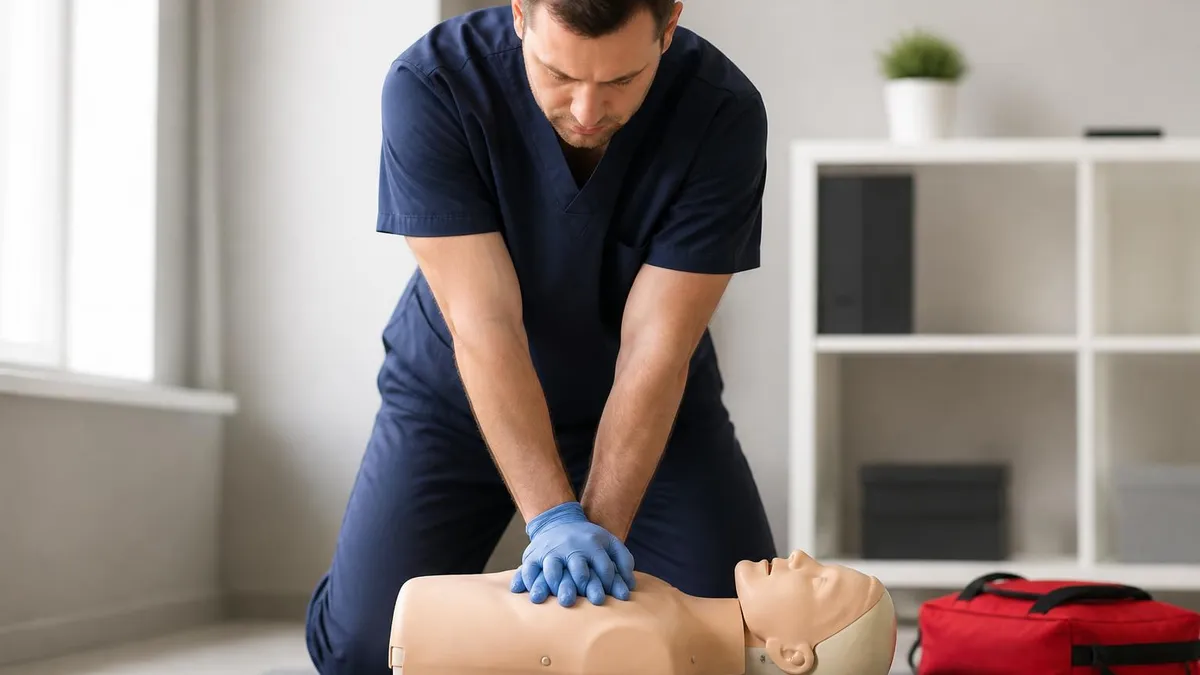
Online BLS Renewal: Complete 2026 Guide to Recertifying Your Basic Life Support Card
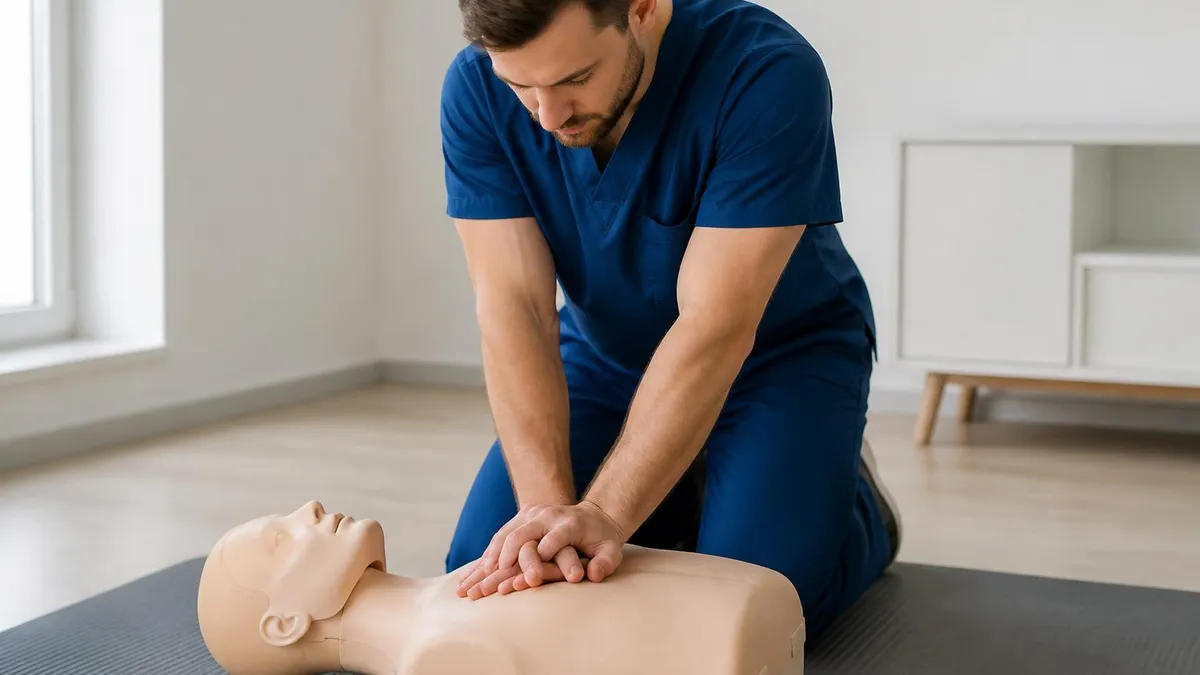
BLS vs ALS: Complete Comparison of Basic and Advanced Life Support
About the Author

Registered Nurse & Healthcare Educator
Johns Hopkins University School of NursingDr. Sarah Mitchell is a board-certified registered nurse with over 15 years of clinical and academic experience. She completed her PhD in Nursing Science at Johns Hopkins University and has taught NCLEX preparation and clinical skills courses for nursing students across the United States. Her research focuses on evidence-based exam preparation strategies for healthcare certification candidates.
Join the Discussion
Connect with other students preparing for this exam. Share tips, ask questions, and get advice from people who have been there.
View discussion (8 replies)