
American Heart Association BLS Provider Course: Certification, Exam, Renewal & How to Pass
What is a BLS certification? Complete guide to the American Heart Association BLS Provider Course: exam, renewal, cost, and how to pass first try. ✅
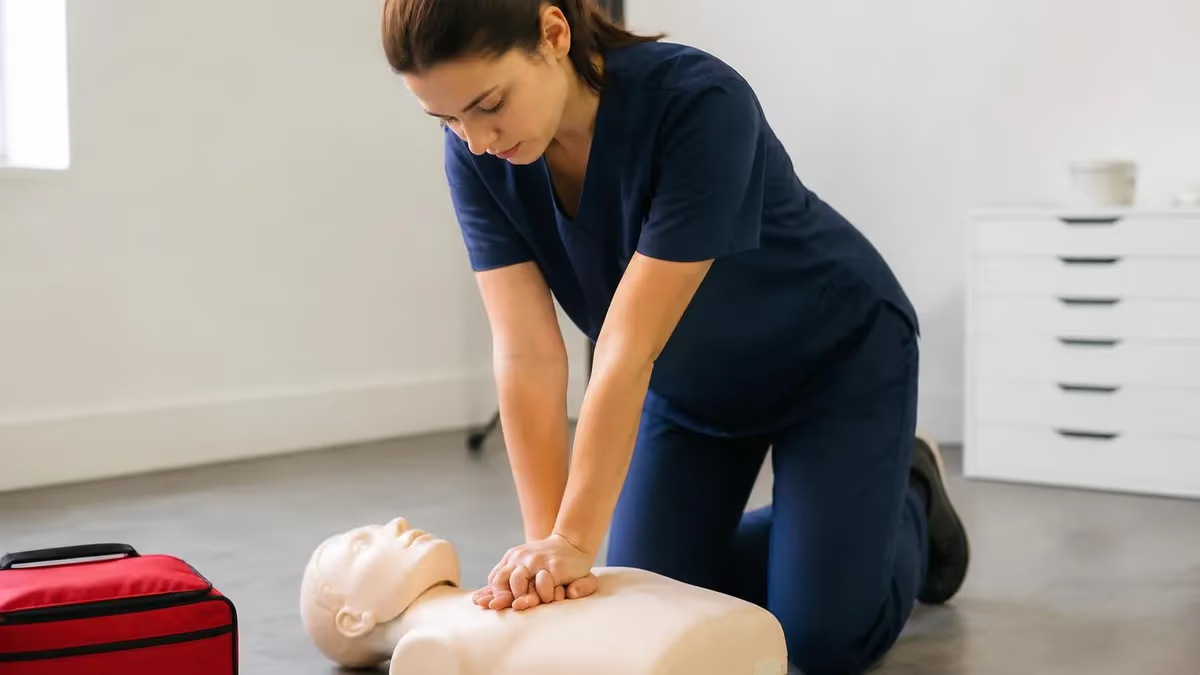
If you work in healthcare or are entering a clinical program, you have probably asked yourself: what is a BLS certification, and why does the american heart association bls provider course matter so much? BLS stands for Basic Life Support, and the AHA Provider Course is the gold-standard credential that proves you can recognize cardiac arrest, deliver high-quality chest compressions, use an AED, and manage choking emergencies. Nearly every hospital, clinic, dental office, and nursing school in the United States requires this card before you can begin patient care.
The course is designed for healthcare professionals and those preparing to enter the field, including nurses, physicians, paramedics, dental staff, respiratory therapists, medical assistants, and students. Unlike a general CPR class aimed at the public, the BLS Provider Course teaches team-based resuscitation, the chain of survival, and the precise compression depth and rate that improve survival odds. It blends lecture, hands-on skills practice, and a written exam that you must pass to earn your two-year certification card.
Many newcomers confuse BLS with ordinary CPR, and the question what does bls stand for is one of the most searched terms in the certification world. While CPR is one component of BLS, the full course covers far more: rescue breathing with a bag-mask device, two-rescuer coordination, infant and child resuscitation, and relief of foreign-body airway obstruction. Understanding this distinction early helps you set the right expectations for the classroom and the exam that follows your training session.
The American Heart Association sets the science behind the course through its Emergency Cardiovascular Care guidelines, which are updated regularly based on the latest resuscitation research. When you take an AHA BLS class, you are learning the same standards taught to emergency physicians and intensive-care nurses. That consistency is exactly why employers trust the credential and why it transfers smoothly between jobs, states, and clinical settings across the country without requiring you to re-prove your competency.
This guide walks you through everything you need to know to feel confident on exam day. We cover the course structure, the basic life support exam american heart association candidates face, how long your card lasts, the difference between initial certification and a renewal class, and the precise skills checklist instructors grade. We also compare AHA training with the American Red Cross option so you can choose the path that fits your schedule, budget, and workplace requirements.
By the end, you will understand the full timeline from enrollment to holding your eCard, the realistic cost ranges in 2026, and the study habits that help first-time test-takers pass without retaking the skills session. Whether you are certifying for the first time or returning for renewal, the goal here is simple: give you a clear, accurate roadmap so the BLS Provider Course feels straightforward rather than stressful, and so you walk in prepared.
The AHA BLS Provider Course by the Numbers
Key Facts at a Glance
| Item | Value | Details |
|---|---|---|
| Classroom Course Length | 4–4.5 hr | Initial provider course |
| Certification Validity | 2 years | Before renewal required |
| Written Exam Pass Mark | 84% | Minimum passing score |
| Typical Course Cost | $60–$120 | Varies by provider |
| Exam Questions | 25 | Multiple-choice format |
How the AHA BLS Provider Course Is Structured
You learn the science of resuscitation through video lessons or instructor-led lecture, covering the chain of survival, compression standards, AED use, and team dynamics before any hands-on work begins.
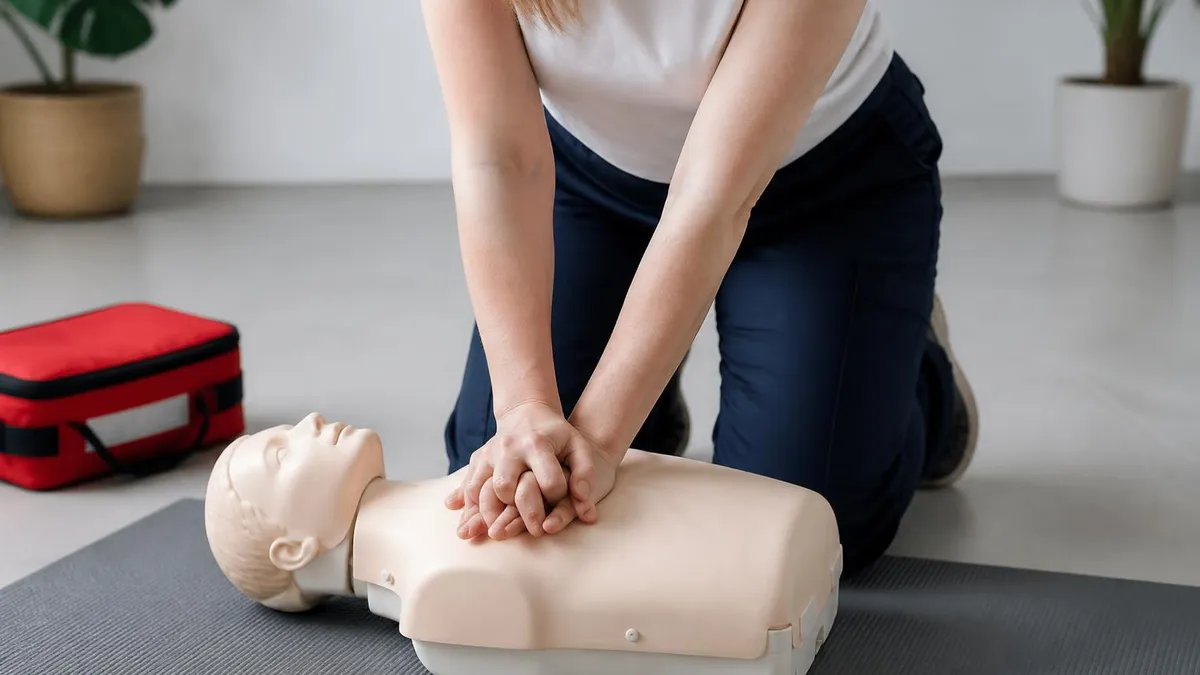
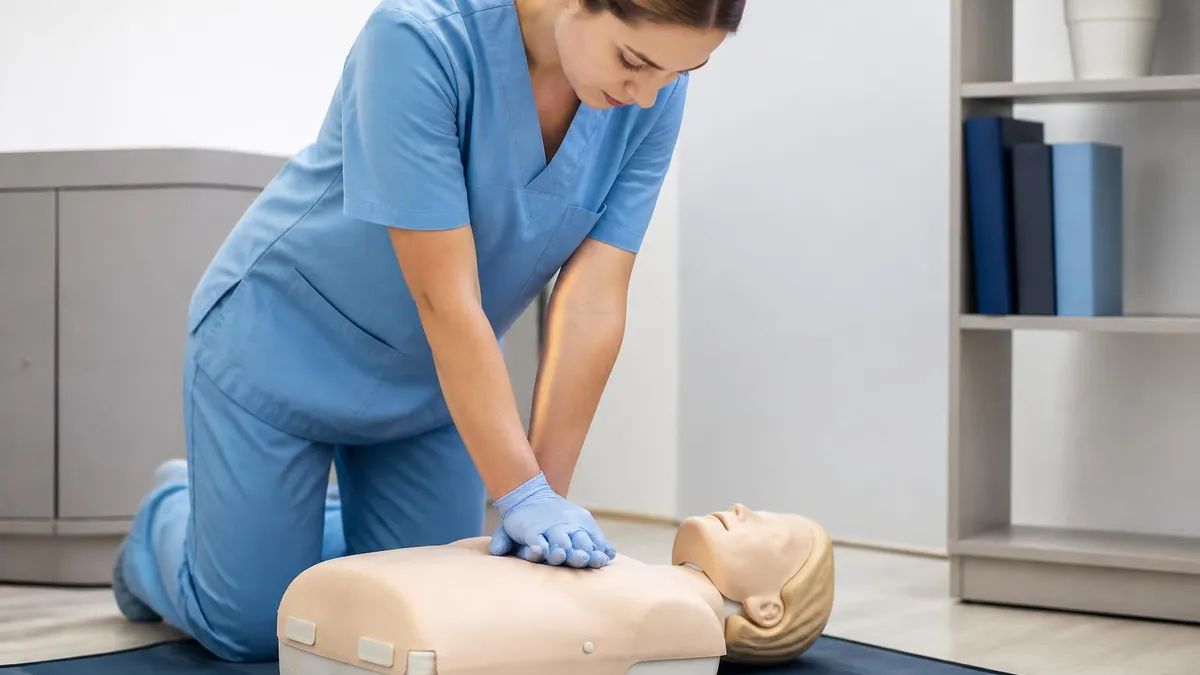
Using manikins and a real AED trainer, you rehearse adult, child, and infant CPR, bag-mask ventilation, and two-rescuer scenarios under instructor coaching until each motion feels automatic and correct.
An instructor grades you against the official AHA skills checklist. You must demonstrate correct compression depth, rate, recoil, and AED operation without prompting to meet the passing standard.
A 25-question multiple-choice test confirms your knowledge of guidelines, sequences, and decision-making. You need at least 84% to pass and receive your two-year provider eCard.
So, what is a BLS certification in practical terms? It is documented proof, issued through an AHA eCard, that you have completed the Basic Life Support Provider Course and demonstrated both the knowledge and the physical skills required to respond to a cardiac or respiratory emergency. The card carries a unique verification code that employers can check online, confirming the issue date, the training center, and the two-year expiration. Without it, most clinical roles will not let you start.
The credential is specifically built around basic life support for healthcare providers, which separates it from the lighter CPR classes offered to the general public. In a hospital code situation, you are rarely alone; you work as part of a resuscitation team. The course therefore drills team communication, role assignment, and the seamless handoff of compressions so the patient never goes long without circulation. These team dynamics are tested both in the scenarios and on the written exam itself.
To get the most out of your training, it helps to study the official AHA materials in advance. The basic life support provider manual is the primary reference and mirrors exactly what the exam covers, from compression-to-ventilation ratios to the steps of the adult and pediatric chains of survival. Reviewing it before class means the hands-on session reinforces concepts you already understand rather than introducing everything for the first time under pressure.
The science behind BLS is not arbitrary. The recommended compression rate of 100 to 120 per minute and a depth of at least two inches for adults come from large studies linking those parameters to better blood flow and higher survival. The course teaches you to minimize interruptions, allow full chest recoil between compressions, and avoid excessive ventilation. Knowing the reasoning behind each number makes the material far easier to remember on test day and in a real emergency.
BLS certification is also a stepping stone in a larger credentialing ladder. Many providers go on to earn Advanced Cardiovascular Life Support or Pediatric Advanced Life Support, both of which require a current BLS card as a foundation. Because the AHA aligns the science across all three programs, the habits you build in the BLS Provider Course, such as high-quality compressions and clear team communication, carry directly into those more advanced courses you may pursue later.
Finally, the certification matters because it is genuinely life-saving knowledge, not just a box to check. Sudden cardiac arrest claims hundreds of thousands of lives in the United States each year, and bystander or early-provider CPR can double or triple survival odds. When you hold an AHA BLS card, you are equipped to act decisively in the critical minutes before advanced help arrives, whether that emergency happens on a hospital floor or in a grocery-store parking lot.
Is BLS the Same as CPR? Understanding the AHA Basic Life Support Exam
People constantly ask, is BLS and CPR the same thing? The short answer is no, though they overlap heavily. CPR, or cardiopulmonary resuscitation, refers specifically to chest compressions combined with rescue breaths. BLS is the broader healthcare-provider course that includes CPR but adds AED operation, bag-mask ventilation, choking relief, and team-based resuscitation across adult, child, and infant patients in a structured clinical framework.
So when someone asks is bls the same as cpr, the most accurate response is that CPR is a core skill inside BLS. A community CPR class teaches you to keep a person alive until help arrives. The BLS Provider Course assumes you may be that professional help, working within a team, using equipment, and following AHA guidelines precisely. The basic life support exam american heart association issues reflects that wider, more clinical scope.
AHA BLS Provider Course: Advantages and Drawbacks to Weigh
- +Recognized by virtually every U.S. hospital and clinical employer
- +Aligns with the latest AHA resuscitation science and guidelines
- +eCard verifies instantly online for employer credentialing
- +Serves as the required foundation for ACLS and PALS
- +Blended online-plus-skills option fits busy work schedules
- +Transfers cleanly across states and between employers
- −Requires an in-person skills session even with online learning
- −Card expires every two years and needs renewal
- −Hands-on testing can feel stressful for first-time candidates
- −Costs more than a basic community CPR class
- −Some workplaces only accept AHA, not other providers
- −Scheduling a skills session may require travel to a training center
AHA Basic Life Support Exam Prep Checklist
- ✓Read the AHA Basic Life Support Provider Manual cover to cover before class.
- ✓Memorize the adult compression rate of 100 to 120 per minute.
- ✓Learn the adult compression depth of at least two inches.
- ✓Know the 30:2 compression-to-ventilation ratio for single-rescuer adult CPR.
- ✓Review the 15:2 ratio for two-rescuer infant and child CPR.
- ✓Practice the steps of the adult, child, and infant chains of survival.
- ✓Understand correct AED pad placement for adults and pediatric patients.
- ✓Rehearse bag-mask ventilation without delivering excessive volume.
- ✓Take at least one full-length practice test to gauge your readiness.
- ✓Confirm your class is a Provider Course, not a community CPR class.
- ✓Bring photo ID and arrive early to your scheduled skills session.
- ✓Get a good night's sleep so you perform compressions with full energy.
The written exam alone does not earn your card
Even if you ace the 25-question written test, you cannot receive your AHA BLS eCard without passing the in-person skills check. An instructor must observe you delivering high-quality compressions and operating an AED. This is why fully online "certifications" that skip the hands-on session are not accepted by hospitals and most healthcare employers.
One of the most common questions candidates ask is how long does bls certification last. The answer is two years from the date your eCard is issued. The American Heart Association sets this window because resuscitation guidelines evolve and skills degrade without practice. Studies show that CPR competency, particularly correct compression depth and rate, can decline noticeably within months of training, so the two-year cap keeps providers current and ensures their hands-on abilities stay sharp.
When your card nears expiration, you do not start from scratch; you take a basic life support renewal class instead. The renewal course condenses the material because it assumes you already understand the fundamentals. It refreshes any updated guidelines, re-tests your skills against the AHA checklist, and administers an exam similar to the initial one. If you pass, you receive a fresh eCard valid for another two years from the renewal date, not the old expiration.
You should plan your renewal before the card actually expires. Many employers require a continuously valid credential, and a lapsed card can mean you are pulled from patient-care duties until you re-certify. A practical rule is to schedule the renewal class four to eight weeks before your expiration date. That buffer protects you against scheduling conflicts and gives you time to retake the skills test in the rare event you do not pass on the first attempt.
If your card has already expired, policies vary by training center. Some allow you to take the shorter renewal course within a short grace period, while others require you to repeat the full initial Provider Course once you are significantly past the expiration. Because there is no universal grace period guaranteed by the AHA, the safest approach is simply to renew on time and avoid the question of whether a lapsed card still qualifies you for the abbreviated class.
Cost is another factor in the renewal decision. A renewal class is often priced similarly to or slightly below the initial course, and you can review typical pricing in the basic life support bls provider manual resources and provider listings. Some employers cover the fee entirely or reimburse you after you submit your new eCard, so it is always worth asking your manager or human-resources department before paying out of pocket for a renewal.
Keep a digital and printed copy of your eCard once you renew. Hospitals increasingly accept the QR-coded electronic card, but having a backup means you are never scrambling during a credentialing audit. Note your new expiration date in a calendar with a reminder set for roughly two months ahead. Treating renewal as a routine, scheduled task rather than a last-minute emergency keeps your certification continuous and your clinical privileges uninterrupted year after year.
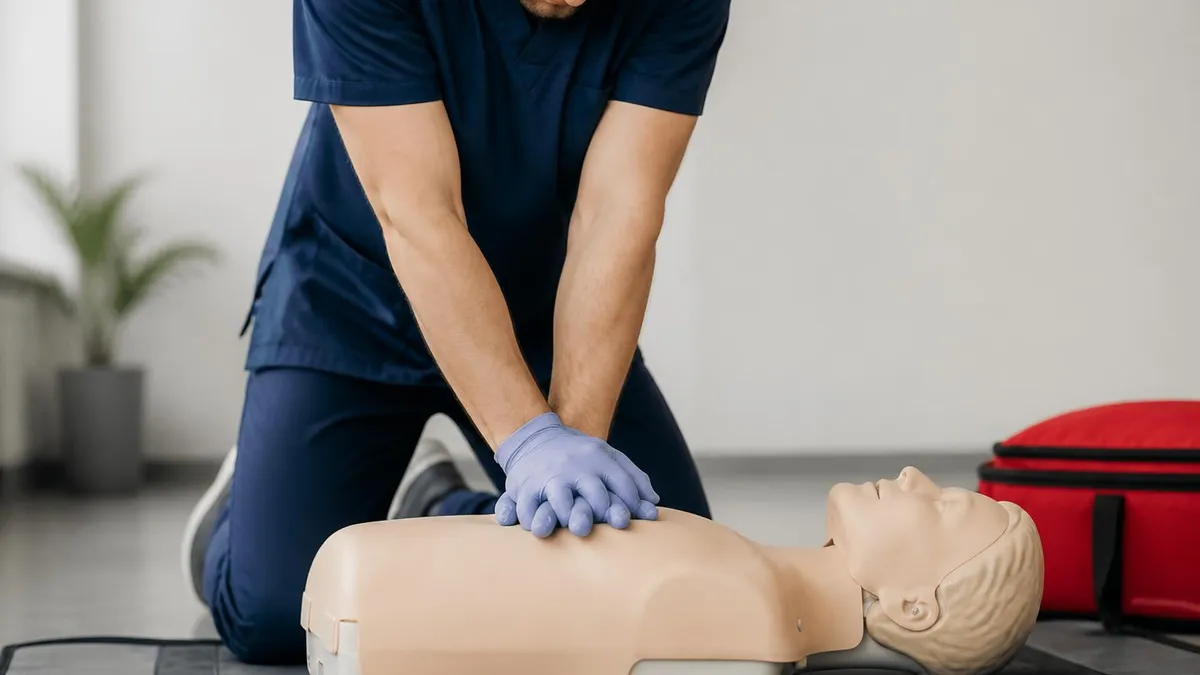
Some websites advertise instant, fully online BLS certification with no skills session. Most hospitals, nursing schools, and licensing boards will not accept these because they lack the required hands-on competency check. Always confirm your course follows the American Heart Association or American Red Cross model with an in-person skills evaluation before you pay.
When choosing where to certify, the two dominant options are the American Heart Association and the American Red Cross basic life support program. Both are nationally recognized, both follow the same underlying resuscitation science published through the International Liaison Committee on Resuscitation, and both issue cards valid for two years. The practical decision usually comes down to which credential your specific employer or school accepts, so it is worth confirming that requirement before you enroll in either program.
The AHA is historically the most widely required credential in hospital settings, and many clinical employers list it by name. The american red cross basic life support course is equally valid in terms of science and is sometimes more convenient or affordable depending on your location. If your employer accepts either, you can compare schedules, prices, and class formats freely. If they specify one organization, follow that requirement to avoid having to re-certify with the accepted provider.
Both organizations offer a blended-learning format that combines online coursework with an in-person skills session, as well as full instructor-led classes. The blended option is popular among working professionals because you complete the knowledge portion on your own schedule and then attend a shorter, focused hands-on session. Regardless of which provider you choose, the in-person skills evaluation remains mandatory because no legitimate provider issues a card without verifying your physical competency in person.
If you are searching for a convenient location, look for a basic life support course near me through the official AHA or Red Cross course locators, which list authorized training centers and instructors in your area. Authorized centers guarantee that your card is genuine and verifiable. Be cautious of unaffiliated sites promising certification without any in-person component, as these often produce cards that fail employer verification and waste both your time and money.
Price differences between the two organizations are usually modest, typically a difference of a few dollars rather than a dramatic gap. Class availability and instructor scheduling often matter more than the small cost variance. In rural areas, you may find one provider has far more available sessions than the other, which can be the deciding factor when you need to certify quickly to start a new job or clinical rotation on a fixed timeline.
Ultimately, the quality of instruction and your own preparation matter more than the logo on the card. Both AHA and Red Cross courses teach you to recognize cardiac arrest, deliver high-quality compressions, and use an AED effectively. Choose the accepted provider, prepare thoroughly with practice questions and the official manual, and you will walk away with a credential that opens clinical doors and, far more importantly, prepares you to save a life.
With your course booked and your manual reviewed, the final step is smart, focused preparation that turns knowledge into confident performance. Start by taking timed practice tests under realistic conditions. Sitting for a full set of questions without notes reveals exactly which topics you have mastered and which need another review pass. Aim to consistently score above the 84% passing threshold on practice exams before your test date so the real thing feels familiar rather than intimidating when you sit down.
Pay special attention to the numbers, because the exam loves them. Memorize the adult compression rate of 100 to 120 per minute, the depth of at least two inches, the 30:2 ratio for single-rescuer adult CPR, and the 15:2 ratio for two-rescuer infant and child resuscitation. Write these on a flashcard and review them daily in the week leading up to your class. Numerical recall is the single highest-yield study activity for the written portion of the exam.
Do not neglect the hands-on rehearsal. If you have access to a manikin through your school or workplace, practice the full sequence of checking responsiveness, calling for help, starting compressions, and attaching an AED. If not, rehearse the motions mentally and physically on a firm pillow at home. The skills test rewards smooth, automatic movement, and the more you have practiced the choreography, the calmer you will be when the instructor is watching closely.
Understand the reasoning, not just the rules. When you know why full chest recoil matters, that it lets the heart refill with blood between compressions, the correct answer becomes obvious even if the question is worded unfamiliarly. The same applies to minimizing interruptions and avoiding excessive ventilation. Reasoning through the physiology protects you against tricky scenario questions that test understanding rather than rote memorization of an isolated fact.
On the day of your course, manage the logistics so they never become a distraction. Arrive early, bring a photo ID, wear comfortable clothing that allows you to kneel and perform compressions, and eat beforehand so your energy stays steady. Compressions are physically demanding, and arriving rested and fed genuinely improves your skills-test performance. Treat the session as the real practice it is, and the certification simply confirms what you have already demonstrated.
Finally, keep your perspective on what this credential really means. The BLS Provider Course is not just a hoop to jump through for a job; it is training that prepares you to act in the most critical moments of someone's life. Approach your preparation with that seriousness, lean on quality practice questions to find and close your knowledge gaps, and you will not only pass the exam on your first attempt but also carry skills that genuinely matter long after the test is over.
Sample BLS - Basic Life Support Practice Questions
Try these questions from our free BLS - Basic Life Support practice tests. The correct answer and an explanation follow each question.
A BLS provider at a community event finds a victim unresponsive with no pulse and a prominent tattoo reading 'DNR.' How should the provider respond?
- A. Honor the tattoo as a valid DNR and withhold CPR
- B. Begin CPR because a tattoo is not a legally recognized DNR order
- C. Call poison control for guidance before acting
- D. Only apply an AED but skip chest compressions
Answer: B. Begin CPR because a tattoo is not a legally recognized DNR order
Tattoos are not legally recognized DNR documents; without a valid written order, BLS providers should initiate CPR.
How long should you allow the AED to analyze the victim's heart rhythm before prompting it to deliver a shock?
- A. The AED completes analysis automatically; do not interrupt it
- B. Press the analyze button repeatedly to speed up the process
- C. Manually assess rhythm for 10 seconds first
- D. Begin compressions during analysis to save time
Answer: A. The AED completes analysis automatically; do not interrupt it
The AED performs its own rhythm analysis automatically; all movement and CPR must stop and the rescuer must not touch the victim during analysis.
A healthcare provider fails to initiate CPR on a patient with a treatable cardiac arrest and the patient dies. This could constitute:
- A. Assault
- B. Negligence by omission
- C. Battery
- D. Informed consent violation
Answer: B. Negligence by omission
Negligence by omission occurs when a provider fails to perform a duty of care that a reasonably prudent provider would have performed.
An AED analyzes the heart rhythm and advises 'No shock recommended.' What is the correct next action?
- A. Repeat the analysis immediately
- B. Deliver a manual shock anyway
- C. Resume CPR immediately, starting with chest compressions
- D. Check for a pulse and wait
Answer: C. Resume CPR immediately, starting with chest compressions
If no shock is advised, resume CPR immediately beginning with chest compressions, as the rhythm may be non-shockable (e.g., PEA or asystole).
BLS Questions and Answers
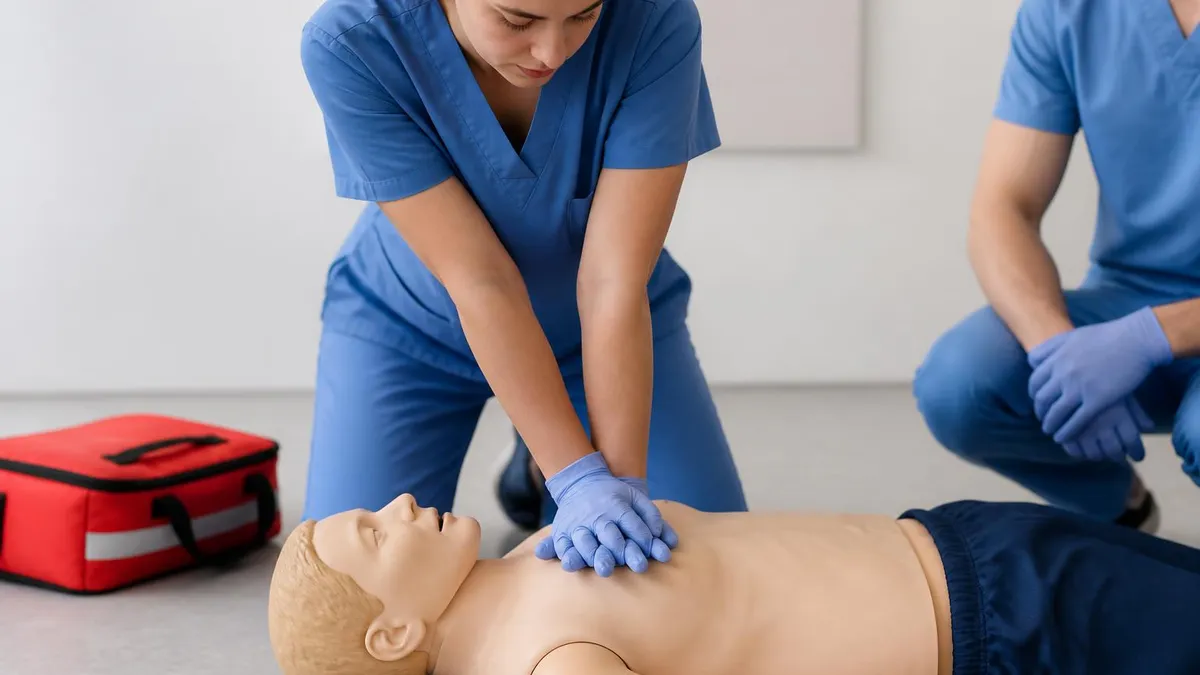
BLS CPR Training: Complete Guide to Certification, Requirements, and What to Expect
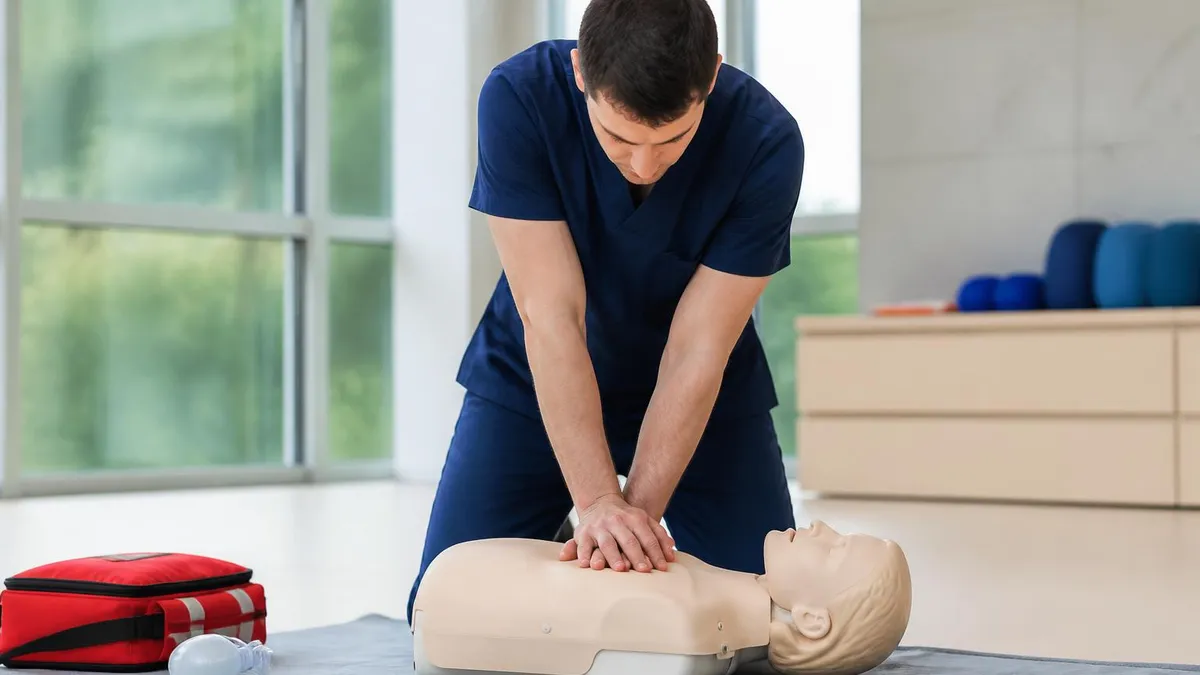
BLS Certification Cost: 2026 Pricing, What's Included & How to Save
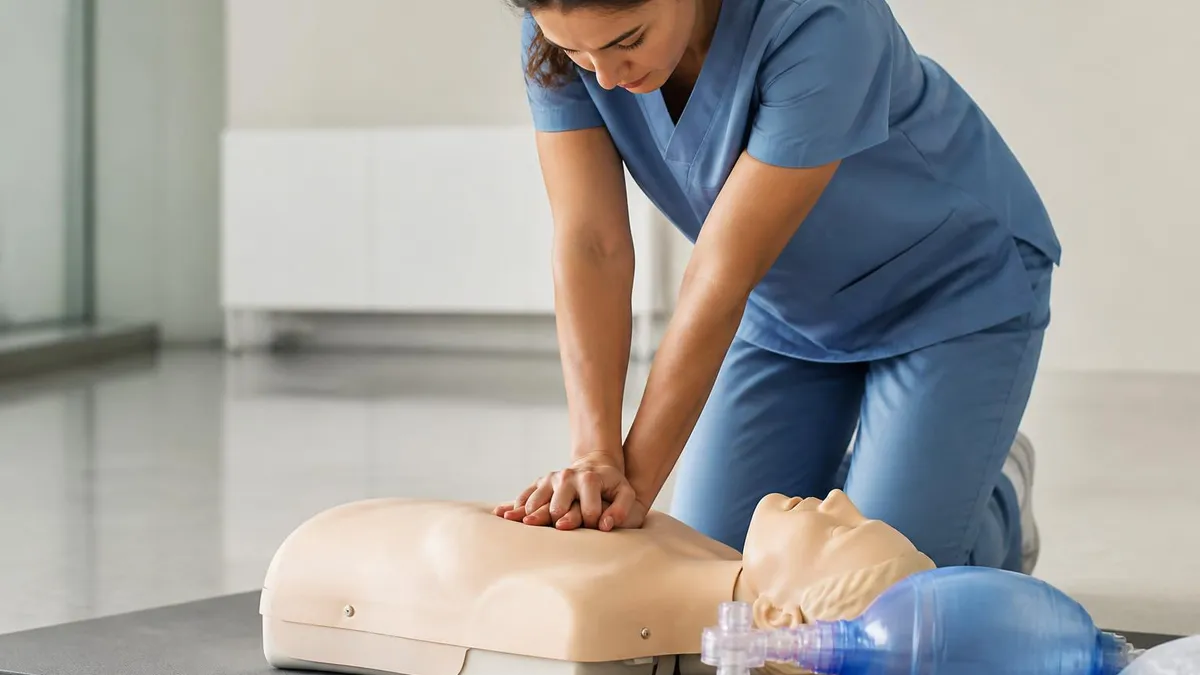
BLS Course Online: What Is a BLS Certification, Requirements, Renewal, and How to Pass
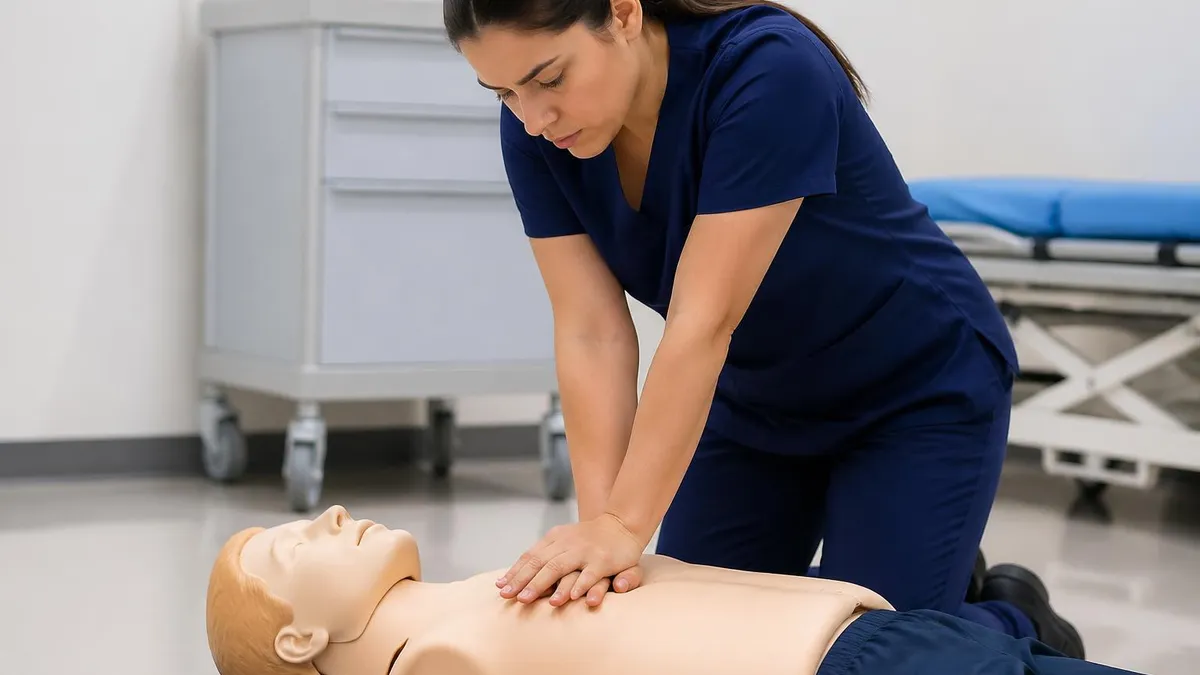
American Heart Association BLS: Certification, Renewal, Cost & What to Expect
Red Cross BLS Certification: Course, Cost, and Renewal Guide
About the Author

Registered Nurse & Healthcare Educator
Johns Hopkins University School of NursingDr. Sarah Mitchell is a board-certified registered nurse with over 15 years of clinical and academic experience. She completed her PhD in Nursing Science at Johns Hopkins University and has taught NCLEX preparation and clinical skills courses for nursing students across the United States. Her research focuses on evidence-based exam preparation strategies for healthcare certification candidates.