
How to Renew BLS Certification: Complete 2026 October Guide to Recertifying Your Card
🎯 Learn how to renew BLS certification in 2026 October. Step-by-step guide to AHA & Red Cross renewal classes, costs, online options, and skills check.
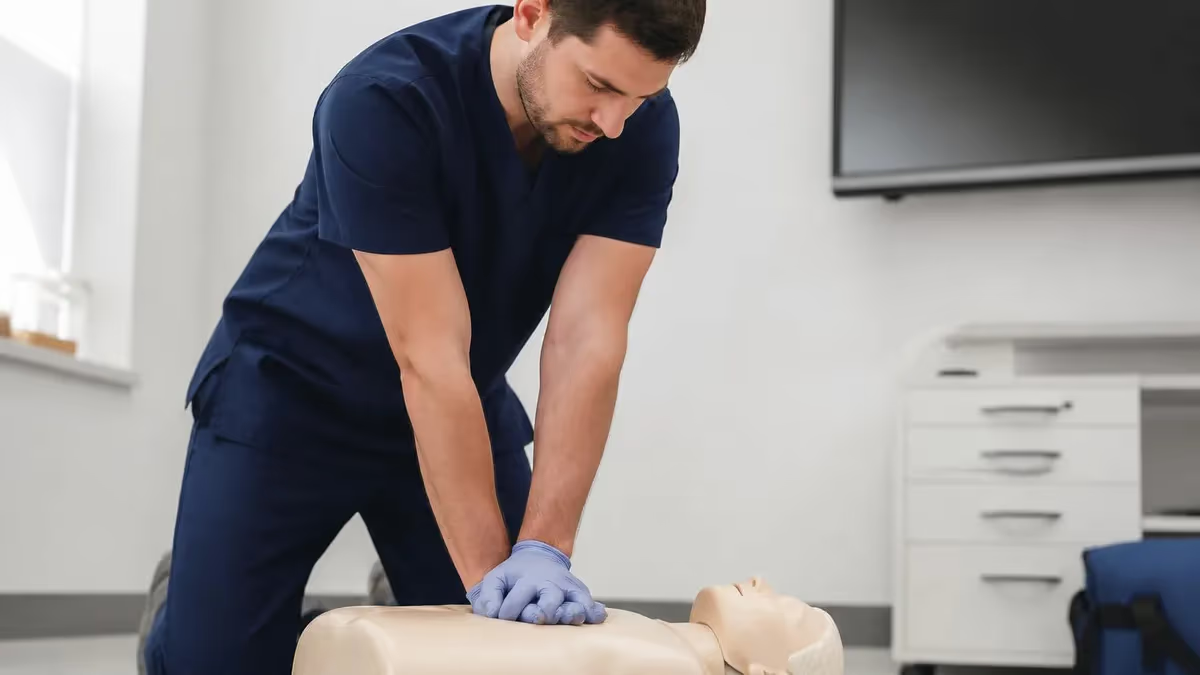
Learning how to renew BLS certification is something every healthcare provider faces every two years, and the process has become significantly more flexible in 2026. Whether your card is from the American Heart Association, the American Red Cross, or another approved provider, renewal generally involves a refresher course, a written exam, and a hands-on skills evaluation. Understanding what is a bls certification and how it differs from a standard CPR card is the first step toward a smooth, stress-free recertification experience this cycle.
BLS, which stands for Basic Life Support, is the entry-level resuscitation credential required for nurses, paramedics, dental staff, respiratory therapists, medical assistants, and most clinical employees in hospitals and outpatient settings. The credential expires exactly 24 months after your initial course completion date, and most employers will not allow you to clock in with a lapsed card. Planning your renewal at least 60 days before the expiration date gives you breathing room to schedule, study, and retake any failed station without panic.
The good news is that renewing is typically faster, cheaper, and less stressful than your original certification. Renewal classes condense the material because instructors assume you already understand the basics of chest compressions, ventilations, and AED operation. Many providers now offer blended-learning formats where the cognitive portion happens online at your own pace and the skills portion is completed in person in roughly 60 to 90 minutes, compared with the four-to-six-hour initial course most providers remember from nursing school.
Knowing is bls and cpr the same question is one of the most common confusions among healthcare workers approaching renewal. The short answer is no — BLS includes everything in a layperson CPR course plus team-based resuscitation, two-rescuer techniques, infant and child algorithms, advanced airway considerations, and bag-mask ventilation. Renewal courses test all of these scenarios, not just adult CPR, so you cannot substitute a generic community CPR class for a true BLS recertification.
This guide walks you through every option for renewing in 2026, from the traditional in-person AHA class to fully remote video-conference renewals approved by the Red Cross. We cover real pricing from the major providers, what to study before your skills check, how to handle an expired card, and the specific situations where your employer may or may not accept an online-only renewal. By the end you will know exactly which renewal pathway fits your schedule, your budget, and your employer's policies.
We have also included practice quizzes throughout this article that mirror the actual AHA and Red Cross written exams. Healthcare providers who complete two or three full practice tests before walking into their skills check pass on the first attempt at a rate above 95 percent, according to instructor surveys. If you have not opened your BLS textbook since your last renewal, do not panic — the algorithms have only minor updates this cycle, and the muscle memory comes back quickly once you start practicing on a manikin.
BLS Renewal by the Numbers

BLS Renewal Requirements & Eligibility
Most providers allow renewal up to 30 days past expiration. After that grace period you must take the full initial provider course rather than the abbreviated renewal class.
BLS renewal is designed for healthcare professionals and clinical students. Laypersons should take Heartsaver CPR/AED instead, which is shorter and less expensive.
You must score 84 percent or higher on a 25-question multiple-choice exam covering adult, child, and infant scenarios, AED use, and team dynamics.
Instructors verify high-quality chest compressions, bag-mask ventilation, AED operation, choking relief, and switching rescuer positions on adult, child, and infant manikins.
Bring a government-issued photo ID and your previous BLS card. Some employers require you to upload both before the class begins.
Choosing between AHA and Red Cross renewal classes is the most common decision point for healthcare providers approaching their two-year mark. Both organizations issue cards that meet The Joint Commission, OSHA, and state licensing-board standards, but employer policies sometimes mandate one over the other. Check your facility's clinical-education portal before paying for a course — accepting the wrong provider's card means paying twice. Hospital systems in the Northeast and California still lean heavily toward AHA, while Red Cross has gained substantial market share in the Midwest and Southern states since 2022.
The AHA basic life support exam is the industry-standard assessment built around the 2025 Guidelines Update for CPR and Emergency Cardiovascular Care. The written portion includes 25 questions and you need 84 percent to pass. AHA renewal courses are taught only through authorized Training Centers and independent instructors, so quality and price vary regionally. Expect to pay between $65 and $110 for a blended renewal in most US metro areas, with rural locations sometimes charging less and major hospital networks offering free internal classes for employees.
The american red cross basic life support renewal program is the primary competitor and is increasingly popular with travel nurses and per-diem staff because of its simplified online scheduling. Red Cross renewals also run roughly $80 to $105 and follow the same ILCOR science as AHA, but the digital card delivery, instructor-led video conferencing option, and 2-year validity are identical. The skills checklist is functionally the same — high-quality compressions at 100 to 120 per minute, depth of 2 to 2.4 inches in adults, and full chest recoil.
For healthcare providers who travel frequently or work in multiple states, both AHA and Red Cross cards are nationally recognized. The credential follows you, not your state license. However, you should always verify with your nursing board if you hold a compact multistate license, because some boards require specifically the AHA Healthcare Provider card for new graduates entering the workforce. Existing employees renewing for the second or third time rarely encounter this restriction. Always print or screenshot your eCard immediately after passing.
A third option worth mentioning is the American Safety and Health Institute (ASHI) and the Health and Safety Institute (HSI), which offer OSHA-compliant BLS renewals at typically lower prices. These cards are accepted by many outpatient clinics, dental offices, and assisted-living facilities but are sometimes rejected by hospital HR departments. If you work in a hospital, stick with AHA or Red Cross to avoid an expensive surprise. If you work in dentistry or long-term care, ASHI is often the cheapest legitimate option, sometimes for as little as $45 per renewal.
Knowing basic life support for healthcare providers validity rules and renewal windows helps you avoid the panic of a card expiring mid-shift. The two-year clock starts on the day you complete the course, not the day you registered. Mark the date in your phone calendar with a 90-day, 60-day, and 30-day warning. Many employers automatically suspend clinical privileges the morning your card expires, even by one day, which can mean lost wages, lost benefits, and a remediation meeting with your manager that nobody wants on their record.
Finally, remember that your renewal cost may be reimbursable. Most hospitals reimburse 100 percent of BLS renewal fees because the credential is a condition of employment. Submit your receipt and your new eCard through your HR education portal within 30 days of the class to receive reimbursement on your next paycheck. Independent contractors, travel nurses on 1099 contracts, and dental hygienists running their own businesses can deduct the cost as a continuing-education expense on Schedule C of their federal tax return, often saving an extra 20 to 30 dollars.

BLS Practice Test Questions
Prepare for the BLS - Basic Life Support exam with our free practice test modules. Each quiz covers key topics to help you pass on your first try.
BLS High-Quality CPR & Provider Skills
BLS Exam Questions covering BLS High-Quality CPR & Provider Skills. Master BLS Test concepts for certification prep.
BLS Special Situations & Scenarios
Free BLS Practice Test featuring BLS Special Situations & Scenarios. Improve your BLS Exam score with mock test prep.
BLS Adult, Child & Infant Resuscitation
BLS Mock Exam on Adult, Child & Infant Resuscitation. BLS Study Guide questions to pass on your first try.
BLS Airway Management & Ventilation
BLS Test Prep for Airway Management & Ventilation. Practice BLS Quiz questions and boost your score.
BLS Automated External Defibrillator (AED)...
BLS Questions and Answers on Automated External Defibrillator (AED) Use. Free BLS practice for exam readiness.
BLS Certification: Cardiac Arrest
BLS Mock Test covering Certification: Cardiac Arrest. Online BLS Test practice with instant feedback.
BLS Certification: Choking
Free BLS Quiz on Certification: Choking. BLS Exam prep questions with detailed explanations.
BLS Certification: Respiratory Arrest
BLS Practice Questions for Certification: Respiratory Arrest. Build confidence for your BLS certification exam.
BLS Chain of Survival
BLS Test Online for Chain of Survival. Free practice with instant results and feedback.
BLS CPR Techniques & Procedures
BLS Study Material on CPR Techniques & Procedures. Prepare effectively with real exam-style questions.
BLS Legal & Ethical Considerations
Free BLS Test covering Legal & Ethical Considerations. Practice and track your BLS exam readiness.
BLS Post-Resuscitation Care
BLS Exam Questions covering Post-Resuscitation Care. Master BLS Test concepts for certification prep.
Online, Blended & In-Person Renewal Formats
The traditional in-person renewal class runs about three hours and combines a brief lecture, video segments, instructor-led practice, the written exam, and the skills test in one sitting. This is the right choice for providers who learn best in a tactile environment, who failed their last skills check, or whose employer's policy specifically prohibits remote learning. You walk out with a temporary card the same day and the official eCard arrives within 48 hours by email.
In-person classes are also the format used by most hospital-based training centers, which often subsidize the cost for employees down to zero dollars. The downside is scheduling — you must reserve a 3-hour block on a workday and travel to the training site. Many facilities run renewal sessions monthly or bi-weekly, so book at least three weeks in advance during heavy renewal months of December, January, and the summer travel-nurse onboarding wave.
Is Online BLS Renewal Worth It?
- +Complete cognitive portion on your own schedule, day or night
- +Unlimited practice attempts on the written exam
- +No travel time to a training center for the lecture portion
- +Lower cost in many cases, often $20-$40 below in-person
- +Adaptive learning targets your specific weak areas
- +Digital eCard delivered to your phone within 48 hours
- +Works perfectly for travel nurses and multi-state providers
- −Some hospitals reject fully online cards and require AHA in-person
- −Skills check still required in person for AHA and Red Cross
- −Requires reliable high-speed internet and a working webcam
- −Less hands-on practice time than a traditional 4-hour class
- −Self-paced learners may procrastinate and miss expiration date
- −Tech issues during the exam can lock you out for 24 hours
- −Some employers do not reimburse non-AHA online providers

Pre-Renewal Checklist: What to Do Before Your Class
- ✓Find your current BLS card and confirm the exact expiration date
- ✓Verify with HR which provider (AHA, Red Cross, ASHI) your employer accepts
- ✓Compare blended vs in-person prices in your zip code
- ✓Register for a class at least 30 days before your card expires
- ✓Download the current BLS Provider Manual (2025 Guidelines edition)
- ✓Review the adult, child, and infant CPR algorithms one week before
- ✓Take at least two full-length practice exams and review missed questions
- ✓Practice compression rate of 100-120 per minute with a metronome
- ✓Bring photo ID, current card, and confirmation email to the skills session
- ✓Save your new eCard to your phone wallet and submit to HR within 30 days
Renew Within 30 Days of Expiration or Retake the Full Course
Both AHA and Red Cross allow a 30-day grace period after your card's expiration date during which you can still take the abbreviated renewal class. After day 31 you are required to complete the full initial BLS Provider course, which is nearly twice as long and roughly 30 percent more expensive. Set a calendar reminder for 90 days before expiration to avoid this costly trap and to keep your clinical privileges uninterrupted.
Preparing for a BLS renewal exam does not require weeks of study, but the providers who pass on the first attempt almost always invest two to four hours of focused review. The aha basic life support exam tests the 2025 Guidelines Update, which made small but important changes to opioid-associated emergencies, second-rescuer ventilation timing, and the use of feedback devices. If your last renewal was before 2024, you have at least one full guidelines cycle to catch up on, and a quick read of the AHA Highlights document is worth the 20 minutes it takes to read.
Start your prep by downloading the current BLS Provider Manual. The AHA version is roughly 80 pages, the Red Cross version is similar in length, and both are written in plain language with abundant photos. Read through the adult CPR chapter first, then the child and infant chapters, then the choking and special-situations chapter. Reading the entire manual takes about 90 minutes at a normal pace. Make notes on anything that feels unfamiliar — those are the questions you will likely see on the written exam.
The basic life support exam american heart association written portion contains 25 multiple-choice questions and you must score at least 84 percent, which means you can miss only four questions. The most commonly missed questions involve compression-to-ventilation ratios for two-rescuer infant CPR (15 to 2, not 30 to 2), the precise depth of compressions for children (one-third the depth of the chest), and the timing of pulse checks (no more than 10 seconds). Drill these facts until they are automatic — they appear on nearly every renewal exam.
Take at least two full-length timed practice exams before your renewal class. Studies of CPR instructor pass-rate data show that providers who complete one practice exam pass on the first attempt 78 percent of the time, while those who complete three or more practice exams pass 96 percent of the time. The difference is not knowledge — it is exam-taking confidence. Practice tests expose the few facts you forgot and rebuild your timing under pressure, so the real exam feels like a familiar repeat rather than a high-stakes surprise.
Pay special attention to team dynamics questions, which have grown more prominent on renewal exams since 2020. Expect questions about the role of the team leader, closed-loop communication, the importance of swapping compressors every two minutes to prevent fatigue, and how to handle a teammate who is performing a skill incorrectly. The answer is almost always to speak up clearly, respectfully, and immediately — never wait for the next pulse check or for an instructor to intervene during a real arrest.
Special situations are another reliable source of exam questions and many providers under-study this chapter. You should know the modifications for pregnant patients (manual left uterine displacement, not a tilted backboard), opioid overdose response (naloxone in addition to high-quality CPR), drowning (rescue breaths first if you are trained), and hypothermia (longer pulse checks of up to 60 seconds). Each scenario appears on roughly half of all renewal exams in some form, so familiarity here can be the difference between passing and retaking.
Finally, plan to physically practice on a manikin if at all possible. Many libraries, fire stations, and YMCAs offer free open-practice manikin time. Twenty minutes of hands-on compressions the day before your skills check rebuilds muscle memory faster than any amount of reading. If you cannot access a manikin, a firm couch cushion or a rolled-up sleeping bag is a reasonable substitute for practicing compression rhythm and depth at home using a metronome app set to 110 beats per minute.
If your employer requires BLS, a Heartsaver CPR/AED card will not satisfy the requirement, even though both are issued by the AHA. Heartsaver is the layperson course and lacks two-rescuer techniques, bag-mask ventilation, and the team-based assessment your hospital requires. Verify the exact name printed on your card — it must say Basic Life Support Provider, not Heartsaver. Showing up to your shift with the wrong card can mean being sent home without pay until you complete the correct course.
The skills check is the portion that makes most providers nervous, but in practice it is the easiest piece to pass if you prepare. The instructor will ask you to demonstrate adult one-rescuer CPR with AED, adult two-rescuer CPR with bag-mask ventilation, child CPR, infant CPR, and adult and infant choking relief. Each station takes about 5 to 10 minutes. The entire skills evaluation typically runs 45 to 75 minutes including instructor feedback, and the failure rate is below 5 percent among providers who completed the practice quizzes.
High-quality compressions are the single most evaluated skill. The instructor watches for a rate of 100 to 120 compressions per minute, a depth of at least 2 inches in adults (but not more than 2.4 inches), full chest recoil between compressions, and a compression fraction above 60 percent — meaning you spend more than 60 percent of code time actively compressing rather than pausing. Manikins now provide real-time visual or audible feedback, so practicing with one before your class makes the difference between borderline and easy passing performance.
Bag-mask ventilation is the second most common reason for skill-station retests. The E-C clamp technique, where your thumb and index finger form an E around the mask while your remaining three fingers form a C lifting the jaw, takes practice to perform consistently. Each breath should last about one second and produce visible chest rise, no more. Over-ventilation — squeezing the bag too fast or too hard — actively harms cardiac arrest patients by increasing intrathoracic pressure and reducing venous return to the heart, and instructors specifically watch for this.
For child and infant skills, the depth and hand position change but the rate stays the same. In children one-third the chest depth (about 2 inches), with one or two hands depending on the child's size. In infants the depth is again one-third (about 1.5 inches), using two fingers for one-rescuer or the two-thumb encircling-hands technique for two-rescuer CPR. The two-thumb technique generates better blood flow and is preferred whenever two rescuers are present, so use it on the skills station if you have a partner.
AED operation should feel automatic by now. Turn on the device, attach pads in the correct positions (upper right chest and lower left side, or anterior-posterior for infants and small children), let it analyze without anyone touching the patient, and clearly call out clear before delivering the shock. Pediatric pads or a pediatric key should be used for patients under 8 years or under 25 kg. If pediatric pads are not available, adult pads are acceptable for any child or infant in cardiac arrest — never withhold defibrillation for lack of the correct pad.
If you fail any station on the first attempt, do not panic — most providers are allowed one immediate retest after a few minutes of practice with the instructor. The retest is rarely a problem because the instructor has just shown you exactly what to fix. The red cross basic life support course and AHA both follow this remediation policy, though specific Training Centers may have stricter rules about how many retests are allowed before you must reschedule the entire class.
After you pass, your provider issues an eCard within 24 to 48 hours, delivered by email with a verification link your employer can scan to confirm authenticity. Save the PDF to your phone wallet, your email, and a cloud drive so you never lose it. Print one paper copy for your home file. Submit a copy to HR immediately along with your renewal receipt for reimbursement. Then set a 22-month calendar reminder so the next renewal happens before your card expires and never within the dangerous final 30-day grace window.
Beyond the mechanics of passing the renewal class, a few practical strategies will save you time, money, and stress in 2026. The biggest mistake providers make is waiting until the last week. Training centers in every major metro area book solid in December, January, and June, which are the heaviest renewal months because new-graduate nurses and travel nurses tend to cluster their original certifications in spring graduation and fall onboarding. If you wait until your final week, you may not find an opening and may have to drive an hour or pay rush-class premiums.
If you work at a hospital, check your education portal first — most facilities run free internal renewal classes monthly or quarterly. These are often the highest-quality options because the instructors know the equipment and protocols you actually use on shift, and the cost is zero. Internal classes also count toward your annual continuing-education hours in many states, which is a second financial benefit if your nursing license requires CE credits separately from the BLS renewal itself, saving roughly $40 to $80 in CE fees.
For multi-state and travel nurses, consider timing your renewal so the new card expires during a quiet personal month rather than during peak holiday travel or your busiest assignment block. Because the new card is valid for exactly 24 months from the class date, you have full control over which month future renewals fall in. Strategic timing can also align your BLS renewal with ACLS, PALS, or other credentials so you tackle all certifications during the same two-week study sprint every two years, which most providers find easier mentally.
Budget-conscious providers should look beyond the headline class fee. Some Training Centers charge separately for the eCard, the textbook, or a make-up skills session, while others bundle everything into one price. ASHI and HSI courses average $40 to $70 and are perfectly legal in many work settings, while premium hospital-affiliated AHA renewals can reach $130 in expensive metros. Compare the all-in cost with employer reimbursement rules in mind — a $110 AHA class that your hospital fully reimburses is cheaper than a $55 ASHI class your hospital rejects.
If you have test anxiety, request a quiet room for the written portion or schedule a private skills appointment rather than a group session. Most instructors will accommodate reasonable requests, and Red Cross specifically markets one-on-one renewals for providers with documented learning differences. Bringing a friend or coworker who is also renewing converts a stressful afternoon into a low-key practice session, especially during the manikin-skills phase where you can rehearse two-rescuer CPR with someone you already know and trust.
Keep digital backups of every BLS card you have ever held. Some state nursing boards and hospital credentialing offices request your full certification history during license renewal or job applications, especially for positions requiring background checks. A simple folder in your cloud drive labeled BLS with PDFs of every card you have earned takes 30 seconds to create and may save you days of frustration later when a credentialing specialist asks for proof of continuous certification spanning the last 5 or 10 years.
Finally, treat BLS renewal as an opportunity, not a chore. The 2025 Guidelines refreshed several important details, especially around opioid emergencies and post-arrest care that you may not have practiced since your last renewal. A genuinely engaged afternoon of study will sharpen the skills you may someday use on a coworker, a stranger in a parking lot, or a family member at home. The card is just paper — the readiness it represents is what actually matters when seconds count and a real person needs the highest-quality CPR you can deliver.
BLS Questions and Answers
Pediatric BLS Algorithm: Complete 2026 Guide for Healthcare Providers
How Long Does BLS Certification Last? Complete 2026 Renewal Guide
American Heart Association BLS: Certification, Renewal, Cost & What to Expect
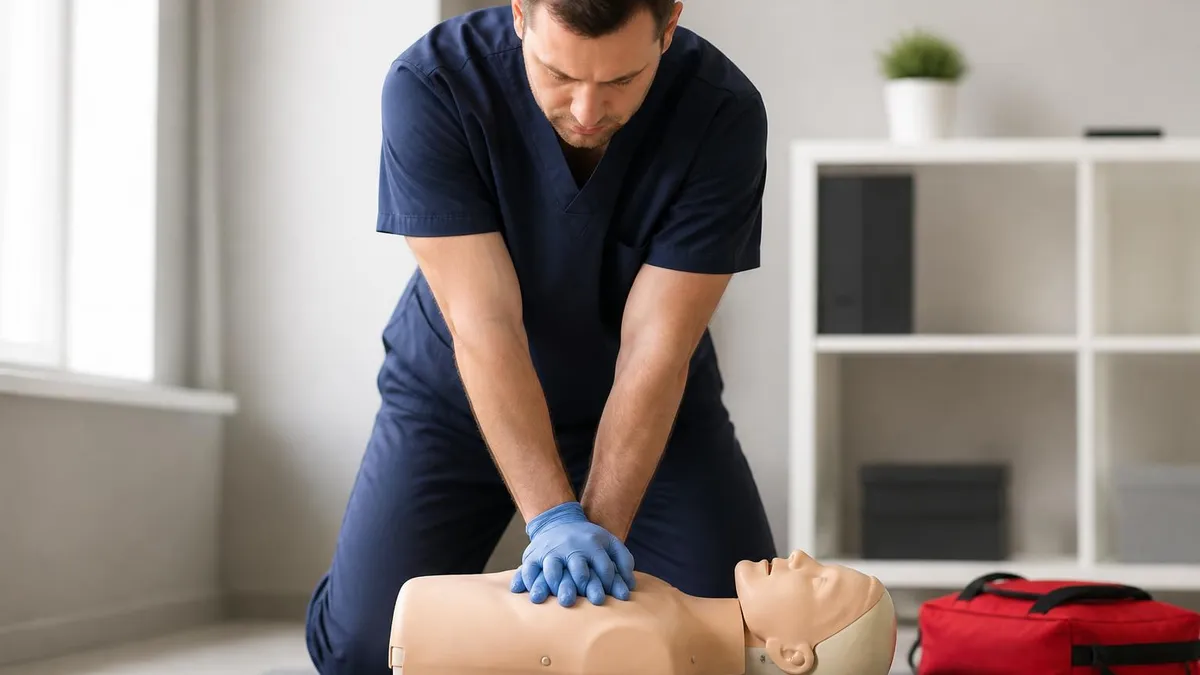
Online BLS Renewal: Complete 2026 Guide to Recertifying Your Basic Life Support Card
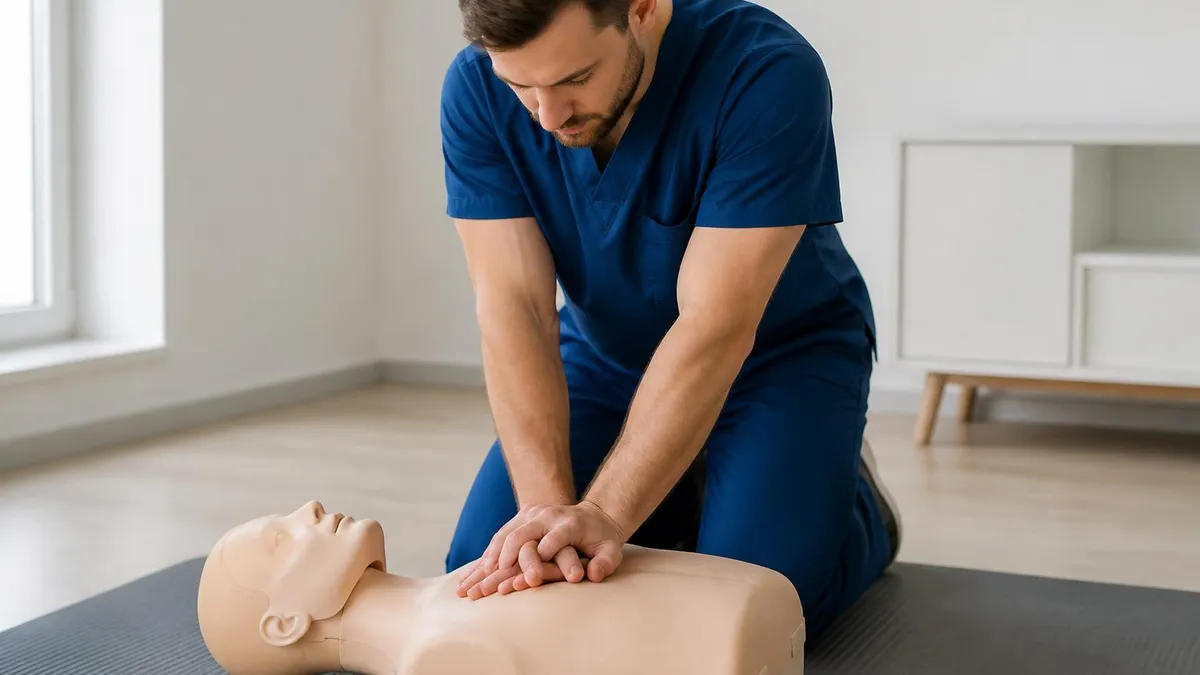
BLS vs ALS: Complete Comparison of Basic and Advanced Life Support
About the Author

Registered Nurse & Healthcare Educator
Johns Hopkins University School of NursingDr. Sarah Mitchell is a board-certified registered nurse with over 15 years of clinical and academic experience. She completed her PhD in Nursing Science at Johns Hopkins University and has taught NCLEX preparation and clinical skills courses for nursing students across the United States. Her research focuses on evidence-based exam preparation strategies for healthcare certification candidates.
Join the Discussion
Connect with other students preparing for this exam. Share tips, ask questions, and get advice from people who have been there.
View discussion (8 replies)