
BLS Provider Certification: Complete 2026 September Guide to the Exam, Renewal, and Becoming Certified
🔎 What is a BLS certification? Complete BLS provider certification guide—exam format, renewal, AHA vs Red Cross, and free practice tests.
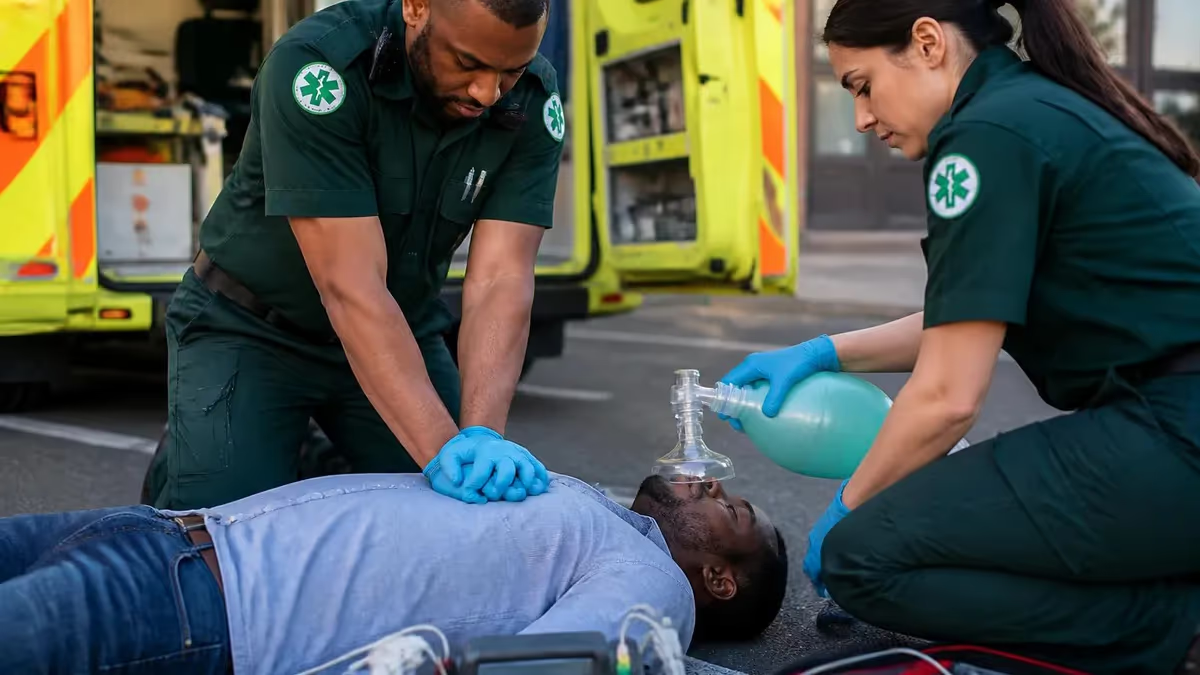
A BLS provider certification is the credential that proves you can deliver high-quality cardiopulmonary resuscitation, operate an automated external defibrillator, and manage a choking or breathing emergency in a clinical setting. Many people first ask what is a BLS certification when an employer lists it as a hiring requirement. In short, it is a structured, hands-on course followed by a skills check and a written exam that verifies you meet national resuscitation standards set by organizations like the American Heart Association and the American Red Cross.
So what does BLS stand for? BLS stands for Basic Life Support, and it forms the foundation of every higher-level emergency course, including ACLS and PALS. The certification is designed primarily for people who respond to cardiac and respiratory emergencies as part of their jobs, though anyone may enroll. If you have ever wondered how long does basic life support certification last, the answer is two years, after which you must complete a renewal course to keep your card active and valid.
The most common question we hear is whether BLS is the same as CPR. They overlap heavily, but they are not identical. CPR is a single skill—chest compressions and rescue breaths—while BLS is a complete provider-level framework that adds team dynamics, AED integration, rhythm recognition basics, and rescue techniques for infants, children, and adults. Understanding that distinction is the first step toward passing the exam and using the credential correctly in a healthcare environment.
BLS provider certification matters because hospitals, clinics, dental offices, EMS agencies, and nursing programs treat it as a baseline safety requirement. Without a current card, many clinical roles will not let you start orientation, sit for licensure, or work patient-facing shifts. Employers verify the card during onboarding and again at each renewal cycle, so keeping it current is not optional—it is a condition of employment that directly affects your ability to clock in and care for patients.
This guide walks you through every part of earning and keeping the credential: who needs it, what the AHA basic life support exam looks like, how the American Red Cross basic life support course compares, what the skills test demands, and how to study efficiently. We will also cover renewal timing, costs, and the most common reasons candidates fail so you can avoid them. By the end, you will know exactly what to expect on test day.
Throughout, we link to free practice questions modeled on the real provider exam. Active recall through practice testing is one of the most reliable ways to convert passive reading into exam-ready knowledge, especially for compression rates, depths, and ratios that the written test loves to ask about. Whether you are certifying for the first time or recertifying before your card expires, treat this page as your central study hub for BLS provider certification in 2026.
BLS Provider Certification by the Numbers
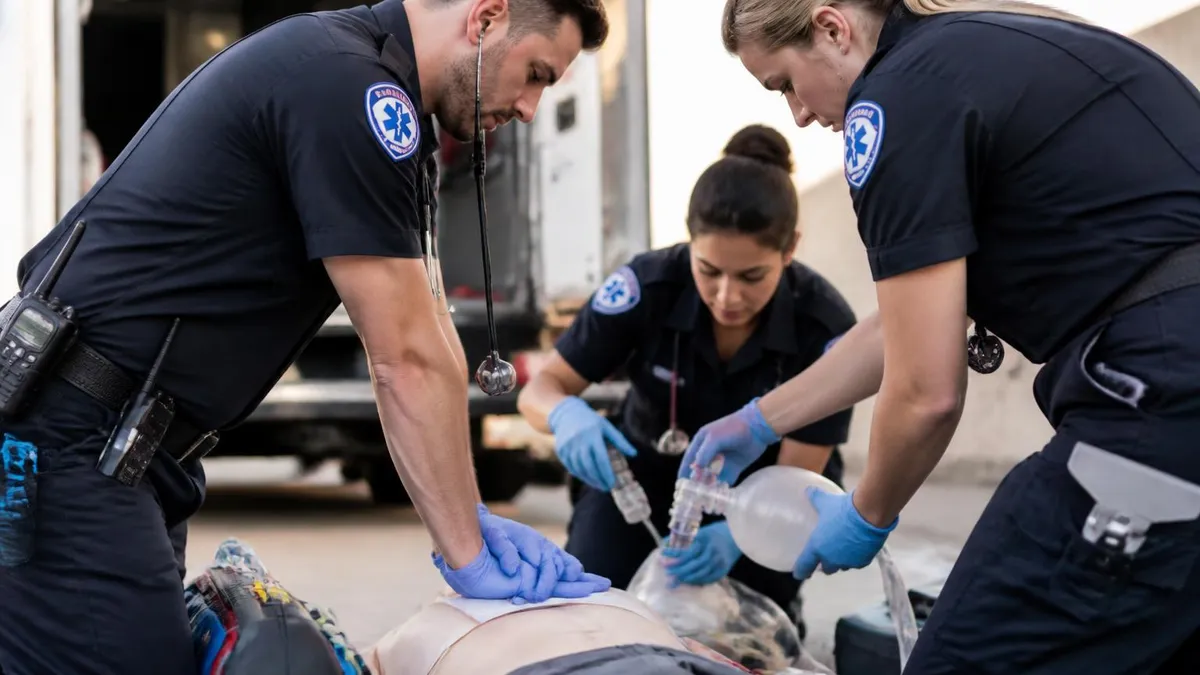
Your BLS Provider Certification Path
Select an AHA or American Red Cross training center. Both are accepted by most US healthcare employers. Confirm your job requires provider-level BLS, not the simpler Heartsaver course, before you register.
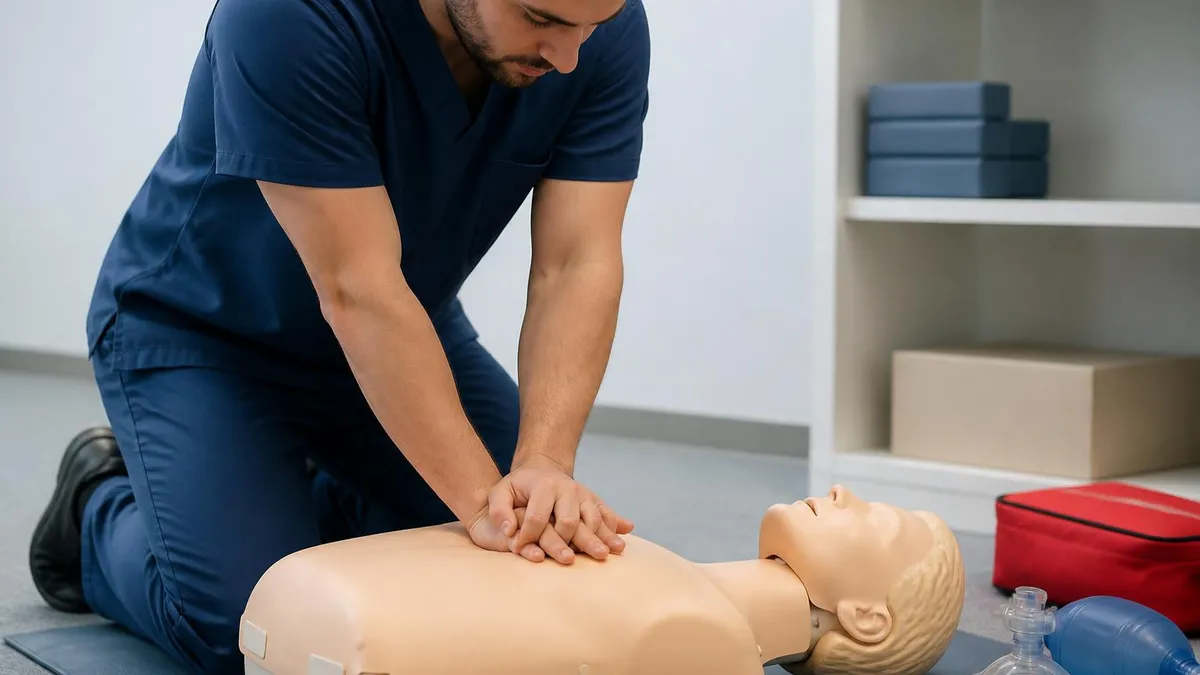
Attend a 4–5 hour in-person session or a blended option that pairs online modules with an in-person skills session. You practice compressions, ventilations, and AED use on adult, child, and infant manikins.
An instructor scores you on a hands-on adult and infant CPR scenario plus AED operation. You must meet compression depth, rate, and recoil benchmarks without coaching to earn a passing check.
Score at least 84% on a 25-question multiple-choice test covering the chain of survival, compression ratios, team roles, and special situations like opioid overdose and choking relief.
After both tests, your training center issues a digital provider card valid for two years. Employers verify it online by the card code, so save the PDF and a screenshot for onboarding.
Basic life support for healthcare providers is built around one goal: keeping oxygenated blood moving to the brain and heart until advanced help arrives or a normal rhythm returns. The course teaches you to recognize cardiac arrest within ten seconds, activate the emergency response system, and begin high-quality compressions immediately. Every other skill—rescue breathing, AED use, and team coordination—is layered on top of that compression-first foundation, which is why the written exam returns to compression quality again and again.
High-quality CPR has measurable standards you must memorize. For adults, you compress at 100 to 120 compressions per minute, push at least 2 inches deep but no more than 2.4 inches, allow full chest recoil between compressions, and minimize interruptions to under 10 seconds. The compression-to-ventilation ratio is 30:2 for a single rescuer on any age patient, and 15:2 for two rescuers working on an infant or child. These numbers appear on nearly every version of the exam.
The course also covers the AED in depth because early defibrillation dramatically improves survival from shockable rhythms like ventricular fibrillation. You learn to power on the device, attach pads correctly for adults and pediatrics, clear the patient before analysis and shock, and resume compressions immediately after a shock is delivered. Providers practice swapping the AED into the resuscitation flow without adding long pauses, since every second off the chest lowers the odds of a successful outcome.
A defining feature of provider-level BLS is team dynamics. Unlike a lone bystander, healthcare providers usually respond in groups, so the curriculum teaches closed-loop communication, clear role assignment, and how to rotate compressors every two minutes to prevent fatigue. The exam may ask which team member calls for the AED, how the team leader confirms a task was completed, or when compressor rotation should occur. Mastering these scenarios separates a passing provider from a struggling one.
Choking relief and rescue breathing round out the skill set. You learn abdominal thrusts for responsive adults and children, back blows and chest thrusts for infants, and what to do when a choking victim becomes unresponsive. The course distinguishes between an adult who needs a pulse check before breaths and an infant whose anatomy demands a gentler technique. If you are unsure how long does it take to get BLS certification, most candidates finish the entire course and both exams in a single day.
Finally, the curriculum addresses special situations such as opioid-associated emergencies, drowning, and arrest in pregnancy. The 2025 guidelines emphasize naloxone administration alongside CPR during suspected overdose, and the exam increasingly tests this. Understanding the full scope of what BLS covers helps you see why employers treat the credential as a genuine competency rather than a formality—it certifies that you can act decisively in the first critical minutes of an emergency.
AHA Basic Life Support Exam Format Explained
The AHA basic life support exam is a closed-book, multiple-choice written test, typically 25 questions, that you must pass with a minimum score of 84%. That means you can miss no more than four questions. Items focus on compression rate and depth, the 30:2 and 15:2 ratios, the chain of survival, and AED operation across adult, child, and infant patients.
The basic life support exam American Heart Association style favors scenario questions over rote definitions. You might read a short vignette and choose the next best action, such as when to switch compressors or how to manage an unresponsive choking adult. Reviewing realistic practice questions beforehand is the most efficient way to recognize these patterns and lock in the exact numbers the test rewards.
Is a BLS Provider Certification Worth It?
- +Meets the hiring requirement for nearly every patient-facing healthcare job
- +Teaches life-saving skills you can use in any emergency, on or off the clock
- +Completes in a single day, including both the written and skills exams
- +Digital eCard is easy to store, share, and verify during onboarding
- +Forms the prerequisite foundation for ACLS, PALS, and other advanced courses
- +Accepted nationwide whether issued by the AHA or the American Red Cross
- −Expires after two years, requiring a renewal course to stay valid
- −Course cost of $60–$110 is often paid out of pocket if not employer-funded
- −Skills test must be completed in person—no fully online shortcut counts
- −Compression and ratio numbers require memorization and regular refreshing
- −Fully online 'certifications' may be rejected by employers and boards
- −Requires scheduling around limited in-person skills session availability
BLS Provider Exam Prep Checklist
- ✓Confirm your employer requires provider-level BLS, not the Heartsaver course.
- ✓Register with an AHA or American Red Cross authorized training center.
- ✓Download and review the official provider manual before class.
- ✓Memorize the adult compression rate of 100–120 per minute.
- ✓Memorize compression depth: at least 2 inches, no more than 2.4 inches for adults.
- ✓Learn the 30:2 single-rescuer and 15:2 two-rescuer infant and child ratios.
- ✓Practice the full AED sequence for adult and pediatric patients.
- ✓Review opioid overdose and choking relief special situations.
- ✓Complete timed practice tests to hit the 84% passing benchmark.
- ✓Practice compressions on a feedback manikin before the skills test.
- ✓Bring photo ID and arrive early for the in-person skills session.
- ✓Save your digital eCard PDF for employer verification after passing.
BLS is provider-level; CPR is one skill within it
If you are asking whether BLS and CPR are the same, remember this: every BLS provider performs CPR, but not every CPR course makes you a BLS provider. Healthcare employers specifically require the provider-level credential because it adds team dynamics, AED integration, and pediatric protocols that a basic community CPR class does not cover.
Your BLS provider card is valid for two years from the date you pass, and letting it lapse can pull you off the schedule at work. A basic life support renewal class is shorter than the initial course because it assumes you already know the fundamentals and simply need to refresh your skills and verify continued competency. Most renewal courses run two to three hours in person, or even faster through a blended HeartCode renewal that pairs online modules with a brief skills check.
Timing matters. Many training centers allow you to renew up to a few months before your expiration date without losing any time on your new card, since the clock resets from the new completion date in most programs. Waiting until the card has already expired can be a problem: some employers and boards treat an expired card as a full lapse, which may force you to retake the entire initial provider course rather than the streamlined renewal version.
The renewal written exam covers the same core content as the first-time test—compression metrics, ratios, AED use, and special situations—but you should never assume the numbers have stayed identical. Resuscitation guidelines are updated on a regular cycle, and the 2025 updates refined recommendations on naloxone use during suspected opioid emergencies. Reviewing the current basic life support provider manual before your renewal ensures you are tested on the latest standards, not outdated ones.
Renewal costs are typically similar to or slightly lower than the initial course, ranging from roughly $50 to $90 depending on your region and whether your employer covers it. Some hospital systems run in-house renewal sessions for staff at no charge, so check with your education department before paying out of pocket. If you certify through a community training center, compare a few options, since prices and skills-session availability vary widely even within the same city.
A common mistake is assuming a fully online renewal with no skills component will satisfy your employer. As with initial certification, a legitimate renewal must include an instructor-verified hands-on skills check. The AHA and the American Red Cross both require this, and credentials that skip it are frequently rejected during compliance audits. If a renewal seems suspiciously cheap and entirely online with an instant card, that is a strong warning sign worth investigating before you spend money.
To stay ahead of expiration, set a calendar reminder ninety days before your card lapses and book your renewal session early, especially around nursing school start dates and hospital onboarding cycles when classes fill quickly. Keeping a digital copy of your current eCard on your phone makes verification painless during audits, travel assignments, or a sudden floor reassignment. Treating renewal as a scheduled, routine task—rather than a last-minute scramble—protects both your credential and your ability to work.
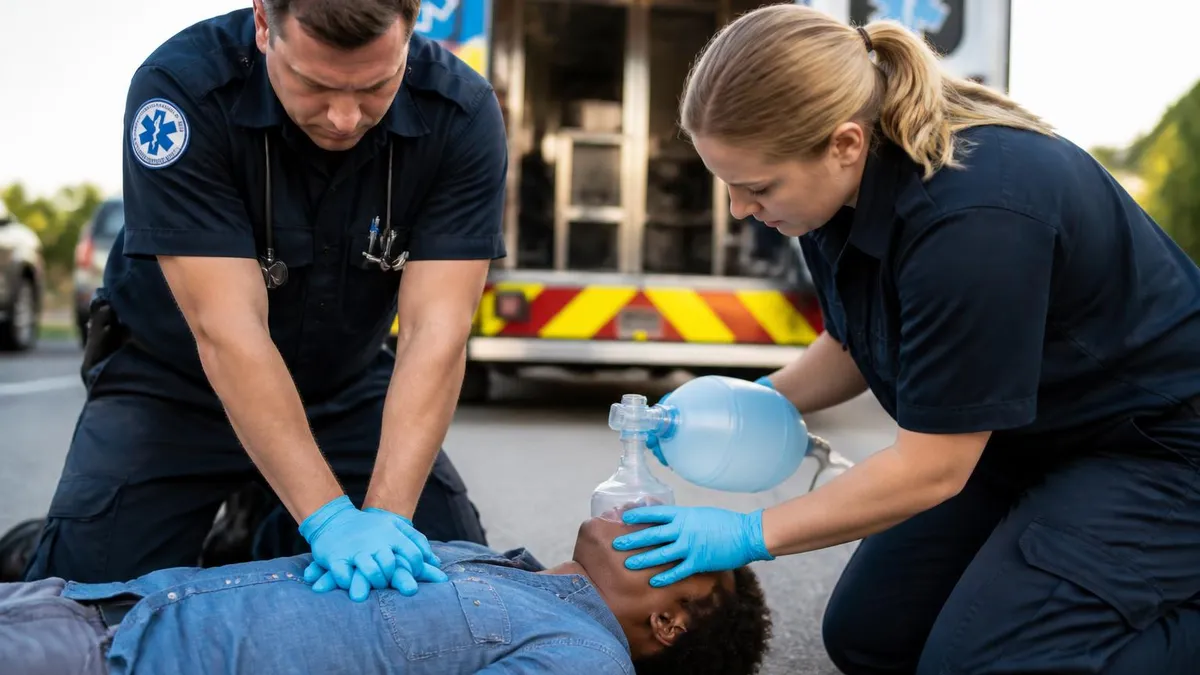
An expired BLS card can remove you from the patient-care schedule until you recertify, and a full lapse may require retaking the entire initial provider course instead of the shorter renewal. Set a reminder 90 days before your expiration date and book your renewal class early—skills sessions fill fast during nursing-school and hospital onboarding seasons.
Two organizations dominate BLS provider certification in the United States: the American Heart Association and the American Red Cross. Both are nationally recognized, both meet the same resuscitation science standards, and both issue credentials that the overwhelming majority of US healthcare employers accept. The American Heart Association is the most widely requested by hospitals and is often the default name people use when they search for the basic life support exam American Heart Association style, but the Red Cross is fully equivalent in scope and acceptance.
The American Red Cross basic life support course follows the same provider-level curriculum: high-quality CPR for all ages, AED integration, team dynamics, ventilation, and special situations. The red cross basic life support course also offers blended learning and a digital card, and its credential is valid for two years just like the AHA version. If your employer does not specify a provider, either organization will satisfy the requirement, so you can choose based on schedule, price, and class location.
That said, always confirm with your specific employer or program before registering. A small number of facilities, residency programs, or state agencies explicitly require an AHA card and will not accept any substitute, even an equivalent one. This is not a judgment about quality—it is a procurement and compliance preference. Checking first prevents the frustrating and costly scenario of completing a full course only to learn your card brand is not accepted at your workplace.
Pricing between the two is broadly comparable, generally landing in the $60 to $110 range for an initial course, with renewals costing somewhat less. Availability is often the deciding factor: in some regions AHA classes are easier to find, while in others the Red Cross has more open seats. Because the skills test must be done in person, proximity to a training center and the timing of available sessions frequently matter more than the brand on the card.
Both organizations periodically update their materials to reflect the latest international resuscitation guidelines, so the science you learn is essentially the same regardless of which you choose. The differences are largely in branding, course interface, and instructor network. For a deeper comparison of curricula and how BLS connects to advanced courses, review the basic life support bls provider manual resources, which outline how the provider credential serves as the prerequisite for ACLS.
The practical takeaway is reassuring: you are unlikely to make a wrong choice between the AHA and the Red Cross for general healthcare employment. Verify your employer's specific requirement, pick the provider with a convenient in-person skills session, and focus your energy on mastering the content. The credential that matters most is a current, instructor-verified provider card—and both organizations deliver exactly that when you complete a legitimate course with a hands-on skills evaluation.
With your provider, course type, and timeline settled, the final piece is studying efficiently so you pass both the written exam and the skills test on the first attempt. The single highest-yield strategy is to memorize the core numbers cold, because the AHA basic life support exam rewards precise recall over general understanding. Build a one-page cheat sheet with the adult compression rate, depth range, both compression-to-ventilation ratios, and the maximum interruption time, then quiz yourself until you can recite them without hesitation.
Use practice tests as your primary study tool rather than passive rereading. Active recall through timed questions exposes the exact gaps you need to close and trains you to recognize the scenario format the exam favors. Aim to consistently score above the 84% passing threshold across several practice sets before test day. When you miss a question, do not just note the right answer—write down why the other options were wrong, since the exam often tests subtle distinctions between similar actions.
For the skills test, rehearse on a feedback manikin if your training center offers one. The most common reasons candidates fail the hands-on check are compressions that are too shallow, incomplete chest recoil, and pausing too long when switching to the AED. Practicing with real-time depth and rate feedback builds the muscle memory that holds up under test-day nerves, when many people unconsciously speed up and push too softly. Treat the manikin like a real patient and narrate your steps aloud.
Pace your preparation rather than cramming the night before. Reviewing for thirty minutes across several days dramatically outperforms a single long session, because spaced repetition moves the compression metrics into long-term memory where you can retrieve them under pressure. If you are renewing, do not skip studying just because you have certified before—guidelines change, and overconfidence causes experienced providers to miss updated details like the current emphasis on naloxone in suspected opioid emergencies.
On exam day, arrive early, bring a photo ID, and read each written question fully before answering, since scenario items often hinge on a single detail such as the patient's age or whether a second rescuer is present. For the skills station, listen carefully to the instructor's prompt, start compressions promptly once you confirm arrest, and keep your hands moving with minimal interruptions. Calm, deliberate execution scores better than rushing through the checklist and triggering an avoidable critical fail.
Finally, leverage the free practice quizzes throughout this guide as a structured study path: start with the high-quality CPR and provider skills sets, then move to the special situations and scenarios tests once your core numbers are solid. Combining manual review, the provider workbook, and repeated practice testing is the most reliable route to a confident pass. Earn your BLS provider certification once, keep it current, and you will hold a credential that protects your career and equips you to save a life when seconds count.
BLS Questions and Answers
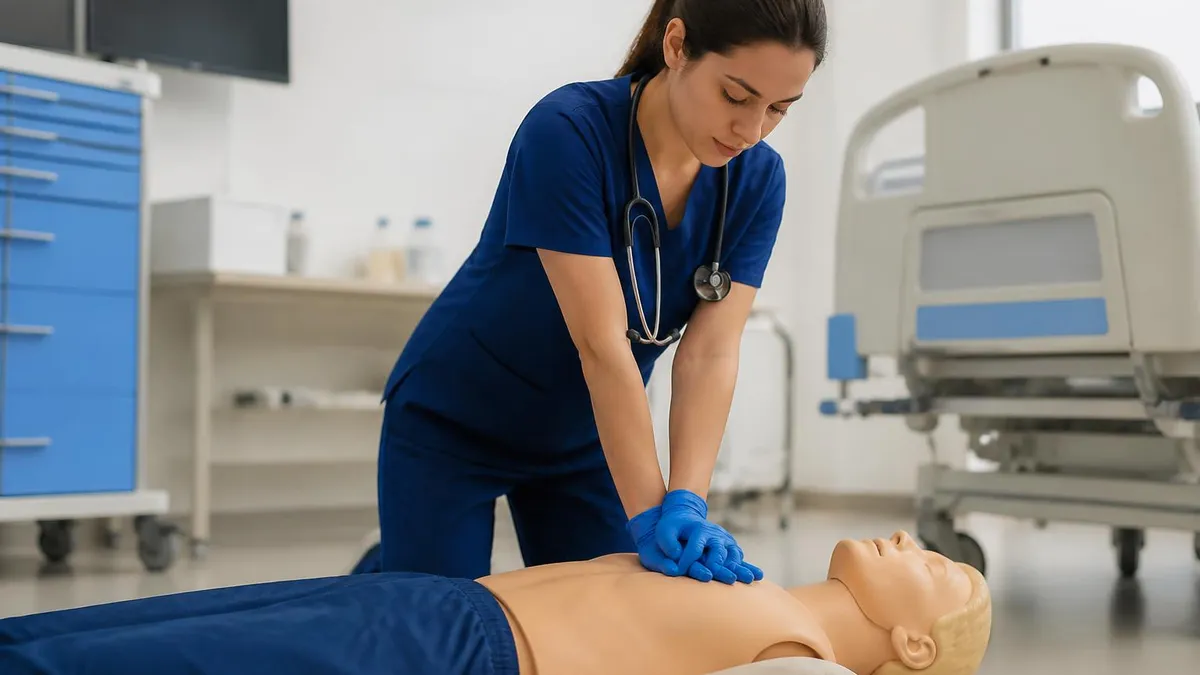
What Is BLS? Basic Life Support, CPR, and AED Guide
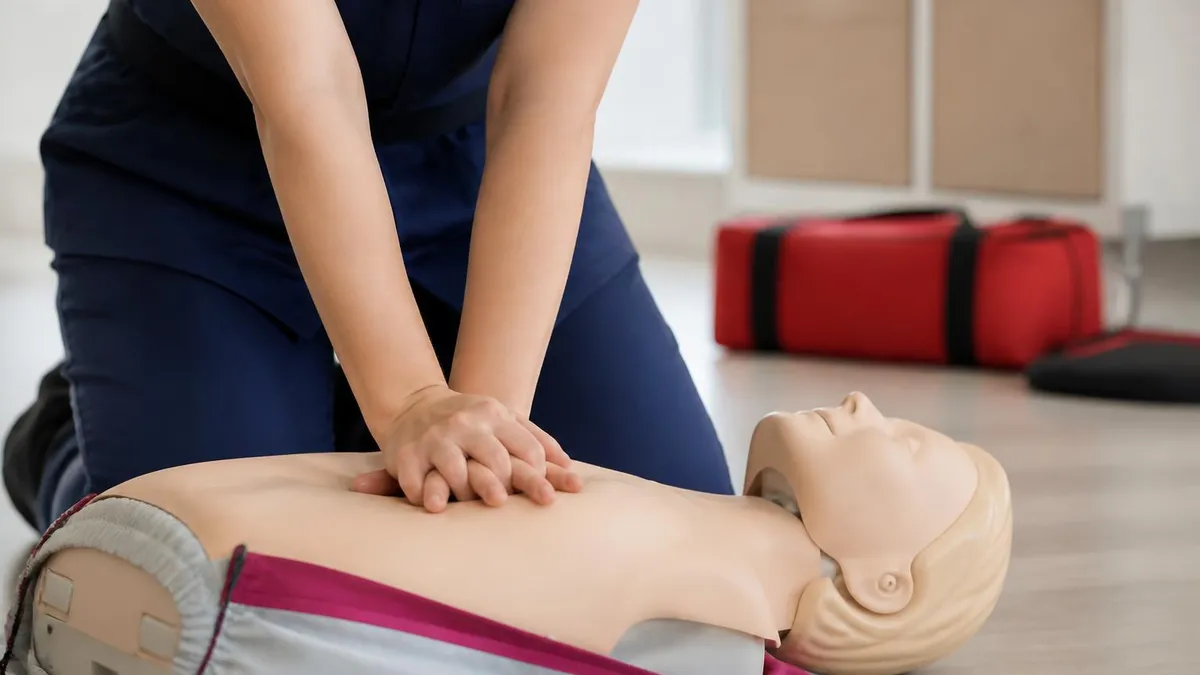
AHA BLS Certification: Course, Renewal, and Exam Guide
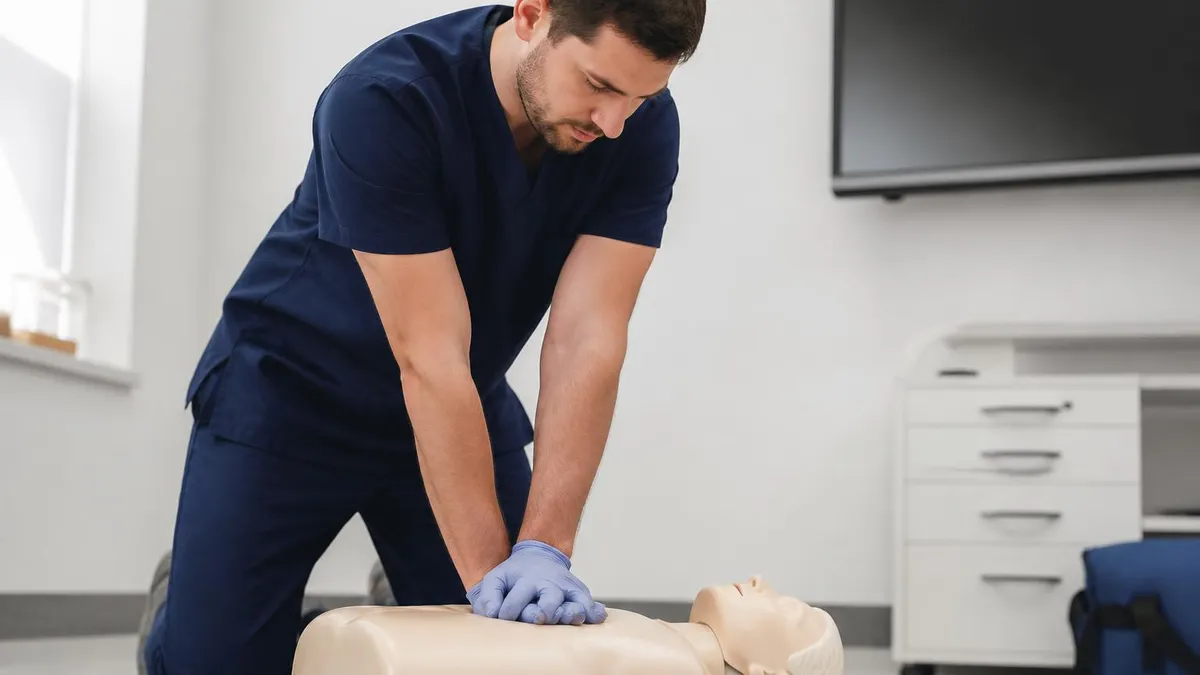
How to Renew BLS Certification: Complete 2026 Guide to Recertifying Your Card
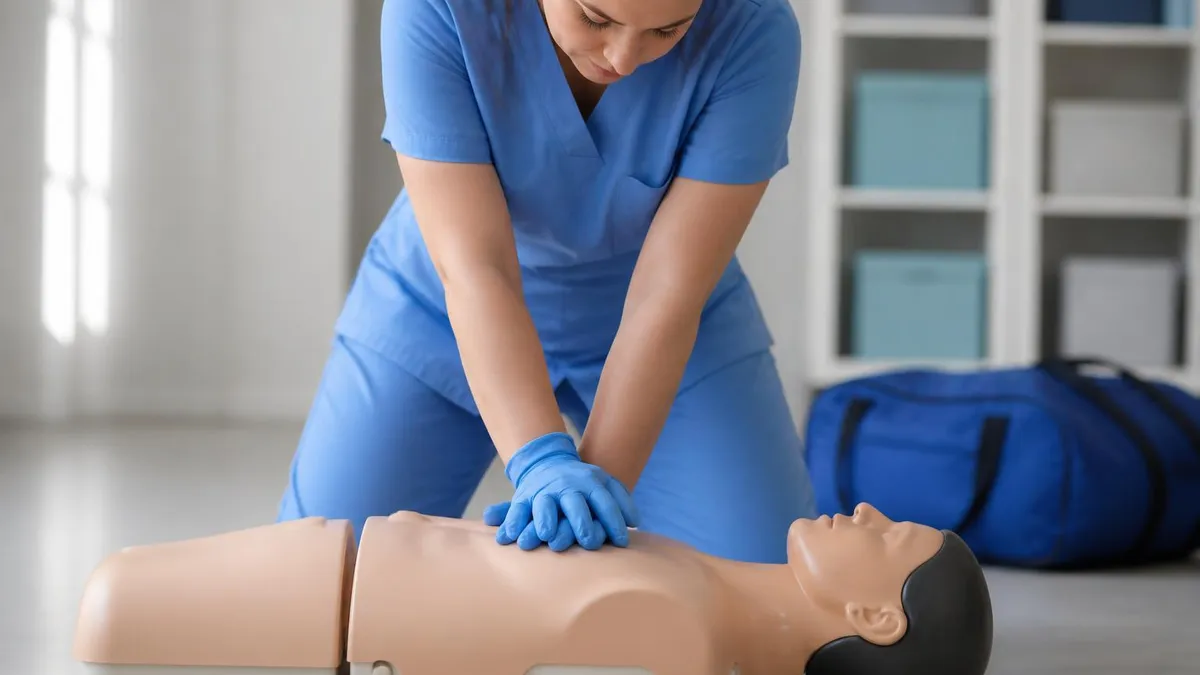
ACLS and BLS Course: Complete 2026 Certification Guide for Healthcare Providers
BLS Training: Course Content, Format & How to Get Certified
About the Author

Registered Nurse & Healthcare Educator
Johns Hopkins University School of NursingDr. Sarah Mitchell is a board-certified registered nurse with over 15 years of clinical and academic experience. She completed her PhD in Nursing Science at Johns Hopkins University and has taught NCLEX preparation and clinical skills courses for nursing students across the United States. Her research focuses on evidence-based exam preparation strategies for healthcare certification candidates.
Join the Discussion
Connect with other students preparing for this exam. Share tips, ask questions, and get advice from people who have been there.
View discussion (8 replies)