
ACLS and BLS Course: Complete 2026 October Certification Guide for Healthcare Providers
What is a BLS certification? Complete guide to ACLS & BLS courses, 📗 AHA exam prep, renewal options, costs, and how to pass on your first attempt.
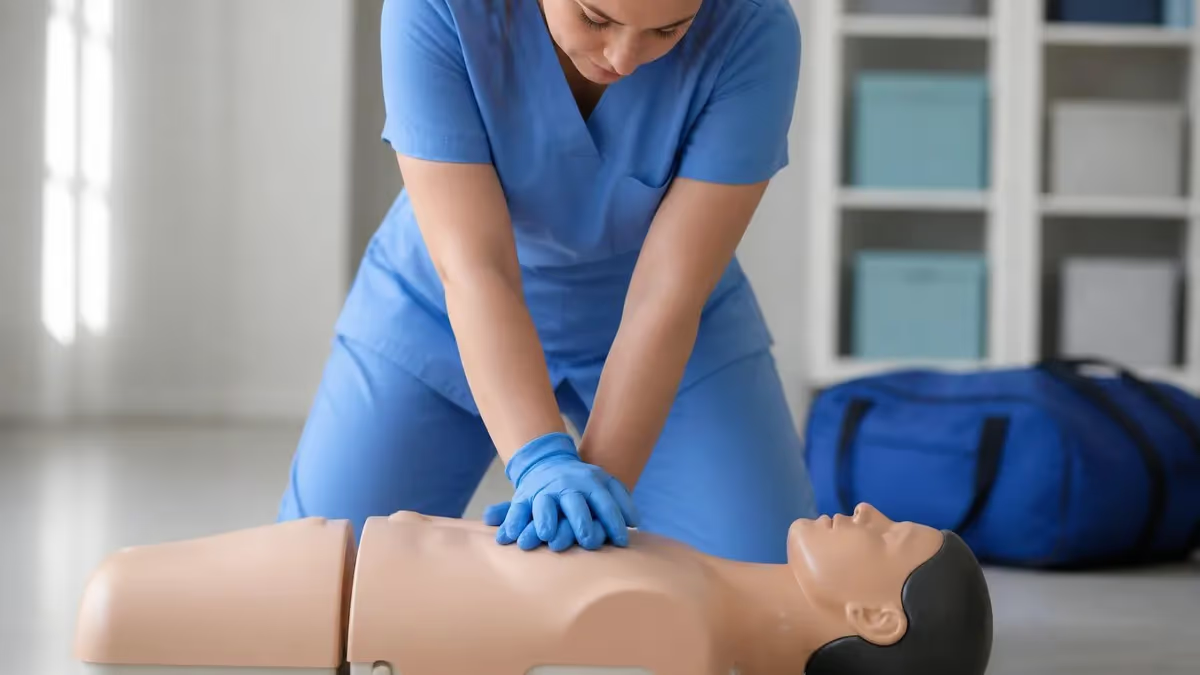
If you are searching for clear answers about what is a BLS certification and how it connects to advanced training, you have arrived at the right resource. The acls & bls pathway is the backbone of emergency response in modern American healthcare, and millions of clinicians, students, and first responders complete one or both certifications every year. This guide walks you through course content, exam expectations, renewal logistics, and study strategy so you can move from registration to a passing score with confidence and clinical readiness.
Basic Life Support, commonly abbreviated as BLS, teaches the core skills required to recognize cardiac arrest, deliver high-quality chest compressions, operate an automated external defibrillator, and manage choking emergencies for adults, children, and infants. Advanced Cardiovascular Life Support, known as ACLS, builds on that foundation by adding rhythm recognition, pharmacology, airway management, and team dynamics for in-hospital and prehospital resuscitation scenarios where seconds determine survival outcomes.
The two courses share a philosophy: early, uninterrupted, high-quality CPR saves lives, and structured team communication multiplies that effect. Whether you are a nursing student preparing for your first clinical rotation, a paramedic refreshing your certification, or a dental hygienist meeting state licensure requirements, understanding the relationship between BLS and ACLS will help you choose the right course, allocate study time efficiently, and avoid common pitfalls during skills testing.
This guide is built around the 2020 American Heart Association guidelines that remain in effect through the next published update cycle. We cover the aha basic life support exam format, the most-tested ACLS algorithms, the difference between provider and instructor pathways, and the practical question of whether online renewal is appropriate for your role. We also include realistic timelines, salary impact data, and a full study schedule you can adapt to your work shifts.
One question we hear constantly is whether BLS and CPR are the same credential. The short answer: BLS includes CPR but adds team-based response elements, two-rescuer techniques, infant-specific compressions, and bag-mask ventilation that consumer CPR courses typically omit. Employers in hospitals, surgery centers, dialysis units, and emergency medical services almost always require BLS rather than community CPR, so make sure the course you register for matches what your credentialing office expects.
By the end of this article you will know exactly which course to take, what to study, how much to budget, how to schedule your skills check, and what to expect on test day. You will also have access to free practice questions modeled on the actual AHA item bank, plus links to deeper guides on pediatric algorithms, renewal timing, and online versus in-person formats so you can build a complete certification plan.
ACLS & BLS Certification by the Numbers
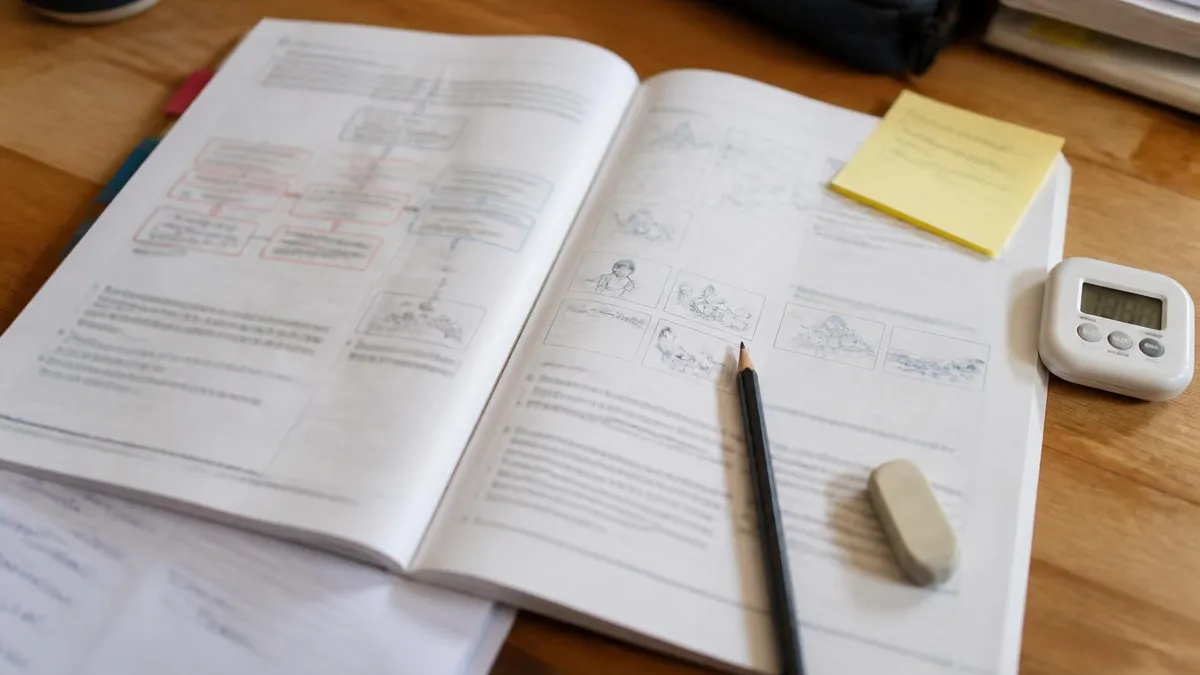
What the ACLS and BLS Course Covers
Compression depth of 2-2.4 inches for adults, rate of 100-120 per minute, full chest recoil, and minimized interruptions during transitions, defibrillation, and airway management procedures.
Pad placement on adults, pediatric attenuator use for children under eight, troubleshooting hairy or wet chests, and safe defibrillation while maintaining scene control and rescuer safety throughout the event.
Closed-loop communication, clear role assignment, constructive intervention, and knowledge sharing during code blue events where six to eight clinicians must coordinate without overlap or missed assessments.
Cardiac arrest, bradycardia, tachycardia with and without pulse, acute coronary syndromes, and post-cardiac-arrest care pathways drawn directly from the 2020 American Heart Association guidelines.
Epinephrine, amiodarone, lidocaine, atropine, adenosine, and dopamine dosing, route, and timing within structured resuscitation scenarios where medication errors directly affect simulated patient survival.
One of the most persistent questions in healthcare education is whether BLS and CPR refer to the same credential. The distinction matters because employers, state licensing boards, and credentialing offices use these terms with very specific meanings, and registering for the wrong course can mean repeating the entire training. CPR, or cardiopulmonary resuscitation, is the skill itself. BLS is a structured certification course that teaches CPR plus team-based response, two-rescuer techniques, and provider-level expectations.
The community CPR course you might take to qualify as a youth coach or daycare worker covers single-rescuer adult, child, and infant compressions plus AED basics. It is typically a two to three hour class and does not include bag-mask ventilation, two-rescuer infant technique, or the structured team communication that hospital codes require. BLS adds those elements, includes a written exam, and requires a hands-on skills test with a certified instructor watching every compression cycle and ventilation attempt.
For healthcare workers, the answer to the question is bls and cpr the same is functionally no, even though BLS contains CPR within it. Hospitals, surgery centers, dental practices, and EMS agencies require BLS specifically because the team-based components map directly to how real codes unfold in clinical environments. Showing up to orientation with a community CPR card almost always results in being sent back to take BLS before you can begin clinical duties.
The American Heart Association is the dominant provider of BLS certification in the United States, with the American Red Cross as the next-largest option. Both organizations align their content with the International Liaison Committee on Resuscitation consensus statements, which means the underlying science is identical. The differences come down to course format, instructor network density in your region, exam style, and whether your specific employer accepts cards from one provider over the other.
When you compare the two head-to-head, AHA cards are accepted essentially universally in hospital systems, while Red Cross cards are accepted at most but not all major hospital networks. If you are a nursing student, ask your program which provider they prefer before you register, because retaking a course solely to switch providers is an avoidable expense. For most allied health roles outside of hospitals, both cards work without issue.
The relationship between BLS and ACLS is hierarchical: BLS is a prerequisite for ACLS, and the high-quality CPR taught in BLS forms the foundation of every ACLS algorithm. You cannot effectively manage a ventricular fibrillation arrest if your compressions are shallow, your rate is wrong, or your team has no closed-loop communication. ACLS instructors will fail candidates who demonstrate weak BLS skills during megacode scenarios, even if their drug knowledge is otherwise strong.
This is why most healthcare providers complete BLS first, work in a clinical setting for at least several months while practicing the skills, and then add ACLS once they have built muscle memory and team familiarity. Some accelerated programs combine the two into a single weekend, which works for experienced clinicians but tends to overwhelm new graduates who would benefit from spacing the courses several weeks or months apart.

BLS Practice Test Questions
Prepare for the BLS - Basic Life Support exam with our free practice test modules. Each quiz covers key topics to help you pass on your first try.
BLS High-Quality CPR & Provider Skills
BLS Exam Questions covering BLS High-Quality CPR & Provider Skills. Master BLS Test concepts for certification prep.
BLS Special Situations & Scenarios
Free BLS Practice Test featuring BLS Special Situations & Scenarios. Improve your BLS Exam score with mock test prep.
BLS Adult, Child & Infant Resuscitation
BLS Mock Exam on Adult, Child & Infant Resuscitation. BLS Study Guide questions to pass on your first try.
BLS Airway Management & Ventilation
BLS Test Prep for Airway Management & Ventilation. Practice BLS Quiz questions and boost your score.
BLS Automated External Defibrillator (AED)...
BLS Questions and Answers on Automated External Defibrillator (AED) Use. Free BLS practice for exam readiness.
BLS Certification: Cardiac Arrest
BLS Mock Test covering Certification: Cardiac Arrest. Online BLS Test practice with instant feedback.
BLS Certification: Choking
Free BLS Quiz on Certification: Choking. BLS Exam prep questions with detailed explanations.
BLS Certification: Respiratory Arrest
BLS Practice Questions for Certification: Respiratory Arrest. Build confidence for your BLS certification exam.
BLS Chain of Survival
BLS Test Online for Chain of Survival. Free practice with instant results and feedback.
BLS CPR Techniques & Procedures
BLS Study Material on CPR Techniques & Procedures. Prepare effectively with real exam-style questions.
BLS Legal & Ethical Considerations
Free BLS Test covering Legal & Ethical Considerations. Practice and track your BLS exam readiness.
BLS Post-Resuscitation Care
BLS Exam Questions covering Post-Resuscitation Care. Master BLS Test concepts for certification prep.
AHA Basic Life Support Exam Format
The basic life support exam american heart association uses a 25-question multiple-choice format delivered either on paper or through an online proctored portal. You have 60 minutes to complete it, and the passing score is 84 percent, meaning you can miss no more than four questions. Topics span adult, child, and infant CPR, AED operation, choking relief, and team dynamics, with questions drawn from a rotating item bank.
Questions favor application over recall. Rather than asking you to define a term, the exam describes a scenario and asks what you would do next. For example, you might read about a collapsed adult in a grocery store and choose between starting compressions, checking a pulse, or activating emergency services first. Knowing the AHA Chain of Survival sequence cold is more valuable than memorizing definitions or historical guideline changes.
Blended Online + In-Person Format: Pros and Cons
- +Complete didactic content at your own pace on personal schedule
- +Pause and replay sections you find confusing or want to review
- +Reduces in-classroom time from full day to two-hour skills session
- +Adaptive scenarios reinforce weak areas before skills testing
- +Counts as continuing education hours in most state nursing boards
- +Saves money compared to full-day instructor-led classroom courses
- +Lets you complete certification across evenings around work shifts
- −Requires self-discipline to finish the online portion before deadlines
- −Skills session still requires in-person attendance at a training center
- −Some employers do not reimburse online portions without prior approval
- −Technical issues with the platform can delay course completion
- −Less peer interaction than traditional classroom-based BLS courses
- −Online portion expires if not completed within a set timeframe
- −First-time providers may benefit more from full in-person instruction
Pros and Cons at a Glance
| Pros | Cons |
|---|---|
| Complete didactic content at your own pace on personal schedule | Requires self-discipline to finish the online portion before deadlines |
| Pause and replay sections you find confusing or want to review | Skills session still requires in-person attendance at a training center |
| Reduces in-classroom time from full day to two-hour skills session | Some employers do not reimburse online portions without prior approval |
| Adaptive scenarios reinforce weak areas before skills testing | Technical issues with the platform can delay course completion |
| Counts as continuing education hours in most state nursing boards | Less peer interaction than traditional classroom-based BLS courses |
| Saves money compared to full-day instructor-led classroom courses | Online portion expires if not completed within a set timeframe |

Pre-Course Checklist for the Basic Life Support Renewal Class
- ✓Verify your current card expiration date and schedule renewal within 30 days of expiration
- ✓Confirm your employer accepts AHA, Red Cross, or both certifying organizations
- ✓Register for the correct provider course rather than community CPR
- ✓Complete any required online HeartCode modules before the skills session
- ✓Print and bring your online completion certificate to the in-person testing
- ✓Review the 2020 AHA guidelines updates including compression rate and depth standards
- ✓Practice two-rescuer adult and infant CPR with a study partner if possible
- ✓Wear comfortable clothing that allows you to kneel and lean over a manikin
- ✓Eat a meal and stay hydrated since skills testing is physically demanding
- ✓Arrive 15 minutes early to complete paperwork and meet your instructor
Your skills test passes or fails on chest compressions
Instructors report that the single most common failure point in BLS skills testing is inadequate compression depth or rate, not drug knowledge, not algorithm memorization, not AED operation. Practice on a feedback manikin or against a firm surface for at least 10 minutes before your test, focusing on the 2 to 2.4 inch depth and 100 to 120 per minute rate. If you can demonstrate consistent high-quality compressions, the rest of the test usually falls into place.
Both the American Heart Association and the American Red Cross issue BLS certifications valid for two years from the date of skills testing. Renewal, often called recertification, is shorter than the initial course and focuses on skills verification rather than full didactic content delivery. You can renew in person, through a blended online format, or in some cases through a fully remote skills demonstration depending on your role and employer requirements.
The basic life support renewal class typically runs two to three hours rather than the four to five hours required for initial certification. The content is identical, but the assumption is that you already know the material and need only a refresher on guideline updates and a fresh skills check. Many providers offer renewal-specific scheduling that compresses everything into a single morning or evening session, making it easier to fit around clinical shifts.
Online renewal has become extremely popular since 2020, with the AHA HeartCode platform and Red Cross digital learning hub both offering self-paced modules followed by virtual or in-person skills checks. Some employers, particularly in low-acuity settings like outpatient dental offices and physical therapy clinics, accept fully online renewals where the skills check is performed via video with an instructor evaluating compressions on a personal manikin you purchase or borrow.
For high-acuity settings like emergency departments, intensive care units, and surgical suites, employers almost always require an in-person skills check even for renewals. The reasoning is that compression quality and team dynamics cannot be reliably evaluated through video, and the consequences of inadequate skills in those environments are too severe to risk. Check your unit-specific policy before paying for a fully online renewal that might not be accepted.
The cost of renewal ranges from about $50 for an online-only Red Cross renewal to $110 for an in-person AHA renewal at a hospital-based training center. Some employers cover renewal costs entirely as part of compliance training budgets, while others reimburse after you submit your card. Independent contractors, agency nurses, and per-diem staff typically pay out of pocket and should plan for the expense as part of their annual professional development budget.
Timing your renewal carefully matters more than most people realize. If you let your card expire, you must retake the full initial course rather than the shorter renewal version, adding both time and expense. The AHA allows renewal up to 30 days before expiration without losing your existing card credit, while some training centers extend this window to 60 or 90 days. Schedule your renewal as soon as you receive the reminder email from your training provider.
If you have moved between states or switched employers since your last certification, double-check that your new credentialing office accepts the provider you previously used. While both AHA and Red Cross cards are widely accepted, individual hospital systems sometimes have specific contracts that favor one provider, and starting a new job with the wrong card can delay your orientation by a week or more.
If your BLS or ACLS card expires before you complete renewal, you cannot renew at the discounted rate. You must register for and complete the full initial course, including all didactic content, even if you have held the certification for years. Set calendar reminders 90 and 60 days before expiration to avoid this costly mistake, and verify renewal eligibility windows with your specific training provider.
Holding current BLS and ACLS certifications opens doors across the healthcare workforce. For nurses, BLS is the floor requirement and ACLS becomes essential within the first year for any role in critical care, emergency medicine, telemetry, surgical services, or interventional procedures. Pharmacists working in hospital settings increasingly need ACLS to participate in code response teams, and respiratory therapists complete both routinely as part of their core training program requirements.
For paramedics and EMTs, BLS is foundational at the EMT level while ACLS is required for paramedic licensure in most states. Physician assistants and nurse practitioners working in acute care settings universally need both, and many primary care offices require BLS for clinical staff including medical assistants. Even dental hygienists, dental assistants, and dentists themselves must hold current BLS in most states as a condition of licensure renewal.
The salary impact of these certifications is modest but real. BLS by itself rarely adds to your hourly rate, but it is required to qualify for the role in the first place. ACLS, combined with specialty experience, can shift you from a med-surg floor position averaging $35 per hour to a critical care role averaging $42 per hour or higher depending on geography. Travel nurses with both certifications plus PALS often command premium contracts in the $2,500 to $3,500 per week range.
Beyond compensation, current certifications affect your scope of practice. Without ACLS, a nurse cannot push code-related medications independently in many hospital systems, cannot serve as the team leader during a code, and cannot transfer patients to higher-acuity units unaccompanied. These restrictions can quietly limit which assignments you receive, which committees you join, and which leadership opportunities open up over time.
If you are studying for the basic life support for healthcare providers credential, treat it as the first step in a longer credentialing journey rather than a checkbox to complete and forget. Build skills you will use, not just memorize for the test. The two-rescuer infant CPR sequence, the choking algorithm, and the AED workflow are skills you will use repeatedly across decades of clinical practice if you remain in healthcare.
Many providers also pursue PALS, the Pediatric Advanced Life Support certification, especially those working in emergency departments, pediatric units, or family practice settings where children may present in distress. PALS builds on BLS and ACLS principles but adds pediatric-specific algorithms, drug dosing by weight, and family-presence considerations during resuscitation. It typically follows ACLS by six to twelve months in most career timelines.
For those interested in teaching, the AHA offers BLS Instructor and ACLS Instructor pathways. Instructor candidates must hold a current provider card, complete an instructor essentials course, attend an instructor course for their discipline, and pass a teaching assessment with a Training Center Faculty member. Active instructors typically earn $40 to $75 per hour teaching evenings and weekends, and many find it a rewarding side income that also keeps their own skills sharp through repeated practice.
With your registration confirmed and your renewal date scheduled, the next question is how to actually prepare so you walk in confident and walk out certified. Start by downloading the AHA BLS Provider Manual or accessing the digital version through your training center. Read the entire manual at least once, paying particular attention to the algorithm diagrams, the high-quality CPR criteria table, and the post-resuscitation care section that many learners skim and later regret skipping.
Build a study schedule that spaces your preparation across at least two weeks rather than cramming the night before. Research on retention shows that distributed practice produces dramatically better long-term recall than massed study, and the skills test specifically rewards muscle memory built through repeated practice over time. Twenty minutes per day for two weeks beats four hours the night before every single time.
Use the free practice questions linked throughout this article to identify your weak spots early. Most learners discover that they are weaker on infant-specific protocols, two-rescuer transitions, or the choking algorithm than they expected. Once you know where you struggle, focus your additional study time there rather than re-reading material you have already mastered. The AHA exam draws questions from a rotating bank, so broad familiarity matters more than deep expertise in one topic.
If possible, practice compressions on a manikin at least once before your skills test. Many libraries, community centers, and fire stations offer free or low-cost access to practice manikins, and some hospital simulation labs allow employees to schedule practice sessions outside of formal training. If no manikin is available, you can practice rhythm and depth against a firm pillow or rolled-up blanket, though this will not give you accurate depth feedback.
The day before your test, review the high-yield items: compression depth and rate for each age group, the AED pad placement and shock workflow, the choking sequences for conscious and unconscious victims, the bag-mask ventilation ratio for one-rescuer and two-rescuer scenarios, and the Chain of Survival for in-hospital and out-of-hospital arrests. These topics appear on essentially every BLS exam regardless of provider, and confident recall here builds momentum for the rest of the test.
If you are renewing for the third or fourth time and feel like you have plateaued, consider attending a different training center or instructor for a fresh perspective. Different instructors emphasize different aspects of the curriculum, and learning the same content from a new voice often reveals subtle techniques or insights you missed during previous courses. Some learners alternate between AHA and Red Cross renewals every other cycle to keep their preparation feeling fresh and engaging.
Finally, treat the certification as a living skill rather than a static credential. Consider joining your facility's code committee, volunteering for mock code drills, or signing up for in-situ simulations on your unit. These no-stakes practice opportunities reinforce your training, build team relationships, and keep your skills sharp between formal renewal cycles. The clinicians who perform best during real codes are almost always the ones who practiced most during simulations. For those exploring fully remote options, our american red cross basic life support renewal guide walks you through the format step by step.
Sample BLS - Basic Life Support Practice Questions
Try these questions from our free BLS - Basic Life Support practice tests. The correct answer and an explanation follow each question.
When can a healthcare provider breach patient confidentiality?
- A. If a legal subpoena is issued
- B. When the patient is under 18 years of age
- C. If the patient is unresponsive and unable to provide consent
- D. If it benefits the healthcare facility
Answer: C. If the patient is unresponsive and unable to provide consent
In emergency situations where a patient is unresponsive or incapacitated, implied consent allows healthcare providers to provide necessary life-saving treatment. It is presumed that a reasonable person would want to receive care in such a critical state. This is a crucial exception to the general rule of obtaining explicit consent, enabling immediate, critical care.
A healthcare provider fails to initiate CPR on a patient with a treatable cardiac arrest and the patient dies. This could constitute:
- A. Assault
- B. Negligence by omission
- C. Battery
- D. Informed consent violation
Answer: B. Negligence by omission
Negligence by omission occurs when a provider fails to perform a duty of care that a reasonably prudent provider would have performed.
What must a healthcare provider obtain before providing emergency treatment to an adult patient?
- A. Verbal consent
- B. Written consent
- C. Implied consent
- D. Consent from a family member
Answer: C. Implied consent
In emergency situations involving an adult patient who is unconscious, unresponsive, or otherwise unable to give explicit consent, healthcare providers operate under the principle of implied consent. It is assumed that the patient would consent to life-saving treatment if they were able to communicate. This allows for immediate, critical care without delay.
A healthcare provider is performing rescue breathing on a patient with a suspected opioid overdose and NO pulse oximeter is available. How should they judge the adequacy of ventilations?
- A. Visible chest rise and fall with each breath
- B. Patient's skin color returning to pink within 10 breaths
- C. Absence of any abdominal movement during ventilation
- D. Audible air rushing through the stoma on exhalation
Answer: A. Visible chest rise and fall with each breath
Without monitoring equipment, visible chest rise with each breath remains the primary clinical indicator of adequate ventilation.
BLS Questions and Answers
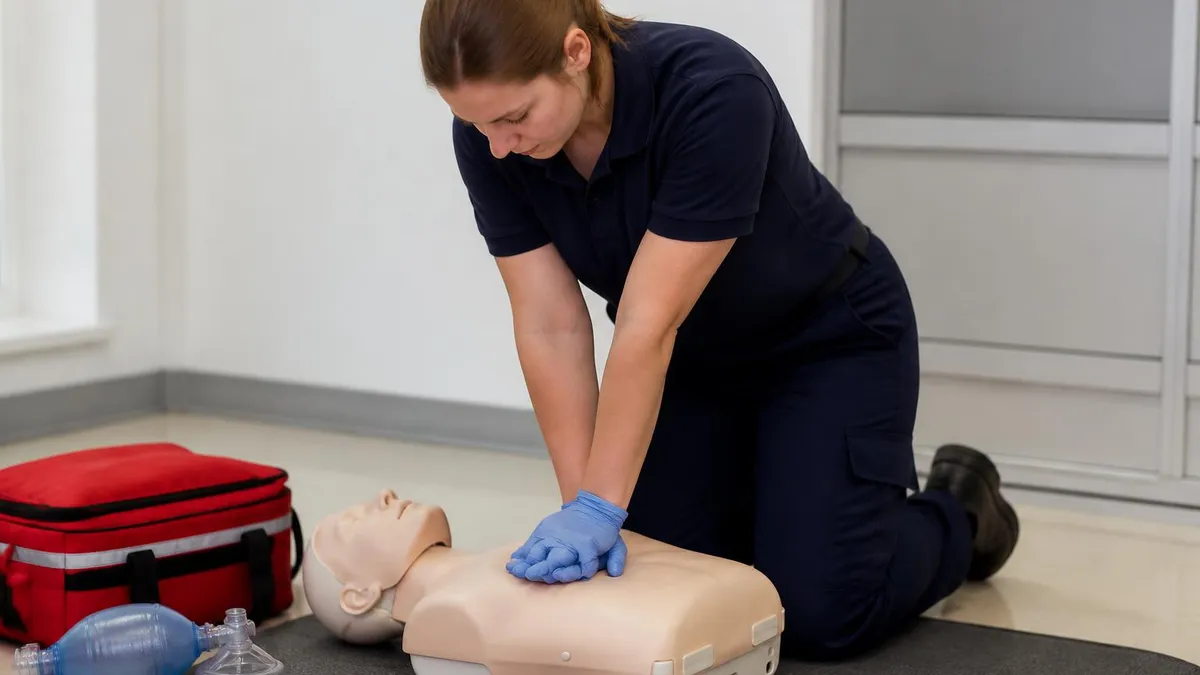
Pediatric BLS Algorithm: Complete 2026 Guide for Healthcare Providers
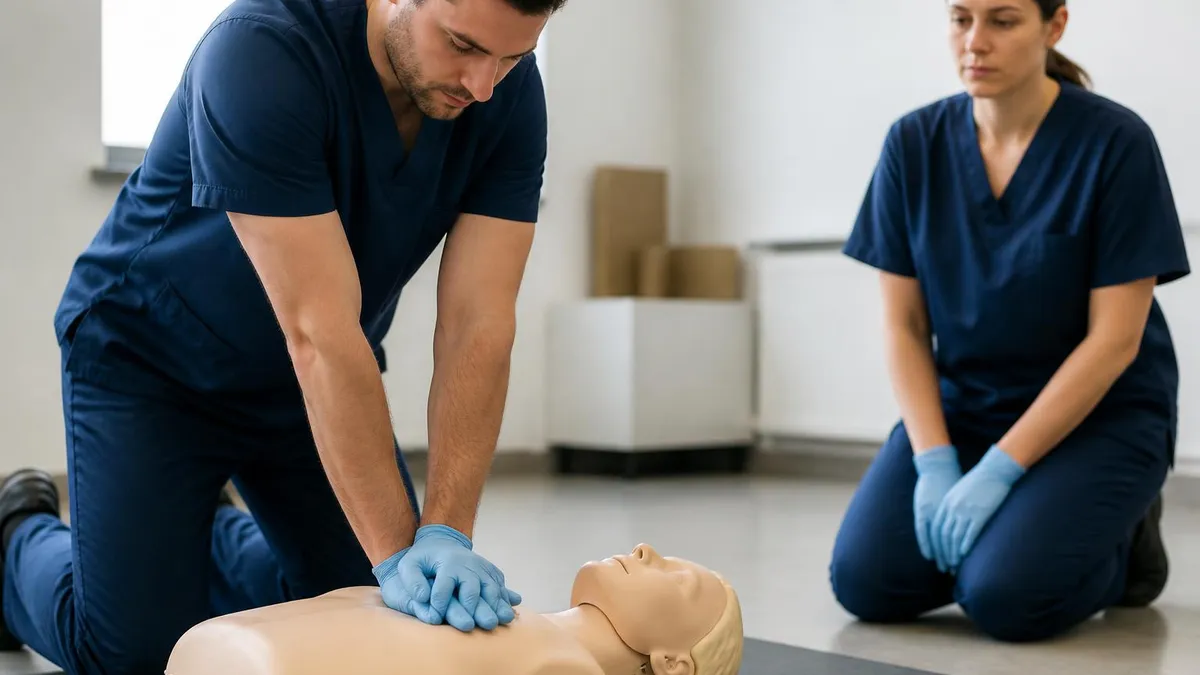
How Long Does BLS Certification Last? Complete 2026 Renewal Guide
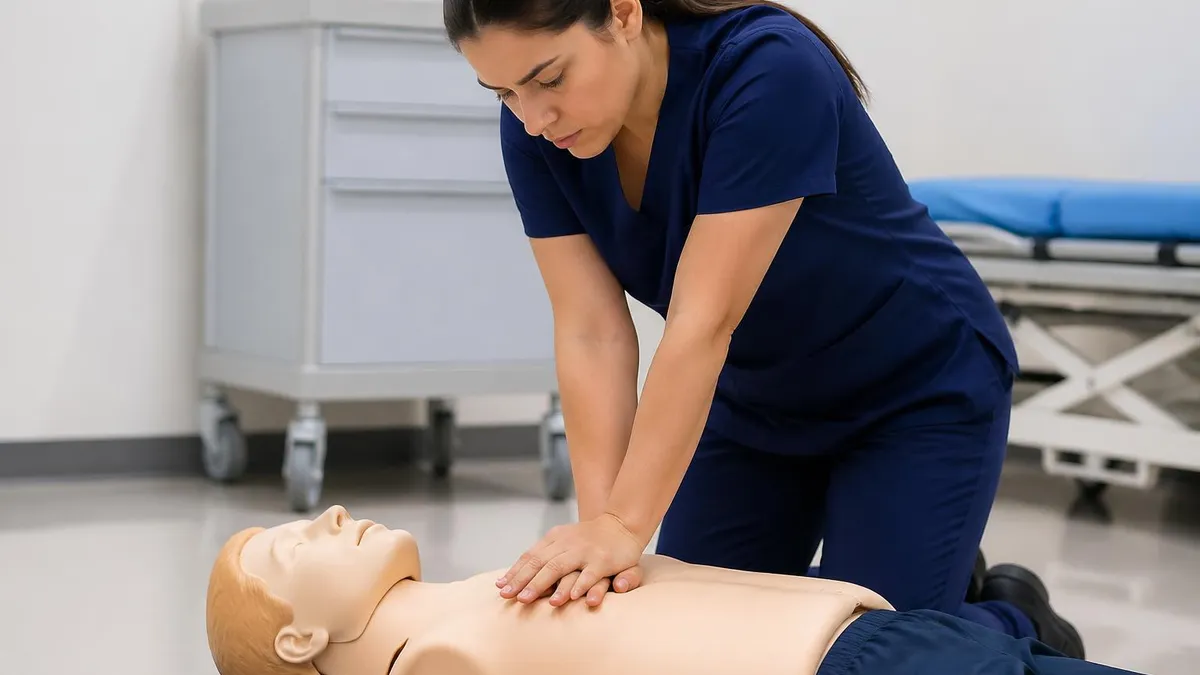
American Heart Association BLS: Certification, Renewal, Cost & What to Expect
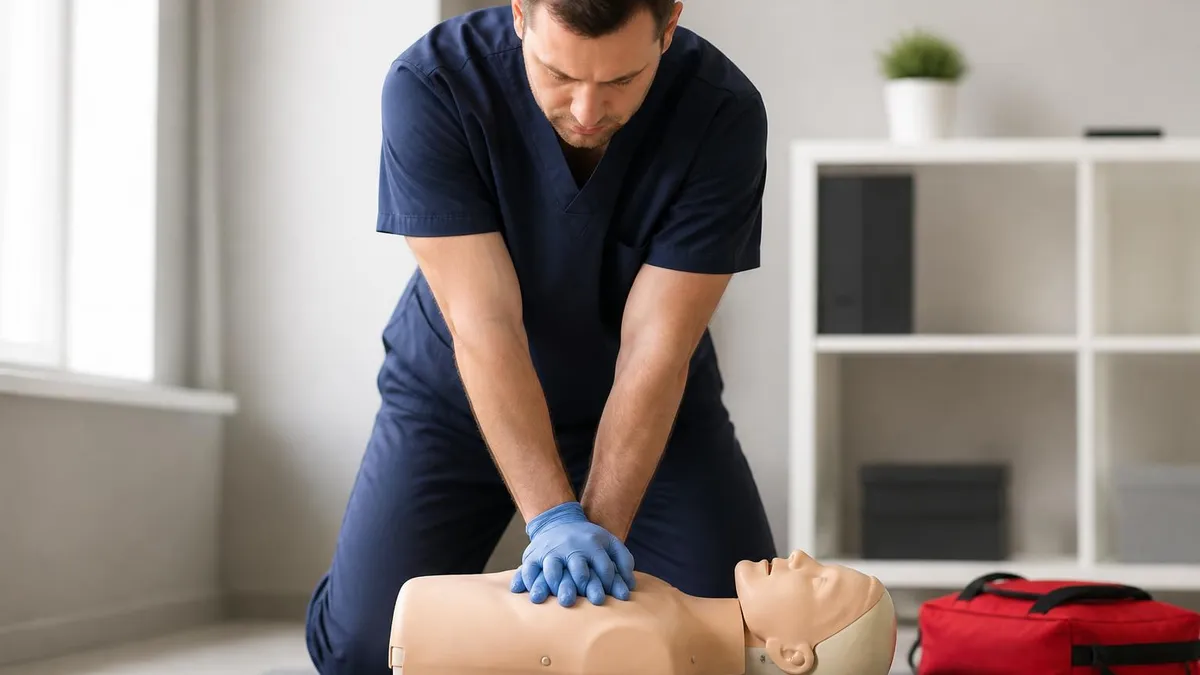
Online BLS Renewal: Complete 2026 Guide to Recertifying Your Basic Life Support Card
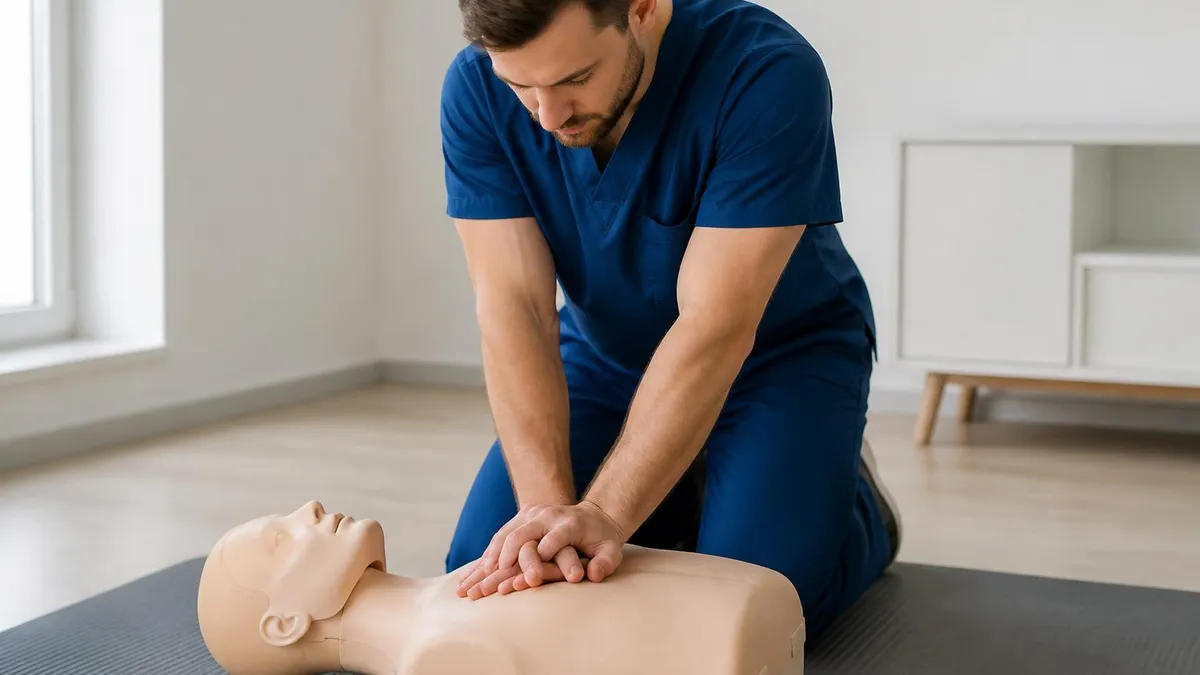
BLS vs ALS: Complete Comparison of Basic and Advanced Life Support
About the Author

Registered Nurse & Healthcare Educator
Johns Hopkins University School of NursingDr. Sarah Mitchell is a board-certified registered nurse with over 15 years of clinical and academic experience. She completed her PhD in Nursing Science at Johns Hopkins University and has taught NCLEX preparation and clinical skills courses for nursing students across the United States. Her research focuses on evidence-based exam preparation strategies for healthcare certification candidates.
Join the Discussion
Connect with other students preparing for this exam. Share tips, ask questions, and get advice from people who have been there.
View discussion (8 replies)